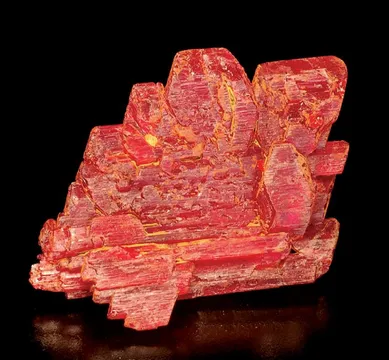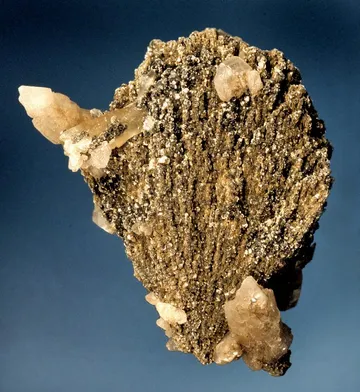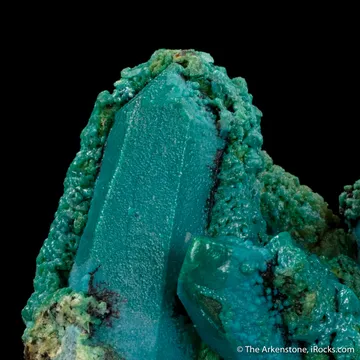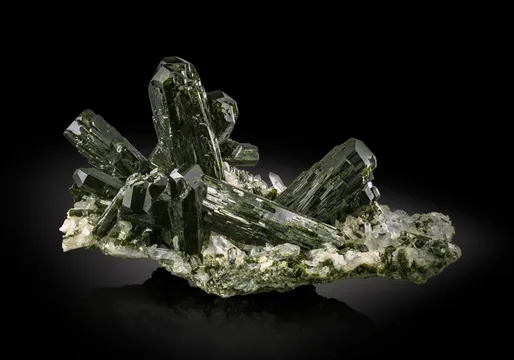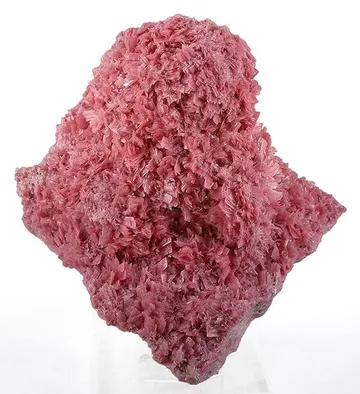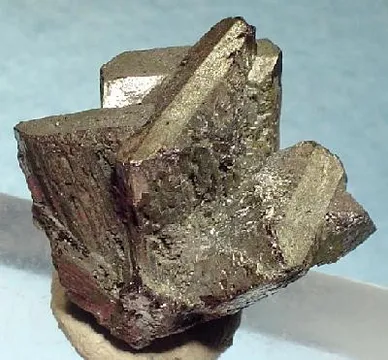
San Genaro Mine, Peru - famed for pyrargyrite and miargyrite, a historic epithermal silver deposit and key collector locality, plus rare type minerals.
Key facts
San Genaro is one of the great South American names for crystallized silver sulfosalts. The mine lies high in the Castrovirreyna mining district of Huancavelica, north of Laguna Orcococha, where low-sulfidation epithermal veins cut Miocene volcanic rocks in the Andean Cordillera. For collectors its fame rests above all on dark, lustrous pyrargyrite and miargyrite: ruby-red to black metallic crystals, commonly only millimeters but locally large and sculptural enough to rank among the finest known for their species. The best specimens show the classic San Genaro look—silver-antimony minerals perched on pale quartz or baryte, sometimes with pinkish siderite, galena, sphalerite, acanthite, polybasite, or tetrahedrite-group minerals as a tightly intergrown ore assemblage.
Regional View
Country View
San Genaro’s importance is not merely aesthetic. It is a historically productive silver mine in a district worked since the Spanish colonial period, and it has become a modern reference locality for complex silver-sulfosalt mineralogy. The mine is the type locality for baumstarkite, sangenaroite, and argentotennantite-(Fe), a remarkable record for a deposit better known to many collectors simply as “that Peruvian pyrargyrite mine.” The mineralogical story is especially compelling because the San Genaro ores document late, silver-rich reworking of earlier base-metal mineralization: quartz, hematite, acanthite, polybasite, pearceite, pyrargyrite, miargyrite, and rarer Ag-Sb-As-Bi species record a chemically evolving epithermal system rather than a single simple ore pulse.

Photo: Wikimedia Commons
Top-grade San Genaro pyrargyrite is loved for contrast and geometry: a sharp, splendent prism or cluster rising from smaller metallic crystals, with the “ruby silver” glow appearing when strong light reaches a thinner edge or fractured surface. Fine miargyrite is different in personality—typically darker, blacker, and more metallic, with blades, stepped aggregates, compact crystal cascades, or botryoidal-looking masses coated by bright microcrystals. Quartz at San Genaro is less famous as a standalone species, but it is the essential stage on which the silver sulfosalts appear: clear seams, drusy cavity linings, crustiform bands, cockade textures, and occasional amethystine crystals all belong to the mine’s collector vocabulary.

Photo: Wikimedia Commons
Search for specimens: View all specimens from San Genaro Mine, Peru
San Genaro is in the Santa Ana district, Castrovirreyna Province, Huancavelica, Peru, in the eastern part of the Castrovirreyna mining district. Modern locality references place the mine north of Laguna Orcococha at roughly 4,750–5,000 meters elevation, a severe puna environment where collecting and mining have always been shaped by altitude, access, water, and seasonal weather. The ore system belongs to the Mio-Pliocene metallogenic belt of southern Peru, in a district where epithermal Ag-Au-Pb-Zn mineralization is structurally related to the regional Chonta fault system and hosted by Miocene volcanic and volcano-sedimentary rocks.
The deposit is a vein-type, low-sulfidation epithermal silver-polymetallic system. District descriptions distinguish narrow to moderate-width fracture-fill veins, commonly subvertical, with crustiform, cockade, breccia, and banded textures. At San Genaro, the collector-relevant mineralization is the silver-rich eastern expression of the Castrovirreyna district: pyrargyrite, miargyrite, polybasite, acanthite, pearceite, argentotetrahedrite-(Zn), argentotennantite-(Fe), baumstarkite, sangenaroite, galena, sphalerite, chalcopyrite, tetrahedrite-group minerals, and rarer sulfosalts occur with quartz, baryte, calcite, siderite, rhodochrosite, hematite, pyrite, clay minerals, and sericite. The veins were altered by silicification close to structures, with argillic and propylitic alteration outward from the ore.
Richard W. Lewis’s classic USGS work on Castrovirreyna remains the foundation for understanding the mine. He described the district as a set of steeply dipping veins grouped around San Genaro, Caudalosa, and La Virreyna, with San Genaro and nearby Astohuaraca representing the silver-sulfosalt-rich end of the mineralogical gradient. At San Genaro, the veins reopened after base-metal sulfide deposition and were invaded by later fluids carrying silica, silver, antimony, iron, and minor gold, arsenic, and bismuth. That late reworking phase is the reason San Genaro specimens are so distinctive: silver minerals occur in clear quartz veinlets that cut older sulfide ore, in banded colloform quartz, in cavity-filling aggregates, and as coatings or replacements on earlier ore minerals.
The mine’s older workings centered on veins historically known as San Julián and Quespisisa, later grouped under the San Genaro name. Lewis recorded about 20 kilometers of workings on 13 levels in the early 1960s, with the principal San Genaro portal at about 4,773 meters elevation, the lowest level near 4,668 meters, and higher workings reaching about 4,956 meters. He noted two shafts, including one on the Trabajo vein connecting the San Genaro level with lower levels, and another on the San Julián vein system. The ore was concentrated in a 130 ton-per-day flotation mill near the main portal, with power supplied by a hydroelectric plant at Santa Inés, near Laguna Choclococha.
The San Genaro area is part of a mining district discovered in 1591; ore processing at Castrovirreyna helped give rise to the founding of the city in 1592. Rich shallow silver ores drew early attention, and San Genaro’s modern story includes repeated reopenings, changing operators, and long intervals of intermittent production. The San Julián and Quespisisa veins were reopened around 1860 by Don Carlos Reynaldo Pflücker, whose most celebrated ore shoot, La Boya de la Cruz in the Quespisisa vein, reportedly yielded 3,000,000 ounces of silver. The property was sold in 1920 to Don Tomás Marsano, who formed Compañía Minera de Santa Inés y Morococha; in 1945 it was leased to Leon Rosenshine and associates, leading to the Castrovirreyna Metal Mines operation documented by Lewis.
Later corporate history is more complicated because San Genaro sits within a district of overlapping historic concessions, operating units, and related mines. In the 2000s and early 2010s, San Genaro was treated as a formal Unidad Minera San Genaro, with a Peruvian mine-closure plan approved in 2011 and a modification prompted by a shift from conventional cut-and-fill mining at approximately one-meter widths to more mechanized, sublevel-style mining with wider stopes. That plan listed numerous mine components, including portals, chimneys, waste dumps, tailings deposits, a concentrator, workshops, camps, water systems, and access roads—an important reminder that this is not a casual collecting site but an industrial mining unit subject to Peruvian mining and environmental regulation.
Current collecting access should be considered closed unless arranged through the legal concession holder and mine management. The area includes underground workings, stopes, shafts, dumps, tailings facilities, and environmental-control obligations. Specimens on the market overwhelmingly come from old mine production, dealer inventories, former collections, and occasional dispersed lots rather than from casual field collecting. Serious collectors should treat “fresh from the mine” claims cautiously unless accompanied by credible chain-of-custody information.
The most important specimen-producing material came from silver-rich pockets and vein zones rather than broad, clean cavities of the sort associated with some fluorite or quartz mines. Lewis’s descriptions of the San Julián Sur vein, the Quespisisa vein, the San Julián Norte vein, and named mine levels such as the 35 and 70 levels are especially valuable. San Julián Sur, for example, is repeatedly tied to pyrargyrite-miargyrite sequences, quartz veinlets, and banded colloform ore. In these zones, crystal size was often modest—many cavity linings had crystals not larger than a few millimeters—but the chemistry was exceptional, and occasional larger, display-quality crystal groups entered collections. Dealer and museum specimens show that the mine did produce cabinet-worthy miargyrite and thumbnail to miniature pyrargyrite of a caliber far above the average ore occurrence.
Pyrargyrite is the signature collector mineral of San Genaro and was described by Lewis as the principal ore mineral in the San Genaro and Astohuaraca mines; at San Genaro it appears in an unusually wide range of habits, from thin laminae and films coating quartz or baryte in supergene ore to massive and semicrystalline cavity fillings, anhedral grains in clear quartz seams, dark-red crystals in banded colloform quartz, and late crack-fillings that coat earlier sulfides and gangue. The most desirable collector pieces are not merely rich ore: they show sharp, lustrous, well-terminated crystals with visible red internal color at edges or under strong light, preferably standing free on contrasting quartz, baryte, or paler sulfide matrix. Crystals around a few millimeters are typical in many ore cavities, but fine thumbnails and miniatures with crystals approaching centimeter scale are what made the locality famous; pieces with bright faces, minimal bruising, and a clean association with miargyrite, acanthite, polybasite, siderite, or baryte are distinctly superior to dull massive aggregates.
San Genaro is one of the world’s strongest localities for collector-grade miargyrite, and its best examples help define the species for modern collections: black to very dark lead-gray metallic crystals and aggregates, commonly intergrown with pyrargyrite and locally developed as cascades, bladed or lens-like forms, thick crystal masses, botryoidal-looking aggregates coated by microcrystals, and compact ore pieces with bright crystal faces. In Lewis’s paragenetic work, miargyrite is the most antimony-rich member of the San Genaro silver-sulfosalt sequence and was observed with pyrargyrite, particularly in banded colloform quartz and late silver-rich quartz veinlets. Excellent pieces are judged by crystallization rather than bulk: sharp isolated faces, visible individual crystals, aesthetic placement on contrasting matrix, and credible association with pyrargyrite or baryte lift a specimen above the common dark massive ore. Because miargyrite and pyrargyrite can be visually confusing in mixed San Genaro material, analyzed or well-provenanced specimens are especially desirable.
Quartz at San Genaro is the principal gangue and the most important structural host for the mine’s collectible silver sulfosalts, occurring as clear crystalline seams, vug linings, drusy coatings, massive and crustiform bands, cockade ore, and locally amethystine crystals. Lewis described clear quartz veinlets cutting older banded quartz and base-metal sulfides, with pyrargyrite, miargyrite, polybasite, acanthite, and pearceite introduced along these openings; he also noted cavities lined by small quartz crystals and less commonly by crystals of baryte, galena, sphalerite, pyrargyrite, polybasite, miargyrite, and tetrahedrite-group minerals. As a collectible species in its own right, San Genaro quartz is generally secondary to the ore minerals, but attractive specimens do occur as lustrous pale or slightly amethystine crystals, flattened crystals, or white quartz druses overgrown by baryte. The best quartz-bearing San Genaro pieces are those in which quartz provides clean contrast and geological context for ruby silver, rather than specimens where quartz is merely a broken ore gangue.
Other documented San Genaro minerals include acanthite, native silver, polybasite, pearceite, diaphorite, aramayoite, stephanite, argentotetrahedrite-(Zn), tetrahedrite-group minerals, galena, sphalerite, chalcopyrite, pyrite, baryte, calcite, siderite, rhodochrosite, hematite, stibnite, realgar, orpiment, and clay minerals. The type-locality minerals are especially important: baumstarkite occurs with dominant miargyrite and less frequent pyrargyrite, diaphorite, galena, chalcopyrite, sphalerite, pyrite, and other sulfosalts; sangenaroite is an Ag-Sb-As sulfide named for the mine; and argentotennantite-(Fe), approved from San Genaro material, occurs only as microscopic anhedral grains and rims around argentotetrahedrite-(Zn) in a pyrargyrite-rich specimen with quartz, baryte, siderite, galena, and acanthite. These are not casual eye-visible species for most collectors, but they make analyzed San Genaro association pieces unusually significant.
San Genaro specimens are not generally associated with a famous fake industry, but the locality does present real authentication challenges. Pyrargyrite, miargyrite, polybasite, acanthite, and dark tetrahedrite-group minerals can look deceptively similar, especially when they occur as black metallic microcrystals or massive intergrowths. Labels reading simply “ruby silver” may conceal pyrargyrite-miargyrite mixtures, and older “aramayoite,” “andorite,” or “tetrahedrite” identifications from the district should be treated cautiously unless supported by analysis. For baumstarkite, sangenaroite, argentotennantite-(Fe), argentotetrahedrite-(Zn), and other rare sulfosalts, visual identification is not enough; XRD, SEM-EDS, electron microprobe, or a published analytical pedigree is essential.
Condition is a major grading factor. Pyrargyrite and miargyrite are relatively soft silver sulfosalts, and sharp San Genaro crystals often show rubbed high points, contacted terminations, cleaved or bruised edges, or dull areas from old handling. Pyrargyrite is photosensitive enough that fine specimens should be kept out of strong long-term light; its prized red translucency is best enjoyed briefly with a fiber-optic or strong oblique light, not by leaving the specimen in a bright display case. Miargyrite is normally opaque-looking and blacker, so a lack of transmitted red color does not disqualify it, but the same caution about abrasion and handling applies. Avoid washing friable ore specimens aggressively: many pieces are porous, crustiform, clayey, or intergrown with delicate baryte and quartz.
The most available San Genaro specimens on today’s market are pyrargyrite, miargyrite, mixed pyrargyrite-miargyrite, and occasional baryte- or quartz-associated pieces from older stocks and collections. Fine pyrargyrite thumbnails with sharp ruby-red crystals are scarcer and more expensive than massive ore pieces. Large, well-crystallized miargyrite is also genuinely uncommon because most localities produce the species only as small or unshowy crystals; San Genaro examples with distinct crystal faces, 3–6 cm specimen size, and strong display presence are highly collectible. Type-mineral material should be bought as analytical or reference material, not as decorative cabinet specimens, unless the specimen also carries eye-visible pyrargyrite, miargyrite, or baryte.
The most memorable San Genaro story begins not with a cabinet specimen but with a bonanza ore shoot. After the district’s early colonial discovery and long, uneven history, the San Julián and Quespisisa veins were reopened around 1860 by Don Carlos Reynaldo Pflücker. In the Quespisisa vein he found the celebrated La Boya de la Cruz ore shoot, credited with yielding 3,000,000 ounces of silver. For a collector holding a sharp 2 cm pyrargyrite from San Genaro, that number gives the piece a different kind of gravity: the crystal is a relic of the same silver-rich system that once delivered fortune-scale ore in a high Andean district where water, fuel, machinery, and altitude made every ton difficult.
Lewis’s mine description also captures the physical drama of San Genaro. By the early 1960s the mine had about 20 kilometers of workings on 13 levels, most of them still accessible at the time of his study. The principal portal stood at 4,773 meters above sea level; the lowest level was recorded at about 4,668 meters and the highest at about 4,956 meters. Those figures are easy to skim past until one imagines the setting: a mine nearly at the elevation of Mont Blanc, worked through shafts and levels, powered by a hydroelectric plant at Santa Inés seven kilometers away, and producing silver ore from veins that were often narrow, broken, reopened, leached, and filled again.
One of the most revealing microscopic stories from San Genaro is the replacement sequence preserved in the ore. Lewis described base-metal sulfides cut by later clear quartz veinlets containing silver sulfantimonides; in places galena grains were corroded or replaced, while silver minerals filled the new openings. A typical sequence in the San Julián Sur vein shows pyrargyrite being replaced by miargyrite, the more antimony-rich phase. On a cabinet scale that may appear as only a black-red metallic cluster on quartz, but under the microscope it records a chemical progression: silver sulfide first, then increasingly antimony-rich silver sulfosalts, and finally rarer bismuth-bearing or arsenic-bearing phases in enriched ores.
The modern type-mineral story adds another chapter. A San Genaro specimen in the collection of Jaroslav Hyršl, measuring 4.3 cm and carrying dark-red pyrargyrite with dark-gray tetrahedrite-group crystals, light-pink siderite, large white tabular baryte, galena, acanthite, and quartz, became the source of argentotennantite-(Fe). The new mineral was not a dramatic crystal visible to the naked eye; it occurred as grains up to 100 micrometers and as microscopic rims on argentotetrahedrite-(Zn). That is part of San Genaro’s special appeal: one specimen can be attractive in the display case and, at the same time, preserve sub-millimeter evidence significant enough to define a new IMA-approved mineral species.
Richard Wheatley Lewis Jr. (1964), “The geology, mineralogy and paragenesis of the Castrovirreyna lead-zinc-silver deposits, Peru,” U.S. Geological Survey Open-File Report 64-103 — The essential geological and paragenetic monograph for San Genaro and the wider Castrovirreyna district, including vein structure, ore zoning, historical mining notes, and detailed mineral descriptions.
Herta Effenberger, Werner Hermann Paar, Dan Topa, Alan J. Criddle, and Michel Fleck (2002), “The new mineral baumstarkite and a structural reinvestigation of aramayoite and miargyrite,” American Mineralogist, 87, 753–764 — Type description of baumstarkite from San Genaro, including its relationship to miargyrite and aramayoite.
Joseph A. Mandarino (2002), “New Minerals,” The Canadian Mineralogist, 40, 1529–1553 — Summary entry for baumstarkite, giving locality, associations, crystal size, habits, and physical properties.
Ritsuro Miyawaki, Frédéric Hatert, Marco Pasero, and Stuart J. Mills (2019), “CNMNC Newsletter No. 50: New minerals and nomenclature modifications approved in 2019,” Mineralogical Magazine, 83, 615–620 — IMA announcement for sangenaroite, Ag8(Sb8-xAsx)S16, named for the San Genaro mine.
Sangenaroite entry, Handbook of Mineralogy — Concise reference sheet for the San Genaro type mineral sangenaroite.
Jiří Sejkora, Dalibor Velebil, Cristian Biagioni, Zdeněk Dolníček, and Jaroslav Hyršl (2026), “Argentotennantite-(Fe), Ag6(Cu4Fe2)As4S13, a new member of the tetrahedrite group from the San Genaro mine, Peru: occurrence and crystal structure,” European Journal of Mineralogy, 38, 325–336 — Full description of argentotennantite-(Fe), based on a San Genaro specimen with pyrargyrite, argentotetrahedrite-(Zn), quartz, baryte, siderite, galena, and acanthite.
Mindat reference page for Lewis (1964) — Useful bibliographic cross-reference for the USGS Castrovirreyna report.
Mindat locality page: San Genaro Mine, Santa Ana District, Castrovirreyna Province, Huancavelica, Peru — The best single locality index for documented species, references, photos, and map context.
Mindat photo gallery: San Genaro Mine — Valuable for comparing specimen styles, associations, and collector labels across pyrargyrite, miargyrite, baryte, baumstarkite, sangenaroite, and other species.
USGS Publications Warehouse: Castrovirreyna lead-zinc-silver deposits — Download hub for Lewis’s classic 1964 geological report and plates.
European Journal of Mineralogy: Argentotennantite-(Fe) from San Genaro — Modern type-mineral paper with specimen description, microprobe data, and crystal-structure work.
American Mineralogist: Baumstarkite and reinvestigation of aramayoite and miargyrite — Primary paper for San Genaro baumstarkite and related Ag-Sb sulfide mineralogy.
Cambridge Core: CNMNC Newsletter No. 50 — Official IMA newsletter entry for sangenaroite.
Wikimedia Commons: Pyrargyrite from San Genaro Mine — Open-license reference image of a sharp San Genaro ruby-silver thumbnail.
Wikimedia Commons: Miargyrite from San Genaro Mine — Open-license reference image of a display-quality San Genaro miargyrite specimen.
OEFA repository: 2023 environmental evaluation of Unidad Fiscalizable San Genaro — Modern regulatory context for the San Genaro unit, especially tailings-surface evaluation.
Alicia/CONCYTEC metadata: mineralogical characterization and flotation tests at Unidad Minera San Genaro, 2019 — Thesis metadata documenting modern mineral-processing study of San Genaro sulfide ores.