Salzburg, Austria — Alpine locality famed for Knappenwand epidote crystals; diverse minerals from emerald to scheelite, prized by collectors and museums.
Key facts
For mineral collectors, “Salzburg, Austria” is best understood not as a single mine but as a classic Alpine mineral province, with the State of Salzburg embracing some of the most storied ground in the Hohe Tauern. Its collector identity is anchored by the Knappenwand in the Untersulzbachtal near Neukirchen am Großvenediger: an epidote-amphibolite cleft locality whose dark, glassy, prismatic epidotes became the old-world standard by which fine epidote was judged. The best pieces show lustrous, olive- to black-green crystals rising from massive epidote or amphibolite, commonly softened by pale green fibrous actinolite var. byssolite and accented by calcite, apatite, albite, quartz, titanite, and occasional rarities.
The geological setting is quintessentially Alpine but unusually specimen-rich. In the southern Salzburg valleys, rocks of the Tauern Window expose metamorphosed Paleozoic and Mesozoic units cut, folded, sheared, and reopened by Alpine deformation and fluid flow. Clefts in amphibolite and related greenstones produced the Knappenwand association; the nearby Habachtal emerald deposit formed in a contrasting beryllium-bearing metamorphic setting involving talc-actinolite, serpentinite, biotite-chlorite schists, and gneissic rocks; and the Felbertal-Mitterschill scheelite district records a major tungsten system in metabasites, hornblendites, and gneisses. This diversity is why Salzburg labels can cover everything from cabinet epidote to emerald, scheelite, sulfosalt microminerals, and historic base-metal ores.
Regional View
Country View
The visual language of Salzburg’s finest epidote specimens is unmistakable: a wet-looking, almost black-green lustre in hand light; sharp prismatic terminations; isolated or jackstraw groupings of crystals; and felted byssolite that can look like moss, smoke, or old alpine grass caught in a pocket. Early Knappenwand material reached major museums and private cabinets quickly, and the locality’s reputation was built not on abundance alone but on an unusual combination of crystal size, brilliance, sculptural form, and dramatic contrast.

Photo: Wikimedia Commons
Search for specimens: View all specimens from Salzburg, Austria
The collector market often shortens labels to “Salzburg, Austria,” but serious cataloguing should go further. For epidote, actinolite, and many calcite combinations, the essential locality is Knappenwand, Knappenwand area, Untersulzbachtal, Neukirchen am Großvenediger, Zell am See District, Salzburg, Austria. The locality lies in the Hohe Tauern, where the Tauern Window exposes metamorphic rocks that have supplied generations of Alpine cleft minerals. At Knappenwand, the productive body is an epidote-rich amphibolite lens; specimen pockets occur as Alpine clefts and fissures in the tough green rock, especially where structural irregularities, calcite stringers, rusty water seepage, slickensided surfaces, and an aplitic vein system marked open space or later fluid movement.
The Knappenwand deposit is not an ore mine in the ordinary economic sense, although it sits in a landscape deeply marked by historic mining. The nearby Hochfeld copper mine in the Untersulzbachtal worked copper ore for centuries and is now a show mine, while the Knappenwand itself became, in practice, a mineral-specimen mine. The mineralization is fissure-controlled rather than a broad, continuously productive orebody. Its prizes occur in small to modest cavities: some dry, some water-filled, some partly choked with byssolite felt and clay. These cavities lined the walls with epidote needles and prisms, fibrous actinolite, calcite, apatite, albite, quartz, and accessory titanite; rarely, loose crystals or detached but rehealed groups lay protected in soft byssolite mud.
The first famous Knappenwand epidote discovery is credited to Alois Wurnitsch in 1865. He found loose, rodlike epidote crystals while searching for minerals, dug further, and encountered a cavity crowded with crystals. The material passed through the hands of the Innsbruck mineral dealer and tailor Andreas Bergmann and reached the mineralogical community, where its importance was quickly recognized. By the later 1860s and 1870s, systematic work was under way, and the best early pieces began moving into museums and elite collections. The first major working period produced many of the locality’s legendary specimens, including crystals reported in the literature up to about 13 cm and large numbers of selected crystals from the early workings.
Mining and collecting at Knappenwand passed through many hands. Bergmann’s early leases and efforts were followed by other lessees and workers, including local collectors and entrepreneurs; some periods were careful and specimen-minded, others destructive. Around the early twentieth century, a more forceful style of blasting enlarged the workings but also damaged or destroyed delicate material. After the Second World War, activity continued intermittently, but by the mid-1950s leasing had lapsed. A major modern scientific phase began when the Natural History Museum Vienna obtained a lease for a Knappenwand research project in 1977. Under that program, the goal was not merely extraction but the study of paragenesis, formation conditions, rock sequence, and related localities; dozens of clefts were opened during the research period.
A later revival began around the turn of the twenty-first century, connected with the Zukunftskollegium Nationalpark Hohe Tauern, the Knappenweg Untersulzbachtal, and scientific oversight from university and museum specialists. Local collectors Franz Gartner, Josef Brugger, and the brothers Hannes and Gerhard Hofer helped remove old debris, secure dangerous walls, and re-enter productive ground. Their work showed how narrow the target really is: many months could pass in barren epidote-amphibolite, and productive signs might amount to a 4 cm calcite vein, rusty slickensides, a seep of iron-stained water, or a tiny opening in a wall of hard greenstone.
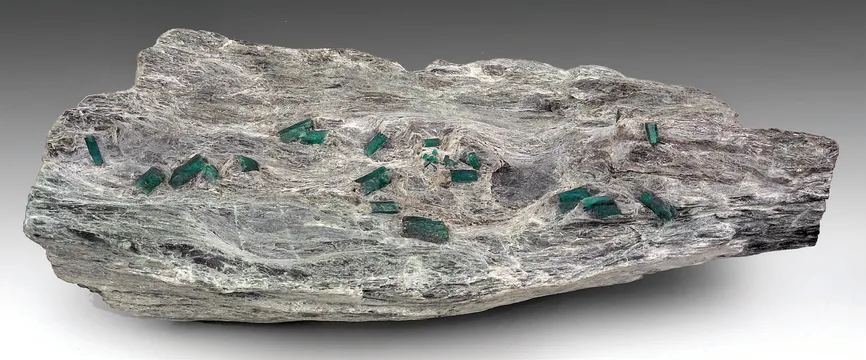
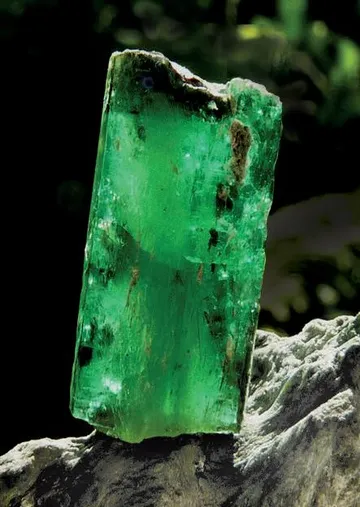
The broader Salzburg mineral province includes several other major deposit types. The Habachtal emerald deposit near Bramberg am Wildkogel is a metamorphic beryl-emerald occurrence in and near talc-actinolite schists, serpentinites, biotite-chlorite schists, amphibolites, and gneisses. The Mittersill-Felbertal scheelite deposit south of Mittersill is one of Europe’s most important tungsten deposits, with scheelite mineralization in metabasites, hornblendites, gneisses, and quartz-rich zones; it has been mined by Wolfram Bergbau und Hütten, with open-pit production historically in the eastern ore zone and modern underground production in the western ore zone. Leogang and other Salzburg districts add carbonate-hosted and vein-type Pb-Ag-Hg-Cu-As mineralization, including several highly specialized type-mineral occurrences.
Collecting access today is highly controlled and locality-dependent. The Hohe Tauern National Park includes protected zones, and mineral collecting in the Salzburg portion operates through regulations, permissions, and documented citizen-science arrangements rather than free-for-all digging. The National Park’s modern mineral documentation program records locality coordinates, photographs, and mineralogical data, and registered participants work under authorization and obligations to document finds and leave sites responsibly. Knappenwand itself is not a casual collecting stop; historic and modern workings are steep, hazardous, leased or managed, and scientifically significant. Specimens in the marketplace are therefore normally older collection pieces or material released through legitimate collecting and ownership channels, not souvenirs from an open public dig.
Salzburg epidote of collector importance is overwhelmingly associated with Knappenwand, where the finest crystals are dark olive-green to nearly black-green, highly lustrous, sharply prismatic, and often dichroic in strong light; historic examples reached roughly 10–13 cm, while many excellent modern pieces are smaller but exceptionally bright and sculptural. The best specimens are not merely “green epidote”: they show clean terminations, separated crystals rather than massive crowded crusts, attractive contrast against pale byssolite or lighter matrix, and credible Knappenwand labels. Association with actinolite var. byssolite is classic, and better pieces may also carry calcite, apatite, albite, quartz, or titanite. Modern pocket accounts show that fine crystals can occur loose in water-filled clefts or embedded in byssolite mud, sometimes protected enough to remain nearly undamaged after detachment from the pocket wall; ordinary pieces are massive epidote-amphibolite with broken rods, dull surfaces, crowded small crystals, or fibrous coatings that hide rather than enhance the crystal form.
Actinolite from Salzburg’s classic epidote specimens is usually the fibrous variety byssolite from Knappenwand, appearing as soft-looking pale to gray-green mats, hairlike sprays, and felted linings in epidote-amphibolite clefts; in the best combinations it forms a contrasting cushion around lustrous epidote prisms rather than an untidy mass of broken fibers. Pocket descriptions from Knappenwand record byssolite needles in the 1.5–3 cm range, commonly with epidote, calcite, apatite, albite, quartz, and occasional titanite or diopside, and its habit is one reason Knappenwand specimens have such a distinctive Alpine look. Good pieces preserve the fibrous texture cleanly and safely, with minimal crushing, dusting, or abrasion; ordinary pieces tend to be matted, dirty, fragile, or visually dominated by loose asbestos-form amphibole rather than by a balanced epidote-byssolite composition.
Calcite at Salzburg’s Knappenwand epidote locality is not the headline species, but it is an important pocket mineral and a useful geological clue: thin calcite veins, loose calcite masses, and isolated crystals have repeatedly marked or occupied productive clefts in the epidote-amphibolite. Modern accounts describe a 12 cm calcite lying in a water-filled 2004 pocket, calcite veins only a few centimetres wide associated with small epidote-byssolite cavities, and calcite surfaces that could preserve the imprint of detached epidote crystals; some attractive specimens show epidote crystals perched on larger calcite. The best Salzburg calcite combinations are valued for context and contrast—clear to white or lightly stained calcite setting off dark epidote and pale byssolite—while standalone calcite from the province is generally less distinctive unless tied to a documented pocket, cave, mine, or unusual association.
Beyond epidote, actinolite, and calcite, Salzburg has an unusually rich roster for a European Alpine province. Knappenwand has documented apatite and fluorapatite, albite including pericline, quartz, titanite or sphene, scheelite, and rare diopside in its cleft assemblage. Habachtal contributes emerald, aquamarine, phenakite, and a large inclusion-rich mineral list tied to emerald-bearing schists. Felbertal-Mitterschill is mineralogically important for scheelite and for sulfosalts, including type-locality minerals such as salzburgite, Cu1.6Pb1.6Bi6.4S12, and felbertalite, Cu2Pb6Bi8S19; Salzburg also claims type-mineral significance at Leogang for leogangite and donharrisite, and in the Gastein Valley for erzwiesite, Ag8Pb12Bi16S40. Many of these are micromineral or polished-section species rather than display specimens, but they give Salzburg a depth that goes far beyond its famous green epidote.
The first authenticity issue with Salzburg specimens is locality precision. A label reading only “Salzburg, Austria” is too broad for serious curation; it may refer to the State of Salzburg, the city of Salzburg, Knappenwand, Habachtal, Felbertal, Leogang, Gastein, or another district entirely. For Knappenwand epidote, good labels should preserve the Untersulzbachtal and Neukirchen am Großvenediger connection. Older labels may use spellings such as Untersulzbachthal, Knappenwand bei Neukirchen, Hohe Tauern, or Pinzgau; these are not necessarily suspect, but they should be reconciled carefully in a catalogue.
No widely repeated modern treatment or synthetic problem defines Knappenwand epidote in the way that some gem localities have documented enhancement traditions. The more common problems are damage, over-cleaning, vague labels, and optimistic relabelling of ordinary Alpine epidote as Knappenwand. Genuine Knappenwand pieces usually have a distinctive association: dark, lustrous epidote on epidote-amphibolite, with fibrous byssolite, calcite, apatite, albite, or titanite. Look closely for broken terminations, bruised edges, abraded byssolite, glued repairs, and matrix trimming that removes the geological context. Early pieces can show old collection wear and slight dulling but may carry stronger provenance value than visually sharper modern material.
Condition is unusually important. Byssolite is fibrous actinolite and should be treated as a fragile asbestos-form amphibole: do not saw, grind, air-blast, brush aggressively, or clean with methods that create dust. Keep friable specimens boxed or under a cover, and handle them by the matrix. Calcite-bearing combinations should not be acid-cleaned indiscriminately; acid can remove or etch the very calcite that documents the pocket association, and careless chemical cleaning can alter iron-stained surfaces that help give some pieces their authentic cleft character.
Rarity depends sharply on quality. Small massive epidote fragments and modest byssolite-coated pieces appear with some regularity, but first-rate Knappenwand specimens—sharp, lustrous, well-composed, undamaged, and well labelled—are genuinely scarce. Large historical pieces in old collections and museums are rarely offered. Modern finds after the major twentieth-century museum project and early twenty-first-century reworking have been intermittent, and published accounts emphasize long barren stretches between productive clefts. Good Salzburg epidote still has active market recognition, but choice material trades more like a classic European mineral than a routine Alpine specimen.
The Knappenwand story begins with an almost cinematic accident. In 1865, Alois Wurnitsch, a shoemaker who had taken up mineral searching in the Tauern valleys, noticed loose, rodlike epidote crystals in the front part of the Untersulzbachtal. He dug into the amphibolite and opened a cavity crowded with crystals. He took specimens to his friend Andreas Bergmann, an Innsbruck mineral dealer and tailor, and the strange green material reached Victor Ritter von Zepharovich at the University of Prague. Once identified, the find changed the valley. The scale, lustre, color, and form of the crystals surpassed what collectors expected of epidote, and Knappenwand entered the classic-mineral canon almost immediately.
The early workings had their own moment of suspense. Bergmann’s first weeks under the 1874–1875 lease were apparently discouraging; wages were becoming hard to meet, and the hard rock gave little back. Then, in the third week, the drill suddenly dropped into open space. Daylight and lamplight revealed a large cleft flashing with epidote and byssolite. Aristides Brezina, visiting in 1869 from the Imperial-Royal Mineralogical Court Cabinet in Vienna, later mentioned epidote crystals up to 13 cm and more than a thousand selected crystals. Those numbers feel almost unreal now because fine Knappenwand specimens are no longer common in circulation, but they explain why the locality became a museum name so quickly.
Not every chapter was gentle. One worker, remembered as Nicolussi and probably from Luserna near Trento, brought to the locality the habits of railway blasting. He drove 62 drill holes into the hard rock, loaded them with dynamite, and used large blasts to enlarge the small working into a cavern. The damage to delicate pockets was predictable. Later accounts remembered not only the destruction of exposed epidote but also the shock waves that shattered mineralization discovered decades afterward. Hermann Unterwurzacher senior gave Karl Podpeskar the line that has become part of Knappenwand folklore: when blasting was done in the Knappenwand, “the church tower in Neukirchen shook.”
The modern revival has a different rhythm: patient, dangerous, and almost surgical. After the Zukunftskollegium and local collectors returned to the old workings, the team first had to make the place safe. Slabs broke from the sidewalls, and the workers built a 10 m protective timbered adit before they could even begin hunting pockets in earnest. The signs were small: rusty water emerging from hairline cracks, a faulted zone, a calcite seam, a change in the tough green amphibolite. On February 17, 2004, after working through nearly 2 m of mostly barren epidote-amphibolite, they saw a round opening about 10 cm across. Behind it was a transverse, water-filled cleft, not a deep tunnel-like pocket but a narrow crack lined with byssolite and epidote.
Sepp Brugger’s recollection of that day has the immediacy of someone reaching into darkness. The group had to decide who would put a hand into the cold water first. Brugger rolled up his sleeve and felt through a layer of detached byssolite mud until his fingers met something smooth, hard, elongated, and heavy enough to make everyone hold their breath. Epidote needles scratched his arm as he worked the piece free. When it emerged in headlamp light, still muddy but obviously large and fine, the men passed it carefully from hand to hand, put it into a prepared soft-lined box, and carried it to the hut. They had even kept a bottle of sparkling wine ready for such a day.
When the pocket was fully opened the following day, its dimensions told a collector’s story in miniature. The cleft was about 50 cm high, 40 cm wide, and only 10–15 cm deep, with a volume estimated from its water content at roughly 20–25 liters. Byssolite mud filled the lower 25 cm and had protected the contents. The walls carried byssolite needles 1.5–3 cm long, apatite crystals to about 0.5 cm, and smaller epidote needles. A 12 cm calcite lay in the middle of the cavity and was blamed for the iron-brown color of the water. Three loose 1 cm diopsides were found in the sludge—rare for Knappenwand. The main epidote group had detached long before, but its break had healed and the specimen survived nearly undamaged.
The mountain reminded everyone in January 2010 that Knappenwand is not simply a romantic mineral place. A major rockfall came down from a side gully above the locality and swept across the area. No one was present, which was the luckiest fact of the day. The path was ruined and had to be rebuilt with rockfall protection. A huge tree shot down point-first near the Knappenwand hut, its root mass of stones and earth damaging the roof and destroying the toilet facility; part of a lower equipment hut was torn away, and the valley road remained closed through the summer for repairs. Even with later protective work, the locality’s steep talus and falling stones remain part of its reality.
The Hofer brothers, Hannes and Gerhard, preserve the older Alpine “Stoasuacha” spirit in a modern regulatory world. In a National Park interview, they recalled beginning as twelve-year-old boys after a neighbor first took them mineral hunting. A normal day’s pack with tools, alpine gear, food, and drink might weigh 15–20 kg; after a successful tour, the return load could reach 50 kg. Among their great finds they named a 170 kg rock crystal from the Venediger north ridge and, as especially valuable, epidotes from the Knappenwand. They also told a very Salzburg field story: once, while eating beneath a boulder in the Untersulzbachtal, a chamois suddenly jumped directly over them. After the shock, more came—about 50 animals leaping over their heads from all sides, apparently never noticing the men below.