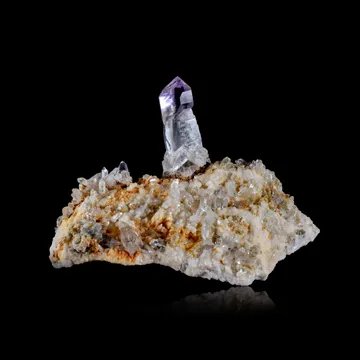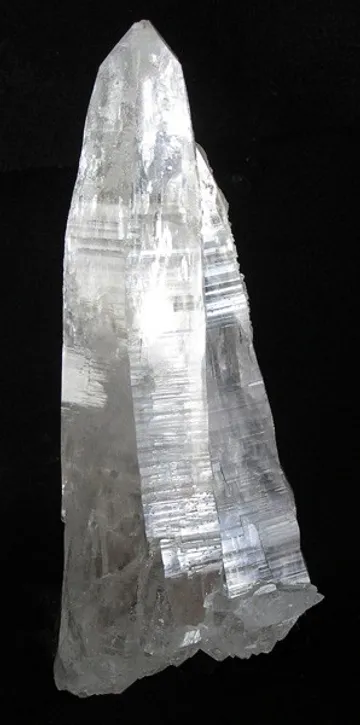
Lohning quarry, Austria — a classic Rauris locality for rare minerals; tiny crystals of aeschynite-(Y), xenotime-(Y), brookite, and monazite on pale matrix.
Key facts
Lohning quarry—Lohningbruch or Lohninger Bruch to Austrian collectors—is one of the classic systematic-mineral localities of the Rauris valley in Salzburg’s Hohe Tauern. It is not a conventional ore mine and not a single neat vein exposure: its mineralogical personality comes from worked blocks in a postglacial rock-avalanche mass at the bottom of the Hüttwinkl valley, with material derived from the Krumlbach and upper Hüttwinkl valley area. That geological accident explains the locality’s great collector appeal. The quarry turns up a mixed Alpine assemblage in chlorite-albite-epidote gneiss, arkose gneiss, phengite quartzite, quartz-rich pockets, and clefts, so the label “Lohning” often means a small specimen from a complex transported-block environment rather than a specimen from one continuously exposed pocket zone.
For collectors, Lohning matters above all as a Rauris rare-mineral locality. The best pieces are generally not large cabinet specimens but bright, sharply crystallized micros and thumbnails: red-brown to black aeschynite-(Y), yellow-brown xenotime-(Y), rutile needles and sagenitic clusters, brookite, anatase, monazite-(Ce), synchysite-(Ce), bertrandite, gadolinite-group minerals, bavenite, phenakite, thorite, cleusonite, and a long supporting cast of Alpine quartz, albite, calcite, muscovite, chlorite, hematite, schorl, and sulfides. Its fame rests in the way these rarities appear as discrete, well-formed crystals on pale matrix, often in fields of view measured in millimeters, where a single undamaged crystal can make the specimen.
Historically, Lohning belongs to the “Rauriser Plattenbrüche,” the Rauris slab quarries, together with the nearby Kaiserer quarry. The stone operation grew from a family quarrying business for Rauris quartzite and marble, but by the 1970s the mineralogical content of the slab quarries had become important enough to receive dedicated coverage in Lapis and Der Aufschluss, followed later by Horst Broschek’s detailed treatments in Mineralien-Welt and The Mineralogical Record. In the collector literature of the eastern Alps, Lohning is now a standard reference point for rare-earth, titanium, beryllium, and uranium-bearing Alpine micro-mineralization.
Regional View
Country View
The visual style is distinctive: clean white to off-white albite and calcite, glassy quartz, silvery muscovite, and greenish chlorite give contrast to dark brown, black, orange-brown, and reddish rare minerals. A top Lohning specimen is judged under the microscope: a perfectly terminated aeschynite crystal, a dipyramidal xenotime on muscovite, a rutile-and-brookite association, or a bright schorl cluster can be far more desirable than a larger but poorly exposed piece.
Search for specimens: View all specimens from Lohning quarry, Austria
Lohning quarry is in the Hüttwinkl valley of the Rauris valley, Zell am See District, Salzburg, Austria, in the Hohe Tauern. The locality is also recorded as Lohningbruch, Lohninger Bruch, or Lohninger quarry. Mindat places the quarry near 47.12018 N, 12.98902 E, and describes it as part of the Rauriser Plattenbrüche, the slab-quarry group that also includes the nearby Kaiserer quarry. The two quarries are only about 1.3 km apart, and the distinction matters: fine old specimens may be labelled simply “Rauris,” “Rauriser Plattenbrüche,” “Lohning,” “Lohninger,” or occasionally confused with Kaiserer.
The deposit is best understood as a stone quarry in a postglacial rock-avalanche accumulation rather than a bedrock ore mine. Geological Survey of Austria data for Rauris quartzite describe the quarrying area as a roughly 1.5 ha postglacial rock-avalanche mass in the rear Rauris valley. The blocks consist principally of chlorite-albite-epidote gneiss, arkose gneiss, and phengite quartzite; the avalanche itself is Pleistocene, while the quarried blocks are assigned to Permian to Lower Triassic source rocks. Blocks of gneiss up to about 5 m3 and quartzite blocks up to about 1–2 m3 have been extracted and processed into slabs and ashlar. This transported-block setting is crucial for specimen interpretation, because minerals from Lohning do not necessarily represent one continuous in-place vein or orebody.
There is no principal orebody at Lohning in the normal mining sense. The collectible mineralization occurs in the diverse clefts, cavities, seams, quartz-rich portions, and altered zones within the quarried gneiss and quartzite blocks. The assemblage is unusually broad because the rockfall material incorporated blocks from more than one paragenesis. For the collector, the important families are titanium oxides and polymorphs, rare-earth and yttrium minerals, beryllium silicates, uranium-thorium phases, Alpine carbonates, sulfides, and ordinary cleft minerals. This is why rutile, brookite, anatase, xenotime-(Y), monazite-(Ce), aeschynite-(Y), aeschynite-(Ce), synchysite-(Ce), bertrandite, bavenite, phenakite, thorite, uraninite, autunite, torbernite, quartz, albite, calcite, muscovite, chlorite, hematite, and schorl can all appear under the same locality name.
Commercial quarrying began as a natural-stone operation. Rauriser Naturstein’s history traces the business to Johann Lohninger sen. sen., who found a pale green, easily split quartzite on the family land and first used it for clean walking surfaces around the farm. Demand grew from neighbors and farmers as far as Bavaria, and in 1958 he received quarrying permission from the Zell am See district authority. The Johann Lohninger OHG developed the quarrying business, expanded into larger orders, and exported to Germany. In 1963, a marble occurrence was discovered during construction of a forest and alpine road to the Hochalm at about 1,900 m elevation, bringing marble into the product line as well. In 1967, the company built what its own history describes as Austria’s first hydraulic stone-splitting machine.
The active quarrying story explains many old specimens. The best mineral finds were made when fresh blocks were being moved, split, trimmed, and processed; collectors could examine newly exposed cavities and seams rather than old weathered debris. Modern accounts describe two quarry operations in the Hüttwinkl valley under Lohninger control: the Lohninger Bruch on the eastern side of the valley and the Lohninger Söllerlwald quarry, formerly Kaiserer, on the western side near the entrance to the Kruml valley. Published collector accounts and specimen labels must therefore be read carefully. When an old label says “Rauriser Plattenbrüche,” the specimen may need supporting notes, matrix comparison, or old collection context to distinguish Lohning from Kaiserer.
Access today is permission-based. Collector reports state that every collecting visit in the quarries requires permission from the company office at Rauriser Naturstein Zentrum GmbH in Rauris and that visitors sign a liability waiver. Prepared stone products and blocks intended for sale must never be broken. That point is not merely etiquette; the locality’s continued collector value depends on responsible behavior around an active natural-stone business. For serious collectors, most acquisition today is through older Austrian collections, micromount exchanges, specialist dealers, and the occasional modern specimen from permissioned visits or from material released through the stone operation.
Notable Lohning finds are best described by mineral association rather than by a single named pocket. Documented specimens include orange to brown prismatic aeschynite-(Y) with calcite, albite, and quartz; aeschynite-(Y) on albite with slightly iridescent surfaces; xenotime-(Y) associated with schorl, rutile, albite, muscovite, and tourmaline; rutile on quartz and chlorite; rutile with brookite; and rutile with hematite and calcite. These are the combinations that give the locality its character: hard, bright, micromount-scale rare minerals set on pale feldspar-carbonate-quartz matrices from an Alpine stone quarry.
Rutile from Lohning is a small-specimen mineral, typically seen as reddish brown to black needles, slender prisms, and sagenitic aggregates in quartz- and carbonate-bearing Alpine matrix; the most collectible examples are not simply “rutile present” pieces but sharp, lustrous crystals with good separation on contrasting calcite, albite, quartz, chlorite, or hematite, and the best associations include brookite and, more rarely, xenotime-(Y) or other Rauris rare-earth minerals. Documented Lohning rutile specimens are often micromounts with fields of view of only a few millimeters, so quality depends on clean exposure, intact terminations, and whether the rutile can be read visually without being lost in iron staining or dark chloritic matrix.
Xenotime-(Y) is one of the signature systematic species from Lohning, occurring as tiny yellow-brown, brown, reddish, or honey-toned tetragonal crystals, especially dipyramidal forms, in the same transported-block Alpine environment that produced the locality’s titanium and rare-earth assemblages; verified associations include schorl, rutile, albite, muscovite, and tourmaline, and collector photographs specifically show xenotime with muscovite as well as dipyramidal xenotime from the Lohningbruch. Fine Lohning xenotime is judged under magnification: an isolated, sharply terminated crystal on clean muscovite, feldspar, or quartz is far preferable to a larger matrix where the xenotime is merely a dull embedded grain.
Aeschynite is the rare-mineral emblem of Lohning, represented principally by aeschynite-(Y) and also by aeschynite-(Ce), with the best known specimens as dark brown, red-brown, orange-brown, or black prismatic to lath-like microcrystals in cavities and on matrix; photographed examples from Lohning show orange prismatic crystals with darker tips in calcite, albite, and quartz, elongated lath-like crystals in fields of view around 2 mm, and single well-developed crystals on albite with slightly iridescent surfaces. The finest pieces are sharp, freestanding, and visibly crystallized rather than embedded, and association with pale albite, calcite, or quartz gives these very small crystals the contrast needed for a first-rate Alpine rare-earth micro.
Beyond rutile, xenotime, and aeschynite, Lohning has an unusually deep species list for a quarry locality. Important documented species include albite, anatase, brookite, calcite including lublinite, hematite, schorl, muscovite, quartz including rock crystal and smoky quartz, monazite-(Ce), synchysite-(Ce), synchysite-(Y), bertrandite, bavenite, phenakite, beryl including aquamarine, gadolinite-(Y), chernovite-(Y), euxenite-(Y), brannerite, cleusonite, thorite, uraninite, autunite, torbernite, nováčekite, scheelite, molybdenite, tetradymite, galena, sphalerite, chalcopyrite, bornite, pyrite, pyrrhotite, siderite, smithsonite, wulfenite, malachite, azurite, baryte, fluorite, titanite, ilmenite, zircon, and native gold. A key caution is that some older reports of “davidite” and “loveringite” from the Rauris slab quarries have been revised or questioned, with cleusonite implicated in at least part of that historical confusion.
Lohning labels deserve close scrutiny. The first authenticity problem is not artificial treatment but locality precision: Lohning, Lohninger, Lohningbruch, Rauriser Plattenbrüche, Kaiserer, and Lohninger Söllerlwald are easily conflated, and the two Rauris slab quarries worked related but not identical material. A specimen labelled only “Rauris” or “Rauriser Plattenbrüche” may be perfectly old and legitimate yet not securely assignable to Lohning without collection history.
The second concern is species identity. Many of Lohning’s most desirable minerals are dark, sub-millimeter to millimeter-scale oxides, phosphates, carbonates, and rare-earth phases. Aeschynite-(Y), aeschynite-(Ce), euxenite-(Y), brannerite, cleusonite, thorite, rutile, ilmenite, and altered uranium-bearing minerals can be visually deceptive in small cavities. Older “davidite” and “loveringite” identifications should be treated cautiously unless supported by modern analytical work. Serious collectors should prize specimens with analytical provenance, published-collection history, or labels from reliable Austrian systematic collectors.
Condition is the main aesthetic issue. The best Lohning pieces are delicate micros; crystals may be exposed on the corner of a trimmed quartzite or gneiss chip, and careless trimming can shear terminations or leave the principal crystal too close to an edge. Chlorite, iron oxides, and secondary coatings may obscure rutile, anatase, or aeschynite. Calcite and albite matrices provide wonderful contrast but can also be bruised, cleaved, or etched. Avoid aggressive cleaning: acid can destroy carbonate context, loosen tiny crystals, or remove exactly the association that makes the specimen meaningful.
Handling considerations are real for the uranium- and thorium-bearing part of the assemblage. Aeschynite, thorite, uraninite, cleusonite, brannerite, autunite, torbernite, nováčekite, and related phases may be mildly radioactive, and some are alteration-sensitive. Normal labeled-box storage for small specimens is usually adequate, but avoid inhaling dust from trimming, do not carry loose radioactive micros in pockets, wash hands after handling, and store fragile uranium secondary minerals away from high humidity and unnecessary light exposure.
Market availability is intermittent. Rutile, schorl, calcite, albite, and quartz from Lohning appear more often than the finest aeschynite or xenotime specimens, but even common species are usually sold as locality pieces rather than as major display minerals. The strongest demand is from Alpine micromounters, rare-species collectors, and collectors building systematic Rauris suites. High-quality pieces with old labels, precise species names, and photogenic millimeter-scale crystals are much scarcer than the long mineral list might suggest.
The origin story of the quarry begins not with gold fever or a prospector’s hammer, but with cows tracking mud into a farmhouse. Johann Lohninger sen. sen., grandfather of the later company head, had had enough of muddy paths on the family property. On his own meadow he found a pale green stone—described in the company history as a quartzite—that split readily with hammer and chisel. He made rough slabs and laid them around the farm, creating a clean, bright, glittering surface for people and animals. Neighbors noticed. Farmers as far away as Bavaria noticed. What began as a practical farm improvement became a business idea, and in 1958 Lohninger had the quarrying permit from the Zell am See district authority in hand.
The family business then moved from hand-split slabs to a genuine natural-stone operation. The early product was mainly split slabs and walling stone, and the work was still close to the physical rhythm of quarry labor: find the right block, split it, shape it, move it. In 1963, during construction of a forest and alpine road to the Hochalm at about 1,900 m elevation, a marble occurrence was found, adding a second stone to the company’s production. By the mid-1970s the operation employed up to 65 people. The turning point came in 1967, when the company built its own hydraulic stone-splitting machine, described in the Rauriser Naturstein history as the first of its kind in Austria.
The hardest stone proved harder than expectation. When the company wanted thin, accurate, even-surfaced slabs, Johann Lohninger looked south to the Italian marble experts. He drove a truck loaded with Rauris marble blocks to Italy, expecting the Italian saws to solve the problem. They did not. The Rauris material stopped the marble saws; the blade stuck, and Lohninger returned without the solution. Only later did granite-cutting saws prove tough enough. The company eventually installed a block circular saw developed with a German diamond-tool manufacturer, and by 1985 the old agricultural and timber activities had been dropped. The natural-stone business remained.
For mineral collectors, the most evocative field note is the contrast between industrial stone and microscopic treasure. One modern collector-photographer looking back on the quarries wrote that during the active period he made many collecting trips to Rauris and “love this valley,” adding that Lohning and nearby Kaiserer are famous for rarities and that he still had “two big boxes full of micros waiting for photos.” That is exactly the Lohning experience: the quarry does not hand the collector a giant jewel; it gives a patient eye a box of small, sharp puzzles—black aeschynite on albite, rutile with brookite, anatase with interference colors, xenotime tucked beside muscovite—and rewards the one who looks long enough.