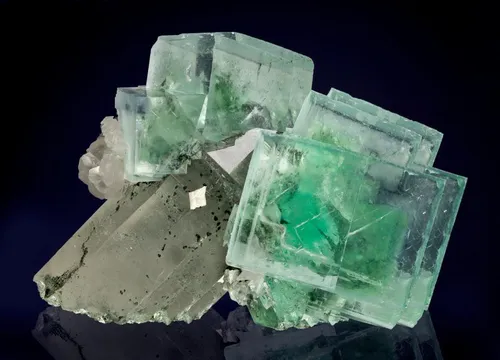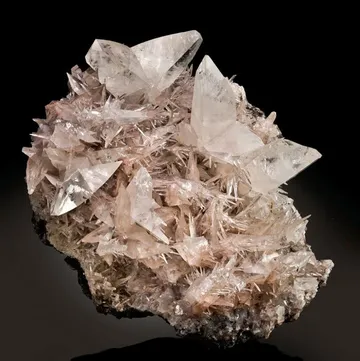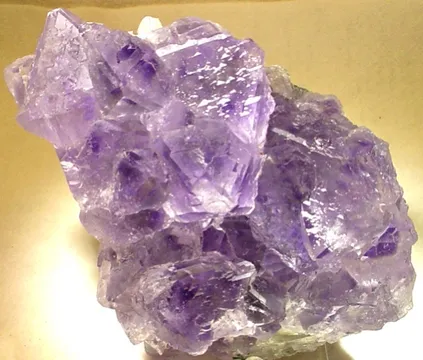
Ruyuan fluorite mine, China — famous green, translucent fluorite on quartz with stepped cube forms; prized for color, luster, and provenance.
Key facts
The Ruyuan fluorite mine in northern Guangdong is one of the small group of Chinese fluorite localities whose best pieces are recognizable at arm’s length. Its collector reputation rests not on a long species list, but on a very particular style of fluorite: green, transparent to translucent, sharply stepped crystals on bright white quartz, with occasional pyrite adding a metallic dusting. The mine is recorded from Ruyuan County in Shaoguan, within the broader South China metallogenic terrain that includes the Nanling and Qin–Hang belts, a region famous for late Mesozoic hydrothermal mineralization and for a remarkable modern outpouring of Chinese display specimens.
For collectors, Ruyuan matters because it gives Chinese green fluorite a different accent from the better-known Jiangxi and Hunan localities. Classic Ruyuan pieces are typically built around modified cubes or apparent octahedra: crystals composed of stacked cubic subfaces, bevels, terraces, and pyramidal growth steps, often rising from quartz like little green temples. The color can be apple-green, mint-green, deep emerald-green, or green with violet to purple edging and phantoms. The finest pieces combine clean separation of the fluorite from the quartz, strong luster, translucency through the crystal mass, and a balanced matrix rather than a hacked-looking plate.
Regional View
Country View
The locality entered the international collector vocabulary in the early 2000s. Well-provenanced pieces in European collections are labeled from about 2002 and 2005, and later finds continued to refresh the market. A 2015 find is especially noted among collectors for larger, more translucent mint-green fluorites with rich internal zoning and a silky surface luster. Even so, Ruyuan is not a locality of mineralogical sprawl. The verified collector assemblage is compact: fluorite, quartz, and pyrite. Its importance is aesthetic and historical rather than taxonomic.
Search for specimens: View all specimens from Ruyuan fluorite mine, China
Ruyuan is a fluorite mine locality in Ruyuan County, Shaoguan, Guangdong Province, China. In specimen usage, labels commonly read “Ruyuan Fluorite Mine,” “Ruyuan mine,” or “Ruyuan, Shaoguan Prefecture, Guangdong Province,” with older labels sometimes retaining the former “Prefecture” wording. The county is now Ruyuan Yao Autonomous County, in northern Guangdong near the Nanling Mountains. Mindat places the locality within several broad geological frameworks used for South China mineral localities, including the Nanling metallogenic belt, Qin–Hang metallogenic belt, West Cathaysia, and the Yangtze Plate context.
The collector material is best understood as a hydrothermal quartz-fluorite vein and pocket assemblage. The specimens themselves are highly diagnostic: fluorite is set directly on drusy to prismatic quartz, and pyrite may occur as small pale brass-yellow cubic crystals or fine sparkling grains on the fluorite and quartz. The ore commodity is fluorite, but the pieces saved for collectors came from open crystal spaces where late-stage fluorite could grow into cavities after, with, or before quartz. The best specimens show a clear paragenetic sequence: green fluorite forming large stepped crystals, pyrite locally dusting surfaces, and white prismatic quartz preferentially coating or flanking parts of the fluorite.
The important ore bodies for collectors were not simply massive fluorite zones; they were pockets where crystal form survived. Ruyuan fluorite is famous for apparent octahedral shapes, but many of those “octahedra” are really composite stepped-growth aggregates of small cubes tapering toward the corners. Other crystals are modified cubes with dodecahedral beveling and terraced faces. On matrix pieces, the white quartz is not incidental: it provides the sharp color contrast that makes the green fluorite read so strongly in a case. Detached or heavily etched examples can be attractive, but the classic Ruyuan look is green fluorite rising from sparkling quartz.
The specimen-producing period most visible in Western collections begins in the early 2000s. Fabre Minerals recorded Ruyuan fluorite with quartz from around 2002 in the Jan Buma collection, including a specimen with two strongly colored octahedral crystals, the larger measuring 7.6 x 6.7 cm. Another well-known Ruyuan fluorite with quartz specimen from about 2005, formerly in the Casado Margolles collection, measured 14.4 x 9 x 5.4 cm, with sharp deep-green crystals edged in violet on quartz. These early pieces helped establish the locality as a recognizable Guangdong fluorite source.
Later material broadened the picture. A collector record for a 2015 Ruyuan find describes large, gemmy mint-green crystals with darker cores, lighter outer zones, silky luster, and stepped “Mayan pyramid” growth. Mineral Auctions has documented old pre-2010 Ruyuan material with fluorite, pyrite, and quartz: green fluorite with dark purple phantoms, pyrite dusting, and a later generation of white quartz prisms concentrated on one side of the fluorites. A small 2013 find described by a collector on the Friends of Minerals Forum produced highly transparent, light-green modified cubes, with white quartz points and orange longwave fluorescence in the quartz.
Published specimen labels generally do not name a historic mining operator. Modern Ruyuan Yao Autonomous County Ching-Kai Mines Ltd. is a verified local fluorspar business marketing fluorite powder, fluorite balls, and lump ore, but that commercial fact should not be substituted for a specimen’s mine provenance unless a label, invoice, or collection history explicitly connects the piece to that operator. For collectors, “Ruyuan fluorite mine” remains the practical locality name.
Collecting access should be treated as closed unless specific permission is obtained from the land and mineral-rights holders. This is an industrial mining locality, not a public collecting site, and Chinese specimen material has generally reached collectors through mine workers, dealers, and export channels rather than through casual field collecting. Any older Ruyuan specimen with a good dealer label, collection card, or publication history carries real added value because the locality name has been used unevenly in the trade and because visually similar Chinese fluorites exist from other provinces.
Ruyuan fluorite is the reason to collect the locality: green to mint-green, apple-green, or deep emerald-green crystals, commonly with violet edges, dark purple phantoms, or blue-purple fluorescence, set on white quartz. The habit ranges from modified cubes to apparent octahedra built of stepped cubic growth, with terraced faces that can resemble miniature pyramids; many crystals fall around the 1.5–3 cm range on cabinet plates, but documented examples include crystals over 5 cm and a Jan Buma specimen with a main crystal of 7.6 x 6.7 cm, while a Fabre reference specimen records an 8 x 7 cm upright octahedral fluorite on quartz. The best Ruyuan pieces are not merely green: they have transparent windows or convincing translucency, crisp stepped geometry, attractive quartz contrast, minimal edge bruising, and enough matrix to show the pocket architecture.
Quartz from Ruyuan is usually the stage rather than the star, but it is crucial to the locality’s aesthetic. It occurs as white to colorless drusy coatings and small prismatic crystals on the matrix and commonly grows around, against, or partly over green fluorite; in some pieces, quartz crystals preferentially coat one side of the fluorite, preserving the sequence of pocket growth. Collectors should look for bright, clean quartz that frames the fluorite without overwhelming it, since dull, iron-stained, broken, or overly etched quartz can make an otherwise good Ruyuan fluorite look ordinary. At least one collector-described 2013 specimen reported strong orange longwave fluorescence in the quartz, an interesting feature but not something to assume for every Ruyuan piece.
The only other valid mineral recorded from the Ruyuan fluorite mine locality in standard mineral databases is pyrite, noted as pale brass-yellow cubic crystals. In specimens, pyrite may appear as small golden metallic grains or tiny cubes dusting the fluorite and quartz, and good pyrite-bearing pieces are uncommon enough to be sought after. Ruyuan is not a type locality for any mineral species, and claims of additional species should be treated cautiously unless supported by analysis or an unusually strong collection record; calcite has appeared in some trade descriptions of Ruyuan-associated specimens, but it is not part of the concise verified mineral list for the locality.
Ruyuan fluorite is a locality where appearance, treatment history, and label discipline matter. Many specimens from Ruyuan and from visually related Chinese fluorite localities were etched from quartz-rich matrix, sometimes with hydrofluoric acid. Etching can reveal the green fluorite dramatically, but it may also leave unnaturally dulled surfaces, frosted or “shocked” fracture textures, softened quartz, and a sculptural look that owes as much to preparation as to the original pocket. The treatment is not automatically disqualifying—some classic Ruyuan specimens were almost certainly prepared this way—but it should be disclosed when known.
Oiling is another concern with Chinese fluorite generally. A thin oil film can temporarily deepen color and improve apparent luster, especially on pieces with tiny surface abrasions or etched matte faces. It may also enter cracks and give a false impression of transparency. Inspect suspected pieces under strong side lighting: oil often shows as a greasy film, darkened cleavages, or lint-catching residue along contact points and recessed terraces.
Mislabelling is common enough to merit caution. Ruyuan can be confused with De’an in Jiangxi, Xiefang/Ruijin material, Shangrao-area fluorites, and other Chinese green fluorite-on-quartz localities. The Ruyuan “signature” is a green stepped modified cubic to apparent octahedral fluorite on white quartz, often with violet internal color or edging; however, visual comparison alone is never enough for an expensive specimen. Old labels from recognized dealers, documented collection histories such as Jan Buma, Casado Margolles, Brian Kosnar, or Kurt Hefendehl, and published or archived sales records all strengthen a Ruyuan attribution.
Condition issues tend to concentrate on edges, corners, and sawed or trimmed backs. The stepped faces can hide small bruises until viewed under a loupe, and the quartz matrix can be sharp enough to abrade neighboring crystals during transport. Large cabinet plates may show sawn bottoms or backs, which is not unusual for Chinese pocket material, but saw marks should be priced accordingly. Purple-blue fluorescence under shortwave or longwave UV has been reported for Ruyuan fluorite, and some quartz on Ruyuan specimens may fluoresce orange under longwave UV; fluorescence is a bonus feature, not a primary authenticity test.
Market availability is moderate but uneven. Ordinary Ruyuan fluorites, especially etched green crystals with limited matrix, can still appear at modest prices. Well-balanced cabinet specimens with transparent green fluorite on quartz, strong phantoms, pyrite, old labels, or large undamaged crystals are much scarcer. Recent auction records show attractive Ruyuan cabinet pieces selling in the hundreds of dollars, while retail asking prices for large, showy specimens can rise much higher. The best examples are already being treated as modern Chinese classics.
Ruyuan’s best collecting stories are not romantic tales of mountain prospectors so much as the quiet biography of specimens that moved from Chinese mine pockets into named Western collections. One early Ruyuan piece in the Jan Buma collection was labeled from about 2002: two sharply formed, intensely colored octahedral fluorites set against white quartz, the larger nearly 8 cm across. That is a serious crystal for the locality, and it shows why Ruyuan quickly became more than just another green-fluorite source. The crystal form was architectural, the color was strong, and the quartz made the whole piece legible from across a room.
Another Ruyuan specimen, later in the Casado Margolles collection, preserves the classic 2005 look: a 14.4 cm plate of deep green fluorite crystals with violet edging on quartz. The Spanish dealer Fabre Minerals photographed and retained it among reference Chinese specimens, not because the species was rare, but because the piece captured the locality’s identity. The fluorite was sharp, colored, translucent, and unmistakably Chinese—but not easily mistaken for Hunan or Jiangxi once one learned the stepped Ruyuan habit.
A later collector account describes a small 2013 find that produced a subtly different style: glassy light-green fluorites, transparent enough to reveal tiny white quartz grains included inside some crystals, with the quartz seemingly aligned in preferred orientations. The same specimen reportedly showed strong orange longwave fluorescence in the quartz. Details like that are why Ruyuan rewards careful study under more than one light source; the cabinet impression is green fluorite on white quartz, but the closer look may reveal inclusions, zoning, fluorescence, and overgrowths that record the pocket’s growth sequence.
The 2015 find gave the locality another burst of attention. A large Ruyuan specimen from that find was described as having mint-green crystals with darker cores, lighter surfaces, silky luster, and stepped growth like a “Mayan pyramid.” That phrase caught on because it fits the best Ruyuan fluorites perfectly: they are not smooth cubes, nor true simple octahedra, but stacked, terraced, temple-like constructions of fluorite that seem to have grown upward in deliberate stages.