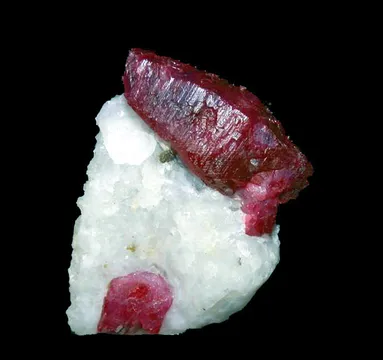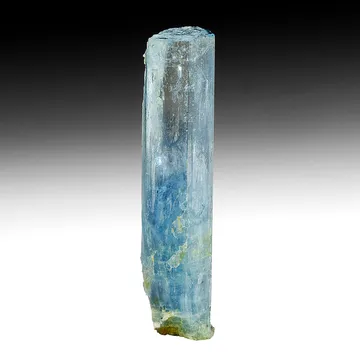
Quỳ Châu District, Vietnam — a gem belt famed for ruby and sapphire, yet collectors prize pegmatite aquamarine and etched beryl crystals from Deo Sen.
Key facts
Quỳ Châu District, in Nghệ An Province of north-central Vietnam, occupies an unusual place in the collecting world because two quite different specimen stories overlap there. To gem dealers, Quỳ Châu is one of Vietnam’s classic ruby districts: a marble-related corundum province in the Bu Khang dome, worked first in feverish placer rushes and later by more organized operations. To mineral collectors, however, the district’s most coveted cabinet pieces are not ruby at all, but intensely colored aquamarine and beryl from pegmatites — slender, glassy, etched to fluted crystals that can show a saturated blue far stronger than the watery tone collectors expect from many ordinary aquamarines.
The corundum geology belongs to the Quy Chau–Quy Hop gem belt, where ruby and sapphire are tied to high-grade metamorphic rocks and secondary concentrations in valley and stream gravels. The specimen-grade beryl comes from granitic pegmatites, with the Deo Sen occurrence specifically described on the north side of the Bu Khang dome, where beryl occurs in pegmatite bodies several meters thick and tens of meters long. The result is a locality whose name can appear on very different labels: faceted ruby and sapphire, spinel from gem gravels, or aquamarine miniatures with sharply terminated blue prisms.
Regional View
Country View
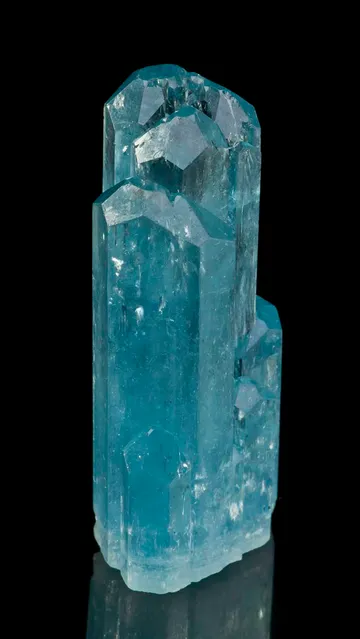
The best Quỳ Châu aquamarines have a recognizable personality: narrow prismatic crystals, often only a few centimeters long but sometimes much larger, with excellent transparency, bright luster, and a blue that can look almost electric in small cross-section. Etching is common on the finest documented pieces, producing scalloped, fluted, or bubbly surfaces rather than the simple flat-sided pencils seen from many pegmatites. Matrix pieces are rarer and are especially desirable when the beryl is perched on crystallized quartz rather than appearing as an isolated gem crystal.
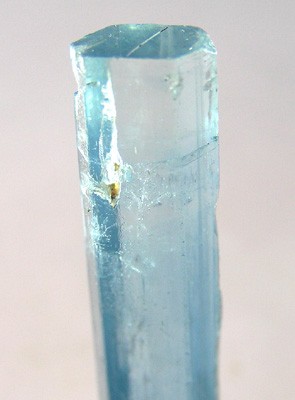
Photo: Wikimedia Commons
Historically, Quỳ Châu’s ruby rush gave the district an outsized reputation in Vietnam’s modern gem history. Reports from the early 1990s describe thousands of independent miners converging on the area, pits dug through clay and kaolin to reach gem-bearing gravels, and a trade that quickly escaped neat official control. Later petrological work refined the geologic picture: the economically important ruby is principally in placers, while rare primary ruby occurs in marbles associated with minerals such as graphite and pyrite, and the ruby’s inclusion suite points to high-grade metamorphic and metasomatic formation.
Search for specimens: View all specimens from Quỳ Châu District, Vietnam
Quỳ Châu is best treated not as a single mine but as a district-scale gem locality in Nghệ An Province. Older specimen labels may use Quy Chau, Ke Bon, Phu Qui Chau, or Nghe Tinh Province; modern references place it in Quỳ Châu District, Nghệ An Province. Mindat records Doi Ty, Doi San, Mo Coi, and a historical “Quy Hop” locality under the district-level entry, reflecting the way gem gravels, administrative boundaries, and older trading names have become tangled in specimen labels.
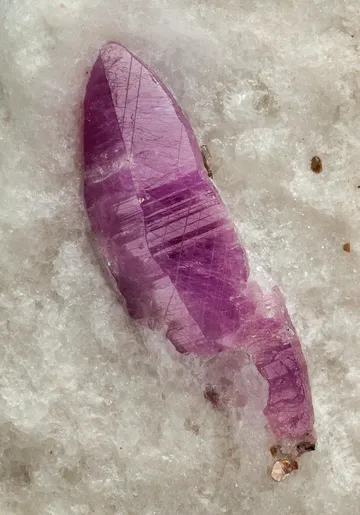
The corundum district lies in the Bu Khang dome, south of the Red River shear-zone gem belt. The dome is described as an antiform involving Paleozoic and Mesozoic sedimentary and metasedimentary rocks over a core of micaschists, granitoids, paragneisses, and orthogneisses. The important ruby and sapphire concentrations occur along the northeastern part of the dome near the Cenozoic Quy Chau shear zone. In the Quỳ Châu area, ruby is documented in two principal modes: very rare, uneconomic primary ruby disseminated in marble with graphite and pyrite, and economic secondary placers derived from erosion and concentration of gem material in valleys and stream systems.
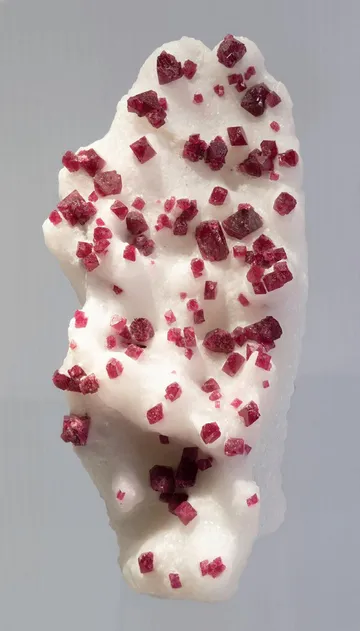
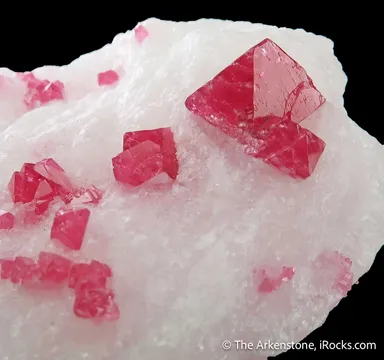
The alluvial and eluvial workings were the commercial engine of the ruby field. Early GIA field reports described gem deposits concentrated in narrow valleys and along streams feeding the upper tributaries of the Hiếu River, with miners cutting through clay and kaolin to reach corundum-bearing gravel layers. Pits could be several meters deep and were reinforced with bamboo; flooding was noted as a recurring problem during the rainy season. Material from Quỳ Châu included ruby, pink to yellow sapphire, spinel in several colors, and some garnet, with spinel reported as one of the common gem materials in the gravels.
More detailed later studies placed the ruby firmly in a metamorphic–metasomatic context rather than a simple pegmatite source. In the Doi San and Doi Ty area, granitic intrusions injected pegmatites and helped form calcium-magnesium-rich skarns in surrounding marble, amphibolite, gneiss, and micaschist, but ruby itself was not observed in the skarn or pegmatite in the cited review. The ruby’s mineral inclusions — including calcite, apatite, phlogopite, rutile, pyrrhotite, zircon, and rarer phases — are consistent with marble-hosted ruby formed under high-grade metamorphic conditions.
The beryl story is separate but geographically overlapping. A published review of Vietnam’s beryl localities lists the Deo Sen beryl occurrence in Quỳ Châu District on the north side of the Bu Khang dome. There, beryl is distributed in pegmatite bodies approximately 2–3 m thick and 40–50 m long, although the beryl grade was not evaluated in that account and the economic outlook was described as unclear. Collector material that has reached the market confirms that at least some pegmatitic pockets produced fine aquamarine crystals of exceptional color, with documented specimens ranging from small thumbnails and miniatures to cabinet-sized, etched single crystals.
Mining history at Quỳ Châu began in earnest during Vietnam’s modern gem boom. Gem corundum had been recognized in northern Vietnam in the 1980s, and Quỳ Châu became a major rush locality around 1990. Contemporary reports describe as many as 10,000 independent miners in the district during peak activity, while Vietnamese sources recall chaotic early mining around Châu Bình and Châu Hồng communes and the famous informal names Đồi Tỷ and Đồi Triệu — “billion hill” and “million hill” — coined by miners for places where valuable stones were found. By the early 1990s, government and provincial operations, police-linked operations, and mechanized mining were all reported alongside continuing hand mining.
Collecting access today should be regarded as permission-only and not comparable to a casual field-collecting locality. The old gem workings include deep, unstable pits and water-filled excavations; the ruby fields have a history of uncontrolled rush mining, official restrictions, and serious accidents. Fine aquamarine specimens now appear mainly through dealers, old collections, and occasional miner-supplied lots rather than through documented collector visits. For a serious specimen buyer, the practical locality work is therefore label discipline: distinguish Quỳ Châu aquamarine pegmatite material from the better-known Vietnamese aquamarine of Thường Xuân, and distinguish Quỳ Châu ruby or sapphire from Luc Yen material unless provenance is supported by older labels, lab origin work, or a credible chain of custody.
Quỳ Châu aquamarine is prized for saturated sky-blue to deep blue color in slim, glassy prisms from pegmatitic pockets, with documented crystals commonly in the 2–5 cm miniature range but also reported at about 10 cm and, in one dealer-recorded cabinet crystal, over 12 cm long. The best examples are transparent, lustrous, sharply terminated, and often etched or fluted, sometimes with scalloped faces or a “bubbly” termination that gives them a distinctive Vietnamese look; ordinary pieces are paler, thinner, contacted, or simply off-matrix gem slivers. Associations include quartz and, in some collector pieces, schorl; matrix specimens with a bright aquamarine crystal perched on crystallized quartz are especially desirable because much Quỳ Châu material reached the market as isolated single crystals or small crystal groups.
Beryl from Quỳ Châu is documented from the district’s pegmatites, especially the Deo Sen occurrence north of the Bu Khang dome, where beryl-bearing pegmatite bodies were described as 2–3 m thick and 40–50 m long. Collector labels may say simply “beryl” even when the crystal is blue enough to be called aquamarine, so the species record includes both varietal and non-varietal material; the most collectible pieces show the classic hexagonal beryl habit, strong glassy luster, transparency or translucent gem zones, and minimal edge bruising. Good Quỳ Châu beryl is separated from routine pegmatite beryl by color intensity, sharp terminations, and the rarity of attractive Vietnamese specimen crystals from this district rather than by sheer size alone.
Quartz at Quỳ Châu is most important to collectors as the matrix and late-stage pegmatite companion for aquamarine rather than as a standalone district specialty. Documented specimen records include aquamarine with quartz, including pieces where the beryl stands above low, bright quartz crystals; smoky quartz is also reported on collector-gallery material from the district. The best quartz-bearing Quỳ Châu specimens are judged by composition: a clean, well-positioned blue beryl on crystallized quartz is far more desirable than loose beryl with no context, while broken quartz, rehealed contacts, or bulky matrix that hides the beryl quickly reduce the appeal.
Other documented minerals from Quỳ Châu District include corundum as ruby and sapphire, spinel, topaz, tourmaline-group minerals, graphite, and pyrite. Ruby and sapphire remain the historically dominant gem story, with corundum reported from Doi Ty, Doi San, Mo Coi, and other district localities; spinel occurs with the ruby–sapphire assemblage in primary and secondary deposits and was common enough in early gravel production to matter commercially. No IMA type-mineral species is established from Quỳ Châu in the principal mineral locality records, but the district is notable for gemological rarities inside its ruby, especially nordstrandite reported as an unusual inclusion in Vietnamese corundum.
Quỳ Châu labels require caution. The most common confusion is with other Vietnamese gem districts, especially Luc Yen for ruby and Thường Xuân for aquamarine. In older trade usage, “Vietnam” was often enough for a dealer label, and later owners sometimes upgraded vague labels to a more famous locality without evidence. For aquamarine, Quỳ Châu pieces should ideally be backed by older dealer labels, specimen photographs, or provenance from recognized suppliers; for ruby and sapphire, origin determination is a gemological problem rather than something a hand label alone can settle.
For aquamarine specimens, the main condition concerns are edge bruising, contacted terminations, internal stress cracks, and etching that can be misread either as damage or as an attractive natural feature. Many of the finest Quỳ Châu crystals are narrow and transparent, so even small chips on the termination or prism edges stand out. Matrix pieces are scarcer and should be checked carefully for repair or reattachment, especially where a slender beryl crystal rises from quartz. Deep blue color is a major part of the locality’s appeal, but the color should be even and natural-looking in the crystal, not dependent on backlighting, photography, or a blue background.
For ruby and sapphire, documented authenticity issues are more serious. GIA’s early work on Vietnamese material found that parcels represented as Vietnamese ruby and sapphire could contain flame-fusion synthetic ruby, almandine garnet, and natural spinel mixed with corundum. The same study noted that flame-fusion synthetic rubies had already been seen represented as Vietnamese stones. Separately, Vietnamese ruby may be heat-treated after mining, and later treatment work has specifically addressed quality improvement and star effects in Quỳ Châu ruby. Any cut stone sold as Quỳ Châu ruby should be judged by a competent gem laboratory if value depends on natural origin, geographic origin, or untreated status.
Ruby from Quỳ Châu is often compared visually with marble-hosted Burmese material, but collectors should not translate that comparison into automatic value. Fine Quỳ Châu ruby can have attractive purplish red to red color, strong fluorescence, and good transparency, yet much material is small, fractured, color-zoned, or better suited to cutting than mineral display. Notable internal features in Vietnamese rubies include blue color zones, swirled growth features, clouds, laminated twinning planes, orange-stained fractures, and inclusions such as calcite, apatite, pyrrhotite, phlogopite, rutile, and nordstrandite. These features can be helpful diagnostically, but they belong in the hands of gemologists, not casual origin claims.
Market availability is uneven. Quỳ Châu aquamarine appears only intermittently, usually as sold older pieces or small groups from dealer stock, and the strongest blue crystals command a premium because the district is not a steady specimen pipeline. Small loose crystals remain obtainable from time to time, but excellent matrix pieces and large etched crystals are rare. Ruby and sapphire from Quỳ Châu are more common in gem-trade contexts than as aesthetic mineral specimens; locality-specific, well-provenanced rough crystals or matrix pieces are considerably harder to secure than faceted stones labeled simply Vietnam.
At the height of the ruby rush, Quỳ Châu must have looked less like a mine than a sudden frontier town. In 1991, GIA authors reported that as many as 10,000 independent miners had descended on the district from across Vietnam. The gem country lay in narrow valleys and along streams feeding the Hiếu River, and the work was brutally simple: cut through clay and kaolin, dig down to the gravel, reinforce the hole with bamboo, then wash everything by hand. Some pits were only a few meters deep; others reached 7 m. Flooding was constant, and early observers noted that they had not seen pumps in use. The prize was a flash of red or pink corundum among the heavy minerals — or, just as often, spinel.
Richard W. Hughes’s 1992 account of the Quỳ Châu ruby mines reads like a road story from a newly opened country. Leaving an auction in Vinh, the party set out for mines roughly 70 km west of Highway 1 and a few kilometers southeast of Quỳ Châu. The road between Vinh and the mining district was restricted; foreigners needed special permits, and Hughes counted six police checkpoints along the way. He described the province as both the birthplace of Hồ Chí Minh and a road-and-rail gateway tied to the history of the Hồ Chí Minh trail, with rail lines crossing the road again and again — infrastructure that had been military targets during the war. At the mines, he saw four mechanized operations in the area visited, but the wider district was already beyond any tidy inventory.
The miners themselves gave the landscape names that preserved the mood of the rush. Vietnamese accounts remember Đồi Tỷ and Đồi Triệu — literally the hill of billions and the hill of millions — names created by diggers to mark ground where stones of spectacular value had been found. One report records a 56 ct Quỳ Châu ruby that sold at auction in 1994 for $560,000. Whether repeated in a gem office, a roadside buying room, or a village tea shop, numbers like that were enough to pull people out of farms and towns and into the red earth.
The darkest Quỳ Châu story centers on Đồi Tỷ. Vietnamese sources preserve conflicting details, but the outlines are consistent: uncontrolled early mining created deep, dangerous workings, and a collapse buried scores of miners. One Dân Trí video page describes a quiet blue lake at Đồi Tỷ as the former mass grave of more than 70 people during a summer day in 1991, adding the statement of Châu Bình commune police chief Lang Thanh Hoài that five people still lay at the bottom. A Vinagems account dates the disaster to 1992 and says more than 100 people were buried at a depth greater than 80 m. The exact figures differ, but the meaning for collectors is plain: Quỳ Châu’s gems are not only mineral specimens and auction results; they are also part of a human history of risk, poverty, rush wealth, and loss.