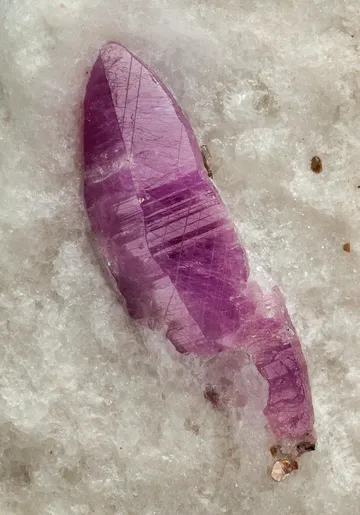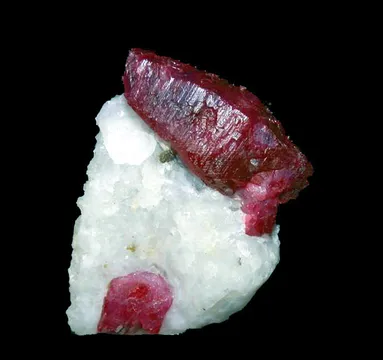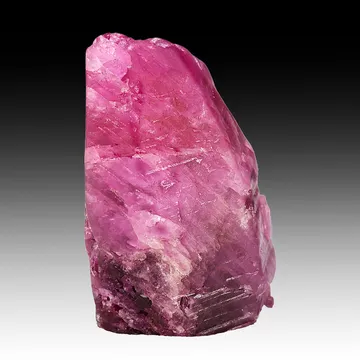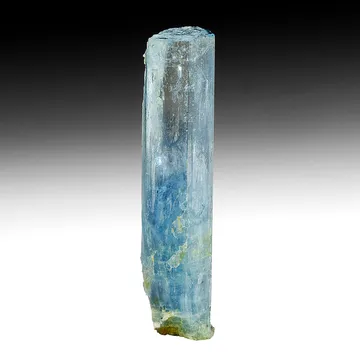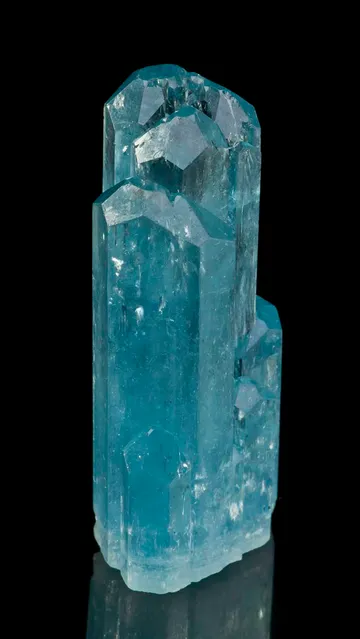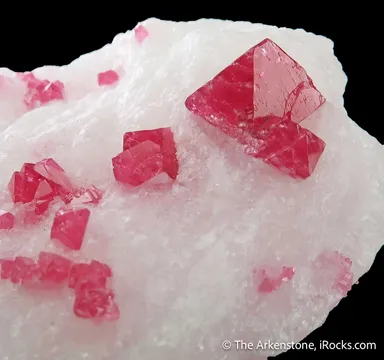
Luc Yen Mine, Vietnam — a gem locality producing ruby, spinel, pargasite and tourmaline in marble, known for vivid color contrasts and cobalt-blue spinel.
Key facts
Luc Yen is one of the great modern gem-mineral districts: a Vietnamese marble-and-pegmatite field where farmers, small mining teams, cutters, traders, and scientists all converged after the late-1980s ruby discoveries. On specimen labels, “Luc Yen Mine” is best understood as an umbrella locality for the Lục Yên district gem field in Yên Bái Province, especially the An Phu, Khoan Thong, Minh Tien, Cong Troi, Bai Gau, Bai Son, Khe Khi, Khau Ca, Lung Thin, and related workings that supplied ruby, sapphire, spinel, pargasite, humite-group minerals, and tourmaline-bearing pegmatite specimens.
Geologically, Luc Yen belongs to northern Vietnam’s Red River shear-zone region. The ruby and spinel deposits lie in the Lo Gam tectonic zone, within metamorphosed carbonate sequences—calcitic and dolomitic marbles with mica, amphibole, graphite, sulfides, rutile, humite-group minerals, and local metasomatic pods. The finest collector pieces show precisely that setting: saturated red, raspberry-pink, lavender, purple, or blue spinel octahedra set into clean white marble; ruby crystals in pale carbonate matrix; dark to bright green pargasite stitched through the marble; and, from the pegmatites, broken but colorful tourmaline and liddicoatite-elbaite material with mica, feldspar, lepidolite, and quartz.
Luc Yen matters because it is not merely a gem source. It is a locality where the contrast between gem and host rock is visually immediate. A good specimen is often legible from across a room: red spinel against white marble, purple spinel perched above orange-brown chondrodite, ruby in a blocky carbonate mass, or tapering pink tourmaline rising from pale pegmatite. The district also gave the gem world some of the most discussed cobalt-bearing blue spinel of the modern era, and its ruby and fancy sapphire entered the international literature almost as soon as the deposit became known outside Vietnam.
Regional View
Country View
The best matrix specimens have a restrained, sculptural beauty. Luc Yen marble is usually pale enough to act like a natural display base, while the gem minerals supply compact bursts of color. The district’s classics include octahedral spinel crystals, spinel-law twins, ruby-bearing marble blocks, green pargasite sprays and bands, orange-brown chondrodite or clinohumite associations, and prismatic tourmaline from the pegmatites. In contrast to many gem localities where the specimen record is mostly loose rough, Luc Yen is unusually satisfying for mineral collectors because many pieces preserve the geological context of gem formation.
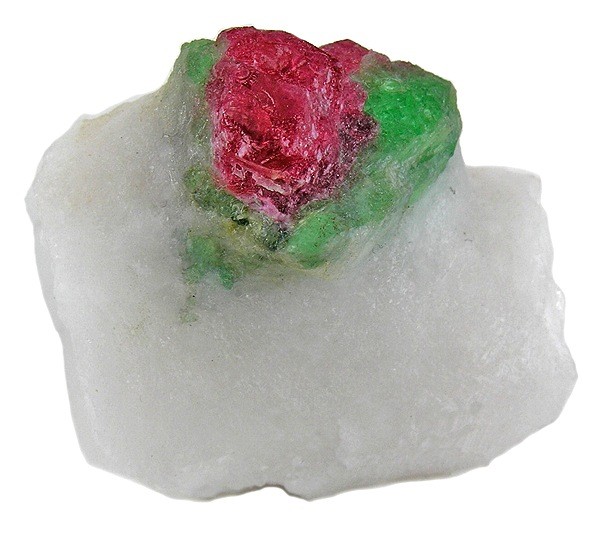
Photo: Wikimedia Commons
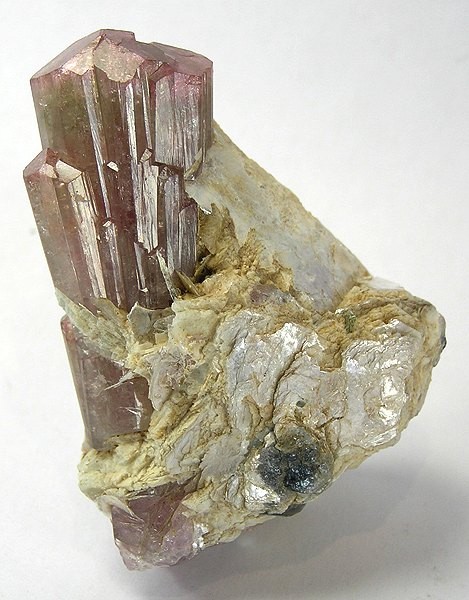
Photo: Wikimedia Commons
Search for specimens: View all specimens from Luc Yen Mine, Vietnam
The Luc Yen gem field is centered around Yen The town in Lục Yên District, northern Yên Bái Province. The district is a karst landscape of steep marble hills, paddy fields, narrow valleys, stream gravels, caves, and residual weathering pockets. Those landforms are fundamental to the collecting story: primary ruby and spinel occur in marble, while weathering and erosion concentrate durable gem minerals in small secondary deposits—karst pockets, alluvial fans, valley gravels, stream beds, paddy-field sediments, and cave traps.
The marble-hosted corundum deposits are set in moderate- to high-temperature recrystallized marble of Upper Proterozoic to Lower Cambrian age on the eastern side of the Red River shear-zone system, in the Lo Gam tectonic zone. In primary settings, ruby occurs disseminated in marble, in veinlets, and in fissures, with associations that include phlogopite, dravite, margarite, pyrite, rutile, spinel, edenite, calcite, and graphite. Secondary corundum deposits are widespread throughout the Luc Yen region, especially where karst depressions and narrow valleys trapped heavy minerals. Luc Yen corundum includes red ruby, pink to purple corundum, blue sapphire, colorless sapphire, gray to brown sapphire, bipyramidal sapphire, and trapiche ruby.
Spinel occurs both as marble-hosted crystals and as placer material. In the primary marble, red to brownish red octahedra may be embedded in dolomitic marble with calcite, phlogopite, humite-group minerals, and pargasite. Red, pink, and brownish red spinel are known from An Phu, Minh Tien, Bai Gau, and Khoan Thong; Cong Troi is especially important for pink and purple spinel; dark sea-blue material has been reported chiefly from Co Ngan and Bai Gau; more electric blue spinel has been associated with Khe Khi, Ba Linh Mot, and Khau Ca; and sky-blue material is connected with Bai Son, Lung Thin, and areas near Bai Gau. Blue spinel’s geology is distinctive: the best-studied primary blue spinel deposits occur in marble rich in forsterite and associated with calcite, pargasite, sulfides, chlorite, and clinochlore, and the primary blue spinel occurrences are not simply ruby deposits with a different color of spinel.
Luc Yen’s pegmatite story is younger in the collecting market but important. Tourmaline was recovered with ruby, sapphire, spinel, and other minerals from placers from the late 1980s onward, but the first colored tourmaline-bearing pegmatite body with green feldspar was reported from Minh Tien in 2004–2005. Other pegmatite bodies followed at Khai Trung, Tan Lap, and An Phu. These pegmatites cut the metamorphic terrane and are associated with quartz, feldspar, mica, lepidolite, schorl, elbaite, liddicoatite-elbaite material, and green feldspar. Unlike the marble-hosted ruby and spinel, Luc Yen tourmaline is tied primarily to rare-element pegmatitic systems and their weathered residues.
Mining history begins with the ruby discovery in the late 1980s. High-quality ruby was found in the Luc Yen district in late 1987, after farmers recovered stones from placer sediments. Organized exploitation began in 1988 with the creation of VINAGEMCO, the Vietnam Gemstones Company, a state-owned body for exploration, mining, processing, and trade. That same year, VINAGEMCO entered a joint venture with B.H. Mining Company of Thailand to mine the Khoan Thong Valley placer. From November 1989 to March 1990, Khoan Thong yielded a reported 244 kg of gem-quality ruby and sapphire, much of which was sold and cut in Bangkok. From 1990 to 1994, thousands of independent miners entered the district, and new primary and placer discoveries fed the morning gem market at Yen The.
Management shifted in 1995 to the Vietnam National Gems and Gold Corporation, known as VIGEGO. A 2003 merger formed the Vietnam Minerals Corporation, VIMICO, and the old model of state-controlled gem mining declined. Industrial-scale mining never fit Luc Yen particularly well because the richest ground is irregular: narrow valleys, karst pockets, caves, steep marble hills, and missed pockets between marble pinnacles. Since around 2000, Luc Yen has largely returned to small-scale artisanal mining by local farmers and small teams, with activity rising and falling around agricultural cycles.
The district’s working methods reflect the geology. At May Thuong, ruby-bearing marble has been quarried from the mountainside by small teams using drilling machines, crowbars, generators, and blasting. The miners follow ruby and phlogopite indicators along foliation in the marble, then remove blocks that can range from hand specimens to large masses weighing hundreds of kilograms. At Cong Troi, spinel and pargasite bands are distributed parallel to marble foliation, so miners work broad areas of the cliff face rather than a single narrow vein. In the placer areas near Minh Tien, Khoan Thong, Bai Chuoi, Nuoc Ngap, Bai Son, and Lung Thin, miners wash gravels with hoses, rattan baskets, pumps, and sluices, then hand-pick the heavy minerals.
Collecting access today is not comparable to a public fee-dig locality. The productive ground is worked by local miners, farmers, families, and licensed or formerly licensed operations; pegmatite outcrops have at times been closed or forbidden to local mining, while placer collection has continued in some areas. For collectors, Luc Yen specimens normally enter the market through Vietnamese dealers, local cutting and carving workshops, the Yen The/Luc Yen market, and international dealers. Locality precision matters. “Luc Yen” is acceptable for older material, but a label naming An Phu, Cong Troi, May Thuong, Minh Tien, Bai Gau, Bai Son, Khe Khi, Khoan Thong, Bai Chuoi, or another sublocality carries more geological and collector value.
Among documented finds, the strongest specimen-producing areas include May Thuong and May Ha for ruby in white marble; Cong Troi for pink to purple spinel, pargasite, and humite-group associations; Bai Son and Lung Thin for light blue to sky-blue spinel in karstic settings; Khe Khi, Ba Linh Mot, and Khau Ca for smaller saturated blue spinel; Bai Chuoi for ruby, trapiche ruby, tourmaline, rutile, quartz, blue sapphire, and light blue spinel; Minh Tien for tourmaline-bearing pegmatite and green feldspar; Khai Trung and Tan Lap for later tourmaline pockets and rubellite-bearing pegmatite material; and Bai Cat for the later-recognized danburite occurrence in a placer worked for ruby, sapphire, spinel, and tourmaline.
Luc Yen spinel is the district’s signature collector mineral: typically octahedral, often twinned, and ranging from red, brownish red, pink, purplish pink, purple, brown, and black to sea-blue, sky-blue, and vivid cobalt-blue material. Matrix crystals in marble range from millimeters to about 5 cm, with the larger marble-hosted crystals commonly translucent to opaque, while placer spinels are more likely to be transparent and cuttable. Cong Troi is the classic area for pink and purple spinel with pargasite in white marble; An Phu, Minh Tien, Bai Gau, and Khoan Thong are important for red to pink stones; Co Ngan and Bai Gau for darker blue material; and Khe Khi, Ba Linh Mot, Khau Ca, Bai Son, and Lung Thin for the coveted electric to sky-blue range. The best specimens combine saturated color, sharp octahedral form or obvious spinel-law twinning, clean contrast against white marble, and credible sublocality information; ordinary pieces are dull, heavily embedded, fractured, or trimmed so aggressively that the natural crystal setting is lost.
Luc Yen corundum is marble-hosted and placer-concentrated, occurring as red ruby, pink to purple corundum, blue sapphire, colorless sapphire, gray to brown sapphire, bipyramidal sapphire, and locally trapiche ruby. In the primary marble, crystals may be disseminated, veinlet-hosted, or fissure-related, with phlogopite, dravite, margarite, pyrite, rutile, spinel, edenite, calcite, and graphite among the documented associates; in placers, corundum is recovered with spinel, tourmaline, garnet, rutile, and quartz. Collector-grade corundum from Luc Yen is usually valued for crystal form and matrix contrast more than cutting clarity: sharp bipyramidal or prismatic crystals, strong pink-red to purplish color, a clean white marble host, and minimal later carving or polishing make a specimen desirable, while cloudy loose fragments and low-relief embedded grains are common.
Ruby from Luc Yen is most admired as red to dark red or purplish red corundum in pale marble, especially from the An Phu, Minh Tien, Khoan Thong, May Thuong, May Ha, Bai Da Lan, Bai Gau, and Bai Chuoi areas. At May Thuong, ruby forms bands along the marble foliation and commonly appears as bipyramidal hexagonal crystals, generally opaque but sometimes translucent enough for cabochons; reported crystals range from about 3 mm to 1.5 cm across and 2 to 10 cm long, while ruby-bearing marble blocks may carry hundreds of crystals. Bai Gau produced ruby associated with pargasite, and Bai Chuoi is noted for large opaque purplish red ruby suitable for cabochons or carvings as well as trapiche rubies. Fine collector rubies here have vivid marble-hosted color, clear crystal outlines, lively fluorescence typical of low-iron marble ruby, and a natural white matrix setting; lesser pieces are dark, granular, over-carved, or reduced to decorative marble blocks where the crystals read more as color spots than minerals.
Luc Yen liddicoatite is part of the district’s complex tourmaline story rather than its marble-hosted ruby-spinel story. The best-known material is linked to the Minh Tien pegmatite and related alluvial material, where pale red to pastel red Ca-rich zones in tourmaline were reported from a 2004 pocket, with bright pastel red liddicoatite-rich areas and darker elbaite cores; later work showed that most Luc Yen tourmaline is elbaite, while only a small number of analyzed zones fall in liddicoatite or liddicoatite-elbaite compositions. Collector specimens are typically prismatic, tapering, striated, and pink to reddish or particolored, often on pale pegmatite matrix with mica, feldspar, or quartz; the most desirable pieces preserve termination, luster, matrix attachment, and zoning, while the majority of Luc Yen tourmaline is broken, included, fractured, or compositionally ambiguous without analysis.
Luc Yen pargasite is a distinctive amphibole associate of spinel-bearing marble, especially around An Phu, Phan Thanh, Khoan Thong, and Cong Troi. It occurs as dense clusters, broad bands, and long prismatic crystals, locally with a nearly hexagonal cross-section, interspersed with spinel in alternating marble bands; documented groups commonly measure about 0.5 to 2 cm, with larger crystals reported to roughly 1.5 × 7 cm. Color ranges from dark to light green at Cong Troi to yellowish green in ruby-associated material at Khoan Thong, and transparency is usually poor. Good collector pieces are not judged like faceting rough: the prize is a balanced marble matrix specimen with saturated green pargasite, red or pink spinel, crisp relief, and intact crystal faces; ordinary examples are massive green amphibole streaks in marble or heavily abraded material used locally for gemstone paintings.
Luc Yen tourmaline comes from both placers and rare-element pegmatite bodies, with important occurrences at Minh Tien, Khai Trung, Tan Lap, and An Phu, as well as alluvial material in Minh Tien and Nuoc Ngap. The district produces colorless, gray, pink, red, green, yellow, orange, brown, purple, and black tourmaline, commonly particolored, with zoning along the c-axis or from core to rim; crystals may be single prisms, aggregates, columnar groups, or radial pink clusters, and individual crystals can reach 20 cm, with large pieces weighing kilograms. Most analyzed material is elbaite, with smaller amounts of liddicoatite, uvite/dravite, and possible rossmanite. Collectors favor vivid zoning, complete prism faces, terminations, and pegmatite matrix with mica, lepidolite, feldspar, or quartz; ordinary material is plentiful because many crystals are broken, fractured, included, low-transparency, or better suited to carving than faceting.
Luc Yen sapphire is the non-red corundum component of the marble and placer system, appearing as blue, light blue, colorless, gray, brown, and pale to fancy-colored crystals recovered with ruby, spinel, tourmaline, garnet, rutile, and quartz. The district is not as famous for top blue sapphire as some other Vietnamese metamorphic or basalt-related provinces, but it is important for collector corundum because sapphire occurs in the same karst pockets, alluvial fans, paddy-field gravels, and marble-derived placers that yield ruby and spinel. Some Luc Yen blue sapphire has been reported from areas such as Bai Chuoi, while colorless sapphire can coexist with ruby in the placer assemblage. The most appealing specimens are natural crystals or crystal groups with attractive blue to pale-blue color, bipyramidal habit, or association with classic Luc Yen spinel and marble; common stones are small, rounded, cloudy placer grains or cabochon-grade fragments.
Chondrodite from Luc Yen belongs to the humite-group assemblage of the spinel-bearing marbles, particularly in the An Phu and Sungate/Cong Troi collecting vocabulary, where orange to brown-orange humite-group crystals occur with spinel, pargasite, calcite marble, and related skarn-like or metasomatic marble minerals. Some early material from the district was sold as clinohumite before later work and specimen-level testing separated chondrodite, clinohumite, and hydroxylclinohumite more carefully; this is one of the reasons analytical confirmation is valuable for better examples. Good pieces combine a sharp, lustrous burnt-orange to honey-brown chondrodite crystal or cluster with purple or red spinel on white marble, an association far scarcer than ordinary spinel-in-marble specimens. The weaknesses to watch are misidentification within the humite group, contact damage on protruding crystals, and repaired or trimmed marble bases.
Luc Yen’s broader mineral list reflects both marble metamorphism and pegmatitic overprint. Documented species and groups include calcite, dolomite, forsterite, clinohumite, humite, hydroxylclinohumite, chondrodite, pargasite, sadanagaite, edenite, tremolite, phlogopite, aspidolite, paragonite, margarite, muscovite, dravite, tourmaline, diopside, kyanite, sillimanite, rutile, titanite, graphite, pyrite, pyrrhotite, feldspar, and chlorite-group minerals. Luc Yen is not presently known to collectors chiefly as a type-locality district; its rarities are more important as unusual occurrences and research markers. Preiswerkite was reported there as a first occurrence in marble hosting gem spinel, and danburite from Bai Cat was recognized as a new gem find in a placer otherwise worked for ruby, sapphire, spinel, and tourmaline.
For mineral collectors, the first authenticity issue is locality precision. “Luc Yen” may be accurate at district scale, but the name is often used loosely for a family of mines and deposits across Lục Yên District. A specimen labeled Cong Troi, An Phu, Bai Son, Minh Tien, Khe Khi, Khoan Thong, Bai Chuoi, May Thuong, or another sublocality is more informative than one labeled simply “Vietnam” or “Luc Yen.” Conversely, the Luc Yen market has long handled material from outside the district, so a market purchase is not automatically a Luc Yen specimen.
Mislabelling is especially common in three areas. First, humite-group minerals from Luc Yen may be sold interchangeably as clinohumite, chondrodite, humite, or hydroxylclinohumite; attractive orange-brown crystals with spinel deserve analytical caution. Second, tourmaline sold as liddicoatite may actually be elbaite, liddicoatite-elbaite, uvite/dravite, or compositionally zoned material whose species changes across the crystal. Third, gem corundum and spinel occur together in the same placers, so loose red, pink, or blue stones should not be identified by color alone. For valuable loose gems, laboratory testing is prudent; for matrix specimens, crystal habit, refractive character, and association help, but analysis remains the safest route for unusual claims.
Condition is central to value. Luc Yen matrix pieces are often extracted from marble with drilling, blasting, trimming, and carving tools. Check for polished marble faces, recut bases, removed matrix, restored crystals, and glue-filled fractures. Spinel octahedra can be naturally embedded but should still show honest luster and geometry; overly glossy or rounded marble may indicate ornamental preparation rather than a specimen-minded trim. Ruby-in-marble blocks are frequently carved for local decorative and phong thuy markets, so collectors should distinguish natural matrix specimens from sculpted decorative objects.
Fluorescence can be useful, especially for low-iron marble-hosted ruby, which commonly shows red fluorescence under ultraviolet light. Some Luc Yen sapphire and tourmaline also show diagnostic reactions in published studies, but fluorescence should be treated as supporting information rather than proof of species or locality. In handling, remember that the contrast that makes Luc Yen specimens beautiful also makes them vulnerable: white marble bruises and stains, protruding spinel and pargasite crystals chip easily, and many tourmalines are fractured internally. Avoid acids, ultrasonic cleaning, and aggressive soaking; dust gently and store bright ruby-spinel marble pieces away from abrasion.
Market availability is uneven. Small spinel-in-marble pieces, ruby-in-marble fragments, pargasite-bearing marble, and tourmaline pieces appear regularly, but top examples are much scarcer: sharp pink or red spinel octahedra on clean matrix, credible cobalt-blue spinel crystals, fine ruby crystals in marble, confirmed liddicoatite-rich tourmaline, and spinel with orange chondrodite are all select collector material. The best old pieces often circulate through international dealer inventories rather than the general tourist market, and sublocality documentation strongly affects desirability.
Luc Yen’s gem story begins not in a corporate office but in fields and stream gravels. In late 1987, farmers in the district recovered bright stones from placer sediments, and within months the finds had drawn the attention of state mining authorities. By June 1988, VINAGEMCO had been established to control exploration, mining, processing, and trading, and that September a Thai-Vietnamese joint venture was working the Khoan Thong Valley placer. The numbers from that first rush still feel startling: from November 1989 to March 1990, Khoan Thong produced 244 kg of gem-quality ruby and sapphire. Much of that material moved through Bangkok, carrying the name of a northern Vietnamese farming district into the international ruby trade.
The boom years changed Yen The. Before the discoveries, the town was a quiet agricultural and timber center. In the 1990s, its morning market became the district’s pulse. The exhibition area reportedly spread over more than 1,000 square meters, and hundreds of local farmers came in from 5:30 to 7:30 every morning with the previous day’s stones. When the market ended, sellers returned to the hills, streams, paddy fields, and karst pockets to mine again. The rhythm was brutally simple: dig, wash, sort, sell, and go back out.
May Thuong gives a collector a good sense of how matrix specimens are born. In May 2011, a handful of men were mining the Upper Cloud ruby mine every day, living halfway up the mountain in a shack covered with canvas. Their tool kit was not romantic: a power generator, drilling machines, and crowbars. They watched the marble for signs of ruby or phlogopite, drilled where the foliation looked promising, blasted, and pried out ruby-bearing blocks. Those blocks could be small enough to carry by hand or large enough to weigh hundreds of kilograms. Once freed from the mountain, they still had to descend it. Local Man or Tay porters carried the blocks on their shoulders for 2,000 to 3,000 Vietnamese dong per kilogram, and one person could reportedly carry 50 to 80 kg despite the terrain.
At Cong Troi, the story shifts from ruby to spinel. The name means “Sky Gate,” and the deposit became a focal point for spinel and pargasite in white marble after the turn of the 21st century. Around 2009–2010, marble-export drilling licenses forced local gem miners to stop temporarily. When drilling ended in late 2010, they returned. By 2012, about 20 miners were working there, most of them between 17 and 35 years old. The reason Cong Troi matters to collectors is easy to see in the specimens: spinel and pargasite run in bands parallel to the marble foliation, so the quarry face can produce color combinations rather than isolated gems—pink to purple spinel, green pargasite, and white marble in the same hand specimen.
The placers have a different kind of drama. In old mining areas such as Minh Tien, Khoan Thong, and Bai Chuoi, earlier companies removed the easiest and richest ground, but the machinery could not cleanly work the irregular spaces between marble pinnacles. Local miners returned with shovels and buckets to collect what was left. In the Bai Son and Lung Thin areas, miners followed crevasses underground to depths of about 5 to 8 meters looking for pale sky-blue spinel. In the caves and karst pockets, heavy gem gravels are washed and sorted underground, then brought back to daylight for careful picking.
Tourmaline brought its own rushes. At Minh Tien, the first colored tourmaline-bearing pegmatite body with green feldspar was mined in 2004–2005. Khai Trung followed in 2008–2009 and saw heavy mining from 2008 to 2010. Some rubellite-bearing blocks weighed hundreds of kilograms, and one large pink tourmaline and violet lepidolite pegmatite block from Khai Trung, weighing about 300 kg, was sold to a foreign dealer in 2016. The gem percentage was low, but the color, zoning, and sheer size of the pegmatite pieces made them irresistible as mineral and carving material.
Luc Yen also developed a second life for low-grade stones. Gemstone paintings became a local craft in the 1990s, using small gems and crushed stone that might otherwise have little market. Red ruby, garnet, and spinel; blue sapphire; green pargasite, peridot, or chalcedony; purple fluorite or amethyst; and pale calcite powders all became pigments in relief. One described method begins with a white acrylic sheet, a drawn design, a calcite powder base, and colored stones fixed with glue. A 40 × 60 cm picture could be completed by one worker in a day. For miners, that craft mattered because even small, fractured, opaque, or off-grade stones could help pay daily costs while they waited for the rare good crystal or cuttable gem.
The market still has its own theater. Sellers set out parcels of rough and cut stones on small tables, and buyers examine them with lamps and loupes. Traders may pool money to buy exceptional stones, while the best goods are often shown only to trusted professionals. One Vietnamese account described gems laid out in bamboo baskets “like vegetables,” an image that captures Luc Yen’s unusual blend of village market and high-value trade. It is not a market where every stone is local or every label is precise, but it remains one of the few places where a collector can see ruby, spinel, sapphire, pargasite, tourmaline, carving rough, and gem-painting material moving through the same small-town economy.
Robert E. Kane, Shane F. McClure, Robert C. Kammerling, Nguyen Dang Khoa, Carlo Mora, Saverio Repetto, Nguyen Duc Khai, and John I. Koivula, “Rubies and Fancy Sapphires from Vietnam,” Gems & Gemology, Fall 1991, Vol. 27, No. 3 — Early major gemological study of Luc Yen and Quy Chau ruby and fancy sapphire, including internal features such as blue color zones, growth structures, calcite, pyrrhotite, and nordstrandite inclusions.
Pham Van Long, Hoang Quang Vinh, Virginie Garnier, Gaston Giuliani, Daniel Ohnenstetter, Thérèse Lhomme, Dietmar Schwarz, Anthony E. Fallick, Jean Dubessy, and Phan Trong Trinh, “Gem corundum deposits in Vietnam,” The Journal of Gemmology, 29(3), 2004, pp. 129–147 — Broad geological and gemological review of Vietnamese corundum deposits, with detailed Luc Yen marble-hosted ruby context, inclusions, chemistry, and isotopic data.
Pham Van Long, Vincent Pardieu, and Gaston Giuliani, “Update on Gemstone Mining in Luc Yen, Vietnam,” Gems & Gemology, Winter 2013 — Essential field-based overview of Luc Yen’s history, geology, mining methods, ruby, sapphire, spinel, tourmaline, feldspar, pargasite, humite, market activity, and gemstone painting.
Boris Chauviré, Benjamin Rondeau, Emmanuel Fritsch, Philippe Ressigeac, and Jean-Luc Devidal, “Blue Spinel from the Luc Yen District of Vietnam,” Gems & Gemology, Spring 2015 — Key modern study of Luc Yen cobalt-bearing blue spinel, its geology, primary and secondary deposits, associated minerals, and color cause.
Nguy Tuyet Nhung, Le Thi-Thu Huong, Nguyen Thi Minh Thuyet, Tobias Häger, Nguyen Thi Le Quyen, and Tran Thi Duyen, “An Update on Tourmaline from Luc Yen, Vietnam,” Gems & Gemology, Summer 2017 — Detailed treatment of Luc Yen tourmaline from pegmatites and placers, including elbaite, liddicoatite, uvite/dravite, possible rossmanite, crystal morphology, zoning, inclusions, and gem use.
Le Thi-Thu Huong, Laura M. Otter, Tobias Häger, Tim Ullmann, Wolfgang Hofmeister, Ulrike Weis, and Klaus Peter Jochum, “A New Find of Danburite in the Luc Yen Mining Area, Vietnam,” Gems & Gemology, Winter 2016 — Characterization of honey-yellow gem danburite found at Bai Cat in the Luc Yen mining area, including REE-related luminescence and associated placer context.
Vladimir G. Krivovichev, Katherine A. Kuksa, Pavel B. Sokolov, Olga Yu. Marakhovskaya, Andrey A. Zolotarev, Vladimir N. Bocharov, Tatyana F. Semenova, Maria E. Klimacheva, and Geir Atle Gussiås, “Preiswerkite: A First Occurrence in Marble Hosting Gem Spinel Deposits, Luc Yen, Vietnam,” Minerals, 12(8), 1024, 2022 — Reports preiswerkite in Luc Yen marble-hosted gem spinel deposits and documents its association with spinel, corundum, amphibole, phlogopite, aspidolite, chlorite, calcite, rutile, pyrite, and pyrrhotite.
Vladimir G. Krivovichev et al., “First Occurrence of Titanian Hydroxylclinohumite in Marble-Hosting Gem Spinel Deposits, Luc Yen, Vietnam,” Minerals, 13(7), 901, 2023 — Important paper for sorting the humite-group mineralogy associated with Luc Yen spinel-bearing marbles, including hydroxylclinohumite and related chondrodite–norbergite-bearing assemblages.
Mindat: Luc Yen Mine, Lục Yên District, Yên Bái Province, Vietnam — Locality entry listing documented mineral species and references for the Luc Yen Mine umbrella locality.
Mindat: Lục Yên District, Yên Bái Province, Vietnam — District-level mineral locality page useful for tracing sublocalities such as Minh Tien, An Phu, and related gem occurrences.
Verified published sources consulted for this guide do not identify Luc Yen Mine as the type locality of a currently accepted mineral species. Its mineralogical importance rests instead on classic gem specimens, first Vietnamese or first-in-setting occurrences, and unusually well-studied marble-hosted ruby-spinel-pargasite-humite and pegmatite-tourmaline systems.
“GIA Field Gemologists Seek Gems in Luc Yen, Vietnam” — GIA Staff — Field expedition video and report following Vincent Pardieu and the GIA team through Luc Yen’s limestone terrain, gem market, and mining context.
“Vietnam Unearthed: The Gemstones of Luc Yen” — Mine to Market Media — Documentary-style visit to Yên Thế/Luc Yen with mountain and market scenes focused on the district’s gem culture.
“Spring trip and experience buying gemstones in Luc Yen with an audience member from Hanoi” — Ruby Vlog — Vietnamese-language market visit showing buying activity and contemporary Luc Yen gemstone trade atmosphere.
“V - Việt Nam: Chợ đá quý ở Lục Yên” — VTV — Vietnamese television segment on the Luc Yen gemstone market.
“Gem Painting” — Philippe Brunot, produced by Vincent Pardieu — Short documentary on gemstone painting in Thailand and Vietnam, including the Luc Yen craft tradition and its use of lower-grade gem material.
GIA: Update on Gemstone Mining in Luc Yen, Vietnam — The most useful single field report for Luc Yen’s mining history, geology, mineral assemblages, sublocalities, market, and gem-painting economy.
GIA: Blue Spinel from the Luc Yen District of Vietnam — Essential study of Luc Yen cobalt-blue spinel, including deposit names, mining style, host rocks, and color origin.
GIA: An Update on Tourmaline from Luc Yen, Vietnam — Best concise reference for Luc Yen tourmaline, liddicoatite-elbaite material, pegmatite occurrences, zoning, inclusions, and applications.
GIA: Rubies and Fancy Sapphires from Vietnam — Early classic paper documenting the gemological character of Luc Yen and Quy Chau ruby and fancy sapphire.
GIA: A New Find of Danburite in the Luc Yen Mining Area, Vietnam — Focused report on the Bai Cat danburite find and its relationship to Luc Yen’s gem placer system.
MDPI Minerals: Preiswerkite, a First Occurrence in Marble Hosting Gem Spinel Deposits, Luc Yen, Vietnam — Technical mineralogical paper documenting preiswerkite in Luc Yen spinel-bearing marble.
MDPI Minerals: First Occurrence of Titanian Hydroxylclinohumite in Marble-Hosting Gem Spinel Deposits, Luc Yen, Vietnam — Technical reference for humite-group minerals in Luc Yen spinel marbles.
Mindat: Luc Yen Mine, Lục Yên District, Yên Bái Province, Vietnam — Mineral list, photos, and reference trail for the Luc Yen Mine locality entry.
Mindat: Chondrodite from Luc Yen Mine, Vietnam — Occurrence entry useful for checking documented chondrodite from the Luc Yen Mine locality.
Mindat: Liddicoatite from Minh Tien Mine, Lục Yên District, Vietnam — Occurrence entry explaining the questioned and compositionally complex status of liddicoatite at Minh Tien.
Wikimedia Commons: Spinel, Pargasite, Marble from Luc Yen — Open-license specimen photograph showing the classic red spinel–green pargasite–white marble association.
Wikimedia Commons: Liddicoatite from Luc Yen — Open-license specimen photograph of Luc Yen tourmaline on matrix.
VOV World: Luc Yen Natural Stone Market — Cultural context for the Luc Yen stone-picture craft, market hours, workshops, and local trade.
VietNamNet: Market for Gemstones — Short local account of the Yen The/Luc Yen gemstone market and its distinctive selling style.