A collector's guide to Pasto Bueno, Peru: its geology, mining history and notable minerals, illustrated with the 89 specimens documented from this locality on EarthWonders.
Key facts
Pasto Bueno is one of the great tungsten localities of the Andes, a high-elevation vein district in the Pampas area of Pallasca Province, Ancash, at the northern end of the Cordillera Blanca batholith. For specimen collectors, its fame rests on a combination that few tungsten deposits can match: lustrous black to deep cherry-red hübnerite blades, glassy quartz, green to lavender fluorite, and rhodochrosite that can look startlingly close to classic Colorado material. The district is not a single mine in the strict sense but a group of workings and mineralized zones historically grouped under the Pasto Bueno name, especially Huayllapón, Huaura, and Consuzo, with Mundo Nuevo and related workings often appearing on older or broader “Pasto Bueno district” labels.
Geologically, Pasto Bueno is a greisen-influenced tungsten–base-metal vein system related to the Consuzo quartz-monzonite stock. The intrusive cuts Jurassic Chicama slates and Lower Cretaceous Chimú quartzites, and the principal veins are steep, commonly north–south structures within and around the intrusive contact, with additional northeast–southwest and northwest–southeast systems in the metasedimentary rocks. The ore-stage assemblage is anchored by wolframite, chiefly hübnerite, with tetrahedrite–tennantite, sphalerite, galena, and pyrite in a gangue of quartz, fluorite, sericite, and carbonates; molybdenite, chalcopyrite, bornite, arsenopyrite, enargite or luzonite, stolzite, scheelite, zinnwaldite, topaz, tungstite, and native arsenic round out the better-documented rarities.
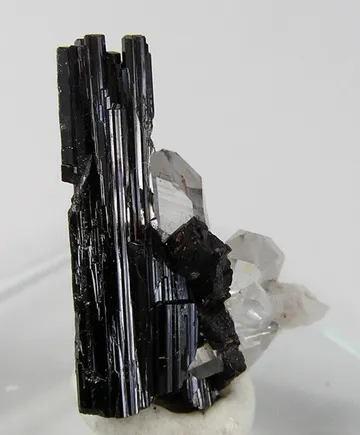
The best Pasto Bueno specimens have a sharply recognizable aesthetic. Quartz commonly occurs as clear to milky, densely crowded prismatic “jackstraw” groups, often wrapped around or perched on dark metallic hübnerite. Fluorite tends toward green, colorless, pale lavender, or purple, and the most desirable examples show bright, transparent cubes or octahedral-looking masses sitting with quartz and sometimes hübnerite. Rhodochrosite is usually pale to rich pink, but the top pieces are vivid red-pink, glassy rhombs on quartz, occasionally with fluorite. In elite combinations the contrast is superb: black bladed tungsten ore, clear quartz, cool green fluorite, and warm rose-red carbonate all in one high-Andean vein assemblage.
Regional View
Country View
Pasto Bueno’s place in mineral collecting was built in waves. Older hübnerite specimens entered collections in the late 1960s and 1970s, when the district became recognized as a premier world source for the species. Rhodochrosite from Huayllapón appeared most memorably in 1970s–1980s material and remains much scarcer than the better-known Peruvian rhodochrosites from Uchucchacua. Fluorite, though secondary in fame to hübnerite and rhodochrosite, is highly collectible when it occurs as large, clean, glowing green crystals with quartz or as unusual combinations with hübnerite.

Photo: Wikimedia Commons

Photo: Wikimedia Commons
Search for specimens: View all specimens from Pasto Bueno, Peru
Pasto Bueno lies in the Ancash region of northern Peru, in the Pampas District of Pallasca Province, at roughly 4,000 m elevation in the north-central Andes. In collector usage, “Pasto Bueno” usually means the historic tungsten mining district rather than one discrete shaft or quarry. Huayllapón is the key specimen-producing mine for collectors, particularly for hübnerite and rhodochrosite, while Huaura and Consuzo are central to the economic geology of the tungsten system. Older technical literature and older labels may also sweep in Mundo Nuevo, Compaccha, Tamboras, La Victoria, Huaccara, and related workings under the wider district name, which is one reason Pasto Bueno labels require more interpretation than labels from a single isolated mine.
The deposit is best understood as a hydrothermal tungsten–base-metal vein system with an important greisen component. The Consuzo quartz-monzonite stock intrudes Chicama Formation slates and Chimú Formation quartzites; the main veins cut the stock and its margins, while other structures pass into the surrounding metasedimentary section. Alteration is zoned around the intrusive system, with greisen assemblages including zinnwaldite, fluorite, sericite or muscovite, pyrite, and minor topaz and tourmaline. The principal ore stage deposited wolframite, especially the Mn-rich member hübnerite, together with tetrahedrite–tennantite, sphalerite, galena, and pyrite, followed or accompanied by quartz, fluorite, sericite, carbonates, and late vug minerals.
The district’s vein geometry matters to collectors because open-space textures produced many of its most attractive specimens. The Consuelo vein is described as a north–south, steep to subvertical structure hosted in the quartz monzonite, with a beaded or “rosario” morphology in which vein width and ore shoots vary strongly along strike. The Alonso-Fénix manto is treated as a branch-like structure related to Consuelo but emplaced in Chicama slates and locally subparallel to bedding. Chabuca, in the Huayllapón area, is hosted in slates and quartzites and is notably richer in muscovite-sericite, fluorite, pyrite, and sulfides. These structural and chemical changes explain why Pasto Bueno can yield both classic tungsten-vein specimens and later, more colorful fluorite–carbonate–quartz combinations.
The paragenesis is unusually well studied for a specimen locality. Earlier high-temperature greisen and vein fluids were followed by the principal tungsten mineralization and then by lower-temperature sulfide, fluorite, quartz, and carbonate stages. Technical work on fluid inclusions places the main mineralizing event broadly in the 200–250 °C range, with higher-temperature precursors and later CO2-rich fluids. Collectors see that history in hand specimen scale: black hübnerite blades partly enclosed by quartz, later fluorite occupying open spaces, sphalerite and galena in darker sulfide-rich zones, and rhodochrosite as a late carbonate that can line pockets with sharp pink rhombs.
Mining at Pasto Bueno is historically important far beyond the specimen trade. Fermín Málaga Santolalla’s mining interests are tied to tungsten and copper exploitation in the region from the early 20th century, and the district became one of the Western Hemisphere’s notable tungsten producers. Later corporate history includes Avocet participation in the 1990s, a period of idleness after the late 1990s, acquisition by Dynacor or Málaga interests in 2005, a planned restart around 2006 using an existing 250-tonne-per-day mill, and care-and-maintenance status after production and power problems in 2012. Current public project material presents Pasto Bueno as a privately held redevelopment project focused on restarting the historic tungsten mine, with existing underground development and processing infrastructure.
Specimen collecting today should be treated as mine-controlled access, not recreational field collecting. Pasto Bueno is an underground mining district with old workings, active redevelopment interests, and a history of industrial tungsten extraction; casual entry is neither realistic nor safe. Most collector pieces on the market come from older recoveries, especially Huayllapón and older district material, supplemented by occasional specimens released from Peruvian collections, dealer inventories, and estate collections. Exact mine provenance is often uncertain unless an old label names Huayllapón, Huaura, Consuzo, Mundo Nuevo, or another specific working.
The most famous specimen finds are the hübnerite–quartz pockets and the rhodochrosite pockets from Huayllapón. Hübnerite occurs as flattened, striated, lustrous prisms and blades, black in normal light but commonly deep red to cherry-red on thin edges or under strong backlighting. Rhodochrosite specimens from classic Huayllapón finds are usually miniatures to small cabinet pieces; the finest show sharp, translucent, red-pink rhombs with clear quartz needles or prisms and sometimes pale green or lavender fluorite. Pasto Bueno fluorite specimens can be surprisingly large and fine, with emerald-green crystals, pale lavender fluorite, or colorless to green octahedral-looking forms on quartz. The district is less prolific in specimens than some Peruvian polymetallic mines, but its best pieces have a compact, unmistakable, high-contrast vein aesthetic.
Quartz is the indispensable stage on which Pasto Bueno’s more famous minerals perform: clear to milky prismatic crystals, dense jackstraw sprays, and larger glassy points commonly surround hübnerite blades, support fluorite, and frame rhodochrosite rhombs. The best quartz specimens are not simply clean points, but association pieces in which quartz preserves the open-space vein texture—hübnerite piercing or partly enclosed by quartz, rhodochrosite perched on quartz clusters, or green fluorite growing around quartz prisms. Documented examples range from thumbnail combinations to cabinet pieces; quartz points around 1–2 cm are common in hübnerite associations, while larger individual quartz prisms appear as accessories on more sculptural pieces. Ordinary Pasto Bueno quartz can be milky, broken, or visually crowded, but good collector pieces have transparent terminations, undamaged sprays, and a well-balanced contrast with the metallic tungsten or colorful fluorite-carbonate minerals.
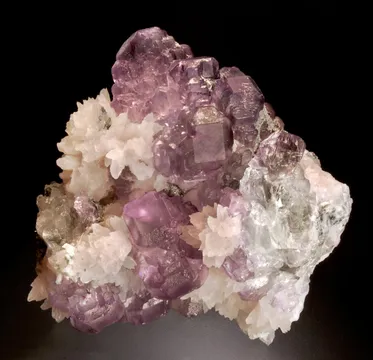
Fluorite from Pasto Bueno is prized for green, colorless, pale lavender, and purple tones in a locality better known for hübnerite and rhodochrosite. The district has produced large emerald-green fluorites, green fluorite on quartz, and rare, highly aesthetic fluorite–hübnerite–quartz combinations in which gemmy cubes or stepped-growth masses partly engulf quartz or are pierced by black hübnerite blades. Fine specimens may reach small-cabinet to large-cabinet size, with individual fluorite crystals documented at several centimeters across; one especially noted style shows glowing green cubes with frosted or pebbly surfaces and quartz emerging through them. Pasto Bueno fluorite separates itself from routine Peruvian fluorite by its association: the most desirable pieces are unmistakably tungsten-vein specimens, carrying quartz and occasionally hübnerite, rhodochrosite, pyrite, sphalerite, or muscovite rather than appearing as isolated fluorite clusters.
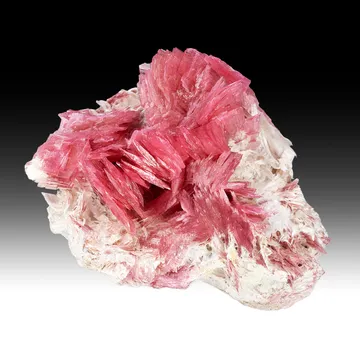
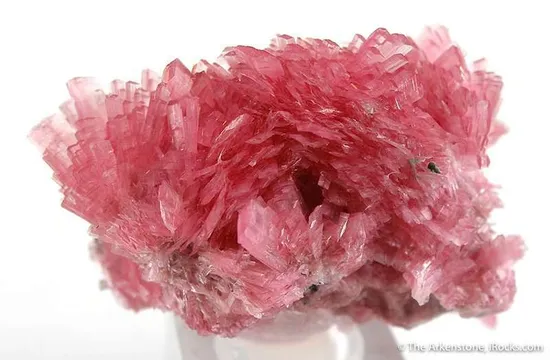
Pasto Bueno rhodochrosite, particularly from Huayllapón, is one of Peru’s underappreciated classic rhodochrosites: typically light red to light pink, but in the best old pieces a vivid cherry to red-pink, translucent, glassy rhombohedral habit rather than the more familiar Peruvian scalenohedral or rosette styles. Collector descriptions repeatedly emphasize sharp rhombs on quartz, sometimes with fluorite; miniatures are more typical than large cabinets, though important old specimens reached substantial size, and exceptional crystals have been compared visually with Colorado rhodochrosite because of their rich color and defined rhombic form. The best pieces have undamaged rhombs, strong color saturation, transparency, and a natural quartz or fluorite association; ordinary pieces tend to be paler, bruised along rhomb edges, or incomplete, reflecting the fact that many of the old pocket specimens were difficult to recover without damage.
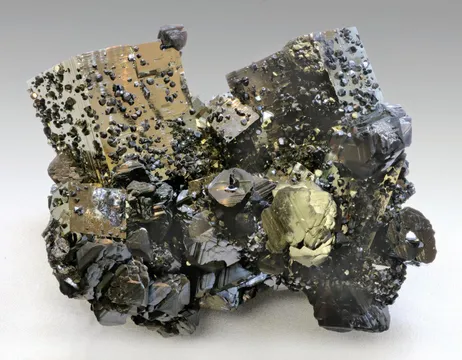
Tetrahedrite-group minerals are part of the principal Pasto Bueno ore assemblage and occur with wolframite, sphalerite, galena, pyrite, quartz, and fluorite in the tungsten–base-metal veins. In collector specimens they are far scarcer than hübnerite, quartz, fluorite, or rhodochrosite, but the best Huayllapón pieces show sharp, lustrous, dark steel-gray to black modified tetrahedral crystals on prismatic quartz, sometimes with sphalerite on the underside or in the matrix. Documented collector examples include crystals around 1 cm and exceptional groups with crystals several centimeters on edge, generally dating to older 1980s-era material. Because Pasto Bueno ores include both tetrahedrite and tennantite, precise species-level naming can require analysis; for display collecting, the key qualities are sharp tetrahedral form, metallic luster, prominent placement on quartz, and a reliable old locality pedigree.
Pyrite is both an ore-stage and gangue-stage mineral at Pasto Bueno, appearing in the greisen and vein assemblages and as an accessory with quartz, fluorite, hübnerite, sphalerite, galena, and rhodochrosite. It is not the district’s showiest species, but good specimens can carry bright cubic to modified crystals or sparkling brassy accents on quartz-rich matrix, providing contrast against green fluorite, black hübnerite, or pink rhodochrosite. Pasto Bueno pyrite is most desirable when it contributes to a balanced association rather than dominating the specimen: small sharp cubes sprinkled through fluorite and quartz, lustrous crystals near tetrahedrite-group minerals, or attractive pyrite accents in a tungsten-vein assemblage. Ordinary pyrite-rich pieces may be massive, sulfide-heavy, or prone to visual darkness, while the better collector pieces show fresh metallic luster, clean crystal definition, and no signs of oxidation or instability.
Other documented Pasto Bueno minerals include hübnerite, the district’s signature species; sphalerite, galena, chalcopyrite, bornite, arsenopyrite, enargite or luzonite, bournonite, molybdenite, scheelite, stolzite, tungstite, native arsenic, calcite, dolomite, siderite, muscovite or sericite, zinnwaldite, topaz, fluorapatite, augelite, vivianite, euclase, chlorite-group minerals, and apatite-group material. No type-locality species are central to Pasto Bueno’s reputation; its importance is instead as a world-class occurrence for hübnerite and as a classic source of uncommon tungsten-vein combinations. For advanced collectors, the most interesting rarities are not necessarily showy: native arsenic with hübnerite, augelite or fluorapatite in the phosphate suite, euclase with fluorite, and analyzed tetrahedrite–tennantite material all reward careful labeling and provenance.
The biggest authenticity issue with Pasto Bueno is not widespread fakery but label discipline. “Pasto Bueno mine” is common on old labels, but the locality is a district, and many specimens should more precisely be called Huayllapón, Huaura, Consuzo, Mundo Nuevo, or another working if that information is known. Mundo Nuevo material is especially tricky because it has historically been treated as part of the broad Pasto Bueno tungsten district in some literature and dealer usage, while modern locality databases may separate it geographically. Old specimens labeled simply “Pasto Bueno, Ancash, Peru” can still be legitimate, but a collector should not assume mine-level precision unless an old, credible label or collection history supports it.
A second mislabeling concern involves “Cantera Quesgar” or Quesgar-related quartz labels that have circulated with Pasto Bueno-area material. The more careful locality usage distinguishes Cerro Quesgar as a mountain locality where local people have searched for quartz with sericite; material described as quartz with “fuchsite” from that source deserves skepticism unless confirmed. In the Pasto Bueno specimen market, over-broad Peruvian labels are common, and rhodochrosite with fluorite and quartz can be confused at a glance with Uchucchacua, Sweet Home, or other rhodochrosite localities if the provenance is lost.
Condition is central to value. Hübnerite blades can have chipped terminations, broken side faces, or detached quartz; the best crystals retain sharp terminations, bright striated faces, and the classic red translucence along thin edges under strong light. Rhodochrosite rhombs bruise easily along corners and edges, and many old Huayllapón pieces show minor roughness; truly undamaged, glassy red-pink rhodochrosite is substantially rarer than merely representative material. Fluorite has perfect cleavage, so check corners, stepped faces, and contact points carefully; small cleaves are common, but a large green fluorite with clean edges and undamaged quartz or hübnerite association is a premium object.
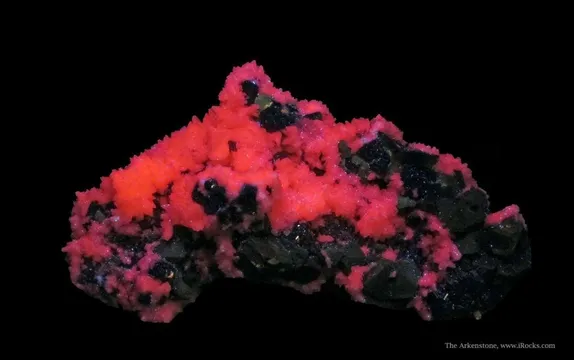
Fluorite from the district may fluoresce under long-wave and short-wave ultraviolet light, with some collector specimens described as fluorescent in both. UV response should be treated as a bonus, not a primary identifier, because color and fluorescence vary. Hübnerite and sulfide-rich specimens should be handled gently and kept dry; sulfides such as pyrite, arsenopyrite, enargite, and native arsenic-bearing associations call for ordinary mineral hygiene—avoid dust, do not trim without proper controls, and wash hands after handling. Rhodochrosite is a carbonate and should not be cleaned with acids.
Market availability is moderate for quartz–hübnerite combinations, limited for good fluorite, and genuinely scarce for fine rhodochrosite and tetrahedrite-group pieces. Pasto Bueno material appears regularly enough that patient collectors can obtain a representative specimen, but the top old pieces—large lustrous hübnerite on quartz, vivid red rhodochrosite rhombs with quartz and fluorite, or green fluorite with hübnerite—are increasingly estate-collection objects. Provenance, old labels, and named collections matter here because many significant finds are decades old and modern production has not replaced them in quantity.
In the 1970s, before Pasto Bueno’s best hübnerites had fully entered the language of international mineral collecting, American dealers who reached the district could buy specimens directly from mine employees for astonishingly small sums. Contemporary collector accounts describe pieces changing hands for less than $1 to $15—material that later sold for thousands once the mineral world understood what these black, heavy, striated crystals really were. The bargain era did not last. As miners and local people learned how much dealers were making from their finds, the easy flow of underpriced hübnerite ended, and the old labels from that period became part of the specimens’ aura.
One reason those early pieces caused such a stir is that hübnerite is a difficult mineral to love until one sees a great example in person. In poor light it can look like a black metallic splinter; under a strong lamp, the same blade may flash deep red along its thinnest edges. Pasto Bueno specimens made that transformation dramatic. Some Mundo Nuevo and Huayllapón crystals are flattened, heavy, and lustrous, with quartz points caught around them as if the vein froze in mid-growth. The largest and finest old pieces helped establish the district as a premier locality for hübnerite, and dealer descriptions from later years still speak of them with a mixture of admiration and disbelief.
The rhodochrosite story is quieter but, for many collectors, more surprising. A vivid Pasto Bueno rhodochrosite can be so glassy and saturated that even experienced eyes have mistaken the style for Sweet Home, Colorado, before reading the label. The best pieces show sharp red-pink rhombs rather than the more expected Peruvian forms, set against clear quartz and occasionally fluorite. Collector lore points to old pockets from the late 1970s and early 1980s; one modern auction description singled out 1980s-era Huayllapón rhodochrosites and noted that many were damaged in recovery, making fine undamaged examples unusually desirable.
There is also the story of the importer. A documented 1980s rhodochrosite specimen in the auction record passed from Jack Halpern through his friend Ken Roberts, who is described as having sourced much of the material by flying to Peru and importing it himself. That detail matters because it captures how Pasto Bueno specimens entered collections before the internet flattened locality knowledge: through individual dealers, personal flights, hand-carried lots, and labels written close enough to the source that today they carry serious evidentiary weight.