Northern Cape, South Africa - manganese-rich localities (N’Chwaning, Wessels, Aggeneys) yield striking rhodochrosite and sugilite, prized for appearance and co…
Key facts
Northern Cape is not a single pocket locality so much as a mineral province: immense, arid, and unusually rich in deposits that matter to collectors. Its two great specimen engines are the Kalahari Manganese Field near Hotazel, Kuruman, Black Rock, N’Chwaning and Wessels, and the Aggeneys-Gamsberg base-metal district in Bushmanland. The former is the world-class manganese system, hosted in Paleoproterozoic Hotazel Formation rocks of the Transvaal Supergroup, where manganese ore beds, banded iron formation, carbonates, faulting, hydrothermal upgrading, and later supergene processes produced one of the most chemically extravagant mineral suites known. The latter is a metamorphosed Broken Hill-type Zn-Pb-Cu-Ag district in the Mesoproterozoic Bushmanland Group, famous to collectors above all for the 2006 siderite-sphalerite epimorphs after calcite from the Broken Hill Mine at Aggeneys. (iugs-geoheritage.org)
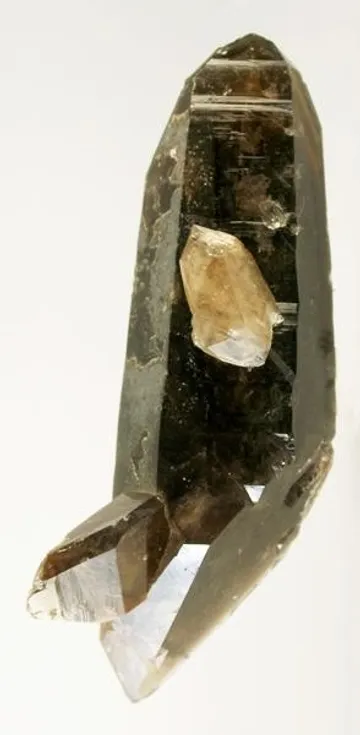
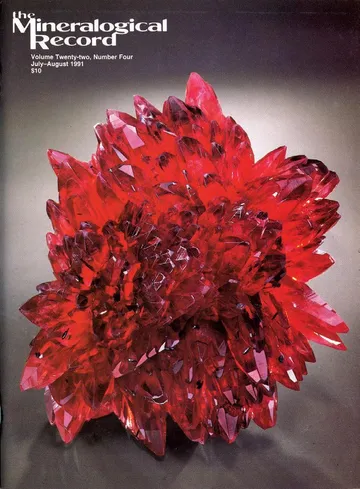
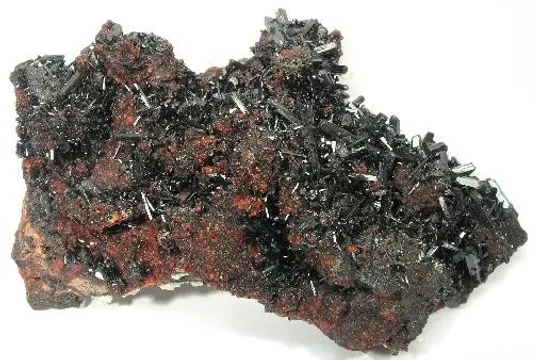
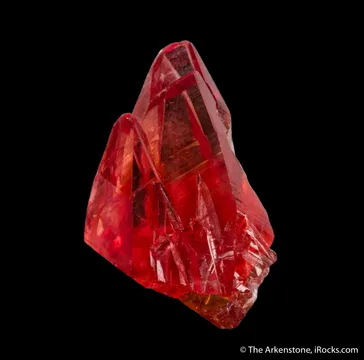
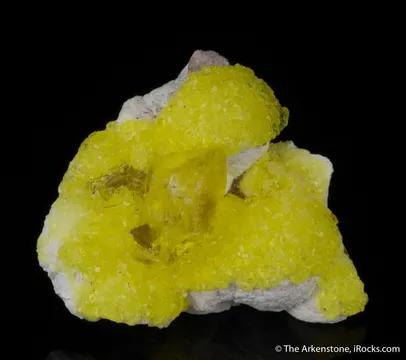
The best Northern Cape specimens have a look that is difficult to mistake: blood-red to orange-red N’Chwaning rhodochrosite on black manganese oxides; golden-yellow sturmanite and ettringite rising from pale calcite or dark ore; glassy to silky manganite, hausmannite, and hematite; purple sugilite from Wessels; and, from Aggeneys, hollow sculptural casts that preserve the shape of vanished calcite in a sparkling mixture of orange-brown siderite and dark sphalerite. This is also diamond country in the historical sense: Kimberley’s Big Hole and the De Beers story made the Northern Cape central to the modern diamond industry, even though crystallized collector specimens from the province are today dominated far more by manganese and base-metal mineralogy than by diamond specimens. (commons.wikimedia.org)
Regional View
Country View

Photo: Wikimedia Commons

Photo:

Photo: Wikimedia Commons
Search for specimens: View all specimens from Northern Cape, South Africa
The collector label “Northern Cape” usually needs refinement. A manganese specimen labeled Northern Cape may come from N’Chwaning I, II, or III, Wessels, Mamatwan, Hotazel, Black Rock, Gloria, Langdon, Smartt, Devon, or another mine in the Kalahari Manganese Field. A siderite-sphalerite-calcite label is much more likely to point westward to Aggeneys, especially the Broken Hill Mine or broader Black Mountain complex. Both districts are in the same province, but they are not the same mineral system.
The Kalahari Manganese Field is a sediment-hosted manganese province in Paleoproterozoic Hotazel Formation rocks, where three manganese ore layers are intercalated with banded iron formations and carbonates. Geological studies divide the ore into a low-grade, carbonate-rich Mamatwan-type ore and a later, structurally and hydrothermally upgraded, oxide-rich Wessels-type ore. The Wessels alteration event is particularly important to collectors because it converted parts of carbonate-rich braunite lutite into high-grade manganese ore along fault systems and created much of the rare-mineral environment for which the field is celebrated. (iugs-geoheritage.org)
The manganese field has also recorded the ordinary rock-forming and ore minerals that make sense in its stratigraphy: braunite, hematite, kutnohorite, hausmannite, calcite, siderite, magnetite, pyrite, quartz, ankerite-dolomite carbonates, and Fe-Mn silicates occur in different parts of the Hotazel succession. Tsikos and Moore described Hotazel iron-formation assemblages in which siderite, calcite, magnetite, hematite and pyrite occur with chert, greenalite, minnesotaite, stilpnomelane and related phases in millimeter- to centimeter-scale banding. (researchgate.net)
Mining in the manganese field has a long modern history. Black Rock opened in 1940, with underground operations beginning in 1942; Devon followed in 1954, Smartt in 1959, Adams in 1959, and Mamatwan in 1960. The 1950s discovery of high-grade Hotazel ore led to Hotazel and Langdon operations and to the rhodochrosite finds that first drew international collector attention. N’Chwaning I and Gloria belong to the major 1970s expansion, with Wessels entering the same broad period under the Samancor sphere; N’Chwaning I was later succeeded by N’Chwaning II and then N’Chwaning III. (capeminerals.co.za)
The operators today are major industrial mining companies, not hobby prospects. South32’s Hotazel Manganese Mines include Wessels underground mine and Mamatwan open-pit mine, while Assmang’s Black Rock operations include the N’Chwaning and Gloria mines. Recent U.S. Geological Survey reporting lists multiple active Northern Cape manganese operators in addition to South32 and Assmang, including Tshipi é Ntle, United Manganese of Kalahari, Kudumane and others. (usgs.gov)
Aggeneys, by contrast, belongs to the Zn-Pb-Cu-Ag world. The Aggeneys-Gamsberg district is a stratabound and stratiform polymetallic sulfide-barite district hosted by the Mesoproterozoic Bushmanland Group of the central Namaqua Metamorphic Complex. The important deposits include Swartberg, Broken Hill, Broken Hill Deeps, Big Syncline and Gamsberg. Broken Hill and Gamsberg are the principal economic anchors, with a regional zonation from Pb-Zn-Cu-Ag-rich deposits in the west toward the Zn-Pb-Ba-rich Gamsberg deposit in the east. (segconferences.org)
The Broken Hill Mine at Aggeneys is the key locality for the siderite-sphalerite epimorphs after calcite. These specimens were widely introduced to the collector market at the 2006 Munich Show and are often labeled simply “Aggeneys,” “Aggeneys Mine,” or sometimes incorrectly or loosely as “Black Mountain Mine.” The more precise specimen locality used by Mindat and many modern dealers is Broken Hill Mine, Aggeneys, Khâi-Ma Local Municipality, Namakwa District Municipality, Northern Cape. (mindat.org)
Black Mountain Mining’s history explains why the Aggeneys labels can be untidy. Exploration began on Swartberg in 1929, Phelps Dodge began diamond drilling in 1970, the Swartberg ore body was intersected in 1971, Noeniespoort se Kop—Broken Hill—in 1972, and Aggeneys Mountain—Big Syncline—in 1973. The town of Aggeneys was established around 1976 to serve the Black Mountain base-metal operation. The mine passed through Gold Fields and Anglo American ownership before Vedanta acquired Anglo American’s zinc interests in 2011; Vedanta Zinc International’s Black Mountain Mining now holds the Deeps, Swartberg and Gamsberg operations. (aggeneys.com)
Collecting access should be treated as closed industrial access. N’Chwaning, Wessels, Mamatwan, Black Rock, Gamsberg and the Black Mountain operations are working or controlled mine environments with safety procedures, security and operating rules. Collector specimens have historically reached the market through miners, mine-approved specimen recovery, dealers, older collections, and occasional organized access—not casual public collecting. (aggeneys.com)
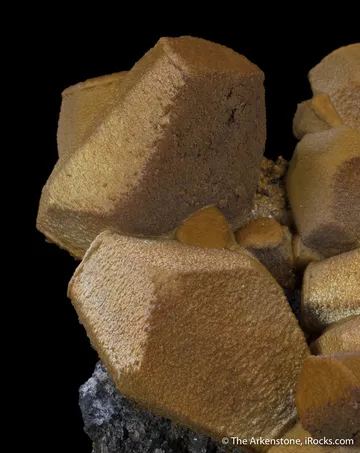
Northern Cape siderite in the collector market is dominated by the Aggeneys/Broken Hill Mine epimorphs after calcite: hollow, barrel-shaped to scalenohedral casts in which the original calcite dissolved away and left a shell of orange-brown siderite mixed with dark sphalerite. Good examples are fully three-dimensional, lightweight for their size, lustrous to subtly iridescent, and preserve crisp calcite morphology rather than collapsing into dull crusts; cabinet specimens from the 2006 find can reach dramatic sizes, with documented examples around 7 cm across and show specimens reported to 25–30 cm at Munich. The strongest pieces balance sculptural form with intact hollow terminations and visible association on sphalerite-rich matrix, while ordinary pieces are flatter, broken along the cast edges, or visually muddy where siderite and sphalerite are poorly expressed. (commons.wikimedia.org)
Sphalerite from Northern Cape appears in two collector contexts: as the economic zinc sulfide of the Aggeneys-Gamsberg district and as the dark, sparkling partner in the Broken Hill Mine siderite-sphalerite casts after calcite. In the Aggeneys-Gamsberg ores, sphalerite ranges from honey-yellow to orangish brown in petrographic descriptions, associated with galena, pyrrhotite, pyrite and chalcopyrite in metamorphosed sulfide assemblages; in specimen-grade epimorphs it is most visible as black to dark brown, glittering material in the cast walls and matrix. The best collector examples show a clear two-mineral effect—warm siderite skin, darker sphalerite sparkles or matrix, and unmistakable calcite-afterform geometry—rather than anonymous black sulfide masses. (segconferences.org)
Calcite is both a major gangue and a specimen-stage mineral in Northern Cape. In the Kalahari Manganese Field it occurs in carbonate-rich Hotazel Formation rocks, in Mn-bearing calcite associations, and as lustrous white to pale crystals that can host yellow ettringite, sturmanite, hematite, manganite, kutnohorite and other manganese-field minerals; at Aggeneys it is the vanished precursor whose scalenohedral or barrel-shaped crystals were coated and then dissolved to create the celebrated siderite-sphalerite epimorphs. Strong Northern Cape calcite specimens are therefore judged less by calcite alone than by association and story: sharp, bright calcite carrying rare Kalahari sulfates or manganese silicates, or casts whose empty interiors prove that calcite once supplied the architecture. (researchgate.net)
Magnetite is documented from Northern Cape both in the Hotazel iron-formation of the Kalahari Manganese Field and in the Aggeneys-Gamsberg district, but it is more often a geological component than a headline cabinet mineral. In Hotazel rocks it appears in banded assemblages with chert, greenalite, minnesotaite, siderite and carbonate minerals, commonly as fine to recrystallized bands rather than freestanding octahedral display crystals. Collector-quality pieces are desirable when magnetite contributes a sharp black metallic contrast or a meaningful ore-texture association with siderite, calcite, hematite or manganese minerals; ordinary pieces are massive, uncrystallized, or indistinguishable from other dark Fe-Mn oxides without analytical context. (researchgate.net)
Beyond these four species, Northern Cape’s specimen identity rests on a remarkable constellation of Kalahari manganese minerals: rhodochrosite, manganite, hausmannite, hematite, ettringite, sturmanite, thaumasite, inesite, gaudefroyite, sugilite, poldervaartite, olmiite, wesselsite, effenbergerite, vonbezingite, cairncrossite, colinowensite, shigaite and many more. The IUGS geoheritage profile records 182 valid minerals and 28 type-locality species for the Kalahari Manganese Field, with Wessels alone credited with half of the type species, including vonbezingite, effenbergerite, poldervaartite and wesselsite. (iugs-geoheritage.org)
The most important authenticity issue is labeling, not laboratory fakery. Aggeneys siderite-sphalerite casts are frequently labeled simply “Aggeneys,” and older or dealer labels may say “Aggeneys Mine” or “Black Mountain Mine,” but the well-known 2006 material is now generally tied more precisely to the Broken Hill Mine at Aggeneys. That distinction matters because Black Mountain can refer broadly to the mining complex, the company, or related operations, while Broken Hill identifies the specimen source far more usefully. (mindat.org)
For Kalahari manganese specimens, the equivalent problem is mine-level precision. Labels reading “Kalahari Manganese Field,” “Kuruman,” “Hotazel,” “N’Chwaning,” or “Wessels” are common, and older specimens may not reliably distinguish N’Chwaning I from N’Chwaning II. Serious collectors should preserve every old label, invoice and dealer note, because pocket, shaft and date information can materially affect value, especially for rhodochrosite, ettringite, sturmanite, shigaite, sugilite and rare type-locality minerals.
Condition issues are predictable from the mineralogy. The Aggeneys epimorphs are hollow casts, so they can look large but be surprisingly light and vulnerable to edge bruising, crushed terminations and pressure cracks. Kalahari calcite and rhodochrosite can have cleaved or bruised edges; manganite and hematite may show scuffs on bright faces; fibrous or massive sugilite can be polished, sawn or stabilized in lapidary contexts; and delicate ettringite-group minerals should be protected from careless washing, heat swings and rough handling. Avoid acid testing on display specimens: calcite and rhodochrosite will react, and the visual or monetary damage will outlast the identification question.
The market remains active but highly stratified. Common small Kalahari manganese-field specimens, including hematite, calcite associations, rhodochrosite fragments, manganite and lesser sturmanite, appear regularly through dealers and online venues. Fine old N’Chwaning rhodochrosite, exceptional Wessels rarities, and large undamaged Aggeneys siderite-sphalerite casts are a different market: they surface intermittently from older stock or collection dispersals, and prices rise sharply with aesthetics, documentation, size and lack of repair. A 2026 Minfind listing for a 100 × 80 × 40 mm Aggeneys siderite-sphalerite after calcite specimen recorded a $9,500 asking price, while another contemporary EarthWonders listing described a Broken Hill Mine example at $3,000—useful evidence of how strongly the best examples are valued when intact and well documented. (minfind.com)
The most visceral account of Northern Cape collecting is the descent into N’Chwaning II described by Cape Minerals. The scene is not romantic in the usual field-collecting sense—no sunlit hillside, no quiet hammering on a dump. It begins with the uncomfortable weight of a cap lamp, loose overalls trapping heat, hands clamped onto the bar of a mine vehicle, and the portal ahead. Underground, the atmosphere is saturated: “100% humidity,” the smell of a recent blast, warm rock to the touch, and tons of manganese ore above. In the dim underground light, small cavities in the face look promising, but the pocket work is slow, hot and physical; many openings extend deep into hard manganese ore and require heavy equipment rather than a collector’s casual chisel. (capeminerals.co.za)
The reward comes only at surface. Specimens recovered during that visit were wrapped in old cloth and packed into plastic containers before inspection. Much of the material was manganoan calcite, often with sprays or tufts of kutnohorite. In the mine lighting the pieces looked muted, but once washed and brought into daylight—the first sunlight those cavities had ever seen—the colors emerged. That moment explains why Kalahari specimens so often carry pocket memory. In an underground manganese mine, a good piece is not merely “found”; it is noticed in poor light, extracted from warm ore, carried out through industrial workings, and only then revealed.
Another story belongs to the 2006 Munich Show. Among the new material in the Overseas Area were strange hollow calcite casts from Aggeneys: not ordinary siderite after calcite, not ordinary sphalerite, but a mixture of an iron carbonate and a zinc sulfide preserving the shape of the dissolved calcite crystals. The Trinity Mineral Co. report captured the surprise succinctly: “Yes you heard me correctly - a carbonate and sulfide.” Bruce Cairncross had produced analyses showing both species in the casts, and a 30 cm specimen from the find was illustrated at the show. In a marketplace accustomed to pseudomorphs, the Aggeneys pieces still managed to feel new. (trinityminerals.com)
The broader Kalahari story begins earlier, with Guido Sacco and Black Rock. Cape Minerals recounts Sacco, an Italian mining engineer, exploring the Black Rock deposit in 1940 and recognizing the potential for high-grade manganese ore. That led to the acquisition of farms including Belgravia, N’Chwaning and Santoy, and to the Assmang development of the field. Once the Hotazel ore was discovered in the 1950s, mines such as Langdon and Hotazel entered collector history: Langdon for todorokite, Hotazel for early rhodochrosite. The great red Kalahari rhodochrosites that followed in the 1960s and especially the N’Chwaning I discoveries of 1977–1978 changed the field from an ore province into a specimen legend. (capeminerals.co.za)
Kimberley adds a different Northern Cape drama. De Beers records the De Beers Mine discovery in May 1871 and the Kimberley Mine discovery in July 1871; by 1872, the rush had turned the place into a dense field of tents, shacks and diggers. Later government and tourism accounts describe the Big Hole as the famous hand-dug excavation that still anchors the Kimberley Mine Museum. For mineral collectors, Kimberley is less about modern cabinet specimens than about historical gravity: the province that gives us N’Chwaning rhodochrosite and Aggeneys casts is also the province that helped build the industrial diamond trade. (debeersgroup.com)