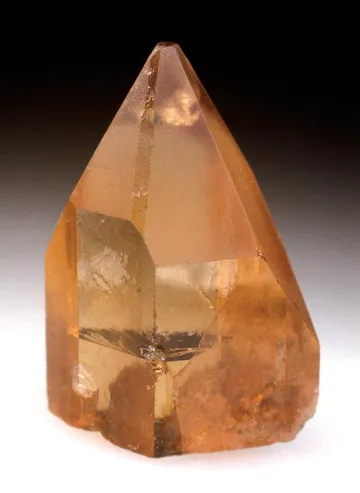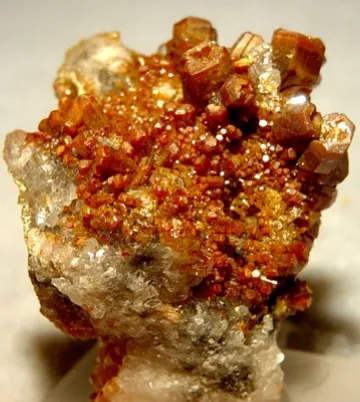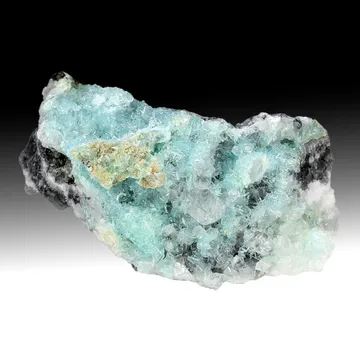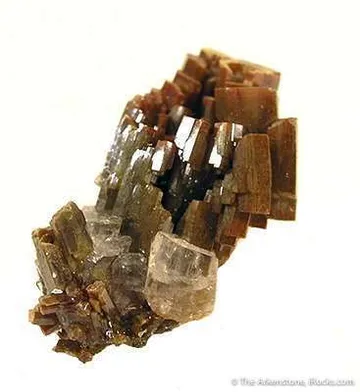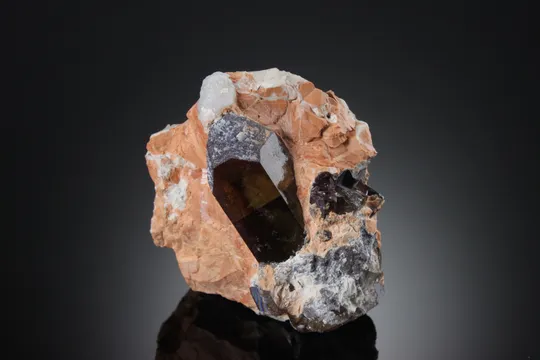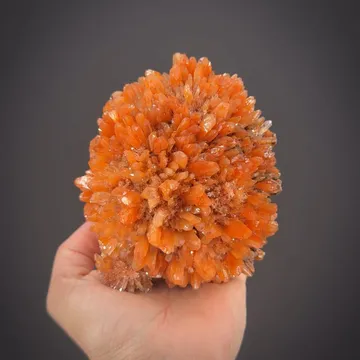
Navidad Mine, Mexico — renowned for pink-purple fluorite octahedra and orange creedite balls, with rare lilac creedite on green fluorite, prized by collectors.
Key facts
Navidad is one of the modern Mexican localities that changed how collectors think about affordable, high-quality creedite. The mine is not a precious-metal showpiece like Ojuela or Santa Eulalia; its working identity is fluorspar. But in the vuggy, brecciated fluorite vein system of the Indé area of Durango, industrial ore mining repeatedly opened clay-filled cavities and silicified pockets that produced an unmistakable specimen suite: pink to purple octahedral fluorite plates, orange to colorless creedite “balls,” and rarer lilac creedite groups on green and violet fluorite. The best examples have that immediate Navidad look—raspberry-pink fluorite octahedra on pale quartz or chalcedonic matrix, or bristling orange creedite sprays perched on etched fluorite, sometimes with green or purple cleavage fragments caught like confetti among the needles.
The setting is the dry, rugged country of north-central Durango, in the foothills of the Sierra Madre Occidental and within the broader Mexican Fold Belt. The deposit is a fluorite vein system developed in a region where folded carbonate rocks were intruded and cut by silica-rich volcanic and subvolcanic rocks. Hydrothermal fluids deposited fluorite in vugs and breccias; later oxidation and groundwater alteration of the upper fluorite system created the chemistry and open spaces in which creedite could grow. That geological sequence is why Navidad specimens so often marry calcium-fluorine mineralization with secondary aluminum-sulfate-fluoride chemistry: fluorite supplied fluorine and calcium, the surrounding rocks contributed aluminum and sulfate-bearing alteration products, and clay-filled voids protected delicate crystals until miners exposed them.
Regional View
Country View
Collectors will encounter several locality names on labels. “Navidad Mine” or “Mina Navidad” is the practical collector name; “Clarines Navidad” or “Clarines de Navidad” is the fuller mine name recorded for the operation. Older labels often say Abasolo or Rodeo, because those settlements were convenient reference points for dealers, but the mine itself is in Indé Municipality, Durango. Good modern labels should read simply: Navidad Mine, Indé Municipality, Durango, Mexico.

Photo: Wikimedia Commons
The finest Navidad fluorites are not cubic display pieces in the classic Elmwood or Rogerley sense; they are plates and clusters of octahedra, commonly translucent, with lilac, purplish-pink, or raspberry color. Some began as very dark purple to nearly black fluorite and became pinker after light exposure, a locality-specific point that matters when assessing both appearance and label history. The creedites, meanwhile, made the mine internationally important: spherical or hemispherical aggregates, radiating sprays, isolated balls, and later lilac druses from old workings all reached a quality that placed Navidad beside the great creedite localities of Santa Eulalia and Akchatau, even if Navidad’s typical palette is warmer and more orange.

Photo: Wikimedia Commons
Search for specimens: View all specimens from Navidad Mine, Mexico
The Navidad Mine is a fluorite mine in Indé Municipality, Durango, roughly northwest of Rodeo and west of Torreón in the arid interior of northern Mexico. The often-seen label names Abasolo, Rodeo, and “Mina Rodeo” are historical market conveniences rather than the best present-day locality wording. Abasolo is a nearby settlement that dealers used as a reference point, while Rodeo is the better-known municipality and town in the region; mineralogically and administratively, however, the mine is placed at Navidad Mine, Indé Municipality, Durango.
The deposit is a brecciated fluorite vein system. Massive green and purple fluorite formed the economic ore, while open spaces in the vein produced specimen material. Published descriptions of the ore body record northwest-southeast-trending fluorite veins, locally several feet to many feet thick, with massive banded fluorspar grading high enough to justify repeated industrial extraction. Mining has used both open-pit and underground methods, with deeper work following the productive parts of the vein below the surface workings. Ore was crushed and upgraded, and state mining summaries list Navidad as a CaF2 operation, with heavy-media concentration reported for the mine.
The specimen zones are closely tied to the structure of the ore body. Pink to purple fluorite plates came from vuggy zones and small fluorite-quartz cross-veins, where octahedral crystals formed on or within silica-rich coatings. These plates are typically made of many intergrown octahedra rather than isolated freestanding crystals. Some pieces retain pale chalcedonic or fine quartz coatings; many others were etched to reveal the fluorite more dramatically. The resulting look—pink octahedra on bleached white, sometimes pitted matrix—is so familiar in the trade that it has become one of the quick visual signatures of the locality.
Creedite formed later in clay-filled breccia voids in the same fluorite system. The classic Navidad creedite groups are often nearly spherical aggregates of outward-pointing prismatic crystals. Many appear to have grown as floaters in clay rather than being attached firmly to a pocket wall; specimens can show no obvious point of attachment, which helps explain the 360-degree “starburst” form of the best pieces. Colors range from colorless and white through honey, orange, burnt orange, brown, and rare violet or lilac. The most desirable examples combine high luster, sharp terminations, transparency at the tips, minimal bruising, and contrasting fluorite fragments or matrix.
Mining history at Navidad reaches back at least to mid-20th-century industrial fluorspar development. The mine is described in recent mineralogical literature as having opened in 1947, and official mining summaries from Durango list Navidad as an active CaF2 mine operated by Minerales y Productos Metálicos, S.A. de C.V. The locality has been worked intermittently, responding both to fluorspar markets and to the practical realities of remote underground mining. Older specimen accounts describe miners and dealers recovering fluorite and creedite during active extraction; later market waves, especially material from the 2000s and a distinctive late-2019 find, brought renewed attention from advanced collectors.
Specimen production occurred in several recognizable chapters. Early interest centered on pink and purple fluorite octahedra, commonly on chalcedony or quartz. By the mid- to late 1980s, creedite from the mine had entered the international market and attracted notice because of its sharp crystals and rich orange color. Around the 2000s, large lots of excellent orange creedite became widely available, including cabinet-sized balls and compound aggregates. A later pocket or group of pockets found in old mine galleries in late 2019 produced pale pink to lavender and lilac creedite on green and purple fluorite, specimens that looked markedly different from the orange “Navidad ball” material and were publicized as Tucson 2020 novelties.
Collecting access should be understood realistically. Navidad is not a casual field-collecting site; it is a private industrial mine, and underground access is a matter of mine permission, safety, and active work conditions. The specimen market has historically depended on miners, mine contacts, and dealers, not on open collecting by visiting hobbyists. Collectors should treat any contemporary field access claim with caution unless it comes with clear permission from the operator. The 2022 fatal rockfall reported at Clarines Navidad is a sobering reminder that this is an active or recently active industrial underground environment, not a safe recreational collecting locality.
Fluorite from Navidad is most prized as plates of intergrown octahedral crystals, typically pink, purplish-pink, lavender, or purple, with crystals commonly around thumbnail to small-cabinet scale and individual octahedra often in the centimeter range; larger prominent octahedra to about 5 cm have been reported from notable lots. The best pieces show saturated raspberry to lavender color, translucency, sharp octahedral form, and pleasing contrast against white chalcedony or fine quartz, while more ordinary pieces are dense, bruised, chalky from acid cleaning, or visually monotonous plates of crowded crystals. Associations include quartz, chalcedony, creedite, and locally gearksutite; the most desirable combinations place orange or lilac creedite against green or violet fluorite, though pure fluorite plates remain the classic Navidad look.
Creedite is the mineral that made Navidad a world-class specimen locality: sharp monoclinic prisms occur as radiating balls, hemispherical “starbursts,” crusts, sprays, and, in the late-2019 material, lilac to pale violet druses and fanlike groups on green and purple fluorite. Classic specimens range from small thumbnail clusters to cabinet-sized balls, with individual crystals commonly in the millimeter-to-centimeter range and exceptional reported balls reaching several inches across. The normal Navidad palette is colorless to orange, honey, and burnt orange, with darker brown or black tones caused by inclusions and rare violet or lavender examples valued especially highly. Top specimens are three-dimensional, lustrous, sharp, undamaged, and aesthetically contrasted with fluorite fragments or matrix; mediocre pieces are dull, iron-stained without brilliance, heavily contacted, or reduced to broken sprays on crumbly matrix.
Other documented minerals from Navidad make a compact but interesting secondary assemblage rather than a large polymetallic suite. Quartz and chalcedony are important as matrix and coatings for the fluorite. Gearksutite is locally significant, particularly where creedite overgrows sparkly white gearksutite and where creedite-gearksutite combinations appear on the market. Mindat-listed and specimen-documented rarities include cacoxenite, dufrénite, goethite, hematite, jarosite, kaolinite, leucophosphite, lipscombite, marcasite, meurigite, and strengite. No accepted type-locality mineral is known from the Navidad Mine; creedite itself was named for the Creede district of Colorado, not for Navidad, but Navidad is one of the species’ most important modern display localities.
Navidad specimens are abundant enough that beginners can still own a representative piece, yet the best examples remain sharply tiered by quality. Common orange creedite balls and pink fluorite plates are regular market items. Fine large creedite, lilac late-2019 creedite, unusually aesthetic creedite-on-fluorite combinations, and clean pink fluorite plates with sharp translucent octahedra are much scarcer. Provenance matters: labels reading “Abasolo,” “Rodeo,” “Mina Navidad,” or “Navidad Mine” may all refer to the same collecting locality, but a disciplined modern label should preserve the historical wording and add the corrected locality: Navidad Mine, Indé Municipality, Durango, Mexico.
The most important authenticity issue for Navidad fluorite is surface history rather than outright fakery. Many fluorite plates were naturally coated with fine quartz or chalcedony and later etched with hydrofluoric acid to expose the octahedra. Acid cleaning can leave a bleached, pitted, sugary, or crumbly white matrix, and buyers should inspect whether the matrix has been weakened. Fluorite from this locality is also known for color change after light exposure: naturally very dark purple material can lighten or shift toward pink after exposure to sunlight. Because much of the market material is already light-altered, a bright pink color should not automatically be treated as suspicious, but it should be understood as part of the specimen’s history.
Artificial luster enhancement is a real concern. Navidad fluorites with an unnaturally wet or plastic shine, especially on otherwise chalky etched matrix, should be examined for spray coatings or oils. “Luster in a can” has long been part of collector warnings for this locality. Look for a film bridging tiny pits, glossy residue in protected recesses, an even unnatural shine on both crystal and matrix, or a chemical smell. Good natural fluorite will show appropriate glassy luster on crystal faces without the matrix looking sealed.
Condition is critical for creedite. The crystals are brittle, protruding, and easily bruised at the tips, especially on spherical aggregates that have no protected back side. Many pieces have broken outer needles from mining, washing, packing, or handling. A 360-degree floater with intact terminations all around is far more valuable than a visually similar ball with a flattened or damaged underside. Creedite specimens should be handled by the matrix or base, never by the spray, and stored where neighboring specimens cannot rub the crystal tips.
Fluorescence is relevant but should not be oversold. Navidad fluorite can show blue to purple-blue fluorescence under ultraviolet light, and some dealer-documented examples from the late-2019 creedite-fluorite find note fluorescence under longwave and shortwave UV. Fluorescence can help confirm the presence of fluorite, but it is not a stand-alone locality proof. Creedite itself may show weak pale responses depending on impurities and coatings, but the visual collector value of Navidad creedite is overwhelmingly in form, color, sharpness, and association.
Mislabelling is common in two directions. First, Navidad is often sold under older Abasolo or Rodeo labels; these are usually historical imprecision rather than fraud. Second, orange Mexican creedite from Navidad can be confused with creedite from Santa Eulalia, especially in older collections that simply say “Mexico.” Santa Eulalia is more famous for purple creedite, while Navidad is especially associated with orange starburst aggregates and creedite on fluorite, but color alone is not enough. Matrix, association, habit, and old labels should all be considered.
The most charming Navidad story is not about a museum pocket but about lunch breaks. In the early days of specimen recovery, the fluorite attracted attention before the creedite did. Miners working the fluorspar ore would spend spare time cleaving fluorite into octahedra to sell to dealers and outlets in El Rodeo and Durango. It is easy to picture the scene: industrial fluorite being mined for steel, cement, chemical, and metallurgical uses, while the same vein quietly supplied the pink octahedra that would end up in collector drawers around the world. What the ore plant wanted was CaF2; what collectors wanted was geometry, color, and a bit of white chalcedonic contrast.
The creedite story began later. Mexico’s first celebrated creedites were not from Navidad but from the Santa Eulalia district of Chihuahua, and those purple groups quickly became the comparison standard. Navidad’s miners, once dealers taught them what to look for, began saving their own creedite in the mid-1980s. The early pieces were described as transparent, pale reddish-orange crystals about an inch long, striking enough to draw notice at the Nürnberg show in 1988. From there, Navidad moved from being a fluorite locality with a secondary curiosity to one of the two great Mexican sources of creedite.
By 1999, Stan Esbenshade of Midwestern Minerals was associated with important recoveries from the Rodeo/Navidad area. The reported lots included numerous plates of pink to purple octahedral fluorite, with individual crystals averaging about 2 cm and occasional “Cyclops-like” singles to 5 cm. The same activity produced lustrous creedite balls from roughly 1 cm to 15 cm across, some incorporating purple fluorite chunks for a vivid contrast against white to orange creedite. Even more unusual were chunks of massive lavender creedite to about 10 cm, partly encrusted with tiny lustrous lavender crystals. For a locality most collectors think of as orange, those lavender notes are important.
A new wave of orange creedite in the 2000s made the locality democratic. Navidad creedites were not just trophy-room rarities; they came out in enough quantity that serious collectors, mid-range buyers, and beginners could all own genuine, attractive examples. The best pieces, however, were anything but common. Large intact floaters with no obvious attachment point, bright orange color, sharp glassy prisms, and fluorite accents stood well above the ordinary broken or dull balls. One notable collector account from 2007 describes acquiring a 9.4-inch-tall orange creedite from a new Navidad find, with spherical sprays of creedite associated with fluorite and quartz—exactly the kind of oversize display specimen that explains the mine’s lasting reputation.
The late-2019 find added a different visual chapter. Instead of the familiar orange balls, collectors saw pale pink to lavender and lilac creedite, often in short, sharp prismatic or bipyramidal crystals on green and purple fluorite. These specimens surfaced as Tucson 2020 novelties and were repeatedly described as unlike the Navidad material collectors had been seeing in recent years. Dealer notes tied the find to old galleries in the mine, an explanation that fits the look: old workings intersecting a pocket style preserved from an earlier stage, with delicate lilac creedite on contrasting fluorite rather than the standard orange starburst aggregate.
There is also a hard, modern mining story attached to the name Clarines Navidad. On September 29, 2022, a rockfall inside the mine near San Rafael de Jícora killed Manuel Hernández Macías and injured Sergio Martín Hernández Favela. Reports described a large rock, approximately three tonnes, detaching while the men were working underground, and noted that the operation employed workers in fluorite extraction. For collectors, the incident is more than a footnote. It is a reminder that even the prettiest creedite spray came from a working mine where specimen beauty was secondary to difficult industrial labor.