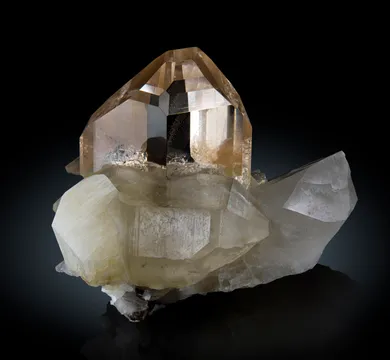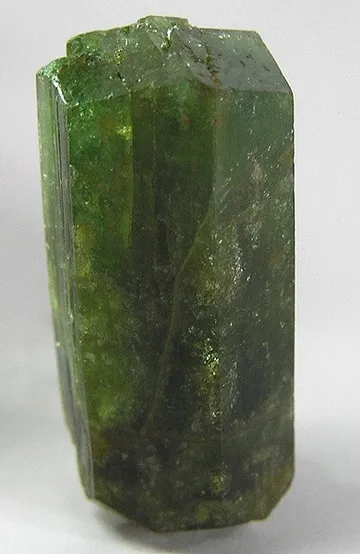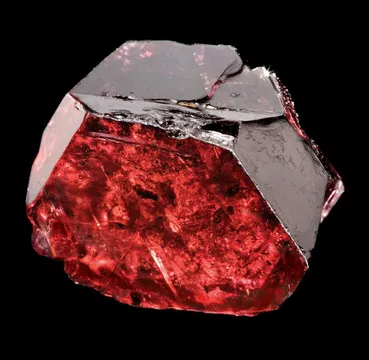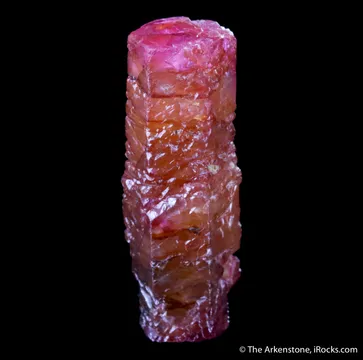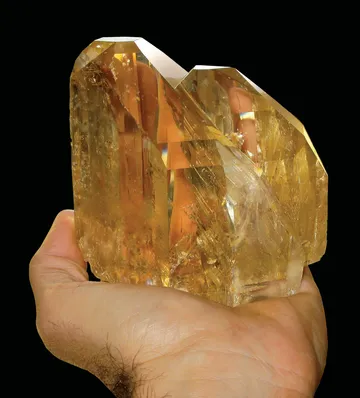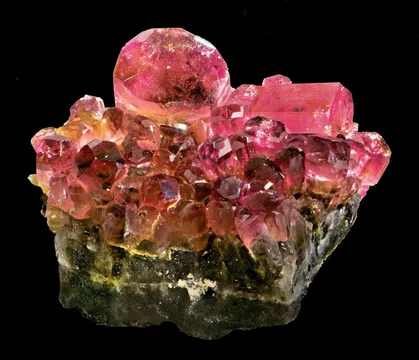
Myanmar - a constellation of gem provinces, home to Mogok's rubies, sapphires, spinel, and rare borates, plus Hpakant jadeite; standout country for collectors.
Key facts
Myanmar is not a single mineral locality so much as a constellation of world-class gem provinces, each with its own geology, mining culture, and collecting character. To specimen collectors, the country matters above all for two mineralogical arenas: the Mogok Stone Tract of Mandalay Region, the classic source of marble-hosted ruby, sapphire, red spinel, painite, and an astonishing suite of borate-, silicate-, and oxide-rich rarities; and the Hpakant–Tawmaw jade tract of Kachin State, the preeminent source of fine jadeite jade and associated high-pressure rocks. Add Momeik pegmatites, Mong Hsu ruby, Namya spinel, peridot localities near Pyaung Gaung, and the fossiliferous amber fields of northern Myanmar, and the result is one of the most collector-significant countries in Asia.
The best Myanmar specimens have a look that is instantly recognizable. Mogok ruby favors sharp red to magenta corundum crystals in white calcite or marble, sometimes with scapolite, phlogopite, graphite, pyrite, spinel, or titanite. Mogok spinel occurs as ruby-red to pink octahedra and twinned crystals, often in white or gray marble, with the most desirable matrix pieces showing strong color contrast and bright vitreous luster. Painite, kyawthuite, johnkoivulaite, hibonite, johachidolite, serendibite, poudretteite, clinohumite, sinhalite, scapolite, moonstone, peridot, danburite, topaz, tourmaline, zircon, and lapis lazuli give the district a rare-mineral depth far beyond its fame in jewelry.
Regional View
Country View
Geologically, Mogok lies within the Mogok Metamorphic Belt, a north–south belt of high-grade metamorphic rocks and younger intrusives connected to Himalayan collision and later tectonic deformation. Its gem deposits are not one deposit type but a mosaic: ruby- and spinel-bearing marbles, skarns and calciphyres, syenitic and pegmatitic bodies, greisens, alluvial and eluvial gravels, and weathered hillside deposits. Hpakant, by contrast, is a jadeite province: jadeitite dikes and boulders associated with serpentinite, altered ultramafic rocks, amphibolite, albitite, and boulder conglomerates along the Uru River system.

Photo: Wikimedia Commons

Photo: Wikimedia Commons
Historically, Myanmar’s mineral reputation has carried two intertwined identities. In the gem world it is “Burma,” the benchmark source of ruby and jadeite. In mineralogy it is Myanmar, the country that supplied type material and near-mythic rarities from small parcels of gem gravel: painite from Mogok, kyawthuite from alluvium north-northeast of Mogok, and johnkoivulaite from Pein-Pyit. That combination—supreme gemstones and species-level rarity—is why Myanmar labels remain so compelling in advanced mineral cabinets.
Search for specimens: View all specimens from Myanmar
For mineral collectors, “Myanmar” usually resolves into several collecting sub-localities, and a good specimen label should go deeper than the country name whenever possible. The most important is the Mogok Stone Tract, centered on Mogok and Kyatpyin in Mandalay Region. The district is mountainous, deeply weathered, and geologically intricate. Marble-hosted ruby and spinel occur both in primary marble and skarn-like contexts and in the secondary gravels known locally as byon. The richest valley-floor gravels were historically the easiest to work; as those became exhausted, mining expanded into hillsides, mountain slopes, caves, crevices, shafts, and hard-rock workings.
Mogok mining has used a remarkable range of methods in close proximity. Alluvial washing recovers dense gem minerals from weathered gravel after overburden is removed. Open-pit work exposes marble boulders and gem-bearing gravel horizons; the boulders may be crushed if they contain ruby or spinel. Cave-and-crevice mining follows natural openings in marble, commonly enlarged by blasting, and some of these workings descend hundreds of meters. Tunnel mines attack primary marble with controlled explosives, chosen to break rock while limiting shock damage to corundum and spinel. In the modern era, excavators, water cannons, washing plants, and jigging devices increasingly replaced the narrow four-foot traditional pits that older accounts describe.
The classic Mogok ore body is not an ore body in the metallic-mining sense. It is a concentration of gem crystals produced by metamorphism, metasomatism, and weathering. Ruby and red spinel are tied especially to marbles and calcium-rich rocks; sapphire also occurs in Mogok but may reflect somewhat different host environments, including syenitic and skarn-related associations in some deposits. Pegmatitic pockets around Mogok and nearby Momeik account for a different collecting suite: tourmaline, beryl, topaz, danburite, feldspar, quartz, jeremejevite, rare beryl-group species, and other uncommon minerals.
The Hpakant–Tawmaw jade tract in Kachin State is the other great pillar of Myanmar mineral collecting, though it is more a gem-rock province than a source of cabinet crystals. Primary jadeitite is hosted by serpentinite and related ultramafic rocks, with dikes and lenses of jadeitic rock cutting the altered peridotite along shear zones. Secondary mining works boulders in the Uru Boulder Conglomerate and river-derived deposits. Tawmaw is the classic primary outcrop; Hpakant became the central mining town, with other important names including Lonkin, Sate Mu, Hwehka, Kansi, and Maw Sit. The jade assemblage includes jadeite, albite, amphiboles, kosmochlor-rich material, chromite, analcime, chlorite, talc, magnesite, chalcedony, and related alteration minerals.
Mining history in Myanmar is inseparable from state control, concessions, and conflict. Mogok’s ruby mines were brought under Burmese royal control in the late sixteenth century; British control followed the nineteenth-century annexation of Upper Burma, and Burma Ruby Mines Ltd. introduced mechanized methods and international marketing. After the company period, much mining returned to local and small-scale methods. In the late twentieth century, state-operated and joint-venture mining revived more mechanized work, particularly through Myanma Gems Enterprise structures and licensed operations. In jade, Hpakant grew into a vast mining landscape of primary workings, conglomerate pits, river digging, and enormous waste dumps feeding a global market centered heavily on China.
Collecting access today is highly constrained. Even in calmer periods, foreigners required permission to visit Mogok and could not freely purchase or export gems from mining areas. Legal export has generally been easier for finished stones purchased through registered channels than for rough or mineral specimens bought informally. Since Myanmar’s 2021 coup and the expansion of armed conflict, access, logistics, and ethical sourcing have become still more difficult. Mogok changed hands during the conflict, road access has been intermittent, and mining and trading have been affected by fighting, telecommunications restrictions, and sanctions risk. Hpakant is likewise dangerous, with landslides, armed conflict, and severe social impacts documented repeatedly.
Notable specimen-producing pockets and sublocalities include Ohngaing and the Wet-loo–Hinthar-taung area for painite and ruby associations; Pein-Pyit for spinel and the beryl-group mineral johnkoivulaite; Dattaw and Baw Mar for major corundum production; Pan-taw and nearby pegmatites for topaz, tourmaline, fluorite, feldspar, jeremejevite, and other pegmatite species; Pyaung Gaung for peridot; Momeik and the Kat Chay–Palelni area for tourmaline and rare beryl-group material; Namya for spinel; Mong Hsu in Shan State for ruby, including trapiche-like material; and Tawmaw–Hpakant for jadeite, kosmochlor-rich jade rock, and high-pressure alteration assemblages.
Ruby, the red variety of corundum Al2O3, is Myanmar’s signature mineral. Mogok ruby specimens are prized less for size alone than for the union of color, fluorescence, crystal form, and matrix. Fine pieces show translucent to gemmy red crystals set in white calcite or marble; some crystals are tabular, some barrel-like or pseudo-octahedral, and some appear as rich red crystal groups scattered across a pale carbonate groundmass. In gemology, low iron content and chromium-driven fluorescence help explain the luminous red body color that made Burmese ruby a standard of comparison.
Sapphire, also corundum Al2O3, is a major Mogok mineral in blue, pink, violet, yellow, and fancy colors. Blue sapphires from Mogok are not all alike; they vary by mine, host environment, zoning, inclusion scene, and color tone. Baw Mar is especially important for sapphire production, and documented inclusions in Mogok sapphires include apatite, calcite, feldspar, mica, monazite, nepheline, rutile, scapolite, spinel, zircon, and other phases. Sapphire crystals as mineral specimens are scarcer on the market than faceted material and are often waterworn, etched, or recovered as single crystals from gravels.
Spinel, MgAl2O4, is the great collector’s counterweight to Mogok ruby. The district produces red, pink, violet, orange, and blue spinel, with classic crystals occurring as sharp octahedra in marble. Red Mogok spinel has long been confused historically with ruby in royal jewels, and fine matrix spinel specimens remain much rarer than loose gem crystals. Collectors value bright red to magenta octahedra on marble, contactless floater crystals, twinned “Star of David” forms, and pieces showing the famous Burmese red fluorescence. Condition matters sharply: octahedral corners and edges are easily bruised during recovery from marble.
Jadeite, NaAlSi2O6, is the defining mineral of the Hpakant–Tawmaw jade tract. Specimen mineralogists should remember that jadeite jade is a rock, not a single crystal specimen: fine jadeite consists of interlocking pyroxene grains and may contain diopside, kosmochlor, albite, amphiboles, analcime, chromite, rutile, chlorite, talc, and other minerals. The highest-value “Imperial” green color is chromium-related, while lavender, white, black, and orange-brown materials reflect other trace-element or staining mechanisms. For collectors, rough boulders, polished slabs, and documented mine-source jadeite are locality objects as much as mineral specimens.
Painite, CaZrAl9(BO3)O15, is one of Myanmar’s most celebrated type-locality minerals. It was described from a deep garnet-red crystal found in Mogok gem gravel near Ohngaing, recognized as unusual by A. C. D. Pain. For decades painite was an almost unobtainable rarity, known from only a few crystals and fragments; later discoveries in the Mogok area made small crystals and rough fragments more available, though good terminated crystals and matrix specimens with ruby remain rare. Painite’s color range—brownish red, orange-red, and garnet-red—can be deceptively gemmy, but many market pieces are small, abraded, fractured, or incomplete.
Kyawthuite, ideally Bi3+Sb5+O4, is one of the most extraordinary modern species from Myanmar. The known material was a waterworn reddish-orange gem crystal from alluvium at Chaung-gyi-ah-le-ywa in the Chaung-gyi valley north-northeast of Mogok. It was faceted before recognition as a new mineral, which makes it a special case: a valid mineral species represented by an essentially gemological specimen rather than by a suite of collector crystals. No ordinary collector should expect to acquire kyawthuite; in practical collecting terms it is a reference point for Mogok’s chemical oddities, not a market species.
Johnkoivulaite, now referred to as johnkoivulaite-(Cs), is another Mogok type mineral, a cesium-, boron-, and magnesium-rich member of the beryl group with formula Cs(Be2B)Mg2Si6O18. The described material came from gem gravels in the Pein-Pyit area and consisted of a single grayish-violet crystal with strong pleochroism. Its importance is twofold: it proves that Mogok’s gem gravels still contain species-level surprises, and it links the district’s mineralogical rarity to the beryl-family chemistry more familiar from pegmatites.
Eckermannite is also tied historically to Myanmar as a type-locality amphibole from the Hpakant–Tawmaw jade tract. That fact is easy to miss because the jade district is usually discussed in gemological rather than systematic-mineralogical terms. The broader Hpakant assemblage includes sodic amphiboles in and around jadeitite, reflecting the unusual high-pressure, fluid-rich alteration history of the serpentinite-hosted jade deposits.
Mogok’s rare-mineral list extends well beyond its type species. Hibonite, johachidolite, poudretteite, serendibite, sinhalite, clinohumite, kornerupine, danburite, scapolite, titanite, rutile, zircon, apatite, garnet, feldspar, lapis lazuli, ekanite, haüyne, sodalite-hackmanite, moonstone, peridot, tourmaline, beryl, chrysoberyl, topaz, fluorite, and quartz all appear in documented Mogok-region assemblages. Some occur as specimen-quality crystals; others are known mostly as gem rough, inclusions, or analytical rarities. The finest non-corundum Mogok specimens tend to come from marble or pegmatite contexts: spinel octahedra on marble, clinohumite in carbonate matrix, gem peridot crystals, pink to red tourmaline from Momeik-type pegmatites, and well-formed topaz or danburite.
Mong Hsu ruby deserves separate mention because it changed the ruby trade in the 1990s. Located in Shan State, it became an important ruby source distinct from Mogok. Much Mong Hsu ruby is known for color zoning, dark cores, and heat-treatment issues, but the locality also produced striking trapiche-like rubies with sectoral growth patterns of real interest to collectors and gemologists. Labels that simply say “Burma ruby” may hide this distinction; Mogok and Mong Hsu material are not interchangeable in specimen style, geology, or market meaning.
Myanmar amber, or burmite, from Kachin State is not a mineral species but is often encountered in mineral and fossil collecting circles. It is a Cretaceous amber famous for biological inclusions, and its trade carries significant ethical and legal concerns because of conflict and mining conditions. For a mineral-specimen marketplace, burmite should be treated as a separate fossil/organic collecting category rather than conflated with Myanmar’s gem-mineral localities.
Myanmar specimens demand unusually careful labels. “Burma,” “Burmese,” and “Myanmar” are often used interchangeably in trade, but the label should preserve the most precise locality available: Mogok, Mogok Valley, Pein-Pyit, Ohngaing, Wet-loo, Hinthar-taung, Baw Mar, Dattaw, Pyaung Gaung, Momeik, Mong Hsu, Namya, Hpakant, Tawmaw, or another sublocality. Country-only labels are common on older material and inexpensive parcels, but they significantly reduce scientific value. A ruby in marble from Mogok, a heated Mong Hsu ruby crystal, a Namya spinel, and a Hpakant jadeite boulder are different collecting objects.
Authenticity concerns are serious. Ruby and sapphire from Myanmar are routinely heat treated in the gem trade, and Mong Hsu ruby in particular is strongly associated with heating to improve color and reduce dark cores. Lead-glass filling, flux healing, dyeing, and composite corundum can occur in broader ruby commerce; specimen collectors should be especially cautious of loose crystals or “matrix” pieces with suspiciously perfect color, artificial-looking attachment, or carbonate matrix that does not match known Burmese habits. For valuable ruby or sapphire specimens, independent laboratory work may be warranted, particularly when the piece is gemmy enough to carry faceted-stone value.
Spinel is less commonly treated than corundum, but synthetics and misidentification are common problems. Red spinel can be sold as ruby by non-specialists; conversely, ruby can be mislabelled as spinel when crystal form is misunderstood. True spinel is cubic, typically octahedral, singly refractive, and lacks corundum’s hexagonal/trigonal crystal habits. Mogok spinel on marble should be examined for glue repairs, edge bruising, filled clefts, and crystals reattached to matrix. Matrix spinels are much rarer than loose stones, so a fine red octahedron on white marble should never be assumed genuine without close inspection.
Jadeite is the most treatment-sensitive Myanmar material. Traditional waxing is widely accepted in finished jadeite, but bleached and polymer-impregnated “B-jade,” dyed “C-jade,” and combined B+C treatments materially change value and durability. Jadeite boulders and slabs can also be deceptive: artificial windows, stained openings, fake skins, inserted green plugs, reflectors, and epoxy-filled constructions are documented. For collectors, a rough jadeite boulder with a vivid green “window” is not inherently more trustworthy than a polished cabochon; the economics of jade have encouraged sophisticated fakery for generations.
Condition varies by species. Ruby and sapphire crystals from gravels are commonly rounded, etched, or abraded; sharp crystals in matrix are much more desirable but may have bruised terminations where marble was broken away. Spinel octahedra chip along corners. Painite crystals are often incomplete, fractured, included, or small, and many attractive reddish fragments lack clear crystal form. Jadeite slabs should be checked for cracks, resin, backing, dye concentration, and surface coating. Scapolite in Mogok matrix may fluoresce yellow, while ruby commonly fluoresces red to pink under UV; this can be useful for display and examination, but fluorescence alone never proves Burmese origin.
Rarity and availability are uneven. Country-label Myanmar ruby, sapphire, spinel, and jadeite are common in global trade; fine old Mogok matrix specimens are not. Painite is no longer the impossible rarity it once was, but high-quality crystals and classic ruby-associated pieces remain scarce. Kyawthuite and johnkoivulaite are effectively unavailable to ordinary collectors. Momeik and Mogok pegmatite rarities appear sporadically and often in small sizes. Because current conflict, sanctions, and transport disruption affect supply, many ethically minded collectors now prefer older documented specimens, ex-collection material, or pieces with transparent pre-conflict provenance.
For U.S. collectors, legal and sanctions questions are not abstract. Myanma Gems Enterprise has been sanctioned by the U.S. Treasury, and Burmese rubies, jadeite, and related jewelry have been subject to import restrictions at various times. Regulations and enforcement can change, and collectors should verify the current law before importing Myanmar gem material. Even when a specimen is legally tradable, ethical sourcing matters: recent Myanmar ruby, jadeite, and amber may be entangled with armed groups, state enterprises, forced labor risks, dangerous mining, or opaque cross-border trade.
The origin myth of Myanmar jade begins not with a miner but with a mule. In the version preserved in early English-language jade histories, a Yunnan trader moving through northern Myanmar needed to balance his pack animal. He picked up an ordinary-looking boulder and used it as ballast. Only later, when the stone was broken open, did the brown skin reveal vivid green jadeite. The tale is too neat to treat as geology, but it captures a truth every jade buyer still knows: the value is hidden under a weathered crust, and judgment begins before the stone is cut.
Mogok’s older ruby stories carry the same mixture of mineral fact and royal theater. Local tradition places the ruby mines under Burmese royal control by 1597, after control passed from Shan authority to the Burmese king. Centuries later, British mining companies brought a very different performance to the valley: concessions, drainage schemes, washing plants, water cannons, and a global advertising language for “Burma ruby.” Yet Mogok resisted full industrial simplification. The decomposed marbles, tropical weathering, cave systems, and erratic gem concentrations favored local knowledge. After Burma Ruby Mines Ltd. left, small-scale working returned, and in many places the mine was again a matter of people reading marble, gravel, water, and slope by experience.
One of the most vivid modern field scenes comes from the kanase women of Mogok. At mine after mine, after the washing jigs had done their work, women carried away the white marble tailings and attacked them with hammers. The point was not casual scavenging; it was an inherited right. By tradition, they could keep the stones they found. During the British mining period that work was restricted to women as a way to limit theft, and the custom endured. The image is unforgettable: brightly dressed women in painted or cone-shaped hats, children nearby, white marble dust underfoot, and the repeated metallic report of hammers breaking rock down so thoroughly that even a tiny ruby or spinel would not escape.
When GIA field gemologists Vincent Pardieu and Andy Lucas returned to Mogok in 2014, they were entering a district that had been nearly impossible for foreign gemologists to visit for more than a decade. They found not one kind of mine but a vertical catalog of mining methods. Some workings followed alluvial byon gravel; some were open pits stripping hillsides; some followed caves and crevices in the marble; others descended hundreds of meters on makeshift ladders into wet, slippery darkness. Pardieu’s field remark after considering the labor behind each stone was plain and accurate: “Now we start to understand the value of rubies.”
The 2014 expedition also recorded Mogok’s markets as living mineral exchanges rather than tourist shops. The team visited the Yoke Shin Yone morning market, known as the cinema gem market, and the Pan Shan afternoon market in Mogok; in Kyatpyin they visited Aung Thit Lwin and Pann Ma; at Barnardmyo, about an hour north of Mogok, gems mingled with produce and livestock. Traders carried torches and head loupes. Kanase women sold their finds. Finished stones lay beside rough. Serious buyers were spotted immediately. Foreigners were not legally allowed to buy gems freely in mining areas, yet small souvenir purchases were reportedly tolerated in practice. It was a market built on relationships and scrutiny, not on display labels.
In one Mogok home, the same GIA visit found lapidary work reduced to its simplest and most elegant form: foot-powered cutting machines. Cutters pedaled back and forth to turn the wheel while fashioning ruby, spinel, sapphire, peridot, and other local stones. Nearby, another cottage industry turned otherwise unsalable tiny gem fragments into gem paintings. For a collector, that detail matters because it shows how thoroughly Mogok used its mineral output. A fragment too small for a ring could become pigment in a picture; a marble chip too humble for the washing table might still yield a ruby when cracked by a kanase hammer.
Painite’s story is one of the best mineralogical detective tales in Myanmar. In 1952, A. C. D. Pain sent a deep garnet-red crystal from the Mogok area to London. It weighed 1.7 grams and came from gem gravel near Ohngaing. To a trader it might have been only an odd red stone among rubies, spinels, and zircons. To mineralogists at the British Museum and the London Chamber of Commerce laboratory, it became a new species. For decades, painite was the kind of mineral collectors read about but could not realistically own. Later Mogok discoveries changed that, but the romance of the first 1.7-gram crystal remains intact: a single strange pebble recognized because someone did not let it disappear into a parcel.
Kyawthuite is even stranger. The known natural crystal was found as a waterworn alluvial stone near Mogok, then cut into a 1.61-carat gem before anyone realized it represented a new mineral species. In most type-mineral stories, the holotype is a rough crystal in a museum drawer. Here, the defining object is a faceted reddish-orange gem. That is pure Mogok: a district where the boundary between mineralogy and gem commerce is so thin that a new species can pass through a cutter’s hands before science catches up.
The Hpakant jade fields tell a harsher story. The mines lie in rugged Kachin country, where monsoon rains, conflict, and huge waste piles have repeatedly turned mining into catastrophe. Jadeite’s market rewards are enormous, but the material itself is often hidden in boulders that must be judged by skin, “eyes,” windows, weight, texture, and sound. Modern mechanized mining created walls of waste and deep pits where freelance pickers searched for overlooked stones. Landslides have killed large numbers of miners, and the social cost of jade—conflict funding, dangerous labor, addiction, and displacement—shadows even the finest polished green. For collectors, a piece of Hpakant jadeite is never only a pretty rock; it is a fragment of one of the most consequential and troubled gem-mining landscapes on earth.
In 2026, Myanmar’s ruby story again entered international news when an 11,000-carat ruby was reported from near Mogok. Whatever its final gemological and commercial fate, the announcement was a reminder that Mogok is not merely a closed historical chapter. Even after centuries of mining, the district can still produce a stone large enough to make the world look back toward its marbles.
Claringbull, G. F., Hey, M. H., and Payne, C. J. “Painite, a new mineral from Mogok, Burma.” Mineralogical Magazine and Journal of the Mineralogical Society, 31, no. 236, 1957, 420–425. https://rruff.geo.arizona.edu/doclib/MinMag/Volume_31/31-236-420.pdf
Shigley, J. E., Kampf, A. R., and Rossman, G. R. “New data on painite.” Mineralogical Magazine, 50, no. 356, 1986, 267–270. https://rruff.geo.arizona.edu/doclib/MinMag/Volume_50/50-356-267.pdf
Caltech Mineral Spectroscopy Server, “History of Painite.” A concise historical and bibliographic note on the first painite crystals and later Myanmar discoveries. https://minerals.gps.caltech.edu/files/visible/painite/index.html
Thu, K., Kampf, A. R., and others. “Kyawthuite, Bi3+Sb5+O4, a new gem mineral from Mogok, Burma (Myanmar).” New-mineral description for the reddish-orange alluvial gem species from Chaung-gyi-ah-le-ywa. https://sgiinstitute.com/wp-content/uploads/2019/10/Kyawthuite-Bi3Sb5O4-a-new-gem-mineral-from-Mogok-1.pdf
Palke, A. C., Henling, L. M., Ma, C., Rossman, G. R., Sun, Z., Renfro, N., Kampf, A. R., Thu, K., Myo, N., Wongrawang, P., and Weeramonkhonlert, V. “Johnkoivulaite, Cs(Be2B)Mg2Si6O18, a new mineral of the beryl group from the gem deposits of Mogok, Myanmar.” American Mineralogist, 106, no. 11, 2021, 1844–1851. https://sgiinstitute.com/wp-content/uploads/2021/11/Johnkoivulaite.pdf
Kane, R. E., and Kammerling, R. C. “Status of Ruby and Sapphire Mining in the Mogok Stone Tract.” Gems & Gemology, Fall 1992, 28, no. 3. Important modern baseline for Mogok mining history, methods, and active sites. https://www.gia.edu/gems-gemology/fall-1992-mogok-tract-ruby-sapphire-kane
Hughes, R. W., Galibert, O., Bosshart, G., Ward, F., Thet Oo, Smith, M., Tay, T. S., and Harlow, G. E. “Burmese Jade: The Inscrutable Gem.” Gems & Gemology, Spring 2000, 36, no. 1, 2–26. Essential reference on Hpakant jadeite geology, history, mining, trading, treatment, and fakery. https://www.gia.edu/gems-gemology/spring-2000-burmese-jade-hughes
Searle, M. P., and coauthors. “Timing of Syenite-Charnockite Magmatism and Ruby and Sapphire Metamorphism in the Mogok Valley Region, Myanmar.” Tectonics, 2020. A modern geochronological paper on the Mogok metamorphic and igneous framework. https://agupubs.onlinelibrary.wiley.com/doi/10.1029/2019TC005998
Li, and coauthors. “~25 Ma Ruby Mineralization in the Mogok Stone Tract, Myanmar: New Evidence from SIMS U–Pb Dating of Coexisting Titanite.” Minerals, 2021, 11, 536. Open-access study linking ruby-bearing marble and titanite geochronology near Kyatpyin. https://www.mdpi.com/2075-163X/11/5/536
Harlow, G. E., Pamukcu, A., Saw Naung, and Kyaw Thu. “Mineral assemblages and the origin of ruby and sapphire in the Mogok Stone Tract, Myanmar.” GIA abstract PDF discussing ruby, sapphire, spinel, painite associations, and skarn/marble relationships. https://research.amnh.org/users/gharlow/GIA_Mogok_Abs_PP.pdf
GIA, “Blue Sapphires from Mogok, Myanmar: A Gemological Review.” Gems & Gemology, Winter 2021. Detailed review of Mogok sapphire properties, inclusions, and deposit context. https://my.gia.edu/gems-gemology/winter-2021-blue-sapphires-from-mogok-myanmar-gemological-review
GIA, “Gemological Characterization of Peridot from Pyaung-Gaung in Mogok, Myanmar.” Gems & Gemology, Winter 2021. Focused study of peridot from one of Mogok’s important non-corundum gem localities. https://www.gia.edu/gems-gemology/winter-2021-gemological-characterization-peridot-from-pyaung-gaung-mogok-myanmar
The Mineralogical Record, “MOGOK!” Volume 53, Number 1, January–February 2022. Special issue devoted to Mogok mineralogy, collecting history, and specimen highlights. https://mineralogicalrecord.com/wp-content/uploads/2022/01/3DFlipbookvol53n1janfebmogok-20220906-181351.pdf
Smithsonian National Museum of Natural History, “Corundum (var. ruby), NMNH 17716.” Museum record for a Mogok ruby specimen with small tabular translucent crystals. https://www.si.edu/object/nmnhmineralsciences_17124213
Mindat, “Type Locality Report for Myanmar.” Useful consolidated list of Myanmar type-locality minerals, including Mogok and Hpakant–Tawmaw entries. https://www.mindat.org/typelocs-5998.html
“Searching for Ruby in Mogok” — GIA Field Gemology. Field video from the 2014 GIA expedition showing Mogok ruby mining, markets, kanase women, and deep underground workings. https://www.gia.edu/gia-news-research/seek-ruby-mogok-myanmar-field-expedition
“Mogok: The Legendary Valley Of Rubies” — Federico Barlocher / YouTube. Documentary-style film on Mogok life and ruby mining, conceived after a 2013 visit to the region. https://www.youtube.com/watch?v=MjaRE1bE5MU
“Vein” — Visual Documentary Project, Center for Southeast Asian Studies, Kyoto University. Documentary on Hpakant jade mining and the dangerous labor landscape around the jade fields. https://vdp.cseas.kyoto-u.ac.jp/en/film/vein/
“Women Toil in Myanmar’s Jade Mines” — Radio Free Asia. Short video report on women and freelance miners in the Hpakant jade-mining region. https://www.rfa.org/english/video/1_kjv72wx0/
“Myanmar Prospectors Keep Up Search for Jade Just Weeks After Deadly Landslide” — Radio Free Asia. Video report on continuing jade picking after the fatal July 2020 Hpakant landslide. https://www.rfa.org/english/video/1_6an3v1b6/
Mindat — Mogok Township, Pyin-Oo-Lwin District, Mandalay Region, Myanmar — Broad mineral list and sublocality framework for the Mogok Stone Tract.
Mindat — Mogok Valley, Mogok Township, Pyin-Oo-Lwin District, Mandalay Region, Myanmar — Useful locality page for Mogok Valley minerals, mines, and references.
Mindat — Hpakant–Tawmaw Jade Tract, Kachin State, Myanmar — Mineral occurrence and locality data for the principal jadeite district.
Mindat — Jadeite from Myanmar — Occurrence listing for jadeite localities across Myanmar, including Hpakant–Tawmaw and Hkamti-area entries.
Mindat — Painite from Ohngaing, Mogok Valley — Type-locality occurrence data for painite from the Mogok area.
GIA — Mogok Expedition Series, Part 1: The Valley of Rubies — Readable field introduction to Mogok history, geography, gem importance, and the 2014 GIA expedition.
GIA — Mogok Expedition Series, Part 2: The Expedition, the Mines, and the People — Best open-access overview of modern Mogok mining methods and kanase tailings work.
GIA — Mogok Expedition Series, Part 3: The Market and the Stones — Valuable account of Mogok gem markets, cottage cutting, and export limitations.
GIA — Burmese Jade: The Inscrutable Gem — Essential long-form reference on Myanmar jadeite geology, mining, grading, treatment, and imitation.
GIA — Status of Ruby and Sapphire Mining in the Mogok Stone Tract — Classic 1992 technical and field summary of Mogok ruby and sapphire mining.
GIA — Blue Sapphires from Mogok, Myanmar: A Gemological Review — Detailed sapphire-focused study with inclusion and locality observations.
GIA — Gemological Characterization of Peridot from Pyaung-Gaung in Mogok, Myanmar — Specific modern reference for Mogok peridot.
American Museum of Natural History — Ruby Land: The Gems and Geology of Myanmar’s Mogok Stone Tract — Accessible geological overview of Mogok’s gem formation and mineral significance.
Searle and coauthors — The Burmese Jade Mines belt: origins of jadeitites, serpentinites, and ophiolitic peridotites and gabbros — Modern geological paper on the jade belt and its ophiolitic context.
U.S. Treasury — Treasury Sanctions Key Gems Enterprise in Burma — Authoritative source on the 2021 OFAC designation of Myanma Gems Enterprise.
U.S. Treasury OFAC — Burma-related Designation, April 8, 2021 — Direct sanctions action page relevant to Myanmar gem-sector compliance.
U.S. State Department — Risks and Considerations for Businesses and Individuals with Exposure to Burma — Risk advisory covering gems, jade, rubies, sanctions, corruption, and labor concerns.
AP News — 11,000-carat ruby reported near Mogok, 2026 — Current news report on a major ruby discovery and the conflict context around Mogok.
The Irrawaddy — Residents of Myanmar Ruby Hub Speak Out as TNLA Mining Takes Toll — Reporting on post-2024 conflict control, renewed mining, and local environmental concerns in Mogok.
Business & Human Rights Resource Centre — Conflict hits Mogok ruby mining and China-linked gem trade — Human-rights and supply-chain overview of conflict disruption in the Mogok gem trade.
Wikimedia Commons — Minerals of Mogok — Open-license image category with ruby, spinel, scapolite, danburite, tourmaline, and other Mogok specimens.