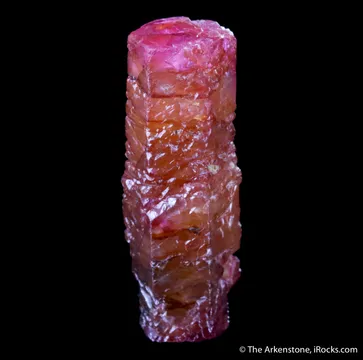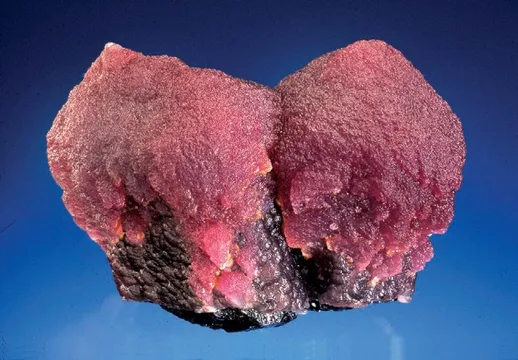
Kyaukme District, Myanmar — a top locality for Palelni mushroom tourmalines and pegmatites, noted for vivid color, sculptural habit, and collecting appeal.
Key facts
Kyaukme District is one of northern Myanmar’s most rewarding names for the serious specimen collector because it brings together two very different mineral worlds. On the gem-specimen side are the rare-element pegmatites of the Khetchel–Molo–Momeik area, best known for the extraordinary Palelni, or “Kat Chay,” mushroom tourmalines: pink to red tourmaline caps and botryoidal aggregates grown around dark tourmaline cores, commonly perched on quartz, calcite, feldspar, or albite-rich matrix. On the economic-geology side is the historic Namtu–Bawdwin mining complex, a great silver-lead-zinc-copper system whose importance reaches back to early Chinese silver mining and forward into modern VHMS ore-deposit studies.
Regional View
Country View
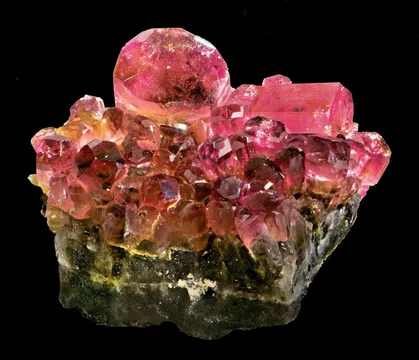
For collectors, Kyaukme District’s signature look is unmistakable. The finest Palelni tourmalines are not the long striated prisms familiar from Brazil, California, or Afghanistan, but compact, sculptural “mushrooms”: raspberry, cherry-red, magenta, or pale pink rounded terminations with a fibrous to acicular internal construction, often showing a black schorl-like seed or stalk. Matrix pieces can be especially beautiful, with vivid tourmaline buttons or caps floating against snowy quartz, cream feldspar, or pale calcite. The same pegmatitic belt also produced petalite, phenakite, beryl, hambergite, rare Ta-Nb-Bi-Sb oxides, trapiche pezzottaite-(Cs), and the type-locality mineral perettiite-(Y), usually as microscopic yellow inclusions in phenakite.
The district therefore rewards two different collecting instincts. One is aesthetic: a complete, saturated, three-dimensional mushroom tourmaline from Palelni is among the most distinctive tourmaline habits in the world. The other is mineralogical: the Momeik pegmatites have been repeatedly studied because their pockets record unusual boron, lithium, beryllium, tantalum, antimony, bismuth, yttrium, manganese, and iron chemistry in a compact and highly evolved pegmatite environment.
Search for specimens: View all specimens from Kyaukme District, Myanmar
Kyaukme District’s collectible minerals are dominated by the Momeik-area rare-element pegmatites, especially the Palelni mine, also rendered on labels as Kat Chay, Khat Che, Cache, or Khetchel. These pegmatites occur near Khetchel village in the Molo quarter of the Momeik area, northeast of Mogok, and are described as elbaite-subtype granitic pegmatites cutting serpentinized peridotite. The pockets are simply zoned but chemically sophisticated: K-feldspar, albite, quartz, beryl, petalite, phenakite, hambergite, and several tourmaline species occur together with rare tantalum-niobium-antimony-bismuth oxides.
The most famous Palelni production began with an initial discovery around 1993, after which gem-quality material appeared only sporadically. The specimens that made the locality famous came to Western mineral shows chiefly from the late 1990s through the mid-2000s, with many dealer and collection labels noting 2003–2004 or 2005 finds. The best-known products were the locally named mushroom rubellite tourmalines: fibrous pink to red tourmaline masses with dark cores or stalks, formed as rounded caps, balls, buttons, or mushroom-like terminations. Some examples sit directly on calcite or quartz, others are associated with schorl, albite, microcline or orthoclase, smoky quartz, and kaolinized matrix. The most desirable examples are complete all around, richly colored, backlit with glowing red or magenta, and still attached to contrasting matrix.
Scientific work has shown that the “mushroom” label is a habit description, not a precise species determination. Some material is elbaite, some is schorl-cored elbaite, and some pale pink mushroom-like material has been analyzed as olenite or as more complex tourmaline compositions. A collector label reading simply “rubellite” may be aesthetically useful but mineralogically incomplete unless supported by analysis.
The Palelni pegmatites also produced gemmy and sharply crystallized petalite, reported as an important novelty around 2009; phenakite crystals, including material containing perettiite-(Y) and tusionite inclusions; beryl varieties including aquamarine and morganite; and uncommon accessory oxides such as stibiotantalite and columbite-(Mn). In practical specimen terms, most of this material reached collectors through dealers rather than open collecting, and matrix pieces of tourmaline, petalite, or phenakite are appreciably scarcer than loose singles or trimmed pocket fragments.
Kyaukme District also contains the celebrated Bawdwin mine near Namtu, about 50 km west-northwest of Lashio. Bawdwin is not a modern source of fine aesthetic cabinet specimens in the way Palelni is, but it is one of Myanmar’s great ore localities and an essential part of the district’s mineral story. The deposit is interpreted as a siliciclastic-felsic volcanogenic massive sulphide system hosted by altered volcaniclastics and rhyolitic rocks of the Bawdwin Volcanic Formation and associated Palaeozoic sedimentary units. The principal ore minerals are galena and sphalerite with very high silver values, accompanied by copper minerals and oxidized lead minerals such as cerussite and anglesite.
Historically, Bawdwin was worked for silver by Chinese miners from at least the early fifteenth century, then abandoned in the nineteenth century after the old workings reached water and the region was disrupted by rebellion. British and international mining capital revived the district in the early twentieth century, initially by treating the vast old slag heaps left by silver extraction, and then by developing fresh ore. The Burma Mines Railway connected the mines and Namtu smelter, the Chinaman Lode was discovered in 1913, and Bawdwin became one of the great high-grade silver-lead-zinc mining names of the colonial era. The mine was damaged during World War II, rebuilt after the war, and nationalized in the 1960s.
A second economic locality in the district is Yadana Theingi, a Pb-Zn-Ag mine at Dobin village in Naung Cho Township. Its mineralization is hosted by altered sandstones and shales in a broad northwest-trending fracture zone, with galena, sphalerite, pyrite, arsenopyrite, quartz, sericite, kaolinite, anglesite, and cerussite recorded. The mine entered government exploration and development after silver-rich float samples were brought in for analysis, and it has been treated as an active lead-zinc mine in modern references.
Collecting access today should be regarded as extremely limited to nonexistent for visiting collectors. Northern Shan State has been affected by continuing armed conflict, road disruption, and changing territorial control. Serious collectors should rely on reputable old-stock specimens, documented dealer finds, and specimens with strong provenance rather than assuming that fresh field collecting is possible or safe.
At Kyaukme District, “tourmaline” usually means the Palelni mushroom habit: rounded, botryoidal, fibrous, or cap-like aggregates that can show a black schorl core or stalk beneath pink, red, or magenta outer growth. Good pieces range from small toenail-sized singles to miniature and small-cabinet matrix specimens, with the finest examples showing complete three-dimensional form, saturated color, and strong contrast against quartz, calcite, albite, or K-feldspar. The habit is more important here than sheer size: ordinary pieces are dull, bruised, incomplete, or weakly colored, while the best look like polished red fruit or candy buttons emerging from pale pegmatite matrix.
Elbaite is the principal named tourmaline species behind many of the classic Palelni rubellite mushrooms, though analysis is always preferable because the aggregates may include schorl, olenite, or other tourmaline compositions. Studied mushroom elbaites from the Kat Chay mine show black-to-gray single-crystal cores, prismatic zones, and outer masses of very fine acicular crystals diverging toward the cap, with colors including pink, red, white, black, and purple. Collectors prize rich raspberry to cherry-red caps, translucent edges that glow when backlit, a visible dark core, and attractive association with quartz or calcite; matrix examples and clusters of multiple mushroom buttons are notably more desirable than loose, flat, or abraded singles.
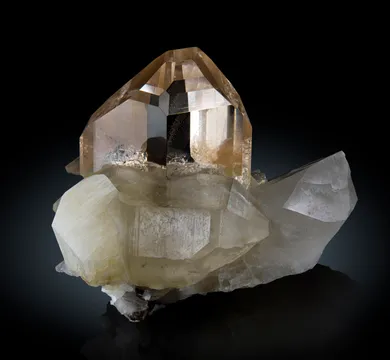
Quartz from Kyaukme District is most important as the stage on which the Palelni tourmalines perform: white plates, sugary masses, and occasional smoky crystals provide the contrast that makes the red mushroom caps so visually strong. Some specimens show pink to red elbaite buttons scattered across quartz or quartz-kaolin matrix, while others combine smoky quartz, albite, and feldspar with small tourmaline caps. As standalone quartz the locality is not a world competitor, but as a matrix mineral it is critical; the best pieces have clean, pale quartz that frames rather than overwhelms the tourmaline, with minimal iron staining, bruising, or repair.
Beyond the three featured species, Kyaukme District is unusually rich in minerals of real scientific interest. Palelni and nearby Khetchel pegmatites have produced schorl, olenite, beryl including aquamarine and morganite, petalite, phenakite, hambergite, albite, orthoclase, columbite-(Mn), stibiotantalite, and related Bi-Sb-Ta-Nb oxides. The Phenakite Mine at Khetchel is the type locality for perettiite-(Y), Y2Mn4FeSi2B8O24, a yellow Y-Mn-Fe borosilicate known from inclusions in phenakite. The same Momeik pegmatite environment is also tied to trapiche pezzottaite-(Cs) and to avdeevite, historically described from Palelni as a Na-dominant alkali beryl but subsequently discredited in the 2025 beryl-supergroup nomenclature revision. Bawdwin adds the district’s contrasting ore suite: argentiferous galena, sphalerite, pyrite, chalcopyrite, cerussite, anglesite, native silver, and native copper are among the historically recorded minerals.
The main authenticity issue for Kyaukme District specimens is not a famous treatment scandal but nomenclature and locality precision. Palelni “mushroom tourmaline” has been sold under rubellite, elbaite, tourmaline, schorl-rubellite, and occasionally olenite-related labels. Because the habit can contain more than one tourmaline species and because different zones of a single aggregate may have different chemistry, “tourmaline group” is often the safest label unless the specimen has analytical support. A high-value specimen labeled specifically as elbaite, olenite, darrellhenryite, or another tourmaline species should ideally have documentation beyond visual appearance.
Locality wording is another issue. Labels may read Palelni mine, Kat Chay mine, Khetchel, Khat Che, Cache, Molo, Momeik, Mogok area, Shan State, Burma, or Myanmar. Many older labels use “Mogok” broadly for gem material from the region, but the classic mushroom tourmalines belong to the Khetchel–Molo–Momeik pegmatite locality, historically placed in Kyaukme District on mineral labels. Retain old labels, but update catalogue records with the fuller mine and village hierarchy whenever possible.
Condition matters greatly. The mushroom caps are made of fine radiating or fibrous tourmaline growth and can bruise, dull, or chip along their rounded surfaces; damage is often most visible at the rim or on the display-facing dome. A missing stalk, flattened back, sawed base, or incomplete cap can be acceptable in a thumbnail, but it should be reflected in price. Matrix pieces should be checked for repaired tourmaline caps, stabilized friable quartz-kaolin matrix, and acid-sensitive calcite associations. Avoid aggressive cleaning: acids can attack calcite, and mechanical cleaning can ruin the delicate matte-to-lustrous cap texture.
Market availability is limited and increasingly dependent on old stock. Good Palelni mushrooms were more visible on the market in the 2000s than they are today, and current conflict conditions in northern Shan State make reliable new supply uncertain. Small singles and average mushrooms appear periodically, but saturated, complete, matrix-mounted examples with provenance are genuinely scarce. Phenakite with confirmed perettiite-(Y) inclusions, trapiche pezzottaite-(Cs), well-crystallized petalite, and analyzed rare oxides from Khetchel are specialist items and should be bought with strong documentation.
The Bawdwin story begins long before modern mineral labels. In the early fifteenth century, Chinese miners were already deep in the hills of northern Shan State, extracting silver and leaving the lead behind. The old operation was not a small prospect. Later accounts describe a once-thriving Chinese mining colony, abandoned workings, slag heaps, tunnels, and an open working on a scale that still startles: roughly a thousand feet long, five hundred feet wide, and three hundred feet deep. To a modern geologist, those remnants are not just archaeology; they are a map of centuries of selective silver extraction, with the unwanted lead-rich slag waiting for twentieth-century metallurgists to recognize it as ore.
That recognition helped draw Herbert Hoover, then a mining engineer rather than a future U.S. president, into the Bawdwin venture. Hoover later remembered the opportunity as “the largest chance of my life.” The first modern phase was not glamorous underground mining but the reworking of old dumps: the Chinese had taken the silver and left enormous quantities of lead-bearing slag. Once capital, rail, and smelting capacity arrived, those discarded heaps became the bridge between ancient silver mining and industrial Burma Mines production.
The railway itself reads like an engineering adventure written in ore and elevation. To move material from the mountain workings to the smelter, builders pushed a narrow-gauge line through rough country between Namyao, Namtu, Tiger Camp, and Bawdwin. Between Tiger Camp and Bawdwin, a straight-line distance of only about two miles was made workable by laying more than five miles of track, climbing roughly 500 feet and using heavy cuttings, reversing stations, and later a spiral. This was not decorative infrastructure for a remote mine; it was the machinery that turned a difficult mountain deposit into an industrial complex.
In 1913 the modern mine’s destiny changed when the deep crosscut finally entered the massive ore body that became known as the Chinaman Lode. The name preserved the memory of the old miners, but the scale belonged to the twentieth century: Bawdwin became one of the world’s great high-grade silver-lead-zinc deposits, feeding a complex that supported workers and families from multiple communities and supplied lead, silver, zinc, copper matte, and other products to international markets.
The Palelni mushroom tourmalines tell a quieter but equally memorable collecting story. When they first appeared in numbers, collectors had to adjust their sense of what tourmaline could look like. Instead of striated prisms, Palelni offered little rounded caps, red spheres, and mushroom forms with black cores. Broken examples revealed the secret: a dark seed or stalk, then pink to red radial or fibrous growth forming the cap. Mineralogists later took the specimens apart chemically and structurally, showing that the collector’s nickname concealed a sophisticated growth history involving changing chemistry, acicular crystals, and multiple tourmaline compositions. The result is one of the rare cases where a trade nickname—“mushroom tourmaline”—is both visually perfect and scientifically provocative.
The discovery story of perettiite-(Y) belongs to the microscope. In 2015, yellow needles included in phenakite from the Momeik area were described as a new mineral species, not because they made flashy cabinet crystals but because they represented a new Y-Mn-Fe borosilicate structure. For collectors, that turns certain transparent phenakites from Khetchel into miniature specimen chambers: the value lies not only in the phenakite crystal but in the tiny included needles, often requiring magnification, photography, and analytical confirmation to appreciate fully.
A. J. Lussier, P. M. Aguiar, V. K. Michaelis, S. Kroeker, S. Herwig, Y. Abdu, and F. C. Hawthorne (2008), “Mushroom elbaite from the Kat Chay mine, Momeik, near Mogok, Myanmar: I. Crystal chemistry by SREF, EMPA, MAS NMR and Mössbauer spectroscopy,” Mineralogical Magazine, 72(3), 747–761 — The key crystal-chemical study of the famous mushroom tourmalines.
A. J. Lussier, F. C. Hawthorne, S. Herwig, Y. Abdu, P. M. Aguiar, V. K. Michaelis, and S. Kroeker (2008), “Mushroom elbaite from the Kat Chay mine, Momeik, near Mogok, Myanmar: II. Zoning and crystal growth,” Mineralogical Magazine, 72(5), 999–1010 — Documents the zoning, black cores, acicular cap growth, and growth model for the mushroom habit.
Andreas Ertl, John M. Hughes, Stefan Prowatke, Thomas Ludwig, Franz Brandstätter, Wilfried Körner, and M. Darby Dyar (2007), “Tetrahedrally coordinated boron in Li-bearing olenite from ‘mushroom’ tourmaline from Momeik, Myanmar,” The Canadian Mineralogist, 45(4), 891–899 — Important analytical work showing that at least some pale pink mushroom material belongs to Li-bearing olenite compositions.
Milan Novák, Jiří Sejkora, Radek Škoda, and Václav Budina (2008), “Bismutotantalite-stibiotantalite-stibiocolumbite assemblage from elbaite pegmatites at Molo near Momeik, northern Shan State, Myanmar,” Neues Jahrbuch für Mineralogie - Abhandlungen, 185(1), 17–26 — Describes the rare Bi-Sb-Ta-Nb oxide assemblage from pockets in the elbaite pegmatites.
A. A. Agakhanov, D. A. Stepanenko, N. V. Zubkova, L. A. Pautov, I. V. Pekov, A. V. Kasatkin, V. Yu. Karpenko, V. A. Agakhanova, R. Škoda, S. N. Britvin, and D. Yu. Pushcharovsky (2020), “Avdeevite, a Na-dominant alkali beryl: definition as valid mineral species and new data,” Zapiski RMO, 149(1), 1–19 — Original formal treatment of avdeevite from the Kat Chay/Palelni mine, now chiefly of historical nomenclature interest.
F. Bosi, F. Hatert, M. Pasero, and S. J. Mills (2025), “IMA Commission on New Minerals, Nomenclature and Classification (CNMNC) – Newsletter 87,” European Journal of Mineralogy, 37, 695–698 — Establishes the beryl supergroup nomenclature and records the discreditation of avdeevite.
Rosa Micaela Danisi, Thomas Armbruster, Eugen Libowitzky, Hao A. O. Wang, Detlef Günther, Mariko Nagashima, Eric Reusser, and Willy Bieri (2015), “Perettiite-(Y), Y3+2Mn2+4Fe2+[Si2B8O24], a new mineral from Momeik, Myanmar,” European Journal of Mineralogy, 27(6), 793–803 — Type-mineral description for perettiite-(Y), from the Momeik/Khetchel pegmatite environment.
Hålenius, Hatert, Pasero, and Mills (2015), “New minerals and nomenclature modifications approved in 2015, CNMNC Newsletter No. 25,” Mineralogical Magazine, 79(3), 529–535 — CNMNC approval notice for perettiite-(Y), listing Momeik Township, Kyaukme District, Shan State, Myanmar as the type locality.
Jaroslav Hyršl (2018), “Perettiite-(Y) and Tusionite Inclusions in Phenakite from Myanmar,” Gems & Gemology, 54(2) — Accessible gemological note on rare inclusions in phenakite from the Khetchel/Molo area.
Elise A. Skalwold and John I. Koivula (2015), “Pezzottaite Debuts as the Newest Trapiche Gem Mineral,” Gems & Gemology, Fall 2015 — Describes trapiche pezzottaite material reported from the Myanmar side of the Thai-Myanmar gem trade and tied in locality discussions to the Khetchel–Momeik area.
Than Htun, Aung Kyin, and Khin Zaw (2017), “Chapter 27: Lead–zinc–silver deposits of Myanmar,” Geological Society, London, Memoirs, 48, 589–623 — Broad modern review of Myanmar Pb-Zn-Ag deposits, including Bawdwin and Yadana Theingi.
“Chapter 30: The Bawdwin Mine, Myanmar: a review of its geological setting and genesis,” Geological Society, London, Memoirs — Detailed modern synthesis of Bawdwin’s geology, ore bodies, grades, and VHMS interpretation.
David Baillargeon (2020), “‘Imperium in Imperio’: The Corporation, Mining, and Governance in British Southeast Asia, 1900–1930,” Enterprise & Society, 23(2), 325–356 — Historical study of the Burma Corporation, Namtu–Bawdwin, and corporate governance in colonial Burma.
Mindat: Kyaukme District, Shan State, Myanmar — District-level locality framework and mineral list.
Mindat: Palelni mine (“Kat Chay mine”), Khetchel village, Molo quarter, Momeik Township — Core reference page for the mushroom tourmaline locality and associated pegmatite minerals.
Mindat: Momeik Township, Kyaukme District, Shan State, Myanmar — Regional locality page for the Momeik pegmatite suite.
Mindat: Bawdwin Mine, Namtu Township, Kyaukme District, Shan State, Myanmar — Locality summary for the historic silver-lead-zinc-copper mine.
Mindat: Yadana Theingi Mine, Dobin village, Naung Cho Township — Locality data for the district’s sediment-hosted Pb-Zn-Ag mine.
Mindat: Perettiite-(Y) — Mineral page documenting the type locality and known occurrence of perettiite-(Y).
GIA: Perettiite-(Y) and Tusionite Inclusions in Phenakite from Myanmar — Excellent illustrated note for inclusion-oriented collectors.
GIA: Pezzottaite Debuts as the Newest Trapiche Gem Mineral — Gemological treatment of Burmese trapiche pezzottaite material.
Mineralogical Record: What’s New in the Mineral World, Report 61 — Market-oriented discussion including a Palelni mushroom elbaite specimen.
Fabre Minerals search results for Palelni/Momeik elbaite and petalite — Useful dealer archive for sizes, associations, and find dates of classic Palelni specimens.
Myanmar Digital News: Geology and Ore Deposits of the Bawdwin Mines — Historical mineralogical notes on Bawdwin ore minerals.
AP: A Myanmar town lies in shambles as both sides in civil war vie for control — Current regional-security context relevant to access and collecting assumptions.