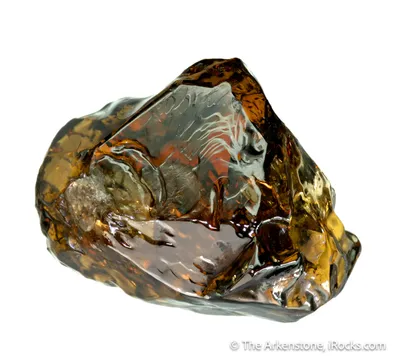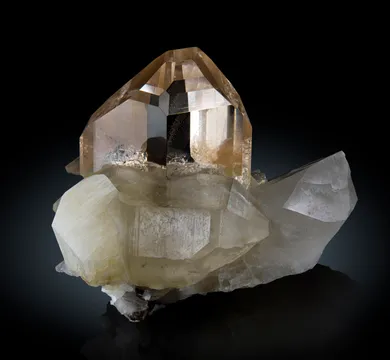
Pyingyi Taung, Myanmar - rare-element pegmatite locality famed for stocky rubellite and elbaite tourmalines, plus lepidolite, beryl, and cesium-rich minerals.
Key facts
Pyingyi Taung is one of the modern Myanmar pegmatite localities that serious collectors should know by its full label, not simply as “Mogok” or “Burma.” The locality lies east of Letpanhla, in Singu Township, Mandalay Region, on the southern continuation of the Mogok Metamorphic Belt. Instead of the marble-hosted ruby story that made Mogok famous, Pyingyi Taung is a rare-element pegmatite story: lithium-rich, rubellite-bearing dykes intruded into marble and calc-silicate country rock, producing compact but vivid suites of tourmaline, quartz, feldspar, lepidolite, apatite, beryl, caesium-rich beryl, and rare antimony-tantalum minerals.
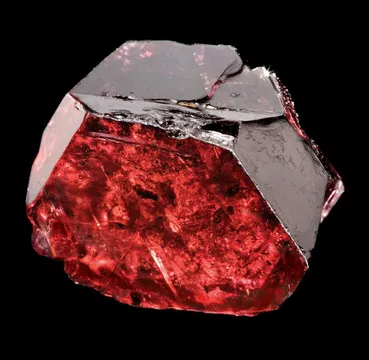
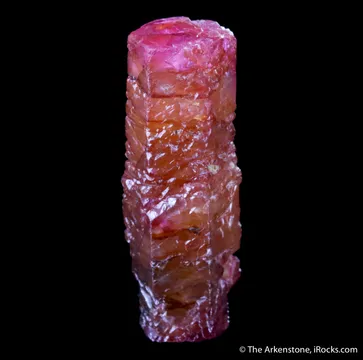
The locality’s collector reputation rests above all on short-prismatic rubellite and elbaite-type tourmaline. The best specimens are not long, pencil-like tourmalines of the classic California or Pakistan style; they are stocky, highly lustrous crystals with complex pyramidal terminations, cherry-red to mauve bodies, darker caps or centers, and sharply contrasting white feldspar or glassy quartz. Fine pieces can look almost floral: small sprays or crowded groups of red crystals set against quartz and albite, with a density of color that is instantly recognizable once you have handled a few reliable Pyingyi Taung examples.
Regional View
Country View
For mineralogical interest, Pyingyi Taung is richer than the tourmaline trade alone suggests. Its pegmatites are classed as rare-element, complex, lepidolite-subtype bodies, and published work has treated the area as part of the broader lithium-cesium-tantalum family of evolved granitic pegmatites. That explains the mix collectors see on labels: lepidolite, albite, microcline, quartz, rubellite, apatite, beryl varieties including goshenite and morganite, caesium-rich beryl, and stibiotantalite. The most intriguing material is the pale pink to milky white “beryl” suite, some of which has been shown to include Cs- and Li-rich beryl and a small number of pezzottaite crystals.
Search for specimens: View all specimens from Pyingyi Taung, Myanmar
Pyingyi Taung, also written Pyin Gyi Taung or Pyi-Gyi-Taung, is located about 6 km east of Letpanhla village in Singu Township, Pyin-Oo-Lwin District, Mandalay Region. Published coordinates for the area cluster around 22°33'N, 96°07'E, with the locality reference commonly centered near the Ba-da-ya mining area. The name has been translated as “Big timber mountain,” and the mountain range hosts numerous lithium-bearing pegmatite occurrences rather than a single, sharply bounded mine.
The deposit type is rare-element granitic pegmatite, specifically a zoned, complex lepidolite-subtype pegmatite suite. The pegmatites cut the southern continuation of the Mogok Metamorphic Belt, here represented chiefly by marble and calc-silicate rocks. The structural setting is complicated: Pyingyi Taung forms an anticline with many minor folds, especially in calc-silicate rocks, and several small fault sets trend NNW-SSE, NNE-SSW, NE-SW, and E-W. The pegmatite dykes may be concordant or discordant, generally trending nearly E-W to NE-SW, dipping steeply to moderately at roughly 40 to 80 degrees, and forming irregular tabular bodies with narrow branches. Published measurements give dyke widths of about 1 to 10 m and exposed lengths of about 7 to 50 m.
The internal zoning is important for collectors because it controls what reaches the market. The outer dyke zones are dominated by feldspar and quartz—albite, perthite, orthoclase or microcline, and quartz—while the more evolved inner parts contain lepidolite, zinnwaldite, cleavelandite, colored tourmaline, and purple apatite. Late pneumatolytic and hydrothermal fluids helped shape the gem-bearing assemblage, so pockets may carry well-formed tourmaline with quartz and feldspar rather than simply massive pegmatite minerals.
Mindat and published gemological sources distinguish four mining areas along the Pyingyi Taung range: Kyawt-ma, Taung-chat-su-chan, Myauk-chat-su-chan, and Ba-da-ya. Ba-da-ya is especially noted as the area where the first tourmalines were found, and it is also the approximate center used for locality mapping. More than ten shafts have been reported in the Pyingyi Taung area, with gem pits described as deep local workings of about 25 to 30 m. The work appears to have been carried out by local miners rather than by a well-publicized large corporate mine operator.
The early collector identity of Pyingyi Taung was built on rubellite. A 2007 find produced stibiotantalite associated with elbaite-type tourmaline near Letpanhla, while later finds brought much more visible tourmaline to the European and American collector trade. By 2010, the locality was appearing in European show reports for its yellow and pink tourmaline with black caps. In 2015, the locality received focused treatment in Le Règne Minéral in Federico Bärlocher’s article on the elbaites of Male, Mandalay. A particularly strong 2018 pocket near Letpanhla put small but brilliant cherry-red matrix specimens into dealer inventories; reports from that find emphasize short, transparent crystals with intense red color, greenish-brown centers, complex terminations, and quartz or feldspar association.
The beryl story is smaller in volume but mineralogically more consequential. Local miners originally explored the area for rubellite, then found goshenite and pale pink “beryl” with rock crystal and green tourmaline in small near-surface pockets. The total production of pink beryl-like crystals was reported as only about 1 kg over five years. Most crystals are pale pink to milky white, subtransparent to translucent, included, and typically 10 to 20 mm across, with exceptional crystals reaching about 30 mm in width. Some show a clear pink cap or band at the termination. Laboratory work on this material identified Cs- and Li-rich beryl, and a small number of specimens as pezzottaite.
Field collecting access should not be assumed. Pyingyi Taung is a working-locality name in an active mining district, not a public collecting site. Any visit would require permission from landholders and mineral-rights holders, knowledge of local mine safety, and current security information. Since the Myanmar conflict has affected Mandalay Region, Singu Township, the Mandalay–Mogok corridor, and nearby mining districts, collector travel to the area is not comparable to visiting a classic open quarry or fee-dig locality. For most collectors, Pyingyi Taung is a specimen-market locality, and provenance must come through labels, dealer records, prior collections, photographs, and where needed analytical confirmation.
Elbaite from Pyingyi Taung is best represented by short prismatic rubellite crystals, commonly pink to cherry-red, mauve-red, or red with darker greenish-brown centers and dark caps; many specimens show complex pyramidal terminations, while some have flatter terminations on the same piece. Good examples occur on quartz, albite, microcline or feldspar-rich matrix, and the more coveted pieces are those with transparent to translucent crystals, strong luster, crisp faces, undamaged terminations, and a pleasing contrast between red tourmaline and pale quartz or feldspar. The locality is also known for “moor’s head” rubellites and for zoned tourmalines ranging from nearly colorless through blue, green, yellow, and pink. Fine matrix miniatures and small cabinets from the 2018 and 2024 market appearances can be spectacular despite modest size, while ordinary pieces tend to be crowded, contacted, opaque, or visually dark without the bright internal red that makes Pyingyi Taung material distinctive.
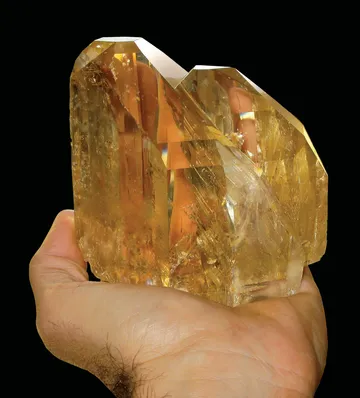
Quartz at Pyingyi Taung is a principal pegmatite mineral and a key visual associate for the tourmaline specimens rather than the locality’s headline species. It occurs in the feldspar-quartz outer zones of the dykes and in pockets with rubellite, green tourmaline, goshenite, and pink beryl-like material. Collectors encounter it as rock crystal, smoky quartz, and occasional amethyst, with the best examples serving as sharp, transparent accents among red tourmalines or as clean, lustrous pocket crystals on albite and feldspar. On matrix specimens, quartz quality matters because bright, colorless crystals give separation and scale to the squat red elbaite; dull, broken, or sugary quartz can make otherwise interesting Pyingyi Taung pieces look busy and indistinct.
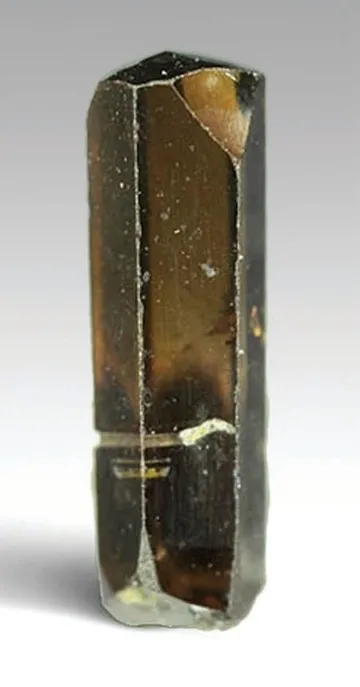
Other documented minerals from Pyingyi Taung include albite, microcline, lepidolite, apatite, beryl, goshenite, morganite, caesium-rich beryl, stibiotantalite, tourmaline var. rubellite, smoky quartz, rock crystal, amethyst, and uranophane. Stibiotantalite is the outstanding rare-species accessory: documented crystals are golden-yellow to orange-brown and may occur with pale lepidolite and pink elbaite-type tourmaline. The beryl suite is also unusually important because Pyingyi Taung has yielded Cs- and Li-rich beryl and rare pezzottaite-bearing material, though pezzottaite itself is not the type-mineral story of the locality. No valid mineral species is widely documented as having Pyingyi Taung as its formal type locality; the locality’s significance lies instead in its rare-element pegmatite mineralization and its Burmese rubellite specimens.
The first rule for Pyingyi Taung specimens is label discipline. The same material may be labelled Pyingyi Taung, Pyin Gyi Taung, Pyi-Gyi-Taung, Male, Marle, Marla, Letpanhla, Singu Township, Mandalay Division, Mandalay Region, Burma, or Myanmar. Older dealer labels may also loosely associate the locality with Mogok, although Pyingyi Taung is not in the Mogok Stone Tract proper; it is a separate Singu Township pegmatite locality between the Mandalay and Mogok collecting worlds. A good label should preserve “Pyingyi Taung” or one of its spelling variants, plus Male or Letpanhla when known.
Species names deserve care. Much dealer material has historically been sold as “tourmaline” or “rubellite,” and even locality databases have treated elbaite as probable or believed valid in some records because analytical work on every color zone is not available. For the collector, that means the safest wording on an older, untested label is “tourmaline var. rubellite” unless the specimen has been analyzed or comes from a source that clearly documents elbaite. The problem is not that the material is suspicious; it is that evolved pegmatites can contain multiple tourmaline-group species, and visual identification alone is not enough for strict species-level cataloguing.
The pale pink beryl-like crystals require even more caution. Pyingyi Taung material has included ordinary beryl, caesium-rich beryl, and a small number of pezzottaite crystals. Color, habit, and locality are not sufficient to separate them reliably. A pale pink, stubby hexagonal crystal from Pyingyi Taung should not be bought as pezzottaite unless accompanied by convincing laboratory documentation. Many legitimate specimens are better labelled as beryl, morganite, goshenite, or Cs-rich beryl rather than forced into the more valuable pezzottaite name.
No well-documented locality-specific fake tourmaline industry was found for Pyingyi Taung, but normal tourmaline-market cautions apply: inspect for repaired crystals, glued terminations, gap fills, reattached matrix crystals, and color exaggeration in photography. The best Pyingyi Taung rubellites are often small and very bright; backlighting or high-saturation photographs can make lesser pieces appear more gemmy than they are. Matrix specimens should be checked around the base of major crystals and on the reverse, where contacts and recrystallized dark tourmaline-rich matrix can hide repairs or heavy trimming.
Condition is a major value divider. The short prisms tend to be exposed on quartz-feldspar matrix, so termination bruising, edge wear, pocket contacts, and small chips on complex pyramidal faces are common. Fine pieces should have at least one undamaged, well-displayed principal crystal with clean luster and strong red body color. A specimen crowded with many tiny rubellites can be attractive, but it will not carry the same premium as a composition with a dominant, transparent, sharply terminated crystal.
Fluorescence is not a major selling point for Pyingyi Taung tourmaline. Reported tourmaline is inert under shortwave ultraviolet, while associated lepidolite may show a soft yellow response. Uranophane is documented from the locality, so tiny yellow secondary uranium minerals should be handled as one would any radioactive-species accessory: avoid abrasion, wash hands after handling, and do not store friable material where dust can spread.
Market availability is intermittent rather than continuous. Pyingyi Taung rubellite appeared prominently in the mid-2000s, again in 2018, and with additional dealer offerings from recent finds including 2024 material. Excellent specimens are typically miniatures and small cabinets, with fine matrix pieces in the high hundreds to several thousands of dollars depending on size, color, transparency, and condition. The rare-species material—especially stibiotantalite with elbaite and documented Cs-rich beryl or pezzottaite-bearing pieces—is much less common and should be judged as much on documentation as on display quality.
Collectors in the United States should also keep provenance and compliance records for any modern Myanmar gem or mineral purchase. Current U.S. sanctions focus on designated entities and transactions involving blocked persons rather than a blanket prohibition on all mineral specimens, but Myanmar gems and mining revenues are a sensitive due-diligence area. For Pyingyi Taung specimens, retain invoices, prior labels, dealer source notes, and any analytical reports; avoid vague new material with no chain of custody, especially if the seller cannot explain how it left Myanmar and through whom it was traded.
The most revealing Pyingyi Taung story begins not with a famous museum specimen, but with a field puzzle. Local miners had been chasing rubellite in the mountain’s lithium pegmatites when unusual pink “beryl” began to appear with rock crystal and green tourmaline in small pockets near the surface. The crystals were not abundant. Published gemological work gives the whole production as only about 1 kg of crystals over five years, most of them pale pink to milky white, included, and only 10 to 20 mm across. A few exceptional crystals reached roughly 30 mm in width. Their shape was distinctive enough to draw attention: euhedral short hexagonal prisms, commonly with basal pinacoid terminations and a clear pink band or cap at the top.
The trigger for the investigation was even more specific: the discovery of “mushroom” and “wheatsheaf” tourmaline in the area. Those odd tourmaline forms led Shang I. Edward Liu, working with Kyaw Thu and Hexiong Yang, to look closely at the pale pink beryl-like material. The result was not a simple morganite story. X-ray diffraction, spectroscopy, and chemical work showed that the material included Cs- and Li-rich beryls, with a small number of crystals proving to be pezzottaite. For collectors, it is a perfect warning tale: the object that looks like a modest pale pink beryl may carry the more interesting science, while the spectacular red tourmaline is what first brings everyone to the table.
The shafts at Pyingyi Taung add another layer to the locality’s character. More than ten have been reported, and the gem pits were described as roughly 25 to 30 m deep—serious underground workings for a locality best known internationally by small, jewel-like cabinet specimens. The pegmatites themselves are not grand continuous ore bodies but irregular dykes, only about 1 to 10 m wide and 7 to 50 m long where measured, splitting into narrow branches within folded marble and calc-silicate rock. That geology helps explain the episodic market: a pocket opens, specimens appear for a season or two, and then the locality may seem quiet until the next productive zone is found.
One early rare-species specimen fixes the locality in time. A stibiotantalite with elbaite-type tourmaline was documented as having been found in 2007 in a mine close to Letpanhla village near Mount Pyin Gyi Taung. The elbaite crystal was doubly terminated, with a basal pinacoid at one end, and the stibiotantalite was about 1.5 cm long, terminated, and partly in parallel intergrowth. That is exactly the kind of specimen that separates a pegmatite locality from a mere gem source: not just pretty red tourmaline, but a chemically evolved system capable of producing antimony-tantalum oxides in collector-quality crystals.
The 2018 pocket gave Pyingyi Taung its most public modern moment in the specimen trade. Dealer descriptions from that find were unusually enthusiastic, saying the new pocket near Letpanhla “by far” outshone previous finds from the region. The specimens were small but intense: cherry-red, short-prismatic tourmalines, often with greenish-brown centers, sparkling luster, and complex terminations, set with quartz and feldspar. One widely noted example measured only about 5 cm overall, yet carried a top crystal around 1.6 by 1.7 cm—large enough to dominate the piece and small enough to preserve the compact, saturated look that makes Pyingyi Taung rubellite so desirable.