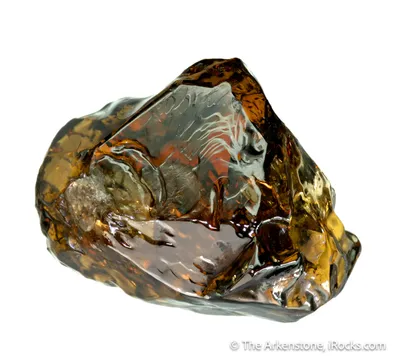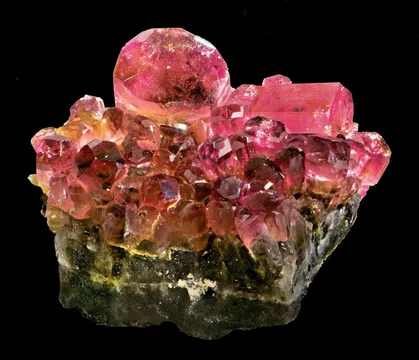
Mandalay Region, Myanmar — Mogok Stone Tract yields ruby, sapphire, spinel, topaz, beryl, and rare pegmatite minerals; prized for crystal form, color, and loca…
Key facts
Mandalay Region matters to mineral collectors because it contains the Mogok Stone Tract and related gem districts: one of the world’s classic high-grade metamorphic gemstone provinces, and a locality name that has carried prestige for centuries. The region’s collector identity is not a single mineral story but two interwoven systems. In the marbles of the Mogok Metamorphic Belt, ruby, sapphire, spinel, scapolite, diopside, forsterite, phlogopite, titanite and rare borates record metamorphism, metasomatism and tropical weathering. In the granitic pegmatites west and northwest of Mogok, especially around Sakangyi, Kabaing, Kyauk-Pyat-That and related workings, topaz, quartz, feldspar, beryl, tourmaline, danburite, herderite, cassiterite and rare-element minerals form a very different suite: miarolitic, glassy, pegmatitic and often specimen-grade.
The best Mandalay Region specimens have a look collectors recognize immediately. A ruby crystal on sugary white marble can glow red even in weak light; a Mogok spinel from marble may have a sharp octahedral form and saturated color that seems too vivid for its matrix; Sakangyi topaz can be colorless to pale sherry, thick, transparent and sharply terminated; Mogok elbaite may show the celebrated “mushroom” habit, with a dark core and pink or green cap perched on quartz or feldspar. This is also a locality where gem rough and mineral specimens overlap. Many stones were found because miners were chasing facetable material, yet some crystals survived as mineral specimens precisely because their form, matrix or association made them more important uncut.
Regional View
Country View
Geologically, the Mandalay Region gem deposits sit in a belt of marble, gneiss, schist, calc-silicate rock, syenite, granite and pegmatite shaped by the India–Asia collision and older Tethyan tectonics. Ruby and spinel are tied chiefly to marble and related contact or regional metamorphic environments; sapphire is linked in part to syenitic and pegmatitic rocks and their weathered products; topaz, aquamarine, quartz and tourmaline are most closely associated with evolved granitic pegmatites related to the Kabaing granite. Later tropical weathering concentrated many gems into red soils and gravels known locally as byon, so a Mandalay Region label can represent either a primary crystal from marble or pegmatite, or a waterworn crystal recovered from secondary deposits.

Search for specimens: View all specimens from Mandalay Region, Myanmar
For collectors, “Mandalay Region” is usually a broad label standing above more precise localities such as Mogok Township, Mogok Valley, Kyauk-Pyat-That, Sakangyi, Wet-loo, Ohngaing, Pein-Pyit, Bernardmyo, Kyatpyin and the Madaya-area ruby tracts such as Sagyin and Yatkanzin. Older labels may say “Burma,” “Mandalay Division,” “Mogok,” “Mogok Stone Tract,” or simply “Ruby Mines.” Those labels are historically meaningful, but they are not equivalent in specimen value: a topaz from the Sakangyi pegmatites, a ruby from Dattaw, a painite from Ohngaing or Wet-loo, and a sapphire from Bernardmyo are all Mandalay Region specimens, yet each belongs to a different sublocality tradition.
The dominant bedrock framework is the Mogok Metamorphic Belt, a complex assemblage of high-grade metamorphic rocks including marble, gneiss, schist, quartzite and calc-silicate rocks, intruded by granites, syenites and pegmatites. Ruby and spinel are classically hosted by white to pale marble, often with phlogopite, forsterite, diopside, scapolite, titanite and calcite. The finest specimens are primary or near-primary crystals in marble, but large volumes of gem material were also recovered from weathered marble residue and byon gravels. These residual layers can contain ruby, sapphire, spinel, quartz, tourmaline, feldspar and other durable minerals left behind as carbonate dissolved away under tropical weathering.
The pegmatite side of the district is centered on evolved granitic bodies and dikes associated with the Kabaing granite and related intrusions west of Mogok. Sakangyi is the key name for mineral collectors: it has produced topaz, quartz, feldspar, beryl varieties including aquamarine, goshenite and morganite, elbaite, schorl, danburite, herderite, fluorite, mica, columbite-tantalite, cassiterite, scheelite, rutile and rare uranium-thorium phases. These are not merely gem gravels; they include true cabinet-quality pegmatite specimens from pockets, with topaz on quartz, quartz crystals with feldspar and mica, and gem beryl and topaz in open-cavity material.
Mining history is long, layered and politically complicated. Mogok’s ruby fame predates colonial records by many centuries, and the district entered Western mineralogical literature through nineteenth- and early twentieth-century accounts of the “Ruby Mines” and the Mogok Stone Tract. After the British annexation of Upper Burma in 1885, colonial control brought the Burma Ruby Mines Ltd. period, during which more mechanized methods, water cannoning and organized washing were introduced. By the early 1930s, large-company operations declined and much work returned to local-scale mining. Later, the post-independence and socialist periods brought nationalization and state control, followed by government and joint-venture operations under Myanmar Gems Enterprise.
Production has never been limited to one mining style. Mogok has seen open pits in weathered byon, shallow hand-dug workings, tunnels driven through marble and pegmatite, mechanized washing, quarrying of marble, and deep hard-rock workings. The ruby and sapphire reports from the early 1990s describe government mines and joint ventures operating alongside traditional miners, while later field accounts show a district where small pits, markets, crushing, washing and hand sorting remained part of the mineral economy. In the pegmatite areas, specimens came both from active gem mining and from specific pocket finds, most famously the late-2006 Sakangyi pocket lined with quartz, feldspar and mica and carrying colorless to pale blue and pale yellow topaz.
Collecting access today should be treated as effectively closed to casual visitors. Even in comparatively calm periods, Mogok was a controlled gem-mining district where foreign access required permissions and gem export was legally complex. Since the 2021 coup and the expansion of Myanmar’s civil war, Mogok and nearby mining areas have been directly affected by armed conflict, shifting control, airstrikes, sanctions, disrupted logistics and contested mine administration. Specimens reaching collectors are therefore generally old-stock, dealer-sourced, locally mined pieces, older collection material, or stones that moved through gem channels before current restrictions. For serious collectors, provenance and chain of custody are not decorative paperwork here; they are central to the specimen.
Notable finds include the classic ruby-in-marble specimens from Mogok Valley, the pale to water-clear topaz and quartz combinations from Sakangyi, the “mushroom” elbaites associated with the broader Mogok–Momeik pegmatite province, and rare-species material such as painite from Ohngaing and Wet-loo and kyawthuite from Chaung-gyi. The region has also produced famous large ruby rough, including historic giant stones and the 2026 report of an 11,000-carat ruby found near Mogok. Such finds reinforce the district’s gem fame, but for mineral collectors the enduring prizes are crystals that retain geological context: ruby still seated in marble, topaz still attached to quartz and feldspar, elbaite still showing its strange growth history, and rare borates documented with precise mine or village labels.
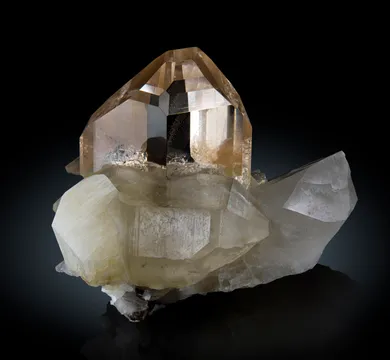
Topaz from Mandalay Region is most strongly associated with the Mogok pegmatites, especially Sakangyi and related Kyauk-Pyat-That workings west of Mogok, where evolved granitic dikes produced transparent, colorless to very pale blue, pale yellow or pale sherry crystals with quartz, feldspar, mica, beryl and locally cassiterite-bearing assemblages. Collector pieces range from small glassy crystals to substantial miniatures and cabinet crystals; documented Mogok examples include thick, water-clear crystals several centimeters across, and historical accounts mention very large topaz from the Kabaing granite pegmatite system. The best pieces here are not simply clear topaz: they are lustrous, sharply terminated, undamaged crystals, ideally on smoky or milky quartz and feldspar matrix, with the clean orthorhombic form and icy transparency that distinguish Sakangyi material from ordinary loose gem rough.
Elbaite from Mandalay Region belongs to the rare-element pegmatite story rather than the ruby-marble story, with important material labeled from Mogok, Pan-taw, Pyant Gyi, Sakangyi and the neighboring Mogok–Momeik pegmatite province. The most memorable collector habit is the so-called “mushroom” tourmaline: short, stout crystals with dark cores and colored caps, commonly pink to reddish, sometimes perched on quartz, feldspar or mica rather than occurring as long prismatic pencils. Good pieces have intact caps, visible zoning, glossy luster and credible locality data; ordinary pieces may be broken single crystals, vague “Burma rubellite” labels, or material whose locality has been stretched from the broader trade route rather than tied to a specific Mandalay Region mine.
Quartz is abundant in Mandalay Region but becomes collectible when it records the pegmatite pockets of Sakangyi and related Mogok workings: large clear to milky crystals, smoky quartz, quartz matrix carrying topaz, elbaite, beryl or feldspar, and occasional rose or rutilated material documented from the Sakangyi mineral suite. In the ruby-bearing weathered deposits quartz also appears as a durable residual mineral in gem gravels, but those loose grains rarely interest mineral collectors unless associated with gem crystals or unusual inclusions. The best quartz specimens from this region are matrix pieces that frame rarer minerals—topaz on quartz is the classic collector combination—while large pocket quartz from Sakangyi is prized when it retains bright faces, minimal bruising and the blocky, cavity-grown architecture of the original pegmatite.
Tourmaline in Mandalay Region spans black schorl, elbaite and chromium-bearing elbaite, with the strongest specimen association in granitic pegmatites at Sakangyi, Pan-taw and related Mogok-area workings. The colors most often sought by collectors are pink to red rubellite tones and unusual zoned mushroom forms, but green, yellow and yellow-orange tourmalines have also been documented from the district’s gem pegmatites. Good tourmaline specimens show complete terminations, clear color zoning, matrix association with quartz or feldspar, and preferably a named sublocality; poorer examples are abraded, repaired, over-cleaned or sold as generic “Mogok tourmaline” without evidence that they came from the Mandalay Region side of the broader trade network.
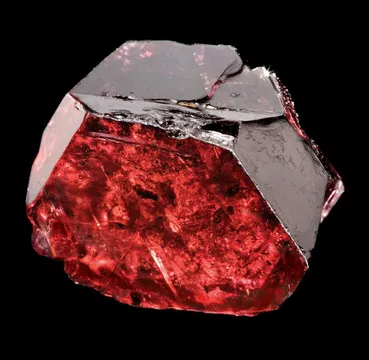
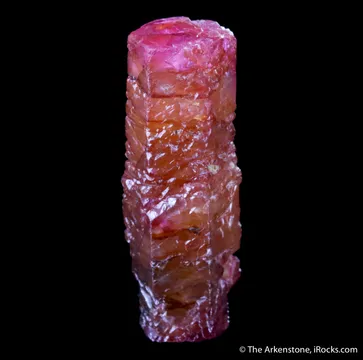
Corundum from Mandalay Region is dominated in collector consciousness by ruby and sapphire from the Mogok Stone Tract, Sagyin, Yatkanzin and related marble-hosted or syenite-associated deposits. Crystals may be red, pink, blue, violet, gray or mixed-color, occurring as rough hexagonal prisms, barrel-shaped crystals, tabular pieces, alluvial grains, star material and matrix specimens in marble or calcite. The most desirable corundum specimens preserve form and context: a ruby or sapphire crystal still attached to white marble or calcite, a sharp crystal with visible parting and growth markings, or a color-saturated piece with strong fluorescence; ordinary material is waterworn gem gravel, opaque massive corundum, or stones labeled “Burma” without enough detail to separate Mogok, Mong Hsu, Kachin, Shan or other Myanmar sources.
Ruby is the signature mineral of Mandalay Region and the reason Mogok became one of the world’s most storied gem localities. Here ruby occurs principally as chromium-colored corundum in white marble and marble-derived byon, commonly associated with calcite, phlogopite, spinel, diopside, forsterite, scapolite and titanite; good crystals range from small bright red grains to thumbnail and miniature crystals in marble, while exceptional rough can be vastly larger. The finest collector specimens show saturated red to pinkish red color, translucency, recognizable hexagonal crystal form, strong red fluorescence and dramatic contrast against white marble, whereas low-grade pieces may be opaque, heavily abraded, fractured, coated, or represented only by loose gem rough with no geological setting.
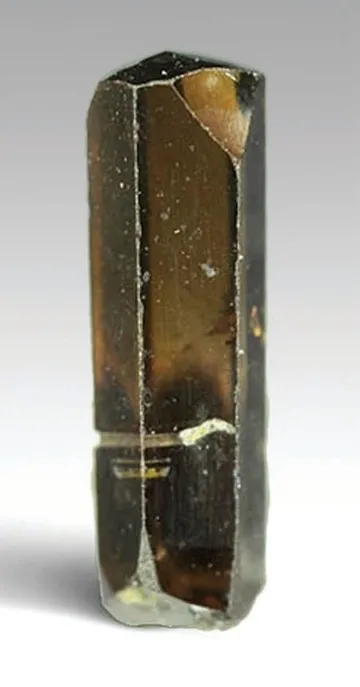
Beyond these headline minerals, Mandalay Region is one of the great rare-species districts of Asia. Painite, CaZrAl9(BO3)O15, was described from Mogok and is documented from Ohngaing and Hinthar-taung/Wet-loo; kyawthuite, Bi3+Sb5+O4, is known from a single waterworn gem crystal from Chaung-gyi; and Sakangyi is a co-type locality for ertlite, a tourmaline-supergroup mineral. Other noteworthy documented species and varieties include spinel, sapphire, star ruby, star sapphire, danburite, herderite, hibonite, johachidolite, poudretteite, sinhalite, serendibite, clinohumite, forsterite/peridot, scapolite, moonstone, amazonite, aquamarine, morganite, goshenite, fluorite, scheelite, cassiterite, zircon, rutile, titanite, thorite, thorianite, uraninite and thorutite. For collectors, these rarities make Mandalay Region more than “ruby country”: it is a reference district for marble-hosted gem minerals, pegmatite pocket minerals and rare borate/oxide species produced by an unusually complex metamorphic-magmatic environment.
The first authenticity issue is locality inflation. “Burma,” “Myanmar,” “Mogok,” “Mandalay,” “Mandalay Division” and “Mogok Stone Tract” are not interchangeable as collector data, even though old labels often use them loosely. A ruby bought in Thailand, a sapphire from a mixed Myanmar parcel, or a rubellite sold as “Mogok” may be entirely natural but still not securely from Mandalay Region. The safest pieces have old collection labels, named mines or villages, documented dealer history, museum-style numbering, or associations that fit known Mandalay Region assemblages.
Ruby and sapphire require special caution. Mogok ruby is often marketed as unheated, but heat treatment, fracture filling, flux-assisted healing, diffusion-like surface modification in some corundum markets, dyeing of low-grade material, and composite or glass-filled stones all circulate in the wider trade. Mong Hsu ruby from Shan State is particularly associated with heat treatment to improve dark cores, and it is sometimes confused commercially with Mogok ruby. For valuable ruby or sapphire, a major laboratory report is essential, but even a lab origin opinion does not replace legal import history or ethical chain-of-custody documentation.
Mineral specimen misidentification is common. Red spinel in marble can be called ruby by non-specialist sellers; pink corundum may be sold as ruby; clear topaz may be confused with quartz, danburite, beryl or phenakite; and colorless gem rough from mixed Mogok parcels can be nearly impossible to assign without optical, density and spectroscopic testing. Painite and kyawthuite attract exaggerated claims: painite is rare but not every brown-red crystal from Mogok is painite, and kyawthuite should be treated as essentially unobtainable as a mineral specimen because the described natural species is based on a single known faceted gem.
Condition is a major value divider. Ruby and sapphire in marble may have bruised edges from digging, crushing and washing; many topaz crystals have cleavage damage or flat, frosted contacts that should not be mistaken for complete terminations; quartz-topaz combinations are often repaired because pocket extraction is rough and the minerals are brittle; elbaite mushrooms can be chipped around the cap or broken at the base. Matrix matters: a slightly imperfect ruby crystal in original marble may be more meaningful than a sharper loose crystal with no provenance, and a topaz on quartz from Sakangyi is far more collectible than a loose colorless topaz crystal of uncertain source.
Fluorescence can be useful but not definitive. Mogok ruby commonly shows strong red fluorescence because of chromium and relatively low iron, and ruby-in-marble specimens can be spectacular under UV. Calcite or marble matrix may fluoresce as well, and scapolite-bearing rocks from the district can respond strongly. Fluorescence supports an identification; it does not prove Mogok origin, natural color, absence of treatment, or legal provenance.
Market availability is uneven. Topaz, quartz, rubellite/elbaite, ruby-in-marble, spinel and sapphire specimens appear regularly but not abundantly, with the best pieces usually coming from old collections or long-held dealer stock. Sakangyi topaz on matrix is scarcer than loose topaz, and undamaged matrix examples command a premium. Painite is obtainable in tiny crystals and fragments but should be bought only from dealers who understand the species and locality. Kyawthuite belongs in the realm of mineralogical record, not normal collecting. Current conflict, sanctions risk and disrupted supply mean that responsible collectors should favor older, well-documented specimens and avoid newly mined material with opaque sourcing.
The Sakangyi pocket is the modern Mandalay Region story mineral collectors tend to remember first. In late 2006, miners working the Sakangyi pegmatites encountered a spectacular cavity lined with quartz, feldspar and mica, with associated colorless to pale blue and pale yellow topaz. Later accounts and photographs show the scale vividly: a miner lying inside the pocket among huge quartz crystals, the sort of image that instantly separates a real pegmatite discovery from ordinary gem gravel. For topaz collectors, that find established Sakangyi as a world-class source not merely of facetable topaz but of mineral specimens—topaz crystals on quartz and feldspar, pocket quartz, mica plates and the full architecture of a granitic cavity.
Mogok’s ruby story has an older and rougher rhythm. The district’s fame was already ancient when British power reached Upper Burma. After the 1885 annexation, an expedition was mounted in 1886 to secure the ruby mines for British commercial interests, and the Burma Ruby Mines Ltd. period followed. Mechanized water methods and organized washing entered a district that had long depended on local miners, pits, tunnels and careful hand sorting. When company-scale activity faded in the early 1930s, much of Mogok returned to smaller, local mining—an important reason why old Mogok specimens vary so much in style. Some are polished gems from an imperial commodity chain; others are intimate mineral specimens that survived because a miner, trader or collector recognized beauty in a crystal still attached to marble.
A very different field moment comes from the GIA expeditions of 2013 and 2014, when gemologists returned to Mogok after more than a decade without direct access. Their work was not romantic armchair gemology: it meant entering underground workings, documenting miners, obtaining reference samples and moving through a district where market rumor, mine identity and scientific evidence had to be disentangled every day. Andrew Lucas later described traversing a rock wall in a Mogok ruby mine reaching a depth of 300 meters as giving “a heightened sense of focus.” That is a concise field description of the district: beautiful stones, narrow workings, real danger and no substitute for seeing the geology in place.
Mogok’s markets are part of the locality as much as the mines. Field accounts describe open-air trading in the towns of the Stone Tract, where ruby, sapphire, spinel, moonstone, zircon, garnet, iolite, amethyst, scapolite and other stones pass through hands quickly. The market can preserve information, but it can also erase it. A stone from a named mine can become “Mogok,” then “Burma,” then simply “old stock,” and by the time it reaches a collector the geological story may depend on a faded label or a dealer’s memory. That is why a modest specimen with a precise Mandalay Region sublocality can be more valuable to a serious collector than a prettier but anonymous gem crystal.
The human image that stays with many field readers is the kanase women working the white marble tailings. In Mogok tradition, women have searched mining waste for overlooked gems, sometimes surrounded by a glare of crushed marble under open sky. It is easy for mineral collectors to focus on luster and color, but Mogok specimens are inseparable from this labor: crystals were found by people washing byon, breaking marble, carrying baskets, sorting gravel and looking for a flash of red, blue or pink that might alter a family’s fortunes.
The rare-mineral stories are quieter but no less extraordinary. Painite began as one of the great puzzles of twentieth-century mineralogy, first described from Mogok and named for Arthur C. D. Pain, the mineralogist and gem dealer who recognized that the reddish crystal was not an ordinary gem. For decades, painite was legendary for scarcity; later exploration around Mogok produced more specimens, especially from Wet-loo and related areas, but good crystals remain highly prized. Kyawthuite is even more extreme: a single waterworn crystal from the Chaung-gyi area, ultimately faceted into a 1.61-carat gem and described as a new bismuth antimonate mineral. In most localities, one rare type mineral would be enough for fame. Mandalay Region has several.
In 2026, Mogok again entered international news when state media reported an 11,000-carat ruby found near the town. The stone was described as weighing 2.2 kg and as more valuable than an even larger 21,450-carat stone reported from the region in 1996 because of better color and quality. The discovery was spectacular, but the context was grim: Mogok had been caught in Myanmar’s widening civil war, with shifting control of mines, sanctions concerns and insecurity around the gem trade. For collectors, the episode illustrates the modern Mandalay Region perfectly—geologically capable of producing astonishing stones, but politically and ethically complicated in ways no serious buyer can ignore.