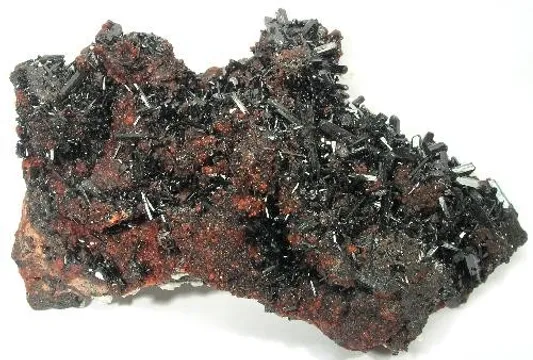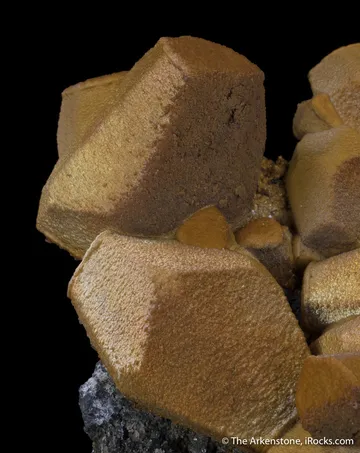
Mpumalanga, South Africa — Boekenhouthoek’s cactus and spirit quartz showcase two-stage growth, vivid amethyst/smoky hues, and standout collecting appeal.
Key facts
Mpumalanga is a province-scale collecting name, but in the modern specimen trade it is inseparable from one exact place: the Boekenhouthoek area near Mkobola, where South Africa’s “cactus quartz” and “spirit quartz” entered the international market and became one of the most recognizable quartz habits of the last generation. These are not ordinary amethyst clusters. Their best pieces show an earlier generation of larger quartz prisms—clear, smoky, lilac, or amethystine—partly to completely mantled by a second generation of tiny, glittering quartz points. The result is a bristling, sculptural surface: terminations left clean and glassy, prism faces armored with sparkling microcrystals, and iron-oxide staining adding orange, ocher, and rusty-red contrast.
Geologically, the Boekenhouthoek material is a residual quartz-vein occurrence rather than a conventional hard-rock mine. Quartz first grew in fissures in granitic host rock; later silica-rich fluids deposited the smaller overgrowths that produced the cactus habit. Long weathering decomposed the feldspar-rich granite to red clay while the resistant quartz veins remained, buried as seams and pockets. Collectors prize specimens that preserve this two-stage growth clearly: upright sceptered crystals, glossy purple tips, complete all-around clusters, deep phantom zoning, and a natural balance between amethyst, smoky quartz, white quartz, and hematite-colored clay stains.
Regional View
Country View
Mpumalanga’s broader mineralogical importance is much deeper than one quartz field. The province includes the Barberton Greenstone Belt and Makhonjwa Mountains, among the world’s great Archean geological windows, as well as historic gold camps at Barberton and Pilgrim’s Rest, the Bon Accord nickel occurrence with its suite of rare nickel minerals, coalfields on the Highveld, and mafic-ultramafic mineralization tied to the Uitkomst and Bushveld-related systems. For collectors, however, the province’s instantly recognizable cabinet presence is the Boekenhouthoek quartz: sparkling, tactile, unmistakably South African, and still frequently encountered under the old and incorrect trade label “Magaliesberg quartz.”

Photo: Wikimedia Commons
Search for specimens: View all specimens from Mpumalanga, South Africa
Mpumalanga occupies a remarkable slice of northeastern South Africa, with mineral districts that range from Archean greenstone gold to coal-bearing Karoo strata and Bushveld-related mafic-ultramafic mineralization. In specimen terms, the most important quartz-producing area is Boekenhouthoek near Mkobola in the Thembisile Hani Local Municipality of the Nkangala District. The cactus quartz occurrence is hosted in deeply weathered granitic terrain of the Highveld. It is best understood as hydrothermal quartz veins preserved as residual bodies in decomposed granite and red clay: the feldspar of the granite altered to clay, while the quartz veins resisted weathering and remained as diggable seams.
The mineralization at Boekenhouthoek is dominated by quartz in several visual varieties: colorless to milky quartz, smoky quartz, amethyst, hematite-stained quartz, and the distinctive two-generation cactus habit. The first generation produced larger hexagonal quartz crystals in fissures; the second coated the prism faces with smaller quartz crystals, commonly leaving the terminal faces better exposed. Iron oxides and hematite-rich coatings are a major part of the look of the material, especially on specimens with orange to reddish-brown staining against pale lilac or smoky crystals. The occurrence has also been reported with associated secondary minerals such as goethite, cerussite, beudantite, and chalcedony, but the locality’s collector identity is overwhelmingly quartz.
The collecting history is unusually well documented for a modern quartz occurrence. The first notable crystals were reportedly found in 1986 during the digging of a house foundation on the Boekenhouthoek communal farm. Early material was sold quietly in South Africa, and the true source was obscured under the more romantic but wrong name “Magaliesberg.” A much larger discovery in September 2002 pushed significant quantities onto the international market, and the material became widely noticed by collectors at the 2003 Tucson shows. Since then, cactus quartz recovery around Boekenhouthoek, Mathys Zin Loop, and Kwaggafontein has functioned as a local small-scale industry rather than a formal mine run by a major company.
The workings are hand-dug pits and trenches through compacted red clay and decomposed granite, with diggers following residual quartz seams laterally in the hope of encountering crystallized pockets. Reports describe excavations reaching roughly 20 feet deep, and later workings have required timber support in places. Many pieces emerge heavily clay-coated or iron-stained and require careful cleaning before their luster, color zoning, and second-generation druse can be assessed. Bases on commercial specimens are sometimes sawn flat for display, especially on upright groups and cabinet pieces; that is not unusual for the locality but should be disclosed.
Collecting access today should be treated as private or community-controlled, not as an open field-collecting locality. The best route for collectors is acquisition through reputable South African diggers, established dealers, old collections, and well-labeled specimens with Boekenhouthoek or Mkobola on the label. Casual field collecting without permission is inappropriate, and older “Magaliesberg” labels should be corrected rather than discarded, because they preserve an important chapter in the marketing history of the material.
Outside the quartz fields, Mpumalanga’s historic mining districts add important context. Barberton’s goldfields, including Sheba, Fairview, and Consort, lie in the Barberton Greenstone Belt and have operated in some form since the 1880s. Pilgrim’s Rest preserves the memory of the 1873 alluvial gold rush on the escarpment. Nkomati, in the Uitkomst Complex near Machadodorp/Waterval Boven, is a nickel-copper-PGE system rather than a quartz-specimen source, but it reinforces the province’s broader mafic-ultramafic mineral pedigree. These districts are industrial or heritage settings, not casual specimen grounds, yet they help explain why Mpumalanga occupies such an outsized place in South African mineralogy.
Quartz from Mpumalanga, as represented in the collector market, means the Boekenhouthoek cactus habit above all: primary quartz crystals ranging from small thumbnails to cabinet-scale stalks and clusters, with some reported stalks approaching 15 cm, overgrown by a second generation of tiny quartz points. The color range is wider than many labels suggest—colorless, milky, smoky, pale lavender, rich amethyst, iron-stained golden, and rusty hematitic combinations all occur—and the best specimens show sharp primary terminations, intact bristling druse on the prism faces, visible color zoning, and attractive three-dimensional architecture. Ordinary pieces are plentiful as broken drusy fragments or flat seam sections; fine examples stand apart by having undamaged tips, high luster, strong contrast between generations, and a sculptural silhouette rather than simply a sparkling crust.
Amethyst from Boekenhouthoek is prized less for gem mass and more for form: lilac to deep purple quartz crystals with glassy terminations and cactus overgrowths of finer amethyst or pale quartz. Many specimens show richer purple concentrated near the tips or as phantom zoning, with smoky wisps and orange-red hematite staining adding depth. The classic pieces are small-cabinet to cabinet size, though individual points and compact clusters are common; better specimens combine saturated purple color, undamaged exposed terminations, cleanly developed second-generation druse, and enough matrix or opposing crystals to display naturally. Deep purple scepter-like groups and Japan-law-twinned examples are especially desirable when complete, because they show the locality’s two main strengths—color and eccentric growth—without sacrificing crystal definition.
Mpumalanga also has a serious systematic-mineral pedigree. The Bon Accord nickel occurrence near Barberton is the type locality for several rare nickel-rich species, including bonaccordite, cochromite, liebenbergite, nimite, trevorite, tredouxite, and willemseite, with associated bunsenite, népouite, millerite, gaspéite, violarite, and PGE-bearing phases. Lone Creek Falls cave near Sabie is the type locality for unusual secondary ammonium ferric-iron sulfates, including sabieite, lonecreekite, and clairite. The Barberton district is also associated with historic gold, stichtite-group minerals, nickel minerals, and Archean greenstone assemblages, while Argent and Albert silver-mine occurrences add lead, silver, arsenic, antimony, and copper secondary species to the province’s record.
The single most important label issue is locality correction. A large amount of Boekenhouthoek cactus quartz was historically sold as “Magaliesberg quartz,” and old labels with that name still circulate. The proper collector locality for the classic South African cactus or spirit quartz is Boekenhouthoek, Mkobola, Nkangala District, Mpumalanga, South Africa. A good label may preserve the old trade name in quotation marks, but it should not present Magaliesberg as the actual source.
Be cautious with “citrine,” “ametrine,” and “golden healer” labels on Mpumalanga cactus quartz. Yellow, orange, and brown color on these specimens is commonly due to iron-oxide or hematite staining and inclusions, not true citrine; “ametrine” is especially suspect for this locality when the yellow is a surface stain or iron-colored zone rather than genuine citrine intergrown with amethyst. The marketing term “spirit quartz” is widely used, but “cactus quartz” is the more descriptive habit name.
Condition matters more here than many casual buyers realize. The secondary druse is tough enough for normal display but vulnerable to edge abrasion, bruised sparkle, and broken micro-terminations. Larger exposed tips often take the first impact in mining, cleaning, shipping, and show handling, so inspect terminations carefully under a loupe. Clay trapped in the druse is normal; overly bright, uniformly clean surfaces may simply be well cleaned, but they should still retain natural texture rather than an etched or chemically dulled look. Sawn bases are common on upright display pieces and are not automatically a problem, but they reduce geological context and should be factored into price.
Fluorescence is not a major buying criterion for this material; the appeal is visual growth habit, color zoning, luster, and three-dimensional form. Avoid prolonged direct sunlight for strongly colored amethyst specimens, as amethyst can fade over time. For handling, the danger is mechanical rather than chemical: the cactus surfaces catch cloth fibers and foam, and small points can chip if specimens are packed tightly. Store better pieces in rigid boxes with soft, non-snagging support and lift them by the matrix or massive quartz base rather than by isolated scepters.
Market availability remains relatively good for small and mid-grade pieces, because the locality produced in quantity and material continues to appear through dealers, old stock, and South African channels. Fine examples are a different matter. Complete, sharply crystallized, deep purple, aesthetic clusters with strong second-generation growth and undamaged tips are much scarcer than the casual abundance of “spirit quartz” suggests. Provenance to older collections, early 2000s finds, or well-known dealers can add interest, especially when the specimen retains an old “Magaliesberg” label alongside a corrected Boekenhouthoek attribution.
The origin story of Boekenhouthoek cactus quartz begins not in a mine shaft but in a house foundation. In 1986, a resident digging on the Boekenhouthoek communal farm uncovered unusual amethystine quartz crystals in the red clay. The specimens were taken to a gem-and-mineral club in Pretoria, where their bristling form immediately drew attention. Two commercial collectors soon visited the area, but the farm’s rules allowed excavation only for building or agricultural work. For years, the crystals moved quietly through South African collecting circles in small numbers, dug outside formal permission and shielded by a false locality.
That false locality became part of the legend. To conceal Boekenhouthoek, the quartz was marketed as coming from the Magaliesberg Mountains, a scenic and better-known range far to the southeast. The name had romance and commercial value, and it stuck. Even after mineralogists and dealers corrected the record, “Magaliesberg quartz” continued to appear on labels and invoices. For collectors today, those labels are not merely wrong; they are historical artifacts from the years when the source was being protected, obscured, and commercialized all at once.
The turning point came in September 2002, when diggers exposed much larger veins. Suddenly, specimens reached the international market in quantity. By the 2003 Tucson shows, collectors were seeing trays of glittering purple cactus quartz unlike anything else in common quartz commerce: primary crystals standing like little towers, their sides coated with smaller points, their tips often left smooth and glassy. The material was eye-catching, easy to understand visually, and unlike the more familiar amethyst geodes from Brazil and Uruguay or the alpine-style quartz groups of Europe. Tucson gave it a stage, and demand rose quickly.
With demand came tension. Reports from the early commercial period describe intimidation of diggers and legitimate dealers, theft, and attempts by a few hard-edged middlemen to control supply. At the same time, the digging ban was lifted, and quartz recovery became a local industry. Around Boekenhouthoek, Mathys Zin Loop, and Kwaggafontein, villagers dug through red clay and decomposed granite, following quartz seams in hand-dug pits that could reach about 20 feet deep. The work was direct and physical: dig, expose a vein, follow it sideways, remove clay-coated quartz, clean it, and wait for dealers from Pretoria and Johannesburg to arrive with cash.
The name “spirit quartz” gathered its own folklore. One explanation ties it to metaphysical dealers at Tucson, who saw the many secondary crystals as an amplification of the main crystal. Another, more local and more prosaic, links the term to methylated spirits, a common purple-colored fuel and cleaning liquid familiar in South African rural life. “Cactus quartz” may lack the romance, but it captures the specimen in one phrase: a main crystal with a prickly second skin.