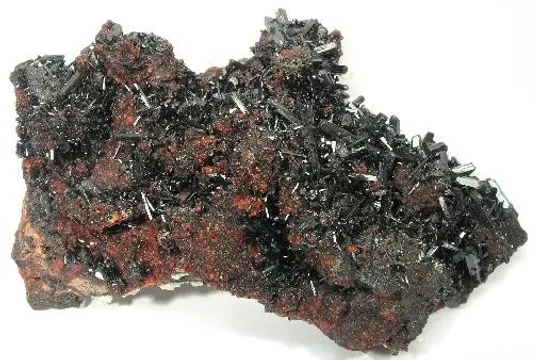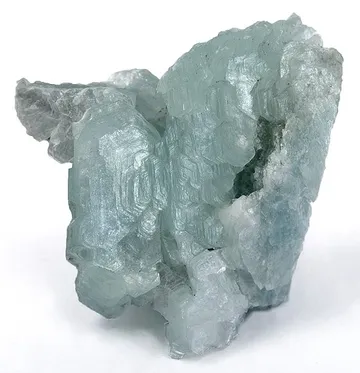
Messina Mine, South Africa - renowned for quartz crystals with blue-green ajoite and papagoite, plus shattuckite and native copper; a legendary locality.
Key facts
Messina Mine is one of the great included-quartz localities of the mineral world: a copper mine whose fame among collectors rests less on massive ore than on transparent to translucent quartz crystals that trapped a jewel-box suite of copper minerals while they grew. The mine lies at Musina in Limpopo Province, near South Africa’s northern border, in the high-grade metamorphic terrane of the Central Zone of the Limpopo Belt. Copper mineralization was localized along major brittle structures, especially the Messina and Dowe-Tokwe faults, where fluids entered complexly folded gneisses of the Beit Bridge Complex and formed veins, lodes, disseminations, and pipe-like breccia bodies.
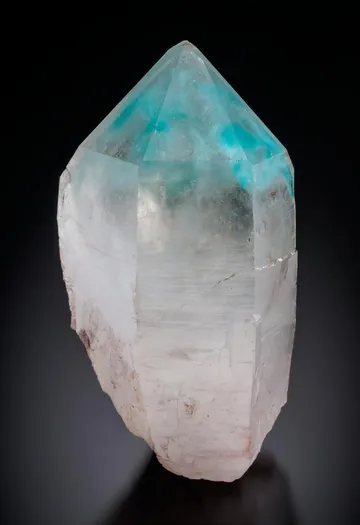
The classic Messina specimen is instantly recognizable: quartz crystals, commonly singly terminated or doubly terminated and often internally zoned, carrying floating phantoms, sprays, tufts, clouds, and threads of blue-green ajoite, darker blue papagoite or shattuckite, red-brown hematite, green epidote or piemontite, white kaolinite, and, in the best surprises, native copper. The highest-grade pieces have saturated but natural inclusions visible through unpolished quartz; ordinary examples may be cloudy, bruised, weakly included, or so heavily coated by later drusy quartz that the internal scene is subdued.
Regional View
Country View
Historically, the locality bridges two different kinds of collecting importance. As a mine, it was part of a long copper belt at Musina, with modern operations superimposed on ancient African copper workings. As a specimen locality, it became legendary after the 1980s production of ajoite- and papagoite-included quartz, especially material from No. 5 shaft. The 1985 ajoite pocket is the benchmark event in the collector history of the mine, and subsequent finds—some still sold under the broader Messina name—kept the locality visible long after underground copper mining ceased.

Photo: Wikimedia Commons, Rob Lavinsky, iRocks.com, CC BY-SA 3.0

Photo: Wikimedia Commons, Rob Lavinsky, iRocks.com, CC BY-SA 3.0
Search for specimens: View all specimens from Messina Mine, South Africa
Messina Mine is the legally retained mine name; the nearby town, historically called Messina, is now Musina. In collector usage the name can be a little slippery, because “Messina” may refer to the individual Messina or No. 5 shaft locality, the former Messina copper mines as an operating group, or the broader Musina-Messina district that includes Artonvilla, Spence, Messina, Harper, and Campbell. For specimen cataloguing, that distinction matters. The classic No. 5 shaft material, especially the 1980s ajoite quartz, should be kept separate from Artonvilla material where reliable labels allow it.
Geologically the deposits are hosted by granulite-grade gneisses and related rocks of the Beit Bridge Complex in the Central Zone of the Limpopo Belt. Copper mineralization is structurally controlled by brittle shear and fault zones and occurs as pipe-like breccia bodies, fissure deposits, veins, lodes, and disseminated replacement bodies. The ore bodies are irregular, and several were described as breccia pipes rather than simple veins. This brecciation is fundamental to the specimen story: open spaces produced by fracturing gave quartz room to grow as euhedral crystals, and successive mineralizing events supplied the inclusions that now make these specimens so desirable.
The primary economic ore minerals were chalcopyrite, bornite, and chalcocite, with native copper reported particularly toward the central and deeper parts of some ore bodies. The ore bodies show zonation, commonly described as more chalcopyrite-rich toward outer portions and progressively enriched inward or downward in bornite, chalcocite, and native copper. Alteration around the ore included albitization and sericitization, together with epidote, zoisite, quartz, pyrite, and carbonates. Later collector minerals—ajoite, papagoite, shattuckite, hematite, kaolinite, epidote, and related phases—record the complicated late hydrothermal and supergene history preserved inside quartz.
Modern mining followed much older African copper exploitation. Ancient workings in the Musina-Messina area were extensive enough that early prospectors used them as guides to ore, and smelting evidence such as slag, furnace remains, clay pipes, ore fragments, and copper objects has been recorded from the region. Lt. Colonel J. P. Grenfell’s prospecting party investigated the area in 1903; the Messina (Transvaal) Development Company was registered in 1905; and industrial copper mining began in the early twentieth century. A reduction works was operating by 1914, the mines paused around 1920 while plant and smelting works were expanded, and operations resumed in 1922.
The five principal mines of the district were developed along a roughly linear mineralized trend: Campbell, Harper, Messina, Spence, and Artonvilla. Mining methods changed as ore bodies were followed underground, with large irregular bodies earlier mined by shrinkage stoping and later by bench-and-trail stoping. Historical summaries give total production on the order of 40 to 42 million tonnes of ore and roughly 700,000 to 750,000 tonnes of copper over the life of the district. The final Messina No. 5 shaft stopped production and the mines closed in the early 1990s, ending nearly nine decades of modern copper mining at Musina.
The specimen-producing zones were not mined as specimen pockets in the pegmatite sense; they were encountered during copper mining in brecciated, quartz-rich ore. The important 1985 No. 5 shaft find produced drums of quartz crystals with pale blue ajoite inclusions, including single crystals reportedly reaching as much as 25 cm and larger clusters of blue-tipped quartz. Papagoite-included quartz from the same mine is much scarcer, and the best pieces have rich, sharply visible, darker blue phantoms rather than vague blue smudges. Later material from surface diggings in the broader district, especially Artonvilla around 2007, produced additional ajoite-in-quartz in a somewhat different style and is sometimes imprecisely sold under the older Messina umbrella.
Collecting access today should be regarded as closed. The mine is abandoned, underground workings are sealed or flooded, and collecting from mine property, dumps, or old shafts should not be assumed legal or safe. Serious specimens on the market are overwhelmingly from old mine production, dealer stock, or released private collections. Provenance—No. 5 shaft, Messina Mine, Artonvilla, or simply “Messina district”—is therefore part of the specimen’s scientific and market value, not a cosmetic detail.
Quartz is the stage on which nearly every important Messina specimen performs: crystals range from tiny included points to large cabinet clusters, with older literature and later summaries noting crystals from microscopic scale up to very large examples, even around a metre in exceptional mine material, though the collector classics are far smaller and more manageable. The best quartz is transparent to translucent enough to show internal zoning—blue-green ajoite sprays, dark blue papagoite or shattuckite, red-brown hematite, white kaolinite, green epidote, and occasional native copper—often as phantoms sealed beneath later quartz growth. Strong specimens are sharp, lustrous, naturally terminated, and visibly included without polishing; lesser pieces may be milky, dull, heavily contacted, or internally busy without a clean composition.
Ajoite from Messina is celebrated chiefly as inclusions in quartz, not as freestanding crystals: pale aqua to turquoise-blue fibers, sprays, tufts, clouds, and phantom coatings were sealed during quartz growth, giving some crystals the look of blue smoke suspended inside glass. The most important No. 5 shaft production dates to the 1985 discovery, with abundant specimens reaching the market at and after the 1986 Tucson show; later district material is often more massive or stylistically different and should be labelled carefully. Top Messina ajoite pieces show rich but not muddy saturation, distinct phantoms or sprays, sharp unpolished terminations, and attractive associations with hematite, kaolinite, epidote, papagoite, or native copper.
Papagoite is the rarer blue treasure in Messina quartz, usually appearing as darker, more intense blue inclusions and phantom zones rather than broad greenish clouds. The best known material is tied to the famous small 1985 find, and strong pieces are scarce enough that a fine natural, unpolished crystal with a vivid papagoite phantom is a major inclusion specimen. Color alone is not a safe identification criterion here because papagoite, shattuckite, and ajoite can all appear blue in quartz; the most desirable examples combine documented identification, strong blue concentration, glassy quartz, minimal bruising, and complementary hematite, epidote, kaolinite, or ajoite inclusions.
Native copper at Messina occurs both as part of the ore-zone mineralogy and, for collectors, as fine internal inclusions in quartz, commonly filamentous, dendritic, threadlike, or speckled rather than large sculptural masses. In included-quartz specimens, genuine copper adds warm metallic red to the blue-green ajoite and dark hematite palette, but it is easy to overcall reddish hematite or iron staining as copper without magnification and testing. The best pieces show bright metallic copper clearly sealed in quartz, preferably with ajoite or papagoite and no confusing surface staining; large masses of ore copper from Messina are far less characteristic of the collector market than the included-quartz combinations.
Hematite is one of the essential accent minerals in Messina quartz, appearing as red-brown internal dustings and phantoms, black to silvery specular inclusions, and small lustrous crystals or coatings on quartz surfaces. It often gives the crystals their smoky, rusty, or “landscape” quality and can outline growth zones that make the blue ajoite or papagoite seem to float more sharply. Fine hematite-bearing Messina pieces have clean red or black phantom definition without overwhelming the blue inclusions; common examples are merely iron-stained, cloudy, or so densely included that the aesthetic becomes muddled.
Other minerals documented from Messina include chalcopyrite, bornite, chalcocite, pyrite, calcite, malachite, azurite, epidote, clinozoisite-epidote series minerals, zoisite, piemontite, kaolinite, chlorite-group minerals, muscovite, shattuckite, chrysocolla, tangeite, and very rare cuprorivaite. Cuprorivaite is especially noteworthy because confirmed Messina material is extremely scarce and occurs with ajoite, papagoite, quartz, and hematite in a tiny population of specimens; shattuckite is also significant because its royal-blue to navy-blue inclusions can be visually confused with papagoite unless analytically verified. Messina is not best known as a type-locality mine; its importance is instead that it produced world-class included quartz for several otherwise rare copper silicates.
Messina specimens require unusually careful buying because the premium is tied to what is inside the quartz. The first question is locality precision: “Messina Mine,” “No. 5 shaft,” “Messina district,” and “Artonvilla” are not always used consistently on older or commercial labels. A crystal genuinely from No. 5 shaft’s classic 1980s production carries different historical weight from later Artonvilla material, even if both are visually attractive and both belong to the Musina-Messina copper district.
The second question is identification. Blue-green does not automatically mean ajoite, and dark blue does not automatically mean papagoite. Messina quartz may contain ajoite, papagoite, shattuckite, cuprorivaite, chrysocolla, or mixtures too fine-grained for confident visual identification. Serious pieces, especially expensive papagoite or cuprorivaite claims, deserve analytical support or provenance from a source with a record of careful testing. Similarly, reddish or coppery inclusions may be native copper, hematite, iron staining, or other fine-grained material; metallic luster and diagnostic habit help, but confident naming sometimes requires more than a loupe.
Polishing is common and not automatically fatal, but it must be disclosed. Many Messina crystals were polished on one or more faces to remove dull, powdery, or drusy late quartz coatings and reveal the inclusions. Some polished pieces are beautiful and collectible, especially if the internal scene is exceptional, but they should be priced and described as polished crystals or lapidary-enhanced mineral specimens, not untouched natural crystals. Natural, unpolished quartz with strong visible inclusions is much scarcer and commands a premium.
Condition issues are typical for pocket quartz from a working copper mine: contacted sides, bruised terminations, rehealed bases, chipped prism edges, and coatings of later quartz, calcite, clay, iron oxides, or epidote. Because value is concentrated in internal color, a small edge bruise may matter less than a damaged or polished termination that interrupts the main phantom. Backlighting is useful when judging internal zoning, but it can also exaggerate faint inclusions in photographs; evaluate pieces in normal display light as well as transmitted light.
There are no widely documented large-scale synthetic “fake Messina ajoite” productions comparable to the better-known fake markets for some gemstones, but mislabelling and over-interpretation are real problems. Vague blue stains in quartz, ordinary chrysocolla-bearing quartz from other copper localities, and unidentified blue inclusions should not be sold as Messina ajoite or papagoite without evidence. Avoid harsh acid cleaning unless the associations are fully understood; included quartz is physically robust, but associated copper minerals, carbonates, clays, and surface coatings can be altered or damaged.
Market availability is limited but not absent. Small singles and modest included crystals appear regularly from old stock, metaphysical inventories, dealer back rooms, and private collections. Fine unpolished ajoite phantoms, strong papagoite-in-quartz, specimens with convincing native copper, and any analytically confirmed cuprorivaite association are much scarcer and can move quickly when offered. For high-value purchases, documentation should include old labels, mine or shaft attribution where known, disclosure of polishing, and clear photographs from multiple angles under both reflected and transmitted light.
Long before Messina was a company mine, the copper was already known. Early accounts describe ancient workings running across the Musina country in an almost continuous line for many kilometres, with cup-like hollows, old shafts, stone hammers, iron tools, wedges, soapstone objects, slag, furnace bases, broken clay pipes, and fragments of ore. One early description of the ancient workings at the Messina Mine itself noted excavations around 80 feet deep to the water level and about 30 feet wide. The old miners were not casually scratching green stains from the surface; they were following rich chalcocite and bornite, and later estimates suggested several thousand tonnes of copper may have come from the Messina workings alone, with the broader district perhaps reaching into the tens of thousands of tonnes.
The modern mine began with those older clues. Stories of ancient copper mining drew Lt. Colonel J. P. Grenfell’s attention after the Second Anglo-Boer War, and his prospecting party moved into the Limpopo country in 1903. The names Digby, Harper, and Campbell survived not as footnotes but as mine names, attached to shafts and ore bodies developed by the modern company. When the Messina (Transvaal) Development Company was registered in 1905, it did not begin with a blank geological map; it began by standing on and beside the older African workings that had already marked the copper line.
By 1912, the mine was still remote enough that distance from rail transport was a major handicap, but the scale was already apparent. Contemporary mining press reported around 12,500 feet of ancient workings visible on the surface, with about 2,000 feet partly explored down to the eighth level, and continuous production since 1903. The same report noted a main lode 27 feet wide at the 800-foot level. The railway was expected to reach the mines by the end of that year, and coal for reverberatory smelting had been found within 20 miles—details that capture the mine at the moment it was changing from frontier prospect to industrial copper producer.
The specimen story has its own turning point: July 1985 at No. 5 shaft. Before then, ajoite was a rarity from Messina, interesting but not yet the locality’s calling card. Then miners broke into a zone that yielded drums of quartz crystals carrying pale blue ajoite inclusions. The image is almost implausible now, given today’s scarcity: not a few thumbnails wrapped in tissue, but 44-gallon drums filled with included quartz. Some single crystals reached impressive sizes, and clusters of blue-tipped quartz were larger still. When Rob Smith exhibited the material at the 1986 Tucson Gem and Mineral Show, Messina ajoite-in-quartz moved from South African mine curiosity to international collector phenomenon.
One collector-dealer account of those early days gives the story a wonderfully human scale. The writer remembered visiting the mine from 1971 because a family member worked there, then seeing a mine employee with about eighty astonishing ajoite-in-quartz crystals displayed together. He kept material quiet for a while, then brought it into the market in the mid-1980s with Bruce Cairncross helping at Tucson. According to that recollection, early pieces were sold to Leonard Hymes and Cal Graber for $15 each in a cold, rainy, muddy tent; Wendell E. Wilson of The Mineralogical Record photographed some crystals; and the market at first did not quite know what it was looking at. The later irony is obvious to any collector who has tried to buy a top Messina ajoite today.
Papagoite tells a quieter, rarer story. Unlike ajoite, it never became plentiful, and the best 1985 papagoite-in-quartz specimens are remembered as a small find that was not repeated in comparable abundance. Fine examples show intense blue phantoms inside quartz, sometimes with hematite and epidote, and many of the best are small enough to sit in the hand yet important enough to anchor a serious included-quartz suite. Their appeal is not size alone; it is the unlikely preservation of a rare copper silicate as a vivid internal painting.
The mine’s closure in the early 1990s sharpened the legend. Underground access ended, shafts were sealed, and the old source of specimens was gone. Later discoveries in the broader district, especially Artonvilla surface material around 2007, proved that the Musina-Messina story was not entirely over, but they did not erase the distinction between classic No. 5 shaft material and later finds. For collectors, that is part of the fascination: a single label can carry ancient copper mining, colonial prospecting, industrial ore production, the 1985 pocket, the 1986 Tucson debut, and decades of later debate over what exactly lies suspended in a quartz crystal.