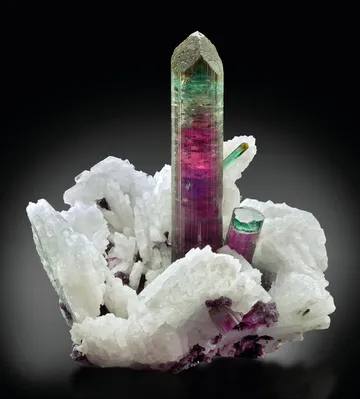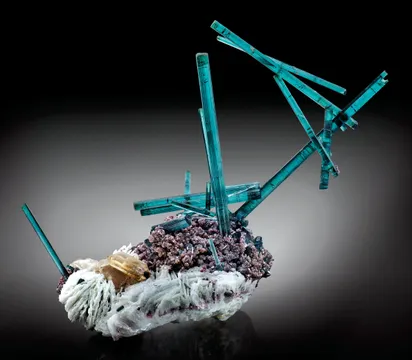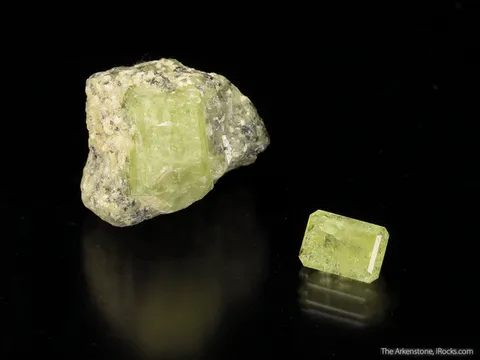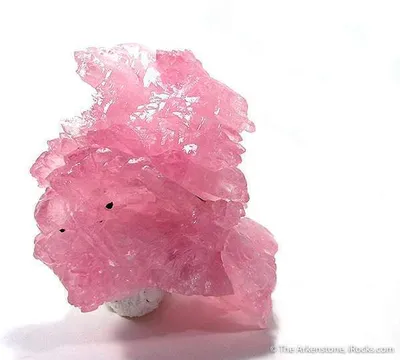
Conselheiro Lafaiete, Brazil — Morro da Mina manganese deposit yields intensely colored rhodonite crystals and serves as a key collector reference locality.
Key facts
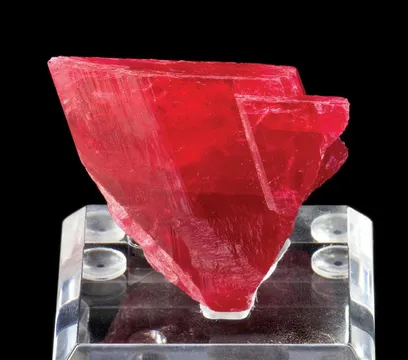
Conselheiro Lafaiete is one of the great manganese names in Brazilian mineral collecting, not because it produced vast quantities of common pink lapidary rhodonite, but because the Morro da Mina manganese deposit yielded a comparatively small population of intensely colored, transparent to translucent rhodonite crystals that changed collectors’ expectations for the species. The mine lies just south of the Quadrilátero Ferrífero, in the Lafaiete district of Minas Gerais, where the old town name, Queluz de Minas, survives in the geological term “queluzite”: a manganese silicate-carbonate protore whose assemblage is built around rhodochrosite, spessartine, rhodonite, pyroxmangite, tephroite, graphite, and alabandite. For specimen collectors, the finest Morro da Mina pieces are instantly recognizable: hot cherry-red, glassy triclinic rhodonite crystals, often bladed or thick-tabular, sometimes perched on pale cummingtonite or quartz-chalcedony matrix, with a color saturation closer to fine gem rough than to ordinary manganese silicate ore.
Regional View
Country View
The locality’s collector importance is layered. It is first an old industrial manganese mine, worked on a serious scale since the early twentieth century and studied repeatedly in the classic literature on Brazilian manganese ores. It is also a mineralogical reference locality for unusual high-temperature manganese silicate-carbonate assemblages: the ore body preserves a metamorphosed Paleoproterozoic sedimentary system, later folded, sheared, intruded by granodioritic dykes, oxidized near surface, and mined through a long industrial history. Finally, it is a modern specimen locality whose best rhodonites appeared in the mineral trade only intermittently: a few small pieces in the late 1990s, more deliberate specimen work around 2005–2006, later sporadic finds, and occasional releases from established collections.
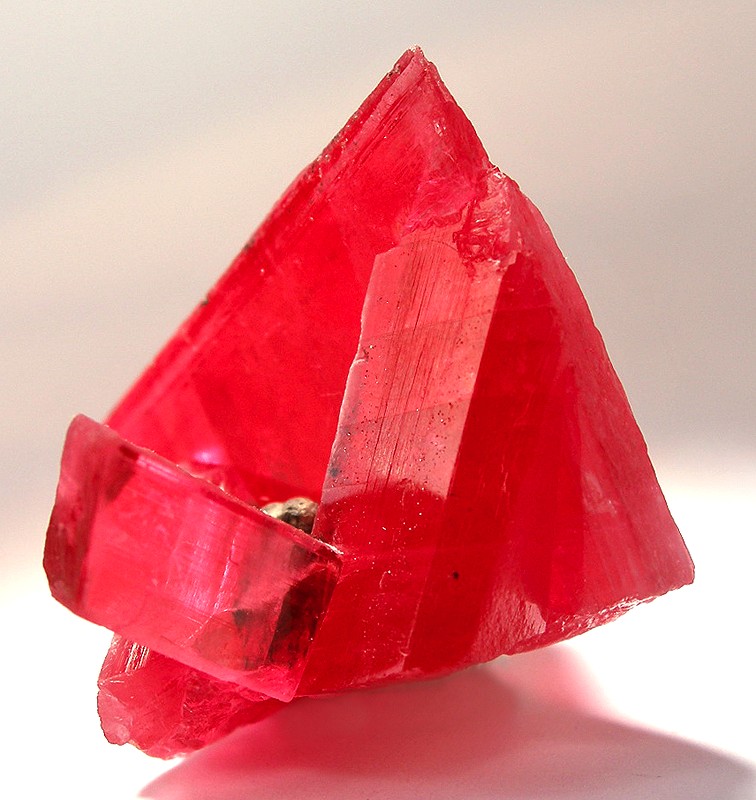
Photo: Rob Lavinsky, iRocks.com / Wikimedia Commons
The best specimens have an unusual visual tension: the crystals can be bright, gemmy, and saturated, yet they come from a dark, graphitic, sulfide-bearing manganese system rather than from a pegmatite or alpine cleft. This contrast is part of the locality’s appeal. Even thumbnail crystals may carry a vivid internal red glow, while cabinet pieces can show rhodonite against white to gray amphibole or quartz coatings, producing the strong color contrast that makes Morro da Mina material so desirable. Rhodochrosite specimens from the same district are much rarer as collector pieces, generally seen as rounded, botryoidal, or “rice-grain” crystal aggregates on manganese-rich matrix or chalcedony rather than the large scalenohedral crystals familiar from classic hydrothermal carbonate veins.

Search for specimens: View all specimens from Conselheiro Lafaiete, Brazil
The collector locality is centered on the Morro da Mina mine at Conselheiro Lafaiete, historically Queluz de Minas, in Minas Gerais. The deposit belongs to the manganese-rich Lafaiete Formation, a unit traceable for more than 100 km in the Barbacena greenstone belt. Its principal protore is queluzite, a manganese silicate-carbonate rock composed chiefly of Mn carbonate with major Mn silicates, especially spessartine, rhodonite, pyroxmangite, and tephroite, with graphite and alabandite widely present. In the mine sequence, queluzite occurs with intercalations of quartz-biotite schist, graphitic schist, quartzite, garnet-amphibole schist, and amphibolite; these rocks were folded and sheared, and the shearing formed sigmoidal ore bodies that reach roughly 100 m thickness.
The geological story matters for collectors because Morro da Mina rhodonite is not simply a late vein mineral in a typical hydrothermal pocket. The manganese-bearing sedimentary precursor was deposited in the Paleoproterozoic, later metamorphosed to at least about 600 °C, and locally affected by granodioritic dykes. That high-temperature history explains the robust manganese pyroxenoid and silicate assemblage, while later weathering and localized openings contributed to the specimen-scale development seen in pockets, narrow seams, and cavities. The industrial ore has been described as a mixture of carbonate-silicate manganese protore and supergene oxide ore; the oxidized cap produced manganese oxides such as pyrolusite and cryptomelane, while the deeper and less altered silicate-carbonate rock retained rhodochrosite, spessartine, rhodonite, tephroite, pyroxmangite, graphite, and alabandite.
Mining began in a rudimentary way in the 1890s near Fazenda Olaria, a few kilometers from the town center. By late 1902, with the creation of Companhia Morro da Mina and the completion of a rail connection, the mine entered large-scale export production. Early output moved by rail toward Rio de Janeiro for overseas shipment; in the first years of operation the mine quickly became one of the defining manganese suppliers of Minas Gerais. During World War I, demand for manganese in steelmaking drove production to exceptional levels for the period. In 1920 the property was sold to United States Steel and operated as Companhia Meridional de Mineração, tying a mine in interior Minas Gerais directly to an international steel supply chain. Later control passed through Brazilian ferroalloy interests and then to Vale; by the early 2020s Vale had sold its manganese and ferroalloy assets, including Morro da Mina, to the VDL/Nexus Ligas group. The modern operation is an industrial manganese ore source feeding ferroalloy plants rather than a collecting locality open to the public.
As a specimen locality, Morro da Mina has a separate, much smaller history superimposed on the mining history. Gem-quality rhodonite from the Conselheiro Lafaiete area had been noted before the modern collector boom, but the locality did not become widely visible in the specimen trade until the late 1990s and 2000s. Dealers and collectors began to see brilliant red rhodonite miniatures, some loose crystals, and rare matrix pieces. Further work around 2005–2006 was directed specifically toward recovering specimen-grade rhodonite, culminating in a 2008 Mineralogical Record study that documented the chemistry of the Ca-Mg-Fe-rich rhodonite. Later finds, including material described in the trade around 2019, added additional small groups of sharp, gemmy crystals.
Access today should be regarded as closed. Morro da Mina is an active or controlled industrial mine area, not a casual field-collecting site, and its best specimens are overwhelmingly encountered through older dealer stocks, collection dispersals, or pieces that left the mine through authorized channels during specific recovery periods. Serious collectors should treat labels carefully: “Conselheiro Lafaiete,” “Morro da Mina,” “Morro de Mina,” “Queluz de Minas,” and sometimes older “Lafayette district” wording may all refer to the same collecting context, but “Minas Gerais, Brazil” alone is too broad to establish this locality without specimen style, provenance, or analytical support.
The pockets that matter to collectors were small compared with the scale of the mine. The best rhodonite occurred as sharp, red, transparent to translucent crystals in narrow zones, commonly associated with pale cummingtonite, quartz or chalcedony, spessartine, rhodochrosite, and locally calcite or sulfides. Matrix pieces are much scarcer than loose crystals or damaged embedded crystals, and aesthetic crystals standing free on pale matrix are the premium expression of the locality. Rhodochrosite came out in far smaller numbers, often as rounded aggregates or compact botryoidal crusts rather than large isolated crystals; the best pieces stand out by strong color, discrete rounded forms, and contrasting white to tan chalcedony or dark manganese-rich matrix.
Rhodonite is the signature collector mineral of Conselheiro Lafaiete, especially from Morro da Mina, where the finest pieces show vivid cherry-red to raspberry-red, lustrous, transparent to translucent triclinic crystals rather than the massive pink material common at many manganese deposits. Crystals are commonly bladed, tabular, or blocky with sharp stepped faces; many good examples are thumbnail to miniature size, with individual crystals from a few millimeters to several centimeters, while truly fine matrix pieces are far rarer than loose or contacted crystals. The most distinctive associations are pale cummingtonite needles or fibrous masses, quartz or chalcedony, spessartine, rhodochrosite, and occasional calcite or sulfides. The finest specimens combine saturated red color, translucency, sharp undamaged terminations, and strong contrast on pale matrix; ordinary pieces tend to be embedded, cleaved, edge-worn, or granular, still attractive but lacking the jewel-like presence that made Morro da Mina famous.
Rhodochrosite from Conselheiro Lafaiete is far less available than rhodonite as a display specimen, even though Mn carbonate is an important constituent of the Morro da Mina ore. Collector pieces are usually not classic large rhombohedral crystals; they are more often rich pink to hot reddish-pink botryoidal crusts, rounded aggregates, puffy trigonal forms, or small granular “rice-grain” crystals on manganese-rich matrix, quartz, or tan to off-white chalcedony. Documented specimens include cabinet-size pieces, but most attractive examples are modest in size and prized for form and color rather than sheer scale. The best pieces have separated rounded groups or bright spherules sitting cleanly on contrasting matrix; ordinary pieces can look like compact pink carbonate crusts in dark ore and may be difficult to appreciate without strong color and surface definition.
Other documented minerals from the Conselheiro Lafaiete–Morro da Mina system make it a rich study locality for manganese specialists. Spessartine, tephroite, pyroxmangite, cummingtonite, clino-suenoite, bementite, neotocite, graphite, alabandite, kutnohorite, fluorapatite, molybdenite, pyrite, pyrrhotite, chalcopyrite, bornite, covellite, cryptomelane, lithiophorite, manganosite, nsutite, pyrolusite, todorokite, talc, chlorite-group minerals, mica-group minerals, and quartz/chalcedony are all recorded from the mine area. The old rock name queluzite is especially important: it is not an IMA mineral species but a historically significant manganese protore name rooted in the former Queluz district. Among the rarities, coombsite has been reported from the locality, and Ca-poor rhodonite-group material from Morro da Mina has been identified analytically as vittinkiite on at least some specimens, a useful warning that the most interesting “rhodonite” labels here may deserve modern microprobe or Raman confirmation.
The first authenticity issue is locality precision. Many labels compress the locality to “Conselheiro Lafaiete,” “Morro da Mina,” “Morro de Mina,” “Queluz,” or simply “Minas Gerais.” For high-value rhodonite, the mine name matters. A credible Morro da Mina rhodonite should fit the known style: cherry-red to raspberry-red, gemmy to translucent crystals, commonly in association with pale cummingtonite, quartz/chalcedony, spessartine, or rhodochrosite, and often with some cleaving or edge contacts. Bright red rhodonite without locality history can also be Brazilian gem material or another rhodonite-group occurrence; color alone is not proof.
The second issue is treatment. GIA has documented clarity enhancement in a transparent rhodonite submitted for gem testing; that stone’s exact source was not established, but its needle-like inclusions were consistent with Brazilian rhodonite inclusions previously described from Morro da Mina material. For faceted or transparent rough rhodonite, collectors should assume that fracture filling is possible and should inspect under magnification for residue, gas bubbles in fractures, and unnatural visual “healing.” For mineral specimens, oiling or resin filling is less often discussed publicly than in gems, but the same caution applies to highly transparent fractured crystals offered at premium prices.
Condition is a major value driver. Rhodonite has good cleavage, and Morro da Mina crystals are commonly contacted, cleaved, or chipped along thin edges. A crystal can still be important if the color is exceptional, but sharp terminations, clean front faces, and minimal repairs are what separate elite pieces from merely representative ones. Matrix pieces require special scrutiny: pale cummingtonite or quartz matrix can be friable, and crystals standing proud from the matrix are vulnerable to edge bruising. Repairs and reattachments should not be assumed, but they are worth checking on expensive specimens, especially where a red crystal meets a soft-looking white amphibole base.
Rhodochrosite presents different concerns. Because the best Conselheiro Lafaiete pieces are unusual in habit, they can be misidentified or doubted when seen without provenance. Massive pink carbonate in manganese ore may be visually unconvincing, and botryoidal red-pink crusts can be confused with other manganese carbonates or even dyed-looking material by non-specialists. A good label, old collection history, or analytical confirmation is valuable. Rhodochrosite is softer and more acid-sensitive than rhodonite; avoid acid cleaning, prolonged moisture, or aggressive ultrasonic cleaning.
The locality is rare but not unobtainable. Small rhodonite crystals and thumbnails appear periodically, while top matrix pieces with large, transparent red crystals are much scarcer and command strong prices. Rhodochrosite is substantially rarer on the market as an aesthetic specimen. Because Morro da Mina is an industrial mine with no public collecting access, the supply depends on old finds, collection turnover, and occasional material released through the trade rather than steady field production.
Long before collectors admired red rhodonite from Morro da Mina, the hill already had a name. Celso Oliveira Magalhães Gomes, an engineer who entered the mine in 1959, recalled that the “Morro da Mina” name did not originally refer to manganese at all. The hill was known for an older tunnel, probably driven in search of gold, perhaps in the eighteenth century when the great Ouro Preto region was already fading. He remembered the old report as describing a gallery tens of meters long and about 80 meters below the surface. By the time manganese became the prize, the name was already waiting.
The industrial story begins with rail. In Celso’s telling, two local men — the Italian chemist Artur Fornazini and the merchant Francisco Zenha Pereira Costa — bought Fazenda Olaria in 1896, encouraged by manganese showings near Queluz. They did not have enough capital to complete the railway link alone, but outside investors entered, and on November 12, 1902, the first special train of ore left the mine for Rio de Janeiro. The shipment was part of a lot of more than 5,000 tonnes bound for England. The Rio docks were not yet finished, so the ore had to be transferred from rail to barges, then out to a ship anchored offshore. Celso preserved even the shipping economics from the old reports: freight to England was 9 shillings per tonne by sailing ship and 12 shillings by steamship.
World War I transformed the mine. With traditional manganese sources disrupted, Minas Gerais manganese flowed toward the Allied steel industry. Morro da Mina’s production record came around 1916, when Celso remembered approximately 300,000 tonnes of production and about 350,000 tonnes of sales. The point was not merely local prosperity; it was wartime steel. Manganese hardened rails, armor, and military steel, and the Lafaiete district became one of the places where a global shortage was answered by a mine in inland Brazil.
The American chapter had its own drama. U.S. Steel sent missions during and after the war, weighing the value of Morro da Mina against risks in freight and taxes. On December 20, 1920, after securing favorable conditions, the company bought the property. Celso remembered the mine being discussed as U.S. Steel’s first offshore property below the Equator, a status that fed directly into the Portuguese company name Companhia Meridional de Mineração: “meridional” because, to American eyes, the mine lay in the exotic south.
One of the most memorable figures in Celso’s account was William Karly, an American who arrived in 1920 and lived at the mine for fifteen years. Karly was remembered locally as unusually captivating, organized, and close to the people around him. He died suddenly in the house, leaving behind what Celso considered one of the richest archival treasures connected with the mine: correspondence, newspaper clippings, and documents linking Morro da Mina with Itabira Iron, São João del-Rei, Ouro Velho, Arthur Bernardes, Percival Farquhar, and articles by Assis Chateaubriand. The archive mattered because it preserved the mine not only as an ore body, but as a node in the political and industrial history of Brazil’s steel age.
Celso’s own entrance into Morro da Mina is wonderfully unglamorous. As a student intern he expected to learn the mine; instead, he was assigned to level the football field of the company’s Mineiro Sport Club. He spent a month with “tio Dolitos” preparing the field, which later became good enough to receive floodlights for night games. When he returned in January 1959 as an employed engineer, the company jeep collected him from the Hotel Meridional. He remembered being squeezed among heavyset workers and arriving with them at the start of the shift. The men ate lunch at 8:30 in the morning, three hours after starting work, and he had to eat with them; by day’s end he was exhausted.
The mine’s technical identity changed as the rich oxidized ore declined. Celso described the anxiety of proving to Brazilian authorities whether the oxide ore was truly running out, while drilling showed something more important below and beside it: millions of tonnes of carbonate-rich protore. That “protominério” became the future of Morro da Mina. In collector terms, this transition matters because the same silicate-carbonate world that sustained industrial production is the world that produced rhodonite, rhodochrosite, pyroxmangite, tephroite, spessartine, graphite, and alabandite — the mineralogical fabric beneath the famous red crystals.