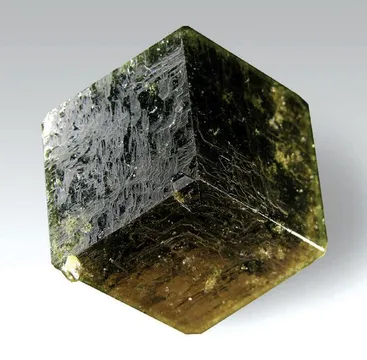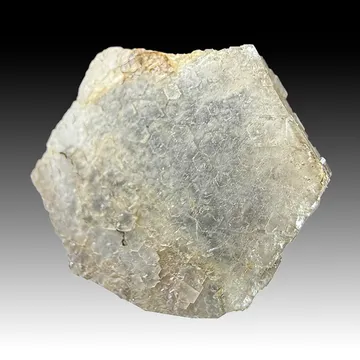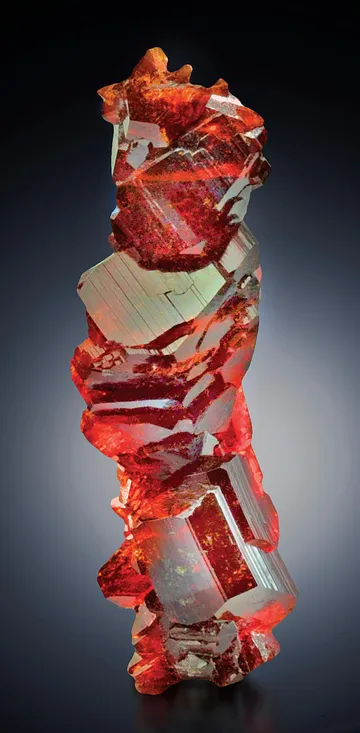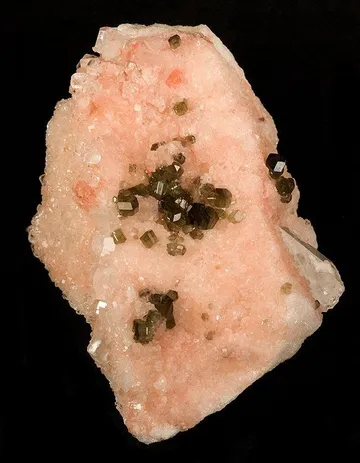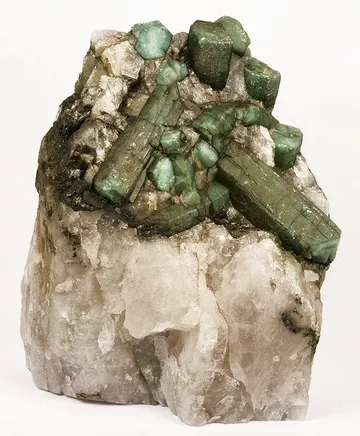
ブラジル・バイーア州のブルマド・マグネサイト。展示用結晶を産出し、しばしば tourmaline や florencite を含む。コレクターにとって対比と美観が高く評価される
Key facts
ブラムダドのマグネサイトはブラジルのクラシックな鉱物標本物語の一つです。産業用の炭酸塩鉱床でありながら、驚くほど優雅なコレクター向け結晶をも産出します。最良の標本は、シャープで透明感のある菱形晶と改変菱形晶を示し、しばしば石英、マグネサイト基質、あるいは district をもって有名な色彩豊かな蛍石–雨石系列のトルマリンの上に置かれています。多くのマグネサイト産地が主に大結晶材料で知られるのに対し、ブラムダドは真のディスプレイ標本を供給してきました—光沢があり、幾何学的で、時には宝石質で一見カルサイトと混同されるほどです。

産地は、ブラッドドーの近くのセラ・ダス・Éguas 地区、バイーア州のブラムダドに近接しています。歴史的には、古い鉱物文献では町の旧称 Bom Jesus dos Meiras で知られてきました。この地区は大規模なマグネサイトとタルクの採掘地であり、 Pedra Preta と Pomba 鉱山が現代のコレクターにとって最もよく知られた指標点を形成しています。地質学的には、ブラムダド鉱床はガビャォン帯のセラ・ダス・Éguas複合体に位置し、サン・フランシスコ地塊内にあります。鉱石は玄武岩性・変成岩を含む変成地質序列の中で、方解石-マグネサイト大理石の層状レンズとして現れ、かつ他の岩石としては苦鉄質・超苦鉄質岩石、石英岩、片麻岩、鉄層が含まれます。
コレクターの魅力は対比にあります。淡く清浄なマグネサイトが、黒〜赤のルチル、緑色またはさくらんぼ色のトルマリン、 Ceを含むとFlorencite、煙のような酸化鉄着色、または明るい石英と対照を成します。マグネサイトのみの美しい板は、トルマリン、トパーズ、Florencite、ルチル、ドロマイト、または石英を付随鉱物として含む標本よりも一般的には少ないです。そのため、マグネサイトが主要な観賞的要素であり、透明・シャープ・光沢があり、傷のないブラムダド標本はとりわけ好まれます。

*写真: Wikimedia Commons*歴史的に、ブラムアドは二つの側面で重要である。1940年代にマグネサイト採掘が始まり、大規模な露天掘り作業を通じて発展した、ブラジルで最も重要な耐火材料原料地区の一つとなった。また、ブラジル人および国際的なコレクター、ディーラー、鉱物学者の活動により、異常に広範な共生鉱物群を記録した標本地としても著名になった。マグネサイトは鉱石だが、コレクターの間でのこの地区の評判は、フルオロウィット–ウィット系ツアメローマを含む全体的な共生関係に根ざしている:石英、ドロマイト、ルチル、磁鉄鉱、トパーズ、セラライト、フロレンシート-(Ce)、スヴァンバーガイト、マラカイト、およびブラムアド石を含む珍種がある。## 特集標本
Search for specimens: View all magnesite specimens from Brumado, Brazil
ブラムドー・マグネサイト鉱床は、バイア州ブラムドー市の西にあるセラ・ダス・Éguasを中心としています。コレクターのラベルには「Brumado」「Serra das Éguas」「Pedra Preta」「Pomba」「Pirajá」「Catiboaba」、あるいは「Bom Jesus dos Meiras」のような旧表現が用いられることがあります。上質な鉱物ラベルで最もよく見られる二つの名称は Pedra Preta 鉱盤と Pomba 鉱盤です。
鉱床タイプは変成作用を受けた層状のマグネサイト大理石です。マグネサイトは Serra das Éguas 複合体のドロマイト大理石内に囲まれたレンズ状として現れます。現代研究では、二つの主なマグネサイト鉱化様式を区別します。Pedra Preta と Pedra de Ferro では、マグネサイトには赤色系および淡色系が含まれ、赤系は微細に分散した赤鉄砿と結びつきます。Pomba と Pirajá では、マグネサイトは典型的に白色で、赤鉄砿はごく目立ちません。最近の流体包有研究は、非常に塩水性の H2O-CO2 流体を説明し、鉱床形成系を変成作用中に動員された蒸発性ブラインと関連づけています。
採掘の歴史は、マグネサイトが地区のアイデンティティになる以前から始まっています。地域で最も早く記録された採掘活動は鉄層形成で、続いて Pirajá バレーでエメラルド採掘が行われました。マグネサイトは認識されましたが、すぐには商業的焦点とはなりませんでした。20世紀初頭、ピエール・カーンとジョルジュ・ムンヴィエルがセラ・ダスÉguas のマグネサイトの報告を追い、Magnesita S.A. を組織し、地区の工業史の展開を手助けしました。RHI Magnesita の独自の操業履歴は、1943年の Pedra Preta 鉱山開坑を起点とし、4年後には最初の垂直焼成窯の設置を記しています。
現在、この地区はカジュアルな野外採集地というよりも、工業的な採掘地域です。Pedra Preta と Pomba は露天採掘で、アクセスは採掘会社によって管理されています。コレクター標本は、過去には採掘活動、鉱夫、地元の関係者、ブラジルのディーラーネットワークから来るのが一般で、露天のレクリエーション採集からではありませんでした。鉱山の活発な性質は標本の存在理由の一部ではありますが、それは現代の採集アクセスが公的な採掘場や有料の採掘と同等にはならないことも意味します。
主な産業活動は、耐火材料用のマグネシア性セメント(マグネシアン・シンター)と苛性マグネジアの生産に結びついています。Pedra Preta と Pomba は、粉砕、選別、濃縮、焼結、道路・鉄道での出荷を含む処理系へ供給します。現代の RHI Magnesita の文献は、Pomba と Pedra Preta からの抽出、シンター M-10 および M-30 の生産、そして Brumado への継続的な投資、効率性を高め鉱山の有用寿命を延長することを目的とした Pedra Preta のロータリーキルン計画を示しています。 notable specimen finds are scattered through several mineral groups. magnesite crystals to exceptional size have been recorded from the district, including rhombohedra and pinacoid-modified forms. sellaite from pedra preta and pomba is among the world’s best for that species. brumado also produced major suites of tourmaline, dolomite, rutile, topaz, florencite-(ce), svanbergite, and rare uranium, arsenate, phosphate, sulfate, titanate, and tellurate minerals. the district is the type locality of brumadoite, a copper tellurate hydrate described from material associated with magnesite at pedra preta.## ブルマドのブラジル産海水石の特徴
Brumado産海水石は、鋭い菱形晶、改良菱菊晶、ピナコイドの影響を受けた菱形板が最も recognisable です。クラシックな結晶形はシンプルで建築的: ブロック状で清澄、ガラス光沢を持ち、キャビネット標本には階段状の成長特徴や平行成長が一般的です。細長い板状は海水石や石英を基盤とした多数の淡色の菱形晶が互いに共生してなることがあり、単結晶は小さな結晶群の中で明るく透明性のあるブロックとして立ち上がることがあります。
色は通常、白、無色、クリーム色、淡い灰色、またはかすかに煙色。含有物や関連鉱物によっては、ピンク、ラベンダー、サーモン、赤みのあるトーンを示す標本もあります。鉱石中の鉄鉱相の影響で赤やマルーンの海水石も見られ、コレクターの結晶には局所的な鉄着色、内部のベール、または赤みを帯びた含有物が見られることがあります。最も美しい標本は、チョーク状ではなく透明〜半透明で、ガラス光沢と鋭い終端を持つものです。
サイズの範囲は幅広いです。一般的なコレクター用結晶はミリメートル〜センチメートルスケールで、良いキャビネット標本はしばしば約1–3 cm程度の菱菊晶を周囲に持ちます。公刊された鉱物学の記録には、ブリュマドオ産の極めて大きな菱水晶が辺縁で最大30 cmに達する例があるとされますが、その規模の標本は通常の市場材料を代表するものではありません。より典型的な展示品はミニチュアおよび小型キャビネットで、単一の巨大結晶よりも鋭い結晶が集まった群晶であることが多いです。
関連鉱物は識別と価値の核心です。最もよく知られたコレクターの組み合わせは、海水石上または海水石と共に尖晶石-海水石系列のトルマリンで、緑、茶色、橙色、赤、深いサクランボ色の結晶として現れます。石英は一般的で、海水石の基質を形成することがあります。ドロマイトは見事な平板状の結晶、二重晶、疑似立方晶形で現れます。ルチルは Pedra Preta および Pomba 産の黒〜赤黒い結晶と二重晶として現れます。ヘマタイトは見える関連鉱物であり、赤みのある海水石の着色要因にもなります。その他の注目すべき共生鉱物には、トパーズ、フロレンサイト-(Ce)、スヴァンベルギ石、マラカイト、アラゴナイト、セレスチン、無水硫酸塩、セラサイト、タルク、トレモライト-アクチノライト、カイライト、まれにリン酸塩、砒酸塩、ウラン酸塩、テルレート鉱物などがあります。
最も強い品質要因は、シャープさ、透明性、光沢、割れ痕のないこと、視覚的対比です。無色の海水石菱は優雅ですが、赤いトルマリンや石英上の無色菱は特にブリュマドらしい特徴です。海水石に焦点を当てた標本では、基質に傷のない宝石質の菱菊晶が突き出していることをコレクターは期待します。関連標本では、海水石は主種を隠すのではなく強調するべきです。すっきりとした淡い結晶がフ fluor-uvite、Florencite、Quartz、Rutile を強調する場合、非常に魅力的です。コレクターにとって実用的な点として、ブラムド magnesite は特に透明で菱状柱状のとき calcite に似ることがある。違いは単なる学術的なものではない。ツアモライトや水晶上に鋭く透明なブラムド炭酸塩結晶がある場合、外観だけで検査すると誤ってラベル付けされることがある。マグネサイトは calcite より密度が大きく、酸に対する発泡挙動が異なり、光学的および分析的特性も異なる。古いラベルは尊重されるべきだが、標本が unusually transparent(特に透明度が高い場合)であるとか、典型的なブラムドの関連物から孤立しているときには確認すべきである。## Collector Notes
Brumado magnesite is not generally a plentiful “new pocket” mineral on the market. Specimens appear regularly enough that dedicated collectors can find them, but many attractive pieces are older material from past mining episodes or dealer inventories. Modern industrial activity continues, yet specimen recovery is opportunistic and access-controlled; the presence of an active mine does not mean a steady supply of collector-grade crystals.
Condition deserves close attention. Magnesite has perfect rhombohedral cleavage and moderate hardness, so exposed crystal edges nick easily. The most common issues are bruised rhombohedron corners, cleaved faces, contacted backs, iron-oxide staining, and trimming damage. On matrix specimens with fluor-uvite, quartz, or dolomite, inspect both the magnesite and the associated species: a perfect-looking tourmaline cluster may have damaged magnesite rhombs, and a sharp magnesite plate may carry broken or missing accessory crystals.
The main authenticity concern is identification, not a well-established locality-specific treatment. Clear rhombohedral magnesite can be mistaken for calcite, dolomite, or other pale carbonates, especially on older labels. Conversely, Brumado labels can be applied too broadly to attractive Brazilian tourmaline-and-carbonate specimens whose exact pit is uncertain. For high-value pieces, especially those sold as magnesite-dominant or as rare associations, a label that distinguishes Pedra Preta, Pomba, or Serra das Éguas is preferable, and analytical confirmation is worthwhile when the mineral species or tourmaline subgroup identity affects value.
Tourmaline nomenclature is a special Brumado issue. Many older specimens were sold as “uvite.” Under modern tourmaline-supergroup nomenclature, some Brumado material falls in the fluor-uvite–uvite compositional range, and the species assignment cannot always be made visually. Unless a specimen has reliable analysis, “fluor-uvite–uvite series” is often the more cautious label. That does not diminish the aesthetic value, but it matters for systematic collectors.
No standard Brumado-specific magnesite treatment—such as dyeing, coating, or artificial crystal enhancement—has become part of the serious mineral-specimen literature. However, magnesite as a species is sometimes dyed in the decorative-stone trade, especially as turquoise imitation; that material is a different market and should not be confused with crystallized Brumado specimens. For Brumado crystals, be wary instead of repaired cleavages, glued-on loose crystals, cleaned surfaces that have dulled luster, and vague labels that use “Brumado” for any Brazilian carbonate association.## Stories & Field Notes
Brumado の話は、有用な neglect の一種から始まる。地区で最初に記録された採掘は、マグネサイトそのものではなく、1912年か1913年の itiabirite であり、帯磁鉄層が現地で採掘・精錬された。緑の宝石であるエメラドがすぐ後に PirajáValley で発見されてからほぼ30年間、その緑の賞が注目を集め、関連する magnesite は認識され、 then largely forgotten。振り返れば、世界の偉大な magnesite 地区の未来の鉱石は、エメラドに見下ろされながら、平易な場所に坐していた。
Then came Pierre Cahen and Georges Minvielle, naturalized Brazilian citizens who became interested in reports of magnesite in the Serra das Éguas. They carried a sample of magnesite with them and showed it to local prospectors and miners, asking after anything similar in the hills. The search apparently dragged on for months until a local prospector gave them the key in a wonderfully understated way: it was “extraordinarily simple to discover the Serra das Éguas deposits.” The remark proved true. The two men located the deposits and organized Magnesita S.A., setting in motion the industrial identity that still defines Brumado.
Specimen collectors remember another episode: the sellaite pocket at Pedra Preta. In 1979, a pocket in the quarry yielded loose sellaite crystals in magnesite “sand.” They were colorless, clear to whitish, translucent, and reached 5 cm, with inclusions of greenish-brown dravite, quartz, and translucent magnesite noted in the published account. Later production from Pomba pushed the species still further, with sellaite up to 6.5 cm, including nearly black crystals and geniculate twins. For a mineral that most collectors know only as a small or obscure fluoride, Brumado turned a species footnote into a headline.
The modern locality has a quieter field note that matters to anyone trying to understand labels. Pomba is above the Pedra Preta open pit, higher on the hill or mountain, and the two names are not interchangeable even though old labels sometimes blur them. A specimen labeled simply “Brumado” may be perfectly legitimate, but a piece labeled “Pomba pit” or “Pedra Preta pit” carries more geological information. At Pomba, collectors expect white magnesite and the famous suite of tourmaline, topaz, florencite, svanbergite, and rare accessories. At Pedra Preta, reddish and light-colored magnesite, hematite influence, rutile, sellaite, malachite, and rare copper-tellurate mineralization are part of the locality’s identity.鉱物記録にも人間の糸口が存在します。カルロス・P・バルボーザは、収集家に届いたブラマドの標本の流れと繰り返し結びつけられ、地区の現代種リストはブラジルの野外関係者、ディーラー、コレクター、学術的鉱物学者の協力を反映しています。ブラムアサイトの記載はその世界の一つの結果であり、 Pedra Pretaで粘板岩石と結びつく微小な青色の銅テラレート水和物で、Brumado自体にちなんで名付けられました。産業鉱業には見えないタイプの鉱物ですが、体系的コレクターには忘れられない存在です――同じ炭酸塩環境の中で cabinet マグネサイト菱形体を生み出した鉱物と同じ場所に隠れているタイプの鉱物です。## 鉱物学的記録と出版物- Alfred J. Bodenlos, “Magnesite deposits in the Serra das Éguas, Brumado, Bahia, Brazil,” U.S. Geological Survey Bulletin 975-C, 1954 — 地質学の基礎報告書で、地図、鉱床の記述、初期の採掘史、鉱物学、埋蔵量推定を収録。
Bodenlos, A.J. 1954. “Magnesite deposits in the Serra das Éguas, Brumado, Bahia, Brazil.” DOI: 10.3133/b975C — USGS Bulletin の DOI ページ。
Jacques P. Cassedanne and Jeannine O. Cassedanne, “Famous Mineral Localities: The Brumado District, Bahia, Brazil,” The Mineralogical Record 9, 196–205, 1978 — ブルマド地区の古典的コレクター向け解説で、地点記録と後の鉱物学文献で引用。
Carlos P. Barbosa, Alexander U. Falster, William B. Simmons, Karen L. Webber, James Nizamoff, and Richard V. Gaines, “Minerals of the Brumado Magnesite Deposits, Serra das Éguas, Bahia, Brazil,” Rocks & Minerals 75(1), 32–39, 2000 — 重要な標本・鉱物目録とコレクター向け参照、マグネサイトと多くの関連鉱物をカバー。
ResearchGate copy of “Minerals of the Brumado Magnesite Deposits, Serra das Éguas, Bahia, Brazil” — Rocks & Minerals 論文本文と図のアクセス可能なプレビュー。
Jacques P. Cassedanne and J.P. Resende, “Sellaite from the Brumado Mine,” The Mineralogical Record 14, 179–181, 1983 — ブルマドの世界クラスのセラライト産地の主要参考文献。
Daniel Atencio, Andrew C. Roberts, Paulo A. Matioli, J.A.R. Stirling, K.E. Venance, W. Doherty, C.J. Stanley, R. Rowe, G.J.C. Carpenter, and J.M.V. Coutinho, “Brumadoite, a new copper tellurate hydrate, from Brumado, Bahia, Brazil,” Mineralogical Magazine 72(6), 1201–1205, 2008 — ブルマドーite の説明。マグネサイトと関連するタイプ局鉱物。
Magno de Mendonça Freire, “Caracterização petrográfica e geoquímica dos mármores magnesíticos da Serra das Éguas, Brumado-BA,” Universidade Federal da Bahia, 2021 — Serra das Éguas の magnesitic 大理石の現代的な岩石学的・地球化学的研究。
Elisabeth Hauzinger, “Fluid Inclusions in Magnesites of Brumado Deposit, Bahia, Brazil,” Montanuniversität Leoben, 2021 — Pedra Preta、Pomba、Pedra de Ferro、Pirajá のマグネサイトにおける流体包有物の研究を記述した論文データ。
[Ronald J. Bakker, Johann G. Raith, Elisabeth Hauzinger, Walter Prochaska, and Christoph Stranzl, “Metamorphic magnesite deposits of Brumado (Bahia, Brazil): Evidence from highly saline H2O-CO2 flui]d inclusions,” Lithos 504–505, 108035, 2025]() — 白色の Pomba/Pirajá マグネサイトと赤みを帯びた Pedra Preta/Pedra de Ferro マグネサイトを区別し、鉱物形成流体を解釈する最近の遺伝学的研究。## 参考資料と外部リンク
Mindat: Brumado, Bahia, Brazil — ミネラルリスト、サブローカルティ、参考文献、写真ギャラリーを含む中央ローカリティページ。
Mindat: Pomba pit, Serra das Éguas, Brumado, Bahia, Brazil — Brumadoの最も重要な標本源の一つを詳述するサブローカルティページ。
USGS Publications Warehouse: Magnesite deposits in the Serra das Éguas, Brumado, Bahia, Brazil — アルフレド・J. ボーデンロスによる歴史的地質報告の要点。
RHI Magnesita: O Empreendimento — Brumado operation PDF — Brumado操業、Pedra PretaおよびPomba鉱山、処理・生産歴を説明する企業資料。
RHI Magnesita: Brazil Emerges as a Global Magnesia Powerhouse — Brumadoの世界的マグネシア生産における役割の現況概要。
RHI Magnesita: investment in Brazilian operations — ロータリーキルン投資とPedra Pretaの生産性計画に関するプレスリリース。
Wikimedia Commons: Magnesite-121892.jpg — 鋭いBrumadoのマグネサイト菱형結晶のフリーライセンス画像。
Wikimedia Commons: MagnesiteQuartzBresil.jpg — Serra das Éguas産の水晶上のピンク色マグネサイトのフリーライセンス画像。
RRUFF: Magnesite R050443, Brumado, Bahia, Brazil — Brumado産マグネサイトの分析参考エントリ。
Portal da Mineração: Magnesite — ブルマドの耐火用マグネサイトの重要性を指摘する、ブラジル鉱業の短い概説。