Magnesite - Styrian specimens pair snow-white rhombohedra with pinolite textures and banded forms; formation, appearance, and notable Austrian localities.
Key facts
Styria is one of the classical European regions for magnesite, and its specimens fall into two collector worlds that rarely overlap so neatly: bold, sparry MgCO3 crystals for the systematic mineral cabinet, and ornamental pinolite in which pale magnesite crystals sit in a dark graphitic-dolomitic groundmass like almond kernels in black stone. The best Styrian material is not merely “white magnesite.” It is Alpine industrial geology made visible: rhombohedral crystals, snow-white to translucent cleavages, zebra and rosette textures, and the unmistakable black-and-white pinolite that made the Sunk–Hohentauern deposit famous.
The region’s importance is anchored in several deposits rather than a single mine. Veitsch gave its name to the “Veitsch-type” sparry magnesite model, a class of carbonate-hosted, metamorphically overprinted magnesite deposits of the Eastern Alps. Breitenau am Hochlantsch remains one of Austria’s great producing magnesite mines and is embedded in the Graz Paleozoic. Oberdorf an der Laming, worked for magnesite and talc, is a specimen locality of special collector importance because magnesite there also serves as matrix for some of Europe’s most desirable strontianite. Sunk–Hohentauern supplies the locality’s most distinctive visual identity: pinolite, banded magnesite, and rosette textures in a graphite-bearing carbonate sequence of the Greywacke Zone.
For collectors, Styrian magnesite is valued less for saturated color than for architecture and provenance. A fine Styrian cabinet piece may be a glassy, translucent rhomb; an old Oberdorf specimen with dolomite; a pinolite slab with sharp contrast and bold, “pine-kernel” magnesite grains; or a Breitenau specimen carrying the story of one of Europe’s major refractory raw-material mines. Labels matter. “Styria, Austria” is useful, but “Sunk, Hohentauern,” “Oberdorf an der Laming,” “Breitenau am Hochlantsch,” “Veitsch,” or “Wald am Schoberpass” is what turns an attractive carbonate into a documented Alpine specimen.
Historically, the region’s magnesite moved from decorative stone into the furnace age. Pinolite from Sunk was used architecturally long before magnesite became a strategic refractory raw material. The rise of Bessemer and Thomas-Gilchrist steelmaking changed the scale of mining: magnesite was no longer simply a handsome black-and-white stone, but a heat-resistant industrial mineral needed for converter linings. That dual identity—ornamental Alpine stone and refractory mineral—still gives Styrian magnesite its special collector resonance.
Search for specimens: View all magnesite specimens from Styria, Austria
Styrian magnesite belongs chiefly to the Eastern Alpine sparry magnesite tradition. The key deposits are carbonate-hosted, stratiform to stratabound bodies that have been tectonically and metamorphically overprinted during Alpine events. In the Veitsch nappe and associated Greywacke Zone settings, magnesite occurs with dolomite, talc, graphite, quartz, pyrite and other sulphides; in the Graz Paleozoic at Breitenau, the magnesite is hosted in an Upper Silurian sequence and associated with black shale facies, dolomite, sulphides and secondary copper minerals.
Sunk–Hohentauern lies between Hohentauern and Sunk in the Niedere Tauern. The deposit was known before modern industrial mining, and the older quarry area lay at roughly 1150 m elevation, with later workings extending through multiple benches and adits. The mine is celebrated for pinolite: light magnesite crystals and cleavages in a dark graphite-pigmented dolomitic matrix. The mine’s recorded history reaches into the seventeenth century, when black-and-white mottled Styrian stone was ordered for St. Stephen’s Cathedral in Vienna. Before about 1850, the material was used largely as decorative and architectural stone, including ecclesiastical settings; later, refractory demand transformed production.
Industrial work at Sunk increased dramatically in the steel age. A processing plant was built at Trieben between 1907 and 1910, and the mine processed 55,000 metric tons of ore in 1913. Production peaked in 1965 at about 200,000 tons with roughly 260 workers. Total lifetime production reached about 5.5 million tons of magnesite, around 4.5 million tons of which came from adits. Sunk ranked behind Veitsch and Breitenau as the third-largest Styrian magnesite mine. It closed for economic reasons in 1991, saw tourist-mine installations from 2002, and mining resumed in 2013 under STYROMAG.
Breitenau am Hochlantsch is the heavy industrial anchor of Styrian magnesite. The deposit was known around 1850 and first exploited in 1903. It is a strata-bound sparry magnesite deposit in the Graz Paleozoic, located south of St. Jakob-Breitenau in the southwestern Fischbacher Alpen. It has been worked by both open-pit and underground methods and is owned by RHI Magnesita. Breitenau is especially important for understanding the economic scale of Styrian magnesite: published figures describe annual production on the order of several hundred thousand tons, and geological summaries identify it as Austria’s most productive magnesite operation.
Oberdorf an der Laming, northwest of Bruck an der Mur, is a classic magnesite and talc district with the Angerer, Kaintaleck/Kaintalegg and Wiesergut/Wieser workings. The deposit was located in 1852, magnesite mining began in 1870, industrial production of magnesite products began in 1906, and the first Oberdorf furnace was built in 1911. STYROMAG has operated a surface mine at Kaintalegg and underground mines at Angerer and Wiesergut. From 1945 to 1963, Wiesergut also produced talc. For collectors, Oberdorf’s fame extends beyond magnesite itself because the magnesite deposit produced superb strontianite specimens on magnesite, dolomite or calcite-rich matrices.
Wald am Schoberpass is another Styrian magnesite mine in the Liesing-Palten valley region, recorded with dolomite, magnesite, pinolite and talc. Compared with Sunk, Breitenau and Oberdorf it is less frequently encountered as a named specimen locality in the international cabinet market, but it is part of the same broader Styrian magnesite province and matters for collectors who specialize in fully labeled Austrian suites.
Collecting access should be treated as restricted unless permission is explicitly granted. These are mines and industrial or former industrial sites, not casual collecting quarries. Oberdorf’s locality record specifically warns that permits are required to enter the mining area, and that mine damage by reckless collectors has been a documented problem. The responsible collector should acquire old labeled material, specimens released through legitimate dealer channels, or material collected with documented permission.
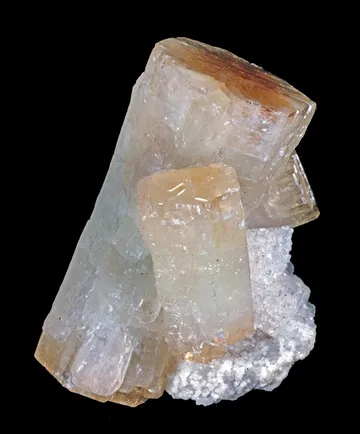
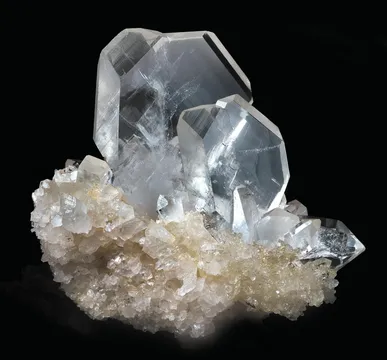
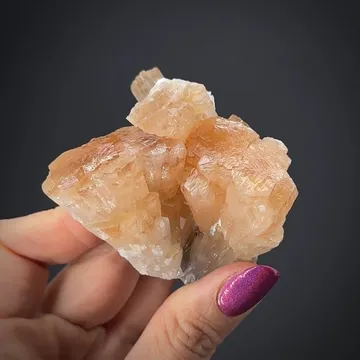
Styrian magnesite is most recognizable in three forms: sparry rhombohedral crystals, massive to cleavable white magnesite, and pinolite. The crystals are typically white, cream, colorless, grayish, honey-tinted or locally included by darker material. Good rhombs can be glassy to pearly, translucent to opaque, and may show sharp carbonate cleavage. Cabinet-quality crystals are usually valued for sharp form, translucency, undamaged edges and an old, precise locality label.
Pinolite from Sunk–Hohentauern is the most visually distinctive material. It consists of pale magnesite crystal sections in a dark matrix rich in dolomite and graphite, producing the pine-kernel pattern that gives pinolite its name. In polished slabs the contrast can be dramatic: white or ivory magnesite grains float in smoky gray to black groundmass, often with a graphic, almost textile rhythm. Collectors look for large, well-spaced magnesite “kernels,” strong black-white contrast, minimal fractures, and an old Hohentauern/Sunk provenance rather than a vague “pinolite” label.
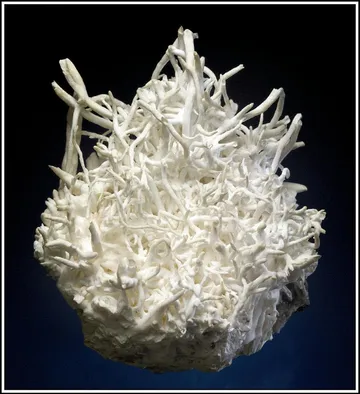
The Sunk deposit also shows rosette and banded, or zebra-like, textures. These are especially attractive in cut faces and geological study pieces because they display the replacement and deformation history of the ore. The most interesting specimens preserve the magnesite-dolomite relationship clearly: pale sparry magnesite against darker dolomite or graphitic material, sometimes with late carbonate veining or sulphide specks.
Breitenau material is important geologically and historically more than as a common showy hand-specimen source. It is a sparry magnesite deposit in the Graz Paleozoic, with magnesite, dolomite, graphite, pyrite, quartz, magnesiochromite, millerite and a suite of copper and secondary minerals recorded from the mine. “Magnesite suns” are described as characteristic textural features of the Breitenau deposit. In collector terms, Breitenau labels add locality significance even where the specimen is not as visually dramatic as Sunk pinolite or Oberdorf crystal specimens.
Oberdorf magnesite specimens are often seen as rhombohedral crystals or cleavages with dolomite, and the locality is especially prized when magnesite forms the matrix for strontianite. The finest Oberdorf strontianites are lustrous, colorless to pale tan, doubly terminated or sharply prismatic crystals, commonly in the 1–3 cm range, perched on magnesite, dolomite or white carbonate matrix. For magnesite collectors, these combination pieces are important because they show the locality’s carbonate paragenesis rather than magnesite as an isolated mineral.
Associated minerals vary by deposit. Sunk–Hohentauern records include dolomite, graphite, talc, quartz, pyrite, pyrrhotite, chalcopyrite, galena, sphalerite, millerite, gersdorffite, fluorite, baryte, calcite, aragonite and several sulphates formed in mine environments. Breitenau records include dolomite, graphite, pyrite, quartz, chalcopyrite, cinnabar, millerite, native copper, malachite, azurite, brochantite, magnesiochromite, sasaite and many other species. Oberdorf records include dolomite, strontianite, celestine, calcite, graphite, hematite, quartz, talc-related assemblages and secondary minerals.
Quality is judged by different standards depending on type. For rhombs, sharpness, luster, translucency and lack of bruising are paramount. For pinolite, pattern is everything: high contrast, attractive grain size, polish quality and low fracture density separate cabinet-grade material from lapidary scrap. For old Styrian specimens, provenance can be as important as aesthetics. An Anton Berger-era label, an old Austrian collection label, or a specific mine name such as Oberdorf, Sunk or Breitenau greatly increases interpretive value.
The main authenticity issue with Styrian magnesite is provenance, not chemistry. Magnesite is widespread globally, and unlabeled white rhombs or polished pinolite-like material can be difficult to assign confidently after the label is lost. Serious collectors should prefer pieces with old labels, mine-specific locality information, or a documented acquisition chain. “Styria” alone is acceptable for a decorative cabinet piece, but insufficient for a locality-focused Austrian suite.
Pinolite deserves special scrutiny. The trade name is used for attractive black-and-white magnesite-bearing ornamental stone, and material from different deposits or modern lapidary lots may be sold with loose or romantic locality wording. True Sunk–Hohentauern pinolite should be represented as magnesite with dolomite and graphite, not as a separate mineral species. Strongly polished slabs are legitimate collector objects, but they should be distinguished from natural crystal specimens.
The species-wide treatment issue for magnesite is dyeing. White, porous magnesite is commonly dyed blue or blue-green and sold as imitation turquoise, especially in beads, cabochons and tumbled material. This is not a Styrian crystal-specific problem, but it matters for buyers encountering “blue magnesite,” “turquoise magnesite,” or unlabeled blue ornamental stones. Dyed magnesite is not fraudulent when disclosed; it becomes a problem when sold as natural turquoise or as naturally colored magnesite.
Condition problems are typical of carbonates. Rhombohedral crystals bruise along edges, cleave cleanly, and can show dull spots from abrasion. Pinolite slabs may show repaired cracks, resin fills, surface polish inconsistencies or undercut graphite-rich areas. Oberdorf combination specimens with strontianite need especially careful handling: strontianite crystals can be brittle, and the open, vuggy carbonate matrices can shed small crystals if packed poorly.
Availability is uneven. Polished pinolite from Sunk appears regularly in lapidary and decorative-stone channels, but high-quality old locality pieces with strong labels are more selective. Fine Styrian magnesite crystals, especially old Oberdorf or general Styria rhombs with good translucency, are far less common than ordinary white magnesite fragments. Breitenau material is encountered more often as geological or locality-suite material than as showpiece magnesite. Oberdorf strontianite-on-magnesite combinations remain desirable and can command strong prices when crystals are sharp, lustrous and undamaged.
The most memorable Styrian magnesite story begins not in a modern mine, but in architecture. A seventeenth-century record describes black-and-white mottled Styrian stone—pinolite by later names—being ordered for St. Stephen’s Cathedral in Vienna. The old wording evokes the material perfectly: dark and pale stone, speckled like a winter forest floor. Long before collectors prized polished pinolite slabs, the stone had already entered one of Austria’s great ecclesiastical spaces.
For generations after that, Sunk’s magnesite belonged as much to church and architectural stonework as to mining. The landowner, Stift Admont, was part of the enterprise, and the black-and-white material was used in churches and decorative settings. After the catastrophic Admont Abbey fire of 1865, pinolite is recorded in the story of restoration. It is a striking reversal of the usual mineral-collecting timeline: the rock was valued first as a worked stone and only later became a named object of geological and collector attention.
Then steel changed the valley. The rise of Bessemer and Thomas-Gilchrist converter technology created an appetite for refractory linings, and magnesite became industrially urgent. At Sunk, the workings grew into a quarry with about fourteen levels between roughly 1200 and 1300 m, followed by underground adits. Between 1907 and 1910 a processing plant was built at Trieben, linking the high Alpine deposit with valley industry. By 1913 the operation processed 55,000 metric tons of ore; in 1965 it reached about 200,000 tons with around 260 workers.
The numbers give the Sunk mine its scale, but the texture gives it its soul. Geologists describe the magnesite bodies as layers, lenses and stocks in carbonate rocks; collectors see pinolite, rosettes and zebra banding. In hand specimen, that difference collapses: the pale magnesite crystals are not simply attractive markings but the visible record of replacement, deformation, graphite-rich sediment, dolomite inheritance and later Alpine overprint.
Oberdorf’s story is more cautionary. The locality is classic, and its strontianite-on-magnesite specimens are European cabinet standards, but the mine is not an open invitation. The record of reckless collectors entering and damaging workings with explosives in 2004 is a reminder that a specimen locality can be harmed by the very people who claim to value it. For modern collectors, an old Oberdorf label is more than nostalgia; it is often the responsible way to own a piece of the locality without adding pressure to active or dangerous workings.