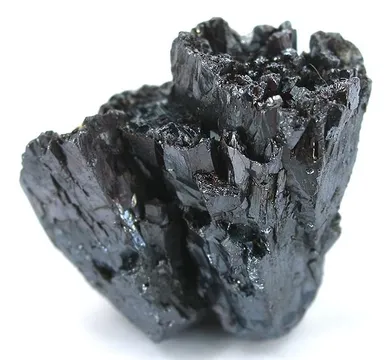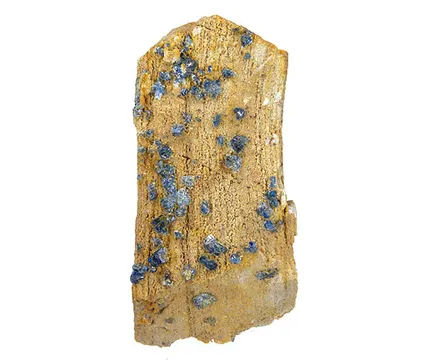
Machacamarca Mine, Bolivia - historic locality famed for cogwheel bournonite twins and first-crystal augelite, with quartz, pyrite, and siderite.
Key facts
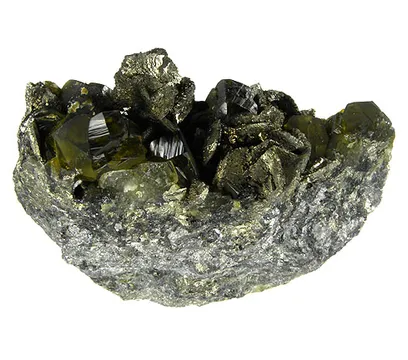
Machacamarca is one of those Bolivian names that means different things to different collectors. To the ore geologist it belongs to the Colavi–Machacamarca silver–tin belt northeast of Potosí, a high Andean district where old silver workings, tin mantos, brittle sandstone hosts, and dacitic intrusions all overlap in a complicated polymetallic system. To the systematic mineralogist it is a historic augelite locality of first rank: the place that supplied the first well-crystallized augelite studied in detail, at a time when the species itself still needed firm definition. To the modern cabinet collector, however, Machacamarca means bournonite—especially the celebrated “cogwheel” twins from the Víboras sector, metallic gunmetal to stainless-steel gray, perched on drusy quartz, pyrite, sphalerite, or brown siderite.
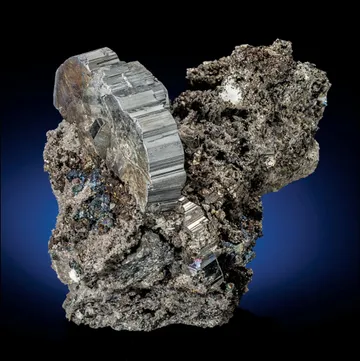
The best specimens have a look quite unlike the flatter, darker sulfosalt suites from many other Bolivian camps. Machacamarca bournonite can be bright, sculptural, and distinctly three-dimensional, with thick tabular twins serrated around the rim like miniature gear wheels. Fine examples show sharp edges, crisp stepped faces, and enough matrix to tell the paragenetic story: quartzose rock, pyrite, sphalerite, siderite, occasional tetrahedrite/freibergite-group minerals, and, in rarer association pieces, augelite. The augelite itself is quieter but scientifically more important—colorless to milky, glassy, sharply tabular or blocky, and often easy to miss unless one knows what the locality can produce.
Regional View
Country View
The district sits in Potosí Department, in Tacobamba Municipality, Cornelio Saavedra Province, near Colavi and northeast of the city of Potosí. The mine is not an isolated “specimen hole,” but part of a broader mining landscape worked for silver since colonial times and later for tin and base metals. That long history explains both the richness of labels—Machacamarca, Colavi, Víboras, Silver Sand, Canutillos—and the collector’s headache: many specimens legitimately come from the same mineralized belt but not necessarily from the same workings.
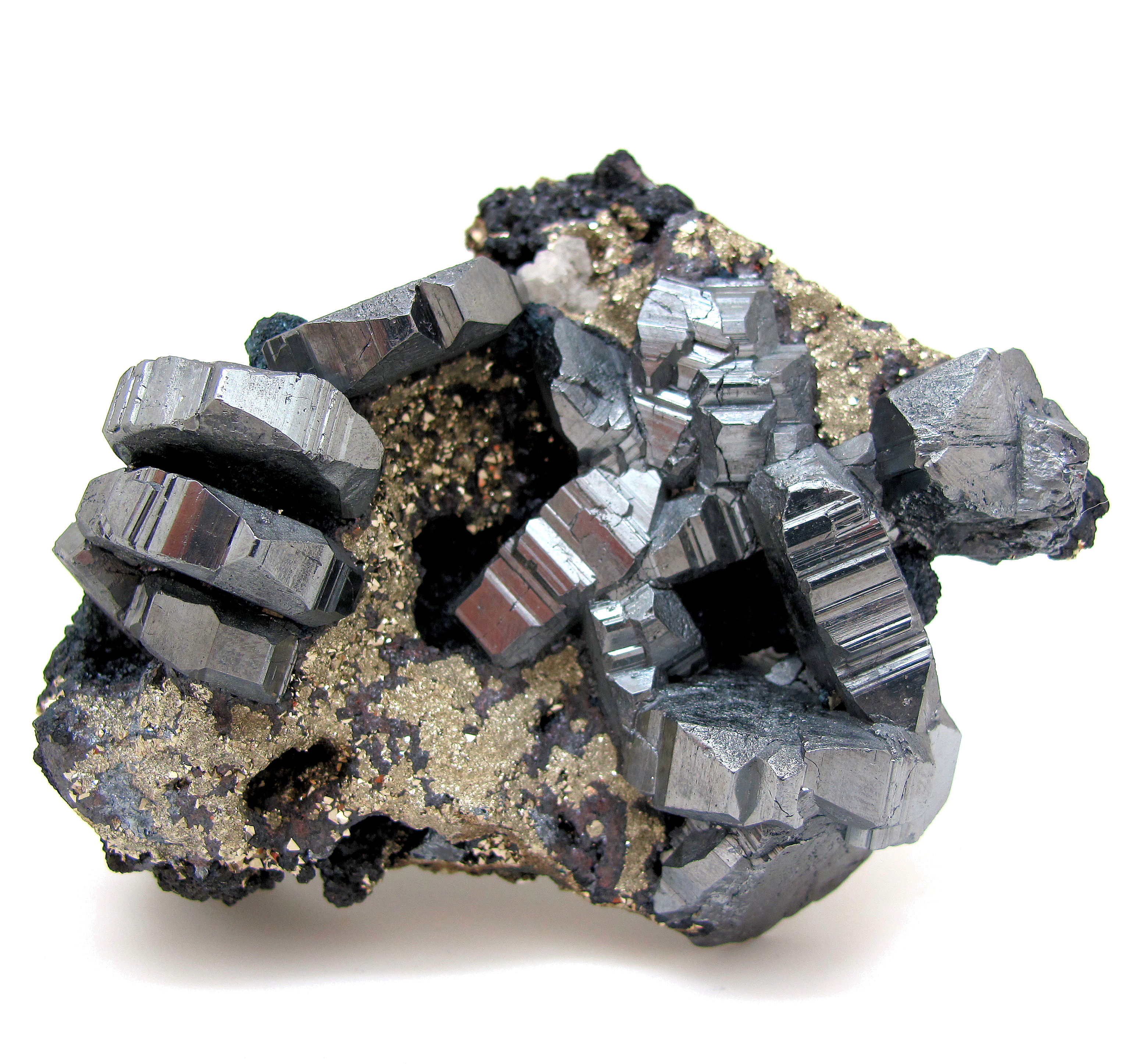
Photo: Carles Millan, Wikimedia Commons

Search for specimens: View all specimens from Machacamarca Mine, Bolivia
Machacamarca Mine is recorded in the Machacamarca subdistrict of the Colavi, or Colavi–Machacamarca, mining district of Potosí. The locality is commonly placed at about 19°22'18" S, 65°31'28" W, in cold semi-arid highland country at roughly the same elevation regime as the Silver Sand project area, around 4,000 m above sea level. Nearby reference points are Betanzos, Potosí, Sucre, and the Colavi–Canutillos–Machacamarca mineral belt northeast of Cerro Rico.
Geologically the district belongs to the southern part of Bolivia’s polymetallic tin belt in the Eastern Cordillera of the Central Andes. The broader Silver Sand–Colavi area is underlain by weakly deformed Cretaceous continental sandstone, siltstone, and mudstone, together with more strongly deformed Paleozoic marine sedimentary rocks. The Cretaceous section includes the La Puerta Formation sandstone and the overlying Tarapaya Formation of siltstone, mudstone, and minor sandstone. Small Miocene subvolcanic dacitic porphyry intrusions cut both the Cretaceous and Paleozoic rocks, and brittle sandstone hosts are particularly important for open-space vein and breccia mineralization.
The mineralization is best understood as a district-scale, structurally controlled silver–base-metal–tin system rather than a single simple vein. Silver-bearing sulfides and sulfosalts occupy faults, fractures, fissures, crackle breccias, sheeted veins, stockworks, veinlets, and breccia fillings in sandstone and dacitic intrusive rocks. In the broader property-scale descriptions, the common silver minerals include freibergite, miargyrite, polybasite, bournonite, andorite, and boulangerite, while oxidation produces jarosite, goethite, minor hematite, and locally mixed oxide–sulfide zones. Tin and base-metal mineralization also occurs as manto-type bodies in the wider Colavi district, historically important enough that local mining shifted from old silver workings toward tin after the late nineteenth century.
Machacamarca’s old silver mine was worked from colonial times until silver prices declined around 1890. Since then, local activity in the adjacent Colavi and Canutillos areas has focused more on tin mineralization, though the old silver–polymetallic workings and dumps remained important landmarks for exploration. Modern exploration history around the Silver Sand property includes work by NJ Mining from 2009 to 2015—mapping, underground sampling, trenching, and drilling—and subsequent work by New Pacific Metals through its Bolivian subsidiary Alcira after the 2017 acquisition of the project. The historic Machacamarca mine lies within this broader mining and exploration landscape, but specimen collectors should be careful not to confuse corporate project boundaries with the older specimen labels used in the mineral trade.
For collectors, the key practical distinction is between Machacamarca Mine sensu stricto and the Víboras Mine or Víboras section. Many of the best modern bournonite specimens labelled “Machacamarca” are more precisely from Víboras, in the same Machacamarca subdistrict. That is not merely pedantry: Víboras material dominates the modern specimen market, especially the lustrous cogwheel twins on pyrite, quartz, sphalerite, and siderite. Older museum material, however, includes true Machacamarca bournonite–augelite associations that were already in the British Museum collection by the 1890s.
Specimen-producing episodes have been intermittent. Dealers and collection records point to important bournonite finds in the 2000s and 2010s, including a 2008 find, a one-pocket production of larger tabular crystals around 2009, a notable September 2012 pocket that yielded sharp lustrous bournonite with pyrite microcrystals, and later smaller finds including early 2020 cogwheel material on sphalerite. Augelite specimens reached the market in the early 2000s and again in later redistributions of old stock; the finest pieces show colorless to milky crystals around 1–2 cm on drusy quartz, siderite, sphalerite, or minor pyrite.
Collecting access today should be regarded as closed unless arranged through legitimate mine, land, community, and operating-rights channels. The wider Silver Sand project area has been under active exploration and permitting management, with company-controlled access and security measures reported after problems with illegal artisanal mining. Independent collecting in old workings is neither safe nor appropriate. Specimens now available to collectors come from older pockets, dealer stock, deaccessioned collections, and occasional modern Bolivian supply, not from casual visitor collecting.
Bournonite is the signature display mineral of Machacamarca in the modern market, especially when the label is sharpened to the Víboras Mine or Víboras section of the Machacamarca district. The sought-after habit is the thick tabular “cogwheel” twin: metallic gunmetal to silvery gray, sharply stepped around the edge, commonly on pyrite, drusy quartz, sphalerite, or brown siderite. Crystal sizes range from small 5–10 mm groups in more recent finds to impressive individuals and plates around 2–5 cm; Mineralogical Record index entries record Machacamarca platy crystals to 5 cm and Víboras cogwheels to about 6 x 6 cm, while documented market pieces include cabinet specimens with 2–3 cm crystals. The best pieces are not merely big—they have luster, intact rims, clean separation from the matrix, and enough contrast to show the crystal architecture; ordinary pieces are contacted on the back, iron-stained, dull, or crowded into less legible sulfide masses.
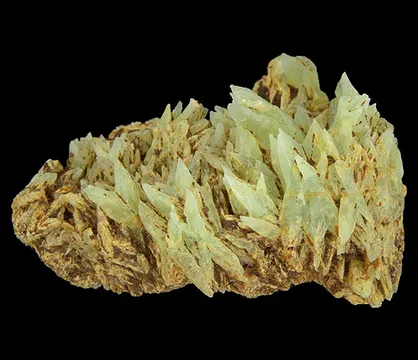
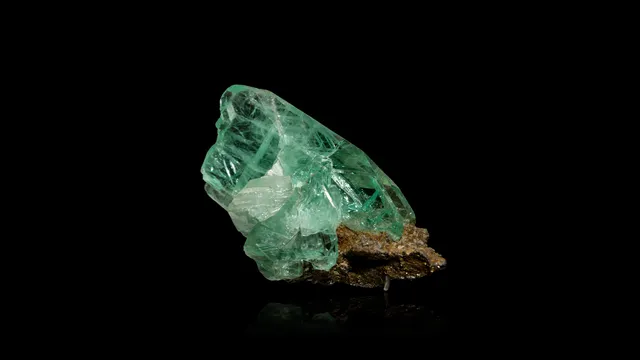
Augelite is Machacamarca’s great scientific mineral: the Swedish type material established the species as massive, but Machacamarca supplied the first well-crystallized material on which G. T. Prior and L. J. Spencer could make full crystallographic and chemical determinations in the 1890s. The old British Museum specimens showed augelite in cavities in bournonite and as isolated crystals lining crevices in quartzose matrix with pyrite; most crystals they studied were only a few millimetres, the largest not exceeding about 6.5 mm. Later collector specimens from the mine are more visually satisfying, with sharp, glassy, colorless to milky crystals commonly described around 5 mm to 2 cm, perched on drusy quartz, siderite, sphalerite, or pyrite. Good Machacamarca augelite is judged by transparency, bright faces, crisp tabular form, and association; small scattered crystals can be historically interesting, but the finest pieces show obvious, undamaged, isolated crystals with contrast against dark sulfides or sparkling quartz.
Pyrite at Machacamarca is usually an association mineral rather than the headline species, but it is essential to the locality’s look: bright octahedra and microcrystalline druse provide the sparkle beneath bournonite and the matrix setting for augelite and sphalerite. Prior and Spencer noted symmetrically developed, usually very bright octahedral pyrite in the old British Museum material, with occasional black coating and at least one larger modified crystal showing complex forms beyond the simple octahedron. Modern specimen descriptions echo this: pyrite is common with bournonite, but stand-alone pyrite specimens are scarce, and a documented small cabinet piece measured 5.8 x 2.1 x 0.8 cm with the largest pyrite crystal only about 6 mm, accompanied by colorless augelite. A good Machacamarca pyrite piece therefore is not judged by size alone; the desirable examples show sharp, lustrous crystals, unusual modifications, and meaningful association with augelite or bournonite rather than just granular sulfide matrix.
Other documented Machacamarca minerals make the locality far richer than a three-species cabinet drawer. The mine list includes arsenopyrite, reported as inclusions in augelite crystals; baryte; bindheimite or oxyplumboroméite-type antimony oxides; chalcanthite; chlorargyrite; diaphorite; freibergite- and tetrahedrite-subgroup minerals; jamesonite; lazulite; pyromorphite; quartz; siderite; sphalerite; stylotypite; valentinite; vivianite; and zinkenite. Zinkenite is historically important because Prior and Spencer found that acicular crystals on Machacamarca bournonite, once suspected to be the rare mineral guejarite, proved on analysis to be zinkenite. Stylotypite should be treated cautiously: modern mineralogical databases note that Bolivian “stylotypite” material appears to be Ag-Fe-rich tetrahedrite and may occur as pseudomorphs after bournonite. The broader Colavi–Machacamarca district is also tied to the type-locality record for bismite, attributed to the Colavi side of the district rather than to Machacamarca Mine proper.
The most important authenticity issue is locality precision. Many attractive “Machacamarca” bournonites, particularly specimens from the 1990s onward, are more accurately Víboras Mine material from the same Machacamarca subdistrict. That is not necessarily a bad label, but serious collectors should preserve both names when possible: “Víboras Mine, Machacamarca district” is better than reducing everything to Machacamarca Mine. Conversely, some specimens from neighboring mines in the Colavi–Machacamarca district have been sold simply as “Machacamarca,” which may be too broad for collection cataloguing.
A second mislabelling issue concerns magnetite. Recent magnetite specimens marketed from the Machacamarca district have been specifically flagged as wrongly labelled; the true source has been identified as the San Calixto prospect on Mt. Huanaquino, roughly 20 km north of Potosí city. Magnetite should therefore be viewed with skepticism if offered as Machacamarca district material unless the provenance is unusually strong.
Condition is a real concern with bournonite. The crystals are commonly contacted where removed from the pocket wall, and many otherwise attractive pieces have bruised backs, incomplete cogwheel rims, or small edge nicks hidden by the metallic luster. Older material can be iron-stained or dulled, and nineteenth-century descriptions mention alteration, thin dusty black coatings, anglesite flakes, and crevice coatings on some bournonite. Fine, bright, undamaged cogwheels on matrix command a premium precisely because so much material is contacted or visually flat.
Augelite requires a different eye. It is colorless to milky, glassy, and easily lost against quartz, baryte, or pale siderite unless the crystals are isolated and lustrous. Damage can be subtle: small cleaves, bruised terminations, and edge chatter reduce the quality of a piece more than a casual glance suggests. Because early scientific material was only millimetric, a 1–2 cm augelite crystal from Machacamarca is significant, but only if it is actually sharp and not merely large.
Pyrite and other sulfides should be kept dry and stable. Machacamarca material includes pyrite, chalcanthite, and oxidation products, so avoid humidity, washing, and prolonged storage in damp cabinets. Chalcanthite-bearing pieces in particular should not be soaked or cleaned aggressively. No special fluorescence reputation attaches to the main Machacamarca bournonite–augelite–pyrite suite; visual value is overwhelmingly about crystal form, luster, contrast, and accurate provenance.
Market availability is episodic. Bournonite appears more often than augelite, but top pieces are not common: good cogwheel twins on matrix tend to disappear into collections, while lower-priced examples usually have contacts, small crystals, or less dramatic matrix. Augelite is scarcer in the trade, especially in truly display-quality crystals above 1 cm. Pyrite-only or pyrite-dominant specimens from Machacamarca are uncommon and are best bought when they carry an augelite or bournonite association that makes the locality unmistakable.
The most consequential Machacamarca story begins not underground in Bolivia, but in the Mineral Department of the British Museum in London. In the early 1890s, augelite was still a mineral with a fragile identity. It had been named from Westanå, Sweden, as a massive aluminium phosphate with pearly cleavage, but distinct crystals had not been described, and its position as a species had been treated as doubtful. Then G. T. Prior and L. J. Spencer examined Machacamarca specimens bearing bournonite and octahedral pyrite. Nearly every bournonite specimen they saw from the locality carried small augelite crystals—some tucked into cavities in bournonite, others lining crevices in a quartzose, pyrite-bearing matrix.
Those crystals were tiny by modern cabinet standards. The largest did not exceed about 6.5 mm, and many were only 3–4 mm across. Yet they were good enough to settle a problem. Prior and Spencer measured their form, analyzed their chemistry, compared them with Swedish augelite obtained from Blomstrand, and concluded that the Bolivian crystals were true augelite. In collector terms, Machacamarca took a doubtful-looking massive species and gave it a face.
There is a satisfying detective twist in the same paper. Earlier literature had mentioned bournonite from Machacamarca associated with baryte. Prior and Spencer could not find baryte on the British Museum bournonite specimens they studied. Instead, they suspected that at least some of the supposed baryte had been augelite all along, overlooked because the two could appear similar in habit. Even the acicular mineral on bournonite had to be checked: rare guejarite had been suggested in old references, but their analyses showed the needles were zinkenite. Machacamarca was already teaching the same lesson it still teaches collectors today—labels and first impressions are useful, but they are not the final word.
The modern bournonite story is more commercial, but just as memorable. A 2008 Bolivian find produced sharp, silvery-gray cogwheel groups on pyrite and quartz matrix, the sort of miniature that invited comparison with classic Herodsfoot, Cornwall material but at Bolivian prices. Around 2009, dealers described a single pocket that produced larger tabular bournonite crystals to more than 2 cm on microcrystalline quartz matrix. The warning at the time was pointed: when the bournonites stopped coming out, it had previously taken three years for miners to find more.
Another pocket, found in September 2012, produced one of the more photogenic modern Machacamarca–Víboras examples: a 95 x 74 x 46 mm specimen weighing 335 g, with about a dozen sharp, lustrous gunmetal bournonite crystals and pyrite microcrystals scattered across the matrix. The widest bournonite crystal measured 29 mm and the thickest 12 mm. That specimen captures why collectors keep returning to the locality—the crystals are not just metallic plates, but little architectural objects with stepped edges, crisp faces, and enough relief to cast shadows.
The later market has been a rhythm of pauses and surprises. Early 2020 brought another offering of smaller cogwheel bournonite, this time with stainless-steel gray crystals to about 6 mm on black sphalerite matrix. It was not a giant find, but it mattered because good Machacamarca cogwheels had again been scarce. Augelite followed a similar pattern: a mine famous for bournonite yielded fine phosphate specimens in the early 2000s, then those pieces largely vanished into collections. When old-stock augelite appeared again years later, the excitement was not because the species was flashy in the usual Bolivian sense, but because sharp, gemmy, colorless Machacamarca augelite is exactly the kind of quiet rarity that systematic collectors remember.