Les Malines District, France — a renowned Pb-Zn locality in the Cévennes, yielding bournonite cogwheels, barite rosettes, and sphalerite, prized by collectors.
Key facts
Les Malines is one of the great French names in lead-zinc mineralogy: a large, now-abandoned mining district on the southern flank of the Cévennes, between Saint-Laurent-le-Minier and Montdardier in the Gard. Its collector reputation rests on a rare combination of scale and specimen character. Geologically, the district is a carbonate-hosted Pb-Zn system developed in Cambrian dolomites, Triassic strata, and Bathonian limestones on the Saint-Bresson horst, with ore occupying paleokarst cavities, irregular lenses, and stratiform horizons. In specimen terms, that translates into the classic Les Malines look: grey metallic bournonite cogwheels and cyclic twins, red-brown to ruby sphalerite, snow-white crested barite rosettes, pyrite, galena, calcite, dolomite, and a lively suite of secondary Pb-Zn-Cu minerals.
Regional View
Country View
For collectors, Les Malines is above all a bournonite district. The best crystals show the famous toothed-wheel habit in cabinet scale, sometimes several centimeters across and in exceptional cases much larger, with sphalerite or barite setting off the steel-grey sulfosalt. Yet the locality should not be reduced to one species. Its white barite “pompons” on dark sphalerite are instantly recognizable French classics, and its sphalerite ranges from massive ore to attractive lustrous crystals in black, brown, and red tones. The district also preserves a long mining history: early workings predate modern industrial mining, while large-scale extraction by successive companies in the late nineteenth and twentieth centuries made Les Malines a major French producer before closure in the early 1990s.
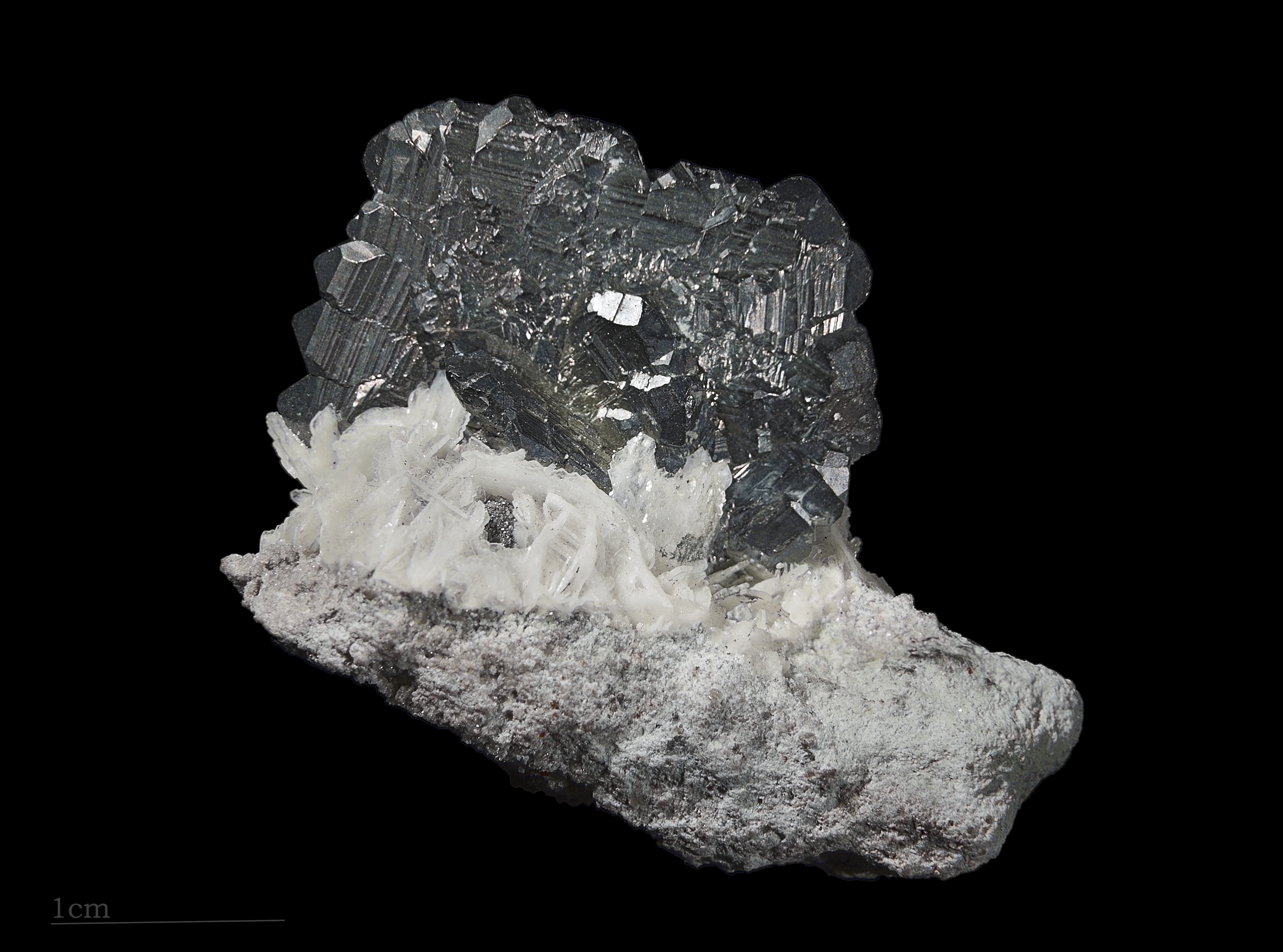
Photo: Didier Descouens / Wikimedia Commons

Photo: Rob Lavinsky, iRocks.com / Wikimedia Commons
Search for specimens: View all specimens from Les Malines District, France
The Les Malines district lies near Saint-Laurent-le-Minier in the Gard, in the southern Cévennes at the edge of the Massif Central. The principal mineralized area is commonly described around the Saint-Bresson horst, bounded by major structures including the east-west Les Malines fault and a north-south Montdardier fault system. The country rocks are not a simple vein setting: Cambrian dolomites and dolomitic shales are overlain or accompanied by Triassic conglomerates, marls, dolomitic levels, and Mesozoic carbonate formations. The ore occurs in several geological positions, including lenses in Cambrian calcareous schists, bodies in karstified Cambrian dolomite, stratiform layers in Triassic marls and conglomerates, and lenses in Bathonian dolomite. That multi-level architecture explains why different sectors of the district can produce noticeably different specimen styles.
The dominant ore assemblage is the classic Pb-Zn suite of sphalerite, galena, and pyrite, with barite, calcite, quartz, dolomite, and local sulfosalts. In the older French mining vocabulary the ores were described as blende, galena, plombiferous calamines, calamine earths, and silver-bearing lead ores. The specimen-producing cavities appear to have been best developed where sulfide masses and breccia zones met open karstic or fissure space. Barite, bournonite, sphalerite, pyrite, galena, and calcite grew in vugs, fractures, and cavities; the most collectible pieces preserve that open-space growth instead of simply showing massive ore.
The district includes several named sectors and mines familiar to collectors, among them Florence, La Sanguinède, Les Cèdres, and Les Vieux Travaux. La Sanguinède is especially important for bournonite, while Les Cèdres and Les Vieux Travaux are names often attached to barite, sphalerite, bournonite, calcite, and rarer secondary species. Old labels may say simply “Saint-Laurent-le-Minier,” “Les Malines,” “Mine des Malines,” “La Sanguinède,” or “Les Cèdres”; all may be correct, but the sublocality matters for serious documentation.
Mining was not a single short episode. The broader Saint-Laurent-le-Minier area has evidence and tradition of very old exploitation, with medieval workings tied to the village’s name and still earlier activity reported for copper-bearing ores. Industrial mining accelerated in the late nineteenth century. The Saint-Laurent-le-Minier concession was granted in the 1870s, the Société des Mines des Malines was formed in the 1880s, and by the 1890s the district had roasting furnaces, sorting installations, gravity concentration, and downhill transport toward the workshops and valley. The western Sanguinède sector was worked from the 1880s, passed through company reorganizations, and became part of the broader industrial operation.
In the twentieth century the mine saw interruption, modernization, and consolidation. Production was very active before a stoppage in the 1930s; work resumed during the 1940s under Peñarroya, later associated with Metaleurop. A flotation plant was built after the Second World War and later expanded. Mining moved through old and new sectors, including Montdardier and Sanguinède, and at its industrial height the operation could treat on the order of a thousand tonnes of ore per day. The local municipality records the final stop date as December 20, 1991, and collectors generally treat Les Malines as a closed historical district rather than an accessible producing mine.
The workings are extensive: the district is repeatedly described as covering roughly 3 km by 2.5 km, with about 300 km of underground galleries. That figure matters for collectors because it explains both the abundance of ordinary ore material and the unevenness of specimen output. A mine of that size can be famous for a species while still having only a few pockets that yielded truly fine display pieces. Fine bournonite, barite-on-sphalerite, and clean sphalerite specimens are not just “ore from a big mine”; they represent comparatively fortunate openings in a vast underground system.
Collecting access today is highly constrained. The mine is abandoned, adits are closed or secured, and the land includes private ground, unstable underground workings, old dumps, and contaminated mine residues. Post-mining studies around Saint-Laurent-le-Minier document significant Pb, Zn, Cd, As, and Tl contamination in soils and mine-waste areas, and state authorities have addressed mining risks and remediation in the commune. Modern collecting should be approached as a matter of provenance, old collections, and legal surface finds with permission—not as an invitation to enter old workings.
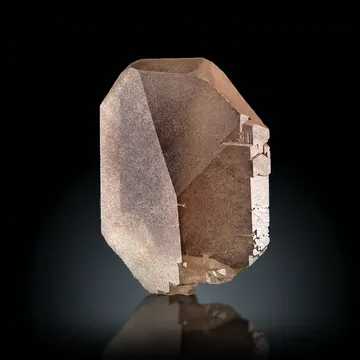
Bournonite is the signature collectible mineral of Les Malines, especially from La Sanguinède and related Saint-Laurent-le-Minier sectors, where it forms grey to dark metallic tabular crystals and cyclic “cogwheel” twins on sphalerite, barite, galena, pyrite, calcite, or secondary-coated matrix. Ordinary pieces are often crowded, dull, contacted, or embedded in dark ore, but good specimens show separated, well-defined wheels with crisp edges, visible twinning, and contrast against red-brown sphalerite or white barite. Crystals around 5 cm are classic for the district, and documented examples reach about 10 cm, making Les Malines one of the important European localities for large bournonite; the very best pieces combine size, intact margins, natural luster, and an old or well-documented sublocality attribution rather than simply showing a mass of grey plates.
Sphalerite at Les Malines is both an ore mineral and a key aesthetic partner in the district’s best specimens. It occurs abundantly as dark black to brown masses, bright granular druses, and red to ruby-brown crystals that may line cavities or form the matrix beneath barite and bournonite. Collectible pieces range from small cabinet groups of lustrous crystals to heavy ore plates, but the desirable examples are those with visible crystal faces, translucency or red internal color, and attractive associations—especially white crested barite, cogwheel bournonite, fine galena, or pyrite. Because sphalerite is so common at Les Malines, rarity lies not in the species but in the presentation: clean geodes, sparkling red-brown druses, and contrast-rich combinations are much more important than bulk mass.
Barite from Les Malines is a French classic in white crested sprays and rounded “pompon” aggregates, commonly perched on brown to red sphalerite and sometimes associated with grey bournonite, pyrite, chalcopyrite, galena, quartz, dolomite, or calcite. The most familiar pieces show snow-white, bladed rosettes richly covering a dark sulfide matrix, producing the high contrast collectors expect from the locality; other specimens are tabular, transparent, bluish, or grey, and some pieces show pyrite inclusions or dustings. Good Les Malines barite is judged by freshness of the blades, freedom from bruising, three-dimensional form, and whether the barite sits aesthetically on sphalerite rather than forming a flat, chalky crust. Large “pompon” groups are recognizable across a room, but smaller pieces can be better if the barite is sharply bladed and compositionally balanced.
Beyond the three headline species, Les Malines has a deep species list reflecting sulfide ore, carbonate host rocks, and post-mining oxidation. Galena is common and locally forms unusual reticulated specimens; pyrite is abundant and may produce large pieces; calcite, dolomite, quartz, chalcopyrite, tetrahedrite-group minerals, siderite, cerussite, anglesite, azurite, malachite, rosasite, aurichalcite, hydrozincite, smithsonite, hemimorphite, greenockite, linarite, serpierite, ktenasite, devilline, and other secondary Pb-Zn-Cu species are recorded from the district and its sublocalities. Les Vieux Travaux and La Sanguinède are also noteworthy to micromount specialists for rare sulfate and supergene species such as bohuslavite, lahnsteinite, khademite, cesàrolite, römerite, krausite, epsomite, and related alteration minerals. Two names require caution: marcasite and wurtzite have been cited historically, but locality summaries note that “melnikovite” material proves to be pyrite and that striated sphalerite caused some earlier wurtzite misidentifications.
Les Malines specimens reward careful provenance work. Labels reading “Saint-Laurent-le-Minier” may refer to Les Malines broadly, but a stronger label will identify La Sanguinède, Les Cèdres, Les Vieux Travaux, Florence, or another district sector. This is especially important for bournonite, where La Sanguinède has a particular reputation, and for barite-sphalerite specimens where mine-sector names help separate old finds from later dump or collection material.
The main authenticity issue is not synthetic material but preparation and attribution. Large bournonite crystals from Les Malines are often naturally matte grey, and collectors have reported aggressive cleaning or artificial brightening: polishing compounds, mechanical preparation, sandblasting, strong chemicals, and other “improvements” can leave rounded edges, unnatural sheen, pitted faces, or residue in crevices. A naturally preserved crystal with honest luster and sharp twinning is preferable to a brighter but overworked one. Because Les Malines bournonite is distinctive but not the only large bournonite on the market, association helps: red-brown sphalerite, white barite, pyrite, galena, or a documented French collection label strengthens confidence.
Condition is a serious factor. Bournonite is brittle and tabular crystals commonly have contacted backs, chipped wheel margins, or repaired plates. Barite pompons are even more vulnerable: bruised blade tips, crushed rosette edges, and powdered contact areas are common. Sphalerite can show cleaved faces, edge bruising, and dull surfaces from acid or abrasive cleaning. Specimens with intact three-dimensional form and minimal restoration command a significant premium over superficially similar damaged examples.
Secondary minerals from Les Vieux Travaux and other altered zones may be fragile, water-sensitive, or best treated as micromount material. Sulfate efflorescences such as epsomite, melanterite-type material, römerite, and related post-mining species should be kept dry, stable, and away from repeated handling. Ore specimens may contain lead, zinc, cadmium-bearing phases, arsenates, or thallium-bearing contamination in adhering mine dirt, so collectors should wash hands after handling, avoid generating dust, and keep friable dump material away from food-preparation areas.
Market availability is uneven. Ordinary Les Malines sphalerite, barite, and mixed sulfide specimens still appear in French and European dealer stock, often at modest prices. Fine barite-on-sphalerite and cabinet bournonite are much less common, and large, sharp, well-composed bournonite pieces with old provenance are genuinely hard to replace. The locality is closed, legally complicated, and environmentally sensitive, so the best material on the market increasingly comes from old French collections, estate dispersals, or specimens collected during the mine’s operating years and shortly after closure.
The history of Les Malines is not the story of a single shaft but of an entire mountain district drawn into ore. The village name Saint-Laurent-le-Minier already signals the old mining identity of the place, and the modern mine grew out of hills that had seen earlier workings long before industrial flotation plants and company offices. By the late nineteenth century, a prospect at the place called Serres Malines had revealed a giant zinc orebody in the abrupt mountains bordering the Causses. The concession machinery moved quickly: presidential authorization, a mining company, and then decades in which the surrounding country lived to the rhythm of ore.
The municipal history preserves one of the most vivid images of the early industrial period: “kyrielles de charrettes,” long strings of carts drawn by oxen, descending the slopes of Montdardier with ore for the workshops at Saint-Laurent or onward to the railway at Ganges. Before the mine became a twentieth-century underground network of compressed-air drills, concentrators, and flotation circuits, it was also that image—animals, carts, steep roads, and dense sulfide ore moving downhill toward the Vis valley.
The district’s surface plant changed the landscape almost as much as the underground workings did. Roasting furnaces and concentrating installations were built on the slope, linked to lower crushing and washing workshops by an inclined plane. Along the Vis, washing plants treated ores that were not just zinc and lead, but zinc and lead with enough silver to matter. The ore was mineralogically complicated—sulfides, carbonates, galena, sphalerite, pyrite, barite, secondary minerals—and the processing history left both industrial ruins and environmental residues that still shape how the locality is discussed.
The mine’s twentieth-century life had two distinct moods. There was the restart and modernization under Peñarroya after wartime interruption, when a flotation plant was built and later expanded from a few hundred tonnes per day toward much larger capacity. Then there was the slow narrowing at the end: in 1988 the mine still employed about 250 people, but in the final months of 1991 the workforce had fallen to roughly 65. The last stop came on December 20, 1991. For collectors, that date marks more than industrial closure; it is the line after which Les Malines specimens became essentially a finite historical supply.
The mineral-collecting afterlife of Les Malines has its own lore. French collectors speak of the district’s bournonite wheels with the mixture of admiration and frustration reserved for difficult classics. The crystals can be huge for the species, but many are grey and naturally subdued rather than mirror-bright. A small number of bournonite-on-white-barite pieces are especially admired because the contrast makes the metallic wheels come alive. Meanwhile, barite collectors look for the white, crested pompons on sphalerite—the kind of specimen that needs no label once you have seen a few. The mine produced ore by the tonne, but the collector’s Les Malines is really a handful of successful cavities, a few memorable pockets, and the pieces that survived mining, trimming, cleaning, and decades of collection changes.