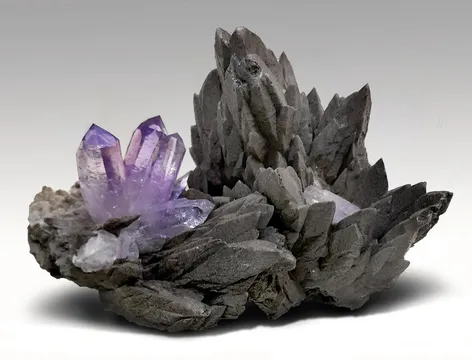
Las Vigas de Ramírez, Mexico - renowned amethyst locality with slender, glassy quartz crystals from Piedra Parada; prized for open clusters and sculptural form.
Key facts
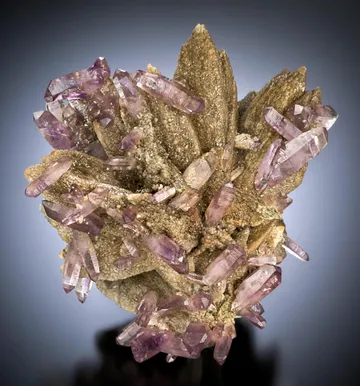
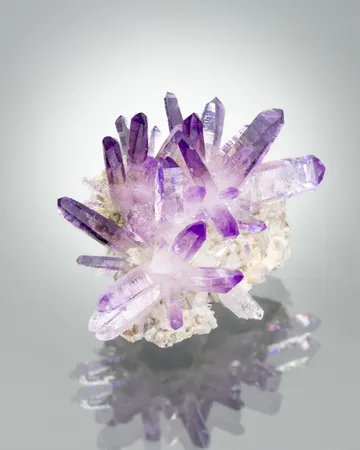
“Las Vigas” is one of those locality names that every amethyst collector recognizes on sight: slender, glassy, lilac-to-purple quartz crystals rising from pale quartz, calcite, epidote-rich, or andesite matrix, often with the color most intense in the terminations. The best specimens are not the squat geode crusts familiar from Brazil or Uruguay, but elegant, prismatic crystals and open clusters with sharp rhombohedral terminations, phantom zoning, scepter growth, and an airy sculptural quality that makes even a hand-sized piece feel architectural. In the mineral trade the name has long been used for Veracruz amethyst collected and distributed through Las Vigas de Ramírez, although modern locality work has clarified that many of the classic crystals sold as “Las Vigas” came from the Piedra Parada mining area in neighboring Tatatila Municipality, especially the north slopes and andesite cliffs around La Cascada, La Loma, El Bordo, Torrecellas, and related workings.
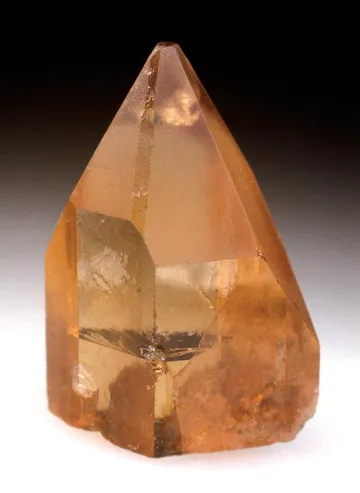
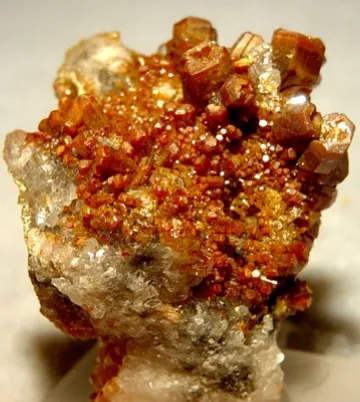
The geological story is more complex than a simple “amethyst vein” label suggests. The famous amethyst-bearing zone is tied to vesicular andesite and to a broader contact-metasomatic environment in which skarn, volcanic rocks, late silica-rich fluids, epidote, garnet, calcite, baryte, zeolites, and quartz all play roles. In the specimen pockets, quartz commonly grew into open cavities rather than lining geodes; that open-space growth is the reason so many pieces show isolated crystals, floaters, scepters, and delicate groups with minimal matrix. Adjacent and related Las Vigas-region skarn occurrences have also yielded andradite varieties, including topazolite and demantoid, while a Las Vigas de Ramírez pegmatite zone has produced feldspar–quartz plates with zeolites and titanite.
Regional View
Country View
Historically, the locality’s importance rests on both beauty and timing. Surface-collected amethyst from the Piedra Parada area was known locally before the modern specimen trade noticed it. In the 1960s, Alfonso Ontiveras bought available material from local residents, traced the source, and began extracting specimens for the American market. A larger wave followed after 1980, when leased specimen mining with pneumatic drills greatly increased production and placed Veracruz amethyst into serious collections worldwide. By the late twentieth century the name “Las Vigas” had become shorthand for a recognizable style: pale to rich purple, transparent to gemmy crystals, commonly 2–7 cm but occasionally larger, on light matrix or greenish epidote, with fine pieces prized for complete tips, glassy luster, graceful separation, and saturated color without the heavy darkness that can make amethyst look opaque.

Photo: Wikimedia Commons
Search for specimens: View all specimens from Las Vigas de Ramírez Municipality, Mexico
Las Vigas de Ramírez lies in the highlands of central Veracruz, on the northeastern flanks of the Cofre de Perote region, at roughly 2,400–2,450 meters elevation. The municipality and town became the commercial name attached to the amethyst because Las Vigas served as a collection, lodging, dealing, and distribution point for miners and buyers. For label accuracy, collectors should understand that “Las Vigas” on older labels may mean the town, the municipality, the broader Veracruz amethyst district, or the nearby Piedra Parada workings in Tatatila Municipality. The old municipal name Profesor Rafael Ramírez also appears on older labels and in museum records.
The best-documented amethyst workings are in massive and vesicular andesite on the north side of the Piedra Parada area. Field descriptions from the 2014 Rečnik expedition make clear that many pockets are not obvious fissure veins one can follow across the wall; they are cavities in hard volcanic rock, discovered by experience, subtle alteration, and luck. Vesicles and larger cavities are lined by early chalcedony or fine quartz, with chlorite, lepidocrocite or limonitic iron oxides, epidote, calcite, baryte, and zeolitic minerals appearing in the paragenesis. In the upper levels, cavities may be only a few centimeters across; in the lower levels, the best pockets reportedly reached more than 3 meters long and 1–2 meters wide.
The mining style is small-scale specimen mining, not industrial ore extraction. At La Cascada, workings were described along three amethyst-producing levels separated by roughly 3–5 meters, with a total productive vertical span of about 10–15 meters in the exposed andesite cliff. Horizontal trenches and short adits link the openings. At La Loma, the compact host rock required diamond drilling and controlled blasting; at Torrecellas, one miner described around 17 tunnels, with some exceeding 100 meters in length. The work is family-based and private-land based, with miners paying for access where required and selling lots through local dealers. There is no single mine operator in the corporate sense; names documented in field accounts include local miners and dealers such as the Ortega and Trujillo families.
Production has been episodic. Loose surface pieces were known before the 1960s; Alfonso Ontiveras’ work in the late 1960s brought the first major collector attention; an American specimen miner and dealer reportedly leased the ground and introduced pneumatic drilling around 1980; and later decades saw pocket-by-pocket artisanal production. Dealers and field writers describe the 1980s material as often thicker and more evenly colored than many later finds, while contemporary production tends to include narrower crystals with stronger color concentrated toward the tips. That is not a hard rule—recent pockets have produced fine saturated crystals, large plates, scepters, and floaters—but it is a useful market observation when judging old labels and old collections.
Individual zones have recognizable reputations. La Cascada is associated with deep purple crystals on andesite and the dramatic waterfall cliff; La Loma is celebrated for deep purple amethyst perched on green epidote matrix; Torrecellas is known for clear amethyst groups on white, fine crystalline matrix and for combinations with white leafy baryte; El Bordo has produced electric-purple floaters and clusters, including later lots of high quality, damage-free crystals; Los Volcanes was reported to have yielded colorless quartz crystals to 20 cm with deep purple scepters. Because specimens often pass through dealers in mixed lots, however, precise pocket attribution is uncommon unless a piece came directly from a miner or a carefully documented purchase.
Collecting access today should be approached as private, local, and permission-based. The amethyst workings are active or intermittently active on private land, reached by rural roads and foot trails, and the hard-rock openings are hazardous. Serious collectors should not treat old locality coordinates or field reports as an invitation to enter. The safest and most respectful route is through established local contacts or reputable dealers with direct relationships in the district. Even then, provenance should be recorded carefully: “Las Vigas de Ramírez” may be acceptable as a traditional trade locality, but “Piedra Parada, Tatatila Municipality, Veracruz” is often the more precise modern label for the classic amethyst.
Amethyst from the Las Vigas trade locality is prized for long, slender, lustrous quartz prisms in lilac, rose-violet, and purple tones, commonly with milky or pale bases grading into transparent, richly colored terminations; typical collector crystals are in the 2–7 cm range, but field reports and dealer records document larger scepters to about 12 cm and rare quartz–amethyst combinations still larger. The finest examples are open clusters or floaters with complete terminations, glassy faces, saturated but still transparent color, phantom zoning, and aesthetic separation on white quartz, calcite, green epidote, or dark andesite matrix. La Cascada and La Loma are especially associated with deeper purple crystals, Torrecellas with clear amethyst on pale matrix and baryte, and El Bordo with electric-purple floaters and later high-quality lots; ordinary pieces tend to be pale, broken, heavily included, or congested, while top specimens have the crisp, airy, almost alpine look that made Veracruz amethyst a world classic.
Quartz from the Las Vigas de Ramírez area is not limited to purple amethyst: clear, milky, smoky, chalcedonic, and sceptered forms occur in the same broader volcanic–skarn–pegmatite environment. In the amethyst workings, pale or colorless quartz commonly forms the early lining of cavities, the sparkling bases beneath amethyst, doubly terminated floaters, skeletal scepters, and clear points associated with epidote, calcite, baryte, iron oxides, and chloritic films. Field accounts from Los Volcanes mention colorless quartz crystals to 20 cm capped by deep purple scepters, while the Las Vigas de Ramírez pegmatite zone has yielded plates of orthoclase and albite with smoky quartz crystals reported to several centimeters. The best non-amethyst quartz pieces from the district are those with clean terminations, scepter architecture, phantoms, smoky-purple contrast, or matrix associations that tie them unmistakably to the Veracruz assemblage.
Other documented minerals from the Las Vigas de Ramírez municipality and its closely entangled Veracruz amethyst district include epidote, calcite, baryte, hematite or iron-oxide inclusions, chlorite-group minerals, chalcedony, and zeolites. The Pegmatite Zone in Las Vigas de Ramírez Municipality has yielded albite, orthoclase, clinochlore, aragonite, heulandite-Ca, stellerite, stilbite-Na, clinoptilolite-subgroup minerals, titanite, tourmaline, and smoky quartz. The broader “Las Vigas skarn deposits” are also important for garnets: Cerro de la Concordia and Piedra Parada have produced andradite varieties including yellow to yellow-brown topazolite, green demantoid, and grossular-andradite material, with GIA reporting the first Mexican topazolite discovery there in 2014 as crystals around 1.5–2.5 cm.
The chief authenticity issue is not synthetic amethyst but locality precision. “Las Vigas,” “Vera Cruz,” “Veracruz,” “Las Vigas de Ramírez,” and “Piedra Parada” have been used interchangeably in the trade for decades, yet the classic source of many pieces is now understood as the Piedra Parada mining area in Tatatila Municipality, with Las Vigas functioning as a nearby town, municipality, and distribution point. Old labels are historically valuable, but a serious catalog entry should preserve both the original wording and the modern interpretation, for example: “Piedra Parada area, Tatatila Municipality, Veracruz, Mexico; traditionally labeled Las Vigas.”
Condition is everything. These crystals are slender and often perched at exposed angles, so broken tips, bruised prism edges, reglued crystals, sawn or over-trimmed matrix, and repaired plates are common enough that every important specimen deserves careful inspection under magnification. A small nick on a termination may be acceptable on a dramatic old-time cluster, but a Las Vigas amethyst with multiple dulled points loses much of what the locality is about. Look also for detached floaters that have been glued back to matrix or mounted into drilled bases; not all repairs are deceptive, but they should be disclosed.
Color should be judged in daylight and against the full crystal, not only the tip. Natural Las Vigas amethyst is often pale at the base and more saturated toward the termination; too-dark, uniform purple is not automatically better if it sacrifices the transparent, floating quality collectors expect from Veracruz material. Conversely, many genuine pieces are delicate lavender rather than royal purple. Fine examples show saturation, transparency, luster, and crystal architecture together. Scepters, phantoms, strong zoning, rare twins, epidote contrast, and clean floater habit all add desirability.
Treatment is less central for specimens than for cut amethyst, but heat can alter amethyst color in quartz generally, and strong sunlight or heat exposure is unwise for any amethyst display. Store and display pieces away from hot windows, and avoid harsh chemical cleaning on matrix specimens carrying calcite, zeolites, chlorite, or iron-oxide films. Calcite-associated pieces may show fluorescence, but fluorescence is not a defining diagnostic for the locality.
Market availability remains better than for many classic localities because production has recurred episodically and specimens continue to circulate from old collections, dealer stock, and recent artisanal finds. Truly fine old clusters with sharp, saturated, transparent crystals on attractive matrix are much scarcer than the abundance of small loose points suggests. Current marketplace material ranges from affordable single crystals and small plates to significant cabinet specimens; the premium goes to undamaged, well-composed pieces with exact provenance, old labels, or documented pocket associations such as La Cascada, La Loma, Torrecellas, or El Bordo.
The story of Las Vigas amethyst begins in the way many classic mineral localities do: with local people already knowing the stones, and an outside collector realizing the wider world would care. Loose amethyst crystals had long been picked up near Piedra Parada before Alfonso Ontiveras, a miner and mineral collector from Querétaro, bought all the specimens local residents had available in the 1960s. He then searched the eroded canyons for the source. Once he began extracting intact specimens and sending them north, the long purple prisms caused a stir in the American specimen market. By 1980, mechanized drilling brought enough production that “Las Vigas” became an international name.
Aleksander Rečnik’s 2014 field account captures the romance and confusion of chasing the locality itself. His first encounter came not in Mexico but in 1992 in Renningen, Germany, when dealer Marco Schreier had just received a fresh Mexican lot. The shelves were loaded with specimens unlike anything Rečnik had seen: electric purple amethyst on fine green epidote. One specimen was enough to plant the idea that he had to see the pockets. More than two decades later, after meeting Mark Kielbaso at the Munich show, Rečnik and Miran set out from Mexico City in a small Chevrolet, climbed a highway pass around 3,200 meters where the car “feels that,” and reached Las Vigas after about four hours.
Their first lesson was that Las Vigas was a mineral town in the social sense as much as the geological one. In the town square, a taxi driver reluctantly pointed them toward a young man named Beto, who led them to a downtown house. On the terrace, the owner produced a huge plastic basket and began laying out amethyst. The price was 50,000 pesos for the lot, and high-grading was not allowed. That rule, repeated throughout the district, makes sense in a pocket-mining economy: a dealer who lets buyers cherry-pick only the best crystals is left with the pale, damaged, awkward, or unattractive pieces. Lots commonly contained 100 or more specimens, and Rečnik heard stories of the best lots selling for 300,000 pesos.
The field party next followed leads east to Tlacolulan, where Doña Dolce María reportedly had two rooms full of amethyst. Four big tables held roughly 150–300 specimens each, separated by find. One lot of scepters stopped Rečnik cold: crystals up to 12 cm long, many pale purple to milky white from fluid inclusions, smaller crystals clearer and better colored, the kind of lot a collector can still picture years later. Miran, with three decades of dealer discipline, insisted they should keep looking. Rečnik agreed reluctantly, writing that he could have spent all his money on that first day. A miner then arrived with a small lot of smoky, skeletal scepters with rare purple tips. Doña María dismissed them for poor color; Miran bought all 30 at once because their oddity completed the locality story.
The morning after a cold, damp night in the only hotel in Las Vigas, the party found breakfast at El Artesano, run by a shaman lady whose wall drawing included animals and amethyst crystals. She told them that for the best “piedras” they had to go north to Piedra Parada, where the miners lived. Her mason, Julio, joined as a contact. The village, about 15 km northeast of Las Vigas, had around 2,000 inhabitants and a school for 300 children in Rečnik’s account; farming and cattle supported many families, but about 80 families made their living from amethyst on the northern slopes.
At José Trujillo Ortega’s house, one of three offered lots was exceptional: no junk, good color, long prismatic floaters averaging 5–7 cm. The purchase came with tequila and baked tortillas with salsas. The social chemistry changed immediately. Once the visitors had bought seriously, José told them to come the following week to his son-in-law in Las Vigas, where even better pieces would be waiting at a higher price.
The physical reality of the mines surprised even experienced collectors. A young miner named Sergio organized the trip to La Cascada. From the edge of Piedra Parada they hiked about 45 minutes, descending roughly 300 meters down the north slope to a waterfall dropping about 50 meters over an open andesite cliff. The amethyst workings high in the wall were not dainty alpine-style pockets to be teased open with a small collector’s pick. They were mines in compact volcanic rock. Rečnik’s titanium strahlstock, normally useful for probing pockets, became a joke to the local miners. There were no easy quartz veins to follow, no generous fissures leading the way—just hard andesite, luck, and learned signs.
At La Cascada, the miners had followed three productive levels 3–5 meters apart, with the whole amethyst zone spanning perhaps 10–15 meters vertically. The upper cavities were small, sometimes only 5 cm across; the lower levels produced the great pockets. Some cavities exceeded 3 meters in length and 1–2 meters in width, but most were barren of showy crystals. Miners told Rečnik that only about 20 percent of cavities contained larger crystals. Sparse crystallization meant that when a pocket was good, clusters often sat apart from one another or healed loose on the floor as floaters.
The local vocabulary is one of the richest parts of the district’s collecting culture. Miners called the cavities “chollas.” Amethyst itself was “quarzo morado.” Matrix specimens were “coronas,” crowns; floaters were “gallos,” roosters. The altered rock near a pocket, softened and pale blue, was “piedra azul.” Thin greenish or bluish vertical lines appearing just before a pocket were “realis,” signs. In a hard-rock district without obvious quartz veins, such words are not poetry; they are tools for survival.
At La Loma, famous for deep purple crystals on green epidote, Rečnik met the Trujillo family at work. The family mined on private land owned by a relative, with earnings shared for access. Diamond drills and legal low-strength explosives were more expensive than time. Ten-year-old Antonio Trujillo showed his best finds of the day while adults searched for new pockets; children picked through dumps and tunnels for “slippers,” and broken points were sold cheaply in bags. Seeing a child’s small finds beside the cost of drilling gives these delicate purple crystals a different weight.
Torrecellas supplied another kind of drama. Raúl Ortega, one of the best-known local miners in the field account, was preparing for blasting when the visitors arrived. He said he could drive a 15-meter tunnel in 20 days, but only by working from dawn to night. The site had about 17 tunnels, some over 100 meters long. Two weeks earlier he had opened two chollas that proved nearly empty; one looked promising, more than a meter across, but yielded only a handful of crystals. Two years before that, he struck the largest pocket he had ever seen: more than 3 meters long and packed with top-quality crystals. It produced over 500 amethyst specimens and 100 kg of crystal points. He could not finish removing it in one day, and once word spread, many villagers arrived to “help.”
That same Torrecellas visit reveals the practical intelligence behind fine condition. Miners learned that undamaged crystals commanded the best prices, so they packed specimens in plastic or wooden boxes between layers of sawdust, abundant in the village. Paper wrapping lets crystals press, chip, and crush each other; sawdust lets fragile points ride without touching. Many fine Las Vigas pieces survived the mountain because of that simple local packing method.
Mark Kielbaso’s 2014 field story gives a different angle on the same district: the buying day. En route from Mexico City to Las Vigas by way of Puebla, he, Ruben Avila, and Gilberto Gurrola stopped at roadside food tables where the menu included soups, stuffed meats, and coagulated venison blood. In Piedra Parada, the mood shifted when locals began setting up multiple tables covered with amethyst. Specimens were spread out for inspection, coffee was offered in the high-elevation sun, and the source area was pointed out near the waterfall at La Cascada. Negotiation, in that account, came down to cards. Kielbaso lost the hand and had to pay the sellers’ price; he joked that the locals offered medical help for “a gringo in shock.” Afterward, the nearest bank was in Xalapa, so the buyers waited a couple of days for a wire transfer before the pieces could be paid for, packed, crated, and shipped.