Itaguaçu, Brazil: chrysoberyl locality known for sculptural yellow-green to olive-green twins, especially sixlings; secondary deposits and collector appeal.
Key facts
Itaguaçu, in the mountainous interior of Espírito Santo, is one of the classic Brazilian names for chrysoberyl. For collectors, its importance rests less on large commercial tonnage than on a small number of exceptionally sculptural crystals: yellow-green to olive-green chrysoberyl twins, especially cyclic “sixlings” or trillings, with glassy faces, sharp re-entrant angles, and a compact, flower-like geometry that became a standard by which chrysoberyl specimens are judged. The locality lies within the gem-bearing pegmatite country of eastern Brazil, where beryllium-rich granitic pegmatites and their weathered derivatives have supplied aquamarine, chrysoberyl, and related gem minerals for generations. At Itaguaçu, much of the chrysoberyl known to commerce and collecting came not from open vugs in hard rock but from secondary deposits: alluvial and colluvial concentrations produced as primary pegmatites weathered, eroded, and shed their resistant gem minerals into gravel horizons.
Regional View
Country View
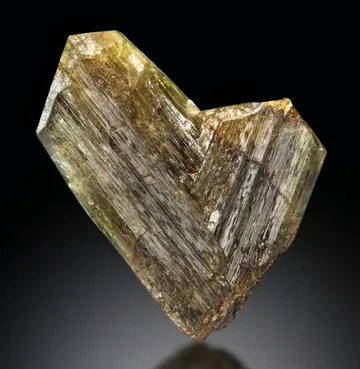
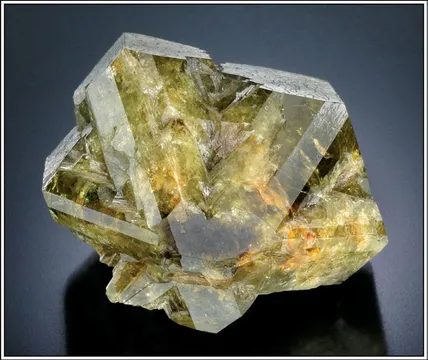
The best Itaguaçu chrysoberyls have an instantly recognizable personality. They are typically yellow-green, greenish yellow, honey-olive, or yellow-brown, often with darker central zones and translucent to gemmy margins. Many are floaters or near-floaters, their contact points small compared with the visual force of the repeated twin geometry. Even modest thumbnails can look architectural; the finest miniatures have a six-rayed symmetry, strong luster, and enough translucency at the edges to light up under a lamp.

Photo: Wikimedia Commons
Historically, Itaguaçu is tied to the mid-20th-century flow of Brazilian gem crystals into North American and European collections. Allan Caplan’s Brazilian collecting and dealing years in the 1930s and 1940s brought remarkable chrysoberyls, topazes, aquamarines, and other specimens to major collectors and museums, and the Itaguaçu sixlings are among the mineralogical trophies most often associated with that era. Later listings, museum displays, and auction records continue to show the locality’s staying power: not as a prolific modern mine pouring out specimens, but as a benchmark source of classic chrysoberyl twins.
Search for specimens: View all specimens from Itaguaçu, Brazil
Itaguaçu is a municipality in Espírito Santo, about 137 km from Vitória and in the Serra region of the state. Gemologically it belongs to the same broad eastern Brazilian pegmatite province that continues through parts of Minas Gerais, Espírito Santo, Bahia, and northern Rio de Janeiro. The country is one of deeply weathered crystalline rocks intruded by granitic pegmatites; where those pegmatites carried beryllium and aluminum under the right chemical conditions, chrysoberyl and beryl could form. The collectible chrysoberyl from Itaguaçu is best understood as a resistant survivor of that system. It is hard, dense, chemically durable, and able to persist after the softer feldspar-rich pegmatite has decomposed into clay and gravel.
The deposit described for Itaguaçu is secondary. Local studies describe chrysoberyl crystals associated with other beryllium minerals in deposits formed by erosion, transport, and sedimentation of material derived from primary bodies, especially granitic pegmatites. The productive ground includes alluvial plains interpreted as torrential deposits from an older erosion cycle, later mantled by calmer sediments. These gravel-bearing flats extend for a little over three kilometers and have been responsible for much of the Itaguaçu chrysoberyl that reached the gem and specimen trade.
Mining has generally been small-scale and manual rather than industrial. The typical working method described for the area is a hand-dug pit, placed somewhat opportunistically, sunk down to the rocky layer, timbered or otherwise supported, and dewatered with small pumps. That kind of extraction explains both the character and the scarcity of good specimens. A garimpeiro digging for gem rough is not necessarily preserving complete twins; the finest mineral specimens are the lucky pieces that survived weathering, recovery, washing, transport, and decades of handling without losing their luster and form.
The most celebrated Itaguaçu event is the circa-1940 find associated with Allan Caplan. Later accounts describe a single pocket producing many of the world’s finest chrysoberyl specimens from the locality, including cyclic twins as large as 9.5 cm. Those are the pieces that gave Itaguaçu its classic status. GIA locality compilations also record Boa Vista, Itaguaçu, as a chrysoberyl source, placing it among a group of Espírito Santo localities that supplied chrysoberyl, cat’s-eye chrysoberyl, and, more rarely in the state, alexandrite. The strongest documented specimen tradition at Itaguaçu, however, is ordinary chrysoberyl in sharp yellow-green twins rather than alexandrite.
Associated and nearby gem occurrences broaden the picture. Sauer’s Brazil gem locality records, as indexed by Mindat, list Itaguaçu for andalusite, aquamarine, beryl, and scapolite as well as the chrysoberyl occurrences documented in later sources. Espírito Santo as a whole is better known to the public for aquamarine, and Itaguaçu sits within that wider gem belt rather than as an isolated chrysoberyl anomaly. One indexed note for scapolite refers to the Antonio Coelho mine near Itaguaçu producing transparent yellow stones, showing that the municipality’s gem record is not limited to chrysoberyl alone.
Collecting access today should be approached as private, local, and permission-based. These are not public collecting dumps in the North American sense, and historical production came from garimpo-style workings, farms, and gravel pits rather than a continuously promoted visitor mine. For most serious collectors, the practical route is the specimen market: old Caplan-era pieces, later Brazilian dealer material, estate specimens with older labels, and the occasional new or semi-new find offered through established dealers.
Itaguaçu chrysoberyl is famous for yellow-green to greenish yellow crystals, commonly twinned and, in the best examples, developed as complete cyclic sixlings or trillings with crisp re-entrant angles and a compact rosette-like outline. Laboratory work on Itaguaçu material records colors ranging from yellow-green to yellow-brown, with fine acicular growth tubes, mineral inclusions including mica, quartz, and apatite, and two- and three-phase fluid inclusions. The classic specimen size is thumbnail to miniature, though historical accounts cite superb twins to 9.5 cm, and local studies note crystals reaching about 5 cm. Matrix is uncommon in older classics, but later material has been reported with smoky quartz and minor albite; the top pieces are judged by completeness of the cyclic twin, luster, sharpness, saturation of yellow-green color, and translucency at the crystal edges rather than by sheer weight.
Other documented minerals from Itaguaçu include beryl, aquamarine, andalusite, and scapolite. These matter because they anchor the locality in Espírito Santo’s broader gem-pegmatite province rather than leaving it as a one-mineral curiosity. Aquamarine and beryl point back to Be-bearing granitic pegmatites as the regional engine; andalusite reflects the aluminous metamorphic context in which such pegmatites intruded; and transparent yellow scapolite from the Antonio Coelho mine near Itaguaçu is an additional collector’s note for the municipality. No type-locality mineral has become central to Itaguaçu’s reputation; its enduring name is built on chrysoberyl morphology, especially the classic sixling twins.
The first question with any Itaguaçu chrysoberyl is locality integrity. Old labels may read “Itaguacu,” “Itaguaçu,” “Espirito Santo,” “Colatina area,” or simply “Brazil,” and the boundaries between municipality names, dealer shorthand, and broader regional labels can blur. The classic Itaguaçu look is persuasive but not absolute: yellow-green chrysoberyl twins occur elsewhere in Brazil, including other Espírito Santo localities and Bahia. A strong Itaguaçu attribution is best supported by old provenance, a credible dealer chain, a publication trail, or comparison with well-documented Caplan-era material.
Be especially careful with alexandrite labels. Espírito Santo has documented alexandrite occurrences, but the most famous Brazilian alexandrites are overwhelmingly associated with other districts, especially Minas Gerais and Bahia localities. A chrysoberyl offered as Itaguaçu alexandrite should show a real color change, not just olive-to-brown body color under different lighting. Listings that mix an Itaguaçu locality line with descriptive text referring to another Brazilian alexandrite source should be treated as suspect until clarified.
Condition is the second major issue. Chrysoberyl is hard, but the Itaguaçu twins are geometrically vulnerable: the re-entrant notches, thin arms, and raised edges chip easily. Many pieces show small edge bruises, incomplete arms, clay-filled pits, etched zones, or duller waterworn faces from their secondary-deposit history. A “complete all around” floater with bright luster and intact twin arms is far scarcer than a merely yellow-green broken twin. Dark centers are normal and can be attractive if the margins remain translucent; dead, opaque, brownish pieces are much less desirable.
Treatments are not a major published issue for Itaguaçu collector crystals. Ordinary chrysoberyl and alexandrite are not commonly improved by routine color enhancement in the way that some other gem minerals are, and the specimen market values natural form over cut-gem appearance. Repairs, however, should be checked carefully under magnification: a sixling’s symmetry can hide a reattached arm, and old glue in a re-entrant angle may be hard to see without UV or a strong side light. Because some pieces are ex-collection classics, cleaning history also matters; overly bright fractures or suspicious residue at contacts deserve scrutiny.
Availability is limited but not impossible. Small Itaguaçu chrysoberyl twins appear periodically from old collections and dealer inventories, and EarthWonders’ inventory count reflects a real market presence for the locality. The very finest historical sixlings—large, sharp, complete, and confidently traced to the classic finds—are trophy-level pieces and tend to remain in advanced private collections or museums for long periods.
The Itaguaçu story collectors repeat begins around 1940, with Allan Caplan and a pocket that later writers treated almost as mineral folklore. The pocket is credited with producing most of the world’s finest chrysoberyls from the locality. The exact number of crystals was not preserved in a mine ledger, but Caplan’s own remembered measure was wonderfully unscientific: a “gunny sack full.” That phrase has followed the find ever since because it captures the shock of abundance in a deposit now known mostly by rare, expensive survivors.
What emerged from that pocket was not just gem rough. It was form: complete cyclic chrysoberyl twins, some approaching miniature to small-cabinet scale, with the radial repetition and re-entrant geometry that make the species look almost engineered. Later descriptions cite individual Itaguaçu sixlings to 9.5 cm, while a Mineralogical Record supplement described a 4.6 cm example from the find as one of about a dozen great specimens known. That specimen, collected by Caplan in 1940, later passed through old-collection channels and was associated with Wayne Thompson and Gene Meieran before entering the Gene and Roz Meieran collection.
The same account notes how far the pocket’s influence reached. Other Caplan chrysoberyls have been recorded in the William Larson collection, the Wayne Leicht collection, the Houston Museum of Natural Science, and the Smithsonian Institution. One pocket in rural Espírito Santo thus became a constellation of classic labels scattered through some of the most serious mineral collections in the world. It is also said to have helped inspire a young Wayne Thompson toward a career in mineral mining and recovery—a fitting legacy for a find whose crystals are themselves lessons in how rare good recovery really is.
Another Itaguaçu specimen, now publicized from the mim Museum in Beirut, shows the afterlife of these classics. The museum describes a 6 x 6.5 x 5.5 cm chrysoberyl, 166 grams in mass, with a main crystal of 6.3 cm. Its centerpiece is a sharply formed 4.6 cm sixling, with three V-shaped twins on the back measuring 3.5 cm, 3 cm, and 2.5 cm. The recorded provenance runs through the Russell and Alice Haggard collection and the Wayne Leicht collection, a chain that reads like a map of 20th-century high-end mineral collecting.
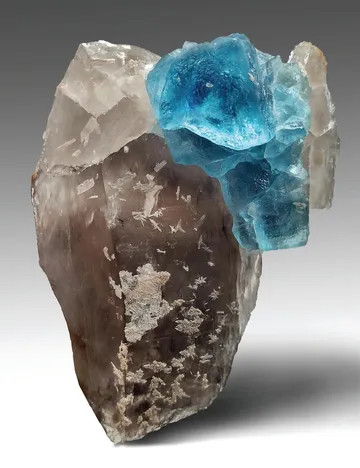
The later market has added a smaller coda. A 2017 find produced chrysoberyl associated with smoky quartz and a little albite—unusual enough that dealers singled out the association because Itaguaçu pieces are normally encountered as isolated chrysoberyl crystals. Those specimens are not the mythic Caplan pocket, but they are important for another reason: they remind collectors that Itaguaçu was a real working gem district, not just a name attached to antique sixlings. New ground can still complicate the old picture.
Pagel, U. R.; Jesus, R. X.; Candeias, L. M. M.; Soares, P. V. D.; Carolino, J. “Caracterização Mineralógica dos Crisoberilos do Município de Itaguaçu, Espírito Santo.” Universidade Federal do Espírito Santo. A concise local mineralogical study of Itaguaçu chrysoberyl, including deposit style, mining method, color range, inclusions, and gem varieties.
Marçal, F. A.; Newman, D. T. C. de; Newman, J. A.; Sousa, G. A.; Paula, B. N.; Perini, D. S.; Soares, P. V. D. “Ocorrências de Crisoberilo no Espírito Santo: Resgate Histórico e Atualização.” Universidade Federal do Espírito Santo. Places Itaguaçu within the wider chrysoberyl distribution of Espírito Santo and summarizes earlier authors including Svisero and Taufner.
Proctor, K. “Chrysoberyl and Alexandrite from the Pegmatite Districts of Minas Gerais, Brazil.” Gems & Gemology, Spring 1988. Primarily on Minas Gerais, but includes an important note on Espírito Santo and Itaguaçu’s famous cyclic sixling chrysoberyls to 9.5 cm.
White, J. S. “Interview: Allan Caplan.” The Mineralogical Record, 11(6), 1980, pp. 351–360. The key historical reference associated with Caplan’s Brazilian collecting and the Itaguaçu chrysoberyl occurrence.
The Mineralogical Record, November–December 1980, Vol. 11, No. 6. Issue listing for the Allan Caplan interview and related Brazilian mineral content.
“Chrysoberyl sixling twin, Itaguaçu, Espirito Santo, Brazil.” Mineralogical Record Special Supplement, January–February 2007. Documents a 4.6 cm Caplan-collected Itaguaçu sixling from the classic 1940 pocket and summarizes its collecting significance.
Chaves, M. L. S. C.; Bartorelli, A.; Cornejo, C. “Minerals of the Espírito Santo Pegmatite District, Eastern Brazil.” The Mineralogical Record, 54(6), 2023, pp. 697–742. A major modern publication on the Espírito Santo pegmatite district; the linked Journal of Gemmology literature note gives the full citation.
Sauer, J. R. Brazil: Paradise of Gemstones. Gemological Institute of America, 1982. Classic Brazil gem locality reference indexed by Mindat for Itaguaçu occurrences including andalusite, aquamarine, beryl, and scapolite.
Kiefert, L.; Schmetzer, K.; Hänni, H. A.; et al. “Gem Localities of the 1990s.” Gems & Gemology, Winter 2000. Lists Itaguaçu: Bôa Vista among Espírito Santo chrysoberyl localities.
“Gem Localities of the 2000s.” Gems & Gemology, Fall 2010. Updated GIA locality compilation listing Itaguaçu: Boa Vista for chrysoberyl in Espírito Santo.
Karampelas, S.; et al. “Coloured Stone Mining and Trade in Brazil: A Brief History and Current Status.” The Journal of Gemmology, 35(8), 2017. Useful national overview with tables listing Itaguaçu among Brazilian beryl and chrysoberyl localities.
Chaves, A. O.; Scholz, R.; et al. “The influence of supervised and unsupervised methods in the analysis of low density stream sediments in the regional prospecting of pegmatites in the state of Espírito Santo, Araçuaí Orogen - Eastern Pegmatite Province of Brazil.” Geochemistry, 84(4), 2024, article 126181. Modern regional pegmatite-prospectivity paper explaining Espírito Santo’s position in the Eastern Brazilian Pegmatite Province.
Mindat: Itaguaçu, Espírito Santo, Brazil — Core locality database entry for the EarthWonders locality ID used in this guide.
Mindat: Chrysoberyl from Espírito Santo, Brazil — Regional occurrence page that places Itaguaçu among other Espírito Santo chrysoberyl localities.
Wikimedia Commons: Chrysoberyl-119762.jpg — Publicly licensed photograph of a 4.4 x 3.4 x 1.2 cm Itaguaçu chrysoberyl sixling by Rob Lavinsky.
Wikimedia Commons: Chrysoberyl-59681.jpg — Another photographed Itaguaçu chrysoberyl twin, useful for comparing classic yellow-green color and form.
Fabre Minerals: Itaguaçu Chrysoberyl reference specimen — Dealer reference image of a small transparent, lustrous Itaguaçu sixling from the Robert J. Noble collection.
Mineral Auctions: Chrysoberyl sixling, old classic 1940s finds — Archived sale record documenting size, condition language, and market framing for a classic Itaguaçu miniature.
Mineral Auctions: Chrysoberyl with smoky quartz, new find — Archived 2018 sale record for the unusual 2017 material associated with smoky quartz and albite.
mim Museum chrysoberyl discussion entry — Includes dimensions, mass, provenance, and description for a major Itaguaçu sixling in the mim Museum collection.