Grimsel area, Switzerland — Alpine fissure quartz district with sharp quartz and pink fluorite; type locality for grimselite and baylissite, prized by collecto…
Key facts
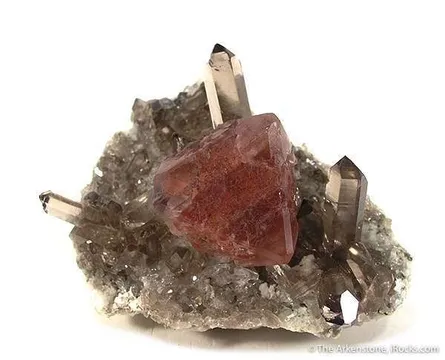
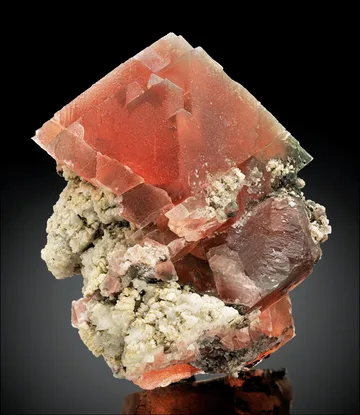
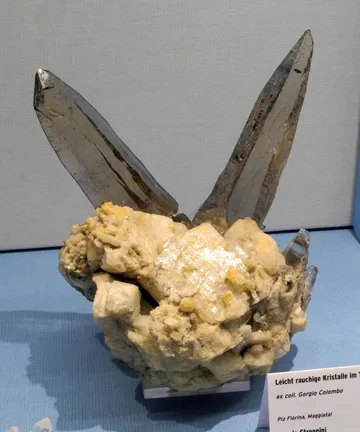
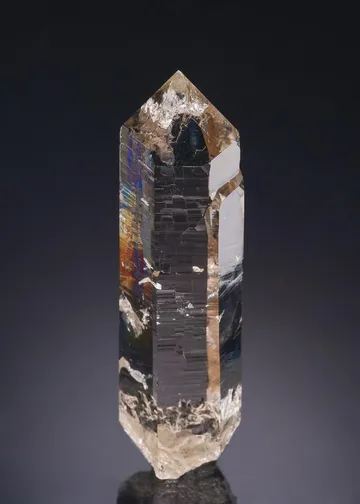
The Grimsel area is one of the great Alpine quartz districts: a high, glacier-scoured part of the upper Haslital and Grimsel Pass region where the crystalline basement of the Aar Massif is cut by tension fissures, hydrothermal veins, and late Alpine clefts. For collectors, “Grimsel” does not mean an ore mine in the usual sense; it means Alpine fissure mineralization in granodiorite, granite, aplite, gneiss, and associated crystalline rocks, opened by tectonic stress and later lined by quartz, adularia, chlorite, calcite, fluorite, and rarer accessory species. Its finest specimens have the unmistakable Swiss look: sharp, lustrous, disciplined crystals, either water-clear rock crystal or smoky quartz in steeply prismatic groups, with the best pieces enlivened by green chlorite, white adularia or calcite, and, most memorably, pink octahedral fluorite.
Historically, Grimsel matters far beyond the cabinets of quartz specialists. The Zinggenstock crystal finds of the eighteenth century helped create an Alpine “crystal fever,” when local strahler worked dangerous clefts not for ore but for rock crystal valuable enough to be taxed, traded, hauled over passes, and preserved in early museum collections. In the twentieth century, hydropower tunnelling by Kraftwerke Oberhasli AG unexpectedly exposed further clefts deep in the mountain, culminating in the protected Gerstenegg crystal fissure—one of the rare Alpine clefts left essentially in place rather than cleaned out for specimens. The area also carries type-locality importance: the Gerstenegg–Sommerloch tunnel is the type locality for grimselite and baylissite, two unusual carbonate minerals from secondary mineralization in the Grimsel underground workings.
Regional View
Country View
The best Grimsel specimens are not just “Swiss smoky quartz” in the broad trade sense. Serious labels distinguish Zinggenstöcke, Vorderer Zinggenstock, Oberaar, Rufibach cleft, Gerstenegg, Sommerloch, and the various clefts and tunnel localities around the Grimsel hydropower system. A single term such as “Grimsel Pass” can cover a wide mineralogical landscape; a specimen with an old Guttannen, Rufibach, Stalder-era, museum, or well-documented dealer provenance carries much more meaning than one with only a country label.
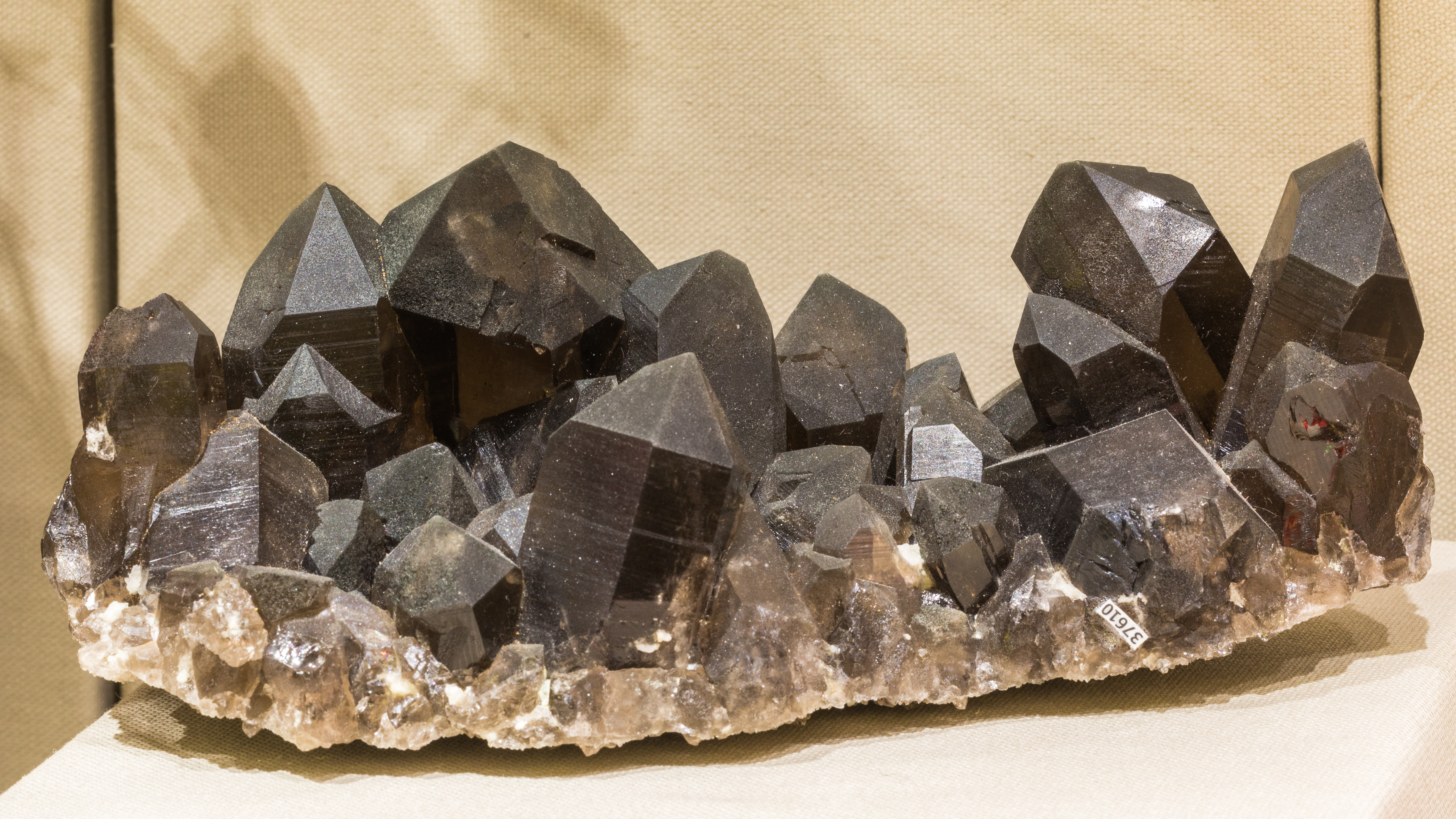
Photo: Raimond Spekking / Wikimedia Commons

Search for specimens: View all specimens from Grimsel area, Switzerland
Grimsel specimens come chiefly from Alpine-type fissures, or Zerrklüfte, developed in the crystalline rocks of the central Aar Massif. Around the Grimsel Test Site and Gerstenegg, published geology places the area in the Central Swiss Alps within a basement assemblage that includes pre-Variscan gneiss complexes, late- to post-Variscan volcanic and plutonic rocks, Central Aar Granite, Grimsel Granodiorite, aplite facies, and later brittle and ductile structures related to Alpine deformation and exhumation. The collector’s version of that geology is simple but powerful: fissures opened in competent crystalline rock; hot saline fluids moved through them; quartz grew first or early in many cavities; later phases introduced chlorite, calcite, fluorite, adularia, and rarer accessory minerals.
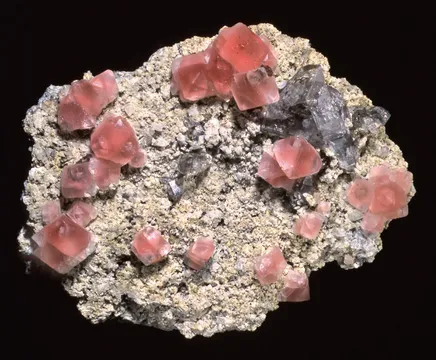
The famous clefts are not ore bodies in the mining-company sense, but they are mineralized structural openings. At Gerstenegg, the protected cleft is described as mainly rock crystal, with chlorite as the second most abundant mineral, white tabular calcite in the rear portion, and scattered pale pink octahedral fluorite, commonly perched on quartz and locally overgrown by calcite. Mineralogical studies and official Grimsel geological descriptions connect this mineralization with Alpine metamorphic and uplift history: the Aar Massif crystalline rocks were buried deeply, heated and pressurized, then uplifted and eroded, with tension joints and cleft fillings forming during late Alpine exhumation. The specimen assemblage is therefore a classic Alpine fissure assemblage rather than a vein-ore suite.
The Grimsel region’s “mining history” is best understood as three overlapping histories: local strahler work, commercial and museum recovery of crystal finds, and modern engineering excavations. The first great Zinggenstock episode was the 1719 rock-crystal discovery by Peter and Jakob Moor of Geissholz and Melchior Brügger, a find large enough to send major crystals into Bernese public collections and to spark widespread searching in the Alps. Later finds from the broader Grimsel–Hasli–Furka world kept the region’s reputation alive, including large morion discoveries at Tiefengletscher and twentieth-century discoveries around the Zinggenstöcke and Oberaar.
Hydropower changed the collecting landscape. Kraftwerke Oberhasli AG, the major operator of the Grimsel hydroelectric infrastructure, drove tunnels and pressure systems through mineralized crystalline rock; these works intersected clefts that would never have been seen from the surface. The best-known result is the Gerstenegg crystal cleft, discovered on 4 October 1974 during excavation of the access tunnel to the Grimsel II power station. The discovery was quickly treated as a geological monument rather than a normal collecting opportunity, and the Bern government placed it under protection on 11 December 1974. In the mid-1980s, KWO and Ernst Rufibach developed access so visitors could look into the cleft through observation openings rather than remove its crystals.
The Rufibach cleft on the Vorderer Zinggenstock is the other indispensable name for collectors. Opened in the 1960s by the Guttannen strahler brothers Ernst and Hans Rufibach, it produced smoky quartz, quartz gwindels, pink fluorite, calcite, and rare phenakite. Published accounts describe the cleft system as enormous by Alpine standards—about 45 m deep, up to 20 m wide, and locally up to 3 m high—with layers of barren rock, ice, and crystal-bearing cleft material. Fine Rufibach specimens are among the most recognizable Swiss Alpine classics: glassy smoky quartz, sometimes on granite matrix, sometimes associated with the distinctive pink fluorites with modified octahedral forms and violet-edged or packeted surfaces.
Collecting access today is tightly constrained. Much of the area lies within the Grimsel nature reserve, the largest nature reserve in Canton Bern, where ground disturbance and the use of technical aids for mineral collecting are restricted. The canton’s rules allow only very limited searching with simple tools unless an exception permit has been granted; organized collecting courses are not permitted under the permit framework, and permit holders must follow detailed conditions, including cooperation with scientific and museum authorities for important finds. The Gerstenegg cleft itself is protected and visited by guided tour, not collected. For the collector, that means legitimate Grimsel specimens are primarily older finds, finds recovered under proper permissions, tunnel-era pieces with provenance, and specimens passed down from Swiss collections.
Quartz from the Grimsel area is the district’s defining mineral, ranging from perfectly transparent rock crystal to lightly smoky points, lustrous prismatic groups, and gwindels from Alpine clefts around Oberaar, Zinggenstöcke, Gerstenegg, and related sublocalities. Gerstenegg crystals are famous for clarity and preservation, with crystals reported up to about 20 cm in the protected cleft, and with pink fluorite, chlorite, and calcite providing the classic associations; older surface clefts at Zinggenstock yielded much larger museum-scale material. Good Grimsel quartz is judged by the same demanding Alpine criteria collectors apply to the best Swiss material: glassy luster, clean terminations, crisp prism faces, strong three-dimensional composition, minimal bruising, and a precise label tying the specimen to a real cleft or sublocality rather than merely “Switzerland.”
Smoky quartz is the collector image of Grimsel at its most dramatic, especially from the Rufibach cleft and the Zinggenstock–Oberaar sector, where fine crystals are typically sharp, lustrous, transparent to smoky brown, and may stand on granitic matrix or occur with gwindel growth, white adularia, calcite, chlorite, and pink fluorite. Rufibach material in particular is coveted because the smoky quartz can be water-clear under the color, with sculptural singles or groups accompanied by the locality’s famous pink fluorite; phenakite-bearing smoky quartz is much rarer still and was documented from only a restricted zone of the Rufibach system. Ordinary pieces are small loose points or contacted cleft fragments, while top specimens combine rich but transparent smoky color, clean termination, matrix or accessory minerals, and an old, credible sublocality provenance.
Beyond quartz and smoky quartz, the Grimsel area has a compact but important suite of Alpine fissure minerals and tunnel-related rarities. Fluorite is the key display associate, especially pale to rich pink octahedra on quartz from Gerstenegg and Rufibach; chlorite and calcite are fundamental cleft minerals; adularia, albite, anatase, brookite, apatite, rutile, titanite, monazite-(Ce), xenotime, zircon, milarite, molybdenite, siderite, sphalerite, galena, hematite, pyrite, and goethite are documented from the broader area and its sublocalities. The type-locality minerals give Grimsel special scientific weight: grimselite, K3Na(UO2)(CO3)3 · H2O, named for the district, and baylissite, K2Mg(CO3)2 · 4H2O, both from the Gerstenegg–Sommerloch tunnel environment. Gramaccioliite-(Y), senaite-series material, schröckingerite, monohydrocalcite, and other secondary carbonate or radioactive species add micro-mineral and analytical interest, but they are not the cabinet-specimen face of the locality.
The main authenticity issue for Grimsel is locality precision. “Grimsel,” “Grimsel Pass,” “Haslital,” “Oberaar,” “Zinggenstock,” “Rufibach cleft,” and “Gerstenegg” are not interchangeable labels. The market rightly rewards a specimen that can be tied to a named cleft, a known strahler, an old Swiss collection, a museum deaccession, or a documented dealer record. Conversely, a loose smoky quartz point labelled only “Switzerland” should not be upgraded to Rufibach, Gerstenegg, or Zinggenstock on appearance alone.
No single famous fake style defines the locality, but there are recurring problems. Pink fluorite-on-quartz associations are so desirable that glued repairs, reattached fluorite crystals, old cleft contacts disguised as damage-free surfaces, and locality inflation deserve careful checking. Examine junctions between fluorite and quartz under magnification, especially where pink octahedra meet chlorite films, calcite, or old broken quartz faces. Sawed bases are not unusual on Alpine display specimens and are not necessarily deceptive, but they should be disclosed and priced accordingly.
Condition is crucial. Alpine quartz can look pristine from the front while hiding contact marks, minor bruises on termination edges, cleaved gwindel corners, or rehealed fractures along the back and base. Many honest Rufibach and Zinggenstock pieces show natural contacts from tight cleft growth, ice, clay, or removal from pocket walls; these are less troubling than fresh edge bruises or undisclosed repairs. Frost cracking and internal veils occur in some high-altitude smoky quartz; collectors should distinguish internal stress features from impact damage.
Grimsel material spans a wide rarity range. Small quartz points and minor smoky quartz pieces from the broad district are obtainable, while matrix smoky quartz with pink fluorite, good gwindels, and old Rufibach-cleft pieces are genuinely scarce. Gerstenegg specimens are especially sensitive: much of the cleft is protected in place, and any loose specimen claiming Gerstenegg should have unusually convincing provenance. Type-locality grimselite and baylissite are specialist micro or analytical material, not casual cabinet pieces; grimselite is a uranyl carbonate and should be treated as radioactive and toxic, stored in a sealed container, handled minimally, and kept away from living or sleeping spaces.
The story that still hangs over Grimsel collecting began in the autumn of 1719 on the Vorderer Zinggenstock. Peter and Jakob Moor of Geissholz, together with Melchior Brügger, opened a cleft so rich that later accounts describe between 20 and 150 tonnes of quartz crystals being removed. Three great crystals from that find became the oldest mineral specimens in the Natural History Museum Bern’s collection. They were not simply purchased as curiosities: the large crystals were seized as tax payment, entered the Bern city library on 15 February 1721, and later passed into the museum. The largest of the three is 55 cm high, and the three points together weigh 140 kg. For collectors accustomed to miniatures and thumbnails, that is the scale of the original Grimsel reputation.
That old Zinggenstock cleft then became a detective story. The traditional location, long cited at about 2260 m above sea level, did not satisfy later investigators. Paintings, written descriptions, and the logic of the old glacier level suggested a lower site. In 2019, three centuries after the discovery, the “Krystallgewölbe” was relocated. Dendrochronological analysis of wooden support posts confirmed the year 1719, and the rediscovered cleft matched historical descriptions, including the watercourse through it. Measurements gave a total length of about 40 m, with the front part up to 8 m wide and more than 2 m high. The old crystal fever had left timber, memory, and an emptied void in the mountain.
The Rufibach cleft brought the same drama into the twentieth century. In 1966, Ernst and Hans Rufibach of Guttannen opened a huge smoky-quartz system on the north flank of the Vorderer Zinggenstock, after Hans had already noticed signs of the cleft in the early 1960s and recovered some smoky quartz. The system was large enough to be worked over time: 45 m into the mountain, 20 m across in places, and up to 3 m high. Inside, the brothers faced barren rock layers, ice, and crystal-bearing cleft material. The ice was not a scenic detail; it had to be melted with kerosene and propane heaters before crystals locked in frozen clay and fluorite sand could be freed and cleaned.
The Rufibach find also became part of Swiss legal history. In 1966, Ernst Rufibach marked the cleft according to strahler custom by leaving tools on site, and later protected the entrance with an iron gate set into the rock. On 28 August 1970, while Rufibach and a colleague were in the cleft, a hiker named Hadorn passed by with his two sons; Rufibach showed the boys the pocket and gave them small smoky quartz pieces. On 11 September 1970, Hadorn returned with Bruchez. They set out at about 22:00, reached the cleft after roughly two hours, blew open three padlocks, loosened screws, entered the pocket, broke pieces from a mineral group, and carried off crystals from the floor. The Swiss Federal Court case that followed treated the strahler custom seriously: a marked or gated cleft was not fair game for later visitors, even on land where the owner generally allowed crystal hunting under traditional rules.
Then came the accident that shadows the Rufibach name. In late summer 1971, a 300 kg smoky quartz plate was being lowered over a rock face by a material cableway. Under the strain, the upper rock anchorage failed. Five people were buried and killed. The specimens from the cleft later entered three main collections: Ernst Rufibach’s, Hans Rufibach’s, and that of their brother-in-law Werner Abplanalp of Brünigen. Ernst opened his Crystal Museum in Guttannen in 1975, ensuring that at least part of the find remained tied to the place and people who had risked so much to bring it out.
The Gerstenegg cleft is a different kind of story because it is the famous Grimsel find that was not cleaned out. On 4 October 1974, miners driving the access tunnel for the Grimsel II power station suddenly stopped sending muck out of the tunnel. Management, fearing trouble, went to the heading and found the miners not drilling, but collecting crystals. Ernst Rufibach was called in. He recognized that the tunnel had struck only the forward end of a much larger fissure. A great transverse crystal slab had shielded the main pocket from blasting and from enthusiastic hands. The slab itself weighed 875 kg and was later placed in the KWO administration building in Innertkirchen. Because the cleft lay deep inside the mountain—about 1,850 to 1,860 m from the tunnel entrance and roughly 500 m below the surface—it was safe from the weathering, ice, water, and avalanches that destroy exposed clefts. Within weeks, the Bern government protected it. Later, instead of being stripped, it was opened to visitors through windows and an observation gallery.