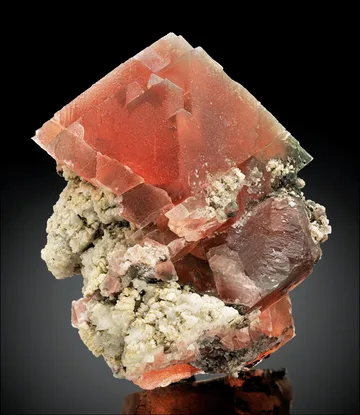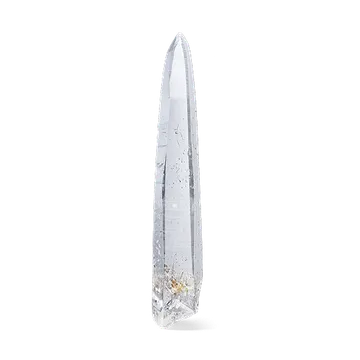
Grimsel quartz — Alpine classic from Grimsel, Bern: sharp, glassy rock crystals and smoky varieties, famed for gwindel growth and collector appeal.
Key facts
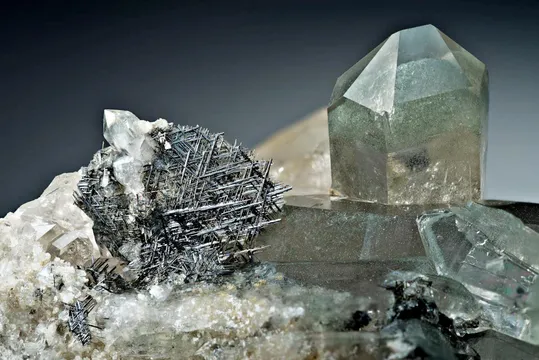
Quartz from the Grimsel area is one of the great Alpine classics: sharp, glassy rock crystal and smoky quartz from fissures in the Aar Massif, often with the poised austerity collectors expect from Swiss material. The best specimens are not loud; they are precise. They show clean hexagonal architecture, brilliant luster, internal transparency, smoky brown to nearly colorless tones, and, in the most coveted examples, the twisted growth known as gwindel.
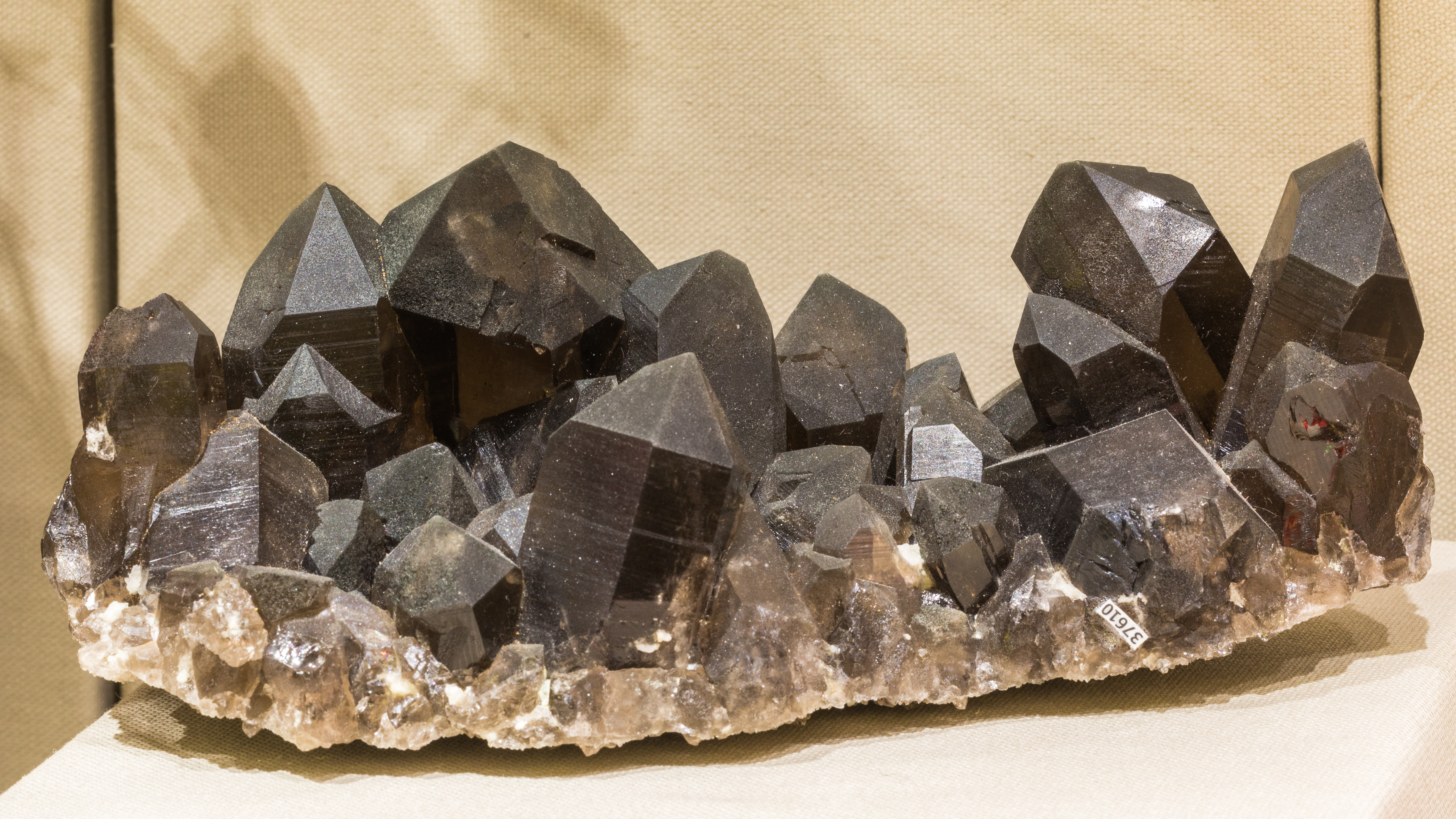
Photo: Wikimedia Commons
The locality name covers a mountain area around the Grimsel Pass and upper Haslital in Canton Bern, with important sublocalities around the Oberaar lake area, the Zinggenstöcke, Gross Sidelhorn, Scheuchzerhorn, Rufibach cleft, Vorderer Zinggenstock, and the underground Gerstenegg crystal cleft. Mineralogically, the setting is Alpine-type fissure mineralization in granitic and granodioritic rocks. Quartz crystallized in open tension fissures during late Alpine uplift, where hot saline fluids dissolved silica and other components from the wall rock and later redeposited them as euhedral crystals.
The Grimsel name has unusual historical depth. The Zinggenstock produced large quantities of clear quartz in the early eighteenth century for cutting and polishing, and later discoveries yielded smoky crystals of remarkable size. In the twentieth century, hydroelectric tunneling exposed mineralized fissures that would otherwise have remained sealed in the mountain. The most famous of these is the Gerstenegg cleft, a protected crystal cave in Grimsel granodiorite discovered during tunnel excavation for the Grimsel II power station in 1974. Unlike ordinary Alpine clefts, it survives in place behind protective windows, so visitors see rock crystal, gwindels, pink fluorite, calcite, chlorite, and accessory minerals where they grew.

Photo: Wikimedia Commons
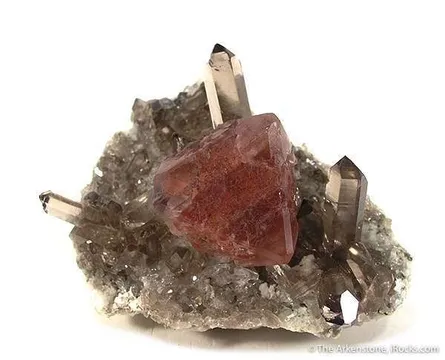
Collectors look for several things in Grimsel quartz: transparency through smoky color; undamaged, mirror-bright prism and rhombohedral faces; elegant proportions; and locality-typical associations. Pink fluorite on quartz is especially desirable when the fluorite is sharply octahedral and well placed. Gwindels are another major prize: flattened, twisted quartz growths that can be open or nearly closed, colorless or smoky, and whose value rises steeply with completeness, clarity, sculptural twist, and absence of repair.
Search for specimens: View all quartz specimens from Grimsel area, Switzerland
The Grimsel area lies in the upper Haslital of Canton Bern, within the Aar Massif of the Central Swiss Alps. The relevant collector’s geology is dominated by granitic to granodioritic crystalline rocks, especially the Grimsel granodiorite and related Aar Massif granitoids. These rocks are late- to post-Variscan plutonic rocks, later overprinted and fractured during Alpine deformation and uplift. The quartz pockets are Alpine fissures: open cracks formed under deep crustal conditions and later filled by hydrothermal solutions that precipitated quartz, feldspar, chlorite, carbonates, fluorite, sulfides, and accessory minerals.
The geological timing matters because it explains the look of the specimens. The fissures formed late in the Alpine orogeny, while the massif was being exhumed. In the Gerstenegg crystal cave, the formation has been described as roughly 16 million years old, with fluids hotter than 400 °C circulating at depths of at least 10 kilometers before uplift and erosion brought the cleft to its present position. The bleaching and leaching halos around fissures are not incidental; they are the wall-rock signature of the same process that supplied material to the crystals.
Grimsel quartz collecting has two intertwined histories. One is the older surface tradition of the Swiss strahler, the professional or semi-professional mountain crystal seeker working cliffs, glaciers, and high clefts. The other is the industrial history of the twentieth-century hydroelectric works, whose tunnels intersected mineralized fissures deep inside the mountain. Between about 1950 and 1975, construction galleries in the Grimsel area produced important mineral material, including quartz and fluorite specimens.
The most celebrated preserved find is the Gerstenegg cleft. It was discovered on October 4, 1974 during excavation of the access tunnel to the Grimsel II power station operated by Kraftwerke Oberhasli AG. A Bernese government resolution placed it under protection on December 11, 1974. Subsequent work exposed the cleft for viewing rather than extraction; an 875-kilogram slab of crystal was removed from the front of the cave and placed in the KWO administration building in Innertkirchen, and an observation gallery was constructed in the winter of 1985–86. Public guided visits began in 1987. The protected visible system is about 14 meters long and up to about 1 meter high, with rock crystal, gwindel quartz, pink fluorite, calcite, chlorite, pyrite, galena, adularia, epidote, titanite, apatite, biotite, and milarite recorded from the cave system.
Access is therefore sharply divided. The Gerstenegg cleft is not a collecting locality; it is a protected geological monument inside the KWO underground infrastructure and is visited only as part of organized tours. Surface Alpine collecting in the broader Grimsel area is a separate matter involving difficult terrain, seasonal snow and ice, land status, possible protected zones, and local permissions. For serious collectors, old labels specifying the precise sublocality—Zinggenstöcke, Rufibach cleft, Scheuchzerhorn, Gross Sidelhorn, Juchlistock, Oberaar, Gerstenegg, and so on—are far more valuable than a vague “Grimsel” label.
The signature Grimsel quartz crystal is prismatic, lustrous, and cleanly terminated, with the typical Alpine refinement of form: crisp prism faces, rhombohedral terminations, and a glassy surface that can remain bright even where the crystal is internally smoky. Color ranges from colorless rock crystal to pale smoky, sherry brown, clove brown, and dark smoky quartz. Colorless crystals are especially notable at Gerstenegg and in some fluorite-bearing Grimsel specimens; smoky quartz is the more familiar collector image from high Alpine clefts.
Gwindels are central to the locality’s appeal. These are flattened, twisted quartz growths elongated roughly along the a-axis, commonly smoky in Swiss Alpine material. Grimsel gwindels may be subtle, with only a slight torsion across a stacked termination surface, or more dramatic, with a visibly curled or stepped “comb” of terminations. Closed gwindels, where the twist is compact and the form appears more massive, are particularly prized when complete all around.
Size varies widely. Ordinary collector specimens range from thumbnail and miniature crystals to cabinet-sized groups. Documented Gerstenegg rock crystals reach about 20 centimeters, while historic Zinggenstock and Gerstenhorner finds produced crystals and crystal groups far larger than the typical market specimen. The best saleable pieces are often not the largest but the most resolved: a 5–10 cm smoky crystal with high clarity and pristine faces can be more desirable than a bigger, bruised group.
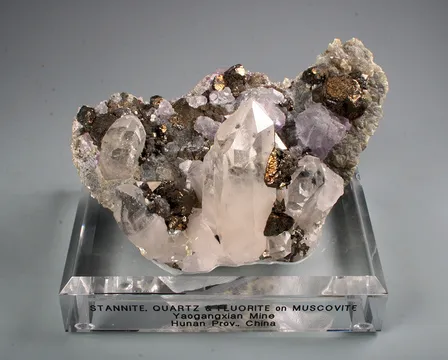
Associated minerals are important for attribution and aesthetics. Pink octahedral fluorite on quartz is a Grimsel classic, especially when the fluorite is translucent rose to saturated pink and perched cleanly on clear or pale smoky quartz. Other common or characteristic associates include chlorite, calcite, adularia, albite, apatite, hematite, pyrite, galena, sphalerite, epidote, titanite, rutile, brookite, anatase, and milarite in restricted occurrences. Chlorite may appear as green coatings or inclusions; calcite can form white tabular crystals over chlorite or quartz; sulfides and accessory species are more localized.
Quality rests on a few uncompromising factors. First is surface: Alpine quartz lives or dies by luster and edge sharpness. Second is transparency: smoky color should not be muddy; the ideal Grimsel smoky has depth and internal fire. Third is form: a single, balanced crystal; an undisturbed cluster; a well-composed quartz-fluorite association; or a gwindel with strong twist will outrank an otherwise ordinary group. Fourth is condition: contact marks from cleft walls are acceptable when natural and unobtrusive, but bruised terminations, broken side crystals, sawed bases, crude trimming, and repaired gwindels must be assessed honestly.

Photo: Wikimedia Commons
Grimsel quartz is a classic rather than a mass-market commodity. Good specimens appear regularly, but fine ones are tightly held, especially gwindels, quartz with well-placed pink fluorite, large transparent smoky crystals, and pieces with old Swiss provenance. The market recognizes precise Alpine labels: “Grimsel area” is acceptable, but “Zinggenstöcke,” “Rufibach cleft,” “Oberaar,” “Juchlistock,” or “Gerstenegg” can matter greatly when supported by credible old labels, collection history, or dealer documentation.
No standard locality-specific treatment is part of the accepted Grimsel quartz market. The normal authenticity concerns are more practical: overly broad locality labels, repaired gwindels, reattached crystals, cleaned or acid-brightened surfaces without disclosure, and specimens assembled from multiple pieces. Because Alpine quartz can break cleanly and because gwindels are thin, flat, and valuable, repairs at the base or along stress fractures deserve close inspection under magnification and strong side lighting.
The most common condition issues are edge bruising, small chips on terminations, contact scars where the crystal grew against the cleft wall, chlorite-filled cracks, and dull etched areas. Natural etching is not automatically a flaw; on some Grimsel smoky quartz it adds texture and evidence of pocket history. Damage is different: look for interrupted luster, fresh conchoidal chips, unnatural glue lines, and mismatched surface gloss.
For quartz with pink fluorite, condition grading should include both species. Fluorite octahedra are softer and more vulnerable than quartz, so tiny cleaves or frosted corners are common. A specimen with undamaged fluorite, clean contrast against quartz, and no distracting matrix breakage is substantially scarcer than a merely colorful piece.
Provenance has special weight here. Old Swiss collections, strahler labels, museum deaccession histories, and named dealer lineages can help separate a genuinely classic Grimsel specimen from a generic “Swiss Alps” quartz. For high-value pieces, insist on photographs under multiple lighting angles, a clear statement of repairs, and a label trail that names the sublocality as specifically as possible.
In the Grimsel area, the old stories begin with weight. Between 1719 and 1740, the Zinggenstock was worked not for delicate cabinet miniatures but for raw crystal in industrial quantities. Roughly 30 to 50 tons of colorless quartz were extracted from fissures there, and one crystal was said to weigh about 400 kilograms. Most of that material went south to Milan for cutting and polishing. The tragedy, from a collector’s point of view, is that almost all of it vanished into lapidary use. Only three pieces are recorded as surviving in Bern’s Natural History Museum.
The twentieth century brought a different Zinggenstock story. In 1966, the brothers Rufibach made a notable find at about 2,700 meters elevation. At that height the quartz was no longer the clear rock crystal of the eighteenth-century polishing trade, but pale smoky quartz. The same mountain district then yielded darker smoky quartz at the Gerstenhorner, around 2,900 meters elevation: about 770 kilograms in all, with individual crystals reaching nearly 50 kilograms. These figures explain why Grimsel is not merely “another Swiss quartz locality.” It is one of the places where Alpine fissures proved they could produce both refinement and mass.
The Gerstenegg discovery reads almost like a staged mineral-collector parable. In 1974, deep inside the Grimsel Pass, Kraftwerke Oberhasli was driving a tunnel for the Grimsel II hydroelectric works. One day, no excavated rock was coming out of the tunnel mouth. The site managers went to the working face and found the miners not drilling, but strahlen—crystal hunting. The experienced strahler Ernst Rufibach was called in. He recognized that the tunnel had only clipped the outer part of something larger. The main cleft lay protected behind a large transverse crystal slab, still shielded from blasting and from the eager hands at the tunnel face.
That detail—the slab as a natural locked door—is the reason the Gerstenegg cleft survived. Rufibach understood that the combination was extraordinary: large dimensions, fine contents, and a location deep enough inside the mountain to be safe from the normal Alpine enemies of exposed pockets: freeze, thaw, meltwater, falling rock, and erosion. The cleft lay about 1,850 to 1,860 meters from the tunnel entrance and roughly 500 meters below the surface. By December 1974, only weeks after its discovery on October 4, the Bernese authorities had placed it under protection.
The later opening of the cave was careful rather than exploitative. After tunnel construction was complete, work began to make the cleft visible. The first major obstruction was an enormous crystal-bearing rock slab weighing 875 kilograms. Once it was removed, another crystal-filled cavity appeared behind it. During the winter of 1985–86, an observation gallery was constructed to let visitors see the rear section. Since 1987, the public has been able to look through protected windows into a cleft that still holds its quartz, gwindels, pink fluorite, calcite, and chlorite essentially in place.
For collectors accustomed to seeing Alpine minerals only after extraction, trimming, cleaning, shipping, and decades of relabeling, Gerstenegg is a rare correction. It shows the pocket as architecture: an elongated, elliptical to nearly cylindrical void in Grimsel granodiorite, about 14 meters of visible cleft, with bleached wall rock and minerals arranged in the order and posture of growth. The glass and steel are not barriers to collecting; they are the reason the locality still exists as a complete mineralogical scene.