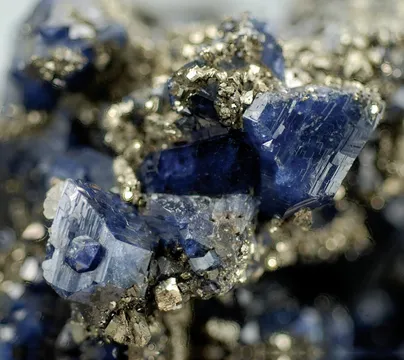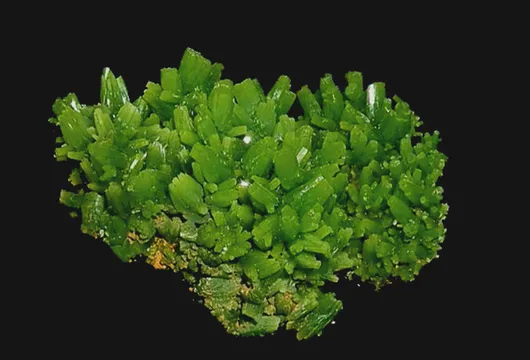
Daoping Mine, Guangxi - a defining Chinese locality famed for vivid green pyromorphite crystals and notable cerussite, prized by collectors for color and form.
Key facts
Daoping Mine is one of the defining Chinese mineral localities of the modern collecting era: a hydrothermal lead-zinc deposit in Guangxi whose oxidized zones produced pyromorphite so bright, lustrous, and sculptural that the material quickly became a benchmark for the species. The mine lies in Gongcheng County, in the Guilin region of the Guangxi Zhuang Autonomous Region, in a district of folded Devonian carbonate and clastic rocks where Pb-Zn mineralization cuts limestone, sandstone, and shale of the Wuzhishan Formation. To collectors, however, Daoping is remembered less as an ore deposit than as a revelation: suddenly, around the turn of the twenty-first century, flats of vivid apple-green to lime-green pyromorphite from southern China began competing visually with classics from Bad Ems, Les Farges, Phoenixville, and Bunker Hill.
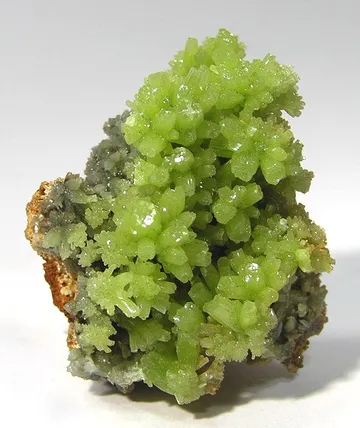
The best Daoping specimens have a look all their own. Pyromorphite forms hexagonal prisms, tapered barrels, skeletal and hoppered crystals, divergent sprays, open rosettes, and thick encrustations lining vugs in rusty gossan, carbonate, barite-rich matrix, or, more rarely, quartz. The finest pieces are intensely colored without being opaque: translucent yellow-green interiors flash beneath glossy to resinous surfaces, and some crystals show hollowed, stepped terminations that make the specimen read as architecture rather than coating. Cerussite gives the locality a quieter second reputation, especially in reticulated white “snowflake” twins, yellow to straw-yellow crystals long traded as “chrome cerussite,” and striking combinations where pale lead carbonate sits against acid-green pyromorphite.
Regional View
Country View
Daoping also matters because it clarified, and sometimes complicated, Chinese locality labels. The deposit straddles the Gongcheng-Yangshuo county boundary and is worked by the Daoping and Yangshuo mines, which have been interconnected underground since 2003. Many specimens marketed as “Daoping,” “Yangshuo,” “Tangping,” or “Guilin” are therefore best understood within a combined Yangshuo-Daoping Pb-Zn system, especially for material mined after the workings were linked. A separate but nearby issue concerns blue plumbogummite-after-pyromorphite specimens: material once widely sold as Daoping or Yangshuo has been reattributed by specialists to the Laohuan area to the north, making label discipline essential for serious collectors.


Search for specimens: View all specimens from Daoping Mine, China
Daoping Mine is in Gongcheng County, Guilin, Guangxi Zhuang Autonomous Region, southern China, near the better-known tourist city of Yangshuo and within the broader Guilin karst region. Older specimen labels may read Daoping, Dao Ping, Tangping, Tang Ping, Yangshuo, Yangshao, or simply Guilin, Guangxi. The most careful modern usage treats Daoping and Yangshuo as related workings on the same Pb-Zn mineralized system rather than wholly separate specimen localities, because the underground workings have been connected since 2003 and Chinese mining practice has often regarded them as one operation.
Geologically, Daoping is a hydrothermal lead-zinc deposit hosted in Devonian Wuzhishan Formation limestone, sandstone, and shale, with the sequence locally intruded by granite and lamprophyre dykes. Primary ore minerals include galena and sphalerite, accompanied in the broader mineral list by secondary lead, zinc, copper, carbonate, phosphate, and vanadate species formed in the oxidized zone. This oxidized environment is the collector’s Daoping: lead from galena, phosphate-bearing fluids, carbonate gangue, iron oxides, open fractures, and cavities combined to produce pyromorphite, cerussite, malachite, dundasite, descloizite, willemite, calcite, dolomite, quartz, hematite, limonite, and related minerals.
The deposit has been worked industrially for lead and zinc since the mid-twentieth century, well before Western collectors knew the name Daoping. By the late 1990s and early 2000s, however, local miners and dealers recognized that bright green pyromorphite, formerly of little ore value, had substantial specimen value. That transition is a familiar but decisive moment in the history of Chinese mineral collecting: pockets that might once have been discarded as colorful gangue were suddenly trimmed, saved, traded, and sent into the international market. The main specimen-producing period for classic Daoping pyromorphite began around 1999–2000 and continued through a series of episodic finds in the early 2000s and later. The locality never functioned like a single open collecting pit; specimens came from pockets, vugs, and oxidized zones encountered during ore mining and selective specimen recovery.
Important Daoping finds are remembered by style. The early green pyromorphites include loose and matrix clusters of translucent hexagonal prisms, tapered barrels, acicular to elongated sprays, skeletal crystals, and deeply hoppered growths. Some of the finest early pieces show crystals around 1 to 2 cm, with exceptional examples reaching larger sizes in geode-like cavities or thick clusters. Quartz-matrix pyromorphites are much rarer than the usual gossan or carbonate-matrix pieces, and dealer records describe early and later pockets in which wet-looking apple-green crystals were perched on blunt milky quartz or drusy quartz. Cerussite finds were smaller in volume but highly distinctive: yellow to pastel-yellow crystals from the mid-2000s, reticulated white twins with pyromorphite from a very small 2007 find, and a later 2011 pocket of subtly colored lustrous cerussites distributed in China and at the Munich show.
Collecting access today should be considered restricted and commercial. Serious collectors encounter Daoping specimens through dealers, auction archives, old collections, and occasional new or satellite-production material rather than through casual field collecting. The mine is an industrial underground Pb-Zn operation or former operation with the hazards of old workings, active or intermittent mining, private mineral rights, and uncertain access. No collector should attempt to visit or collect there without explicit permission from the mine or rights holders and competent local guidance.
Pyromorphite is the mineral that made Daoping famous, and the best specimens are among the most recognizable modern pyromorphites in the world: grass-green, apple-green, lime-green, yellow-green, and occasionally olive to brownish green crystals in hexagonal prisms, barrel-shaped crystals, radiating sprays, skeletal clusters, and especially stepped hopper forms. Classic pieces are generally thumbnails to cabinet specimens, with individual crystals commonly in the millimeter to 1 cm range, fine examples around 1 to 2 cm, and exceptional cavities or clusters showing larger crystals. Associations include cerussite, quartz, galena, iron oxides, malachite, calcite, and gossanous matrix, with quartz-matrix and cerussite-combination specimens much scarcer than ordinary pyromorphite clusters. The best Daoping pieces combine saturated green color, translucency, wet to resinous luster, strong three-dimensional architecture, undamaged terminations, and either an elegant floater form or a contrasting matrix; ordinary pieces tend to be flatter coatings, crowded druses, or bruised clusters where the color is good but the crystal form is visually lost.
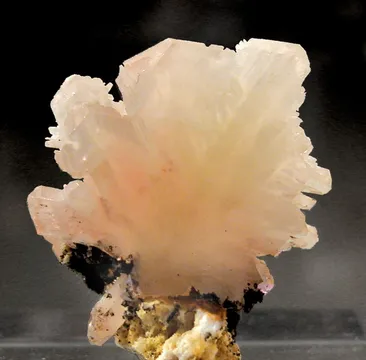
Cerussite from Daoping is far less abundant than pyromorphite but highly collectible in three principal styles: white to colorless reticulated twins, pale yellow to straw-yellow crystals historically sold as “chrome cerussite,” and combination specimens where cerussite lies on or beside brilliant green pyromorphite. Sizes are usually thumbnail to small-cabinet, with many notable specimens in the 3 to 8 cm range; the crystals themselves may form delicate snowflake lattices, glassy intergrown columns, crusts, or flat reticulated sprays. The celebrated 2007 cerussite-pyromorphite combinations are small but visually memorable, with white reticulated cerussite accented by wet-looking apple-green prisms, while the 2005–2007 yellow material is prized when translucent, lustrous, and not reduced to formless lead-carbonate masses. Top Daoping cerussite is judged by sharpness, translucency, intactness of the reticulated habit, exposed placement, and contrast with pyromorphite or matrix; broken lattice edges, chalky surfaces, and ambiguous “chrome” color claims without observable quality should be valued more cautiously.
Quartz is not the headline mineral at Daoping, but it is important as an uncommon and highly effective matrix for pyromorphite. Documented Daoping quartz specimens show milky to white drusy or blunt-tipped quartz crystals carrying vivid green to yellow-green pyromorphite, a combination that collectors prize because most Daoping pyromorphite occurs on gossan, carbonate, barite-rich material, or as loose clusters rather than on clean quartz crystal matrix. The best quartz-associated pieces are not collected for quartz crystal perfection alone; they matter because the white quartz makes the green pyromorphite look electric and gives the specimen a more open, classic vein-pocket appearance. Fine examples show sparkly, sharply exposed pyromorphite crystals distributed across quartz without excessive iron staining or missing crystals, while ordinary examples are simply quartzose matrix pieces with sparse or damaged pyromorphite.
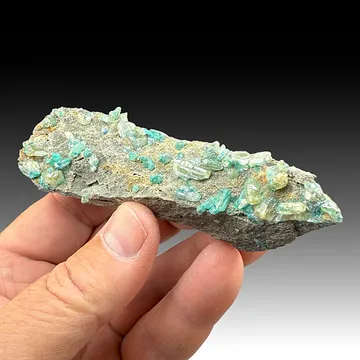
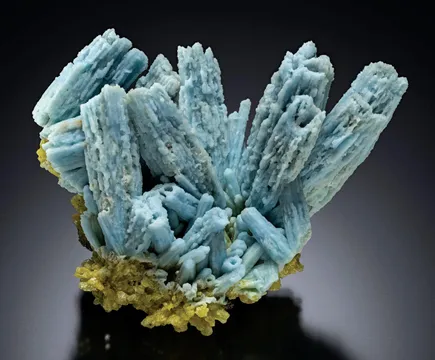
Other minerals documented from Daoping include galena and sphalerite as the primary Pb-Zn ore minerals, calcite and dolomite as common carbonates, malachite as a green copper secondary mineral, hematite and limonite as oxidized iron material, gypsum, dundasite, descloizite, willemite, and a recently recorded XRD-confirmed hawleyite occurrence. Plumbogummite requires special caution: although blue plumbogummite-after-pyromorphite specimens circulated for years with Daoping or Yangshuo labels, specialist work has reattributed the celebrated blue material to the separate Laohuan locality rather than the Daoping-Yangshuo workings.
Daoping authenticity problems are less about manufactured fakes than about labels, locality precision, and overenthusiastic variety names. Because Daoping and Yangshuo are connected underground and belong to the same mineralized system, a label reading “Daoping” on post-2003 material may be a trade shorthand rather than proof of a specific adit. “Tangping” or “Tang Ping” is an older label variant often encountered on pyromorphite and cerussite. “Yangshao” appears frequently in older dealer descriptions, usually as a spelling variant connected to Yangshuo/Daoping material rather than a separate mineralogical concept.
The largest label hazard is blue plumbogummite. Fine sky-blue to blue-green plumbogummite pseudomorphs after pyromorphite were historically sold as Daoping or Yangshuo, but published specialist work now places the classic material at Laohuan, a separate locality in Gongcheng County. Collectors should not automatically reject every old label, but a blue plumbogummite specimen offered as Daoping/Yangshuo deserves close scrutiny, and the most responsible label should mention Laohuan when that attribution is supported.
The “chrome cerussite” label should also be used carefully. Yellow Daoping cerussite is real and collectible, but the trade term does not by itself prove chromium as the color cause, nor does it define a separate mineral species. Pay for what can be seen: transparency, luster, form, completeness, color, and association. The same caution applies to vague “cuprian” color claims unless backed by analysis.
Condition is critical. Daoping pyromorphite can look robust, but hopper edges, hollow terminations, and exposed sprays chip easily, and damage is often hidden among crowded crystals. The best pieces show intact terminations under magnification, clean pocket faces, and no obvious contact scars in the display area. Cerussite is heavier and more brittle, so reticulated twins are especially unforgiving: even a small break can disrupt the entire visual rhythm of a snowflake cluster. Yellow cerussite crystals can also show dulling, bruised edges, or chalky alteration.
Fluorescence is not a major buying factor for classic Daoping pyromorphite. Some dealer listings have noted minor fluorescence under long- and short-wave UV, but the locality’s value rests overwhelmingly on color, luster, habit, and association in visible light. Handling should follow standard lead-mineral precautions: wash hands after touching specimens, avoid generating dust, keep pieces away from children and pets, and do not use acids or aggressive cleaning methods on cerussite, carbonate matrix, or delicate pyromorphite.
Market availability remains good at the lower and middle levels because Daoping produced many pyromorphites over more than two decades, and specimens continue to appear through dealers, auctions, and collection dispersals. The supply of top early-2000s pieces, large cabinet specimens, superb hoppers, quartz-matrix combinations, and clean reticulated cerussite combinations is much tighter. Fine thumbnails and miniatures still surface, but the best examples are increasingly treated as modern classics rather than disposable recent Chinese production.
The Daoping story entered Western collecting under a fog of names. In the late 1990s and early 2000s, specimens reached the market as Guilin, Yangshuo, Daoping, Tang Ping, and other variants. That confusion was not just clerical. It reflected translation, dealer secrecy, multiple mine entrances, and the reality that the mineralized system was worked from more than one side of the mountain. By the time the locality was written into the collector literature, the name Daoping had become attached to the great green pyromorphites, but the specimen trail still carried the fingerprints of those early uncertain labels.
The pocket geography was surprisingly precise. One early account distinguished Yangshuo tunnels numbered 1335 and 1370, where pyromorphite was collected in June 1999, from Daoping tunnels numbered 2398, 3250, and 3199, where material appeared in January and February 2000. The tunnel numbers were not random labels: in the Daoping system the first digit indicated the mining area, and the last three digits indicated elevation, so the listed tunnels corresponded to elevations such as 1398, 1250, and 1199 meters. That small numerical detail explains why collector labels from the district can be both confusing and meaningful: the specimens came from a real industrial mine with a structured underground geography, not from a single picturesque “pyromorphite cave.”
One early Yangshuo pocket was described as only about 60 x 70 cm in cross-section. From that compact space came four large pieces around 20 x 20 x 20 cm and many smaller specimens, including yellow pyromorphite crystals reported to 2.5 cm in diameter and as much as 4 cm long. After May 2000, that tunnel yielded no further significant pockets. The episode captures the true economics of fine minerals: a world-class locality can be built from a few small openings in oxidized ore, emptied quickly by miners who have suddenly learned that a glittering green lining is worth preserving.
Daoping itself was no romantic hand-dug curiosity. Contemporary descriptions place it in the context of a mature Pb-Zn mining operation, with hundreds of workers, many tunnels, and ore transport from high mountain workings by rope-way where roads could not reach. Specimen mining was a narrow side economy grafted onto industrial metal production. In February 2000, the Daoping administration reportedly signed contracts with individual miners, including men named Zhou and Jiang, allowing them to mine pyromorphite specimens. That shift—from ore to specimen—changed the fate of material that might otherwise have gone to waste.
The change in value is the most memorable part of the story. Local miners reportedly knew the green mineral before collectors did, but it was treated as gangue until a specimen was taken for identification and recognized as pyromorphite. Once the name and value were understood, the rush began. The result was not merely another Chinese locality added to lists; Daoping became one of the places that defined the “Golden Age” of Chinese minerals, when new mines and newly opened markets brought world-class specimens from China into major Western collections at a pace collectors had never seen before.
A later chapter belongs to Zhouping Guo, originally from Guilin and trained in geology, whose home and office were close enough to Daoping for him to watch the mine’s specimen production over roughly twenty-five years. His 2025 Dallas Mineral Collecting Symposium talk, “Daoping Pyromorphite Mine in Southern China,” promised firsthand accounts, photographs, and videos from inside the locality, placing Daoping not simply as an export source but as a mine understood by people who lived near it, entered it, and watched its production rise and fade.