






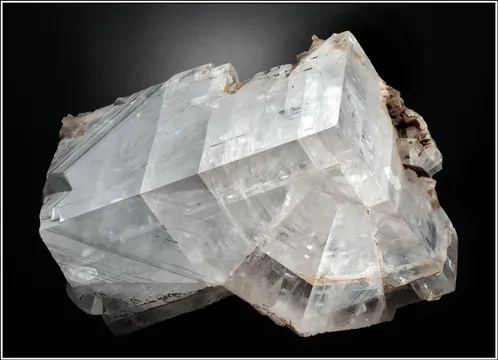
Eugui, Spain - classic European carbonate locality famed for sharp dolomite and magnesite, zebra banding, historic quarries, and strong collector appeal.
Key facts
Eugui is one of the classic European carbonate localities, known to collectors not for ore minerals in the usual metallic sense but for world-class dolomite from a working magnesite district in Navarre, in the western Pyrenees near the Spanish-French border. The specimens come chiefly from the Eugui magnesite workings near the village of Eugi/Eugui in the municipality of Esteríbar, especially the older Asturreta or “Militares” quarry and the later Azcárate quarry. Geologically, the deposit is a Carboniferous, stratabound magnesite body hosted by dolomitic carbonate rocks in the Asturreta anticline, part of the Alduides-Quinto Real massif. The scientific interest of the deposit lies in the epigenetic replacement sequence: limestone altered to dolostone and then to magnesite, producing the characteristic zebra or rhythmic banding for which the deposit is also famous.
For specimen collectors, Eugui means dolomite first. The best pieces are sharply rhombohedral, bright, translucent to transparent, and commonly grey, bluish grey, colorless, or faintly milky, sometimes with zoning, phantom-like internal structure, or delicate face striations. In the best old Asturreta material, single rhombohedra may be several centimeters on edge, and exceptional crystals reached roughly 20 cm. Some specimens are matrix pieces on compact dolomite or magnesite; others are floating or near-floating interpenetration twins, the sort of clean sculptural carbonate that made the locality a standard against which other dolomites are still compared.
Regional View
Country View
Eugui is also more than a single-species locality. Industrially, it is Navarra’s magnesite deposit, worked since the mid-1940s by Magnesitas Navarras, with processing historically centered at Zubiri. Mineralogically, the magnesite quarry exposed a compact but intriguing assemblage: dolomite and magnesite dominate, aragonite can make attractive and fluorescent specimens, and carbonaceous shales in parts of the deposit carry uncommon phosphate and fluorophosphate minerals such as fluellite, minyulite, crandallite, metavariscite, and the especially rare bariosincosite.
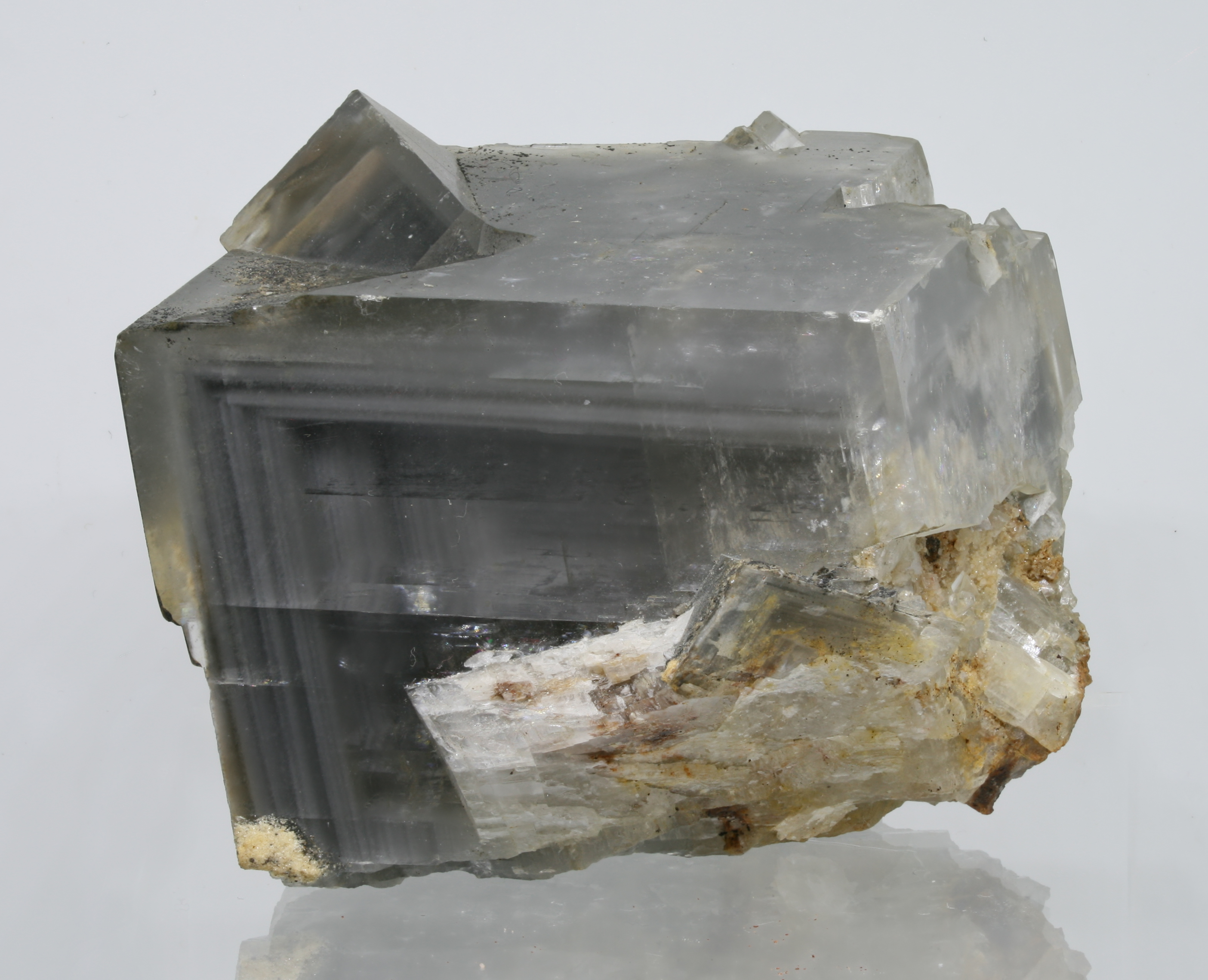
Photo: Miguel Calvo, Wikimedia Commons
Search for specimens: View all specimens from Eugui, Spain
The Eugui mineral locality is the magnesite mining district north of the village of Eugui in Esteríbar, Navarre. In specimen labels and literature it appears under several forms: Eugui, Eugi, Cantera Azcárate, Cantera Azkarate, Asturreta Quarry, Cantera de los Militares, and sometimes simply “Eugui quarry.” Serious labels should distinguish Asturreta, the older and now historic quarry, from Azcárate, the better-known active open pit, because many of the highest-grade old dolomites came from Asturreta, while later material has more often been attributed to Azcárate.
The deposit is a stratabound sparry magnesite body in Carboniferous carbonate strata. The host sequence includes limestones, dolostones, shales, sandstones, and greywackes, with the magnesite package sitting within the folded structure of the Asturreta anticline. Spanish geological-survey descriptions place the deposit in the Pyrenean domain and the western South Pyrenean setting, with the Carboniferous series including the Asturreta Formation, in which dolomite and magnesite are especially important. The ore is not a vein system in the usual collector sense; it is a replacement body in carbonate rock, where carbonate textures, bedding, stylolites, pelitic seams, and later cavities controlled where display-quality crystals could grow.
The magnesite occurs as stratabound packages within dolomite, with some studies describing magnesite bodies up to tens of meters thick and a maximum accumulated thickness on the order of 150 m. The most characteristic ore texture is zebra or “ritmita” banding: alternating dark and light bands of magnesite, commonly influenced by carbonaceous matter and pelitic seams. Petrographic work shows magnesite replacing saddle dolomite in an interdigitated, isovolumetric relationship, and fluid-inclusion studies point to relatively low-temperature formation, commonly treated as below 200 °C. That replacement story matters to collectors because it helps explain why the same quarry can yield massive industrial magnesite, compact dolomite matrix, carbonaceous shale seams, and, only in special openings, jewel-like second-generation dolomite crystals.
Mining began after the discovery of the magnesite deposit in the 1930s–1940s, followed by the formation of Magnesitas Navarras S.A. in 1945. Early work was done for refractory magnesite, first under more primitive quarrying conditions and later with modern industrial methods. The processing history is tied to Zubiri, where a plant and furnace capacity were built in the early postwar period, giving the mining district a long economic relationship with the Esteríbar valley. The worked areas are commonly described as the Asturreta, Azcárate, and Lavasar cuts, though specimen collectors usually encounter the first two names most often.
The famous dolomite pockets were incidental to magnesite mining. The great specimen period is associated above all with Asturreta from the late 1950s through the early to mid-1970s, with the finest crystals recovered especially in the late 1960s. A mid-1960s geode reported from the district was enormous by mineral-collector standards, roughly 50 m long and 20 m deep, and yielded dolomite crystals of a quality previously unknown from the locality, including crystals up to about 20 cm on edge. Subsequent finds in Azcárate continued to produce good dolomite, but the consensus among Spanish collectors is that, with notable exceptions, later Azcárate production generally did not equal the best old Asturreta material.
Access today should be treated as closed to casual collecting. The official geological-interest inventory identifies Eugui as an active mining operation and explicitly states that access is not authorized. Mineral or fossil collection is described as admissible for research purposes, not recreational collecting. In practical collector terms, Eugui is a market-and-collection locality: specimens come from old collections, dealer stock, former quarry recoveries, and occasionally later material legitimately removed during industrial work, not from casual field collecting by visitors.
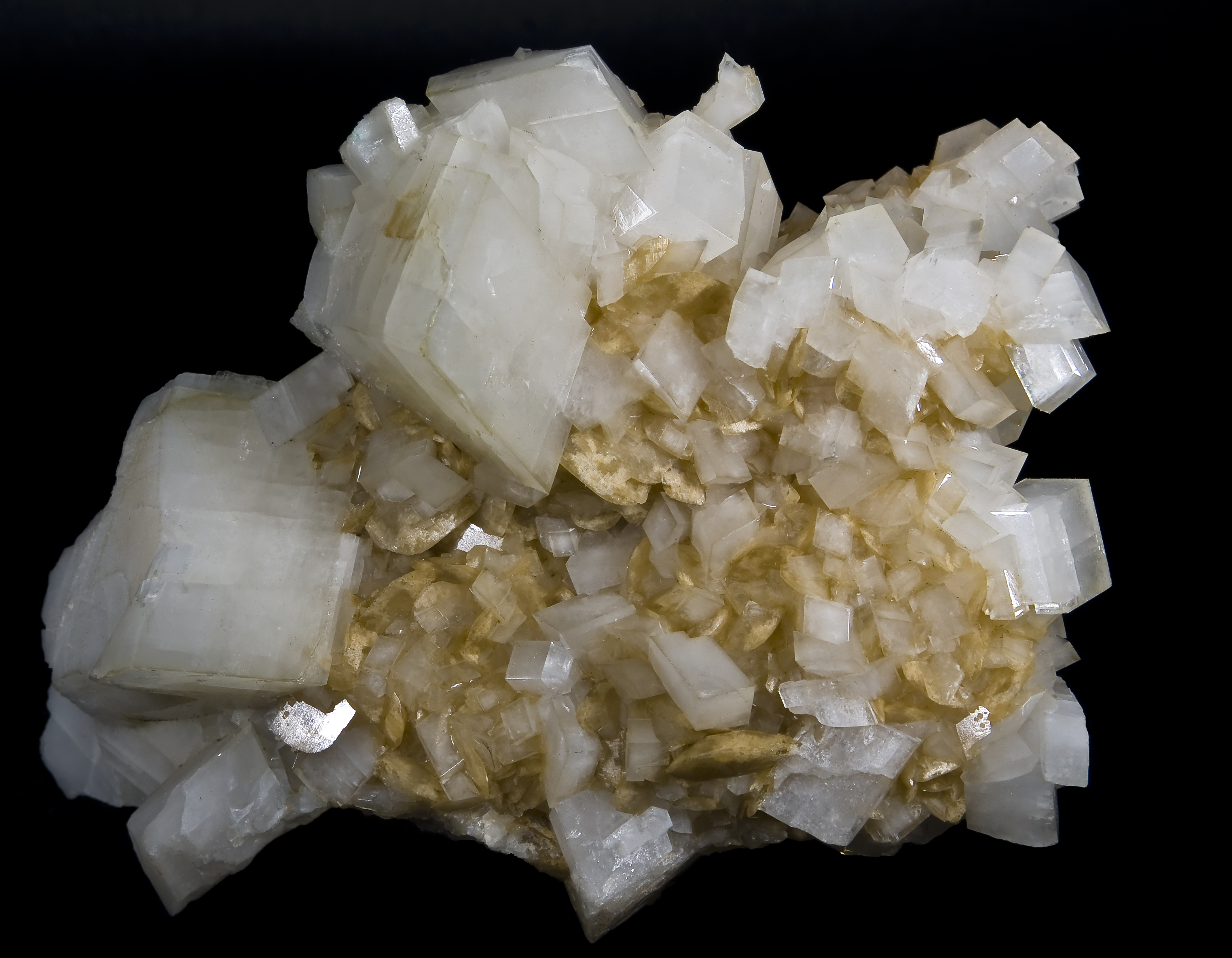
Dolomite is the signature mineral of Eugui and the species that made the locality internationally famous. The finest specimens are sharp rhombohedra, commonly translucent to transparent, with colors ranging from colorless and white to pale grey or bluish grey; the best old pieces may show zoning, grey phantoms, fine striations, bright vitreous luster, and clean interpenetration twinning. Ordinary Eugui dolomite is often whitish, milky, slightly pinkish, less transparent, and commonly untwinned, while fine pieces have separated crystals, crisp edges, undulled faces, and a lively internal transparency that sets them apart from compact matrix material. The classic production is tied especially to the Asturreta quarry and the late-1960s–early-1970s “first epoch,” when crystals reached several centimeters routinely on good pieces and exceptionally up to about 20 cm on edge; later Azcárate specimens are also important, especially when they preserve bright isolated twins or transparent rhombohedra on matrix. Associations include magnesite, aragonite, calcite, quartz, pyrite, iron and manganese oxides, and occasional chalcopyrite or secondary copper minerals.
Other documented Eugui minerals fall into several distinct groups. The main carbonates are magnesite, aragonite, calcite, siderite, and dolomite; crystallized magnesite is much scarcer as a display mineral than its industrial abundance would suggest, occurring as fragile lenticular white to pale brown crystals, sometimes with satiny faces and growth striations. Aragonite is one of the locality’s best secondary display species, forming individual crystals, divergent groups, acicular sprays, and delicate white to yellowish or orange-toned aggregates, many with strong fluorescence. Calcite is much less common than dolomite and was historically confused by miners with dolomite. Sulfides and copper minerals include pyrite, chalcopyrite, chalcocite, sphalerite, tetrahedrite-group material, malachite, pseudomalachite, and mcguinnessite; the latter is notable at Eugui as a turquoise-blue copper-magnesium carbonate recorded from Spain in an unusual association. The carbonaceous shales carry the locality’s most specialized rarities: fluellite, minyulite, crandallite, metavariscite, cacoxenite, evansite, apatite-group material, and bariosincosite, with Azcárate recognized as only the second known world locality for bariosincosite after its Australian type locality. No verified mineral species has Eugui itself as its type locality, but its rare-phosphate suite is far more important than the locality’s carbonate fame alone would imply.
Eugui dolomite is widely available compared with many classic European localities, but top-grade pieces are not common. The market contains many small to medium examples with milky white or grey rhombohedra, and a smaller number of sharply twinned, transparent, highly lustrous cabinet specimens from old collections. The best old Asturreta pieces, especially those with credible late-1960s to early-1970s provenance, command a premium because that quarry is historic and because the finest pocket material is long dispersed into museums and private collections.
The main authenticity issue is not a known program of faking or treatment, but locality precision and mineral identification. Old labels may say Eugui, Eugi, Navarra, Azcárate, Asturreta, or Militares, and a specimen sold simply as “Eugui” may be correct while still lacking useful historical resolution. For higher-value pieces, Asturreta provenance is worth preserving only when supported by an old label, collection history, or reliable dealer note. Another common confusion is calcite versus dolomite: at the quarry, material called “calcita” by miners was often dolomite, and true calcite from Eugui is comparatively minor. Acid testing should not be performed on display crystals; if identity is in doubt, use provenance, morphology, heft, UV response of associated minerals, and non-destructive analytical methods before resorting to any spot test on an inconspicuous broken edge.
Condition is a serious value factor. Eugui dolomite has broad rhombohedral faces and prominent edges that show bruising immediately. On old cabinet pieces, look for chipped corners, flattened crystal tips, cleaved rhombs, abrasions along exposed ridges, and old repairs where a transparent crystal meets matrix. Manganese or iron oxide films can be natural and locality-consistent, but aggressive cleaning can dull the luster or leave residues in stepped faces and pockets. Floating twins and isolated rhombohedra should be examined under side light for repaired contacts, because a repaired Eugui dolomite may still be attractive but should not be priced as an undamaged classic.
Fluorescence is relevant mainly for associated aragonite and some phosphate specimens. Eugui aragonite can be strongly fluorescent, with some collectors reporting vivid pale yellow to whitish responses, while dolomite may show weaker bluish effects on certain specimens. Phosphate specimens from the carbonaceous shales are often small, delicate, and partly micro-mineralogical; evansite-like crusts, fluellite associations, minyulite sprays, and crandallite pseudomorphs should be handled dry and sparingly, because some are fragile, dehydrated-looking, or easily damaged by abrasion. Store fine Eugui carbonates away from vibration and avoid repeated handling of matrix pieces with friable carbonaceous seams.
The origin story of the Eugui mine belongs to a mid-century mountain landscape rather than to a formal exploration campaign. In 1945, Eliseo Belzunce, a mining engineer from Bearin working as a prospector for the San Sebastián company Promisa, was prospecting the Esteríbar hills with Francisco Lizarraga, a mason from Elbete who knew the local mountains intimately. They recognized the value of a magnesite outcrop, denounced the claim under the name El Quinto, and made an oral agreement about sharing what might come from it. Spanish accounts of the story emphasize that the agreement was made “sin ningún papel escrito,” and the enduring force of that spoken pact is part of local mining lore: descendants of both men continued receiving part of the quarry royalty.
The corporate machinery followed quickly. On August 16, 1945, Magnesitas Navarras S.A. was entered in the Pamplona commercial register, with capital of 5 million pesetas and an address on Avenida Carlos III in Pamplona, though the administration and management were in San Sebastián. The first workings were known as the Cantera de los Militares, followed by Asturreta, and later by Azcárate. The early mineral was processed at Andoáin until the Zubiri factory and its first furnace came into operation in 1953. For collectors, those company milestones are not dry background: without the quarrying of refractory magnesite, the great dolomite geodes would likely never have been opened, and without alert people in the operation, many of the best crystals would have gone to the crusher.
The most repeated collecting episode is the discovery of a huge dolomite geode in the mid-1960s, described locally as about 50 m long and 20 m deep. Inside were dolomite crystals of unprecedented quality for Eugui, including rhombohedra up to about 20 cm on edge. Spanish collectors connect the rescue of the finest late-1960s Asturreta specimens with the engineer Juan Córdoba, whose interest in the crystals reportedly allowed exceptional pieces to be saved rather than lost in normal mining. Those recovered crystals—bluish grey, transparent to translucent, striated, zoned, or twinned—later found their way into major museums and private collections around the world.
One of the more human mineral stories from Eugui is that of Gregorio Santesteban Errea, whose collection is now presented in the Eugi mineral exhibition. Santesteban had family roots in the village through his mother’s side, in Casa Eroseta, a house now disappeared because of the reservoir, though he was born and lived in Zubiri. His early working life was tied to the family sawmill, and he joked that he had studied at the “Universidad de Ilarraz,” meaning the place where he had spent childhood as a cowherd. Later he joined Magnesitas Navarras, starting from humble work and eventually becoming head of the vehicle fleet.
Santesteban’s daily contact with the mine turned into a mineralogical passion through Juan Córdoba. For roughly twenty years he exchanged minerals with people from many countries, and Eugui dolomite became his currency. The story survives with wonderfully local particulars: he barely needed to leave home to assemble more than 250 specimens; a dolomite, a piece of Mezkiritz cheese, and the hospitality of his house were enough to bring home another texture, color, or crystal form. He involved his daughters too—one as a French interpreter at an international mineral exhibition, another on a mineral “hunt” in Soria. Beyond specimens, he was remembered for carving boxwood spoons by hand and giving them to people he valued, a fitting detail for a collector whose world seems to have been built around exchange, craft, and attention to small forms.
.jpg)
