






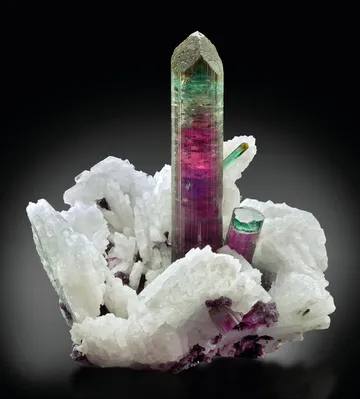
A collector's guide to Equador, Brazil: its geology, mining history and notable minerals, illustrated with the 51 specimens documented from this locality on EarthWonders.
Key facts
Equador, in the southernmost part of Rio Grande do Norte, is one of the small but consequential names in Brazilian pegmatite mineralogy. For collectors the locality is inseparable from the Alto do Giz pegmatite and its neighbors in the Borborema Pegmatite Province: Alto Santo, Alto do Jacu, Alto das Furnas, Mina do Santino, Mamões and other workings scattered through the caatinga hills near the Paraíba border. These are rare-element granitic pegmatites, classically worked for tantalum, beryllium, lithium minerals, feldspar and kaolin, and they sit in the Seridó belt, where quartzites and schists of the regional metamorphic sequence host a dense swarm of pegmatite bodies.
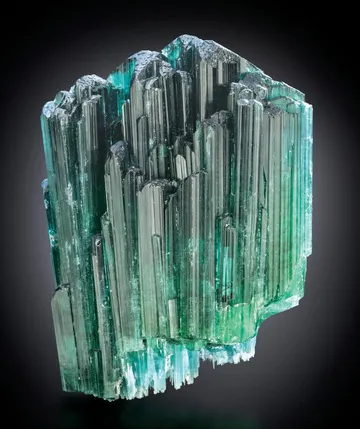
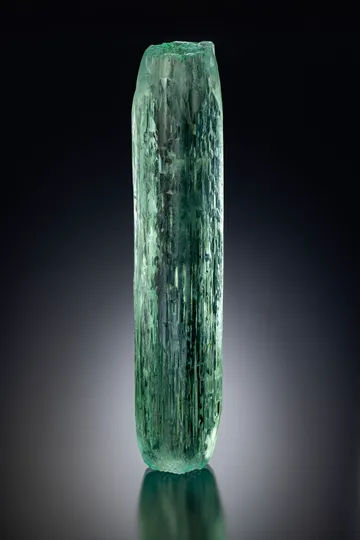
The finest Equador specimens have a very recognizable personality. Euclase occurs as lustrous, striated, generally colorless to milky crystals with internal blue, blue-green or aqua zones; the best “blue stripe” crystals are among the most distinctive non-Colombian euclases in collections. Tantalite-group minerals occur as dense, black to reddish-brown, sharply formed crystals, commonly with strong striation and twinning. Alto do Giz also has a scientific reputation out of all proportion to its size because its tantalate assemblage includes simpsonite, alumotantite, natrotantite, stibiotantalite, tapiolite-(Fe), microlite-group minerals and the historically important parabariomicrolite material now treated as hydrokenomicrolite-3R.
Regional View
Country View
Alto do Giz is not a broad industrial open pit in the modern sense but a weathered, highly altered pegmatite system historically exploited by small miners. That weathering is central to the way specimens came out: tantalum oxides were commonly recovered as loose crystals in kaolinized feldspar rather than as pristine in-situ pocket groups. The same alteration that frustrates paragenetic reconstruction also liberated exceptionally clean crystals and produced an unusually rich record of secondary and replacement tantalates.

Photo: Géry PARENT / Wikimedia Commons

Photo:
Search for specimens: View all specimens from Equador, Brazil
Equador lies in the Borborema Pegmatite Province of northeastern Brazil, a rare-element pegmatite province developed across Rio Grande do Norte and Paraíba. The district is part of the Seridó region, where the main country rocks include quartzites, mica-rich quartzites, metaconglomerates, schists, paragneisses and associated metamorphic units intruded by late Brasiliano granites and their pegmatites. The Equador Formation quartzites are especially important as hosts: Alto do Giz is described as a vertical pegmatite dyke in micaceous quartzite, exposed on a ridge roughly south of the road between Equador and Parelhas.
Alto do Giz is the classic collector locality within the municipality. Its internal structure has been described as zoned, with quartz, mica and kaolinized feldspar in the outer wall zone, coarser quartz-feldspar-mica intermediate zones and a quartz core. The economically and mineralogically important beryl and tantalum-oxide minerals are concentrated in the intermediate parts of the body, especially inward toward the quartz core. Later work using field reflectance spectroscopy recognized kaolinite, muscovite, sodium-rich white micas, lithium micas, cookeite and tourmaline, and used their distribution with quartz, spodumene, tantalite, euclase and garnet to refine the zonation of the pegmatite. A particularly important inner zone was recognized around quartz cores, where lithium-bearing minerals and alteration minerals mark evolved replacement domains.
The deposit is a highly fractionated LCT-style rare-element granitic pegmatite, but its mineralogy is richer than a simple “beryl-columbite” label implies. At Alto do Giz the assemblage includes albite, microcline, muscovite, quartz, kaolinite, beryl, aquamarine, heliodor, amblygonite, petalite, spodumene, lepidolite, cookeite, schorl, elbaite, cassiterite, euclase, brazilianite and a remarkable suite of Nb-Ta oxides. Among those oxides are columbite-(Mn), tantalite-(Mn), tapiolite-(Fe), simpsonite, alumotantite, natrotantite, stibiotantalite, microlite-group material and hydrokenomicrolite-3R, historically described as parabariomicrolite.
Mining at Equador has always had two intertwined faces: practical extraction and collector recovery. The region is recorded for tantalum, lithium, beryllium, gemstones, feldspar, mica and kaolin; local listings also record active or formerly active small workings for feldspar and kaolin in the municipality. Alto do Giz itself became internationally known in the 1940s through tantalum mining and the work of Frederick H. Pough, who documented its simpsonite-bearing paragenesis. Subsequent mineralogical work showed that the “black ore” of the district could hide several different phases, not merely ordinary columbite or tantalite.
Production and collecting have been episodic. Scientific descriptions emphasize sporadic work by garimpeiros rather than continuous large-company mining, and later specimen labels commonly trace pieces to old collections or small contemporary recoveries. The most important historical production episode is the 1943 recovery of more than 300 kg of simpsonite from Alto do Giz, a quantity that made the pegmatite a benchmark occurrence for that very rare tantalum mineral. Modern collector material is more often encountered as individual euclase crystals, small groups on quartz, manganotantalite/tantalite crystals, and old-stock tantalate rarities rather than as abundant fresh pocket production.
Access today should be treated as private-claim and mine access. These are not public collecting parks. The workings lie in rural terrain, many pits and kaolinized excavations are unstable, and the legally safe route is through landowner or claim-holder permission. For collectors, the practical “access” to Equador is usually the specimen market: older euclase and tantalum-oxide pieces surface from Brazilian dealers, old European and American collections, and occasional contemporary finds from the Equador-Parelhas area.
Equador euclase is chiefly prized from Alto do Giz and nearby Alto Santo/Santino-area pegmatites, where crystals are typically lustrous, striated, transparent to translucent and colorless, white, pale blue, blue-green or internally zoned with a vivid central blue stripe. Most collector crystals are thumbnail to small miniature size, commonly around 1–2 cm, though documented pieces reach several centimeters; matrix examples on quartz are scarcer and especially attractive when the euclase crystals sit cleanly on white or clear quartz rather than being loose single crystals. The classic old material is the sharply terminated, colorless crystal with an intense blue core or stripe, while more ordinary pieces are cloudy, broken, poorly terminated or only faintly colored. Associations documented from the district include quartz, albite, muscovite, schorl/tourmaline and the lithium-mineral assemblage of the evolved pegmatite zones, and the best specimens combine glassy luster, intact terminations, internal blue zoning and minimal bruising on the cleavable edges.
“Tantalite” from Equador generally refers to tantalite-(Mn), manganotantalite and closely related columbite-tantalite-series material from Alto do Giz, Alto do Jacu, Alto das Furnas and other pegmatites in the municipality. At Alto do Giz, tantalite is the dominant tantalum-oxide phase and occurs with an unusually complex suite that includes simpsonite, microlite-group minerals, hydrokenomicrolite-3R, alumotantite, natrotantite, tapiolite-(Fe), stibiotantalite and cassiterite. The desirable collector pieces are sharp, dense, well-terminated black to reddish-brown crystals with strong face striation, visible twinning and little edge abrasion; crystals of a few centimeters are exceptional, while smaller complete crystals from old kaolin workings are more typical. The best-known modern-style story for the species is the recovery near Alto do Giz of remarkable twinned black and red manganotantalite crystals from two pegmatites worked only sporadically by a few garimpeiros, a find that placed Equador among the serious localities for display-quality manganotantalite rather than merely ore-grade columbite-tantalite.
Beyond euclase and tantalite, Equador’s importance rests on its rarities. Alto do Giz is the first recorded locality for hydrokenomicrolite-3R material originally described as parabariomicrolite, a translucent white to pale-pink alteration and replacement product related to microlite. Simpsonite from Alto do Giz is historically famous: although the accepted type locality of simpsonite is Tabba Tabba in Western Australia, Brazilian material was once described under the name calogerasite before being recognized as simpsonite, and Alto do Giz remains one of the classic world occurrences. Alumotantite and natrotantite from the pegmatite have figured prominently in structural and chemical studies, while stibiotantalite, tapiolite-(Fe), cassiterite, brazilianite, bismoclite, bismuthinite, waylandite after bismuthinite from Alto das Furnas, aquamarine, heliodor, elbaite, bertrandite, beryllonite, petalite, spodumene, amblygonite and cookeite round out a district assemblage that rewards careful labels and careful analysis.
Equador specimens require label literacy. “Equador,” “Ecuador,” “Alto Equador,” “Alto do Giz,” “Alto Santo,” “Alto do Jacu” and “Alto das Furnas” appear on dealer labels, sometimes inconsistently; “Ecuador” on an older label may be a spelling error for the Brazilian municipality, not the country. For euclase, the classic Equador look is the colorless or whitish crystal with an internal blue stripe, but some specimens are simply pale blue, splotchy blue-green or nearly colorless. For tantalum oxides, the problem is species precision: older “manganotantalite” or “tantalite” labels may need analytical confirmation to separate tantalite-(Mn), columbite-(Mn), tapiolite-(Fe) and related phases.
I have not found a well-documented Equador-specific treatment industry for euclase or tantalite. The more realistic pitfalls are mislocality, outdated nomenclature and overconfident species names applied to black Nb-Ta oxides without analysis. Hydrokenomicrolite-3R may still appear as “parabariomicrolite,” and Brazilian simpsonite may be discussed in older literature under the discarded name calogerasite. “Microlite” labels from Alto do Giz should be treated cautiously, because part of the historical story of the locality is the alteration of microlite-group material into other tantalate phases.
Condition is critical. Euclase is named for its easy cleavage, and Equador crystals commonly show internal fracturing, frosted areas, bruised terminations or cleaved bases. A superb piece should be judged not only by color but by completeness, luster, edge integrity and how centered the blue zone is within the crystal. Tantalite and manganotantalite are much tougher in hand, but the sharp, lustrous ridges and terminations that make them desirable are vulnerable to edge wear after liberation from kaolin. Simpsonite and hydrokenomicrolite-3R are scientific rarities first and display minerals second; small size, contacts and alteration are normal, and provenance is often more important than aesthetics.
On the market, Equador euclase appears regularly but not abundantly, with modest fractured thumbnails at one end and high-priced old “blue stripe” crystals or matrix examples at the other. Equador tantalite and manganotantalite are scarcer as fine display crystals than euclase, especially when well terminated and correctly labelled. The true tantalate rarities—simpsonite, alumotantite, natrotantite, hydrokenomicrolite-3R and stibiotantalite—are collection-building species for specialists; when they appear, they are often old-stock pieces, micromounts or specimens whose value depends on documentation and analytical confidence.
The great Equador story begins not with glittering gem pockets but with heavy, obscure tantalum oxides pulled from a weathered pegmatite in the 1940s. Alto do Giz was already being mined for tantalum-bearing material when Frederick H. Pough studied it, and the deposit quickly proved stranger than ordinary “black ore.” In 1943, more than 300 kg of simpsonite were reportedly mined from Alto do Giz. For a mineral most collectors will never see as a good crystal, that number is startling: hundreds of kilograms of a rare aluminum tantalum oxide from one Brazilian pegmatite, enough to make Alto do Giz the reference locality in practical collecting terms even though the formal type locality of simpsonite lies in Western Australia.
The old simpsonite specimens carry another layer of collecting history. Some of the best-known crystals are said to have been brought out of Brazil by Fred Pough during the 1940s and then dispersed through American collections. One small, sharp, richly colored, doubly terminated crystal from Alto do Giz was later noted as having been sold in the late 1940s to Alex Mann of New York. That sort of provenance matters: with simpsonite, a 1–2 cm crystal from the 1940s Brazilian material is not just a specimen but a surviving fragment of the period when mineralogists were still untangling calogerasite, simpsonite and the tantalate paragenesis of the Borborema pegmatites.
The mineralogical detective story continued decades later. A translucent white mineral associated with abundant microlite from Alto do Giz had been seen by Pough and called “altered microlite,” but it was not chemically and structurally solved at that time. In the 1980s, detailed work by T. Scott Ercit, Frank C. Hawthorne and Petr Černý showed that the material represented a distinct pyrochlore-related phase, described as parabariomicrolite. Later reclassification folded that name into hydrokenomicrolite-3R, but the locality significance remained: Alto do Giz became the defining occurrence for that 3R polytype.
Equador’s euclase story is quieter but no less memorable to collectors. The best old Alto do Giz crystals have an almost improbable construction: a pale, glassy, striated crystal that seems ordinary until the light crosses a saturated blue core running through the interior. Dealer and museum descriptions repeatedly circle back to that same visual fact—the “blue stripe.” Fine examples are not simply blue euclase; they are clear enough that the color sits inside the crystal like a narrow ribbon. That internal zoning, combined with the brittleness of euclase, explains why an undamaged Equador thumbnail can be far more desirable than a larger but bruised or cloudy crystal.
The 2002 manganotantalite paper by Robinson, Jaszczak, Wegner and Mills added a final modern collector episode: remarkable twinned crystals, both black and red, had been recovered from two recently discovered pegmatites near Alto do Giz. The abstract notes the almost paradoxical setting—excellent crystals from workings operated only sporadically by a few garimpeiros, with relatively little tantalum being produced. That is Equador in miniature: not a vast modern mine flooding the market, but a cluster of weathered pegmatites where small-scale work occasionally exposes specimens that become references for an entire species.

-41358.jpg)