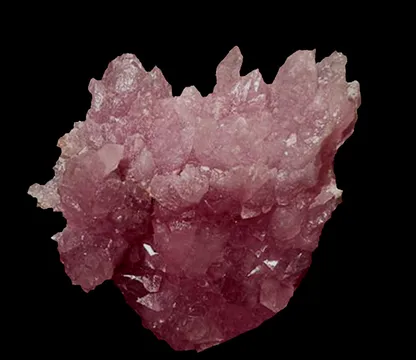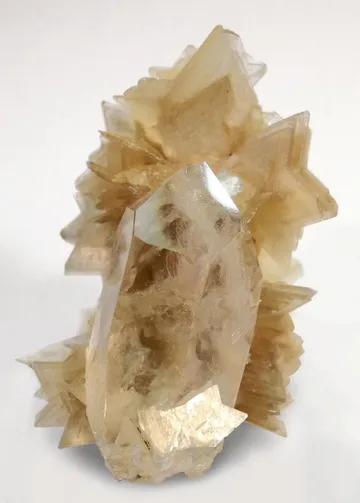
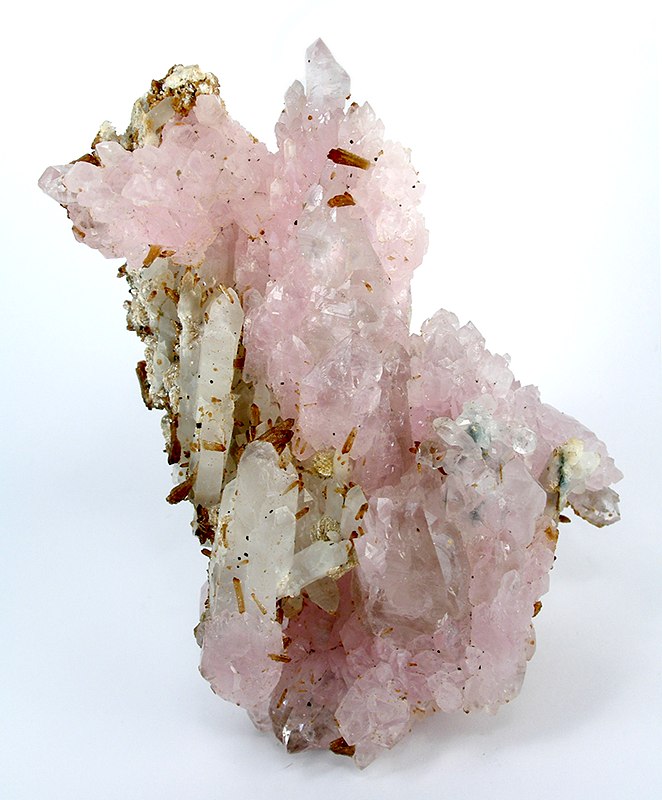
ブラジルの Ilha Claim 産エオスフォライト: ピンクのローズクォーツ上の金褐色の結晶板;珍しいリン酸塩の関連とジエキティーニョニャ州のペグマタイト美の典型例。
Key facts
Ilha Claim 産のエオスフォリト石は、ジェキティーニョーニャ州の谷間ペグマタイトの古典的な視覚的特徴の一つです。暖かい金褐色からオレンジ褐色のブレードや噴霧状の結晶が、結晶化したローズクォーツの上に散らばっています。その魅力はエオスフォリト石そのものだけでなく、色の対比の取り方にもあります。琥珀色のリン酸塩と柔らかなピンクのクォーツ、時には小さなオリーブグリーンのザナジー石球、白雲母、ウォード石、他のリン酸塩の伴生物が組み合わさっています。上質な例は、古いブラジル産ペグマタイト素材ならではの、繊細で光沢があり、二次リン酸塩としては非常に建築的な外観を持っています。
当地は Lavra da Ilha とも呼ばれ、ジェキティーニョーネ河の小島にある帯状花崗岩ペグマタイトで、イティンガ市のタクアラル近郊に位置します。エオスフォリト石の標本地ではありませんが、ザナジー石、白雲石-(CaFeMg)、白雲石-(MnFeMg) など、いくつかの重要な希少リン酸塩の標本地でもあります。その科学的意義が、 Ilha の標本がなおリン酸塩コレクターに重視される理由の一部です。美しいローズクォーツを生んだ同じポケット環境が、複雑な後期段階のリン酸塩の共生現象を書き留めているのです。

コレクターは通常 Ilha のエオスフォリト石において次の3点を重視します。鋭く、損傷のない茶色のブレード;大量のクォーツではなく実際の結晶化を示す強いローズクォーツの基体;そして説得力のある古い産地起源。最も望ましい作品は完全なミニチュアや小さなキャビネットで、エオスフォリト石が単なるアクセサリーではなく、可視的で美的な結晶の噴霧または field であるものです。ザナジー石の共生は鉱物学的な重要性を高め、一方でウォード石、白雲石、他のリン酸塩は系統的コレクターに深みを加えます。
Search for specimens: View all eosphorite specimens from Ilha Claim, Brazil
Ilha Claim, Lavra da Ilha, lies about 3 km north of Taquaral on an island in the Jequitinhonha River. Mindat records the coordinates as 16° 38' 42'' South, 41° 51' 49'' West, and lists the locality as an inactive claim. The setting is a zoned granite pegmatite, partly covered by alluvium, trending roughly N 40° E, subvertical, and reportedly about 300 meters long where exposed or inferred from outcrops. The pegmatite is enclosed in quartzose mica schists.
The deposit was discovered in 1969. Published locality notes describe the island as about 500 meters long, with the pegmatite worked by an excavation roughly 70 × 10 meters and more than 15 meters deep. The mine was repeatedly affected by the annual rise of the Jequitinhonha River, which filled the workings with sand; small production continued for a time during low-water periods after the sand was cleared. This hydrologic setting is not a footnote—it is central to why the locality has an almost legendary character among collectors. It was a pegmatite pit on an island, in a river, fighting the river every season.
The pegmatite is described as having a quartz core surrounded by feldspathic zones with albitic replacement bodies and geode-rich areas. The rose quartz belongs to a late stage of pegmatite development, and the phosphate suite is tied to the alteration and weathering of primary phosphate minerals such as triphylite. The resulting assemblage is unusually rich: eosphorite, zanazziite, wardite, whiteite, rockbridgeite, montgomeryite, apatite, vivianite, collinsite, montebrasite or amblygonite-series material, and other species occur with quartz, rose quartz, albite, muscovite, microcline, pyrite, sphalerite, cassiterite, niobium-tantalum oxides, and beryl.
Production appears to have been most important in the 1970s, with classic rose-quartz and phosphate specimens entering collections through Brazilian channels and through early U.S. dealers. Richard “Rich” Kosnar is repeatedly associated with early American importation of Ilha material; several documented specimens in the market were acquired by him in Brazil in 1973 or 1974 and remained in his personal collection for decades. By the 2000s and 2020s, most quality Ilha eosphorite specimens appearing for sale were old-collection pieces rather than products of regular active mining.
Collecting access should be treated as closed or highly restricted. The claim is inactive, historically water-affected, and located in a river setting where seasonal flooding and sediment fill are part of the mine’s history. Any modern field collecting would require local permission, safe seasonal conditions, and careful confirmation of current land and mining status.特筆すべき発見は、地名を有名にした結晶化したローズクォーツのクラスターであり、特に初期の石英周囲のクラスト、クラウン、双晶ローズクォーツ個体です。エオスフォライトはこれらの標本で非常に長く現れ、特にザナジーサイトあるいはワーデイトと共に出現する場合、それはイルハの起源を示す視覚的手掛かりの一つとなることが多いです。地質学的にも、ザナジーサイトの標本地として、また白石鉱物種である whiteite-(CaFeMg) および whiteite-(MnFeMg) の型標本地としても重要です。## Ilha Claim(ブラジル)産エオスフォライトの特徴
Ilha産エオスフォライトは、光沢があり、半透明で、金褐色からオレンジ褐色の結晶がピンクの結晶化した石英の上に載る姿で最も知られています。結晶は一般に細長い刃状、柱状、剣状で、時にはスプレー状、放射状群、束状、あるいは石英表面全体に点在する個々の刃として形成されます。優れた標本は鋭い終端と強い光で琥珀色に輝く程度の半透明性を示すことがあります。
標本レベルの結晶は通常小さく、多くは数ミリメートル程度ですが、良好な標本では結晶が約1センチに近づくものもあります。問屋や博物館写真の記録は、エオスフォライトがバラ石英、石英、斜長石、雲母に対して単独の刃として、またクラスター状のスプレーとして現れることを示しています。より大きな集合体や束状の塊はミナスジェライス産の物で記述されていますが、クラシックな Ilha の美学は、ピンクの石英を引き立てる小さく鋭い茶色のリン酸塩であるという点を保っています。
エオスフォライトの化学式は Mn2+Al(PO4)(OH)2·H2O です。 Ilha では後期の流体と初期リン酸塩鉱物の変質によって複雑な二次相が生じるリン酸塩富を持つペグマタイト環境に属します。子石 (Childrenite) はエオスフォライト結晶群の微視的領域としてのみ報告されており、これは重要です。見た目が似ている茶色のリン酸塩結晶は、厳密な種名が問題となる場合には分析が必要な場合があります。
最も特徴的な共生相はローズクォーツです。 Ilha のローズクォーツはほぼパープルピンクから淡いピンク-白までの範囲を取り、透明、半透明、または不透明である場合があります。個々のローズクォーツ結晶は数ミリメートルから約2センチメートル程度まで、1つまたは2つの終端を持つことがあります。クラスターは石英上の不規則な外皮として、縞状または平行な集合体として、あるいは大きな石英の周囲に二重終端の結晶の冠として現れることがあります。このローズクォーツはエオスフォライトが演じる舞台です。
ザナツィサイト(zanazziite)はもう一つの重要な伴生鉱物です。ローズクォーツと石英上に小さな緑色の球状または結晶として現れ、通常は茶色のエオスフォライトを伴います。 Wardite、白石石-CaFeMg、白石- MnFeMg、アパタイト、モンテブラスサイトまたはアンブリゴナイト系鉱物、ロックブリッジサイト、モンゴメリーサイト、ビビアナイト、コリンスサイト、斜長石、雲母、黄鉄鉱、石英は広い locality 一連の一部です。収集家にとって、エオスフォライトとローズクォーツとザナツィサイトを組み合わせた標本は、 aesthetics と locality における鉱物学的価値の両方を備えています。
品質はコントラスト、配置、耐久性で判断します。最良の標本は明るいピンクのローズクォーツ、光沢があり損傷のないエオスフォライト、内包せずに独立して立つ結晶を備えています。展示面の開いたスプレーは特に好まれます。鮮やかなローズクォーツ上の小さく鋭いエオスフォライトスプレーは、大きくてくすんだ先端のあるリン酸塩の crust よりも重要である場合があります。産地の来歴は強く重要です。Rich Kosnar、Kay Robertson、Paul Muse、Martin Zinn、Alvaro Lucio、または他の著名なコレクションの古いラベルは信頼性と歴史的価値を加えます。## Collector Notes
Ilha eosphorite is not commonly faked as a mineral species, and no well-documented treatment specific to eosphorite from this locality has become part of the standard collector literature. The bigger authenticity issue is locality and association. Many brown eosphorites from Brazilian pegmatites can look broadly similar, so an Ilha attribution is strongest when supported by the classic rose quartz association, zanazziite or wardite, old labels, or a documented chain of custody.
A special caution concerns “roscherite” labels. Roscherite-style green minerals on Ilha specimens have long caused confusion. Zanazziite was originally connected with material that had been referred to as roscherite, and later work established zanazziite as a distinct species from Lavra da Ilha. Some dealer labels still use or repeat roscherite for green material on Ilha rose quartz, but that identification should not be accepted without analysis. In many classic Ilha pieces, the green spheres are better regarded as zanazziite unless proven otherwise.
Condition problems are common. Eosphorite crystals are small, elevated, and brittle-looking; tips chip easily, sprays flatten, and exposed blades break along pocket edges. Rose quartz matrices can show contacted backs, broken peripheries, iron or manganese oxide dusting, pyrite specks, or thin coatings of hyalite opal or quartz. Some old specimens were trimmed aggressively to emphasize the rose quartz, and there are documented comments that miners sometimes removed eosphorite from rose quartz because they thought the brown phosphate detracted from the specimen. For today’s collector, intact eosphorite on rose quartz is part of the point, not a flaw.
Rarity is relative. Small Ilha eosphorite specimens exist in many collections, and the locality is well represented in photos. But fine, undamaged, aesthetic examples with strong rose quartz, sharp eosphorite, and zanazziite are not abundant on the current market. Most good pieces seen today are recycled old collection specimens from 1960s–1970s production or later dispersals. Recent market appearances range from modest thumbnails and small phosphate combinations to four-figure rose-quartz display pieces where eosphorite is a desirable accessory.
When buying, favor specimens with precise locality wording: Ilha claim, Lavra da Ilha, Taquaral, Itinga, Jequitinhonha Valley, Minas Gerais, Brazil. Be cautious with vague labels reading only “Minas Gerais” or “Taquaral,” since the region hosts multiple pegmatites with phosphate minerals and rose quartz. If a specimen is sold as eosphorite with zanazziite, whiteite, wardite, or roscherite-group minerals, analysis or credible old provenance becomes more important.## Stories & Field Notes
Ilha Claimは山腹の普通のペグマタイトの穴ではなかった。Jequitinhonha川の島にある作業用の採掘坑で、川に対して低く露出しており、季節的な水が採掘サイクルの一部だった。局所性の記述には、長さ約500メートルの島と、長さ約70メートル、幅約10メートル、深さ15メートルを超える掘削を記録している。川の年ごとの増水ごとに坑は砂で満たされた。水位が下がって再度砂をすくい取れるようになるまで作業は再開されなかった。
現地の field account の一つは、この場所の奇妙さを要約以上に的確に捉えている。坑は川の水位より約5メートル低く掘られており、底から島の両側の川へ石を投げることができた。ポンプは絶えず動かなければならなかった。水を十分に後退させて作業床を露出させると、岩の割れ目から小さな水の噴流が噴き出し、時には1フィートほどの高さになることもあった。その光景――茶色のリン酸塩とピンクの石英が、下から川を漏らしているかのような坑から出てくる――が、Lavra da Ilha の本質的な物語である。
この局のコレクターとしての名声は、分類学に先立つ美しさから始まった。最初に注目されたのはローズクォーツだった。実際のクラスター、クラウン、クラスト、および小さな二重終端グループを含むピンクの結晶が、大きなローズクォーツではなく見られた。次に、いくつかの標本に見られた「小さな緑の物体」も興味深いものとなった。ローズクォーツに付随するエオスフォリットとともに見られる緑の球体と結晶が、ザナジサイトの記載へと導いた。小さな川島ペグマタイトが、長らく目立つクォーツに張り付いていたものを画して、コレクターと鉱物学者が近づくことで型標本地として取り扱われることとなった。
Rich Kosnarの名は、古い Ilha 材料の米国市場での流通歴に通じている。彼のコレクションから文書化された標本は、 Ilha の古典的生産がまだ新鮮だった時期の1973年および1974年にブラジルで取得された。その後のオークションの説明では、彼が局地からの鉱物を輸入した最初の米国ディーラーとして紹介され、彼の死去までいくつかの作品が彼の個人コレクションに留まっていたと述べられている。今日のコレクターにとって、古い Kosnar Ilha のラベルは、ロマンスを加える以上の意味を持ち、この標本を局地の国際的な採集史の初期に位置づけている。## ミネラロジー記録と出版物
“Quartz (variety rose quartz) with Eosphorite from Ilha claim, Taquaral, Brazil” — Fabre Minerals — ローテーション動画。Paul Museコレクション標本(11 × 8.8 × 3.2 cm)で、強いローズクォーツと小さな透明茶色のエオスフォライト結晶。
“BFH1699 Quartz with Eosphorite Ilha claim, Brazil” — Crystal Classics — Ilha Claimからのクォーツとエオスフォライトを示すディーラー標本動画。## さらなる読書と外部リンク
Mindat の産地ページ: Ilha claim, Taquaral, Itinga, Minas Gerais, Brazil — 中心となる産地データベースのエントリで、座標、鉱物リスト、産地ノート、参考文献を含む。
Mindat の産出ページ: Ilha claim からのエオスフォライト — エオスフォライトの特化した産出記録で、関連鉱物と写真統計を含む。
Wikimedia Commons: Ilha Claim の鉱物 — 大規模な公開画像カテゴリで、エオスフォライト、ローズクォーツ、ザナッツィサイト、及び Ilha 系標本を示す。
Wikimedia Commons: Lavra da Ilha 露頭花崗岩型鉱物 — Lavra da Ilha 標本の追加公開メディアカテゴリ。
Mindat の「Best Amblygonite」記事セクションで Lavra da Ilha に言及 — 島の坑道の記憶に残る野外説明、汲み上げ、作業内の水噴射についての記述を含む。
RRUFF が hostingする PDF: “Zanazziite, a new mineral from Minas Gerais, Brazil” — Ilha の主要な希少リン酸塩鉱物の一つ、ザナツィサイトを説明する Mineralogical Record 論文への直接アクセス。
Roscherite-Group Minerals from Brazil — ザナッツィサイト/ロスチェライト族の混同と Lavra da Ilha のリン酸塩文脈を理解するのに役立つ。
Le Comptoir Géologique: Eosphorite encyclopedia — 一般的なエオスフォライトの参照と、Lavra da Ilha の材料の特記、種の偽品リストなし。