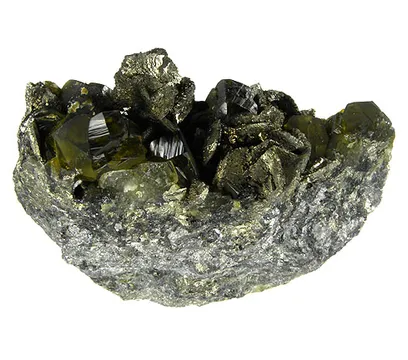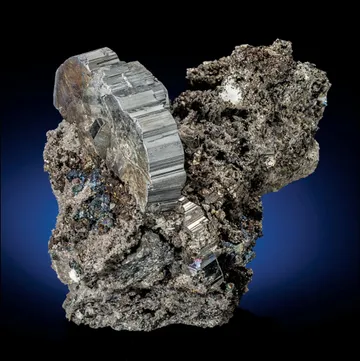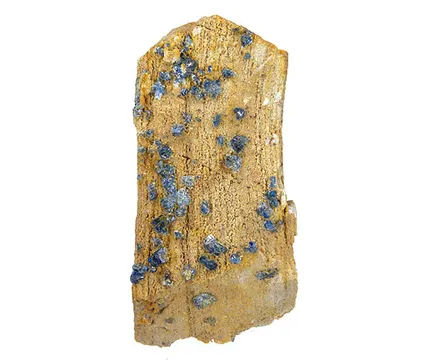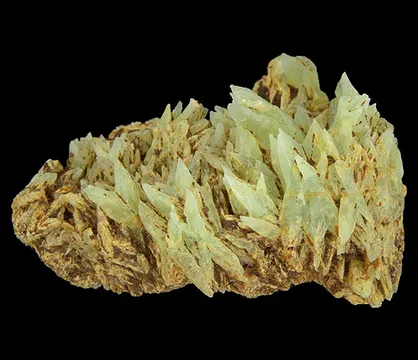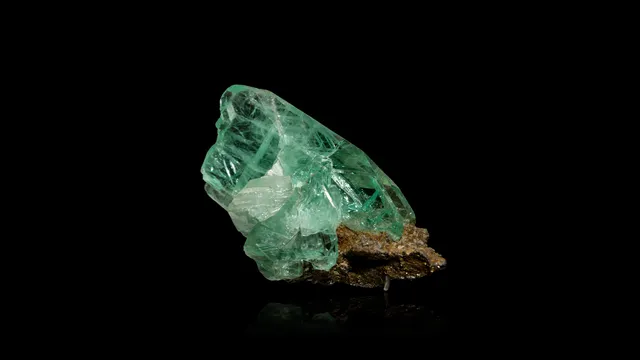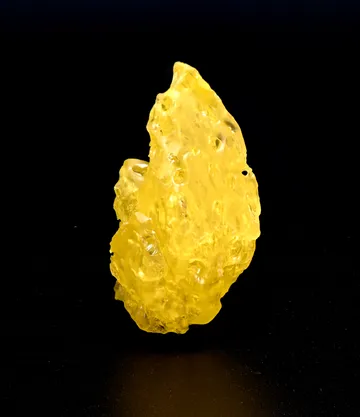
El Desierto mine, Bolivia: remote sulfur locality known for sharp canary-yellow native sulfur crystals on sulfate rock, highly sought by serious collectors.
Key facts
El Desierto is the modern collector’s sulfur locality of the high Bolivian Andes: a remote fumarolic sulfur deposit on the Chilean-border side of Potosí, near San Pablo de Napa and the Salar de Empexa, where volcanic gases and acid-sulfate alteration converted pale volcanic ash and tuff into a pale, sulfate-rich matrix carrying brilliant native sulfur. The deposit belongs to the Cerro Cayte sulfur field in the Cordillera Occidental, a volcanic chain where many sulfur occurrences are massive or earthy, but only a small number have produced the sharp, freestanding crystals that serious collectors recognize instantly.
Regional View
Country View
The best El Desierto specimens are not merely “yellow sulfur.” They are sculptural, glassy to resinous, canary-yellow crystals, often hoppered, skeletal, elongated, or intricately stepped, perched on white acid-sulfate rock or, more rarely, on contrasting dark manganese-oxide-stained matrix. In hand, a fine piece has the look of something grown too quickly for its own symmetry: faces gleam, edges are sharp, and negative-growth hollows give many crystals a jagged, architectural character quite unlike the classic Sicilian sulfur-on-aragonite or calcite.
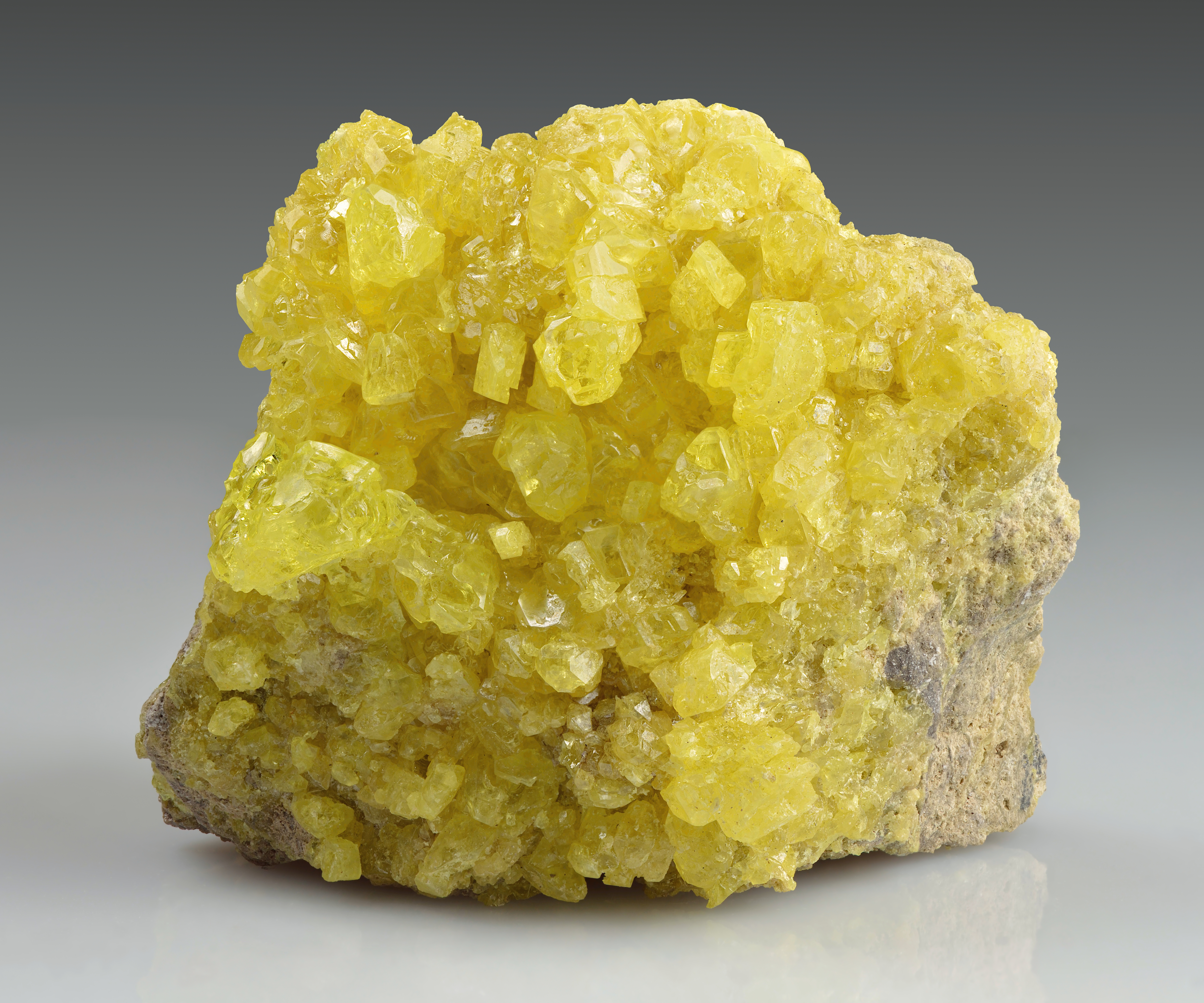
Photo: Ivar Leidus, Wikimedia Commons
For the specimen trade, El Desierto’s significance rests on a remarkable late-20th-century and early-2000s influx of crystals from a locality that was already a working sulfur operation. Rock Currier’s involvement in organizing specimen recovery helped move tons of crystallized sulfur from one of the most inhospitable mining districts in South America into collections worldwide. That supply did not make the best pieces common; it made the locality visible. Top examples with large, undamaged skeletal crystals, vivid color, translucency, and clean presentation remain highly sought after.

Photo: Rob Lavinsky, iRocks.com, Wikimedia Commons
Search for specimens: View all specimens from El Desierto mine, Bolivia
El Desierto is a sulfur mine in the San Pablo de Napa area of Daniel Campos Province, Potosí Department, southwestern Bolivia. It lies in the Western Volcanic Zone of the Andes, near the Bolivian-Chilean border and the southern end of the Salar de Empexa. The mine is commonly grouped with nearby sulfur workings such as Concepción, but it is a distinct locality in collector usage and should not be merged casually with the San Pablo de Napa sulfur mines.
The deposit is best understood as a fumarolic sulfur system developed in altered volcanic material on the lower northern flank of the Cerro Cayte volcanic complex. Published descriptions place the mineralization in a Pliocene volcanic ash bed roughly half a meter to one meter thick, dipping gently northward. Across the mine area, sulfur-bearing ground extends over a broad elongated zone rather than a single vein: sulfur occurs disseminated through altered ash and tuff, as impregnations, as massive ore, and, most importantly for collectors, in open fractures and vugs lined with native sulfur.
The collector specimens came from quarry faces and fracture systems exposed by open-cast sulfur mining. In the best specimen-producing zones, miners followed fissures in the quarry wall; the fissures opened into crystal-lined cavities repeatedly, sometimes every few feet. These pockets are why El Desierto specimens vary so much in character. One cavity may yield small bright crystals carpeting white sulfate matrix; another may give larger freestanding skeletal crystals; another may show sulfur on dark manganese-oxide-stained rock; and still another may show sulfur sprinkled over delicate alum growths.
The ore was unusually rich in the first half of the 20th century. Historical accounts describe early El Desierto sulfur ore as among Bolivia’s richest, with high-grade material averaging around 80% sulfur, and production by 1941 reaching several hundred tons per month for export to Argentina and Brazil, largely for sulfuric acid manufacture. Later ore grades were lower, and production became more limited, with sulfur going in part to domestic industrial use, including the sugar industry. The mine and neighboring Concepción workings were described in the early 2000s as belonging to Empresa Minera Clavijo, commonly abbreviated EMICLA.
The district is mineralogically inseparable from its acid-sulfate environment. Weak fumarolic activity has been observed in fissures in the quarries, and the surrounding Salar de Empexa geothermal area includes hot springs, acidic sulfate waters, and related hydrothermal alteration. In such an environment, sulfur is not simply an ore mineral but part of an active or recently active solfataric system. Hydrogen sulfide and sulfur dioxide reacting at low temperature can precipitate elemental sulfur, while acidic fluids attack volcanic rock to produce the white sulfate-clay-opal matrix so familiar on El Desierto specimens.
Specimen production is one of the mine’s great stories. During a 1999 specimen-mining project associated with Rock Currier’s wholesale mineral business, miners were reportedly working fractures specifically for collectible sulfur, boxing tons of specimens while trying to preserve fragile pocket material from an abrasive, acid-dust quarry. The work was not casual surface collecting: it involved tunneling along fissures, controlled blasting, and careful wrapping of delicate crystals in a place where water, fuel, and even clean storage materials were serious logistical concerns.
Collecting access today should be treated as private, remote, and uncertain. El Desierto is not a public collecting site. Published locality databases warn collectors not to visit without permission from land and mineral-rights holders, and later dealer field comments have described the mine as shut down or not worked for stretches of time. Even if access is obtained, the hazards are exceptional: altitude, isolation, acid sulfate dust, unstable quarry faces, possible fumarolic gases, burning sulfur, and scarcity of water and fuel.
Sulfur from El Desierto is prized for brilliant canary-yellow to lemon-yellow crystals, most often on a white, altered volcanic sulfate matrix and less commonly on dark manganese-oxide-coated matrix; habits range from equant and pyramidal through elongated, acicular, hoppered, skeletal, stepped, and etched-looking single crystals. Average crystals in the classic pocket material are around 1 cm, but major freestanding crystals of several centimeters are known, with exceptional examples reported to about 8–10 cm. The best pieces show sharp terminations, high luster, translucency to gemminess, complete three-dimensional form, and minimal bruising along the soft crystal edges. Ordinary pieces tend to be duller, more massive, crusty, or composed of small crystals scattered on friable matrix; top examples have the unmistakable El Desierto look of fast-grown, skeletal yellow sulfur that is cleaner and brighter than most older European sulfur specimens.
Other documented minerals from El Desierto are mostly acid-sulfate and silica phases formed in the same fumarolic and altered-tuff environment: alum-(K), anhydrite, gypsum, jarosite, melanterite, coquimbite, opal including opal-AN or hyalite-like material, quartz and chalcedony, rosickýite, and reported or visually identified chalcanthite, chrysocolla, covellite, and possible römerite. Petrov also discussed minor kalinite, mirabilite, alunogen, pickeringite, and unidentified blue to orange sulfates that may include species such as voltaite or metavoltine, but collectors should distinguish analyzed records from visual or tentative field identifications. El Desierto is not known for an IMA type-locality mineral; its mineralogical importance is instead the combination of world-class sulfur crystals and an unusually instructive high-Andean fumarolic sulfate assemblage.
El Desierto sulfur is abundant enough that fine small examples still appear regularly, but the finest large skeletal crystals, clean miniatures, and cabinet pieces with strong matrix presentation are not common. The market tends to reward vivid color, high luster, translucency, complete form, lack of bruising, and a displayable orientation. Detached crystals can be spectacular, but matrix pieces with sharp crystals rising cleanly from white or dark ground often carry stronger locality character.
Condition is the central issue. Sulfur is soft, brittle, and heat-sensitive, and El Desierto’s best skeletal crystals have thin edges, stepped faces, and fragile terminations. Look carefully for rubbed tips, crushed high points, repaired single crystals, and crystals broken off the matrix and reattached. Many crystals naturally show hoppered or etched-looking growth, so damage must be judged with magnification and by comparing the luster of suspect surfaces against the natural faces.
The matrix can be chemically troublesome. Published preparation notes describe soaking specimens in ammonium-hydroxide-treated water to neutralize acidic matrix material and adding sodium bifluoride to complex iron, because untreated sulfate-rich matrix could attack paper or cardboard and gradually stain brown. That history matters to collectors: a prepared El Desierto specimen is not necessarily “treated” in the deceptive sense, but acidic friable matrix, old wrapping stains, powdering, iron browning, and box corrosion are all worth checking. Store pieces dry, away from reactive metals and delicate labels, and inspect periodically.
Mislabelling is more common than outright faking. El Desierto pieces are sometimes confused with generic “Bolivian sulfur,” San Pablo de Napa material, or even European sulfur when old labels are vague. Conversely, some specimens sold as European sulfur, especially vague “Spain” or “Sicily” material, may be Bolivian if they show the correct skeletal yellow habit on altered volcanic matrix. Synthetic sulfur exists in the marketplace, and artificial “Sicilian” sulfur has been documented generally, so be wary of unnaturally perfect crystals, incorrect matrix, suspiciously glassy surfaces, or pieces lacking credible provenance. Genuine El Desierto crystals normally have a distinct volcanic-sulfate matrix association and a growth style that is vivid but not plasticky.
Handling should be conservative. Keep specimens out of heat and direct sunlight, never wash casually, and avoid enclosed hot display cases. Sulfur melts at a low temperature, burns readily, and combustion produces sulfur dioxide, so never flame-test a collectible specimen. The safest display strategy is a stable acrylic base or padded mount, low light to moderate light, dry air, and minimal handling.
In July 1999, Alfredo Petrov set out for El Desierto because Rock Currier wanted an entire sea container of crystallized sulfur for his wholesale business in California. The target was not a few flats of pretty yellow crystals but eight tons of specimen material from a mine far beyond the normal collecting circuit. Petrov loaded a battered four-wheel-drive vehicle with sleeping bags, blankets, food, water, gasoline, and a Bolivian companion skilled at keeping vehicles alive where ordinary mechanical assumptions failed.
The first night’s stop was Sevaruyo, a windblown Altiplano settlement that Petrov compared to a post-apocalyptic trading post. The lodging cost $1.50 per bed in a communal room, with candlelight, no toilet, and little comfort. In the early morning, smugglers stumbled into the room after a freezing drive from Chile. This was not the difficult part of the trip; it was only the approach.
The next day the route crossed high volcanic country so empty that the landscape seemed increasingly Martian. Human encounters were reduced to a handful of quinoa farmers, smugglers, and a single truck carrying yareta, the resinous cushion plant once used as fuel in the sulfur industry. Night temperatures in winter could fall to -20°C, and even vehicle maintenance became local improvisation: Petrov’s companion knew to cover the engine with blankets at night and, when brake fluid ran out, how to keep the brakes functioning by a method no manufacturer would recommend.
Then came the Salar de Uyuni. At roughly three million acres, the salt flat served as the finest natural road in Bolivia, a level white surface where a vehicle could run fast for 50 or 60 miles. But leaving the salar was the danger. The shoreline dissolved into mud, wet salt, and brine-filled cavities; only a few exits were usable. With daylight failing, Petrov’s party searched for the track markers that would get them off the salt before the surface betrayed them. Local stories told of vehicles sinking into brine caves and becoming “human pickles,” a phrase too grotesque and too perfect to forget.
By night they reached a Bolivian military post at the Chilean border. The population was tiny: a few soldiers, a few sulfur miners, five children, and one young schoolmistress. They had been without water and fuel for four days. Some miners and the teacher had not been paid for months. In the evening, miners sat by candlelight drinking cane alcohol from plastic cups after first setting it on fire, believing the flames removed the impurities that caused hangovers. The mine owner and sergeant possessed the settlement’s great luxury: a 12-volt videocassette player and a stash of adult videotapes.
At the mine, the specimen project was already in full motion. Miners were following fractures in the quarry wall because those fractures repeatedly opened into sulfur-lined cavities. They had learned how to dynamite near delicate vugs and still save specimens intact, an astonishing skill given the softness of sulfur and the friability of the matrix. By the time Petrov arrived, five tons of specimens were boxed or waiting for wrapping material.
The price of those crystals was visible on the miners’ bodies. They were being paid far better than typical Bolivian miners, but the acid sulfate dust burned their eyes red and ruined clothes and shoes. No one had bathed in six weeks. One miner had brought his wife and two small children to the work site; the whole family arrived with lice, and after two days in the acid environment the lice were dying. The story is darkly comic, but it also explains why El Desierto specimens, however plentiful they may look in show flats, were not easy minerals.
Petrov’s second night at the mine was worse. A howling wind lifted the tin roof of the shack where he slept and slammed it down hard enough to break bits of adobe from the wall. The debris rained onto his head. By then his hair was caked with dust, his clothes smelled of sulfur, and he was ready to leave. The schoolmistress, desperate to escape but without transport and unwilling to walk 60 miles across the salt, begged for a ride. Petrov refused, partly because the vehicle was full and partly because he did not want to leave the children without a teacher.
The specimens did not simply pass from quarry to mineral show. After the mining came packing, transport across remote tracks, border logistics, Chilean port arrangements, and bureaucracy before the sulfur could move through Arica and onward to the United States. The crystals now sitting quietly in drawers and acrylic boxes carry that whole journey in their labels: high-altitude quarry, acid dust, salt-flat crossing, border post, and the improbable commercial ambition of shipping tons of fragile yellow crystals from the end of the Altiplano to the collector world.