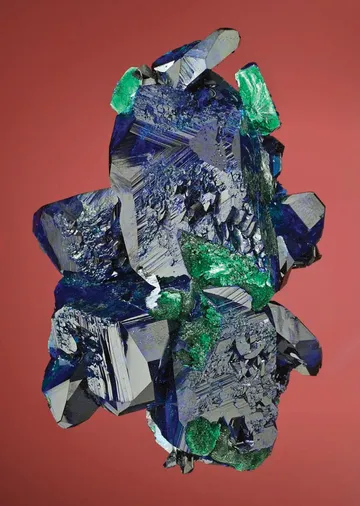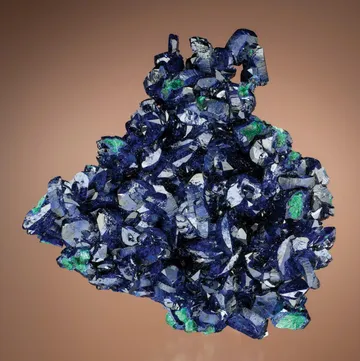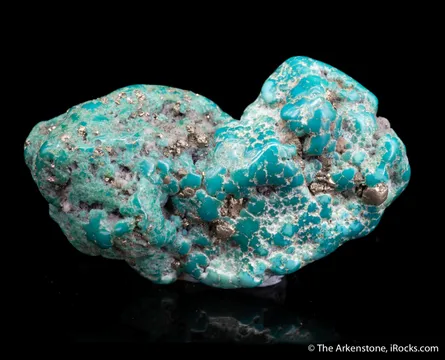
El Cobre mine, Mexico, renowned for blue azurite crystals and malachite replacements in a complex skarn system, yielding pockets prized by collectors.
Key facts
El Cobre is the old collector’s name attached to the celebrated Aranzazú copper mine at Concepción del Oro, Zacatecas, a high, semi-arid skarn and replacement-mineral district on the northern edge of the Sierra Madre Oriental. For specimen people, the name matters less as a modern mine label than as a visual signature: bright, electric-blue azurite in small sharp crystals; deep green malachite replacing azurite in chunky, chisel-tipped forms; quartz druses stained by iron oxides; calcite generations ranging from large scalenohedra to sparkling translucent plates; and, less commonly, handsome chalcopyrite, tetrahedrite-tennantite, olivenite, spangolite, plancheite, chrysocolla, tenorite and other oxidized-copper accessories.
Geologically, the mine belongs to the Concepción del Oro skarn system. Eocene granodioritic to quartz-monzonitic intrusions cut Jurassic and Cretaceous carbonate and clastic strata, converting limestones to marble and skarn and siltstones to hornfels. The ore bodies are not simple veins but a structurally guided suite of mantos, chimneys, stockworks, tabular bodies and skarn-replacement masses. That complexity is exactly what produced collectible pockets: sulfide-rich copper ore at depth, iron-stained gossan and oxidized copper carbonates near surface, and late quartz-calcite cavities where blue and green copper minerals could crystallize with pleasing contrast.
Regional View
Country View
The finest classic specimens have an old-Mexico look: miniature to cabinet pieces on brown gossan or white-to-iron-stained quartz, with azurite crystals that are usually small but intensely colored, and malachite pseudomorphs after azurite that may preserve robust blades and chisel ends. Top pieces are not merely “green copper ore.” They have recognizable former azurite morphology, undulant sparkle from quartz or calcite, and a sculptural matrix that lifts the color rather than smothering it. The best examples were saved decades ago, especially from the mid-20th-century specimen stream, and now tend to reappear through old collections rather than fresh collecting.

Photo: Rob Lavinsky, iRocks.com, via Wikimedia Commons
This is also a locality where labels deserve care. Modern mining and technical literature generally treats the operation as Aranzazú, while old collector labels often read El Cobre, Cobre mine, or El Cobre mine, Concepción del Oro. Those labels are part of the history of the material, but for precise locality work the name should be tied to Aranzazú Mine, Concepción del Oro Municipality, Zacatecas, Mexico.

Search for specimens: View all specimens from El Cobre mine, Mexico
El Cobre, in the collector sense used for fine mineral specimens, corresponds to the Aranzazú mine area at Concepción del Oro, Zacatecas, close to the Coahuila border. Mindat records the locality as Aranzazú Mine, with Cobre Mine, El Cobre and Arroyos Azules mine among its names, at 24° 37' 6" N, 101° 27' 17" W. The mine sits just west of the town of Concepción del Oro in rugged, semi-arid country, historically reached by the road system linking Zacatecas, Saltillo and Mazapil.
The deposit is a copper-gold-silver skarn system, with associated zinc-lead-silver carbonate-replacement mineralization in the wider district. The controlling geology is a suite of late Eocene intrusive rocks, ranging from granodiorite to high-potassium quartz monzonite, emplaced into Jurassic and Cretaceous limestones and siltstones. Contact metamorphism produced marble, hornfels and skarn; subsequent hydrothermal alteration overprinted these rocks with propylitic, phyllic and potassic assemblages. In collector terms, this means the showy oxidized copper minerals formed above and within a much deeper, larger ore system dominated by sulfides and skarn alteration rather than by a narrow, single pocket vein.
Modern technical descriptions divide the ore into multiple structural and lithologic domains. The mineralized system extends roughly 1.5 km along strike, reaches widths up to about 250 m, and has been drilled and mined to substantial depth. Current and recent operating zones include names familiar in mining reports rather than specimen labels: BW, Mexicana, Glory Hole Footwall, Glory Hole Hanging Wall and Cabrestante. The bodies are described as irregular to tabular, generally north-northwest oriented, and hosted close to limestone-intrusive contacts, though mineralization also extends into intrusive apophyses and hanging-wall limestone. The deeper copper minerals include chalcopyrite, bornite, chalcocite, covellite and copper sulfosalts; near-surface oxidation produced malachite, azurite, brochantite, chrysocolla, tenorite and related secondary minerals.
The oxidation profile is central to understanding El Cobre specimens. In shallow skarn and gossan, sulfides were oxidized and the semi-massive pyrite-rich retrograde skarn became limonitic. In these oxidized cavities and fractures, azurite and malachite developed on quartz, calcite and iron-oxide matrix. Some pockets preserved primary azurite; others converted azurite to malachite, leaving pseudomorphs that retain the original azurite crystal architecture. The best pieces therefore record a sequence: skarn and sulfide ore, supergene oxidation, carbonate crystallization, and later quartz/calcite overgrowths or coatings.
Mining history at Concepción del Oro reaches back to the 16th century, with activity documented as early as 1546. The district rose in importance in the 17th century, declined in the 18th, and entered a more industrial phase in 1889 when the English-owned Mazapil Copper Company Ltd. acquired and consolidated old mines, expanding production to copper and zinc. Operations began in 1891 and continued under Mazapil Copper until 1962, when the mines were sold to American Smelting & Refining Company, or ASARCO. ASARCO operated them until Mexican nationalization in 1982, after which the property passed through Fomento Minero, Macocozac and later exploration and development groups before Aura Minerals acquired the Aranzazú mine, formerly known as the El Cobre project, in 2008.
The physical mine is a palimpsest of centuries of extraction. Historical workings include old adits, shafts, ruins, chapels and dwellings, with more systematic underground development at depth. Reports describe at least 13 underground levels in the historical Aranzazú area, 23 levels in the Catarroyo area, and substantial workings at Cabrestante, Arroyos Azules and Mexicana. The Arroyos Azules area includes a mined-out pit; the Security Pit is also part of the modern underground access system. Earlier mining used open stoping and shrinkage stoping, and modern production uses underground longhole methods accessed through portals and ramps.
Specimen production belongs largely to the older oxidation zone and to material saved from earlier mining, not to present-day public collecting. Aranzazú is an active industrial mine with controlled access, infrastructure, contractors, haulage, ventilation, explosives, tailings facilities and modern safety requirements. Collecting should therefore be treated as closed unless explicit permission is obtained through the operator and local authorities. Most collectible El Cobre material seen today is old stock, old collection material, dealer-retained finds from past decades, or specimens that passed through major Mexican and American collections.
The important specimen finds include the classic azurite-malachite material collected and sold from the 1950s through the 1970s, along with later-recognized rarities such as olivenite with azurite, spangolite on azurite and malachite, and unusual malachite pseudomorphs after chalcopyrite. A few pieces are large and dramatic, but the locality is generally strongest in thumbnails, miniatures and small cabinets with intense color. Cabinet-size quartz-malachite and calcite-malachite combinations are much less common, and the rarest attractive pieces are those in which the specimen has scale, undamaged crystal faces, strong blue-green contrast and a documented old provenance.
Malachite is the emblematic El Cobre species when it preserves the form of earlier azurite: robust, sharp, isolated to clustered pseudomorphs, often elongate and chisel-tipped, in green that ranges from velvety deep emerald to brighter fibrous surfaces. The celebrated examples from Concepción del Oro were collected mainly in the 1960s and 1970s, with the finest individuals reported to reach perhaps 4 cm and some important specimens carrying quartz encrustation or sitting on calcite. More ordinary pieces are simply green coatings or granular botryoids in oxidized matrix; the better El Cobre specimens show crisp former azurite geometry, undamaged terminations, sparkle from quartz or late calcite, and enough matrix contrast to set off the green rather than hide it.
Azurite from El Cobre is famous less for giant individual crystals than for intensity: small lustrous blades, rosettes and pocket linings in saturated blue, commonly perched on oxidized gossan, quartz druse or malachite. Fine pieces may show crystals only a few millimeters long, but they can be transparent to gemmy at the edges and glow under strong light; old dealer descriptions repeatedly compare the color favorably with classic world azurites while emphasizing that El Cobre crystals are generally small. Associations include malachite, quartz, calcite, olivenite and, rarely, spangolite or plancheite; the best examples have electric color, sharp crystal faces, clean vug presentation and minimal dulling or partial alteration to malachite.
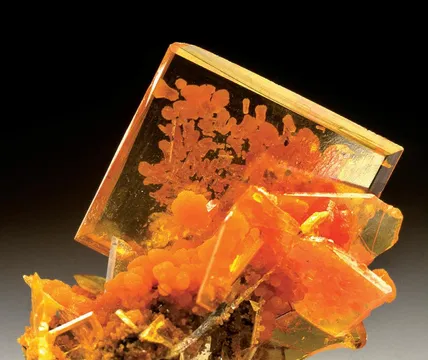
Calcite at El Cobre is valued mainly as an architectural and contrasting matrix mineral in azurite-malachite combinations. Documented specimens include large scalenohedral calcite carrying malachite pseudomorphs after azurite, later coated by a second generation of sparkly translucent disc-shaped calcites, with occasional surviving pristine azurite crystals nearby. In the ore system, calcite is also a low-temperature retrograde alteration product present with quartz, epidote, vesuvianite, chlorite and iron oxides in exoskarn and endoskarn zones. The collector premium goes to calcite that is not merely massive gangue but visibly crystallized, bright enough to contrast with green malachite and blue azurite, and intact on exposed edges.
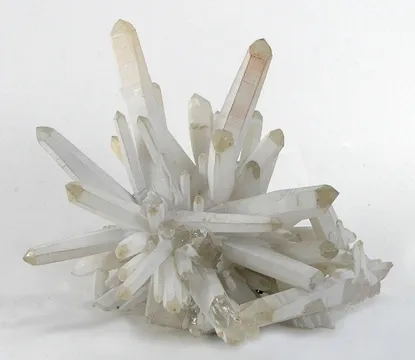
Quartz is one of the principal stage-setting minerals of El Cobre specimens: drusy white to iron-oxide-coated crystals lining vugs, forming sculptural gossanous matrices, or sparkling beneath malachite sprays and azurite crystals. Notable pieces show lustrous translucent quartz crystals to about 2–2.5 cm, sometimes partly coated with bright green needle malachite, and at least one well-known 14 cm specimen carries azurite crystals on drusy quartz with minor malachite after azurite. Good quartz combinations from here are judged by architecture and freshness: open, three-dimensional quartz faces, strong brown-white-green-blue contrast, and malachite or azurite placed on the crystal surfaces rather than buried in massive iron oxide.
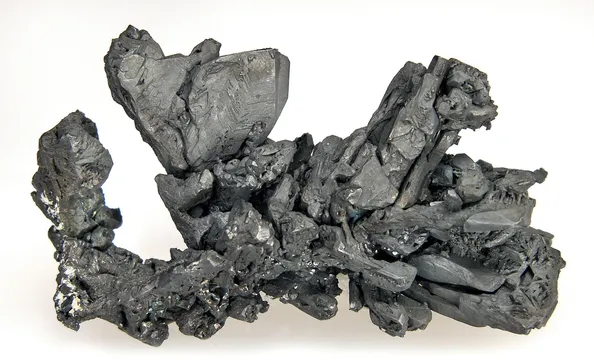
Chalcopyrite is both an ore mineral and a specimen mineral at El Cobre. In the modern skarn, chalcopyrite is a major copper sulfide, especially in propylitic and retrograde sulfide zones, and it occurs with pyrite, chalcocite and quartz at depth; in classic collector material it appears as sharp, dark gray to brassy, sometimes corroded tetragonal crystals in quartz-gossan matrix. Particularly interesting are malachite pseudomorphs after chalcopyrite with quartz, where the original chalcopyrite shape is replaced by green copper carbonate. Top chalcopyrite pieces from El Cobre are scarce, usually older, and depend on sharp crystal form, recognizable tetragonal habit, limited oxidation damage and association with quartz or malachite that clarifies the paragenesis.
Other minerals documented from El Cobre/Aranzazú include arsenopyrite, chrysocolla, emplectite, goethite, grossular, hematite, native copper, olivenite, plancheite, pyrite, scorodite, spangolite, tenorite, tennantite-group and tetrahedrite-group minerals. No well-established type-locality mineral species appears to be tied specifically to the El Cobre mine itself, but the locality is important for rarities in attractive combinations: spangolite on azurite-malachite, olivenite as green acicular starbursts with azurite, blue plancheite accessories, black botryoidal tenorite with chrysocolla, and tetrahedrite-tennantite crystals on quartz. Spherocobaltite has appeared in older literature or lists but is treated as an erroneous entry for this locality.
The first authenticity issue is locality precision. “El Cobre mine, Mexico” is an old label that can be correct for Aranzazú material from Concepción del Oro, Zacatecas, but it is easy to confuse with other “Cobre” and “El Cobre” localities in Mexico, Sonora, Cuba, and the American Southwest. Serious labels should preserve the old wording while adding the modern locality: Aranzazú Mine, formerly Cobre/El Cobre, Concepción del Oro Municipality, Zacatecas, Mexico. Specimens labeled only “Mexico” or “El Cobre” deserve extra scrutiny, especially if the matrix or habit does not match the classic gossan-quartz-calcite copper assemblage.
A second label problem is Bisbee confusion. Old El Cobre azurites and malachite-after-azurite specimens can superficially resemble Arizona material, and at least one dealer-recorded example was noted as having been mislabeled as Bisbee despite being recognizable as El Cobre material. The best diagnostic clues are not absolute, but El Cobre pieces commonly have a gossanous, iron-stained quartz/calcite skarn matrix and small, intensely blue azurite crystals or robust green pseudomorphs, while Bisbee material often has different limestone, limonite and massive copper-oxide contexts. Provenance is especially important.
Condition is a real separator. El Cobre azurite crystals are often small, so bruising that would be tolerable on a large cabinet specimen can destroy the effect on a thumbnail. Look closely for chipped blue edges, dull altered surfaces, cleaved calcite, broken quartz druse, and rubbed malachite pseudomorph terminations. Malachite pseudomorphs should be examined under magnification for sharpness of the former azurite shape; granular green coatings on matrix may be attractive but should not be priced like crisp pseudomorphs. Calcite combinations are vulnerable to contact damage and acid cleaning, and iron-oxide matrices can hide repairs.
No widespread, locality-specific fake industry is well documented for El Cobre, but the usual copper-carbonate cautions apply. Azurite and malachite can be artificially grown, glued into vugs, oiled, waxed, over-cleaned or enhanced photographically. Old collection pieces with multiple labels, publication history or known dealer lineage are preferred. Repairs should be expected occasionally on larger calcite and quartz combinations; they are not automatically disqualifying, but they should be disclosed.
Fluorescence is not a major selling point for the classic El Cobre assemblage. Handling concerns are ordinary for azurite, malachite and calcite: avoid acids, prolonged soaking, ultrasonic cleaning, high humidity swings and rough brushing. Azurite can be sensitive to chemical cleaners, calcite reacts readily with acid, and fragile malachite sprays can mat or break if scrubbed. Store pieces away from abrasion and keep old labels with the specimen.
Market availability is limited but steady in old collections. Small azurite, azurite-malachite and malachite pseudomorph pieces appear from time to time; top-quality specimens with electric-blue azurite, sharp pseudomorphs, olivenite or spangolite accessories, or strong calcite/quartz architecture are much scarcer. Since modern Aranzazú is an active mine rather than a public collecting locality, the best pieces should be regarded as finite classic material rather than a replenishing supply.
The most evocative way to understand El Cobre is to stand, mentally, on the road west of Concepción del Oro and look up toward Aranzazú. The modern technical reports describe ore zones, domains and portals, but the landscape also preserves a mining village story: Aranzazú, also known locally as El Cobre, clinging to the slope among limestone and monzonitic rocks, high above the lower town. A government cultural inventory describes the old church at 2,670 meters above sea level, in a rich mining region, and notes that the settlement around it is now essentially abandoned, with only four inhabitants recorded in the account. The abandoned walls were made of stone, adobe and black brick—black because some of the building material came from mine-smelter waste.
The church itself is a survivor of the mining camp rather than a colonial ruin. Its painted interior was reportedly decorated between June 1941 and April 1943, when the mine settlement still had enough permanence to support parish life. The building’s white walls and tiled dome were described as visible from far away, a landmark on the road and among the workings. That detail matters to collectors because it reminds us that the “El Cobre” label did not come from an anonymous hole in the desert: it came from a lived mining community, with chapels, houses, roads, ruins, families and a whole labor landscape around the ore.
Below that surface history is an astonishing tangle of old workings. Modern reports say the Concepción del Oro district and Aranzazú property are “riddled” with openings, a haphazard swarm of near-surface shafts and adits from early extraction, becoming more orderly in deeper, later mine development. The historical Aranzazú area alone has at least 13 underground levels. Catarroyo has 23. Level 11 is described as a tunnel more than a kilometer long, three meters by three meters, cutting through the main intrusive body to the skarn contact. Elsewhere, internal ladders were removed, hoists disappeared, and a surface headframe was destroyed by fire. It is exactly the sort of place where a 1950s or 1960s miner could break into oxidized ground and save a pocket of blue and green crystals almost incidentally, while the mine itself was being driven for copper.
The collector stories are smaller but sharper. A classic El Cobre azurite may be only a few millimeters in crystal size, yet the color can look implausibly alive under a lamp. One old small-cabinet specimen sold through MineralAuctions was described as covered on both sides and along its crest with azurite crystals to about 5 mm, accompanied by rare green olivenite starbursts and even a 1.3 cm oxide-coated terminated quartz crystal perched on top. It was not a new discovery: the description placed such old classics in the 1950s-to-1970s stream. In that sense, every fine El Cobre miniature is a remnant of a now-closed specimen moment within a still-active ore district.
Another story sits in a single published photograph: a cabinet specimen from the Dr. Miguel Romero collection, 9.5 x 8 x 7.5 cm, with malachite pseudomorphs after azurite perched on a large scalenohedral calcite crystal. A later generation of sparkly disc-shaped calcites coats the calcite, and two sharp primary azurite crystals remain unaltered beside the green pseudomorphs. The piece was on loan exhibition to the University of Arizona Museum for more than a decade before being acquired with the Romero collection in 2008 and later featured in a Mineralogical Record-sponsored book on the Miguel Romero collection. It is a specimen that tells the entire locality in one object: blue azurite, green replacement, white calcite, old Mexican provenance and the afterlife of a mine pocket in museum and collection history.