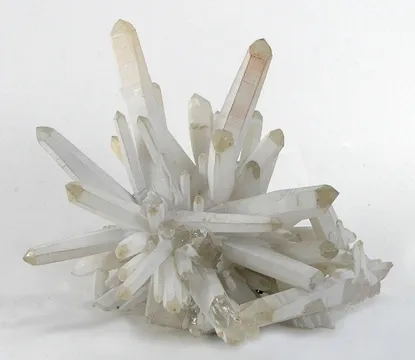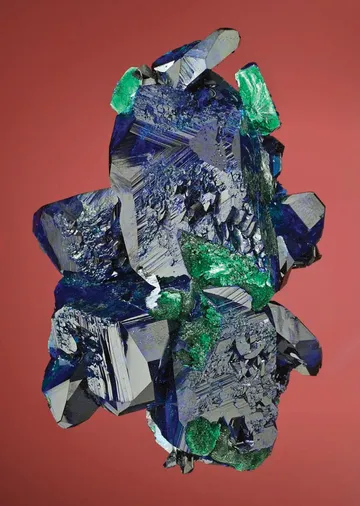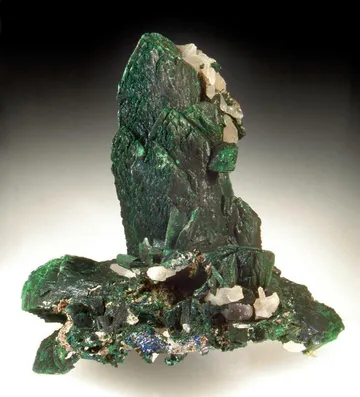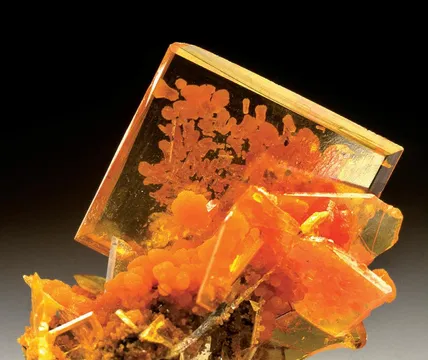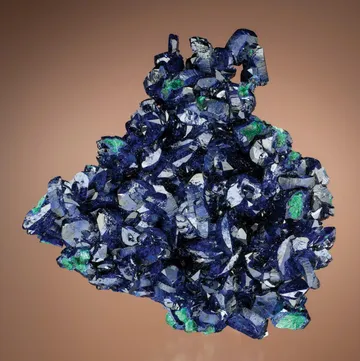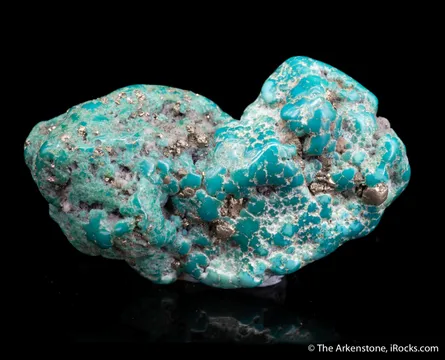
Chispas Mine, Mexico — Sonora silver-specimen locality famed for bonanza pockets of acanthite, pyrargyrite, stephanite and polybasite; prized by collectors.
Key facts
Chispas Mine, more often written historically as Las Chispas, is one of the great old silver-specimen localities of Mexico: a compact but legendary epithermal silver-gold vein system near Arizpe, Sonora, whose fame rests not on sheer output alone but on the improbable perfection and scale of its crystallized silver minerals. The best specimens are black, metallic, sculptural objects from bonanza pockets—thick pseudohexagonal polybasite tablets, “poker chip” stephanite clusters, sharp acanthite groups, pyrargyrite masterpieces, and polybasite pieces dusted or edged with minute pale fluorite and bright chalcopyrite. In serious silver collections, a fine Chispas label still means something very specific: early-20th-century Mexican classic, high-grade ore pocket, and a level of crystallization that pushed ordinary ore minerals into museum territory.
Geologically, Chispas belongs to the Arizpe silver district of north-central Sonora, on the western side of the Sierra Madre Occidental region and within the broader Basin and Range structural province. The historic Las Chispas vein is part of a northwest-southeast-trending system of fault-fissure veins cutting felsic volcanic and subvolcanic rocks. The ore was dominated by quartz with silver sulfides and antimony-rich sulfosalts, plus pyrite and subordinate base-metal sulfides. The best collector pieces came from open cavities in irregular bonanza pockets, where the vein widened enough for crystals to grow freely rather than as massive ore.
Regional View
Country View
The locality’s collecting importance is inseparable from Edward L. Dufourcq, the Columbia School of Mines graduate who managed the mine beginning in 1904. Dufourcq recognized that the spectacular crystals were more than rich ore, and he sent important specimens to New York institutions, especially Columbia and the American Museum of Natural History. Because of that unusually enlightened preservation, Chispas is far better represented in major collections than many more productive Mexican mines whose best ore vanished directly into the mill.
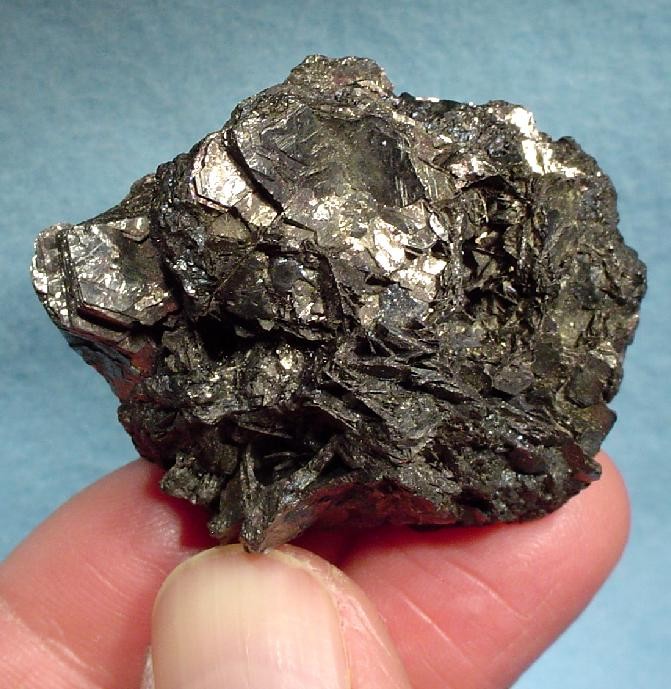
Photo: Rob Lavinsky / iRocks.com via Wikimedia Commons
The visual signature of the locality is dark and metallic, but not monotonous. A good Chispas specimen often shows broad hexagonal or pseudohexagonal outlines, stepped or skeletal growth, bright metallic flashes along edges, and occasional accents of color: a clear or pale fluorite crust, brass-yellow chalcopyrite sparkle, white quartz, or the deep red glow of ruby silver exposed at a broken edge. The very finest pieces are not merely “silver ores”; they are crystallographic showpieces from a mine where mineral species that usually occur as compact ore were allowed to grow as architecture.

Search for specimens: View all specimens from Chispas Mine, Mexico
Chispas Mine is the historic Las Chispas or Pedrazzini mine near Arizpe, in Arizpe Municipality, Sonora. The old specimen locality was a silver mine on the Veta de Las Chispas, and the modern Las Chispas operation now covers a broader district of veins and exploration targets around the historic workings. The site lies south of the community of Arizpe, in rugged Sonoran country where north-south structural grain, volcanic rocks, and steep arid topography strongly shaped both mining and access.
The deposit is a low- to intermediate-sulfidation silver-gold epithermal system. In the historic mine, the Las Chispas vein is described as hosted by felsic porphyry and overlying rhyolite, with quartz as the principal gangue and ore minerals concentrated in cracks, seams, stringers, lenses, and irregular pockets. Modern district work recognizes numerous epithermal veins, including the historic Las Chispas area and the Babicanora area, with mineralization in veins, stockworks, and breccias developed along structural conduits. The current operation has been described as comprising more than sixty epithermal veins, though only a subset contains the bulk of defined mineral reserves.
The collector mineralization is strongly silver- and antimony-rich. Acanthite, polybasite, and stephanite make up the classic suite, with pyrargyrite, native silver, fluorite, pyrite, chalcopyrite, quartz, and minor base-metal sulfides adding important associations. Historical descriptions emphasize vertical zoning in the silver minerals: chlorargyrite and native silver toward the upper parts of the vein, grading to ruby silver, especially pyrargyrite, at greater depth. Ore outside the bonanza pockets could be comparatively modest, while individual pockets were extraordinarily rich; that pockety behavior explains why the mine produced both world-class specimens and an uneven operating history.
The name Las Chispas, “the sparkles,” is apt collector’s poetry but also miners’ language. The “chispas” were the glittering crystals of rich silver ore that made the property famous. Some vein openings contained vugs several feet across, and those open spaces are where the great crystals formed. Polybasite and stephanite developed in pseudohexagonal forms; acanthite occurred both as blocky crystals and elongated skeletal prisms; native silver could grow from acanthite; and pale, complex fluorite crystals coated many polybasite specimens in a way collectors regard as diagnostic for the locality.
The wider Arizpe silver story reaches back to colonial Sonora. Historical accounts place rich silver-vein discoveries near the future town of Arizpe in 1640, followed by the founding of Arizpe in 1646. The exact continuity between that earliest discovery and the later Las Chispas workings is not securely documented, but descriptions of early silver veins in the Río Sonora valley fit the same district. The Chispas mine itself enters the modern record around 1880, when a small gold-silver operation was being worked south of Arizpe by the Santa Maria Mining Company. That company failed, and its clerk, the Italian-Swiss John Pedrazzini, acquired the property in settlement of money owed to him.
Pedrazzini’s tenure turned a difficult prospect into a famous mine. By the early 1890s he had capital behind him, and an exhibit associated with the 1893 World’s Columbian Exposition in Chicago is reported to have included spectacular silver-mineral specimens. A key development was a tunnel driven about 125 meters into the hill, intersecting the Las Chispas vein roughly 185 meters below the surface outcrop. After Dufourcq became general manager and consulting engineer in 1904, the mine was rapidly modernized with a 20-stamp mill and cyanide plant. By early 1910 the Pedrazzini company employed about 600 men, nearly 500 of them underground at Las Chispas, and the years 1907 to 1911 saw annual production on the order of 1.5 million ounces of silver plus 10,000 to 12,000 ounces of gold.
The Mexican Revolution battered the operation. Transportation disruption, labor unrest, highgrading, and political seizure all affected the mine. In 1917 the local government confiscated the mine, highgraded workings and mill, and expropriated infrastructure. Around 1918, a flood destroyed the mill’s pump station on the Río Sonora, restricting the operation to water pumped from inside the mine. In 1921 a French-backed company, through Corporación Minera de México, S.A., took over the property, remodeled the power plant, and achieved a profitable revival. A bonanza vein struck in 1924 was followed by a 25 percent dividend the next year, but organized mining had ended by about 1930.
For collectors, the most important production period remains the first decade of the 20th century, when Dufourcq deliberately preserved crystallized ore. Specimens went to Columbia, the American Museum of Natural History, and later other institutional and private collections. The American Museum received crystallized “argentite” specimens, polybasite with wire silver, and crystallized stephanite from Dufourcq; in modern species language, much of the old “argentite” material is treated as acanthite after argentite. The Columbia and American Museum pieces helped establish Las Chispas as a world-class silver locality while the mine was still active.
There was limited later collector recovery. In the 1960s, visiting collectors obtained fine stephanite specimens from old workings and local sources. By the 1970s, the mill and tailings had been hauled away for concentration and many old buildings were removed, reducing the casual collecting potential of the historic site. Today the locality is not an open collecting ground. The modern Las Chispas operation is an active underground mining complex, developed by SilverCrest Metals through its Mexican subsidiary Compañía Minera La Llamarada and acquired by Coeur Mining in 2025. Access is controlled industrial access, and collector material on the market is overwhelmingly old-time, ex-collection, or from historical surface/underground recoveries rather than casual modern field collecting.
Modern mining has returned Las Chispas to the operating world, but not in the old specimen-collecting sense. SilverCrest began advanced exploration in 2016, built the modern project through underground access, drilling, and plant construction, poured first metal on June 30, 2022, and declared commercial production effective November 1, 2022. Coeur Mining acquired SilverCrest and Las Chispas on February 14, 2025. Those modern operations confirm the district’s enduring silver-gold endowment, but fine crystallized Chispas specimens remain principally historical classics.
Acanthite is the most abundant classic ore mineral at Chispas and, in its best examples, one of the reasons the locality ranks internationally for silver sulfides. The old literature commonly used “argentite,” but collector and mineralogical usage now treats the preserved low-temperature material as acanthite, Ag2S. Chispas acanthite occurs in two prized habits: blocky, sharp, dark metallic crystals reaching several centimeters, and more distinctive elongated skeletal prisms that form branching or clustered groups. Blocky crystals may carry a fine pyrite druse and are commonly associated with polybasite, sometimes appearing to sit parasitically on it; native silver wires may grow from acanthite on exceptional pieces. The best specimens are not merely rich chunks of black sulfide: they show crisp crystal form, sculptural separation, old provenance, and minimal bruising to fragile edges, with large display pieces far scarcer than the more typical small black clusters.
Polybasite is the signature Chispas mineral and the species for which the mine produced some of Mexico’s largest and finest historical specimens. It occurs as black to steel-gray metallic pseudohexagonal prisms and tablets, with stout tabular crystals reported to impressive size and clusters of thinner plates making some of the most elegant pieces. Chispas polybasite is especially recognizable when its edges and surfaces are coated with minute, complex, pale fluorite crystals, or when chalcopyrite adds a brassy sparkle over black metallic faces. Associations with stephanite, acanthite, quartz, pyrite, fluorite, and chalcopyrite are all important. Superior specimens show complete pseudohexagonal outlines, bright lustrous faces, relief between individual tablets, and old, believable provenance; massive black ore with only vague tablet edges is much less desirable, even if it is chemically rich.
Stephanite from Chispas is famous for short, thick pseudohexagonal crystals, especially the broad flattened “poker chip” habit that made the locality a textbook name among silver-sulfosalt collectors. Well-developed crystals reach several centimeters and may show radial striations tied to twinning; another, less common habit is a more elongated pseudohexagonal prism. The color is black to gray-black with metallic luster, and old pieces may be associated with polybasite, quartz, acanthite, and other silver minerals. The finest stephanites from Chispas are sharp, freestanding clusters with clean basal faces and strong geometry, while lesser examples are compact, dull, heavily intergrown, or edge-worn. Condition is especially important because broad tabular crystals telegraph even small chips along their rims.
Chalcopyrite at Chispas is not the headline species in the way acanthite, polybasite, and stephanite are, but it is a key visual and paragenetic accessory in the classic suite. It occurs as small brassy crystals or sparkling drusy coatings on silver sulfosalts, particularly polybasite, and is also documented in the broader ore assemblage with quartz, pyrite, galena, sphalerite, and silver minerals. The best Chispas chalcopyrite pieces are therefore usually judged as combination specimens rather than chalcopyrite specimens in the strict sense: a black polybasite or ruby-silver crystal made more vivid by fine golden chalcopyrite dusting can be quite attractive, while isolated or massive chalcopyrite from the district has little special collector identity. On old specimens, chalcopyrite coatings can also help support a Chispas attribution when accompanied by the proper silver-sulfosalt habit and provenance.
Other minerals documented from Chispas include pyrargyrite, proustite, native silver, fluorite, pyrite, quartz, galena, sphalerite, calcite, chlorargyrite, native gold, electrum, hessite, marcasite, and reported pearceite. Pyrargyrite is the great rarity among the showy collector species: uncommon from the mine but known in excellent translucent red crystals to several centimeters, generally from pods lacking the other abundant silver minerals. Native silver is rare in collections and is most characteristic as wire bundles growing from acanthite. Fluorite deserves special mention: the tiny crystals on polybasite are not large display fluorites, but their complex multifaced form and pale coating make them among the most diagnostic accessories for Chispas material. Reported pearceite requires caution, as examined “pearceite” labels from the locality have repeatedly resolved as antimony-dominant polybasite in specialist work.
Chispas specimens occupy a difficult but rewarding corner of the market: they are classic, historically important, visually subtle, and often old enough that labels have been recopied, simplified, or confused over several generations. Strong provenance matters. Labels naming “Arizpe,” “Las Chispas,” “Chispas Mine,” “Pedrazzini mine,” or old “argentite” from Arizpe should be evaluated in context rather than dismissed; however, species names on old labels need modern interpretation. “Argentite” is normally acanthite in today’s collection practice, and “pearceite” from Chispas should be treated skeptically unless supported by analysis.
The most common authenticity issue is not outright fakery but misidentification within the black silver-sulfide/sulfosalt suite. Polybasite, pearceite, stephanite, and acanthite can be visually difficult in worn, massive, or intergrown pieces. Chispas polybasite should show pseudohexagonal tablets or short prisms when well crystallized; stephanite commonly has heavier pseudohexagonal “poker chip” forms and characteristic twinned striations; acanthite tends toward blockier crystals or skeletal prismatic clusters. Analysis is warranted for expensive single-species claims, especially where old labels use obsolete or broad names.
Condition is critical. Many Chispas pieces are brittle silver minerals with broad edges, thin tablets, or skeletal growths that chip easily. Stephanite “poker chips” may have rubbed rims; polybasite tablets may be broken, dulled, or cleaved; acanthite projections can be bruised without obvious color contrast because fresh breaks remain dark. Examine edges under strong light, not just face-on. Metallic luster can be naturally subdued on older pieces, but sharply contrasting broken surfaces, glued repairs, and reconstructed clusters should be checked carefully.
The locality does not owe its value to fluorescence, and collectors should not expect a meaningful fluorescent response from the major silver minerals. Handling should be conservative: keep specimens dry, avoid chemical cleaning, avoid ultrasonic cleaners, and do not expose ruby silver such as pyrargyrite or proustite to prolonged strong light if present, as those minerals can darken. The pale fluorite coatings on polybasite are tiny and easily obscured by oil, dust, or overcleaning, so an untouched old surface is usually preferable to a “brightened” one.
Market availability is uneven. Small acanthite, polybasite, and stephanite pieces appear periodically from old collections and dealer inventories, but major Chispas specimens are scarce and often remain in museums or advanced private collections. Polybasite with strong tablet form, stephanite with undamaged “poker chip” geometry, acanthite with sculptural crystals, and any convincing pyrargyrite are premium material. For modern purchases, prioritize accurate locality wording, old labels, documented collection history, and photographs that show both the crystal habit and condition of the margins.
The best Chispas story begins not with a spectacular pocket but with a mine manager who chose not to crush one. Edward L. Dufourcq arrived in 1904 as a Columbia-trained engineer at a property owned by the Minas Pedrazzini Gold and Silver Mining Company. Very quickly, he realized that the glittering black ore in the vugs was not just mill feed. He began sending specimens to New York, including polybasite, stephanite, acanthite, pyrargyrite, and transitional silver-halide material. In an industry where rich silver ore normally vanished into stamps and cyanide, Dufourcq’s impulse to preserve specimens made Chispas a classic locality. The mine probably produced no more than about 20 million ounces of silver, a respectable but not gigantic total; its fame rests instead on the specimens he saved.
One of the most dramatic objects linked to Dufourcq was a gigantic polybasite mass sent to the American Museum of Natural History. Dufourcq described it as probably the largest mass of polybasite crystals ever taken out in one piece. It originally weighed more than 65 pounds but broke into two pieces in transit from Sonora to New York. That detail is painfully believable to anyone who has handled heavy crystallized sulfides: a specimen large enough to be mineralogical history, but fragile enough that the journey itself became part of its biography.
The mine was rich enough to attract not only investors but thieves. Ore stealing was a persistent problem, and one contemporary tale has a Cananea ore-buying company attempting to purchase high-grade Las Chispas ore secretly, only to end up with tons of specular hematite from another mine. It is an almost comic inversion of the highgrading problem: everyone chasing the “chispas,” and someone getting a load of glittering but wrong rock.
The most memorable later collecting episode comes from the 1960s, after organized mining had long ceased. Arizona collector Joseph Urban reportedly visited the mine thinking it abandoned, only to find people living in the openings. Trying to communicate what he wanted, he drew a hexagon in the dirt. One of the local men understood, disappeared into the mine, and returned with a handful of hexagonal polybasite crystals. It is one of those small field stories that captures the whole locality: the shape mattered, the people knew it, and the mine still held enough identity that a sketched hexagon could summon the right mineral.
Another Chispas specimen story belongs to the Mexican collecting world. A celebrated cluster of paper-thin polybasite crystals, with individual plates reaching impressive size, passed from the Pedrazzini family to Dr. Eduardo Schmitter, one of Mexico’s foundational mineralogists. Schmitter kept the fragile specimen in a large coffee can filled with powdered soap—a homely but ingenious solution for protecting thin metallic plates before modern specimen boxes and custom mounts became common. In the 1950s, Miguel Romero Sánchez worked in Schmitter’s laboratory as an undergraduate at UNAM and absorbed Schmitter’s passion for minerals. When Romero later began building what became one of the world’s great Mexican mineral collections, Schmitter gave him the Chispas polybasite. The specimen’s path—Pedrazzini to Schmitter to Romero—is a miniature history of Mexican mineral collecting.
Even the fluorite at Chispas has a story, though at thumbnail scale rather than cabinet scale. The pale fluorite crusts on polybasite are tiny, but Paul Desautels studied them because their morphology was unusually complex. Each little crystal displayed multiple forms of the hexoctahedral class, making them far more crystallographically interesting than their size suggests. On a Chispas polybasite, those minute pale edges are not dirt or damage; they are part of the locality’s mineralogical fingerprint.
Terry C. Wallace, “The Las Chispas mine: Arizpe, Sonora, Mexico,” The Mineralogical Record, Vol. 39, No. 6, November–December 2008 — The essential modern collector-locality article, covering history, geology, specimen production, and the principal silver minerals.
B. E. Russell, “Las Chispas Mines, Sonora, Mexico,” The Engineering and Mining Journal, Vol. 86, November 21, 1908, p. 1006 — A contemporary mining account of the Pedrazzini operation, including geology, mining practice, and the problem of highgrading.
E. L. Dufourcq, “Minas Pedrazzini Operations near Arizpe, Sonora,” The Engineering and Mining Journal, Vol. 90, December 3, 1910, pp. 1105–1106 — Dufourcq’s own account of the operation, important for the early museum specimens and metallurgical context.
W. E. Ford, “Stephanite Crystals from Arizpe, Sonora, Mexico,” American Journal of Science, Vol. 25, 1908, pp. 244–248 — The classic crystallographic study of the famous Arizpe stephanite crystals.
Paul E. Desautels, “Occurrence of multiform fluorite from Mexico,” American Mineralogist, Vol. 45, 1960, pp. 884–886 — Describes the unusual multiform fluorite crystals associated with Chispas polybasite.
H. T. Hall, “The pearceite and polybasite series,” American Mineralogist, Vol. 52, 1967, pp. 1311–1321 — Important for understanding pearceite-polybasite nomenclature and Chispas material in that series.
W. F. Foshag, “The Minerals of Mexico,” Smithsonian field-work report, 1927–1928 — A Smithsonian perspective on Mexican mineral collecting, noting Chispas as a source of remarkable crystallized silver minerals.
American Museum Journal, “Accessions of Minerals,” Vol. 8, 1908 — Records Dufourcq’s gifts of Las Chispas stephanite, “argentite,” and wire silver with polybasite to the American Museum of Natural History.
SilverCrest Metals / Ausenco, Las Chispas Operation Technical Report, dated September 5, 2023 — Modern technical report for the active Las Chispas operation, with district-scale geology, vein descriptions, resources, and mining context.
Coeur Mining, Technical Report Summary for the Las Chispas Mine, February 19, 2025 — Current operator’s technical summary following Coeur’s acquisition of SilverCrest.
SilverCrest Metals Inc. Webinar — Mexico Mining Center — A 2021 company-focused webinar describing SilverCrest’s development of the high-grade Las Chispas district.
SilverCrest Metals’ Drilling Discovers New Silver/Gold Veins and Expands Footprint to 600 Metres in Sonora, Mexico — InvestmentPitch / Newsfile — A 2017 exploration-news video item tied to the Babicanora-area drilling campaign.
Acanthite & Quartz from Las Chispas Mine, Arizpe, Sonora, Mexico — The Miner’s Lunchbox specimen video — Dealer specimen page with a video of a Chispas acanthite and quartz specimen, useful for seeing the modern market presentation of classic material.
Mindat: Chispas Mine, Arizpe, Sonora, Mexico — Core locality database entry with species list, references, photos, and locality aliases.
Mindat photo gallery for Chispas Mine — Useful visual survey of acanthite, polybasite, stephanite, native silver, and combination specimens from old collections.
Wikimedia Commons: Category Chispas Mine — Open-licensed images of Chispas polybasite, stephanite, and chalcopyrite-proustite specimens.
Coeur Mining: Las Chispas, Mexico operation page — Current operator overview for the active Las Chispas underground mine and processing operation.
SilverCrest Declares Commercial Production at Las Chispas — Primary 2022 announcement documenting the start of commercial production at the modern operation.
SilverCrest Announces First Pour at Las Chispas Mine — Primary 2022 release documenting the first gold-silver doré pour from the modern mine.
Major Mines & Projects: Las Chispas Mine — Concise technical profile of the modern mine, geology, mining method, and processing information.
HyperPhysics: Polybasite from Las Chispas — Brief educational entry showing a Smithsonian-displayed polybasite specimen from the locality.
Heritage Auctions: Stephanite & Polybasite, Chispas Mine — Auction reference illustrating market treatment of classic Chispas silver-sulfosalt specimens.