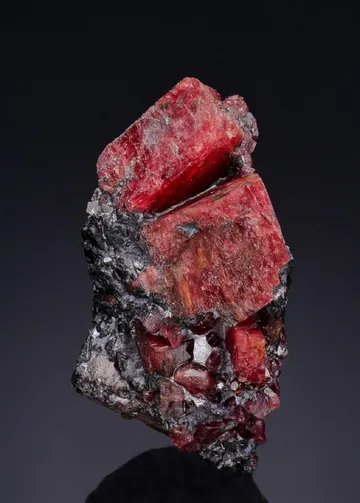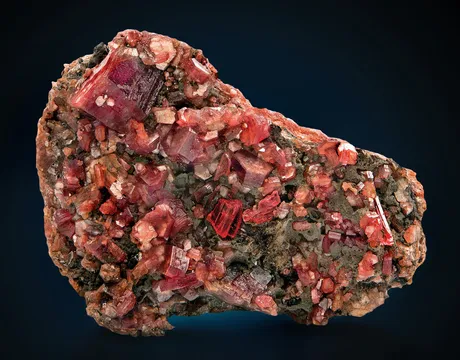
A collector's guide to Durham Co., Australia: its geology, mining history and notable minerals, illustrated with the 52 specimens documented from this locality on EarthWonders.
Key facts
Durham County, New South Wales, is a collector’s locality with a split personality. In old mineral-label shorthand it can be confused with County Durham in England, the classic fluorite district, but the Australian Durham County is the Hunter Valley–Barrington Tops cadastral county around Singleton, Muswellbrook, Glenbawn, Ravensworth, and the upper Hunter coal country. Its collectible importance rests not on gem fluorite veins, but on historically important calcite pseudomorphs, unusual coal-measure and coal-fire mineralogy, a named hydrous magnesium carbonate occurrence at Barrington Tops, small metalliferous workings of the southern New England Orogen, and a pallasite meteorite from Mount Dyrring.
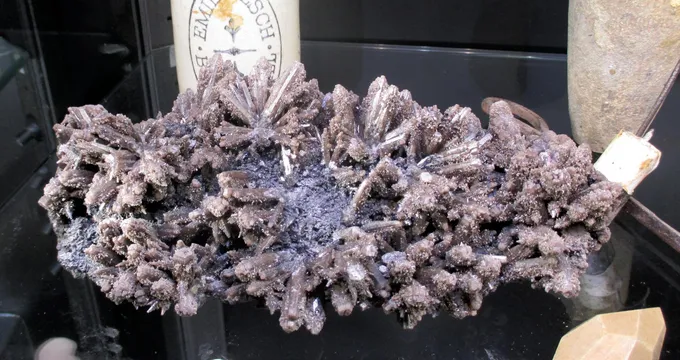
The signature specimens are glendonites: brown to grey calcite pseudomorphs after ikaite from Glendon and the Hunter River near Singleton. These are not merely curiosities; the name “glendonite” comes from this district, and the Hunter Valley examples became the reference point for a worldwide class of cold-water carbonate pseudomorphs. Good pieces are sculptural rather than sparkly: angular, spear-like, bladed, or radiating calcite forms, commonly weathered to an earthy brown surface but prized for sharp original morphology, complete terminations, and old documented provenance.
Regional View
Country View
The county also has a strong research-mineralogical side. At Rainbow Falls on Sempill Creek, Barrington Tops, barringtonite was described as nodular encrustations on wet Tertiary olivine basalt, associated with nesquehonite. Around Muswellbrook, the Mount Arthur and Bayswater coal operations have produced secondary dawsonite and whewellite in coal-measure settings, while “The Pimple” recorded halloysite, tridymite, cristobalite, mullite, glass, and related phases produced by thermal alteration around burned coal seams. Ravensworth adds coal-fire buchite mineralogy, including pyroxenes, cordierite, spinel, and glassy pyrometamorphic rocks. For the specimen collector, Durham County is therefore best read as a locality of pseudomorphs, micro-mineral oddities, research specimens, and old labels—not as a conventional cabinet-crystal district.
Search for specimens: View all specimens from Durham Co., Australia
Durham County is an old land-administration county of New South Wales, so a mineral label reading “Durham Co.” is broad by modern collecting standards. It includes several quite different geological settings: Permian coal measures of the Hunter Valley and Sydney Basin around Singleton and Muswellbrook; parts of the southern New England Orogen with small abandoned metalliferous prospects such as Collisons Mine at Moonan Brook and the New Royal Standard Mine at Stewart’s Brook; Tertiary basalt at Barrington Tops; and scattered quarry and meteorite localities.
The most collectible “deposit type” in the specimen sense is the glendonite-bearing sedimentary occurrence near Glendon and along the Hunter River. These specimens are calcite pseudomorphs after ikaite, a hydrated calcium carbonate that forms under cold, chemically suitable conditions and is unstable at normal surface temperatures. The original ikaite morphology is retained as calcite, giving the familiar spear-like, bladed, stellate, or clustered pseudomorphs. The best old Durham County pieces show clear three-dimensional form rather than broken fragments or rounded concretions, and the strongest labels tie them specifically to Glendon or the Hunter River near Singleton.
The region’s coal geology is equally important, though less represented by aesthetic cabinet specimens. Around Muswellbrook, the Mount Arthur Coal Mine Complex includes Bayswater No. 2, Bayswater No. 3, Mount Arthur North, and related open-cut operations. Bayswater No. 2 is recorded as a coal mine within the Mount Arthur complex and has yielded dawsonite and whewellite, including translucent whewellite crystals with fine hairlike dawsonite from a Hunter Valley coal-measure setting. The wider Mount Arthur operation has been worked since the 1960s, with Mount Arthur North mining beginning in the early 2000s; BHP’s current pathway is to cease mining at Mt Arthur Coal on 30 June 2030.
A different coal-related mineral suite occurs at The Pimple, south of Muswellbrook, where fully hydrated halloysite was described in commercial quantities. There, thermal metamorphism associated with underground combustion of coal seams produced unusual high-temperature silica and aluminosilicate phases, including tridymite, cristobalite, mullite, glass, magnetite, plagioclase, kaolinite, quartz, and chalcedony. Ravensworth adds another research-quality coal-fire assemblage, where buchite associated with a burned coal seam yielded pyroxenes, cordierite, spinel, plagioclase, and brown glass.
At Glenbawn Dam Quarry, an abandoned quarry used for rock during construction of the Glenbawn Dam embankment between 1947 and 1957, the recorded mineralogy is mainly of petrographic and micro-collector interest: quartz, chalcedony, calcite, magnesite, laumontite, magnetite, muscovite, biotite, smectite-group minerals, pyroxene-group minerals, feldspar, and zircon in early Carboniferous sandstone and related rocks. These are not generally the locality’s fame in the marketplace, but they matter because they document the breadth of Durham County’s mineral record.
The small metalliferous localities at Moonan Brook and Stewart’s Brook produced sulphide, sulphosalt, oxide, and supergene assemblages rather than the large showy crystals associated with better-known Australian mining fields. Collisons Mine is especially mineralogically rich for its size, with arsenopyrite, galena, sphalerite, stannite, pyrite, tetrahedrite-subgroup minerals, quartz, goethite, hematite, jarosite, plumbojarosite, beudantite, olivenite, chalcophyllite, guildite, gunningite, stranskiite, woodwardite, and related alteration minerals recorded from abandoned metalliferous mine-site studies.
Collecting access today should be approached conservatively. Operating coal mines, including Mount Arthur-related workings, are controlled industrial sites. Abandoned mines and quarries are commonly on private land or hazardous ground. Glendonite localities around Glendon, Singleton, and the Hunter River have been affected by land-use change, river-bank access, urban growth, vineyards, parks, and private ownership. The specimens most likely to satisfy a serious collector are therefore older pieces with precise labels, publication history, or collection provenance.
Fluorite is the key red flag for this locality name: I found no verified occurrence of fluorite from Durham County, New South Wales, in the locality records and publications checked for this guide, and it is absent from the documented Durham County NSW mineral list even though quartz and calcite are recorded. A specimen labelled simply “Durham Co.” with attractive fluorite, quartz, and calcite is far more likely to belong to County Durham, England—especially Weardale—than to Durham County, Australia. For Australian Durham County, no responsible habit, colour, size range, pocket history, or association can be assigned to fluorite; the best “fluorite” pieces under this locality heading should be treated as probable mislabelling until the original label, dealer trail, or mine name resolves the country.
Quartz from Durham County NSW is documented, but it is not the showpiece species here. At Glendon and the Hunter River it belongs to the glendonite-bearing sedimentary record rather than to open crystal pockets; at Glenbawn Dam Quarry it is recorded with chalcedony, laumontite, calcite, magnesite, magnetite, micas, feldspar, pyroxene-group minerals, smectite-group minerals, and zircon in quarry rock; at The Pimple it occurs with chalcedony in thermally altered coal-measure rocks alongside halloysite, kaolinite, tridymite, cristobalite, mullite, magnetite, plagioclase, and glass; and at Collisons Mine it forms part of a sulphide and supergene metalliferous assemblage. Good Durham County quartz is therefore locality-significant when it is attached to a glendonite, coal-fire, quarry, or metalliferous-mine context, while loose unlabeled crystals have little distinct market identity.
Calcite is the defining collectible mineral of Durham County NSW because the district gave the mineral-collecting world “glendonite,” the name for calcite pseudomorphs after ikaite from Glendon and nearby Hunter River occurrences. The best specimens are not conventional transparent calcite rhombs but sculptural pseudomorphs preserving the original ikaite form: dark brown to grey, sometimes spear-like or clustered, with sharp geometry, intact tips, and a convincing old locality. Published and catalogued examples range from hand specimens to very large cabinet pieces, and the most desirable pieces are those labelled specifically Glendon, Hunter River, or Singleton rather than vaguely “Hunter Valley.”
Other documented Durham County minerals include the historically important barringtonite of Rainbow Falls, Sempill Creek, Barrington Tops, described from wet olivine basalt with nesquehonite; dawsonite and whewellite from Bayswater No. 2 Colliery; halloysite, kaolinite, tridymite, cristobalite, mullite, glass, magnetite, feldspar, quartz, and chalcedony from The Pimple; laumontite, magnesite, micas, zircon, smectite-group minerals, and pyroxene-group minerals from Glenbawn Dam Quarry; and the metalliferous Collisons Mine suite including arsenopyrite, galena, sphalerite, stannite, tetrahedrite-subgroup minerals, pyrite, beudantite, chalcophyllite, olivenite, guildite, gunningite, stranskiite, woodwardite, jarosite, plumbojarosite, goethite, hematite, and quartz. Mount Dyrring adds an extra-terrestrial footnote: a 1903 pallasite meteorite from the Singleton district, represented by kamacite, taenite, and olivine-series material.
The principal authenticity issue is geographic, not chemical. “Durham Co.” on an old mineral label may mean Durham County, New South Wales, Australia, but in the international mineral trade it often points to County Durham, England. Fluorite with quartz and calcite is especially suspect under an Australian Durham County assignment, because the verified Australian county record does not support a classic fluorite-suite occurrence. Serious collectors should insist on a mine or sublocality name: Glendon, Hunter River, Singleton, Rainbow Falls, Sempill Creek, Bayswater No. 2, Glenbawn Dam Quarry, The Pimple, Ravensworth, Collisons Mine, or Mount Dyrring are meaningful; “Durham Co.” alone is too broad.
Glendonites are commonly weathered, iron-stained, chipped, or repaired, and their aesthetic value depends heavily on form. Broken pseudomorphs and rounded concretions are commoner than sharp complete crystals. Because the material is calcite, it should be kept away from acids and aggressive cleaning; even vinegar will attack it. Water and soft brushing may be acceptable for earthy surfaces, but overcleaning can destroy the old patina that makes a Hunter Valley glendonite credible and attractive.
For coal-measure species such as whewellite and dawsonite, fragility is the concern. Fine dawsonite hairs and small translucent whewellite crystals are easily crushed or detached, and specimens from siderite concretions or siltstones should be stored in a stable, dry box rather than handled repeatedly. Halloysite and clay-rich specimens can dehydrate, crack, or shed powder; pyrometamorphic coal-fire rocks may look tough but often contain vesicular glassy or altered areas.
Rarity varies sharply by sublocality. Glendonites from Australia are seen periodically, but well-provenanced Glendon or Hunter River pieces with old labels are much scarcer than generic “glendonite” specimens from broader Australian or overseas occurrences. Barringtonite is a research locality mineral, not a normal cabinet-specimen commodity. Bayswater dawsonite-whewellite pieces are unusual and are best valued as documented coal-mine association specimens. Mount Dyrring pallasite material is meteorite-collection material and should be expected to carry institutional, meteoritical, or dealer documentation.
The great story of Durham County mineral collecting begins with a handoff on the banks of the Hunter River. James Dwight Dana, sailing as geologist with the United States Exploring Expedition under Charles Wilkes, passed through the Hunter Valley in the early 1840s and encountered the strange “Glendon prisms” that would later become famous. The memorable detail is wonderfully human: Mrs Robert Scott of Glendon presented Dana with several odd, solid, dark brown crystals. They were not ordinary crystals at all, but pseudomorphs—forms that preserve one mineral’s outward shape after another mineral has replaced it.
Dana described the New South Wales prisms in 1849, but the name “glendonite” came later. In 1905, T. W. Edgeworth David and colleagues published their study of the pseudomorphs in the Records of the Geological Survey of New South Wales and named them after Glendon. Their proposed precursor was glauberite, which helped launch decades of argument over what the original mineral had been. The modern answer, ikaite, was not available to them: natural ikaite was not recognized until its discovery in Greenland’s Ika Fjord in 1963, and the connection between ikaite and glendonite was not firmly drawn until much later. That makes the old Hunter River pieces more than specimens; they are artifacts from a long scientific detective story.
Another Durham County object took a very different route into collections. The Mount Dyrring meteorite was found in 1903, embedded in soil north of Bridgman in the Singleton district. It was a pallasite, a stony-iron meteorite in which metal and olivine record deep planetary differentiation. The total recovered mass was about 11.3 kilograms in fragments, and pieces entered major collections, including Sydney, London, Chicago, Washington, New York, and later Australian institutional holdings. For a county better known for coal and river-bank pseudomorphs, Mount Dyrring is an extraordinary outlier: a celestial specimen with a Durham County address.
The modern coal-mining chapter has its own specimen consequences. Bayswater No. 2 and the Mount Arthur complex were never mineral-specimen mines, yet coal mining exposed siderite concretions, siltstones, altered rocks, and unusual low-temperature secondary environments where dawsonite and whewellite could be preserved. The best of these pieces are subtle: translucent whewellite crystals with fine dawsonite hairs rather than showy cabinet minerals. They are the sort of specimens that reward a collector who reads labels closely and cares about paragenesis as much as sparkle.