






A collector's guide to Chenzhou, China: its geology, mining history and notable minerals, illustrated with the 61 specimens documented from this locality on EarthWonders.
Key facts
Chenzhou, in southern Hunan, is not a single pocket or a single mine in the way collectors often use locality names. It is a mineral province: a prefecture-level city sitting in the Nanling metallogenic belt, where Jurassic granites and related magmatic-hydrothermal systems invaded Paleozoic sedimentary rocks and carbonate sequences. The result is one of the great Chinese districts for tungsten, tin, beryllium, lead-zinc, fluorite, and specimen minerals. For collectors, “Chenzhou” most often evokes a family of labels from Yaogangxian, Xianghualing, Xianghuapu, Dongpo, Manaoshan, Shizhuyuan, Huangshaping, and nearby ore fields—names that should be preserved whenever they are known, because each has its own look.
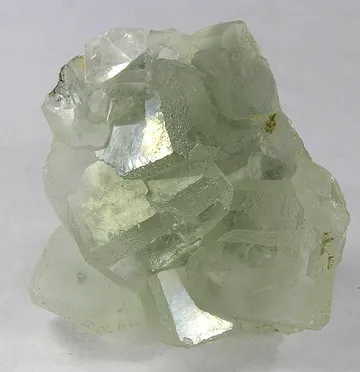
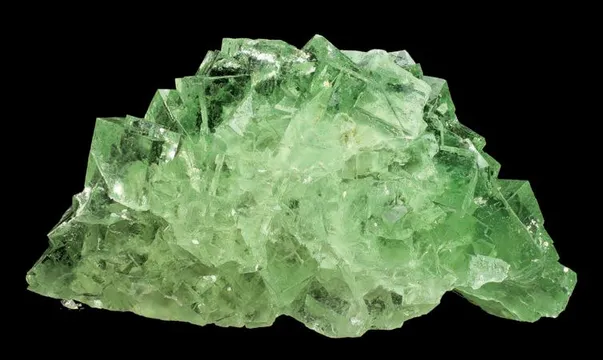
The finest Chenzhou specimens have a visual language that is immediately recognizable: transparent green fluorite cubes on white to tan calcite; pale sea-foam fluorite with beveled corners; color-zoned blue, purple, green, and nearly colorless fluorite on quartz; pyrite dusting that flashes like metallic sugar across calcite or fluorite faces; and occasional combinations with quartz, dolomite, arsenopyrite, ferberite, scheelite, muscovite, chalcopyrite, sphalerite, and other sulfides. The region’s appeal is twofold. It has produced showy, highly aesthetic cabinet specimens in abundance, but it is also a serious mineralogical district, with skarn and greisen assemblages that have yielded rare Li-Be-Sn-B-bearing species and multiple type-locality minerals.
Regional View
Country View
Chenzhou’s specimen fame rose with the great expansion of Chinese mineral exports from the 1990s onward. Yaogangxian became known internationally for fluorite, quartz, ferberite, scheelite, arsenopyrite, muscovite, and complex sulfide assemblages from an old tungsten-tin system. Xianghuapu and Xianghualing brought to market astonishingly glassy green fluorite, commonly with calcite, plus a suite of rare minerals rooted in Be-Li-Sn skarn and greisen chemistry. Dongpo and Manaoshan added new fluorite personalities—frosted cuboctahedrons, purple-blue cores, drusy quartz, and pink dolomite—that complicated and enriched the “Hunan fluorite” story.

Photo: Wikimedia Commons
The best pieces from Chenzhou succeed because they balance color, architecture, and contrast. A good Xianghuapu fluorite is not merely green; it is glass-clear to gemmy, lustrous, and often sharply beveled or stepped. A fine Yaogangxian fluorite may be blue, purple, green, or colorless, but the memorable examples show internal zoning, phantoms, pleasing contrast with quartz or calcite, and a freshness that survives close inspection. Calcite is not just a gangue afterthought here: flattened, lenticular, scalenohedral, platy, “poker-chip,” and pyrite-accented forms can carry a specimen visually. Pyrite, though rarely the headline mineral at Chenzhou, can be the compositional key—the glittering punctuation that makes a calcite-fluorite combination feel distinctly Hunan.
Search for specimens: View all specimens from Chenzhou, China
Chenzhou lies in the south of Hunan Province, close to the structural and metallogenic heart of the Nanling Range. The important specimen-producing mines belong mainly to granite-related W-Sn-polymetallic systems, including quartz-vein, greisen, skarn, skarn-greisen, carbonate-replacement, and later hydrothermal vein styles. These deposits formed where fractionated granites and granite porphyries released F-, B-, Li-, Be-, Sn-, W-, Mo-, Bi-, Pb-, Zn-, Ag-, and sulfide-bearing fluids into fractured sedimentary rocks and reactive carbonate horizons. For mineral collectors, that geology matters because the cavities and veins were not uniform: a pocket in one part of the system might produce limpid green fluorite on calcite, while another zone only a district away might produce smoky quartz with zoned fluorite, arsenopyrite wedges, ferberite blades, or rare microcrystalline Be-Li minerals embedded in skarn.
Yaogangxian, in Yizhang County, is one of the essential names behind the Chenzhou label. It is a classic and long-lived tungsten-tin mine with both wolframite-quartz vein mineralization and scheelite-bearing skarn mineralization related to the Yaogangxian granite. The deposit has been described as a composite granite-associated system intruding Paleozoic strata, with quartz veins, greisen, and skarn carrying wolframite, scheelite, molybdenite, sphalerite, pyrrhotite, arsenopyrite, bismuth minerals, fluorite, quartz, calcite, mica, and other species. The mine’s Heshangtan skarn tungsten-tin deposit was discovered in 1947, explored in the 1950s, and mined from the early 1960s. The broader Yaogangxian mine is older still in the historical record of tungsten mining, and by the late twentieth and early twenty-first centuries it had become one of China’s most recognizable sources of high-quality collector fluorite and associated minerals.
Xianghualing, in Linwu County, is another major pillar of Chenzhou mineralogy. It is a tin-polymetallic ore field tied to highly evolved granitic magmatism and a complicated skarn-greisen-vein system. Published work divides its mineralization into several styles, including Nb-Ta-Sn mineralization in granite, greisenized aplite with topaz and fluorite, disseminated W-Sn-Mo-Pb-Zn mineralization in porphyry with greisen, skarn Sn-W-Be mineralization, dolomite-calcite-cassiterite-galena-sphalerite veins, and stratabound Pb-Zn mineralization in dolomite. That is the scientific backbone behind the specimen diversity: common display species such as fluorite and calcite share the same district with rare species such as hsianghualite, liberite, balipholite, mengxianminite, chukochenite, and zinconigerite-group minerals.
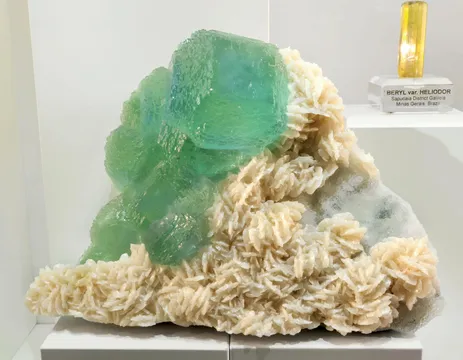
Xianghuapu, also known as the Maiwan Mine, belongs to the Xianghualing tin-polymetallic ore field and is especially important to collectors for transparent pale green fluorite. The classic material consists of sharp green cubes and modified cubes, commonly on flattened white calcite or with small calcite crystals perched on fluorite faces. Some specimens are miniature to small-cabinet size; others reach full cabinet scale, with individual fluorite crystals reported in the several-centimeter range. The distinctive Xianghuapu look—glassy, watery, pale to vivid green fluorite with calcite—has become one of the benchmark Chinese fluorite styles.
Shizhuyuan and the Dongpo ore field add a more industrial, highly metalliferous dimension to Chenzhou. Shizhuyuan, southeast of Chenzhou city, is a giant W-Sn-Bi-Mo polymetallic skarn-greisen deposit related to the Qianlishan granite complex. Its ore system includes massive greisen, stockwork W-Sn-Mo-Bi-F ore, massive skarn ore, and Sn-Be veinlet ore in marble. The mineral assemblage includes garnet, pyroxene, amphibole, epidote, vesuvianite, quartz, calcite, fluorite, chlorite, magnetite, scheelite, cassiterite, molybdenite, bismuthinite, and other sulfides. For the display collector, Shizhuyuan is less universally familiar than Xianghuapu or Yaogangxian, but it has supplied notable fluorite-calcite and fluorite-calcite-pyrite-quartz specimens, including deep blue fluorites introduced on the market as new finds in the mid-2010s.
Huangshaping, in Guiyang County, is a Pb-Zn-W-Mo polymetallic deposit notable in geological literature for the coexistence of lead-zinc and tungsten-molybdenum systems. Its sulfide assemblages include pyrite, sphalerite, galena, pyrrhotite, and related minerals, and it contributes to the broader Chenzhou reputation for metallic mineral diversity. The district’s collector output is not all of the same aesthetic type as the fluorite-calcite material, but it matters for understanding why broad “Chenzhou” labels sometimes mask a complex family of ore systems rather than one tidy locality.
Access today should be understood in the context of active or formerly active industrial mines, not public collecting localities. Chenzhou specimens on the international market have generally moved through miners, local buyers, exporters, dealers, auctions, and older collections. Serious collectors should prefer labels that identify the mine or ore field—Yaogangxian Mine, Xianghuapu Mine, Xianghualing Mine or ore field, Shizhuyuan Mine, Dongpo ore field, Manaoshan Mine, Huangshaping Mine—rather than accepting a broad “Hunan” or “Chenzhou” label as sufficient. Broad labels are common and sometimes unavoidable on older pieces, but precise labels preserve both scientific value and market confidence.
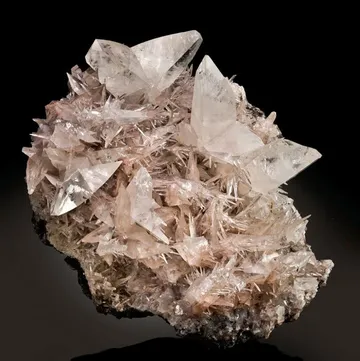
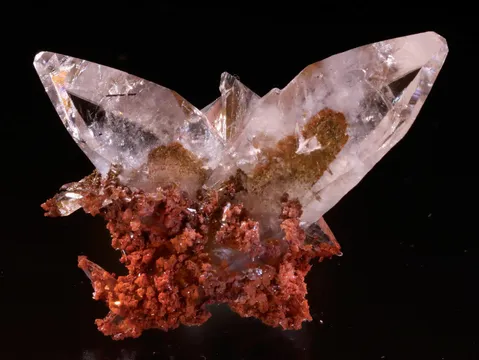
Calcite from Chenzhou is most admired as a companion and sculptural matrix mineral for fluorite, especially at Xianghuapu and Xianghualing, where it occurs as flattened lenticular rhombs, stacked “poker-chip” aggregates, platy translucent crystals, white compressed rhombohedra, and small scalenohedral crystals on or around green fluorite cubes. Documented Xianghuapu examples include cabinet specimens around 10 cm across with fluorite crystals to about 2–2.5 cm and balanced stacks of delicate calcite, as well as larger calcite-on-fluorite compositions where an 8 cm calcite crystal crowns transparent green fluorite. Chenzhou calcite also appears in distinctive pyrite-accented pieces: chip-like calcite on fluorite with tiny pyrite specks at the centers of calcite plates, and “Benz” calcite styles in which pyrite emphasizes termination edges or internal triangular patterns. Good Chenzhou calcite is judged less by absolute size than by luster, translucency, undamaged edges, rhythmic stacking, clean contrast with fluorite, and whether pyrite or fluorite is positioned as a genuine aesthetic accent rather than a muddy coating.
Fluorite is the specimen mineral that made Chenzhou famous worldwide, and the region offers several recognizable styles: Xianghuapu’s exceptionally transparent pale to intense green cubes and modified cubes, commonly with white calcite; Yaogangxian’s blue, purple, green, colorless, and zoned cubes and cuboctahedrons on quartz, calcite, dolomite, mica, or sulfide-rich matrix; Shizhuyuan and Dongpo material with blue to purple fluorite, calcite, pyrite, and quartz; and Manaoshan/Dongpo fluorites with frosted, stepped pale green cuboctahedrons and purple-blue cores. Sizes range from thumbnail single crystals to cabinet plates; published and dealer-documented examples include Xianghuapu fluorite crystals around 2 cm on common cabinet pieces, individual crystals around 4.5 cm on calcite, a 6 cm-class Xianghuapu crystal on a large cabinet specimen, and Manaoshan crystals reported to 7 cm. The best Chenzhou fluorites combine clarity, strong luster, sharply preserved edges, lively internal phantoms or zoning, and an undamaged display face; ordinary examples tend to be bruised at corners, overly contacted, cloudy, or too vaguely labeled to separate Xianghuapu, Yaogangxian, Dongpo, and Shizhuyuan material.
Pyrite from Chenzhou is usually a supporting actor rather than a standalone species, but it is a crucial visual and paragenetic marker in many calcite-fluorite pieces. At Xianghualing and Xianghuapu, pyrite may occur as a fine dusting on calcite or fluorite, as tiny bright specks centered on calcite chips, or as metallic accents associated with fluorite, calcite, quartz, galena, sphalerite, and chalcopyrite in later sulfide-carbonate stages. In Shizhuyuan and related Dongpo material, pyrite accompanies fluorite-calcite-quartz associations in the broader W-Sn-Mo-Bi-Pb-Zn system. The most desirable pyrite-bearing Chenzhou pieces are not those with the most pyrite by weight, but those where the pyrite is sharp, bright, stable-looking, and compositionally useful—lining terminations, picking out faces, or providing golden contrast against white calcite and green or blue fluorite. Dull, powdery pyrite coatings, heavily oxidized sulfides, or pyrite that obscures rather than clarifies the crystal form are less desirable.
Beyond calcite, fluorite, and pyrite, Chenzhou is unusually rich in documented minerals. Yaogangxian alone is known for quartz, ferberite, scheelite, arsenopyrite, muscovite, beryl, topaz, dolomite, chalcopyrite, sphalerite, galena, bismuthinite, sulfosalts, and rare accessory species. Xianghualing is especially important for rare mineralogy: hsianghualite and liberite are classic Li-Be silicates from the locality, balipholite is another Li-bearing type-locality mineral, and the skarn has yielded modern species descriptions including mengxianminite, chukochenite, zinconigerite-2N1S, and zinconigerite-6N6S. Ferrotaaffeite-2N’2S was also described from the Xianghualing ore field, and xiangjiangite is a Chenzhou-related uranium phosphate-sulfate rarity. These are not generally “show minerals” in the fluorite sense; many are microscopic, embedded, or scientifically important rather than cabinet-aesthetic, but they give Chenzhou a stature that reaches far beyond the display case.
The first authenticity issue with Chenzhou is locality precision. “Chenzhou,” “Hunan,” and even “Xianghualing” can be used loosely in commerce, while the most valuable information is usually the exact mine or ore field. Yaogangxian, Xianghuapu, Xianghualing, Dongpo, Manaoshan, Shizhuyuan, and Huangshaping are not interchangeable labels. The Green Fluorite Mine/Manaoshan/Dongpo naming issue is a good example: similar-looking green fluorites entered the market under both a named mine and a broader ore-field label. That does not make the specimens false, but it does mean a serious label should capture the uncertainty rather than replace it with a false precision.
Condition is the most common practical problem. Fluorite cleaves readily and Chenzhou fluorites often have exposed cube corners, beveled edges, stepped faces, and contact points that reveal bruising under strong light. Inspect corners with a loupe. Check whether “frosted” surfaces are natural growth texture or post-mining abrasion. On green Xianghuapu fluorite, even a small corner ding can be conspicuous because the crystals are so transparent. On Yaogangxian pieces, internal phantoms and color zoning can distract from edge damage in photographs, so rotate the specimen under a narrow beam before buying.
Calcite adds a second layer of vulnerability. Flattened, platy, and scalenohedral calcite is prone to chipped rims, bruised tips, and cleaning damage. Avoid acid cleaning unless you know exactly what is present, because calcite will react, and mixed Chenzhou pieces may combine acid-sensitive carbonates with fluorite, quartz, pyrite, and sulfides. Some calcite-fluorite specimens fluoresce—red calcite and blue fluorite responses are documented from Chenzhou material—but fluorescence should be treated as a bonus, not a substitute for daylight aesthetics and honest condition.
Pyrite and sulfides should be examined for stability. Bright, sharp pyrite specks embedded in or sitting firmly on calcite are desirable. Dull, oxidized, crumbly, or powdery sulfide coatings are less attractive and may signal storage problems. Keep pyrite-bearing pieces dry, avoid dramatic humidity swings, and do not store them in sealed foam-lined boxes if the sulfides appear altered.
The market availability of Chenzhou minerals is broad but uneven. Ordinary small green fluorite-calcite pieces from Xianghuapu or broad Chenzhou labels remain accessible, while top-condition, highly transparent cabinet specimens with exact mine labels and old provenance command stronger prices. Fine Yaogangxian fluorites, especially large, damage-free, color-zoned crystals on quartz or calcite, are competitive internationally. Rare-species specimens from Xianghualing occupy a different market: they are bought for scientific interest, type-locality significance, and analytical confidence rather than visual impact. For serious collectors, the best Chenzhou purchases are specimens that combine aesthetics, condition, and label specificity.
One of the more memorable Chenzhou fluorite episodes came through the late-2016 to early-2017 appearance of pale green fluorites attributed to the Green Fluorite Mine at Manaoshan Mountain in Suxian District. The name sounded almost too convenient, but the specimens justified the attention: small-cabinet to cabinet pieces with individual fluorite crystals reported to 7 cm, pale green cuboctahedrons that were transparent inside but frosted and finely stepped on the surface, and purple-blue cores visible in many crystals. Some sat on drusy white quartz and were accompanied by pink saddle-shaped dolomite. The same-looking material also appeared under the broader Dongpo ore field label, a reminder that Chinese specimen localities can be both geologically real and commercially elastic.
That same report compared the Manaoshan material with earlier blue-purple fluorites attributed to the Dongpo mine, Chenzhou. The writer had handled one of the earlier specimens and decided that its color was subtly different from later “tanzanite fluorite” material from Fujian—more purple, not simply another case of mislabeled Chinese fluorite. That is the sort of observation collectors should value: not a sweeping declaration from a photograph, but a careful comparison of actual specimens, color, texture, and market timing.
Xianghuapu’s rise has its own collector lore. Its glassy green fluorites became one of the early signals, in the opening years of the twenty-first century, that Chinese fluorite was about to alter the global specimen market. The best pieces were not just numerous; they were shockingly clean for a new supply line—transparent green cubes and modified cubes, often stacked on flattened white calcite, that looked more like carefully composed sculptures than mine-run gangue. Even after many hundreds of pieces reached the market, collectors continued to single out unusually transparent floaters, large cabinet plates, and combinations where calcite and fluorite seemed naturally balanced.
The Tucson 2017 appearance of deep blue fluorite from Shizhuyuan added another chapter. These specimens were promoted as a novelty, with blue cube-octahedral fluorite on matrix and white scalenohedral calcite. They mattered because they broadened the collector’s idea of Chenzhou beyond the familiar Xianghuapu green and Yaogangxian color-zoned styles. Chenzhou was not one look; it was a family of looks, each tied to a different mine, pocket, or ore-field habit.


_1_(34521392876).jpg)