Davib Ost Farm 61, Namibia - Erongo area famed for tin-tantalum pegmatites and lustrous schorl, green fluorite, and yellow muscovite, prized by collectors.
Key facts
Davib Ost Farm 61 lies on the southern flank of the Erongo Mountains, in the Karibib Constituency of Namibia’s Erongo Region, and it is one of the classic farm-level names serious collectors should not allow to be swallowed up by the broader “Erongo” label. The locality is not a single pocket in the way many modern Erongo specimens are marketed, but a broad mineralized farm area with named pegmatites and workings, including Davib Mine, Carsie, Ariakas, Borna, Herbst’s pegmatite, Pegmatite No. 2, Pegmatite No. 3, and Rübner’s claims. Its collecting importance comes from the overlap of two histories: an older tin-tantalum-tungsten pegmatite story, recorded in greisenized quartz-feldspar cores, cassiterite and columbite-tantalite, and a modern specimen story built around lustrous black schorl, green fluorite, yellow muscovite, quartz, feldspar, beryl, and rarer pegmatite phosphates and arsenates.
Geologically, Davib Ost sits in the Sandamap–Davib Ost sector of the Damaran tin belts, where pegmatites cut Kuiseb schist and occupy a structural corridor between Salem and Erongo granites. The farm is especially important because the southern tin belt reaches nearly 5 km in width here, and its stanniferous pegmatites show the classic internal architecture collectors learn to recognize in hand specimens: quartz-feldspar cores, muscovite greisen, cleavelandite-rich replacement bodies, black tourmaline, cassiterite, and late open-space pocket minerals. In museum and dealer trays the best Davib Ost specimens are instantly legible—black, highly lustrous schorl crystals rising from white quartz or feldspar, or green to color-zoned fluorite cubes set on straw-yellow muscovite, sometimes with schorl needles and etched microcline.
Regional View
Country View
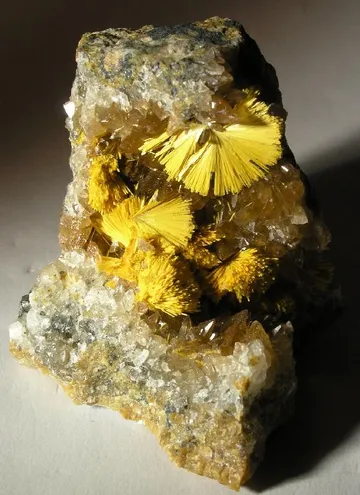
The best modern Davib Ost specimens have a more graphic, architectural look than many other Erongo pieces. The schorl is typically short-prismatic to blocky rather than long and splintery, and fine crystals may be double terminated, chisel-terminated, or clustered in equant “almost garnet-like” groups with strong glassy luster. The fluorite is not the huge purple-green octahedral style that made other Erongo localities famous; Davib Ost fluorite is more intimate and pegmatitic, most prized as sharp, gemmy green cubes or modified cubes with color zoning, perched on muscovite or wrapped around black tourmaline. Muscovite, usually an afterthought at many localities, becomes a real aesthetic player here when it forms yellow rosettes and sharp blades against fluorite and schorl.


Historically, Davib Ost also deserves a place in systematic collections. It is the type locality for ernstite, a manganese-iron-aluminum phosphate formed by oxidation of eosphorite in granite pegmatite, and Ariakas No. 2 on the farm has supplied schneiderhöhnite for modern crystal-structure work. The locality also figures in the broader literature on Namibian Li-Fe-Mn phosphates, rare-element pegmatites, and fluorine-rich late-stage pegmatite mineralization. For the collector, that means Davib Ost labels carry more weight than just “nice Erongo schorl”: they point to one of the better documented rare-element pegmatite fields in the Karibib–Erongo district.
Search for specimens: View all specimens from Davib Ost Farm 61, Namibia
Davib Ost Farm 61 is a farm-scale pegmatite locality near Karibib, south of the Erongo massif. The central Davib Mine coordinates commonly given for the mine locality are about 21°46′36″ S, 15°32′29″ E, with nearby settlements including Usakos to the southwest and Karibib to the southeast. Collectors will encounter the name in several forms: Davib Ost, Davib East, David Ost, and occasionally older label variants such as Dawib. The German “Ost” and English “East” forms refer to the same farm-level locality, not separate collecting districts.
The deposit type is rare-element granitic pegmatite with tin, tungsten, tantalum-niobium, lithium, beryllium, boron, and fluorine expressed in different parts of the farm. In the regional framework, Davib Ost belongs to the southern tin belt of the Damara Orogen. This belt is hosted largely in Kuiseb schist and trends from the Arandis area eastward toward the Swakopmund and Karibib districts, splitting near Onguati into arms that pass toward Okawayo and along the southeastern margin of the Erongo Mountains. Davib Ost is one of the places where the belt broadens most dramatically, with numerous pegmatites lying in a triangle of Kuiseb schist bordered by Salem and Erongo granites.
The ore bodies are best understood as zoned to partly replaced pegmatites. Older economic descriptions emphasize quartz-feldspar cores altered or replaced by muscovite greisen and cleavelandite. Cassiterite occurs in those replacement bodies, in greisenized portions along core margins, as disseminated ore in some pegmatites, in quartz-tourmaline fracture fillings, and in eluvial or alluvial concentrations in dry stream beds. Davib Mine itself produced cassiterite from an opencast pit developed in an elongate greisen replacement body dipping gently eastward on the footwall side of a pegmatite. Carsie, another important working on the farm, exploited a broad pegmatite body in nonporphyritic granite, where cassiterite was limited to linear greisen replacement bodies and quartz-tourmaline fracture fillings. Ariakas, in the extreme southwestern part of Davib Ost 61, carried cassiterite through the pegmatites chiefly as disseminated ore, but historical recovery appears to have come largely from eluvial sands and gravels despite the presence of shafts and adits.
The mining history began as an economic search for tin and associated rare metals rather than for display specimens. Tin was known in the broader Erongo area by 1910, and the Davib Ost farm became part of the Karibib–Erongo tin-pegmatite story that also includes Ameib, Sandamap, Sidney, Borna, Carsie, Drews, and other farm-named pegmatites. Carsie’s old workings are described in the central portion of Davib Ost 61, north of the Davib River. One of the most memorable historical ore finds from the farm was a massive cassiterite lens weighing 235 kg, accompanied by columbite, wolframite, monazite, and molybdenite. That single lump belongs to the older mining history, but it explains why Davib Ost specimens so often carry more geological seriousness than their polished marketplace descriptions suggest.
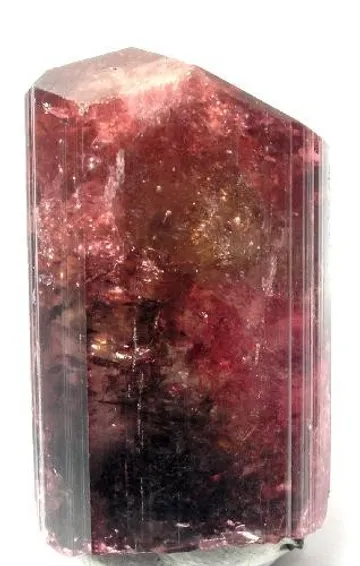
Modern collector interest shifted attention from ore to pockets, greisen selvages, and contact zones capable of producing crystals. Davib Ost is well documented for schorl, fluorite, quartz, muscovite, beryl, feldspar, cassiterite, amblygonite, elbaite, ferberite, tantalite-(Fe), topaz, lepidolite, and several rarer phosphate and arsenate minerals. Specimen dealers recorded a notable schorl-producing period around July–August 2001, when sharp, brilliant black schorl crystals—some on white quartz matrix, some as floaters, and some in aerial clusters—entered the collector market. Fluorite-muscovite combinations, many formerly in specialized Erongo collections, show a different pocket environment: gemmy green fluorite, yellow muscovite, schorl or foitite needles, and feldspar in small but elegant cabinet to miniature specimens.
Access today should be treated as private-land and active-claim access, not casual collecting ground. Namibian environmental records in 2023 listed environmental-clearance applications and approvals for mining of semi-precious stones on several mining claims at Farm Davib Ost 61, and later government clearance lists have continued to show semi-precious-stone mining applications under spelling variants such as David Ost or Daweb East. In practical collecting terms, that means specimens should be obtained through reputable Namibian diggers, dealers, or older collections unless the collector has explicit permission from the landholder and claimholder. The farm is too significant, too subdivided by named pegmatites, and too active in small-scale mineral extraction for undocumented field collecting to be responsible.
Davib Ost schorl is the locality’s signature display mineral: black, lustrous, short-prismatic to blocky tourmaline, commonly in compact crystal groups, double-terminated crystals, or near-equant individuals on white quartz, feldspar, or more complex fluorite-muscovite matrix. Fine pieces from the 2001 finds include brilliant crystals with well-defined faces and edges, dominant individuals around 1.5–2 cm, and larger crystal aggregates approaching 4–5 cm across; the best are not merely black tourmaline “logs,” but sculptural clusters with chisel terminations, high luster, complete all-around form, and strong contrast against snowy feldspar or white quartz. Ordinary Davib Ost schorl tends to be massive, crowded, edge-worn, or poorly separated from matrix; top pieces show individual crystals, undamaged terminations, and an aesthetic spacing that makes the black tourmaline read as architecture rather than as dark rubble.
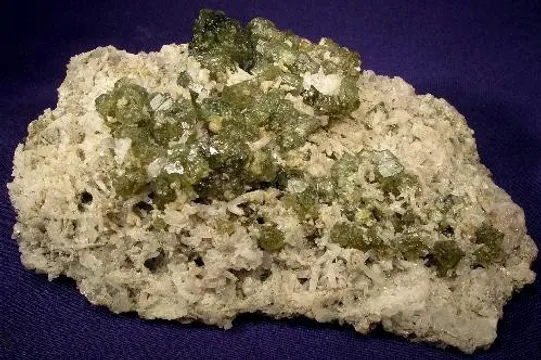
Davib Ost fluorite is most collectible as small, sharp, transparent to translucent green cubes and modified cubes, often with green cores, colorless outer zones, or purple-green zoning, set on yellow muscovite and associated with schorl, foitite, microcline, orthoclase, feldspar, quartz, and occasionally beryl. Documented specimens include miniature fluorites with crystals about 1.2–1.4 cm across on straw-yellow muscovite, and cabinet specimens carrying dozens of gemmy cubes around 5 mm to 1 cm on edge; the attraction is not scale but color zoning, clarity, and association. The finest Davib Ost fluorites have crisp cube faces, visible zoning or phantom-like internal color, and an undamaged relationship to muscovite rosettes or tourmaline; lesser examples are pale, cleaved, crowded, or visually lost in mica.
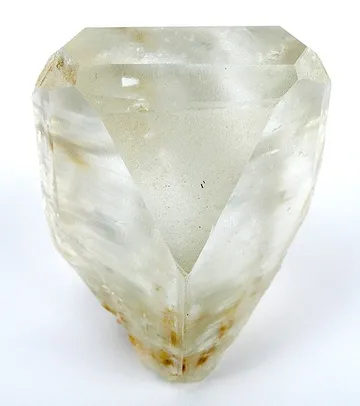
Quartz at Davib Ost belongs both to the structural heart of the pegmatites and to the specimen aesthetic: quartz-feldspar cores were central to the ore-forming system, and one scientific fluid-inclusion study used material cut from a large, roughly 40 cm idiomorphic quartz crystal protruding into an open cavity in the core zone of the main pegmatite body. Collector pieces more commonly show white to milky quartz matrix, small quartz crystals, or smoky quartz associated with schorl; the most desirable pieces use quartz as a bright stage for glossy black tourmaline rather than as a bulky, massive pegmatite fragment. Good quartz-bearing Davib Ost specimens are sharp, clean, and balanced, with schorl or fluorite placed naturally on the quartz; ordinary examples are heavy pieces of core quartz with only embedded or broken accessory crystals.
Muscovite from Davib Ost is unusually important aesthetically because it can form yellow to straw-yellow rosettes, sharp hexagonal blades, and sparkling mica plates that drape over or under green fluorite and black tourmaline. In specimen descriptions from the locality it appears with fluorite, schorl, foitite, microcline, and feldspar, sometimes as the visual background that makes small green cubes stand out; large-cabinet pieces with yellow muscovite rosettes over apple-green fluorite are especially distinctive for Erongo material. The best muscovite pieces have fresh yellow color, crisp blade edges, three-dimensional rosettes, and good contrast; common pieces suffer from the usual mica problems—bent plates, bruised edges, flaking, and an attractive face that hides a dull or incomplete backside.
Beyond the four main collector species above, Davib Ost Farm 61 has a substantial rare-element pegmatite suite. Albite, amblygonite, beryl, cassiterite, elbaite, ferberite, lepidolite, microcline, tantalite-(Fe), topaz, and the broader columbite-tantalite series are documented from the farm or its named workings. Borna is recorded for albite, cassiterite, schorl, triplite, and pink andalusite needles in kaolin; Carsie for cassiterite, columbite-tantalite, ferberite, molybdenite, monazite, muscovite, nontronite, schorl, tantalite-(Fe), and elbaite; Ariakas and Ariakas No. 2 for cassiterite, columbite-tantalite, heterosite, schneiderhöhnite, and tantalite; Herbst’s pegmatite for triphylite and heterosite; and Rübner’s claims for corundum and triphylite. The locality is also notable as the type locality for ernstite, formed by oxidation of eosphorite in granite pegmatite, and for pale-blue, fluorine-rich herderite-series material associated with schorl, muscovite, and orthoclase.
The main authenticity issue with Davib Ost specimens is not a well-known family of fakes, but locality precision. “Erongo” is often used too broadly, and Davib Ost material can be confused with nearby Davib West, Drews, Ameib, Erongorus, Tubussis, or generic Erongo Mountain specimens. Labels reading Davib East, Davib Ost, David Ost, and occasionally Dawib may all be legitimate historical or linguistic variants, but they should be preserved exactly, especially if a sublocality such as Davib Mine, Carsie, Ariakas, Ariakas No. 2, Borna, Herbst’s pegmatite, Pegmatite No. 2, Pegmatite No. 3, or Rübner’s claims is present. A vague “Erongo, Namibia” label reduces the scientific and market value of a good Davib Ost piece.
Condition matters heavily. Schorl from Davib Ost is tough in hardness but not immune to edge wear; look carefully at terminations, re-entrant areas between crystals, and contact points on floater groups. Broken schorl tips can be difficult to see under dark luster, so use a strong light and rotate the specimen. Fluorite is more vulnerable: even small Davib Ost cubes may show cleaved corners, bruised faces, or missing internal edges hidden by muscovite. Muscovite rosettes and blades are easily bent or flaked, and yellow mica can lose its sparkle if oily, dusty, or handled carelessly. Avoid aggressive cleaning; compressed air, a soft brush, and minimal water are usually safer than acids or ultrasonic cleaning for mixed fluorite-muscovite-tourmaline pieces.
Repairs and assembly should be considered in any high-contrast schorl-on-feldspar or schorl-on-quartz specimen, because black tourmaline crystals are visually forgiving and can conceal joins. There is no widely documented Davib Ost fake industry comparable to classic faked localities elsewhere, but a buyer should still inspect matrix contact, matching luster at the base of crystals, glue lines, and unnatural placement of isolated schorl on bright feldspar. Fluorite and muscovite combinations should be examined for glued crystals, but also for natural detached-and-recemented pocket damage, which may occur in legitimate repaired specimens. Repairs are not fatal if disclosed; undisclosed assembly is.
Fluorescence is not a primary diagnostic feature for the common Davib Ost suite. Fluorite may fluoresce, but color response is not a secure locality test, and the black schorl and muscovite that define most pieces are not purchased for fluorescence. Rare arsenate and phosphate species from the farm, including schneiderhöhnite and Li-Fe-Mn phosphate alteration products, should be treated as analytical or systematic minerals rather than cleaning experiments: do not lick, soak, acid-clean, or abrade them, and keep any friable material boxed and labeled.
Market availability is selective. Schorl from Davib Ost appears regularly enough that a patient collector can choose for form, luster, and matrix rather than buying the first black tourmaline offered. Fine double-terminated schorl groups, true floaters, and high-contrast schorl on white quartz or feldspar are less common and command stronger prices. Fluorite-muscovite combinations are scarcer, especially with sharp green zoned fluorite, yellow mica rosettes, and intact schorl or foitite association. Systematic rarities—ernstite, schneiderhöhnite, verified herderite-series material, heterosite, triphylite, triplite, and tantalite-columbite material with precise sublocality—are much harder to obtain than display schorl and should be acquired with documentation.
The old miners at Davib Ost were not chasing thumbnails for perky boxes; they were following tin through dry washes, greisenized cores, and fractured quartz-tourmaline zones. The most vivid surviving number from that period is Carsie’s 235 kg cassiterite lens, found in the central part of Farm Davib Ost 61 north of the Davib River. It was not an isolated black crystal in a collector’s vug but a massive tin-oxide body accompanied by columbite, wolframite, monazite, and molybdenite—the kind of find that reminds a modern collector why pegmatite specimen localities often began life as hard economic prospects. In one object, Carsie condensed the whole Davib Ost story: tin, rare metals, greisen, and a mineralized pegmatite large enough to matter.
A quieter but equally telling episode comes from the scientific work on fluid inclusions. Researchers did not sample an anonymous chip of quartz; they cut material from a large idiomorphic quartz crystal about 40 cm long, protruding into an open cavity in the core zone of the main Davib Ost pegmatite body. That detail is easy to pass over, but it is a collector’s image: a big free-grown quartz crystal in a pegmatite cavity, large enough to preserve trapped fluids from the late stages of crystallization. Those inclusions showed a strong homogenization-temperature peak around 370°C, and after pressure correction the inferred trapping temperature was about 475°C. The numbers belong to petrology, but the object belongs to the imagination of anyone who has ever opened a pegmatite pocket and seen crystal faces shining back from the dark.
The modern specimen market’s Davib Ost moment arrived most visibly around 2001. Dealer records from that period describe a “latest find” of excellent Namibian schorl from Davib East Farm 61, with sharp black crystals on white quartz, floaters, brilliant equant crystals, and aerial aggregates with unusually well-defined forms. The best of those pieces changed how many collectors thought about black tourmaline from Namibia. Instead of long, battered prisms or embedded black masses, Davib Ost offered compact, glossy, self-possessed schorl crystals—some double terminated, some nearly equant, some standing in high relief on quartz or feldspar. It is no accident that several such pieces passed through serious collections, including the Bob Noble, Casado Margolles, Thomas von Criegern, and Desmond Sacco collections.
Then there are the fluorite-muscovite pieces, which feel almost like a separate locality until the labels bring them back to Davib Ost. One specimen from the Heini Soltau Erongo specialty collection shows two conjoined, gemmy fluorite crystals about 1.2–1.4 cm across, subtly colored and patterned, sitting in straw-yellow muscovite. Another carries yellow muscovite blades perched on dark green etched fluorite, the fluorite clustered around slender schorl. Later auctioned specimens from the Kurt Hefendehl collection pushed the same theme larger: apple-green fluorite cubes, some only 5 mm, draped with dazzling yellow muscovite rosettes and accompanied by foitite and schorl. Those pieces are prized not because they are big fluorites, but because they capture a very particular Davib Ost pocket chemistry—fluorine, boron, mica, feldspar, and open space, all in miniature.