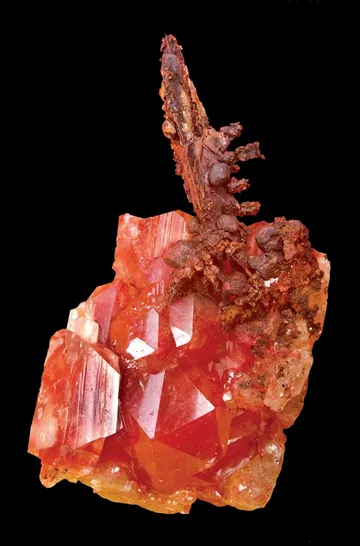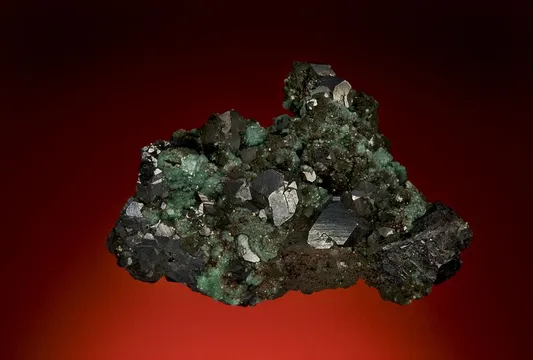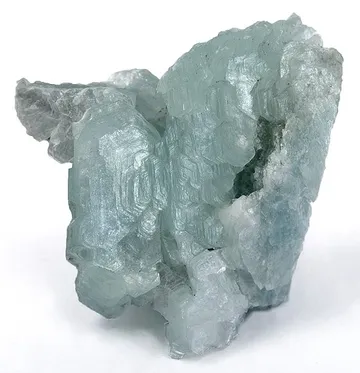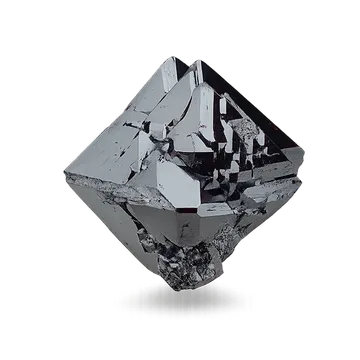
ナミビア共和国オンガンジャ鉱山産クペライト — 大きく鋭い結晶で、孔雀石の皮膜と深紅の内部を持つ;コレクターに長らく愛されてきた歴史的な産地。
Key facts
オンガンジャ産クパイトは、銅酸化物のクラシックの中で特異な地位を占める: クパイトが「美しい鉱物」から伝説的な宝石の結晶の領域へと踏み込んだ locality である。最良の標本は大きく鋭い、等方性の結晶である Cu2O の結晶で、常に八面体や立方八面体に修飾されており、その表面はしばしばマラカイトの薄い苔状からベルベットのような緑の皮膜に覆われている。その皮膜の下には破断面と小さな天然の窓が露出し、有名な内部色を reveal することがある:深いさくらんぼ色、ワインレッド、または血赤色で、時には宝石質であるほどの大きさのファセット石を得られるほどの輝度を示すこともある。

この鉱山は Seeis 近くのオンガンジャ鉱区、 Windhoek の北東、ナミビアのコマス州に位置している。標本の産地表記は古いラベル上では Emke Mine、Emka Mine、Otjisongati Mine、または Ogonja Mine としても現れ、それらの名称は自動的な警告サインとして読むべきではなく、産地の歴史の一部として理解されるべきである。クパイトと天然銅の標本は特に Voitskopf-Maygift 缶脈系に結びついており、Damara Orogen の南部帯の変成岩内で発達した銅含有脈系である。
コレクターの視点で言えば、オンガンジャのイメージは早期1970年代の発見と切り離すことはできない。古典的な材料には重厚なマラカイト・コーティングのクパイト結晶、完全なサムネイルとミニチュア、方解石上の結晶、方解石上の chalcolithite、そして天然銅を含む珍しい基質片が含まれる。鉱物学文献は繰り返し1973年のクパイト発見と1974年の偽装なしマラカイト発見を取り上げ、オンガンジャを有名な産地へと押し上げた出来事として挙げる。今日、古典文学で「閉山かつ水没」と記述される鉱山として説明されるようになり、良好なクパイトは実質的に旧コレクション鉱物となっている。ラベル、産地、表面の経緯、状態が色と同様に重要である標本である。

Search for specimens: View all cuprite specimens from Onganja Mine, Namibia
Onganja Mine is on Helen Farm 235 near Seeis in the Windhoek Rural constituency of Khomas Region, Namibia. Mindat places the locality at 22° 5' 58" S, 17° 27' 41" E, and records the historical names Emke Mine, Emka Mine, Otjisongati Mine, and Ogonja Mine. In the specimen trade, “Emke Mine” and “Onganja Mine” are often used interchangeably for the classic cuprite material.
Geologically, Onganja is not a simple oxidized cap on a random copper showing; it is part of a structurally controlled copper district in the Southern Zone of the Damara Orogen. The country rocks include amphibolites, biotite-plagioclase schists, pelitic schists, and related metamorphic lithologies. Modern work describes a history of polyphase deformation, shearing, albitization, calcite and quartz-albite veining, and copper mineralization associated with chalcopyrite, chalcocite, pyrite, magnetite, hematite, molybdenite, and locally native gold. Moore’s 2010 study classified the system as Neoproterozoic mesothermal Cu(-Au) mineralization, while Hales’ 2024 dissertation argued that the mineralization is best regarded as late-orogenic, shear-related copper mineralization rather than a true IOCG system, despite some IOCG-like features such as Cu-Au-Mo-U-REE association, magnetite/hematite, and albitization.
At the scale most relevant to collectors, the key structure is the Voitskopf-Maygift vein system. The Onganja mine exploited the Voitskopf vein, continuous with the Maygift vein across the Helen 235 and Klein Onganja 148 farm boundary, and the majority of cuprite and native copper specimens are attributed to this vein system. The broader Onganja mining area also includes named veins such as Omahanga, Kronriff, Feldspatriff, Stanley, Kriegsfeldgang, and several lettered veins.
Mining and collecting history are unusually intertwined here. The district has older copper-working history, with published secondary summaries noting copper mining from at least early historic times and more formal company work beginning in the late nineteenth century. The mine was worked intermittently by various operators, and later dump treatment by heap leaching continued into the 1990s. The great specimen era, however, is the early 1970s: large, well-formed cuprite crystals in 1973, and fine primary malachite in 1974. The most famous specimens passed quickly into major private and museum collections, which is why old labels from the mid-1970s carry special weight.採集現場としては、オーンガンハはアクセス可能な収集場所というよりも閉鎖/非公開として扱われるべきです。 古典的な Mineralogical Record の記述は、鉱山は閉鎖されており水没していると説明しており、今後の標本回収の可能性は低いとしています。 実際には、真剣な収集家はオーンガンハの銅砒(Cuprite)を、現場を訪れることではなく、旧収集品、販売業者の在庫、オークションを通じて入手します。## Onganja鉱山、ナミビア産 cupriteの特徴
Onganja産 cupriteは、まずスケールの大きさで評価されます。多くのcuprite産地がミリメートル級や小さなサムネイル結晶で知られるのに対し、Onganjaでは手持ちの標本として目立つ大きさの結晶を生産し、まれには宝石粗粒にもなることがあります。1970年代の宝石学ノートには、5 cmまでの結晶が、正八面体、十二面体、立方体の形状から成ると記されています。ナミビア産鉱物の要約でも、さらに大きな結晶が報告されており、記録としては14 cmおよび2.1 kgに達します。美術館の標本はそのスケールを鮮やかに示しています。オーストラリア国立博物館のアルバート・チャップマン・コレクションには、8.5 × 4.5 × 4 cmのcuprite-on-calcite標本が含まれており、単一のcuprite結晶は5 × 2.4 cmと報告され、約1973年頃に採取されました。
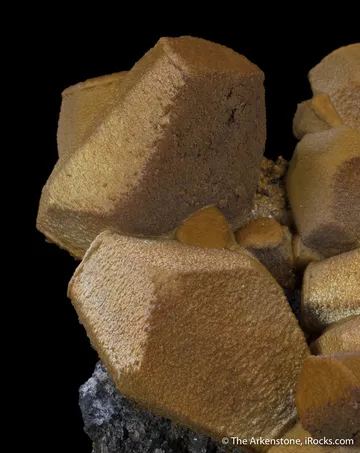
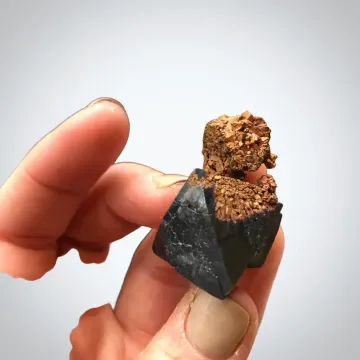
古典的な形状は、等方的で鋭く幾何学的です:正八面体から立方八面体の結晶で、一般にキューブおよび十二面体の面で変形しています。いくつかの標本は、キューブと八面体の関係を非常に明確に示しており、教科書の教材標本として用いられます。表面は、鏡面光沢、凹凸、霜降り、粒状、または被覆された状態であり、マラカイトの残存量と標本が清掃されたかどうかに依存します。Onganjaのおなじみの外観は、暗く、ほとんど黒っぽいまたは緑がかった外表面に、薄いマラカイトのコーティングを施したもので、明るい赤色の表面ではありません。赤色は、欠けた角、付着点、天然の窓、または背光時に最も強く現れます。
色はこの産地の中心的な楽しみのひとつです。手に取ると、多くの結晶は暗い茶黒色、緑色のコーティング、またはくすんだ色に見えます。強い光の下、薄い縁に沿って、または被覆がない場所では、内部が深いガーネットレッドからチェリーレッドへと閃くことがあります。最良の材料は、cupriteが非常に高い屈折率に特徴的な、アダマンチン光から準半金属光沢を保ちつつ、十分な透明度または半透明性を持つほどに発光します。
マラカイトはOnganjaの関連鉱物であるだけでなく、cupriteのアイデンティティの一部です。クラシックな材料の多くはマラカイトでコーティングされたcupriteであり、いくつかの標本はcupriteの後にマラカイトが残るか、cupriteのシャープな立方八面体形を保つマラカイト偽種です。コレクターは、マラカイトで薄くコーティングされたcuprite結晶、部分的にマラカイトを清掃したcuprite結晶、cupriteがほとんどまたは全く見えなくなるcupriteの偽種マラカイトを区別するべきです。石灰岩は最も重要なマトリックスおよび表示アソシエイトです。有名なオーストラリア国立博物館の標本は calcite 上の cuprite であり、公表された図には limonitic マトリックス上に calcite に囲まれた針状 cuprite が記録されています。ネイティブ銅は別の重要な Onganja アソシエイトで、時には cuprite の髪の毛のような変種である chalcotrichite と一緒に現れます。当地の他の記録鉱物には、石英、硫化銅、硫化鉄鉱、ブロンチサイト、青銅鉱石、緑銅鉱、磁鉄鉱、磁鉄鉱、モリブデナイト、黄鉄鉱、ルチル、チタン酸鉄、銅丹、方渋、黄銍閃、方解石などが含まれますが、ほとんどのコレクター向け cuprite 標本は長い種のリストよりも cuprite-マラカイト-カルサイト- native copper の関係で評価されます。
オンガンジャの cuprite の品質は、地域特有の要因の厳密なセットによって判断されます。最高の標本は、シャープで完全な幾何形状を示し、単なる大規模な赤酸化物というだけでなく強い形を持ち、コーティングの下に赤い cuprite の目に見える証拠があり、魅力的なマラカイトの質感があり、欠けたり接触面が少ないことが求められます。 calcite を含むマトリックスの例は、cuprite が目立つ場合に特に望ましく、マトリックスに visually 沈んでいないことが重要です。繊細なサムネイルは、形が均整のとれた完全結晶が希少であるため、大きくて損傷した pieces よりも価値が高い場合があります。信頼できる旧来の産地 provenance — 特に 1970年代のコレクションや主要ディーラー由来 — は信頼性と望ましさを高めます。## Collector Notes
Authentic Onganja cuprite often looks less “red” than newcomers expect. The classic specimens are commonly coated by malachite, giving green, black-green, or dark velvety surfaces; the red may only appear at a chip, corner, base, or backlit edge. A specimen that is uniformly bright red may still be genuine if cleaned, but its surface history should be understood. Some Onganja cuprites have had malachite mechanically removed, and some examples are described as etched out from beneath a malachite coating. Such cleaning can reveal the coveted wine-red interior but may leave pitted faces or a surface that differs from untouched old material.
The most common condition issues are broken corners, contacted growth areas, bruised high points, and pitted surfaces. Large Onganja crystals were heavy and often coated, so not every chip is visually obvious until the piece is examined under light and magnification. Complete-all-around floaters and undamaged modified octahedra are much scarcer than partial crystals or contacted pieces. For malachite-coated examples, inspect whether the green coating is natural microcrystalline malachite rather than paint, waxy enhancement, or a glued-on repair. I am not aware of a classic, widely documented fake scandal specific to Onganja cuprite, but the value of the material makes ordinary high-end mineral due diligence essential.
Locality confusion is a more realistic concern than outright fakery. Onganja cuprite may appear under Emke, Emka, Ogonja, Otjisongati, Seeis, Windhoek District, or Khomas Region labels. Those names can be legitimate, but vague “Namibia” labels deserve closer scrutiny, especially because Tsumeb and other Namibian copper localities also produced cuprite. Conversely, the green malachite-coated Onganja habit is distinctive enough that experienced dealers often recognize it quickly, particularly when the crystal form is sharp and equant.
Rarity is strongest at the high end. Small or damaged examples appear occasionally, but sharp, complete, gemmy, well-proportioned crystals are old-collection pieces and do not circulate in quantity. The mine’s closure and flooding, plus the finite nature of the early-1970s material, mean that availability depends on collection turnover. Faceted Onganja cuprite is rarer still. Even large gems are known, but they are collector stones rather than wearable jewelry stones because cuprite is soft, brittle, and very dark in thick sections.
For buying, prioritize provenance, crystal integrity, and honest surface description. “Malachite removed,” “etched,” “pseudomorph,” and “malachite-coated cuprite” describe different things and should not be treated as interchangeable. Strong Onganja pieces are often expensive because they combine classic locality status, historic scarcity, unusual size, and the unusual overlap between specimen and gem significance.## Stories & Field Notes
オンガンジャの物語は、1970年代初頭の短い窓に焦点を当てている。1973年、鉱山は locality を有名にした巨大で整ったクパイト結晶を産出した。翌年には別の驚きが訪れる:鉱物学レコードの locality 記事で取り上げられるほど精度の高い偽形を伴わないモラスカイト標本。これらの2年間が鉱山の採集アイデンティティを確定させた――最初は赤色の酸化銅、次いで緑色の炭酸銅塩――そして古いラベルが現れたとき、研究者が探す日付の呼称となっている。
現在最もよく歩かれたオンガンジャのクパイトのひとつが、オーストラリア博物館のアービルト・チャップマンコレクションに所蔵されている。標本は8.5 × 4.5 × 4 cm、クパイト結晶は5 × 2.4 cmと報告され、旧い Emke 鉱山、オンガンジャの帰属を持つ。結晶はベルベットのような緑色のモラスカイトで覆われているが、その幾何学は立方体と八面体が重ね合わせられた形として明確に読み取れる。概ね1973年ごろに採集され、ルイス・T・レイテ・コレクションを経て1975年にアービルト・チャップマンが購入した。オーストラリア博物館は1996年に D.50333 として登録し、標本だけでなくこうした標本に権威を与える採集経路も保存している。
オンガンジャの宝石質側面には独自の神話がある。というのも、クパイトは実用的な宝石鉱物のようにはほとんど振る舞わないからだ。ペット・ダンの1976年の宝石学ノートは、大きなオンガンジャ結晶がカット可能なくらい宝石性があると記述する一方で、クパイト宝石が珍しい理由を正確に強調している:硬度が約4、脆性、非常に高い屈折率から来る半金属的な輝き、そして厚い石ではほとんど不透明になり得る深紅の色。彼は、史上最大級のカット石としてスミソニアン所蔵の172カラットのラウンド・モディファイド・ブリリアントを挙げ、壮麗だが宝石収集家向けのものだと記録している。その後の美術館や市場の例も同じテーマを継承している――華麗だが、採集者のためのものに限られる。
2015年の Heritage Auctions で売られた149.36カラットの三角形のオンガンジャ・クパイトは、その宝石遺産の現代的な一端を垣間見せる。オークションの説明は、モラスカイトで覆われたクパイト結晶の大発見と結びつけられており、すべての結晶がカット向きというわけではなく、ファセット付きの標本は決して多数ではなかったことを指摘している。宝石はミズーラ、モンタナ州のマイク・グレイによってカットされ、32.25 × 30.78 × 14.41 mm を測定。$11,250で落札――日常的な宝飾需要というより、そんな石が可能にした唯一の locality からの大きくファセットされた血のように赤いクパイトの稀少性を反映している。## 鉱物学的記録と出版物
Cairncross, Bruce, and Stuart Moir. “The Onganja Mining District, Namibia.” The Mineralogical Record, 27(2), 85–98, 1996. 鉱山の歴史、クープライト発見、マラカイト発見、標本の意義に関する必読の現地情報記事。
Hales, Matthew Paul. Geological Setting and Genesis of Vein-hosted Copper Mineralisation at the Onganja Mining District, Namibia. PhD thesis, University of the Witwatersrand, Johannesburg, 2024. 現代的な地質学的扱いの district、後期造山期のせん断関連銅鉱化を強調。
Moore, J. M. “Comparative Study of the Onganja Copper Mine, Namibia: A Link Between Neoproterozoic Mesothermal Cu(-Au) Mineralization in Namibia and Zambia.” South African Journal of Geology, 113(4), 445–460, 2010. メソス温帯銅鉱系、脈系複合、変質、鉱物集合体、Re-Os モリブデナイト年代の要点論文。
Strunz, H., and H. Wilk. “Cuprit von Onganja, SW-Afrika.” Der Aufschluss, 26(1), 1–3, 1975. Onganja のクープライトを特に引用した初期 publication。
Dunn, Pete J. “Gemmological Notes: Cuprite.” The Journal of Gemmology, 15(3), 113–114, 1976. Onganja の大きなクープライト結晶とファセット済みコレクター向け宝石に関する短くても重要な宝石学的メモ。
Australian Museum, “Cuprite on Calcite.” Albert Chapman 旧蔵コレクションの Onganja クープライト標本(D.50333 を含む、55 ct のクープライト宝石を含む博物館記録)。
Cairncross, Bruce. “The Mineral Collection of Desmond Sacco, Johannesburg, South Africa.” Rocks & Minerals, 87(5), 410–417, 2012. Desmond Sacco コレクションにある Onganja クープライト結晶 6 x 6 cm を含み、他の Onganja クープライトにも言及。
EarthWonders record: “Cuprite, Calcite — Onganja Mine.” Onganja 由来のクープライトを含むアキシカル結晶を囲む Calcite を掲載した Mineralogical Record 図の再現。## Videos & Media
“ASG1337 Cuprite coated by Malachite, Onganja, Namibia” — Crystal Classics Short specimen video showing a malachite-coated Onganja cuprite.
“Copper from Onganja (Emke) Mine, Onganja mining area, Namibia” — Fabre Minerals Video of a crystallized native copper specimen from the same classic Onganja/Emke mining area, useful for understanding associated copper habits.
“Cuprite pseudomorphosed into malachite, Ogonja mine (Onganja), Namibia” — Les Minéraux / Minerals and Crystals Dealer page with a linked specimen video of malachite after cuprite from Onganja.