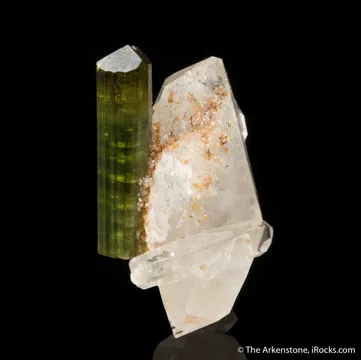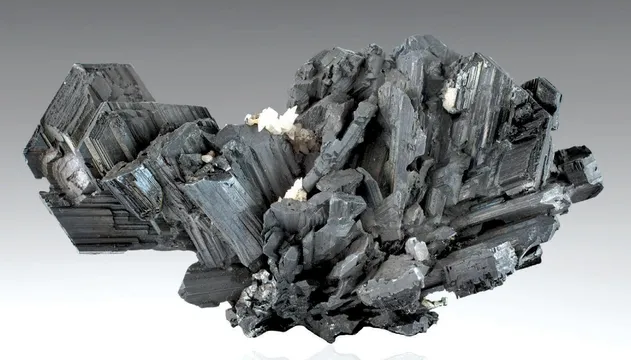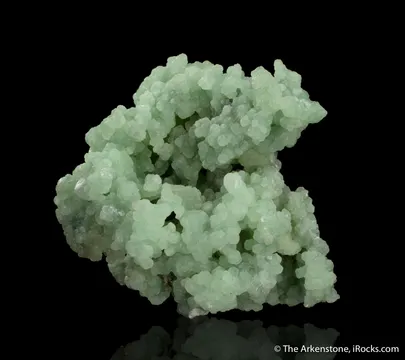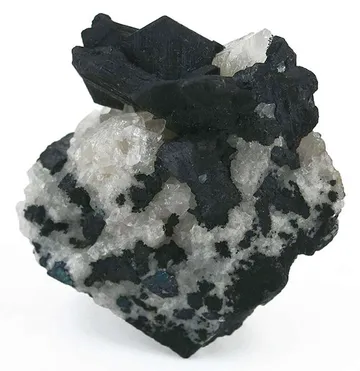
A collector's guide to Cobalt, USA: its geology, mining history and notable minerals, illustrated with the 32 specimens documented from this locality on EarthWonders.
Key facts
Cobalt, USA, in the collecting sense used here, is the Cobalt village area of East Hampton, Middlesex County, Connecticut, with the Great Hill cobalt mines as its historic mineralogical center. This is not a big bonanza silver camp like Cobalt, Ontario, and that distinction matters: the Connecticut locality is a compact, old, problematic, and scientifically fascinating nickel-cobalt-arsenide occurrence at the south foot of Great Hill, tied to pegmatite country and high-grade metamorphic rocks of central Connecticut. Its chief interest for serious collectors lies in the old labels, the arsenide suite, the striking secondary colors produced by weathering of arsenic-rich ores, and the long-running correction of nineteenth-century identifications that called the ore “smaltite,” “chloanthite,” “chathamite,” and “skutterudite” before modern work reassigned much of the material to nickel- and cobalt-rich löllingite with associated gersdorffite, nickeline, pyrrhotite, arsenopyrite, and minor base-metal sulfides.
Regional View
Country View
The best Cobalt specimens are not showy in the way great vein silvers or alpine clefts are showy. They are compact, weighty, historically charged pieces: silvery to steel-gray arsenide grains, bunches, veinlets, and massive streaks in dark biotite- or hornblende-bearing gneiss and amphibolite; milky quartz with arsenopyrite from the gold-bearing lodes; pale green scorodite; pale apple-green annabergite; and pink to magenta erythrite “cobalt bloom” altering from the Co-Ni arsenides. Their beauty is often microscopic or documentary rather than sculptural. A fine example is one that still carries visible metallic ore in the correct host, shows secondary cobalt or nickel color without having been oiled or overcleaned, and preferably retains an old Connecticut, Chatham, Great Hill, Shepard’s Lode, Robert’s Lode, or Francfort-era provenance.
Historically, Cobalt is one of the oldest cobalt-mining stories in the United States. It belongs to the colonial and early national period of American mineral exploitation, when cobalt was valued chiefly for blue pigment and later attracted renewed attention as nickel became interesting for coinage. The mine repeatedly tempted operators and investors, but the lodes were too thin and discontinuous to reward them. For collectors, that failure is part of the charm: the old mine produced little metal, but it left a remarkably tangled mineralogical record.
Search for specimens: View all specimens from Cobalt, USA
Cobalt is a village in the town of East Hampton, Middlesex County, Connecticut. The mineral locality name centers on the Great Hill cobalt mines north of the old Cobalt station area, at the southern foot of Great Hill and near Gadpouch Road and Mine Brook, with related collecting interest in nearby Cobalt-area pegmatites such as State Forest Quarry No. 2. The Cobalt village name itself reflects the old cobalt mine, not a modern mining district.
The Great Hill deposit consists of two closely spaced but distinct mineralized systems. The Co-Ni lodes lie along a very thin garnet-rich gneiss layer below the contact between the Clough Quartzite and the Collins Hill Formation; the better-known names attached to this mineralization are Shepard’s Lode to the west and Robert’s Lode to the east. A separate set of quartz-arsenopyrite gold-bearing veins lies just above that contact, with Winthrop’s Lode on the west and Champion Lode on the east. The two systems were historically confused because they occupy the same rugged little area, but mineralogically they are different: one is a nickel-cobalt arsenide occurrence in gneiss and amphibolite, the other an arsenopyrite-quartz gold occurrence in quartzite.
Modern work has changed the way collectors should label Cobalt specimens. The old literature repeatedly used smaltite, chloanthite, chathamite, and skutterudite for the white to steel-gray arsenide ore. Later crystallographic and microprobe work showed that much of the classic “chathamite” material is better understood as nickel-cobalt-rich löllingite, with gersdorffite and other arsenides and sulfides in the suite. That makes Cobalt an important cautionary locality: a nineteenth-century label can be historically excellent and mineralogically wrong at the same time.
At Shepard’s Lode the host is described as banded amphibolite rich in hornblende, manganous almandine-grossular garnet, sphene, and anorthite, with sulfides and arsenides intergrown through the silicate fabric. At Robert’s Lode the tailings are more biotite-bearing, with manganous garnet, plagioclase, quartz, and staurolite. Ore minerals include Co-Ni-rich löllingite, pyrrhotite, arsenopyrite, gersdorffite, nickeline, chalcopyrite, sphalerite, galena, and pyrite, with weathering products including erythrite, annabergite, scorodite, goethite, melanterite, pickeringite, and other uncertain or poorly confirmed secondary phases.
The mining history begins in earnest in the eighteenth century. German prospectors found cobalt ore in the 1760s, and John Stephauney organized a mining effort around 1770. Ore was reportedly shipped overseas for use in smalt, the blue cobalt pigment used in ceramics and glass. A later German operator, often rendered in the old literature as Erklens or Erkelens, invested heavily and reportedly shipped about twenty tons of ore to China, but the operation failed financially. Seth Hunt of New Hampshire reopened the ground from 1818 to 1820, cutting a long trench along the main vein, but assays showed that nickel was at least as important as cobalt, and his investment also failed.
Charles Upham Shepard examined the occurrence in the 1830s, described the ore, and later took a 99-year lease. Around 1844 he opened an inclined adit on what became known as Shepard’s Lode, but abandoned work within a year while retaining mineral rights. In 1850 Edmund Brown sank a shaft and drove adits and drifts, including work toward the Mine Brook ravine on Robert’s Lode. The Chatham Cobalt Mining Company, organized by Eugene Francfort, then carried out the most extensive operations of the mid-nineteenth century, sinking deeper shafts, driving adits and drifts, and building a stamping mill and assay laboratory. Some dressed ore rich in nickel and cobalt was shipped, but the workings never became profitable and serious mining had ceased by the late 1850s.
The best specimen material was almost certainly produced during those nineteenth-century workings and from old dumps before they were depleted or removed. Surviving specimens in older collections are therefore disproportionately important. Cobalt-mine material with a Francfort, Shepard, Schooner, Januzzi, Patrie, or early Connecticut label deserves careful preservation even if the visible mineralization is modest. Pieces from old Robert’s Lode material can show metallic Co-Ni-rich löllingite with pink erythrite and pale green nickel/cobalt arsenate alteration; Champion and Winthrop lode material is more likely to be arsenopyrite in milky quartz, sometimes with scorodite and the historically important but rarely visible native gold.
Collecting access today is highly restricted. Parts of the old lodes lie on private residential property, and that land should be treated as closed unless explicit permission is obtained. The state-owned portions are within Meshomasic State Forest, where casual rock and mineral collecting is not allowed. Connecticut DEEP policy treats collecting rocks and minerals on state land as prohibited unless the activity is an approved educational collecting event under the state’s permit system. In practice, Cobalt is now best regarded as a historic locality to study, photograph, hike responsibly, and collect through old collections—not a place for modern specimen extraction.
Silver attributed to “Cobalt, USA” requires unusually careful reading of the label, because the verified Great Hill mineral record is dominated by silvery arsenides rather than native silver. Unlike Cobalt, Ontario, whose native silver leaves and arsenide associations are classic worldwide, the Connecticut Cobalt mines are not a documented native-silver locality in the modern Great Hill list; many bright, metallic, silver-colored pieces from this locality prove to be Co-Ni-rich löllingite, arsenopyrite, gersdorffite, or nickeline-bearing ore in gneiss or quartz. For a collector, the strongest “silver” pieces from Cobalt, USA are therefore those with unambiguous analytical support or a clear EarthWonders/museum record, while ordinary examples should be treated as silver-colored arsenide ore until proven otherwise; genuine value here rests less on wire, leaf, or dendritic habit and more on documented provenance, correct host rock, visible metallic lode material, and freedom from Cobalt, Ontario confusion.
Skutterudite-labelled specimens from Cobalt, USA are historically important precisely because the name sits at the center of the Great Hill identification problem. Old specimens may be labelled smaltite, chloanthite, chathamite, nickel-skutterudite, or skutterudite, and they typically appear as steel-gray to tin-white metallic grains, compact bunches, thin veinlets, or massive patches in dark garnet-biotite or hornblende-rich rock, commonly with arsenopyrite, nickeline, gersdorffite, sphalerite, galena, pyrrhotite, quartz, and pink erythrite or green annabergite/scorodite alteration. Modern references regard the skutterudite and nickelskutterudite reports from Great Hill as erroneous or at least not valid for the classic ore, with the material better classed as Co-Ni-rich löllingite; the best skutterudite-labelled specimens are consequently those that preserve old locality history while being honestly cataloged, preferably with analytical notes, because a bright “skutterudite” label alone is not enough at this locality.
Beyond silver- and skutterudite-labelled material, Cobalt’s serious mineralogical interest lies in Co-Ni-rich löllingite, gersdorffite, nickeline, arsenopyrite var. danaite, pyrrhotite, chalcopyrite, sphalerite, galena, pyrite, scorodite, erythrite, annabergite, staurolite, almandine-grossular garnet, anorthite, hornblende, biotite, and quartz. Native gold is documented from the separate Winthrop and Champion gold-bearing quartz-arsenopyrite veins, usually as micron-scale grains but reported locally up to about a millimeter; it is a scientifically fascinating occurrence rather than a practical collector target. The historical name chathamite was proposed from this old Chatham locality but is not a valid modern species; it survives as an important label term and a reminder that Great Hill helped shape, and then complicate, the nomenclature of cobalt-nickel arsenides in American mineralogy. In the broader Cobalt village area, State Forest Quarry No. 2 adds a different pegmatite suite, including triphylite alteration products such as phosphophyllite, vivianite, messelite-type material, autunite, beryl, muscovite, microcline, quartz, tourmaline, apatite, garnet, and related secondary phosphates, but those specimens should not be confused with Great Hill cobalt-mine ore.
Cobalt, USA is a locality where provenance is everything. The most common authenticity problem is not outright fakery but mislabelling: “Cobalt” without state or country is often Ontario, Canada; “Cobalt, USA” in a mineral database or marketplace may mean the Connecticut village; and “Cobalt Mine, Chatham” may be an older form of the same East Hampton locality. Native silver with calcite and cobalt-nickel arsenides should immediately raise the question of Cobalt, Ontario unless the specimen has a strong Connecticut chain of custody.
The second problem is species identity. Old Connecticut labels reading smaltite, chloanthite, chathamite, skutterudite, or nickelskutterudite are historically meaningful but mineralogically suspect. Do not erase them from the specimen history, but do not treat them as modern determinations unless analysis supports the identification. A careful label can read, for example, “Co-Ni-rich löllingite, historically labelled chathamite/skutterudite,” which preserves both the science and the collecting history.
Condition issues are typical of arsenide and arsenate specimens from old dumps. Metallic arsenides can be dense, brittle, and strongly intergrown with tough gneiss, so trimmed pieces may show bruised edges, saw cuts, or broken metallic grains. Erythrite, annabergite, and scorodite coatings can be earthy, thin, or powdery; they should not be scrubbed, oiled, lacquered, or subjected to acids. Avoid prolonged high humidity for pieces carrying sulfate efflorescences such as melanterite or pickeringite. As with all arsenic-bearing specimens, wash hands after handling, keep dust out of the air, never grind or saw indoors, and store crumbly secondary material in a covered box.
Fluorescence is not the main appeal of the cobalt-mine material. However, Cobalt-area pegmatite specimens, especially from State Forest Quarry No. 2 and related East Hampton occurrences, may include inconspicuous opal or uranium-phosphate minerals that respond under shortwave ultraviolet light. Those belong to the pegmatite story, not the cobalt-arsenide lodes.
On the market, authentic Great Hill material is much scarcer than the fame of the name suggests. Most available specimens are small, old, or visually modest. Premiums attach to old labels, visible pink erythrite or green arsenate alteration, documented Robert’s Lode or Shepard’s Lode material, and specimens connected to known Connecticut collectors or institutional collections. “Spectacular” silver or skutterudite pieces from Cobalt, USA should be examined skeptically, because the spectacular North American silver-arsenide aesthetic is overwhelmingly an Ontario story.
The Cobalt story begins in that hazy colonial borderland where prospecting, natural philosophy, and legend are almost inseparable. John Winthrop the Younger—Connecticut’s first governor, a physician, alchemist, and one of colonial New England’s great scientific figures—was said to retreat to the Great Hill area with a single servant, roast ores, assay metals, and return with enough gold to make rings. The hill carried the romantic nickname “Governor’s Gold Ring,” and the tale persisted for centuries. Whether Winthrop actually recovered gold in any meaningful quantity was long uncertain, but the locality did eventually yield real native gold to twentieth-century geologists, giving the old story a tantalizing afterlife.
The more prosaic mining began not with gold but with cobalt. In the 1760s German prospectors found cobalt-bearing ore at the south foot of Great Hill, and by about 1770 John Stephauney had mounted a serious effort. The prize was not metal for batteries or alloys, but color: cobalt oxide for the deep blue pigment used in glass, ceramics, textiles, and chinaware. The ore was shipped away in casks to foreign markets. One later operator, Erklens, reportedly spent ten thousand dollars—an extraordinary sum for a small Connecticut mine—and shipped twenty tons of ore to China, only to lose money. The pattern was set early: Cobalt could seduce investors, but it would not enrich them.
Seth Hunt of New Hampshire tried again from 1818 to 1820. He cut a quarter-mile trench along the vein and sent ore to England, expecting cobalt. The assays were disappointing in a very particular way: there was too much nickel for the cobalt dream then being pursued. Hunt’s money disappeared into the hill. The site’s mineralogical irony is sharp. Later in the century, as the U.S. Mint and others became interested in nickel, the same “wrong” metal helped revive attention to the lode.
Charles Upham Shepard brought scientific authority to the place. He described the workings in the 1830s, leased the property for 99 years, and in 1844 opened an inclined adit on what collectors now know as Shepard’s Lode. Shepard’s interpretations helped create one of the great label puzzles of Connecticut mineralogy. His “chathamite,” named for old Chatham, was meant to be an orthorhombic arsenide distinct from the smaltite-chloanthite group. Later authorities pushed it back into chloanthite or related cubic arsenides, but modern study vindicated part of Shepard’s observation: the Chatham material was indeed non-isometric, though it is now treated not as a valid species but as nickel-cobalt-rich löllingite.
Edmund Brown and then Eugene Francfort carried the mining to its most ambitious stage in the 1850s. Brown sank a 38-foot shaft and drove work toward Mine Brook. Francfort’s Chatham Cobalt Mining Company added deeper shafts, at least 100 meters of underground development, a stamping mill, and an assay laboratory. These were not casual prospect pits; they were the infrastructure of serious expectation. Yet the ore zones were so thin that the mine again failed. The old workings, ruins, and shafts that remain in the woods are the stone-and-water memory of repeated optimism meeting a very narrow lode.
The 1985 rediscovery of gold by a University of Connecticut summer field school turned the old Winthrop legend briefly into modern news. The gold occurred in the quartz-arsenopyrite veins rather than the cobalt-nickel lodes, and much of it was microscopic, but some grains were reported large enough to catch the sun with a hand lens or even the unaided eye under good conditions. Assays discussed in the literature ran high enough to excite mining-company curiosity, but the practical questions were obvious: how continuous were the veins, how much rock existed, what land and environmental restrictions applied, and could such a small, state-and-private-land occurrence ever be mined? The answer, in practical terms, was no. For collectors, the episode remains one of Connecticut’s best mineralogical plot twists: the miners came for cobalt, ignored or missed the gold, and modern geologists found the gold long after the mines were dead.
One modern collector’s recollection captures the place better than any production figure. After the New York World’s Fair in 1964, a fourteen-year-old Bart Cannon persuaded his family to visit Camp Jenkins and the Mine Brook workings. He hauled out a small gunnysack of quartz with silvery crystals and thought he had cobaltite. At home in Detroit, with what he later called a “crummy hand lens,” he realized the crystals were arsenopyrite and noted there was “not the slightest bit of cobalt bloom.” That is Cobalt in miniature: the name promises cobalt, the rock gives arsenopyrite, and the truth is more interesting than the expectation.