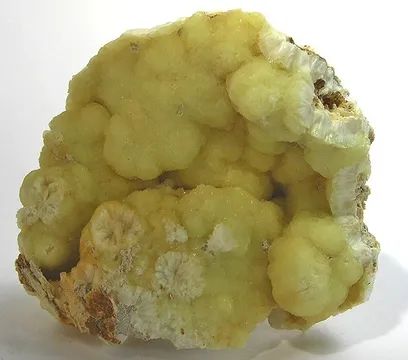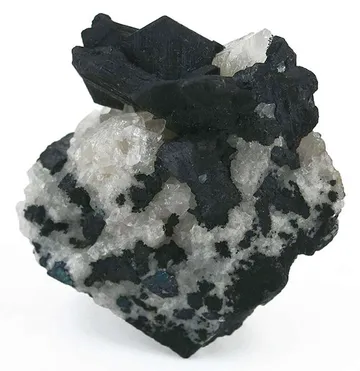
Bristol Copper Mine, USA - famed for twinned, lustrous chalcocite crystals on calcite/quartz, with historic provenance and rare copper-sulfide associations.
Key facts
Bristol Copper Mine is one of the great early American mineral localities: a small Connecticut copper deposit whose best chalcocite and bornite specimens earned a reputation far larger than the mine itself. The workings lay near the south end of Mine Mountain in Bristol, Hartford County, on the western border fault of the central Connecticut Mesozoic Hartford Basin, where Triassic red beds meet older crystalline rocks of the western upland. That faulted contact, broken rock, kaolinized wall rock, bleached sandstone, and quartz-calcite gangue provided the setting for unusually rich copper sulfide mineralization.
For collectors, Bristol matters above all for crystallized chalcocite: lustrous black to bluish-black crystals, commonly twinned, tabular, pseudohexagonal, discoidal, striated, or elongated, often perched on pale calcite or milky quartz. The finest pieces have the visual drama of 19th-century classics—dark metallic copper sulfide geometry against light New England vein gangue—and are routinely compared with the great Cornish chalcocites. Bristol also produced a much smaller population of excellent bornite specimens, together with chalcopyrite, “blistered copper,” malachite, native copper, and rare silver-bearing associations.
Historically, Bristol occupies an unusual place. It was not a giant industrial copper camp in the western American sense, but in the mid-19th century it was among the most important copper producers in the northeastern United States and a focus of attention for Yale-associated geologists and mineralogists. The deposit became famous not merely because it made copper, but because its copper sulfides were studied, collected, argued over, and preserved at a moment when many fine crystals were still being treated as ore for the mill.
Regional View
Country View
The best Bristol specimens are old, finite, and provenance-sensitive. Many were recovered during the great 1840s–1850s collecting period, when Cornish miners, Yale figures, and early American mineral collectors were all close enough to the mine to recognize that the black crystals coming from the vugs were more than furnace feed. Today, the locality is closed in practical collecting terms: the shafts have been filled and sealed, the underground workings are inaccessible, and meaningful specimens circulate chiefly from old collections, museum holdings, dealer stock, and estates.


Photo: Wikimedia Commons
Search for specimens: View all specimens from Bristol Copper Mine, USA
The Bristol Copper Mine is an abandoned copper mine in Bristol, Hartford County, Connecticut, near the northern part of town and near the south end of Mine Mountain. Its geological position is the key to both the ore and the specimens: copper mineralization is localized along the western border fault of the Hartford Basin, at and near the contact between Mesozoic sedimentary rocks—especially red Triassic sandstone and arkose—and older Paleozoic metamorphic rocks of the upland. Federal mineral-resource summaries classify the deposit as a vein and replacement occurrence, with copper as the major commodity and silver as a minor commodity.
The ore zone followed a faulted contact and a decomposed, brecciated belt. Early geological descriptions emphasize a northeast-trending contact, kaolinized and altered by mineralizing solutions, with a broad decomposed band next to the sandstone and broken micaceous and hornblende slates or schists carrying cavities for sulfide deposition. Mineralization occurred as veins, veinlets, disseminations, blebs, and vug fillings. Bornite and chalcocite were the principal ore minerals, with chalcopyrite subordinate and smaller amounts of covellite, pyrite, galena, sphalerite, barite, quartz, calcite, siderite, and oxidized copper minerals documented from the mine.
Bristol’s mineralizing system was long of interest because of its copper sulfide paragenesis. Alan M. Bateman’s 1923 study, “Primary chalcocite; Bristol copper mine, Connecticut,” treated the chalcocite as hypogene, deposited in the primary ore system rather than simply as a product of downward supergene enrichment. Later summaries record bornite and chalcopyrite crystallizing with quartz and calcite, with chalcocite of hypogene origin replacing bornite and chalcopyrite. Other geological interpretations link the mineralizing solutions to the Triassic basin setting and nearby mafic igneous activity, including diabase or basalt-related sources.
The historical story begins with copper-stained water. In the late 1790s, Theophilus Botsford investigated a greenish spring near Zack’s Mountain, where copper-bearing water reportedly killed nearby vegetation and stained stones along the brook. By plowing near the spring with oxen, he exposed copper ore, but did not develop the discovery. In 1800 Asa Hooker, a Bristol brass founder, obtained rights from Sarah Yale, widow of Abel Yale, and the work passed to Luke Gridley, a local blacksmith, who smelted small amounts of ore in the early years of the 19th century. After Gridley’s death in 1810, the ground lay mostly dormant for decades.
Commercial mining began in earnest in the 1830s. George Bartholomew became involved in 1836, and the Bristol Mining Company was organized in 1837 with authorized capital of $60,000. Early development included trenching and an open cut on the exposed vein, followed by shaft sinking and underground levels. One early open cut is described as about 10 by 20 feet and 17 feet deep. By the principal 1847–1853 production period, the workings had reached about 240 feet deep and extended along the vein; reports credit the mine with roughly 2,200 tons of picked ore averaging around 33% copper, following an earlier shipment of about 125 tons of high-grade ore to England.
The mine changed hands and management several times. Andrew J. Miller, a New Jersey capitalist and practical miner, was an important early operator; English investment and Cornish mining skill entered the story soon afterward. In the later 1840s and 1850s, Yale-connected figures including Benjamin Silliman Sr., Benjamin Silliman Jr., Josiah D. Whitney, and John M. Woolsey became tied to the property through reports, ownership, investment, or scientific study. Charles Moore Wheatley, later famous for his connection with the Wheatley lead mines at Phoenixville, Pennsylvania, managed the Bristol mine while many of the classic chalcocite and bornite specimens were being found.
A second significant mining episode began in 1888 under the Bristol Copper and Silver Mining Company or related interests. Modern summaries describe extended underground work from 1888 to 1893, including a new sandstone shaft reported to about 378 feet, with levels at 30, 40, 50, and 60 fathoms in some accounts. The mine closed again in the mid-1890s as economics deteriorated. A final 20th-century attempt followed World War II, when Allen Hearst of Forestville formed the Connecticut Mining and Milling Company to recover copper and silver, including from tailings and remaining low-grade material. That venture ended in 1953 after copper prices fell from wartime levels.
The specimens for which Bristol is famous came chiefly from the 19th-century workings, especially the late 1840s and 1850s. Vugs and pockets yielded chalcocite and bornite crystals, some saved despite pressure from mine owners who wanted high-grade copper sulfides sent to the stamp mill. Good chalcocite occurred as individual crystals and clusters, as crystals on calcite, as crystals on quartz, and as sulfide-rich ore specimens. Some notable museum pieces are now in Yale Peabody, Harvard, Union College, Wesleyan, the Smithsonian, and other institutional or historic collections. Others were carried into old private collections, including specimens reportedly taken or sent back to Cornwall by Cornish miners and later mislabelled as Cornish material.
Collecting access today should be treated as closed. The mine is abandoned, the underground workings are sealed or filled, and state geological resources emphasize that many Connecticut historic bedrock mining sites are on private property and that no permission to visit is implied by their inclusion in public databases. Any field interest in Bristol should therefore be limited to legal historical study, museum research, old collection work, or explicit landowner-authorized access.
Chalcocite is the signature mineral of Bristol Copper Mine and the reason the locality remains important to advanced collectors. Bristol crystals are typically metallic bluish black to charcoal black, often with tabular, elongated, pseudohexagonal, discoidal, or multiply twinned forms; many show strong striation and some have the thick, architectural presence that invites comparison with classic Cornwall material. Documented crystals commonly reach about 2 to 3 cm, with many fine specimens in the thumbnail to small-cabinet range and rare, historically important pieces larger or especially sculptural. The best examples show sharp form, bright fresh luster beneath any removable dark coating, bold twinning, three-dimensional crystal clusters, and attractive contrast on white to cream scalenohedral calcite or milky quartz; ordinary pieces are massive, rubbed, rounded, isolated without matrix, or visually lost in dark ore. Most fine material is associated with the 19th-century pockets and vugs of the main ore zone, where chalcocite occurred with calcite, quartz, bornite, chalcopyrite, pyrite, and locally other copper sulfides.
Other documented Bristol minerals add depth to the locality but rarely challenge chalcocite for collector importance. Bornite is the great supporting species, occurring mostly as massive vein material, blebs, and layers, but also as prized old crystals with a dull black to blue-patinated surface. Chalcopyrite is present, including the botryoidal or blister-like variety historically called “blistered copper,” and sharp Bristol chalcopyrite crystals are much scarcer than the chalcocites. Native copper occurs as films and minor metallic copper; malachite, azurite, chrysocolla, and cuprite represent weathering of the copper sulfides; covellite and djurleite are notable copper-sulfide rarities in the assemblage. Galena, sphalerite, pyrite, siderite, barite, calcite, and quartz round out the ore and gangue suite. Bristol is not celebrated as a type locality for a valid mineral species; its rarities are historical, paragenetic, and specimen-quality rarities rather than type-mineral claims.
Bristol chalcocite is closed-classic material. The mine is not a productive modern collecting locality, so specimens on the market should be expected to come from old collections, institutional exchanges or deaccessions, long-held dealer stock, estate dispersals, and occasional secondary-market listings. Labels matter here. A credible old Bristol label, especially one tied to Yale, Union College, Harvard, Wesleyan, the Smithsonian, a known historic dealer, or a well-documented private collection, can be as important as the specimen itself.
Mislabelling is the principal authenticity issue. Bristol chalcocite can resemble Cornwall chalcocite, and historical accounts specifically note Bristol pieces entering Cornwall collections and later carrying Cornwall pedigrees. The reverse can also happen in commerce when any old black chalcocite is optimistically called Bristol. Good Bristol attribution rests on a combination of crystal habit, association, matrix, patina, and paper trail. Chalcocite on pale calcite, sharp twinned black crystals, and old American institutional provenance are strong supporting signs, but they are not substitutes for label history.
Condition deserves close scrutiny. Many Bristol crystals are somewhat rounded, bruised, cleaved, rubbed, or darkened by a black coating that can obscure luster and edge quality. Chalcocite is a dense metallic sulfide, so small pieces can feel deceptively substantial, but protruding blades and tabular twins are still vulnerable to edge damage. Calcite matrix adds aesthetic contrast but is acid-sensitive and easily bruised; quartz matrix is tougher but often less visually dramatic. Examine Bristol pieces under strong side light for repaired breaks, glued reattachments, and contact scars hidden by dark metallic surfaces.
Old cleaning and surface alteration are part of the conversation. Bristol chalcocite is known to acquire a black charcoal-like coating with age; mild detergent cleaning has been reported by collectors as a way to improve luster without attacking associated minerals, but aggressive chemical cleaning is risky, particularly on calcite-bearing specimens. Avoid acids, avoid ultrasonic cleaning on matrix pieces, and keep labels separated from any damp cleaning environment. No special fluorescence is expected to add value to Bristol chalcocite specimens.
Market availability is thin but not nonexistent. Small loose crystals, massive ore pieces, and modest matrix specimens appear occasionally. Fine matrix pieces with sharp, lustrous, well-separated crystals on calcite or quartz are much scarcer. Major display specimens with old museum or 19th-century provenance are legitimately rare and should be evaluated as historical mineral objects as well as species examples.
The Bristol story begins not with a shaft, but with a spring. Near Zack’s Mountain, Theophilus Botsford noticed greenish water issuing from the ground and killing nearby vegetation. The sign was plain enough to a practical farmer: copper was in the water. He put oxen to work and plowed into the ground near the spring, cutting into copper ore. Then he did something that still feels almost unbelievable in retrospect—he left the discovery undeveloped.
Two years later, Asa Hooker took the idea further. The land belonged to Sarah Yale, widow of Abel Yale and connected to the Yale family line. Hooker, a brass founder, obtained rights to mine, and Luke Gridley, a blacksmith and fence inspector, worked the outcrop with hand tools. Gridley’s arrangement reportedly promised Sarah Yale one-thirtieth of the ore or of any other valuable “treasure” found. He produced only small amounts of copper, smelted locally, and after his death in 1810 the property went quiet for twenty-six years.
When George Bartholomew entered the picture in 1836, the property shifted from curiosity to mine. His first serious cut into the vein was small enough to imagine in a field sketch: about 10 feet wide, 20 feet long, and 17 feet deep. The ore was rich enough to attract capital, and by 1837 the Bristol Mining Company had been organized. Buildings went up, a shaft was sunk, and enough ore accumulated at surface that farmers from the surrounding countryside could be summoned to haul it away for shipment. One historical account describes a courier on horseback notifying local farmers when there was enough ore ready to move.
The mine quickly became entangled with some of the best-known scientific names in early American geology. Benjamin Silliman Sr. visited and reported enthusiastically. Benjamin Silliman Jr., Josiah D. Whitney, John M. Woolsey, and other Yale-associated figures became involved in one way or another. The property was not merely a mining venture; it became a mineralogical classroom, a financial speculation, and a source of specimens for the cabinets of institutions that were shaping American science.
The arrival of Cornish miners gave Bristol another layer of identity. These “Cousin Jacks” knew copper ground, and they recognized features that reminded them of Truro, Redruth, and Penzance. They were on hand when vugs of crystallized copper sulfides were found. Their presence may explain one of the oddest provenance puzzles attached to the locality: more than a century later, fine Bristol chalcocites were reportedly noticed in private collections in Cornwall, but carrying Cornwall labels. A Connecticut mineral had crossed the Atlantic and, over time, become English on paper.
The most painful Bristol episode for collectors is the destruction of specimens. In the 1850s, owners and managers argued over whether fine crystals should be preserved or crushed for copper. The mineralogists protested, but not always successfully. A later historical account records that unusual chalcocite specimens could have sold as cabinet pieces for hundreds of dollars, yet were sent to the stamp mill “in spite of the protest of the mineralogist.” For a modern collector, it is a brutal image: crystals now considered American classics being sacrificed because their copper content was more immediately valuable than their form.
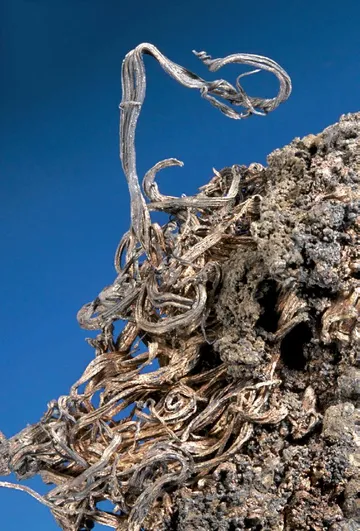
Bristol also has a silver ghost story. Old reports and family recollections suggest that silver specimens once existed from the mine. George Bartholomew’s daughter recalled silver specimens displayed in the windows of the Culver home near the mine property, and other accounts placed fine silver pieces on the window ledges of the small laboratory shack used by assayer Ludwig Stadtmuller, who sold specimens to Silliman at Yale. Yet actual Bristol silver specimens are nearly absent today. Bob Jones, while researching the locality, examined well over 100 Bristol specimens in more than a dozen private and museum collections and found only one specimen with a small silver wire among chalcocite crystals, in the Smithsonian collection. The rest seem to have vanished into ore bins, family drawers, or the fog of old labels.
The later history was no less human. After the mine’s mid-century promise, money, management, and copper prices repeatedly determined its fate. Andrew J. Miller’s effective management ended with his accidental drowning in 1840. Later, extravagant management became part of the mine’s reputation. In an 1889 Bristol Herald passage preserved in later accounts, Professor Silliman defended himself by saying he had sold his shares before abandonment because he saw that extravagance would bring disaster. The mine’s last act came after World War II, when Allen Hearst of Forestville believed modern methods could recover copper and silver from remaining ore and tailings. Falling copper prices ended that hope in 1953.