Seraphinite - a green clinochlore variety prized for chatoyant featherlike optics, silvery shimmer, and cabochon lapidary use from Korshunovskoe deposit.
Key facts
Russian Seraphinite is valued for its chatoyant feather like optics and deep green color. Here's an overview of this lapidary stone.
Regional View
Country View
Seraphinite is a dense fine-grained variety of Clinochlore (Mg5
Al(AlSi3
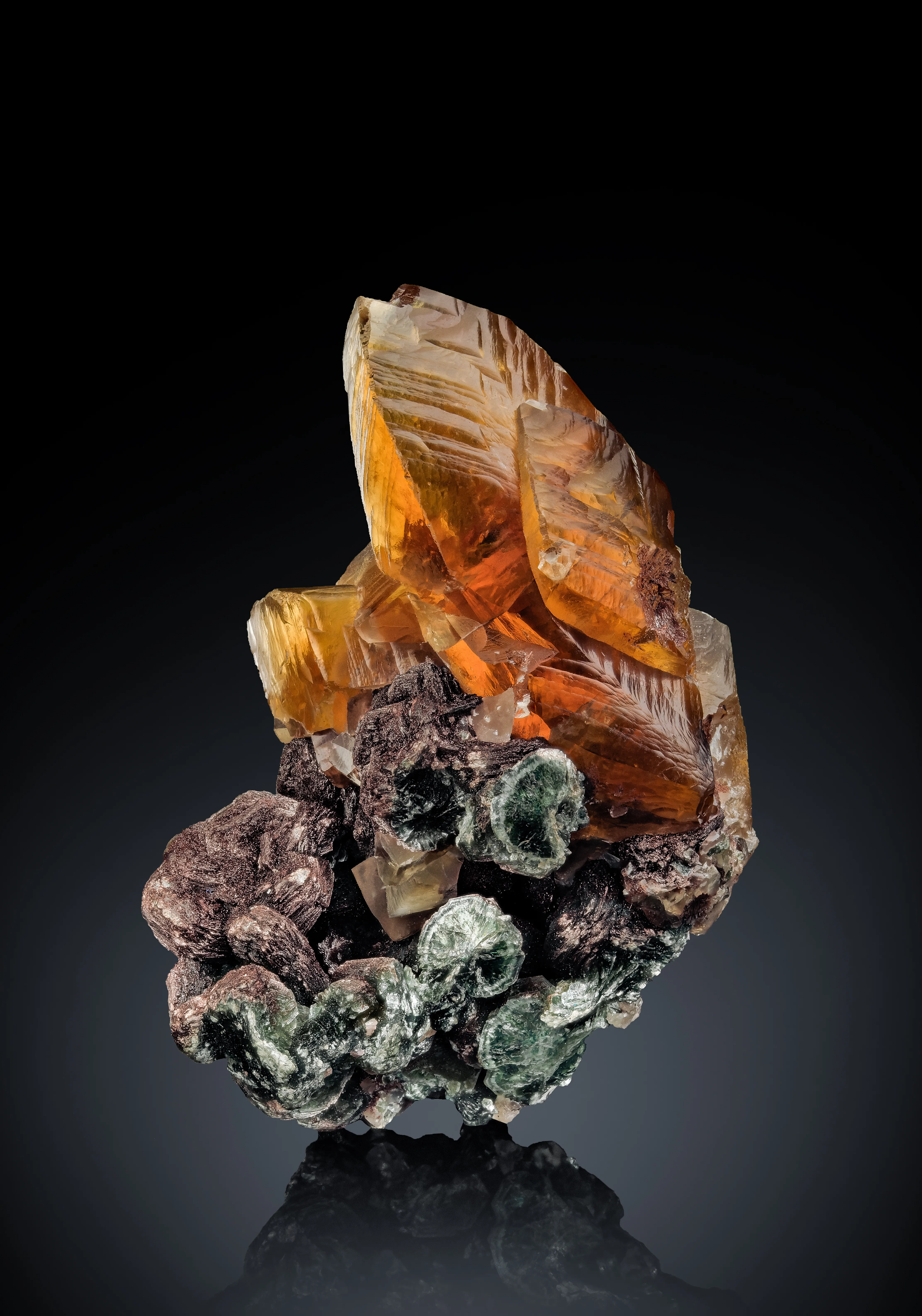
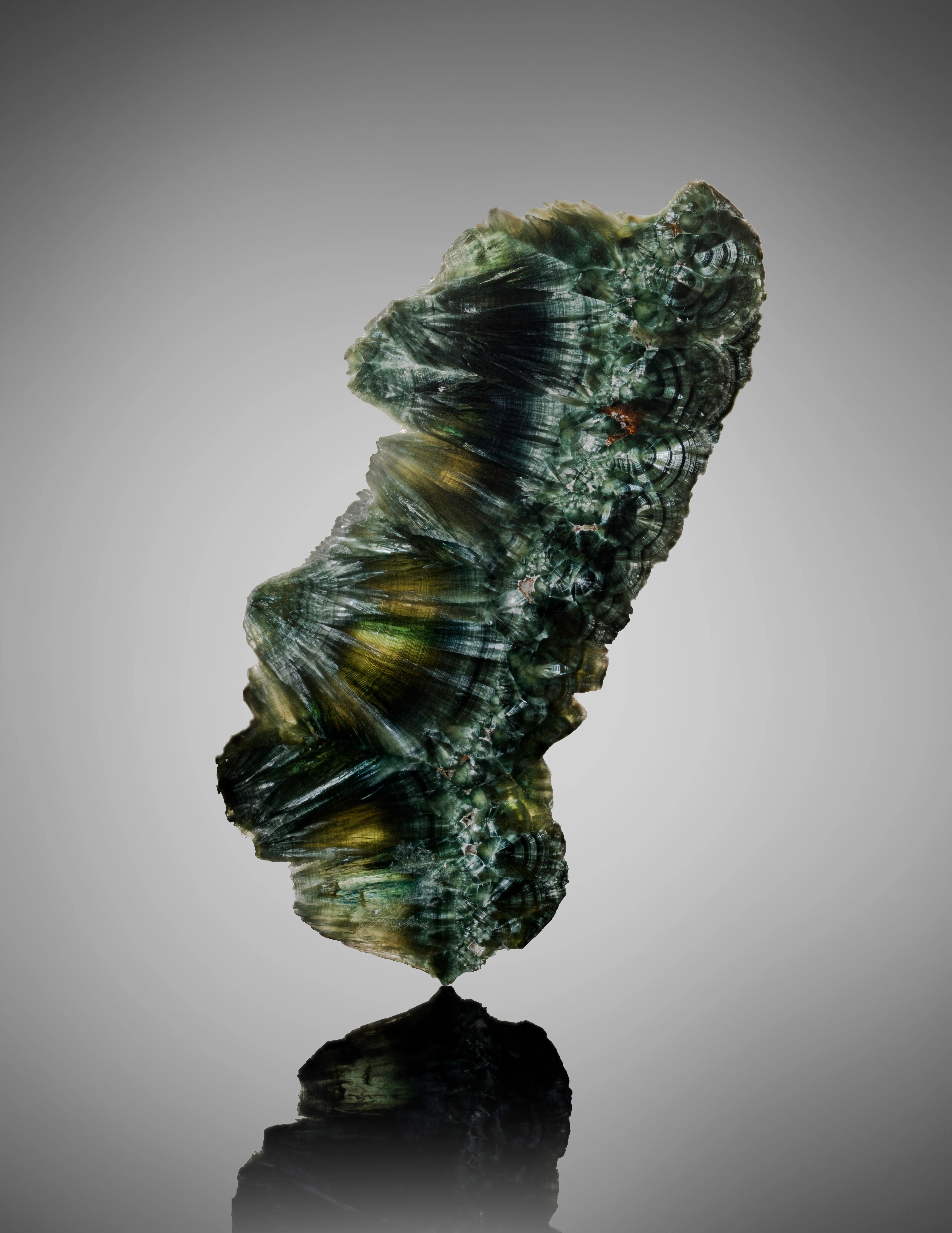
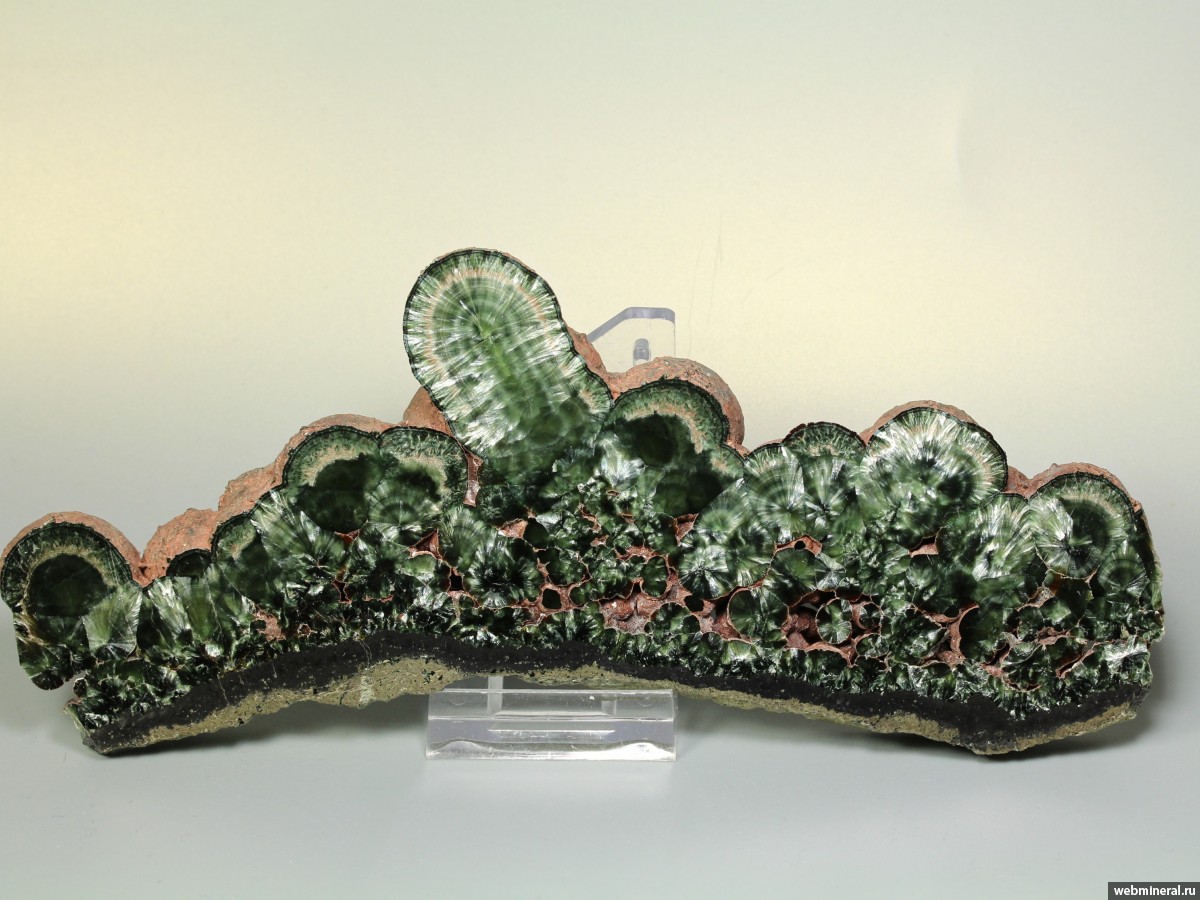
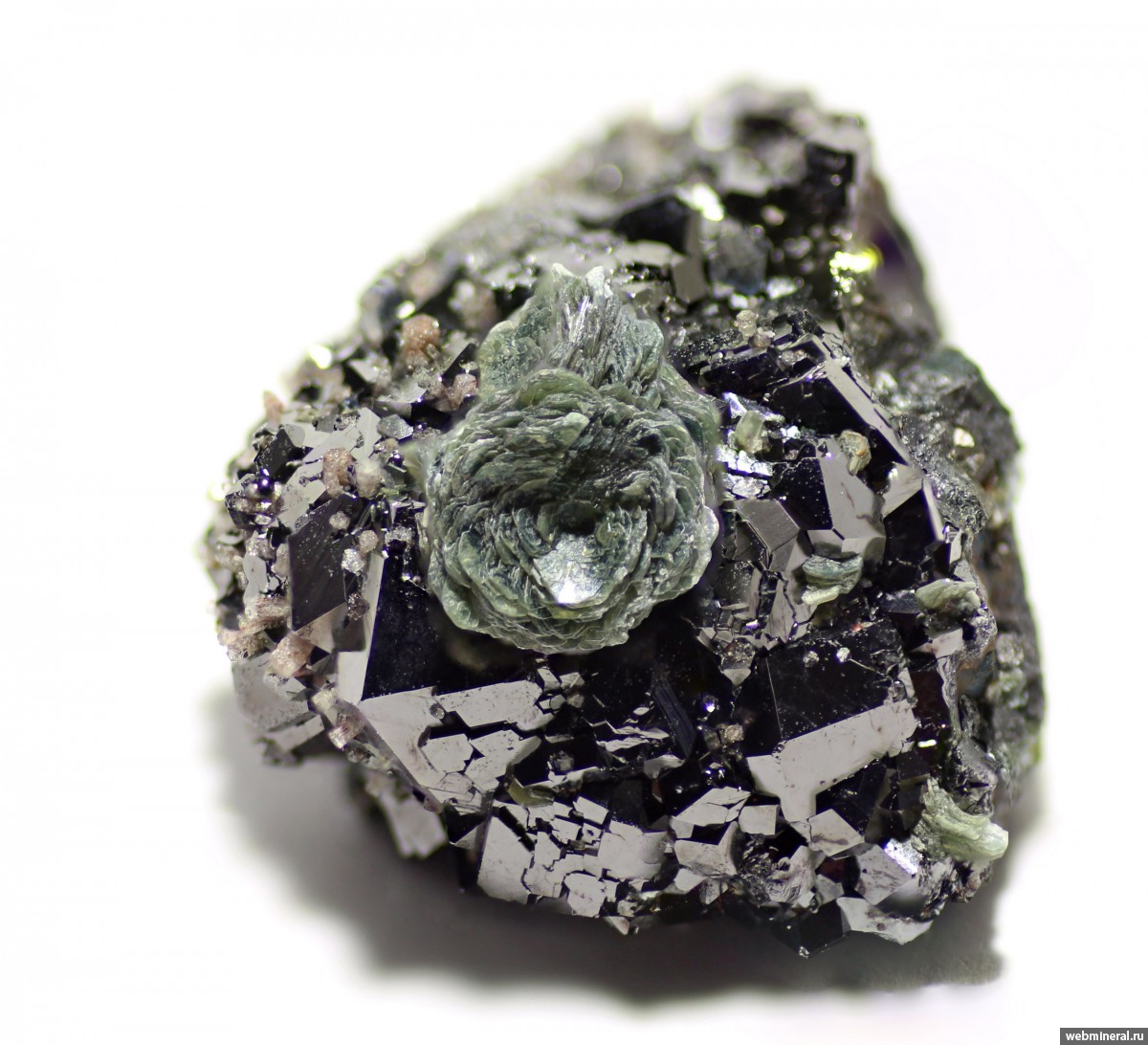
O10)(OH)8), one of the most common members of the chlorite group with a usual radiating/plumose structure. It has dark green to grey colour with silvery and feathery shimmer caused by mica inclusions. The Korshunovskoe iron deposit consists of Cambrian and Ordovician sedimentary rocks and Permian-Triassic traps. During the transformation of ores and aluminosilicate detrital material, significant amounts of magnesium and aluminum are released, resulting in the formation of clinochlore in the skarns at high temperatures (approximately 600-400 degrees Celsius). It is often found as spherulites, brushes, and kidney-like formations and has a brown oxidized outside. Polishing these reveals strikingly beautiful patterns reminiscent of the wings of the Archangel Seraphim, therefore presumably the name. Polished clinochlore clusters at the deposit are known commercially as seraphinite and can sometimes become very translucent. Because of the low hardness (2 to 2,5), it is cut into cabochons or in slabs to decorate or as inlays or other lapidary uses.
The mineral variety was first found and described in the mid-1800s by Russian mineralogist Nikolai Koksharov (1818–1892). Because the mine was primarily used for iron extraction, specimens were only of interest to mineralogists and samples were taken to museums for documentation (like the Fersman Mueum in Moscow). Only in the late 20th century it started to be marketed as a lapidary stone to collectors and cutters. Now the mine is part of a larger mining complex (often called the Korshunov Mining Plant) with several open pits and a processing plant owned by the company Mechel which still focuses iron ore but specimens are being recovered as a byproduct of the mine.