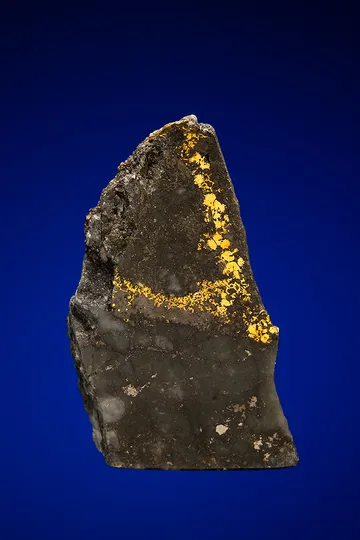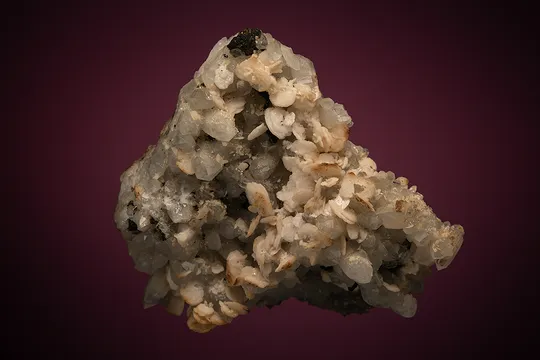
Climax Mine, USA — Colorado locality famed for pyrite cubes, rhodochrosite on quartz, and fluorite; prized by collectors for distinctive cabinet specimens.
Key facts
Climax is one of those rare mineral localities whose importance runs on two parallel tracks. To economic geologists it is the namesake standard for Climax-type porphyry molybdenum deposits: a giant, high-silica, granite-rhyolite intrusive system at Fremont Pass, near Leadville, Colorado, where molybdenite in quartz stockworks made one of the world’s great molybdenum mines. To collectors it is something more elusive and, in many ways, more romantic: a huge industrial mine that only occasionally released fine cabinet specimens—sharp pyrite cubes, red rhodochrosite rhombs on quartz, quartz points with ore minerals, fluorite combinations, and rare accessory species from a highly evolved magmatic-hydrothermal system.
The mine sits high on the Continental Divide, in the Climax mining district of Lake County, at the headwaters country between the Arkansas drainage and the high Mosquito-Tenmile ranges. The productive system is tied to the composite Climax stock and related cupola-like intrusions, with the classic vertical organization of a porphyry molybdenum system: quartz-rich zones, potassium-silicate alteration, molybdenite-bearing quartz veinlets, overlying quartz-sericite-pyrite-topaz alteration, and peripheral tungsten-, tin-, fluorine-, and rare-earth-bearing mineralization. The specimen suite reflects that architecture. Most pieces are not “ore specimens” in the simple sense; the best are the accidental collector’s rewards of a complicated hydrothermal machine.
Regional View
Country View
For collectors, Climax specimens have a distinctive look. Pyrite tends toward clean, brassy, highly lustrous cubes on pale altered matrix, sometimes with fluorite or tetrahedrite-family minerals. Rhodochrosite is far scarcer but far more charismatic: translucent red to pink rhombohedra perched on quartz points or in small matrix groups, sometimes with pyrite attachment or calcite coating. Quartz may appear as ore-stage vein quartz, as sharp colorless points, or as “spear” crystals used as pedestals for rhodochrosite. Climax is not Sweet Home, and it should not be judged by Sweet Home standards; its appeal lies in scarcity, industrial provenance, and the unusually evolved geochemical setting that put rhodochrosite, pyrite, molybdenite, fluorite, topaz, hübnerite, cassiterite, and rare-element minerals into one mountain.

Photo: Wikimedia Commons / Rob Lavinsky, iRocks.com

Search for specimens: View all specimens from Climax Mine, USA
The Climax Mine is a porphyry molybdenum deposit on Fremont Pass, about 13 miles northeast of Leadville, Colorado, and is operated by Climax Molybdenum Company, a subsidiary of Freeport-McMoRan. The modern operation is an open-pit molybdenum mine with a 25,000 metric ton-per-day mill and a stated annual capacity of approximately 30 million pounds of molybdenum. The mine area encompasses roughly 14,350 acres, mostly patented mining claims and fee lands, so collecting should be understood as closed industrial-mine collecting: historical specimens came from mine-related access, old collections, and occasional legacy releases, not from casual public digging.
Geologically, Climax is the archetype of the Climax-type porphyry molybdenum model. The ore is not a single vein but a stacked, intrusion-centered stockwork system in which molybdenite occurs in quartz-filled fractures, veinlets, tabular vein-like structures, disseminations in aplite and pegmatitic rocks, inclusions and breccia fragments, high-silica rocks, and fracture coatings. Published deposit summaries describe three major molybdenite ore bodies—commonly treated as Lower, Upper, and Ceresco ore bodies—related to successive intrusive phases of the Climax stock. Each molybdenum zone is associated with a broader alteration system; the molybdenite-bearing stockwork lies between quartz-rich zones and overlying pyrite-tungsten-bearing alteration, with quartz-sericite-pyrite-topaz alteration especially important in the upper portions.
The mineralization is also notable for its by-products and trace-element complexity. Molybdenum is the primary commodity, but tungsten from hübnerite, tin from cassiterite, pyrite concentrates, and rare-earth concentrates as monazite have all been part of the broader Climax story. The locality’s mineral list includes the expected porphyry assemblage—molybdenite, quartz, pyrite, K-feldspar, orthoclase, muscovite-sericite, topaz, fluorite, magnetite, sphalerite, chalcopyrite and related sulfides—alongside more specialized species such as cassiterite, hübnerite, koechlinite, monazite-(Ce), xenotime-(Y), torbernite, uraninite, svanbergite, rutile varieties including ilmenorutile and strüverite, and pyrochlore-supergroup material historically described as betafite.
The human history begins with Charles J. Senter, who found the gray mineralized outcrop on Bartlett Mountain in 1879. At the time, molybdenum had little practical market, and the mineral did not carry the immediate excitement of gold or silver. Colorado School of Mines professor Rudolph George identified the material as molybdenite in 1895, and industrial demand finally caught up in the World War I era. Climax Molybdenum Company was formed in 1918 by Max Schott to mine and process the deposit, and the mine shipped its first concentrate in the spring of that year.
Mining methods and access changed repeatedly as the scale increased. Early workings focused on Bartlett Mountain and underground levels such as Leal, White, Phillipson, and later Storke; later records also refer to the Ceresco portal and ore body, the 500, 600, and 929 levels, and multiple shafts serving lower levels. Block caving removed enormous volumes of ore and produced the famous glory-hole subsidence on Bartlett Mountain. Open-pit mining developed in the 1970s, including the Ceresco Ridge side of the ore body, and the modern reopened operation is an open-pit mine.
Production history is equally cyclical. Climax began shipping ore in the 1910s, shut down after World War I demand collapsed, reopened in the 1920s, and then operated for decades as a dominant molybdenum supplier. It was crucial during World War II and became an emblem of high-altitude industrial mining in Colorado. Low molybdenum prices eventually pushed the mine into care-and-maintenance status in 1995. Freeport-McMoRan later restarted the operation, and commercial production resumed on May 10, 2012, after a 17-year hiatus.
For collectors, the most important specimen-producing areas and labels include Climax Mine proper, Ceresco Ridge, the Ceresco ore body or portal area, and level or bench labels such as the 11600 Bench. Fine rhodochrosite matrix specimens from Ceresco Ridge are especially prized because they combine complete, deeply colored rhombs with quartz points rather than isolated, damaged, or coated crystals. A well-publicized Ceresco Ridge plate measured about 8.9 by 11.3 cm and carried numerous red rhodochrosite rhombs, including crystals reported at 4.6 cm and 2.6 cm, on quartz point matrix. Another documented 11600 Bench specimen consisted of a single large glossy rhodochrosite rhombohedron with pyrite at the base, measuring roughly 1 1/2 by 1 3/8 by 1 inch. These pieces explain the locality’s collector reputation better than tonnage statistics ever could: Climax is not prolific in specimens, but when it is good, it is unmistakably good.
Pyrite is the most recognizable Climax collector mineral after molybdenite itself, but the good specimens are not massive ore; they are sharp, lustrous, brassy cubes and cube-dominant crystals on pale sericitized matrix, commonly with fluorite, quartz, tetrahedrite-subgroup minerals, or other late hydrothermal associates. Documented specimens include pyrite cubes to around 1.6 cm on an 8.6 cm matrix with green and purple fluorite, and a 5.3 cm specimen with a mirror-bright cube accented by tetrahedrite-family crystals. The best Climax pyrites have crisp edges, bright reflective faces, attractive contrast with altered matrix, and a clear mine provenance; ordinary examples are smaller, embedded, edge-worn, or dulled by oxidation from the pyrite-rich alteration zones above and partly coincident with the molybdenum ore.
Rhodochrosite is the trophy carbonate at Climax and occurs as red to pink rhombohedra, commonly on quartz points or quartz matrix, and locally with pyrite or thin calcite coatings. The best-known collector style is Ceresco Ridge rhodochrosite on quartz: complete, translucent cherry-red to rose-red rhombs rising from a bed of quartz points, a combination rare enough that experienced dealers have remarked that only a handful of significant matrix specimens appear over many years. Sizes range from small thumbnail rhombs to large individual crystals; documented examples include a 2.4 cm floater with a doubly terminated quartz “needle” carrying sharp translucent rhodochrosite, a 11600 Bench crystal about 1 1/2 inches across, and a Ceresco Ridge plate with crystals reported to 4.6 cm. Fine pieces are separated from ordinary Climax rhodochrosite by completeness, color saturation, translucency, lack of heavy coating, and whether the crystal remains on natural quartz matrix rather than being a loose or damaged rhomb.
Quartz at Climax must be read in two ways: as the fundamental ore-stage vein mineral of the molybdenite stockwork and as a collector matrix mineral that sometimes forms sharp points, small plates, or doubly terminated crystals carrying rhodochrosite, pyrite, fluorite, or molybdenite. In the deposit model, quartz-filled fractures and quartz-molybdenite veinlets are the framework of the ore shells; in the display case, the most attractive quartz is clean, bright, and sculptural enough to act as a pedestal for red rhodochrosite. Documented collector specimens include doubly terminated “needle” quartz with rhodochrosite, larger plates of quartz points from Ceresco Ridge, and ore specimens showing molybdenite-quartz veinlets in altered felsic intrusive rock. The best quartz specimens from Climax are valued less as standalone quartz and more for association, sharpness, and context: quartz that clearly belongs to the Climax hydrothermal system and frames a good rhodochrosite, pyrite, fluorite, or molybdenite association is far more desirable than plain vein quartz.
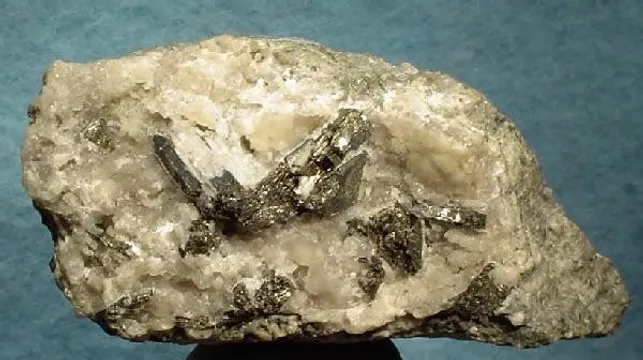
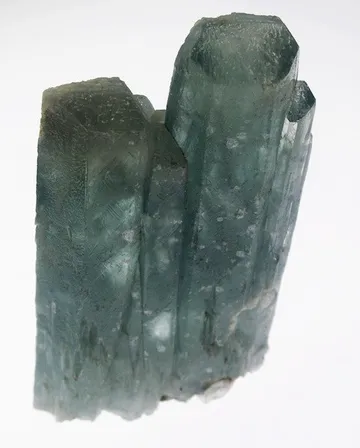
Barite from Climax should be treated as a subordinate collector species rather than a defining ore or alteration mineral. Unlike pyrite, quartz, molybdenite, fluorite, topaz, hübnerite, cassiterite, and rhodochrosite, it is not prominent in the major public mineral lists and deposit descriptions for the mine, so a good Climax barite specimen depends heavily on a convincing old label, compatible matrix, and associations consistent with the late vuggy carbonate-sulfate-sulfide suite. On collector pieces, the desirable qualities are clean bladed or tabular barite with intact edges, pale to warm coloration, and association with quartz, pyrite, or rhodochrosite-bearing matrix. Because Climax is a highly collected but specimen-poor industrial locality, any attractive barite-labeled specimen should be evaluated conservatively for provenance and should not be confused with the far more abundant Colorado barite specimens from Leadville-area mines, Creede, Ouray, or other classic barite localities.
Beyond these four collector-facing species, Climax is documented for a much broader highly evolved porphyry assemblage. Molybdenite is the economic heart of the deposit and appears in quartz veinlets and disseminations; hübnerite and cassiterite account for the historic tungsten and tin associations; fluorite, topaz, muscovite-sericite, K-feldspar, orthoclase, magnetite, sphalerite, chalcopyrite, goethite, jarosite, molybdite, ferrimolybdite, monazite-(Ce), xenotime-(Y), torbernite, uraninite, koechlinite, svanbergite, and pyrochlore-supergroup minerals round out the mineralogical signature. Climax’s formal importance is as the namesake and archetype of a deposit class rather than as a prolific type locality for named mineral species.
The chief authenticity issue with Climax material is locality discipline. Climax lies near some of Colorado’s most famous rhodochrosite country, especially the Alma district and the Sweet Home Mine, and attractive red rhodochrosite on quartz can be visually tempting to relabel, over-attribute, or confuse. Genuine Climax rhodochrosite tends to be rarer on the market than comparable-looking Sweet Home material, and strong pieces should carry old, specific provenance such as Ceresco Ridge, Climax Mine, Fremont Pass, Lake County, or a documented bench or level. If a specimen is simply labeled “Colorado rhodochrosite on quartz” and looks unusually clean, gemmy, and Sweet Home-like, the Climax attribution should not be accepted casually.
Pyrite labels also deserve scrutiny, though for a different reason. Fine Climax pyrite is real and distinctive, but the mine was a large industrial molybdenum operation where mineral collecting by ordinary mine personnel was restricted or prohibited at various times. As a result, better pieces are comparatively uncommon and often trace to named old collections. Sharp cubes on pale sericite matrix with fluorite or tetrahedrite-family association are believable; generic brassy pyrite with no old label is not enough.
Condition matters strongly. Rhodochrosite is soft and cleaves easily, so edge bruises, contacted rhomb corners, and dull calcite coatings are common. Quartz points on matrix plates are frequently incomplete, especially on Ceresco Ridge material; this may be acceptable if the rhodochrosite is complete and prominent, but broken quartz reduces display quality. Pyrite should be checked for edge wear, surface dulling, iron staining, and matrix crumbling. Barite, where present, should be inspected for bruised blade edges and cleavage scars. Molybdenite-bearing ore specimens can shed dark metallic flakes and should be stored so they do not abrade neighboring specimens.
Fluorescence is not the principal reason to collect Climax specimens, though associated fluorite may show response under ultraviolet light depending on the piece. More important are stability and storage: keep rhodochrosite away from acids and rough handling, keep pyrite dry and out of humid storage, and keep friable altered matrix protected from vibration. Radioactive accessory minerals such as torbernite and uraninite are documented from the broader Climax mineral suite; any specimen visibly labeled with uranium minerals should be stored and handled with standard radioactive-mineral precautions.
Market availability is limited. Ordinary molybdenite-quartz ore pieces appear periodically and remain accessible. Good pyrite is scarcer but obtainable. Fine rhodochrosite on quartz from Climax is genuinely rare and can command strong prices because it combines Colorado rhodochrosite appeal with a much less common locality. Top Climax rhodochrosite specimens with complete red rhombs on quartz matrix belong in the same conversation as serious Colorado classics, even though they are usually less widely recognized than Sweet Home or Alma district material.
The Climax story starts with a prospector who did not know what he had found. In 1879, Charles J. Senter broke into gray mineralized rock on Bartlett Mountain while the Leadville silver boom was roaring nearby. The material was not gold or silver, and for years it had little market value. Still, Senter kept doing the assessment work needed to hold his claims. The useful identity of the mineral—molybdenite, MoS2—was recognized in 1895, but the metal’s future waited on the steel industry. When molybdenum became valuable as a hardening and strengthening alloy, the forgotten gray mineral on Bartlett Mountain became one of the great strategic deposits of the twentieth century. Senter eventually sold his claims in 1918 for $40,000, a substantial reward for decades of stubborn patience.
The high-altitude camp that grew around the mine was not a romantic alpine village; it was an industrial town perched near 11,300 feet, built to keep a giant mine running through weather that would stop ordinary work. Frank F. Aplan, later a major figure in mineral processing, remembered Climax as an entire mining camp with houses, a boarding house, recreation hall, hospital, high school, grade school, store, and café. The basketball teams had a peculiar home-court advantage: visiting “flatlanders” had to play at thin-air altitude. Aplan laughed about it in his oral history, recalling that for their size the Climax teams were often state champions or near the top.
The winter of 1950–1951 gives the best measure of the place. By March, according to Aplan’s recollection from official high-altitude observatory weather data, Climax had received 32 feet of fallen snow. Sometimes five feet arrived in one storm, light and fluffy at first, then collapsed under sun and settling. Drivers tied red ribbons to car aerials just to find their buried vehicles. That is the practical backdrop behind every old specimen label from the mine: these were not weekend collecting conditions, but a severe industrial environment where any saved crystal had to survive mining, haulage, weather, and company rules.
The town itself eventually lost to the ore body. Climax had once been a company community with schools and homes, but the mine expanded and the residential houses were moved down to Leadville’s West Park subdivision before the mid-1960s. What had been a town at the top of the Continental Divide became, increasingly, a working mine landscape. The old Bartlett Mountain block-cave area, glory-hole subsidence, haul roads, mill buildings, shafts, and tailings facilities became the visible geography of the place.
One of the more telling industrial stories is not about a pocket of crystals but about scale. By the 1930s, the underground operation had grown so large that block caving fractured and collapsed portions of Bartlett Mountain above the mined ore. A local historical marker records a 1933 blast as the largest in underground mining history up to that time, used to fracture the ore body and begin the controlled collapse that made block-cave mining possible. That collapsing mountain is the reason many Climax specimens feel different from those from a small hard-rock silver vein: they come from an ore body mined as a mountain-scale engineering problem.
Even the water had a story. Aplan recalled that mine water contained about 15–20 parts per million fluorine—far above the concentration useful for dental protection—and that children raised at Climax in the 1930s suffered mottled enamel and dental problems. The camp needed about 200,000 gallons of potable water a day for houses, mine, and mill uses, and water shortage before runoff could force uncomfortable compromises in a place where snow was everywhere but drinkable water was a serious operating concern.
Specimen-wise, the great Climax field-note is scarcity. Collectors did not swarm the mine and line their shelves with rhodochrosite pockets. The mine was a bulk, low-grade molybdenum operation, and collecting access was limited. The best rhodochrosites seem to have appeared when miners encountered rare vugs or vein openings in the right late-stage assemblage, especially in the Ceresco Ridge area. A documented Ceresco Ridge plate with complete cherry-red rhombs on quartz points was described as so good that it could be mistaken for Sweet Home or Pasto Bueno—except that its Climax provenance made it rarer and more surprising. That is the essence of the locality for collectors: not abundance, but the shock of color and crystallization from a mine better known for millions of tons of gray molybdenum ore.
B. S. Butler and J. Vanderwilt, “The Climax molybdenum deposit, Colorado, with a section on history, production, metallurgy, and development,” U.S. Geological Survey Bulletin 846-C, 1933 — The foundational USGS description of the deposit, early geology, history, and mine development.
W. E. Hall, Irving Friedman, and J. Thomas Nash, “Fluid inclusion and light stable isotope study of the Climax molybdenum deposits, Colorado,” Economic Geology, vol. 69, no. 6, pp. 884–901, 1974 — Important hydrothermal study documenting three molybdenite ore bodies and the alteration zoning around them.
S. R. Wallace, W. B. MacKenzie, R. G. Blair, and N. K. Muncaster, “Geology of the Urad and Henderson molybdenite deposits, Clear Creek County, Colorado, with a section on a comparison of these deposits with those at Climax, Colorado,” Economic Geology, vol. 73, no. 3, pp. 325–368, 1978 — A major comparative paper linking Henderson-Urad geology with the Climax model.
A. A. Bookstrom, “The Climax-Alma granite batholith of Oligocene age and the porphyry molybdenum deposits of Climax, Colorado, U.S.A.,” Engineering Geology, vol. 27, pp. 543–568, 1989 — Detailed regional synthesis of the Climax-Alma batholith, intrusive cupolas, ore shells, and related hydrothermal features.
Steve Ludington and Geoffrey S. Plumlee, “Climax-Type Porphyry Molybdenum Deposits,” U.S. Geological Survey Open-File Report 2009-1215, 2009 — Concise USGS deposit-model summary for Climax-type molybdenum systems.
Stephen M. Voynick, Climax: The History of Colorado’s Climax Molybdenum Mine, Mountain Press Publishing — The standard narrative history of the mine, company town, people, shutdowns, and 2012 restart.
Colorado School of Mines / Mountain Scholar, “Climax miners underground,” National Mining Hall of Fame and Museum image record — Historical photograph record with useful summary of Climax mining, town, block caving, and production.
Bonhams, Lapidary Works of Art, Gemstones and Minerals, 2019, lot 862: Rhodochrosite, 11600 Bench, Climax Mine — Auction record documenting a large glossy Climax rhodochrosite rhombohedron with pyrite attachment.
“The Climax Mine atop Fremont Pass near Leadville, CO” — Planet Leadville — Drone footage from January 2019 showing the high-altitude mine setting at Fremont Pass. URL: https://www.youtube.com/watch?v=RKT9x6WR5Ds
“Strengthening the World Connecting the Future® Climax Molybdenum” — Freeport-McMoRan / Climax Molybdenum — Corporate operations video associated with Freeport’s Climax and molybdenum operations pages. URL: https://www.fcx.com/operations/north-america
“Climax Molybdenum” — Bill Casanova / Freeport-McMoRan corporate video portfolio — Investor-oriented media showing Climax Molybdenum operations and molybdenum uses. URL: https://casanovavideo.com/portfolio/fmi-climax-molybdenum/
“Aerial America: Colorado” — Smithsonian Channel segment hosted on Dailymotion — Aerial segment describing the Climax Mine on the Continental Divide and its molybdenum significance. URL: https://www.dailymotion.com/video/x94irwq
Mindat: Climax Mine, Climax Mining District, Lake County, Colorado — Best starting point for the locality’s verified mineral list, photographs, and references.
Mindat: Climax, Climax Mining District, Lake County, Colorado — Regional locality page useful for the abandoned town, district context, and broader mineral list.
Mindat gallery: Climax Mining District, Lake County, Colorado — Useful specimen-photo context for rhodochrosite, quartz, and other collector material.
Wikimedia Commons: Category Climax Mine — Open-image archive including mine views, molybdenite-quartz ore, pyrite, fluorite, and rhodochrosite specimens.
Climax Molybdenum: U.S. Operations — Current operator summary with location, deposit type, mill capacity, fleet, elevation, and operating footprint.
Climax Molybdenum: History — Operator’s concise historical timeline from Charles Senter’s discovery to the modern company.
Freeport-McMoRan: North America Operations — Current corporate description of Climax as a 100% FCX-owned open-pit molybdenum operation.
Freeport-McMoRan / Climax Molybdenum: Climax restart announcement, May 10, 2012 — Primary-source announcement of the mine’s return to commercial production after 17 years.
Western Mining History: Climax Mine MRDS record — MRDS-derived production, commodity, ore-body, level, and ownership details.
Colorado Geological Survey: Metals in Colorado — State-level context for Colorado molybdenum, Climax-type deposits, and historical production.
U.S. Geological Survey: Climax-Type Porphyry Molybdenum Deposits — Concise deposit-model guide for understanding why Climax is geologically archetypal.
Historical Marker Database: Climax — Readable roadside-history account with key dates, wartime significance, and the 1933 underground blast note.
Oral History: Frank F. Aplan — First-person recollections of Climax’s camp, weather, milling, mine water, and high-altitude life.
Mining History Association: Leadville and Climax area tour notes — Practical historical notes on Bartlett Mountain, the company town, Ceresco Ridge, Storke Level, conveyors, and tailings.
Colorado School of Mines / Mountain Scholar: Climax miners underground — Historical mining photograph and summary from the National Mining Hall of Fame and Museum collection.