






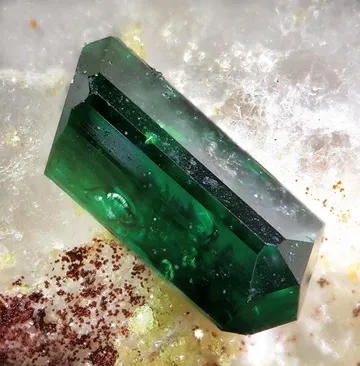
Chile locality guide: copper districts with atacamite, chrysocolla, malachite; Chañarcillo sulfosalts; and rare nitrate minerals prized by collectors.
Key facts
Chile is not a single mineral locality so much as a mineralogical continent compressed into a narrow country: Pacific trench to Andean crest, coastal copper belt to high cordillera, hyper-arid nitrate pampas to snowbound skarn and porphyry districts. For collectors, its importance rests on three intertwined legacies. First is the great Andean copper province, where immense porphyry and manto systems such as Chuquicamata, El Teniente, Escondida, El Salvador, Potrerillos, Collahuasi and La Farola developed spectacular oxidized assemblages rich in atacamite, brochantite, chrysocolla, malachite, libethenite, pseudomalachite, rare sulfates, chlorides, borates and arsenates. Second is the silver history of Chañarcillo, the 19th-century Copiapó district that furnished some of the world’s classic ruby-silver specimens: proustite and pyrargyrite with a depth of color and historical presence that still define the top end of those species. Third is the Atacama nitrate province, where long-lived hyperaridity preserved extraordinary saline mineral suites—nitratine, darapskite, humberstonite, lautarite, dietzeite, iquiqueite and many rarer species—that are mineralogically important even when too delicate or microscopic to be conventional display specimens.
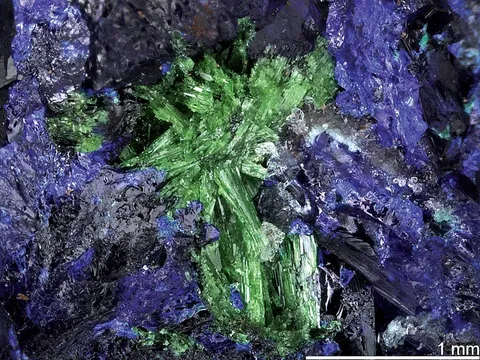
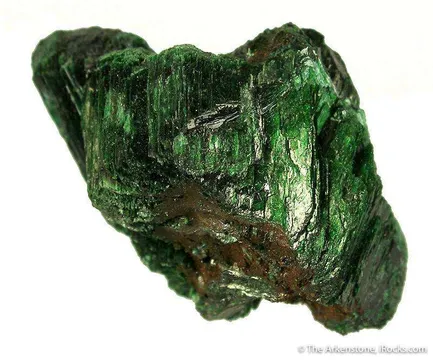
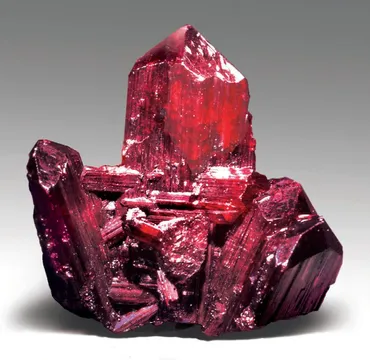
The look of a great Chilean cabinet specimen is often unmistakable. From the copper mines come deep emerald prismatic atacamite sprays on pale halloysite, sky-blue chrysocolla skins over malachite, or oxidized copper pockets where quartz gives a sparkling, sugary finish to otherwise massive color. From Chañarcillo come older, darker, more dangerous-looking pieces: silver sulfosalts in calcite or gossan, proustite crystals that appear metallic-black at the surface but flash red internally where the light enters. From Coquimbo comes Chilean lapis lazuli: not usually a crystallized collector’s mineral, but a nationally important ornamental rock in which lazurite, wollastonite, calcite and pyrite record a high Andean contact-metamorphic setting far removed from the copper deserts to the north.
Regional View
Country View

Photo: Wikimedia Commons

Photo: Wikimedia Commons
Chile’s best mineral specimens are therefore not merely “from Chile” in the broad country-label sense. Serious collectors should try to preserve the district, mine, level or pocket name whenever it is known: Chañarcillo versus Copiapó, La Farola versus a generic Atacama copper mine, Chuquicamata versus Queténa, Flor de los Andes versus an undifferentiated Coquimbo lapis source. The country label is prestigious, but the mine label is what gives a Chilean specimen its real mineralogical and historical value.
Search for specimens: View all specimens from Chile
Chile’s collector minerals come from several different geological provinces rather than from one deposit type. The economically dominant setting is the Andean porphyry copper belt. In northern Chile, late Eocene to Oligocene porphyry systems are aligned broadly with major structural corridors such as the Domeyko and West Fissure systems; farther south, Miocene to Pliocene giant deposits include the central Chilean porphyries. These deposits are fundamentally low-grade but enormous copper-molybdenum systems, with hypogene chalcopyrite, bornite, molybdenite, pyrite and related sulfides overprinted by supergene enrichment and deep oxidation. For collectors, the oxidized and leached zones are the more visible part of the story: atacamite, brochantite, chrysocolla, antlerite, malachite, azurite, cuprite, tenorite, chalcocite, covellite and native copper occur in different proportions depending on chloride activity, acidity, permeability, host rock and the degree of aridity.
Chuquicamata, near Calama in Antofagasta Region, is the archetypal Chilean copper locality in both industrial and mineralogical terms. Open-pit mining began there in 1915, and the district later became a reference locality for porphyry copper geology, supergene alteration and rare oxidized copper minerals. The district is famous not only for copper ore, but for a remarkable suite of type and near-type copper minerals from the oxidized zones and associated prospects. Queténa, within the Chuquicamata district, is the type locality of bandylite, CuB(OH)4Cl, a water-soluble copper borate-chloride first described from blue tabular to pyramidal crystals and lichen-like radial clusters in leached rock above massive iron sulfates. Chuquicamata also produced leightonite, sampleite, salesite, bellingerite, antlerite-bearing assemblages and many other rare sulfate, arsenate, phosphate and chloride species that reward micromount collectors more than cabinet-specimen buyers.
Farther south in Atacama Region, the Copiapó and Tierra Amarilla area is the collector’s Chile par excellence. The Chañarcillo silver district, discovered in 1832, is the great historic locality. Its mineralization is a silver-rich vein, replacement and skarn-related system developed in carbonate and volcanic-sedimentary rocks, later modified by oxidation and supergene processes. The classic assemblage includes native silver, acanthite, chlorargyrite and other silver halides, proustite, pyrargyrite, pearceite-polybasite minerals, miargyrite, xanthoconite, dyscrasite, arsenic minerals, calcite, baryte, quartz and iron-manganese oxides. Chañarcillo specimens were already classics in the 19th century; today, documented examples with old labels from mines such as Dolores, Descubridora, Bolados or Juan Godoy belong to the historic-mineral category rather than the casual market.
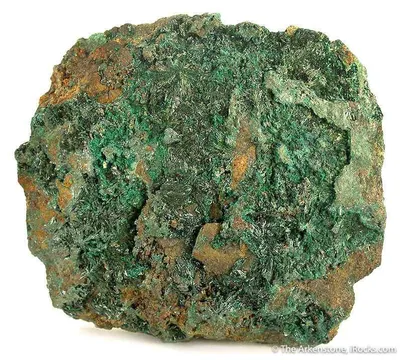
The same broad Copiapó province also hosts smaller copper mines that are much more accessible to the specimen market. La Farola, in the Cerro Pintado–Las Pintadas area near Tierra Amarilla, is beloved for brilliant green atacamite, often in sprays and clusters on halloysite, with libethenite, pseudomalachite, chrysocolla and related oxidized copper minerals. Manto Tres Gracias, in the Diego de Almagro area of Chañaral Province, is a manto-type copper-silver deposit in Jurassic volcanic and sedimentary rocks; collector pieces commonly show malachite and chrysocolla with drusy quartz, and the best examples have open vugs lined with blue chrysocolla or sparkling silica rather than simple massive green copper oxide. The broader Atacama mining belt also includes Inca de Oro, El Salvador, Potrerillos, Cachiyuyo de Llampos, Pampa Larga, Jote, San Samuel and many small prospects that have supplied rare secondary arsenates and copper-molybdenum species.
Chile’s nitrate deposits form a very different kind of mineral locality. In the hyper-arid Atacama Desert of Tarapacá and Antofagasta, saline-cemented caliche accumulations preserved nitrate, iodate, chromate, sulfate, borate and chloride minerals on a scale unmatched elsewhere. Industrial saltpeter mining dominated parts of the northern economy from the late 19th century into the 20th century. For mineralogists, the fields around Iquique, Zapiga and the Pampa del Tamarugal are important for nitratine, nitre, darapskite, humberstonite, lautarite, brüggenite, dietzeite, tarapacaite, lópezite, ulexite and iquiqueite. Many of these are fragile, water-soluble or best represented by analyzed small specimens; they are historically significant, but not usually durable show pieces.
In Coquimbo Region, the Flor de los Andes lapis lazuli deposit near Ovalle sits high in the Andes, close to the Argentine border, in a contact-metamorphic setting developed in limestone adjacent to an Oligocene monzogranitic body. Lazurite gives the rock its ultramarine color, with calcite, wollastonite, pyrite and related minerals influencing quality and appearance. This deposit is most important for gem and ornamental material, but it also matters to mineral collectors because it is one of the world’s few major non-Afghan lapis sources and the defining source of Chile’s national stone.
Collecting access in Chile today is highly constrained. Large active mines such as Chuquicamata, Escondida, El Teniente, Collahuasi, Los Pelambres and El Salvador are industrial operations with no casual collecting access. Historic camps and nitrate works may be protected heritage sites, unsafe ruins, active concessions or private property. Old workings in the Atacama can be unstable, remote and intensely dry; collapsed stopes, open shafts, oxidized sulfates and unmarked exploration cuts are real hazards. Legitimate specimen supply generally comes through old collections, authorized mine employees or contractors, small-scale miners, Chilean collectors, or dealers with established relationships in the northern mining districts. The label chain matters: a specimen simply marked “Atacama, Chile” can be attractive, but a specimen tied to La Farola, Chañarcillo, Chuquicamata, Queténa, Torrecillas or Flor de los Andes carries far more scientific and market value.
Quartz from Chile is most often a supporting actor rather than the headline species: milky vein quartz in silver and copper districts, drusy silica sparkling over chrysocolla and malachite, clear to smoky crystals in pegmatitic and hydrothermal settings, and amethyst reported from northern Atacama localities such as the Carrizalillo area. The most collectible Chilean quartz pieces are not ordinary white vein chunks but association specimens—blue chrysocolla pockets dusted with fine “sugar” quartz at Manto Tres Gracias, quartz gangue carrying silver sulfosalts from historic Chañarcillo, or clear crystals linked to named small mines and well-preserved labels. Good pieces have bright, undamaged terminations or clean drusy coverage that enhances copper color; ordinary pieces are massive, iron-stained quartz without a mine-specific association.
Chile’s broader mineral list is exceptionally deep. The country has given names and type localities to important species such as atacamite from the Atacama Desert; adamite from Chañarcillo; bandylite from Queténa in the Chuquicamata district; and numerous modern arsenates, chlorides, sulfates and mixed anion minerals from Torrecillas, Jote, Santa Rosa and related northern localities. Torrecillas alone has become a modern micro-mineral powerhouse, with species such as torrecillasite, leverettite, gajardoite, chinchorroite, naalasite and other rare hydrogen-arsenates and arsenate-sulfates. The Atacama nitrate fields add iquiqueite, humberstonite, lautarite, dietzeite and associated saline minerals to Chile’s scientific inventory, while Chañarcillo remains the classic source for proustite, pyrargyrite, iodargyrite, bromargyrite, xanthoconite, miargyrite, pearceite-polybasite group minerals and historic native silver. For display collectors, atacamite, chrysocolla, malachite, proustite, pyrargyrite and lapis lazuli are the names most likely to appear in cases; for systematic collectors, the country is a lifetime project.
Chile rewards careful locality reading. The single word “Chile” on a label is useful but insufficient for higher-end collecting, because the country’s mineral provinces are so different. A green copper mineral from La Farola, Chuquicamata, Manto Tres Gracias or an unspecified Atacama mine may be atacamite, brochantite, malachite, chrysocolla, pseudomalachite, libethenite or a mixture; visual identification alone is often unreliable for fine-grained material. Bright green acicular crystals should not automatically be called atacamite, and blue-green crusts should not automatically be called chrysocolla. For expensive Chilean copper secondary specimens, especially unusual species or old labels, analytical confirmation by Raman, XRD or SEM-EDS is worth the effort.
Chañarcillo silver minerals need special caution. Fine proustite and pyrargyrite are both historically important and condition-sensitive; proustite in particular darkens with prolonged light exposure, so the best pieces are stored in the dark and displayed only briefly under low light. Many Chañarcillo pieces are old, repaired, trimmed or stabilized, and some historic specimens carry broad labels such as “Copiapó” or “Chile” rather than the exact mine. That does not make them bad specimens, but it affects price and scholarship. Top proustite crystals with strong form, transparency, provenance and minimal damage are genuinely rare; a vague locality and a glossy red appearance are not substitutes for history and condition.
The saline and sulfate minerals of northern Chile can be far less stable than they appear. Bandylite is water-soluble and alters readily on exposure; nitrate-field minerals such as nitratine, darapskite and humberstonite, and many sulfate-chloride assemblages, should be kept dry, cool and away from handling moisture. Avoid washing unknown Atacama evaporite or sulfate specimens. Even a quick rinse can permanently damage or dissolve the very mineral of interest. For micromounts, sealed boxes with desiccant and clear locality documentation are preferable to open display.
Chilean lapis lazuli presents a different authenticity issue. Much lapis on the decorative market is sold as “Chilean” because the name carries ethical and geographic appeal relative to Afghan material. Collectors should distinguish true Flor de los Andes or Coquimbo material from dyed carbonate, dyed sodalite, reconstructed lapis, or generic blue stone. Natural Chilean lapis commonly shows calcite and wollastonite with variable pyrite and a mottled to banded blue-white texture; intensely uniform blue carvings deserve scrutiny. For mineral collectors, a rough, labeled piece from Flor de los Andes or Flor de Chile may be more meaningful than a polished object with only a country attribution.
Market availability is uneven. Atacamite and chrysocolla combinations from Chile appear regularly but vary widely in quality. Fine La Farola atacamite sprays, well-formed libethenite or pseudomalachite associations, and named-mine pieces with good labels are scarcer. Chañarcillo proustite, pyrargyrite and native silver are classic-mineral territory: available mostly through old collections, auctions and specialist dealers, with prices reflecting provenance as much as aesthetics. Torrecillas and Jote rarities are mainly micromount and analytical-specimen material. Chilean lapis is available in quantity as lapidary material, but mineralogically documented specimens from the correct high Andean deposits are less common than souvenir material.
The Chilean mineral story that collectors still retell begins on 16 May 1832, south of Copiapó, with Juan Godoy Normilla. Later accounts describe him as a young muleteer and prospector, a poor woodcutter in the words of the writer José Joaquín Vallejo, moving through the dry hills of Chañarcillo when he found the silver outcrop that changed the Atacama. The discovery came when the Chilean republic was still young and financially strained; within years, Chañarcillo’s silver helped turn Copiapó into a mining capital. Mines, claims, mule trains, smelters, merchants and fortunes gathered around a desert hill whose specimens would travel much farther than the ore itself. Today the great Chañarcillo proustites and pyrargyrites carry that origin in miniature: red-black crystals from the same rush that helped finance a nation.
A century later, Mark Chance Bandy’s 1935 Chile expedition gave the country another collector legend. Traveling from the United States to northern Chile was not a casual field trip. Bandy prepared by studying the minerals he expected to encounter, securing a passport and Chilean visa, and arranging collecting work that included material for the Smithsonian. His voyage to Tocopilla took from 27 July to 10 August 1935; the Chilean collecting trip then ran from 10 August until his departure from Valparaíso on 7 November, nearly three months on the ground. The itinerary reads like a collector’s map of northern Chile before the modern road-and-security era: Chuquicamata, the nitrate pampa, Iquique, Copiapó and Chañarcillo. That trip later became part of Mineralogical Record history, and Bandy’s name is permanently fixed to Chilean mineralogy through bandylite, the blue copper borate-chloride from Queténa.
The nitrate pampa tells a harsher story. Humberstone and Santa Laura, now preserved as saltpeter works, were once part of a vast industrial landscape of more than 200 oficinas spread through the Atacama. Workers from Chile, Peru and Bolivia lived in company towns in one of the driest deserts on Earth, processing caliche for sodium nitrate that fertilized fields in Europe and the Americas. For the mineral collector, the romance lies partly in the unlikely chemistry: nitrate, iodate, chromate, sulfate, borate and chloride minerals crystallized and persisted because rain almost never came to erase them. But the human story is inseparable from the mineral one. The same desert that preserved nitratine and iquiqueite also preserved the abandoned theaters, machine houses, leaching plants and workers’ quarters of the saltpeter age.
Chile’s blue stone has its own mountain narrative. At Flor de los Andes, lapis lazuli lies high in the cordillera near Ovalle, around 3,600 m elevation and close to the Argentine border. Before modern road access, transport from the mine to La Serena could take two days by mule, with each mule carrying about 100 kg of material. That detail tells more about the old deposit than a polished souvenir ever could: blue rock pried from a high Andean contact zone, loaded animal by animal, and carried down from the thin air toward the coast. The best Chilean lapis still feels geological rather than merely decorative when it shows the full assemblage—ultramarine lazurite, white calcite or wollastonite, and flecks of pyrite locked together in a metamorphic rock rather than a uniform dyed blue mass.
One of the most touching modern Chilean mineral stories is embedded in the name tapiaite. The mineral was described from the Jote mine in the Pampa Larga district near Tierra Amarilla and named for Enrique Tapia, a Chilean collector who helped promote mineral collecting in northern Chile and the Atacama Desert. He collected in areas such as Veta Negra, Alacrán, Descubridora and Jote, and the description records his “untiring collecting spirit.” He died unexpectedly of leukemia in March 2008 while preparing to leave on another collecting excursion. In a country where many mineral names honor geologists, chemists or places, tapiaite preserves the memory of a field collector whose work helped turn obscure Atacama prospects into scientifically important localities.

_-_Chanarcillo,_Copiapo_Province,_Atacama_Region,_Chile.jpg)