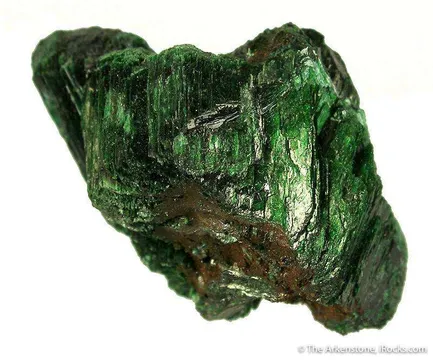
Carlota mine, Chile - a high-Andean polymetallic locality yielding azurite and malachite; valued for striking blue on dark matrix and Chilean provenance.
Key facts
Carlota mine is one of those Chilean names that rewards careful labels. In modern specimen commerce, “Carlota mine, Chile” is best understood as the Carlota–Cristo polymetallic vein system of the San José de Maipo–El Volcán area southeast of Santiago, not the better-known Carlota Mine of Arizona and not the old silver “Carlota” claim in Chañarcillo. The Chilean Carlota–Cristo system is a high-Andean Cu-Ag-Au-Pb-Zn occurrence hosted by clastic-volcanic rocks intruded by a monzonitic to granodioritic body. Its primary assemblage—chalcopyrite, bornite, enargite, galena, sphalerite, magnetite, polybasite, proustite, and tetrahedrite—places it among the classic polymetallic vein deposits of central Chile.
For collectors, Carlota matters because its oxidized copper zone produced azurite and malachite specimens with a distinctly Chilean polymetallic character: copper carbonates developed on dark sulfide-bearing vein material rather than on the pale limestones, shales, or siliceous breccias familiar from many other azurite districts. The best pieces are sought for contrast—deep royal-blue azurite against velvety or botryoidal green malachite, often with iron-stained quartz or massive sulfide matrix giving the specimen a rugged, orebody look rather than a purely decorative one.
Regional View
Country View
The name also carries historical weight. In the Maipo district, Carlota appears in 19th-century Chilean mineral records as a source of argentiferous tetrahedrite and argentiferous galena, and by the early 20th century the mine was being discussed as an active or recently active source of precious-metal concentrates. Its collector profile today is not built on great published pocket narratives, but on the survival of a small number of well-labeled specimens from a difficult, high-Andean mining environment where oxidation, polymetallic sulfides, and old workings intersected.
Search for specimens: View all specimens from Carlota mine, Chile
The Carlota–Cristo deposit lies in the Cordillera de los Andes about 55 km southeast of Santiago, in the San José de Maipo–El Volcán mining region, at elevations reported between about 2,200 and 3,300 m. The deposit is described as a polymetallic vein system developed in a clastic-volcanic sequence cut by a monzonitic-granodioritic intrusive body. The main structure is a steep vein, striking roughly east-west to N 55° E and dipping about 80° north, with a reported strike length of about 2,000 m, widths of roughly 0.5 to 2 m, and mineralization followed to substantial depth.
The primary ore suite is the reason oxidized Carlota specimens have a different personality from simple copper-carbonate show pieces. Chalcopyrite, bornite, and enargite supplied copper; galena and sphalerite supplied lead and zinc; tetrahedrite, polybasite, and proustite contributed the silver-rich character; and magnetite marks the iron-rich component of the vein system. Where near-surface fluids oxidized copper sulfides, azurite and malachite developed in seams, coatings, small cavities, and replacement zones. The collector specimens are therefore best read as pieces of a polymetallic vein brought into the secondary copper zone, not as products of a single-species azurite pocket mine.
Historically, the mine belongs to a long-lived central Chilean mining belt rather than to the nitrate- and silver-boom landscape of northern Atacama. A late-19th-century Chilean mineral catalogue records “Mina Carlota” of Maipo for argentiferous tetrahedrite and argentiferous galena, while later summaries describe Carlota and Cristo as having formerly produced combined gold, silver, lead, zinc, and copper ores. One technical summary gives past production of about 480,000 tonnes grading approximately 1.4% Cu, 180 g/t Ag, and 1 g/t Au, with the ore treated at the Las Melosas plant. The same source identified Carlota–Cristo as the most important polymetallic deposit of the Metropolitan Region and estimated remaining resources on the order of one million tonnes at comparable copper and silver grades.
Access today should be regarded as closed unless explicit permission is obtained from the relevant land and mineral-rights holders. This is mountain mining country with old workings, steep ground, changing weather, and potential snow or rockfall hazards. Loose labels reading only “Carlota, Chile” need special attention because Chile has had more than one mine called Carlota, and because the Arizona Carlota Mine has produced much more widely publicized azurite and malachite after azurite specimens. Serious collectors should preserve any old Chilean labels, Maipo references, dealer notes, and collection histories with the specimen.
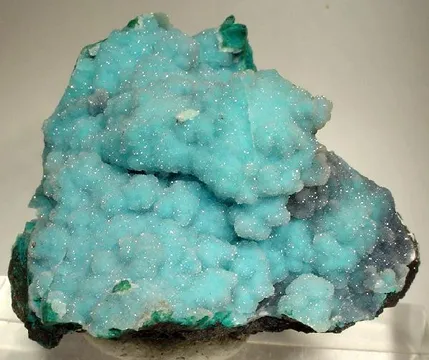
Azurite from Carlota mine is the blue expression of the deposit’s copper-rich oxidation zone, forming where fluids acted on chalcopyrite, bornite, and enargite within the polymetallic vein. The better collector pieces show dark to saturated royal-blue azurite as crusts, small crystal aggregates, and richly colored patches on ore matrix, commonly with malachite as a green associate or alteration partner. Because the locality is not known for large, isolated, freestanding azurite crystals, quality here is measured by richness of color, attractive contrast against dark sulfide or quartzose matrix, lack of bruising, and a credible Chilean Maipo provenance; ordinary pieces are more massive, dull, or label-dependent, while the strongest examples have enough crystal texture and color separation to stand apart from generic “azurite-malachite” ore.
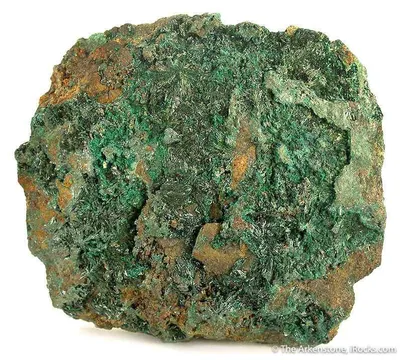
Malachite from Carlota mine occurs as the green companion to azurite in the oxidized copper zone, generally as coatings, velvety crusts, botryoidal films, and massive replacements along fractures and small cavities in the vein material. Its color ranges from dark forest green to brighter emerald tones where the surface is fresh and fibrous; associations with azurite are especially desirable, as are specimens that show malachite draped over or bordering blue azurite without overwhelming it. Fine Carlota malachite is not judged by enormous crystal size but by surface quality, saturated color, undamaged silky or botryoidal texture, and the visual evidence of a polymetallic Chilean matrix; flat, powdery, abraded coatings are much less appealing.
Other minerals documented for the Carlota–Cristo system include chalcopyrite, bornite, enargite, galena, sphalerite, magnetite, polybasite, proustite, and tetrahedrite, with old Chilean records specifically noting argentiferous tetrahedrite and argentiferous galena from Mina Carlota of Maipo. No valid mineral species is established as a type-locality mineral from the Carlota–Cristo mine itself; the most important rarities here are instead the silver-bearing sulfosalts and the survival of well-provenanced oxidized copper specimens from a comparatively obscure central Chilean polymetallic locality.
The main collecting problem is locality confusion. “Carlota mine” is also a significant Arizona locality in the Globe-Miami district, famous among American collectors for modern azurite and malachite after azurite specimens; those Arizona labels may mention Pinto Valley, Pinto Creek, Globe-Miami, Gila County, or a 3460-foot level. They are not Chilean. Chilean Carlota material should ideally carry a Maipo, San José de Maipo, El Volcán, Las Melosas, Santiago, or Región Metropolitana association. A separate old Mina Carlota also appears in the Chañarcillo silver district of Atacama, so a bare “Carlota, Chile” label is not enough for high-value specimens unless the matrix, assemblage, and provenance all agree.
No published, locality-specific fake industry is known for Carlota, but generic azurite-malachite material is easy to misattribute. Be wary of specimens with unusually clean, vuggy, pale matrix and highly lustrous blocky azurite crystals if they are labelled only “Carlota”; that look may fit the Arizona Carlota far better than the Chilean polymetallic vein. Conversely, Chilean pieces with dark ore matrix, sulfide remnants, iron staining, quartz, and compact secondary copper carbonates are more plausible for Maipo Carlota.
Condition is often the limiting factor. Azurite bruises and whitens on high points, malachite fibers flatten or fuzz with abrasion, and copper carbonate crusts can detach from dense sulfide matrix along old fracture surfaces. Avoid acids and aggressive cleaning; acid will attack carbonates and can ruin both azurite and malachite. Because the primary assemblage includes lead-, arsenic-, and silver-bearing minerals such as galena, enargite, tetrahedrite, polybasite, and proustite, trimmed or broken ore should be handled sensibly: do not saw or grind without proper precautions, keep dust out of the display case, and wash hands after handling. Fine, confidently attributed specimens are not common on the market, and provenance adds more value here than size alone.
The most vivid historical moment tied to the Maipo Carlota is not a pocket story but a mountain story. In August 1929, a Chilean newspaper reported that a mass of snow, described as 40 meters thick, buried the worker Roberto Ureta at Mina Carlota in El Volcán. The report was brief, but the detail is unforgettable: a mine high in the Andes, a worker moving through snow country, and an avalanche or snow collapse so deep that it turned the mine’s setting itself into the hazard. For collectors, it is a reminder that Carlota specimens came from a hard mountain environment, not from the dry benches of a low desert quarry.
A few years later, in June 1932, another report from San José de Maipo described metals from Mina Carlota being treated at the mining establishments of El Volcán and producing, each day, about 300 grams of gold and 3 kilograms of silver in concentrate sent abroad. The numbers are modest compared with the legendary bonanzas of Chañarcillo, but they give Carlota a tangible working-life scale: ore moving down from the mountain, treated locally, then leaving Chile as concentrate. The same report mentioned efforts to have the Caja de Crédito Minero support work at Carlota and other mines that had become inactive, capturing the stop-start rhythm typical of many Chilean polymetallic vein mines.