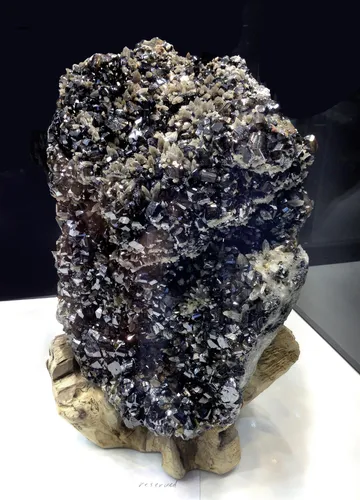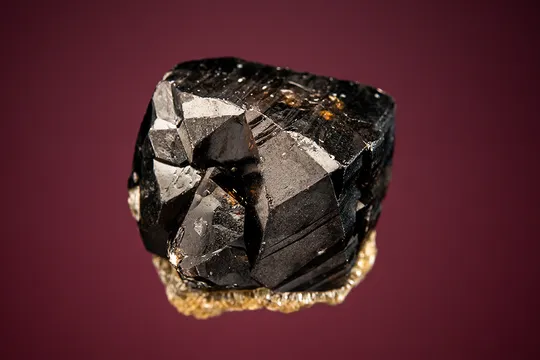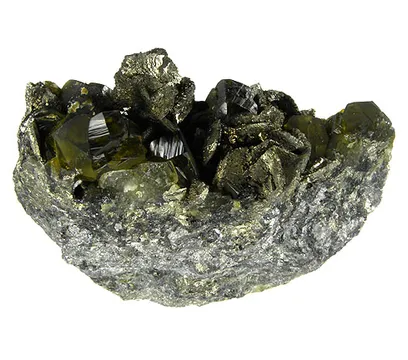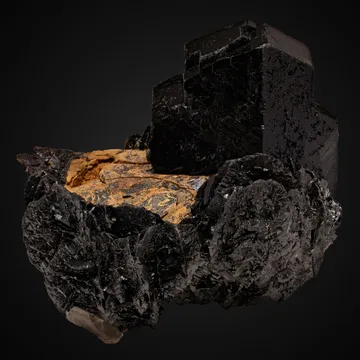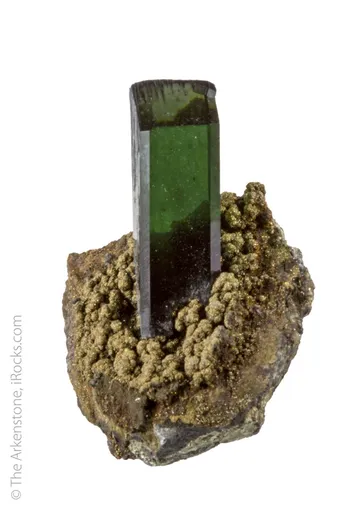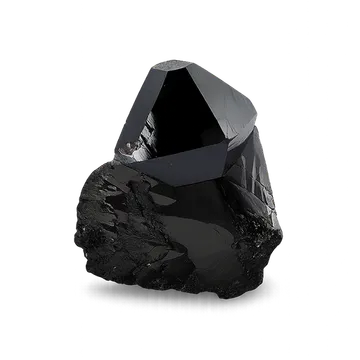
ビロコ鉱山のスズ石 — ボリビアの必須の錫産地で、暗く鏡のように輝く結晶と希少な透明で面品質の標本で知られる。
Key facts
Viloco is one of the essential cassiterite localities: a high-Andean tin mine whose best specimens combine the authority of an ore mineral with the flash, transparency, and form normally reserved for showier gem species. Fine pieces show sharp, highly lustrous brown-black twins, often with amber, honey, or yellow-brown translucency when a strong light is placed behind them. The most desirable examples have crisp cyclic or “spherical” twinning, glassy faces, and enough internal clarity that the crystals stop looking like black tin ore and begin to glow.

Photo: Wikimedia Commons
The mine lies in the Quimsa Cruz–Tres Cruces part of the Cordillera Real, southeast of La Paz, within Bolivia’s famous tin belt. Its collector material is not a pegmatite curiosity but the crystalline expression of a hydrothermal Sn-W-Mo-As vein system around Oligocene granitic intrusions. The Viloco vein field is especially interesting because the district is zoned around the granite: tungsten-arsenic-bismuth-copper assemblages occur close to the intrusive rocks, cassiterite dominates an intermediate tin zone, and zinc-bearing assemblages increase farther out. That zoning helps explain why some Viloco specimens are wonderfully clean cassiterite on quartz, while others carry siderite, tourmaline, arsenopyrite, pyrite, wolframite-group minerals, bismuthinite, and other sulfides.
For collectors, Viloco’s signature is the tension between darkness and light. In ordinary cabinet lighting many specimens read as black, mirror-bright cassiterite. Turn the specimen, or backlight a broken edge or thinner twin, and the same crystals may reveal caramel, honey, golden-brown, or even paler yellow zones. That optical surprise is locality-defining. Viloco is also repeatedly cited as Bolivia’s only tin mine that has occasionally yielded transparent, facet-quality cassiterite; this is a remarkable distinction in a country famed for tin production.

*Photo: Wikimedia Commons*歴史的に、この locality は Viloco と Araca の両方の名で現れ、標本目的でコレクターが密接に結びつくと扱うべき名称です。鉱山は19世紀末に発見され、古典的なボリビアの錫文献にも登場するほど重要で、現在も小さな鉱業組合を通じて活発に稼働しています。最良の旧標本—特に大きく、鋭く、光沢のある双晶—はごく普通ではなく、最良の例は保存された鉱石の性格を帯びています。密度が高く、重厚で、頑丈そうに見えるものの、わずかに透光性があり、カシステライトが単なる産業用酸化錫ではなく、偉大な酸化物種の一つであることを思い出させるのです。## 注目の標本
Search for specimens: View all cassiterite specimens from Viloco Mine, Bolivia
Viloco Mine, also known in much of the literature and specimen trade as Araca Mine, is in Loayza Province, La Paz Department, Bolivia. It sits southeast of the city of La Paz in the Cordillera Real, in the Tres Cruces or Quimsa Cruz range. Mindat gives coordinates for the locality at approximately 16° 52' 26'' South, 67° 29' 52'' West, though older and broader references to the Viloco-Araca district may vary slightly depending on whether they refer to the mine complex, the settlement, or the broader mining field.
Geologically, Viloco belongs to the Bolivian tin belt and is best described as a zoned peribatholithic hydrothermal vein district related to granitic intrusions. The district is hosted chiefly in Paleozoic metasedimentary rocks—especially black shales, slates, phyllites, and minor quartzites—with veins also found in or near granitic rocks and porphyritic granite dikes. The Quimsa Cruz intrusive complex includes Oligocene granodiorite and monzogranite bodies; published U-Pb zircon ages for related units are about 26.2 ± 0.2 Ma and 25.4 ± 0.2 Ma. These intrusions produced contact metamorphism, including hornfels development, and helped drive the hydrothermal systems that deposited cassiterite and associated ore minerals.
The ore occurs in steep, generally northeast-trending veins. Published field descriptions note vein sets spaced by meters, with vertical and longitudinal continuity locally reaching several hundred meters and widths ranging from millimeters to about 50 cm. The richest collector material comes from drusy vein cavities where euhedral cassiterite crystals lined open space, sometimes with comb texture and, in brecciated zones, cockade textures. This open-space growth is crucial: without it Viloco would be only another tin ore producer; with it, the district produced some of the finest crystallized cassiterite specimens known.
The district’s mineral zoning is one of its most useful geological clues. Veins in or very near the granite are richer in As-W-Bi-Cu assemblages, while tin is strongest at intermediate distances from the intrusive contact, roughly 500 to 2000 meters out in the published model. Farther from the contact, zinc-lead assemblages become more important. The cassiterite-rich tin zone includes classic specimen associations with quartz, siderite, tourmaline, arsenopyrite, pyrite, apatite, wolframite-group minerals, and bismuth minerals; in some tin-domain veins, cassiterite can be the dominant ore mineral.Vilocoの鉱業史は、19世紀末の発見に遡ります。より古い文献では鉱区をアラカ鉱山として言及しており、標本ラベルにはVilocoまたはAracaのいずれかが用いられることがあります。21世紀初頭には地区は依然として小規模な採掘組合によって操業されており、公開された記述には約30平方キロメートルの範囲にわたり活発な坑道が数十個、そして250人を超える鉱夫がいると記されています。Mindatは鉱山を「稼働中」と記録しており、その状態は2022年に最後に確認されています。
この鉱山は気軽な採集地ではありません。高度の高いアンデスの地区で、操業は採掘権益を持つ企業や協同組合によって管理されている活発な錫鉱山です。採集者市場へ届く標本は、一般に鉱夫、協同組合、確立されたディーラー、旧コレクション、あるいは二次市場の流通経路を通じて来るのが通常です。最も望ましい例は最近の観光客の発見ではなく、しばしば古い標本であり、ラベルには歴史的な産地名、鉱山のサブローカション、または former owners が記されていることがあります。
コレクター品質の材料の生産時期は一貫して文献化されているわけではありませんが、記録は有用なアンカーを提供します。クラシック標本は初期の採掘、旧コレクション、そして20世紀半ばから後半の生産と関連付けられています。1つの記録された標本にはCOMIBOL 1965の産地が付与されています。ディーラーやコレクションの記録は、約1980年から1994年の間に限定されたバッチで重要な良質標本が現れることを示唆しており、宝石学的報告(2002年)は、鉱夫がトップ標本と宝石材料を分離するよう促すドイツの対外援助の取り組みを指摘しています。これが重要な介入である理由は、操業中の錫鉱山で、世界クラスのカスチテライトと砕析鉱の違いが、手元に何があるかを鉱夫が認識するかどうかで決まる場合があるからです。## ビロコ鉱山(ボリビア)産スнデスの特徴
ビロコ産スノー石は SnO2 で、最高の標本は鉱物を最も彫刻的に示す:密集し、鋭く双晶を成し、面が輝き、明瞭な条痕が強く、透光性を隠すことが多い暗い主体色を持つ。Mindat の産状記録には結晶が最大8 cm、双晶が最大5 cmと記されているが、市場で見られる多くの標本ははるかに小さく、親指の爪程度から小さなキャビネットサイズ、個々の双晶は数ミリから数センチ程度。 bright quartz 上の美しい 1 cm の環状双晶はすでに魅力的であり、鋭い 2–3 cm の艶のある双晶は本格的な標本である。大きく無傷で宝石質の双晶はエリート級である。
特徴的な色は反射光下で濃い茶色から黒色で、透過光下で茶色、琥珀色、蜂蜜色、黄色茶色、あるいはほぼ無色に近い域が見えることがある。ビロコはこの内部発光で特に称賛されている。いくつかの結晶はほとんど不透明に見えるが、割れた縁・角・双晶の薄い部分に強い光が当たると突然キャラメル色になることがある。宝石学的記述では、色の帯状の結晶は茶色と淡黄色があり、表面付近に淡い色が集中することがあると報告されている。ビロコ産の切子石は多くは淡い茶色がかった黄色で、二色の茶色と黄褐色の宝石が知られている。
結晶の形状は、プリズマティックから偽正八面体型のカシステライト形状と双晶化によって支配される。 cyclic twin はビロコで特に重要で、ローゼット状、丸みを帯びた集合体、ほぼ球状のクラスターを生み出す。いくつかの標本は小さく光沢のある双晶が密集した丘のような形状をなし、他にはクォーツ上やや貧弱な鉱物基質上に一つの力強い双晶結晶を持つものもある。背光標本は成長帯区分や内部の幻影を示すことがある。美しい面は通常明るく反射的で、最高の標本ではトップクラスのカシステライト産地に期待される鏡面光沢を示す。
通常のキャビネット的付帯鉱物は石英、方解石、電気石である。石英は透明から煙状のドゥルージ沿結晶として現れることがあり、あるいはカシステライトの下の石英に富む基質として存在する。方解石は黄褐色のレンズ状または圧縮された菱形・集合体を形成する。電気石は基質中に現れることもあり、宝石質のカシステライトの中に微細な包入物としても見られる。他に記録された共伴鉱物には硫化鉄、黄鉄礬、燐灰石、アルケナイト、方解石、閃亜鉛鉄鉱、鎢鉱族鉱物、ビスマス石、酸化鉄(リモナイト)、ロリング石、チタン鉄鉱、カム石、磁鉄鉱、さらに広域地区の総体として天然ビスマスが含まれる。顕微鏡的および地球化学的側面では、ビロコ産のスズ石はほぼ純粋で、SnがNb、Ti、Ta、Feに置換される程度が低いと描述されている。2013年の研究では、スズ石中のTiO2が0.8wt%を超えず、局所的なTa含有量が約0.2wt%程度であることが報告された。中国の雲嶺スズ石との現代的宝石学的比較も、ビロコ材が特にタンタル、ウラン、コバルト、ニッケル、チタンなどの微量元素範囲を広く持ち得ることを示している。コレクターにとって、これらの分析的違いは標本の見た目ほど重要ではないが、宝石起源の検証作業では重要となることがある。
品質は、 locality-specific traits(場所固有の特徴)のコンパクトなセットによって判断される:鋭い双晶、照り、強い光の下での半透明性、結晶サイズ、打撲痕の欠如、石英または方解石上での魅力的な配置、信頼できる産地情報。暗色で鏡面光沢のある双晶を持ち、透過色がないビロコ産スズ石でも優秀であり得る。ガラス状の琥珀色〜茶色の半透明性、鋭い循環形、軽微なダメージを伴う標本は、その産地の最良の状態を示している。## Collector Notes
ビロコ産スチタイライトは密度が高く、硬く、視覚的にも特徴的だが、状態の問題には免疫ではない。一般的な問題点として、縁の打撲、割れたり接触した結晶先端、破損した双晶終端、修復されたマトリクス接触が挙げられる。スチタイライトは重量があるため、クラスターは旧来の採取時の取扱い、輸送時の衝撃、または弱いクォーツやジダライトの接触に沿った振動の影響を受けやすい。クォーツが豊富な作品では、暗いスチタイライト結晶が薄いマトリクスと接する部分を注意深く見ると良い。旧い接着剤、安定化、再接着された結晶は、影になった割れ目の中で見逃しやすい。
調査された資料の中で、ビロコ産スチタイライトに関する、地域特有の偽造産業は確立的には出現しなかった。主な信頼性の懸念はより普通のものである:ボリビアの産地表示が曖昧、 proven ceがないまま宝石質のスチタイライトにビロコ名を過信して使われること、修理の非公表、ビロコとアラカのラベルの混同。資料と取引の中でビロコとアラカはほぼ互換的に用いられているため、その名称のばらつきだけが赤旗とは限らない。「Araca Mine, La Paz, Bolivia」と記されたラベルはビロコ系に属する場合が多い。一方で「Bolivia cassiterite」とだけ記されたラベルは、裏付けがない限り自動的にビロコへ格上げすべきではない。
成長形は最も重要な信頼性チェックの一つである。典型的なビロコ作品は光沢のある茶黒色の双晶を持ち、しばしばサイクル状で、クォーツや時にはジダライトやトルマリンを伴う。背面からの照明で蜂蜜色から黄褐色の半透明が現れることがある。均一に黒く、鈍く、塊状で、明確な双晶を欠く物質はスチタイライトである可能性はあるが、その産地で有名な特徴ではない。対照的に、 unusually pale( unusually paleは「異常に淡い」程度の訳語でOK)で透明度の高い、カット面のあるスチタイライトは宝石素材として判断すべきである:屈折率と顕微鏡的特性を確認し、無色近いスチタイライトが宝石の文脈で合成モアサナイトと誤認される可能性があることを認識すること。スチタイライトの非常に重量感は緩い石の手掛かりとして有用であり、ビロコ系の宝石には二相含有体のベールや、時折、トルマリンの針が見られることがある。
市場での入手性は不均一である。小さなビロコのサムネイルやミニチュアは依然として現れ、往々にして旧在庫や分散収集からの供給である。小型キャビネット用の、双晶が豊富でクォーツのマトリクスが多い標本は入手可能だが、一般的ではない。大きく、損傷がなく、非常に光沢が高く、 partly gemmy(部分的に宝石質)サイクル双晶は実際には希少であり、スチタイライト専門家、ボリビア系のコレクター、主要な鉱物種の体系的展示を作っているコレクターにより迅速に取り扱われる傾向がある。古いラベル、確定的な採集履歴、初期鉱山 provenance を有する標本には特に高値がつくべきであり、結晶品質が強い場合は特にそうである。購入時は、反射光下と、ディーラーが透明感を主張する場合には透過光または背光条件下のはっきりした写真を要求してください。結晶が修理されているかどうか、母材が安定化されているかどうか、標本に旧ラベルが付随しているかどうかを尋ねてください。最高級の例は通常の照明ではほぼ黒く見えることがあるため、優れた写真撮影は単なる見栄えではなく、標本を理解する一部なのです。## Stories & Field Notes
Viloco’s best story is the one repeated, in different forms, every time a collector turns a black cassiterite twin toward a lamp. This was an ore mine first. The district’s reason for being was tin and tungsten production, not cabinet minerals. In that setting, a transparent cassiterite crystal is almost an accident of mercy: the same mineral that could be crushed for tin concentrate instead survived as a gem or specimen. A 2002 gemological note records that, as part of a German foreign-aid project, Viloco miners were instructed to separate top-quality gem and specimen cassiterite rather than process it as ore. That single change in attention helped preserve material that otherwise would have disappeared into the mill.
Jaroslav Hyršl’s 2001 visit to Bolivia gives the gem side of Viloco a concrete scale. He reported seeing hundreds of carats of faceted Viloco cassiterite—an astonishing statement for a mineral most collectors know as dense, dark, and opaque. The same report describes cut stones most commonly as light brownish yellow, with some bicolored brown and yellowish-brown gems. One illustrated center stone weighed 11.77 ct, a substantial size for faceted cassiterite, and the accompanying specimen measured 9 x 7 cm with numerous partly transparent crystals. For a locality famous in mineral cabinets, Viloco also quietly entered the rare-gem world.
The field setting is equally memorable. Published geological work places the mines in the Tres Cruces Range of the Cordillera Real, with many workings at altitudes exceeding 4500 meters. The district covered roughly 30 km2, with tens of galleries active and more than 250 cooperative miners at the time of the 2013 study. That is not a romanticized pocket locality with one lucky vug; it is a high, working Andean tin district where collector crystals are extracted from a functioning mineral economy.
The old specimen record carries its own human trail. One documented 10 cm spherical cassiterite specimen is tied to COMIBOL 1965 and described as very shiny, black, and honey-yellow, a combination that reads like a collector’s shorthand for Viloco itself. Another notable online specimen record describes three small batches of outstanding material from 1980 to 1994, never common, with the example passing through the Ed David Collection. Ed David, science adviser to President Richard Nixon, is an unexpected name to encounter on a Bolivian cassiterite label, but that is how great minerals travel: from cooperative workings high in the Andes, through dealers and specialists, into the cabinets of people whose lives may otherwise have had nothing to do with tin ore.## 鉱物学的記録と出版物- Mindat locality page: Viloco Mine (Araca Mine), Loayza Province, La Paz, Bolivia — 広範な座標、稼働鉱山ステータス、鉱物リスト、そして Viloco/Araca が実質的に交換可能な名称であるという重要な note を含むコア所在地レコード。
Mindat occurrence page: Cassiterite from Viloco Mine — 写真データに基づく結晶形状、色、関連鉱物、主要参考文献を示すカスティテライト固有のレコード。
Cook, Robert B. (1977), “Morphology and Occurrence of Bolivian Cassiterite,” The Mineralogical Record, 8(1), 52–57 — Viloco のカスティテライトおよび他のボリビア産カスティテライト事例に引用される古典的なコレクター用鉱物参考文献。
Sugaki, A. (1985), “Geological study on the ore deposits in the La Paz district, Bolivia,” Science Reports of Tohoku University, Series III, 16, 131–198 — Silurian の石英岩、砂岩、花崗閃緑岩中の Viloco の鉱脈を指摘する地質学的研究。石英、トルマリン、鉄黄鉄鉱、カスティテライト、二色鉄鉱、アルセノぴryrite、ビスマス輝石、黄鉄鉱、パイライト、黄鉄鉱、スファレライト、その他関連鉱物を含む。
Artiaga, D., Torres, B., Torró, L., Tauler, E., Melgarejo, J. C., & Arce, O. R. (2013), “The Viloco Sn-W-Mo-As deposits, Bolivia: geology and mineralogy,” 12th SGA Meeting, Proceedings Vol. 3, 1239–1242 — Viloco の帯状層状花崗体脈系、鉱物列、脈構造、および鉱石化学の現代的必携論文。
Hyršl, J. (2002), “Cassiterite from Viloco, Bolivia,” Gems & Gemology, Gem News International, Vol. 38, No. 2, 175–176 — Viloco がカッサティライトの研磨可能結晶の重要な供給地であることを示す、色、カット、内含物、現地観察を含む短報。
Gemological and Trace Element Characteristics of Cassiterite from Yunling, China, Gems & Gemology, Summer 2024 — Viloco のデータを用いた、云凌(中国)と Viloco(ボリビア)のカスティテライトを区別する比較ガーネット学的論考。
Wikimedia Commons: Cassiterite-121379.jpg — Viloco産カスティテライトの6.2 x 5.4 x 4.3 cm の標本像、4.2 cm の環状双晶結晶を特徴とし、リチャード・コスナー・コレクション由来のライセンス画像。
Wikimedia Commons: Cassiterite-60642.jpg — Viloco産の暗色茶〜黒色の宝石質環状双晶カスティテライト結晶の、10.0 x 6.4 x 4.0 cm の丘状標本画像とレコード。
Mindat Best Cassiterite page — ベスト・カスティテライト Page採集者向けの「ベスト・オブ」ページで、ビロコを世界有数のスズ鉱層産地の中に位置づけ、切削品質の素材であることを示しています。## ビデオとメディア
“カシテライト”のスピンビデオ — PeriodicTable.com / The Photographic Periodic Table — ボリビア・ラパス州ビロコ鉱山産の、2.5 x 2 x 1 cm、重量12 g のカシテライト標本の回転メディア。シモーネ・チトン提供、ジョン・グレイによる寄稿。
“カシテライト” QuickTimeVR 回転 — PeriodicTable.com / The Photographic Periodic Table — 同じビロコ産カシテライト標本の対話型回転ページ。
“カシテライト” — Collector’s Edge Minerals 標本ページ — 約5.5 x 7.0 x 4.0 cm のビロコ産カシテライトで、約12個の大きめでややジェム状の結晶と2つの歴史的ラベルを含むディーラー・メディアページ。
“カシテライト - ヴィロコ鉱山、ロアヤザ州、ボリビア” — EarthWonders 標本メディア — 複数の以前のラベルを伴う、クラシックな旧ビロコのカシテライトを動画付きで紹介する標本ページ。## さらなる読み物と外部リンク
Mindat: Viloco Mine (Araca Mine), Bolivia — 地点座標、状態、別名の使用、鉱物リスト、参照文献の最も優れた出発点。
Mindat: Viloco Mine のCassiterite — Viloco産スズ鉱物についての種特異的記録。結晶形状、色、関連鉱物、写真ギャラリーへのアクセスを含む。
Wikimedia Commons: Category “Viloco Mine” — 許諾済み Viloco標本写真の有用な視覚アーカイブ。多くは歴史的な Mindat/iRocks 画像に由来。
GIA: Gem News International, Summer 2002 — 面板状 Vilocoのスズ鉱物、内包物、色、標本級材料の鉱物分類に関する重要な宝石学ノート。
ResearchGate: The Viloco Sn-W-Mo-As deposits, Bolivia: geology and mineralogy — 地区の分帯、脈構造、鉱物系列、鉱石化学の要約技術論文。
ResearchGate: Geological study on the ore deposits in the La Paz district, Bolivia — ヴィロコ脈の記述と関連鉱物集合を含む、古い地域研究。
Mindat reference: Cook, “Morphology and Occurrence of Bolivian Cassiterite” — ボリビア産スズ鉱の形態と発生に関する古典的Mineralogical Record記事の書誌記録。
Gems & Gemology Summer 2024: Cassiterite from Yunling, China — ユンリンとVilocoスズ鉱の微量元素の違いを論じる現代的比較論文。
PeriodicTable.com: Viloco cassiterite specimen — 画像、スピン媒体、サイズ、重量、来歴情報を含むコンパクトな標本項目。