A collector's guide to Berbes, Spain: its geology, mining history and notable minerals, illustrated with the 142 specimens documented from this locality on EarthWonders.
Key facts
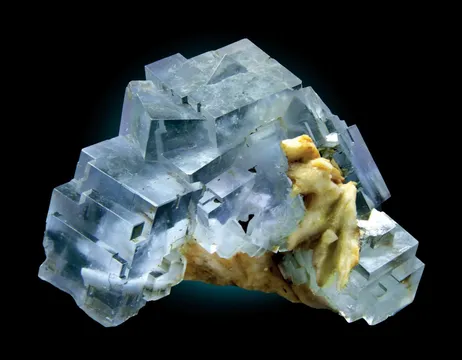
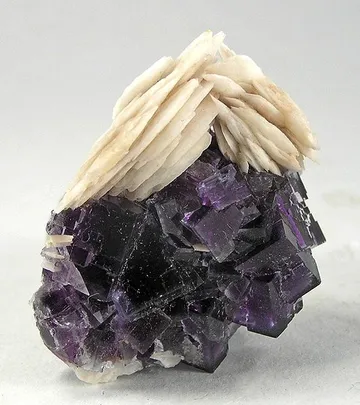
Berbes is one of the great European fluorite localities: a compact coastal mining field above Vega beach, in Ribadesella, Asturias, where hydrothermal fluorite, barite and quartz filled faults, stockworks and karst cavities in carbonate rocks along the margin of the Asturian Permo-Triassic basin. For collectors, “Berbes” means violet to blue-violet cubic fluorite, commonly zoned, often perched on pearly white bladed barite and drusy quartz, with the best pieces showing the unmistakable Spanish combination of gemmy cubic geometry, pale matrix, and ocean-light color.
The classic specimen ground is not a single neat “mine” in the way labels often imply. The name covers a cluster of workings and collecting zones around the Ana vein and related structures: La Cabaña, Valdelmar, Los Cobayos or La Paredona, El Frondil, Cuetu L’Aspa, La Busteriza, and associated pits. The industrial ore was fluorite, but the mineralogical treasure was cavity mineralization—pockets in silicified limestone and dolomite where fluorite grew as glassy cubes, sometimes with dodecahedral bevels, beside tabular barite and quartz. Berbes pieces became Spanish classics in the second half of the twentieth century and entered major private and museum collections worldwide.
Regional View
Country View
The look of the best Berbes fluorites is deceptively simple: purple cubes, white barite, quartz, pale carbonate matrix. In hand, the difference between an ordinary Berbes and a great one is dramatic. Top specimens show saturated but transparent color, sharp zoned phantoms, clean bevels, and a lively position on matrix. The locality also produced important quartz specimens—especially transparent doubly terminated crystals from La Cabaña and Valdelmar, some with hydrocarbon inclusions visible to the naked eye and fluorescent under ultraviolet light.

Photo: Wikimedia Commons

Photo: Wikimedia Commons
Search for specimens: View all specimens from Berbes, Spain
Berbes lies in the coastal Caravia-Berbes fluorite district of eastern Asturias, close to the Bay of Biscay and the western end of Vega beach. Geologically it is part of the fluorite belt developed around the Asturian Permo-Triassic basin, where mineralizing fluids moved along faults and permeable horizons near the unconformable contact between Paleozoic basement carbonates and younger red beds. In Berbes itself, the classic mineralization is more vein-like than the stratiform ore bodies seen elsewhere in the district: subvertical NW-SE veins, dense stockworks in limestone, and partial fillings of karst cavities dominate the old workings.
The country rock is chiefly Carboniferous limestone—locally dolomitized and strongly silicified—beneath Permo-Triassic marls, siltstones and clay-rich red-bed cover. The Spanish geological inventory describes the red Permo-Triassic sequence as an effective seal over the mineralization and emphasizes that the Berbes veins occupy fractures in Carboniferous limestone. The principal ore association is fluorite-barite-quartz, with calcite and dolomite as common gangue or alteration minerals, and with minor sulfides and supergene copper carbonates in localized spots.
The main industrial structure was the Ana vein, immediately north of Berbes. Reported grades were high for the vein ore—on the order of 40–50% fluorite for the Ana vein and lower but still significant grades for the stockwork mineralization. Estimates summarized by the Spanish geological inventory place the combined exploited and remaining fluorite for Berbes around 2.5 million tonnes, while the broader Asturian fluorite districts have produced far larger totals, with Caravia-Berbes forming one of the principal contributors.
Mining history at Berbes begins before specimen collecting became the main story. The concession later known as Ana was originally marked out for iron in 1910 by Raimundo Fueyo of Santander. Fluorspar became strategically interesting during and after the First World War, and early development involved figures and companies including Federico Lipperheide, SOMIMET, Celestino Llaneza, Frédéric Edward Otlet Dewolf, Aldecoa, Fluor-Chemie, Sociedad Minera Vulcano, and ultimately MINERSA—Minerales y Productos Derivados, S.A. Early workings gathered ore from surface exposures, beach-adjacent detrital accumulations, shallow pits, and underground galleries; by 1950 MINERSA was developing the Ana vein underground from a shaft near the Ribadesella-Canero road.
The underground Ana Mine proper operated from 1950 until May 1968 and produced comparatively few collectible specimens, because crystals encountered in mining were generally treated as ore and sent to the concentration plant. The bulk of the classic collection material came instead from open-pit and surface workings on the Ana vein system: La Cabaña, El Frondil, Cuetu L’Aspa, Cueto I, Cueto II, Cueto Norte, Bloque IV, and La Busteriza. That distinction matters. A label reading simply “Ana Mine” is often imprecise; many specimens so labelled are better understood as Berbes mining area, or, when provenance is known, La Cabaña, Valdelmar, Cuetu L’Aspa, Los Cobayos, El Frondil, or Coquera del Liso.
La Cabaña and Valdelmar are the heart of the collector locality. La Cabaña includes the celebrated Los Cobayos or La Paredona area and the Valdelmar sector, where pocket mineralization produced the most prized combinations of fluorite, barite and quartz. The cavities were commonly clay-filled, the surrounding rock hard and silicified, and extraction of intact crystals was notoriously difficult. The upper La Cabaña level exposed large cavities in cliffs facing the sea; the lower mineralized parts of Valdelmar yielded some of the finest matrix combinations, particularly fluorite set on isolated barite clusters over silicified rock.
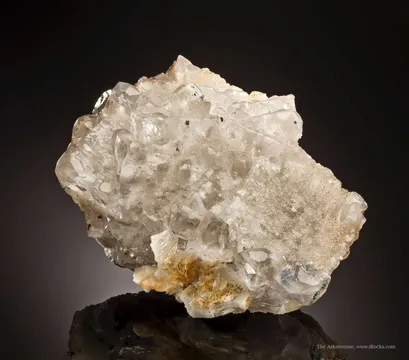
Cuetu L’Aspa is subtly different. Its matrix tends to be whiter and more strongly silicified, commonly with coarser drusy quartz than in La Cabaña. Fluorite from Cuetu L’Aspa may be sharp and attractive, but larger crystals often show stepped or mosaic growth and more subdued luster. Quartz coatings are common there, and both fluorite and barite may be dusted or even partially covered by late drusy quartz. El Frondil, immediately north of Berbes and near Vega beach, contains open cuts and galleries within the Tere concession; one lower gallery opened in 1990 by HECOR under contract to MINERSA later became used for municipal water capture.
Collecting access today must be approached conservatively. The classic Berbes workings are abandoned or restored mining ground, with closed adits, flooded cuts, unstable clay-filled cavities, steep faces and hard silicified rock. The official geological-site record warns of rockfall hazards in the old workings and standing water in the El Frondil open cut, and specifically discourages visiting alone. Berbes is not a public fee-dig. Any field activity depends on land ownership, mining rights, environmental restrictions, and local permission; entering galleries or working cliff faces is both unsafe and inappropriate.
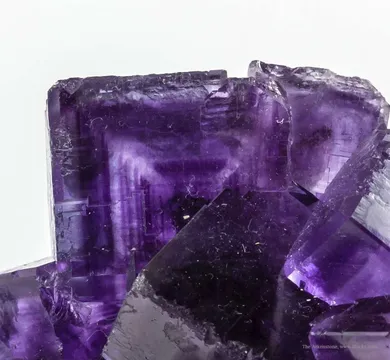
Berbes fluorite is classic for transparent to translucent cubic crystals, usually violet to purple but also lilac, pale blue, colorless and occasionally very dark, with strong internal zoning and, in better pieces, sharp dodecahedral bevels on cube edges. Most cabinet-quality specimens are from La Cabaña, Valdelmar, Los Cobayos, Cuetu L’Aspa and related open workings on the Ana vein system, where crystals range from millimeters in drusy plates to several centimeters on edge; exceptional crystals are reported to reach about 10 cm. The most desirable pieces are not merely purple—they have glassy luster, clean transparency, crisp phantom zoning, good isolation on white barite or quartz, and minimal bruising. Ordinary Berbes material is abundant as small purple cubes on silicified matrix, but world-class examples combine gemminess, balanced barite association, and undamaged sculptural placement.
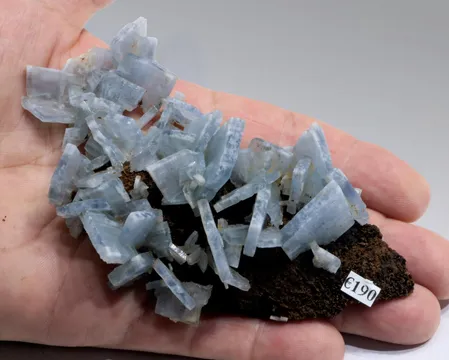
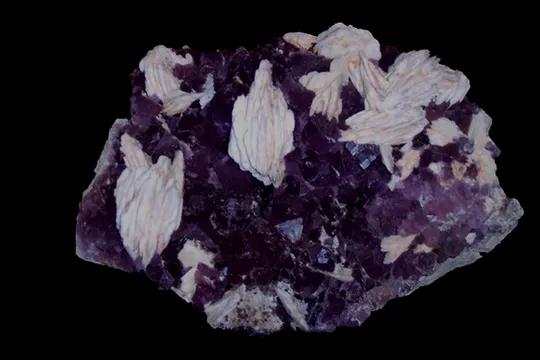
Barite at Berbes is the essential architectural partner to the fluorite, most admired when it forms tabular, bladed or “book-like” clusters that lift purple fluorite cubes off the matrix and give the specimen its characteristic Spanish contrast. In La Cabaña and Valdelmar, barite is commonly white, cream, pearly or lightly iron-stained, forming rosettes and stacked blades with fluorite perched on or between them; in Cuetu L’Aspa it can be rougher, duller, more corroded, and coated by late quartz. Collector-grade barite alone is less central than combination material, but Berbes barite is crucial when the blades are clean, lustrous, undamaged, and compositionally balanced with transparent violet or blue-violet fluorite rather than merely acting as a massive gangue support.
Quartz from Berbes ranges from common drusy linings and milky coatings to highly prized transparent, doubly terminated crystals, especially from the La Cabaña-Valdelmar part of the Ana vein system. The finest quartz crystals may be water-clear, smoky or nearly black depending on hydrocarbon inclusions, and notable specimens show multiphase inclusions with liquid, gas bubbles, carbonaceous particles or bitumen-like material; some inclusions fluoresce yellow, blue or green under ultraviolet light, and in large crystals the bubbles can visibly move. Most quartz is small, drusy or milky and of modest interest, but a first-rate Berbes quartz has sharp double termination, high glassy luster, transparency, mobile or fluorescent inclusions, and an association with violet fluorite and bladed barite; exceptional crystals from La Cabaña have been reported up to 24 cm.
Baryte—the same mineral species commonly spelled barite in American usage—is one of the signatures of Berbes labels, because the locality’s best fluorite specimens often depend on baryte’s pale, platy habit for their visual rhythm. La Cabaña and Valdelmar produced the most celebrated baryte-fluorite combinations: pearly white blades and rosettes, sometimes described as leaves of a book, carrying purple, lilac or pale blue fluorite cubes; Los Cobayos and Cuetu L’Aspa also produced baryte-bearing material, though with more frequent quartz coatings, weathering, or duller blades. The choicest baryte-rich Berbes specimens show upright, undamaged, lustrous blades with fluorite cleanly perched rather than buried in the baryte, while lesser pieces are visually crowded, etched, iron-stained or bruised along blade edges.
Other documented minerals from the Berbes mining area include calcite, dolomite, pyrite, chalcopyrite, goethite, azurite and malachite, with rarer mentions of cinnabar, tetrahedrite, sphalerite, galena, marcasite and related minor species in the broader Asturian fluorite paragenesis. Berbes is not primarily a new-species locality; its “type” importance is as an international reference locality for the fluorite-barite-quartz association in the Asturian fluorspar belt. For collectors, the accessory minerals matter most when they help identify a sub-locality or paragenetic stage: chalcopyrite altered to malachite or azurite in localized copper-bearing spots, iron oxides staining baryte or carbonate, late quartz dusting fluorite, and hydrocarbon-bearing inclusions in quartz or colorless fluorite.
Berbes specimens are common enough that most serious fluorite collectors can obtain one, but great Berbes specimens are not common. The market offers everything from inexpensive miniature fluorite-on-quartz plates to important cabinet pieces from named pockets such as Coquera del Liso, La Cabaña, Valdelmar and Los Cobayos. The strongest premiums go to sharp, transparent, lustrous cubes with vivid zoning, positioned on clean baryte or quartz, with little edge bruising and a reliable old label or named-pocket provenance.
The chief authenticity problem is not synthetic material; it is locality precision. “Ana Mine” is overused and often misleading. The underground Ana Mine itself produced few collector specimens, whereas most classic Berbes pieces came from open workings on the Ana vein system. A practical warning preserved in locality discussions is that baryte-bearing Berbes specimens should not automatically be called “Ana Mine” in the strict underground-mine sense. If a specimen is only generally provenanced, “Berbes mining area, Ribadesella, Asturias, Spain” is safer than inventing a pit name.
Condition issues are real. Fluorite cleaves easily, and Berbes cubes commonly show corner dings, bruised edges, contacted faces, internal crazing, etched surfaces, clay residues, or dulled luster from weathering and silica deposition. Large purple cubes from cliff pockets can be impressive but may be silky or matte rather than glassy. Barite blades are brittle and chip along thin edges; quartz druse can hide repairs or contacts. Because many pieces were recovered from clay-filled cavities or old dumps, cleaning quality varies widely. Look closely for filled cleaves, glued baryte blades, reconstructed matrix edges, and overly bright surfaces that may indicate aggressive acid or mechanical cleaning.
Fluorescence is variable and should not be assumed. Some Berbes fluorite fluoresces purple, red or pink under longwave ultraviolet; some pieces do little or nothing. The hydrocarbon-bearing quartz and colorless fluorite from La Cabaña-Valdelmar can be more interesting under UV than the purple cubes themselves, with inclusions giving yellow, blue or green responses. Those hydrocarbon-inclusion specimens should be handled as mineralogical objects rather than curiosities: avoid heat, strong solvents and prolonged intense lighting, and never attempt to “open” inclusions.
Current availability is shaped by old collections, dealer inventories, and occasional recirculation of named finds rather than ongoing classic pocket production. The locality is mature, famous and heavily collected. Fresh-looking groups still appear, but the finest Berbes material is typically old stock, ex-collection material, or documented specimens from twentieth-century finds.
One of the earliest mineral voices from Berbes belongs not to a mining engineer but to a parish priest. In 1802, Lope José Bernardo de Miranda y Quirós, priest of San Esteban de Leces, described the western part of the deposit—later celebrated as Valdelmar and La Cabaña—as holding “mucho cristal de roca de diversos colores” and even “una especie de diamantes tan transparentes y diáfanos” that they seemed poured from the purest mineral. Decades before fluorite became a strategic industrial commodity, the eye was already drawn to transparent quartz weathering from the Asturian hillside.
In 1836, Guillermo Schulz passed through Ribadesella and wrote in his field notebook that Berbes held an infinity of quartz crystallizations, fluorspar and heavy spar. In that short list—quartz, fluorite, barite—he named the association that would define the locality for collectors nearly two centuries later.
The industrial era began with wonderfully improbable logistics. In 1930, according to Lisandro Bode’s recollections preserved in the modern Berbes literature, an airplane landed on the sands of Vega beach to collect fluorspar ore gathered over the previous six months by Federico Lipperheide. Several wooden boxes were sent away for metallurgical testing in Belgium. Before shafts, modern pits and international mineral shows, the future of Berbes fluorite briefly depended on boxes of ore leaving a northern Spanish beach by plane.
The old collecting ground also has the texture of local childhood. In the 1950s, when fields in the high parts of Las Picas were being plowed, quartz crystals came up in abundance. Children played with them by throwing one crystal against another to see how they broke—and, at night, to watch sparks fly. What later collectors would trim, label and place in drawers had once been common enough to become a village game.
La Cabaña’s quartz pockets have their own drama because the crystals were not always quiet inside. Some transparent quartz crystals hold visible multiphase inclusions: water, gas bubbles, black carbonaceous particles, drops of oil-like hydrocarbon, even bitumen-like material. In large enough inclusions, the bubbles can shift by centimeters when the crystal is tilted. Under ultraviolet light, the hydrocarbon-bearing inclusions may fluoresce in yellow, blue or green, turning a seemingly simple quartz crystal into a sealed micro-reservoir from the mineralizing system.
One of the finest La Cabaña quartz-fluorite-barite specimens was found in 1987. It was about 11 x 11 cm, built on a base of roughly thirty doubly terminated quartz crystals, with a book-like grouping of barite between them and several pale blue fluorite cubes of one to two centimeters set on the barite. The largest quartz was 6 cm long, and the crystals contained numerous three-phase inclusions, some mobile. The piece is remembered not for size alone but for the completeness of the paragenesis: quartz, barite, fluorite, inclusions, and Berbes geometry in one object.
Another older quartz specimen from La Cabaña, collected in 1956 during the first exploitation work in the area, was described as nearly a palm in size and weighing 1.8 kg. A still larger historical specimen was found in 1982 by José María Costales, known as “el Grello”: a mass of about thirty doubly terminated quartz crystals weighing 12 kg. It reportedly sold for 250,000 pesetas, a price remembered in the source as “astronómica” for its day, and passed into the collection of the heirs of Wilhem Zimmerman.
The fluorite stories are just as vivid. In April 1980, in the lower mineralized part of Valdelmar, an exceptional pocket was opened on the edge of a cliff. It held isolated clusters of barite on silicified matrix, with superb fluorite on top: lilac cores with close phantom zoning, abrupt pale blue outer zones, strong transparency, and clay or carbonaceous inclusions trapped between generations. Many specimens fell off the cliff when the pocket opened, and only a small number survived. The best preserved examples were reportedly kept in a house and not fully cleaned or offered to a dealer until 2020—forty years after discovery. The finest known matrix plate from that pocket was more than 30 cm wide, with fluorite crystals to 5 cm on edge.
Also in 1980, Francisco “Paco” Margolles opened a pocket in the Los Cobayos or La Paredona area that many collectors and dealers regard as among the greatest Berbes finds. The pocket produced no more than about fifty pieces, but they were of extraordinary quality. Three became especially famous: a hemispherical barite cluster carrying deep saturated purple fluorite to 5 cm on edge, now in the José Ramón García collection in Oviedo and illustrated on the cover of La Fluorita: Un siglo de minería en Asturias; a second top specimen later in the Jordi Fabre collection; and a fluorite-on-quartz specimen brought to the 1980 Munich Mineral Show and then taken to the United States by Miriam and Julius Zweibel.
The Coquera del Liso find of March 1993 has the character of a collector fable because it began with a rockfall. A boulder of roughly 50 tonnes fell spontaneously onto a small rural path in the La Cabaña area. Inside it, local diggers found an exceptional geode containing extraordinarily transparent fluorite: beveled violet cubes, commonly isolated, associated with barite and quartz, and unusually clean. Most of the specimens were bought by Fabre Minerals, and the better pieces were individually numbered and accompanied by commemorative labels documenting the find. For provenance-minded collectors, that label is part of the specimen.