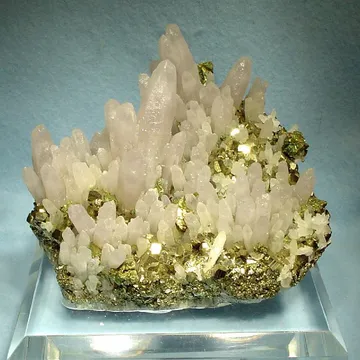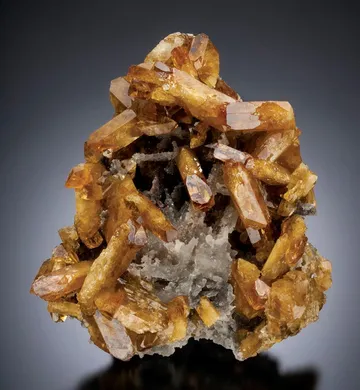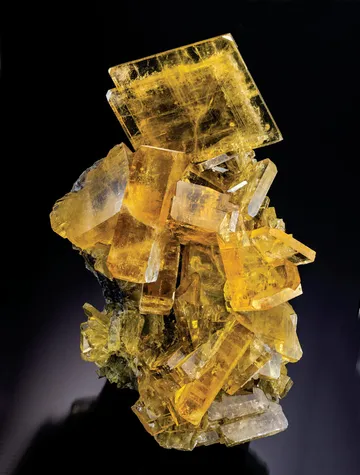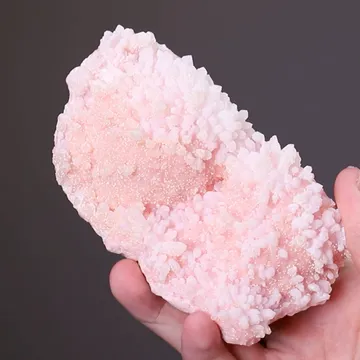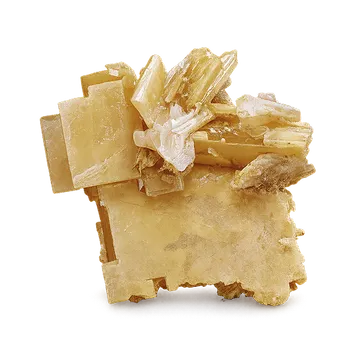
ルーマニア・カヴニク鉱山産のバライト — ロゼット状の青からオレンジ赤の板状結晶、半透明性と収集家にとって有名なカヴニクの脈系に価値がある。
Key facts
Cavnic鉱山産のバライトは、古いマラムレシュ地方の「鉱山の花」伝統に属します。鉱物は鉱石としてではなく、ルーマニアの古典的なエピサーマル系統の内部で開き、癒えていった空洞の彫刻的記録として採集されました。最高の標本は一目で見分けがつきます—薄いタブular状の結晶がロゼット状および花状の噴水のように広がり、青みがかった淡色から強い青、はちみつ色、煙灰色、無色、あるいは珍しく最も印象的な例では実硫黄の含有によるオレンジレッド。結晶は多くが光沢があり、エッジが透き通って輝くほど透明感を持ちながら、密度の高い羽状の扇形に並ぶため、遠くから見ると柔らかく、ほとんど繊維状の印象を与えます。

Cavnicはルーマニア北部のバイア・マーレ鉱区、内アラスカ山脈の地帯に位置します。中新世の火山活動と熱水活動により、Pb-Zn-Cu-Au-Ag-Sb-Mnの鉱化の一連が生み出されました。鉱床は脈状が主体で、破砕岩、層状構造、空洞、ドロース、そして繰り返される鉱物成長のパルスを特徴とします。バライト採集家にとって、この設定は重要です。 Cavnic産バライトは単なる脈石としての鉱物ではなく、方解石、石英、方解石、黄鉄鉱、輝水鉛鉱、硫砒鉄鉱、リアルガー、菱マンガン鉱、四面体群鉱物、そしてこの地域の他のクラシックスをも生み出した、変化に富んだ後期の鉱物地学劇場の一部です。

視覚的な幅は単一の産地としては異常に広いです。博物館および市場の記録には、青い放射状集合体、濃い黄色のタブラー結晶、黒く光沢のあるタブラー結晶、透明な薄板状集合体、淡色の板状、そして稀に赤橙色のリアルガー含有物が見られます。特に Cavnic の特徴的な建築美を保持した標本がコレクターに高く評価されます。ロゼット状や花状の鋭い結晶、良好な透明度、エッジの清潔さ、そして強い自然な青色または珍しい含有色の組み合わせです。

写真: Wikimedia Commons## Featured Specimens
Search for specimens: View all barite specimens from Cavnic Mine, Romania
Cavnic Mine is in Cavnic, Maramureș County, northern Romania, historically known in the mineral trade under Hungarian and Germanized forms such as Kapnik, Kapnikbánya, and Capnic. The town lies in the Baia Mare district, one of the great polymetallic ore districts of the Carpathian belt. The deposit is part of a low-sulfidation epithermal gold-polymetallic system developed in Neogene volcanic rocks, Paleogene-Miocene sedimentary units, and intruding dioritic bodies.
The Cavnic ore field is usually discussed in two broad zones: Cavnic-Bolduț to the northwest and Cavnic-Roata to the southeast. The vein system is organized along numerous roughly NNE-SSW parallel structures. Published geological descriptions record veins hundreds to thousands of meters long, with substantial vertical extent, repeated brecciation, banding, cavity filling, and argillic alteration with local silicification and pyritization. This is the architecture that produced both ore and the open spaces in which barite, quartz, calcite, dolomite, and other collector minerals crystallized.
Mining history at Cavnic reaches far back into the medieval record. The settlement is documented in the 14th century, and mining activity is associated with the district from that early period. Modern production at the Cavnic mine is generally given as beginning in 1958, with the mine best known for lead, zinc, manganese, copper, gold, silver, antimony, and barium-bearing mineralization. The locality’s great collector reputation, however, rests on the “flori de mină”—the mineral “flowers” recovered from underground workings and preserved in public and private collections.
The mine is no longer a collecting locality in the practical field-collecting sense. Since the closure of the Cavnic mines, underground access has been sealed or rendered unsafe, pumping ceased, and mine structures were dismantled or deteriorated. Serious collectors should treat Cavnic barite as a closed-locality market specimen: provenance, old labels, dealer history, and comparison with museum examples matter far more than any hope of contemporary self-collection.
Notable barite finds include large blue radial aggregates, rare yellow tabular crystals, black tabular specimens, transparent lamellar aggregates, barite with calcite, quartz, pyrite, sphalerite, dolomite, stibnite, and the highly distinctive realgar-included barites. A very small mid-1980s barite-dolomite pocket has been described in the trade as having produced only about a dozen specimens, with sky-blue barite blades on pink dolomite. Realgar-included barites are also repeatedly described as scarce, and the best pieces have a saturated orange-red color quite unlike ordinary pale Cavnic barite.## Cavnic鉱山(ルーマニア)産の重晶石の特性
クラシックな Cavnic の結晶形は、ブレード状から板状の重晶石で、よくローゼット状、花状の集合体、ドレープ状、または扇状のクラスターとして配置されます。 個々の結晶は密な板状では数ミリメートルの長さしかない場合がありますが、博物館所蔵や市場の標本には、数センチメートル級の刃部や板状結晶が含まれます。 優れた標本は結晶のサイズだけでなく、構造そのものが重要です。 放射状の成長、層状または羽状の縁、透明度、そして標本がリズム的なパルスで outward に成長した感覚を collectors は重視します。
色は Cavnic の大きな強みのひとつです。 青は最もよく知られたコレクターズカラーで、淡い氷様の青からより飽和した青灰色まで幅があります。 一部の青い標本は、真珠光沢からガラス光沢のある放射状板状集合体を形成します。 博物館の記録では、Cavnic の青い重晶石は、2~8 cm の長さで、厚さ 1~5 mm の交差する板からなる花状の放射状集合体として記述されています。 黄色い Cavnic の重晶石は強くガラス状で、大きな板状結晶になることもあります。 黒い重晶石も Cavnic から報告されており、基質なしの集合体内にガラス状の板状結晶を含むことがあります。 透明〜白色の標本は、薄い層状塊を形成し、複数方向に薄い角柱状または blade-like 要素が突き出ることがあります。
実赤色の含有物を含む材料は最も特徴的な専門分野です。 これらの標本は、赤、オレンジ赤、煉瓦色、黄褐色〜赤、または黄土色の色を示しますが、その原因は重晶石内部の微細な実赤色含有物です。 最良の pieces は単に表面に染色されているだけでなく、色がブレード全体に広がっていたり、明確なゾーンや層に配置されているように見えます。 実赤は光に敏感なため、古い標本は露出面でパラレアルガー(色の変移)を示すことがあり、強い光を避けて保管するべきです。
共生物としては、石英、方解石、ドロマイト、黄鉄鉱、閃鋅鉛鉱、黄銅鉱、アンチモンなどが一般的です。 一部の標本は純粋な重晶石の集合体ですが、他は石英や炭酸塩マトリクスの上に載っています。 重晶石–ドロマイト連帯は、対比が強い場合に特に望まれます。淡いピンク色や粉状のドロマイトの丘が、透亮な青い重晶石の噴霧を carrying します。 スティブナイトや暗い閃鉱を含む標本は、多くのコレクターがバイア・マーレ地区全体と結びつける金属的対比を追加します。
品質は色、透明度、構造、状態で判断されます。 清浄な終端を持つ淡青色のロゼットで、三次元的な被覆がしっかりしているものは、平らで欠けた板よりもはるかに望まれます。 大型キャビネット標本は入手可能ですが、真正に新鮮そうな大板は、小さくてミニチュアな pieces より見つけにくいです。 実赤を含む標本では、内部の赤橙色の密度、見えるゾーニング、薄い刃状の薄片の完全性が主要な品質指標です。 青色材料では、最も強い標本は色ときらめきをバランスさせています。過度に暗く、平坦に見える青色材料は、天然性と表面状態を慎重に検査する必要があります。## Collector Notes
Cavnic barite is a closed-locality classic, so the first collector question is provenance. Old labels from European collections, Baia Mare or Romanian sources, Crystal Classics, Rob Lavinsky/iRocks, Mardani/Fine Minerals International, or other established dealers add real value, especially for unusual colors. The locality name may appear as Cavnic, Kapnik, Kapnikbánya, Capnic, Maramureș, Maramures, or simply Romania; older labels are not always standardized.
Condition is the main practical issue. Cavnic barite blades can be thin, cleaved, and easily bruised at the edges. Rosettes may hide damage in the interior, so inspect across the specimen under low-angle light. Look for broken tips, cleaved blade edges, rubbed high points, and incomplete rosettes. Large plates may have sawn or trimmed backs, which is not necessarily a problem if the display face is natural and undamaged.
Realgar-included barite needs special storage. Realgar is an arsenic sulfide, and it is photosensitive; specimens containing it should be kept out of direct sunlight and away from strong display lighting. Handle normally but sensibly: wash hands after handling, avoid generating dust, and do not let fragile red material abrade against other specimens. A closed display case or dark drawer is preferable for long-term color preservation.
No well-documented, locality-specific epidemic of assembled fake Cavnic barites is part of the standard collector literature, but there are two authenticity concerns worth taking seriously. First, old Romanian blue barite should be separated from other blue sulfate minerals by heft, habit, and provenance; barite is notably heavy for a nonmetallic mineral. Second, irradiation has been reported as a treatment issue for some dark blue Romanian barite and for Romanian smoky quartz, so unusually saturated dark blue pieces without old provenance deserve caution. For higher-value examples, ask for acquisition history, compare the color with museum and long-published examples, and be wary of specimens whose color is too uniform, too dark, or unsupported by any locality history.
Market availability is intermittent rather than rare in the absolute sense. Ordinary Cavnic barite appears periodically in cabinet to miniature sizes, often in the low to mid hundreds of dollars depending on color and condition. Better blue rosettes, large clean plates, and fine realgar-included pieces are much less common. The rare pocket associations—especially blue barite on pink dolomite from the small mid-1980s find—belong in a different tier, where scarcity and provenance drive collector interest as much as visual appeal.## Stories & Field Notes
Cavnic標本に付随する最も感情を掻き立てるルーマニア語の表現は「flori de mină」—鉱山の花である。マラム県では、それは業者への詩的なラベリングというだけでなく、地下で出会う予期せぬ晶体の成長を、何世代にもわたる採掘者と地元の収集家がどのように捉えてきたかを示すものであった。Baia Mareの鉱物文化の記録には、採掘者が作業からこれらの美的・科学的な驚きを救い出し、家庭のディスプレイケースに誇らしげに飾った例が描かれている。 Cavnicの方解石重鉛鉛鉭はその文化に属する:適切なポケットでは、重い硫酸バリウム鉱物が花束のように成長した。
最も記憶に残る小さな話のひとつは、1980年代半ばに市場へ出てきた方解石-りん光反射のポケットに関するものである。そのポケットは小さく、約12個の標本しか得られなかったと伝えられる。その魅力は対比にある:柔らかな粉紅色の方解石の丘が、透過性のある空色の方解石刃の密なローゼットを携えている。鉱物商のダニエル・トリンキッロは、鉱物取引を三十年行った後、このポケットからはわずか2つの標本にしか出会わなかったとされ、2014年に現物を両方購入した。多くの方解石を産出した locality において、この小さなポケットは、組み合わせがいずれの鉱物単独よりもはるかに珍しいことを思い起こさせる。
赤橙色の重晶石を含む方解石には独自の神秘がある。いくつかの資料では1980年代の材料と記される一方、他の取引記録は1950年代・1960年代の初期の採集を示す。コレクターにとって重要なのは見た目である。方解石の刃と先端に、赤色・黄土色・煉瓦色の重晶石の含有物が見られ、時には結晶をコーティングするのではなく、結晶を貫通してゾーニングしていることもある。文献上のオークション例として、サイズは6.5 x 5.0 x 3.3 cm、最大の先端が4.3 cmの高さ、3.2 cmの幅で、この含有習性としては大きい部類に入り、ディーラー自身が見た最も珍しい標本の一つとして説明されていた。
Baia Mare博物館の記録は Cavnic 方解石に公的、ほとんど儀式的な存在感を与えている。「Fluturele」—「蝶」—と呼ばれる黄色い標本は、約5 mm厚の2つの主要なシート状結晶で、強烈な黄色と黒を帯び、光沢があり、近くに小さな黄色い結晶が寄り添って成長している。同じ標本(在庫2679)は、18 x 12 x 14 cmを測定し、ルーマニアの国家文化遺産の宝庫に分類されている。これは Cavnic が単なる美しい青色のスプレーの産地ではなく、歴史的に重要な鉱物オブジェクトの地点であることを明確に示す方解石の典型である。別の博物館所蔵の Cavnic バライトは、透明な「雪の花」として説明されていた:薄く長いプリズマティックな集合体が全方向に向きを持つ、19 x 14 x 7 cm の標本で、長さ数ミリメートルから50 mmまでの要素があり、小さな薄板状のバライト結晶から成る。
Baia Mare 博物館が示した黒い Cavnic バライト標本は、7つのよく発達した板状結晶の規則的な集合体として説明され、幅は100〜40 mm、厚さは最大8 mm、強い黒色とガラス状光沢を持つ。
蝶、雪の花、黒い結晶の聚集体、青い放射状の花束の間にあって、Cavnic のバライト物語は単一の採掘場としては異常に彩度が高い。## 鉱物記録と出版物
Mindat — Cavnic Mine, Cavnic, Maramureș County, Romania — Cavnic鉱山の核心所在地記録。歴史的名称、鉱物リスト、写真、参考文献を含む。
Mindat — Cavnic, Maramureș County, Romania — 広域の Cavnic 鉱区を示す地区レベルの記録。閉鎖状況、商品、鉱物の多様性を記載。
Grancea, L.; Bailly, L.; Leroy, J.; Banks, D.; Marcoux, E.; Milési, J.P.; Cuney, M.; André, A.S.; Istvan, D.; Fabre, C. (2002), “Fluid evolution in the Baia Mare epithermal gold/polymetallic district, Inner Carpathians, Romania,” Mineralium Deposita 37, 630–647 — Cavnic を Baia Mare のエピタル系金鉱/多金属系システム内での重要な流体包有・遺伝研究。
Cook, N.J. et al. / Carpathian Journal of Earth and Environmental Sciences — “Tellurides occurrences in the Baia Mare region, Romania” — Cavnic鉱床の簡潔な地質説明、脈構造、鉱化段階、および Cavnic-Bolduț/Cavnic-Roata のゾーニングを含む。
Muzeul Județean de Mineralogie “Victor Gorduza” Baia Mare — mineral collection — 館の概観。Cavnicがコレクションの主要源であることを記録し、透明色、黄色、赤色、青色、黒色の Cavnic 方解石を文献化。
Muzeul Județean de Mineralogie “Victor Gorduza” Baia Mare — Virtual Museum — Cavnic鉱山由来の青色および黄色の方解石を含む3D鉱物モデルのインデックス。
Institutul Național al Patrimoniului — classified barite specimen, inventory 2679 — Baia Mareの博物館コレクションにある黄色と黒の Cavnic方解石の標本の国家遺産記録。
Wikimedia Commons — Baryte from Cavnic, former Daniel Curie collection, Sorbonne University mineral collection — コレクション由来の博物館標本画像。
Wikimedia Commons — Baryte-261580, Cavnic — Rob Lavinsky による撮影の Cavnic 方解石標本の青いローゼット。
Wikimedia Commons — Barite-Realgar, Cavnic — Rob Lavinsky による撮影の Realgar 含有 Cavnic 方解石標本。## Videos & Media
Baritina albastra — Mina Cavnic, Muzeul Județean de Mineralogie “Victor Gorduza” Baia Mare — 3D/AR model of a blue Cavnic barite specimen, inventory 12863, measuring 25 x 20 x 15 cm.
Baritina galbena — Mina Cavnic, Muzeul Județean de Mineralogie “Victor Gorduza” Baia Mare — 3D/AR model of the yellow “Fluturele” Cavnic barite specimen, inventory 2679, measuring 18 x 12 x 14 cm.
EarthWonders — Baryte, Cavnic Mine, Maramureș County, Romania — Marketplace specimen page documenting a realgar-included Cavnic barite miniature with photo and video media。