






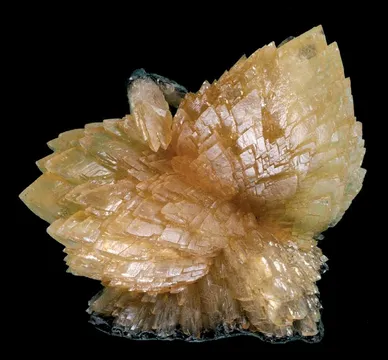
Ametista do Sul, Brazil — a premier basalt-geode locality yielding amethyst geodes with pale chalcedony rims; valued for scale, color, and collector appeal.
Key facts
Ametista do Sul is one of the great basalt-geode localities of the mineral world: a working district where amethyst is not an occasional vein product but the main filling of large cavities in Lower Cretaceous lava flows of the Paraná volcanic province. For collectors, its importance rests on scale and recognizability. The classic pieces are geode sections and plates lined first by pale to bluish chalcedony or agate, then by colorless quartz, and finally by purple amethyst points; the best examples show a crisp architectural sequence, saturated violet terminations, bright luster, and enough basalt rind or chalcedony rim to preserve the story of the pocket.
The district is not just a source of decorator “cathedrals.” It has produced scientifically studied geodes with celadonite rims, quartz and amethyst generations, late calcite, gypsum, iron oxyhydroxides, and uncommon accessory assemblages. The mineralogical character is strongly tied to the volcanic host: geodes occur in specific altered basalt flows, and the miner’s search is a practical reading of lava-flow structure, clay-altered zones, fractures, and productive “spots” rather than a simple chase along a continuous vein.
Regional View
Country View
The finest Ametista do Sul display geodes have a distinctive presence: dark basalt outside, a pale chalcedony-to-quartz selvage, and a deep purple crystalline interior that can read almost black in low light but flashes wine-purple on the crystal faces. Museum-scale pieces may stand more than a meter high, while collector specimens range from cabinet plates with sharp amethyst druse to hand specimens carrying calcite, gypsum, or quartz epimorphs after former sulfate crystals.

Photo: Wikimedia Commons

Photo: Wikimedia Commons
Historically, Ametista do Sul grew around the stone. Early finds were made by farmers and settlers in soil, stream beds, and worked ground; by the 1960s and 1970s the activity had shifted toward mechanized stripping and then underground galleries. The town’s modern identity—its name, tourism, shops, cooperative structure, and even public architecture—is inseparable from the amethyst mines. For a serious collector, that continuity matters: Ametista do Sul is one of the few classic localities where specimens, mine geology, local economy, and public culture remain visibly intertwined.
Search for specimens: View all specimens from Ametista do Sul, Brazil
Ametista do Sul lies in the Alto Uruguai region of northern Rio Grande do Sul, southern Brazil, within the Serra Geral volcanic succession of the Paraná Basin. The amethyst district is hosted by basaltic lava flows rather than pegmatites or alpine veins. Scientific studies describe the geodes as occupying particular basalt flows and levels, especially altered high-Ti basalt units of the Pitanga magma type. Within the mine district, amethyst-bearing geodes are concentrated in the uppermost productive Pitanga flows known in the literature as Veia Alta, Veia do Meio, and Veia Baixa; Veia Alta is treated as the chief producer.
The idealized geode sequence is one of the locality’s most important collecting clues. From the basalt wall inward, studied Ametista do Sul geodes commonly show a green celadonite-rich lining, agate or chalcedony, colorless quartz, and then amethystine quartz. Late calcite can appear at several points in the crystallization history but is especially important as euhedral crystals in the central cavity, locally with gypsum. The same assemblage explains the commercial appearance of many specimens: a blue-gray to white chalcedony border, a glittering white quartz transition, and a purple amethyst druse or crystal lining.
Several geological models have been proposed for the formation of these geodes. One influential interpretation emphasizes early formation of cavities followed by low-temperature filling from aqueous fluids related to the Botucatu–Guaraní aquifer system beneath the volcanic pile. Other work on the Triz quarry and later Veia Alta studies emphasizes the role of basalt alteration, hydrothermal movement through the flow, feeder fractures, and the internal structure of pāhoehoe lava, including tumuli. For collectors the practical conclusion is straightforward: the geodes are not randomly sprinkled through the district. They are tied to particular lava-flow architecture, altered zones, fractures, and productive levels that miners learned to follow underground.
Mining is carried out mainly in horizontal underground galleries driven into the basalt, with the geodes removed manually once encountered. Government and technical reports describe drilling-and-blasting advances, with miners stopping the advance when one or more geodes are found so they can be recovered without shock damage. Earlier mining was far simpler. Local histories describe farmers and early garimpeiros working open pits and shafts with hoes, picks, shovels, hand tools, and improvised hauling systems before tractors and gallery mining became dominant. By 1972, local accounts place production at a major peak, and the open workings had largely given way to tunnel mining.
The district has long been organized around cooperative mining. COOGAMAI, the Cooperativa de Garimpeiros do Médio Alto Uruguai, is central to legal extraction and technical organization in Ametista do Sul and neighboring municipalities. A 2017 government report listed 27 garimpeiro mining permits held by the cooperative over about 153 km2, with 500 registered garimpos and 200 active at that time. A 2022 CREA-RS technical visit described the broader Ametista do Sul mining district as including active and inactive workings across eight municipalities, with the greatest production in Ametista do Sul, Iraí, Planalto, and Frederico Westphalen.
Production figures vary by date and method of reporting, but they convey the scale: technical sources cite hundreds of tonnes per month of amethyst-region material, and official reporting emphasizes export as the main destination for production. Much of the output is not sold as specimen plates for mineral cabinets; it is sorted into rough crystals, geode sections, “capelas” or cathedral halves, polished and reinforced decorative geodes, lapidary material, and craft products. Soledade, farther south in Rio Grande do Sul, has long been an important processing and export center for material from the Ametista do Sul district.
Access for collectors today should be understood as commercial and touristic rather than casual collecting access. Active garimpos are private, regulated industrial workplaces; specimens enter the market through miners, cooperatives, local shops, exporters, and dealers. Visitors can see underground mine settings at attractions such as Ametista Parque Museu and the Museu de Mineralogia in the Geoparque Subterrâneo, but these are guided experiences, not open dig sites. Serious buyers visiting the region should expect to purchase from established shops, miners, or exporters and should ask for precise mine information when buying unusual associated minerals rather than relying on a generic “Brazil” or “Rio Grande do Sul” label.
Named and studied occurrences within the locality include the Triz quarry, where amethyst geodes in basalt were used to investigate wall layering, alteration halos, and the source of silica for crystallization. Later work on Veia Alta used observations from many galleries, including Mina do Professor Léo and Mina da Vinícola, to explain why giant geodes concentrate in specific parts of the pāhoehoe flow. Collector specimens, however, are often labeled only “Ametista do Sul” or “Rio Grande do Sul,” so older pieces with specific mine names deserve careful preservation of labels.
Calcite from Ametista do Sul is chiefly a late geode mineral, commonly perched in the central cavity on amethyst, colorless quartz, chalcedony, or gypsum; it occurs as euhedral crystals ranging from small rhombs and scalenohedra to cabinet-size crystals, usually colorless, white, cream, honey, or iron-stained, with the most desirable examples showing sharp form, transparency, bright luster, and undamaged contacts to the amethyst lining. The locality is especially noted for rare “skunk” calcite, in which narrow black bands of goethite microcrystals mark rhombohedral calcite faces, an association studied from an Ametista do Sul amethyst geode along with lepidocrocite, goethite, and two generations of amethystine quartz. Ordinary calcite on Brazilian amethyst is abundant and often damaged during geode extraction or trimming; collector-quality Ametista do Sul calcite stands out when the calcite is well isolated, complete, aesthetic against purple amethyst, and demonstrably natural rather than glued or assembled onto a cut geode half.
Amethyst is the defining mineral of Ametista do Sul, lining basalt-hosted geodes as drusy to crystal-lined interiors over chalcedony, agate, and colorless quartz; individual crystals are typically short prismatic quartz points with rhombohedral terminations, forming sparkling carpets in cut “cathedrals,” plates, and partial geodes, while large geodes may reach meter scale and, in exceptional cases, several meters in maximum dimension. The best collector pieces combine rich, even violet to deep purple color, glassy undamaged terminations, natural geode architecture, and attractive contrast with the pale chalcedony rim or accessory minerals such as calcite or gypsum. Much commercial material is sawn, polished, cemented, backed, or mounted for the decorative market, so mineral collectors usually prize natural plates, pocket sections with intact basalt rind, and specimens that preserve unusual geode paragenesis rather than simply maximum size.
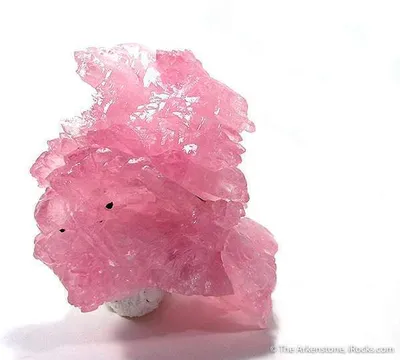
Other minerals documented from Ametista do Sul and its district include celadonite as the green outer geode lining, agate and chalcedony, colorless quartz, gypsum including selenite, goethite, pyrite, and reported lepidocrocite in the “skunk” calcite paragenesis. Barite is noted in regional gemological literature as a less common late mineral over quartz and calcite inside geodes, and rose quartz has been described as rare euhedral to subhedral crystals associated with amethyst in the district. One important caution is the old “anhydrite” label: blade-like specimens from the locality are widely regarded as hollow quartz epimorphs after anhydrite rather than retained anhydrite, a distinction that matters to both labels and value. Ametista do Sul is not primarily known as a type-locality district; its mineralogical fame comes from the abundance, size, and paragenetic clarity of amethyst geodes rather than from new species descriptions.
Ametista do Sul is abundant on the market, but abundance should not be confused with equality. Common sawn cathedral halves, dyed-looking souvenir fragments, and low-grade plates are plentiful; fine mineral specimens are much more selective. Look for natural terminations, strong but not overly dark purple color, minimal bruising on crystal tips, and a clean transition from basalt or chalcedony into quartz and amethyst. On cabinet specimens, an intact rim is valuable because it proves the piece is a genuine geode section rather than a detached druse.
Condition problems are predictable. Amethyst points bruise easily along exposed ridges, and the dark color of some specimens can hide missing or frosted tips until viewed under oblique light. Calcite is softer and more reactive than quartz, so calcite-on-amethyst pieces often show edge bruising, etched faces, dust in cleavages, or losses where crystals projected into the cavity. Gypsum and selenite associations require still more care: they are soft, easily scratched, and can be damaged by water or rough cleaning. Quartz epimorphs after anhydrite are delicate and should not be handled as if they were solid blades.
The most common authenticity issue is not outright fakery but commercial modification. Decorative geodes from the district are routinely sawn, polished, cemented, painted or darkened on the exterior, and fitted with metal reinforcement or bases. That is acceptable for décor but should be disclosed when sold as a mineral specimen. Detached amethyst plates may be trimmed aggressively; small accessory crystals can be glued back or, less acceptably, attached from elsewhere. Always inspect the contact between calcite or gypsum and the quartz substrate under magnification. A natural contact shows growth relationships, tiny overgrowths, or shared mineral coatings; glue tends to pool, shine differently, or trap dust at the base.
Mislabelling is widespread because “Brazilian amethyst” is often used loosely. Ametista do Sul material may be labeled simply Rio Grande do Sul, southern Brazil, or São Gabriel in older contexts. Conversely, amethyst from Uruguay, Artigas, other Rio Grande do Sul districts, Santa Catarina, Paraná, or Minas Gerais can be mis-sold as Ametista do Sul. The classic Ametista do Sul look—basalt geode, celadonite/chalcedony rind, purple quartz lining, and late calcite or gypsum—is helpful but not conclusive; preserve old labels and ask for mine or district provenance where the association is unusual.
Treatments deserve special attention. Heat treatment of amethyst to produce yellow to orange citrine is well established in the southern Brazilian trade, and gemological literature states that natural citrine has not been recovered from these Serra Geral amethyst deposits in the same commercial way. “Citrine” from the Ametista do Sul trade should therefore be assumed heated unless there is strong evidence otherwise. Cut-base cathedrals may also be oiled, waxed, polished, or cosmetically cleaned. None of these practices automatically ruins a decorative object, but they change how the piece should be represented to collectors.
Fluorescence is not the main appeal of Ametista do Sul amethyst. Quartz itself is usually not the draw under UV, while associated calcite may respond variably depending on activators and impurities. If fluorescence matters to you, test the specific specimen rather than buying by locality name. Store specimens away from prolonged direct sunlight to minimize any possible color degradation, and avoid acid cleaning on pieces with calcite. Dust removal is best done dry or with minimal water on quartz-only surfaces; never soak gypsum-bearing specimens.
The founding story of Ametista do Sul is not a tale of one famous prospector striking a single vein. It is a slower, more rural discovery: farmers and hunters in the 1940s finding purple stones under tree roots, in streams, and in cultivated ground. The first mining was improvised because the first “ore” was literally encountered in the landscape people were farming. In the local telling, the deposit moved from curiosity to livelihood after the Second World War, when the commercial value of the stones rose and more families began digging.
One of the most vivid memories preserved in the town’s own 30-year history comes from Nerci da Silva Dutra, the first mayor of Ametista do Sul. He recalled being 12 years old in 1952, working in the fields when the hoe turned up pieces of stone. The digging began with the same tool used for farming; when the hoe was no longer enough, they went deeper with a pick. For years, the basic equipment of the garimpeiro was the hoe, pick, and shovel. The stones were gathered into a “toro,” a lot sorted by quality, color, and size. As soft soil gave way to harder ground, the tool kit grew by necessity: pointer, chisel, and small hammer.
Another local witness, Irotides M. Ceratti, known as Ruty, remembered the 1960s as a family mining world in which children and women worked at the garimpo too. When miners found “rolado,” the first loose indication of stone, they began a shaft-like pit. At first the earth could be thrown out by shovel. When the pit grew too deep, the crew cut a passage and stepped the sides so a wooden wheelbarrow could move the spoil out. One worker loosened material with the pick, another shoveled into the barrow, and the path out lengthened as the hole deepened. When they reached “tijolo mole,” and then ground too hard to work profitably, they simply began another pit elsewhere.
Dona Maninha’s recollection is even more physical. Her family made a pit “all by arm,” without modern machinery. When the shaft reached seven or eight meters, they built a small wooden ladder tied with vine to climb down into the work. Earth and gravel came up in kerosene tins. Her father made a wheelbarrow from hand-split boards because, as she put it, “não havia serraria”—there was no sawmill. That phrase gives the early garimpo its proper texture: not romantic hardship in the abstract, but wood split by hand, ladders lashed with forest vine, and purple quartz lifted out of a family pit in repurposed fuel cans.
The mining culture then changed shape. In the 1960s, bulldozers began removing overburden from the deposits, and by the early 1970s the peak of production coincided with a shift underground. Galleries replaced many open pits. In modern descriptions, a mine advance may have a 20 m2 face drilled with 15 to 20 holes up to a meter deep. If geodes are encountered, the operation stops so they can be freed by hand; if not, the face is advanced with deflagrating powder rather than high-shock explosives, because shock can ruin the very crystals the miners are trying to save. The old hand-dug shaft and the modern gallery are different technologies, but the moment of care is the same: once the geode is found, force gives way to patience.
Ametista do Sul also turned its underground world into public culture. Ametista Parque Museu was founded in 2001 by Valmor Fronza and built around deactivated garimpos; the town’s tourism office presents it as the first major tourist enterprise of the “capital mundial da pedra ametista.” Underground spaces that were once purely industrial now hold guided mine tours, mineral collections, wineries, restaurants, and a brewery. For a collector, the spectacle can feel commercial, but it has a deeper meaning: the town did not leave the mines behind. It brought visitors into them.
Even the civic symbolism is crystalline. The municipality was created by state law on March 20, 1992, formed from areas of Planalto, Rodeio Bonito, and Iraí. The new name, Ametista do Sul, did what no older administrative name could do: it put the mineral at the center of the map. That identity is reinforced every two years by Expopedras, a fair for the stone industry and trade, and by the town’s shops, churches, museums, and underground attractions. Few mineral localities have so visibly converted a geological accident into a civic personality.

.jpg)
_1_(32248292103).jpg)