$315Median
33Sold (12 mo)
$600Last sale
Mercury (Hg) has played a crucial role in human history for thousands of years. Culturally, it has been valued for its use in “never-decaying” paintings, revered by alchemists and nobility as a key ingredient in so-called miracle elixirs (with often disastrous results), and even linked to ancient legends of immortality. Technologically, mercury has been indispensable for gold extraction through amalgamation, as well as in thermometers and various industrial applications.
The primary ore mineral responsible for mercury production is cinnabar (HgS), which forms under specific geological conditions. Organic-rich source rocks serve as the primary reservoirs of mercury, playing a crucial role in cinnabar ore formation. Deposition occurs through the oxidation of H₂S, often via interaction with local meteoric water. Some studies suggest that mercury can dissolve in hydrocarbons, which are commonly associated with black shales and organic-rich limestones. When hydrocarbon-bearing (of course, with dissolved Hg) fluids mix with oxygenated meteoric water, the oxidation of H₂S leads to the precipitation of cinnabar, forming high-grade deposits.
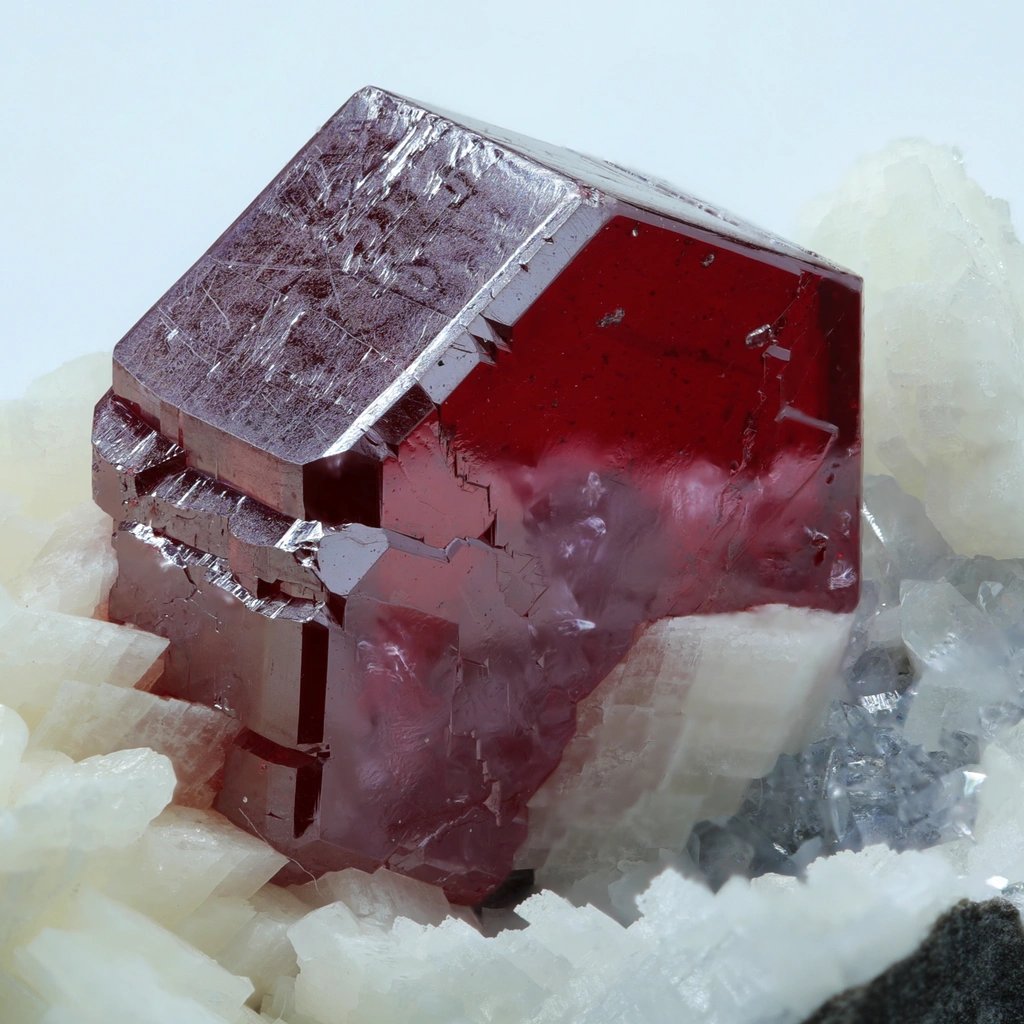
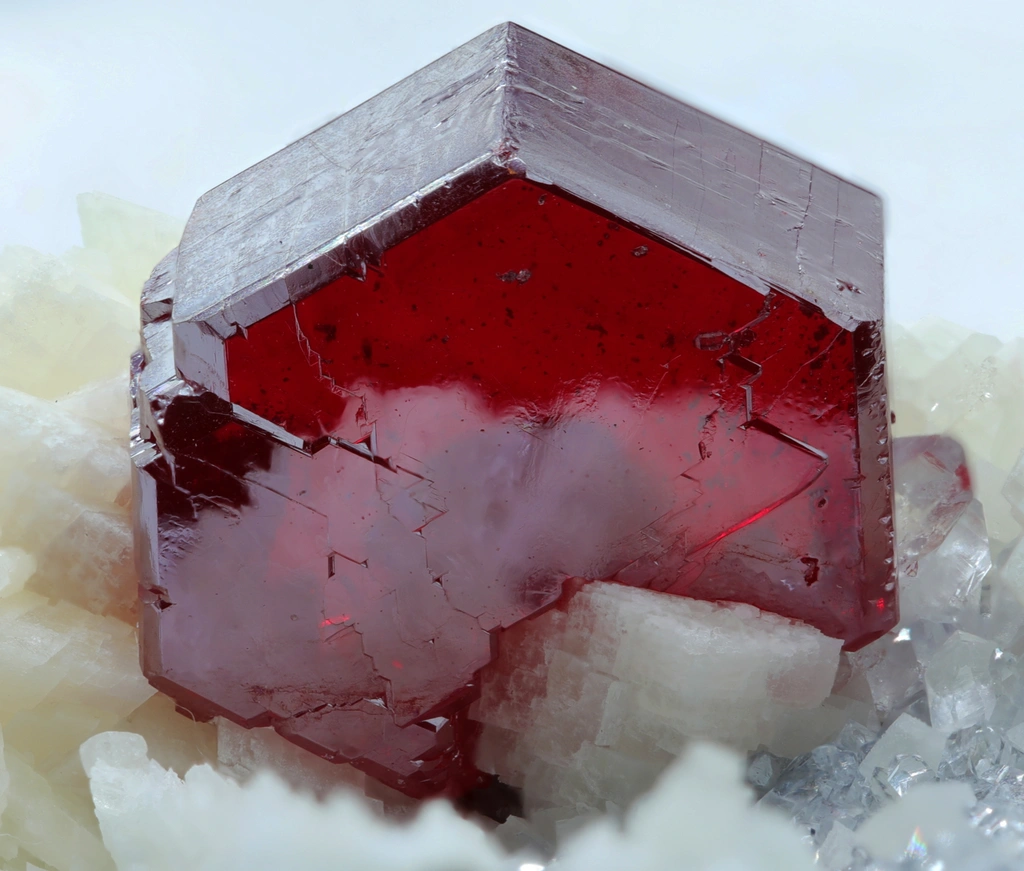
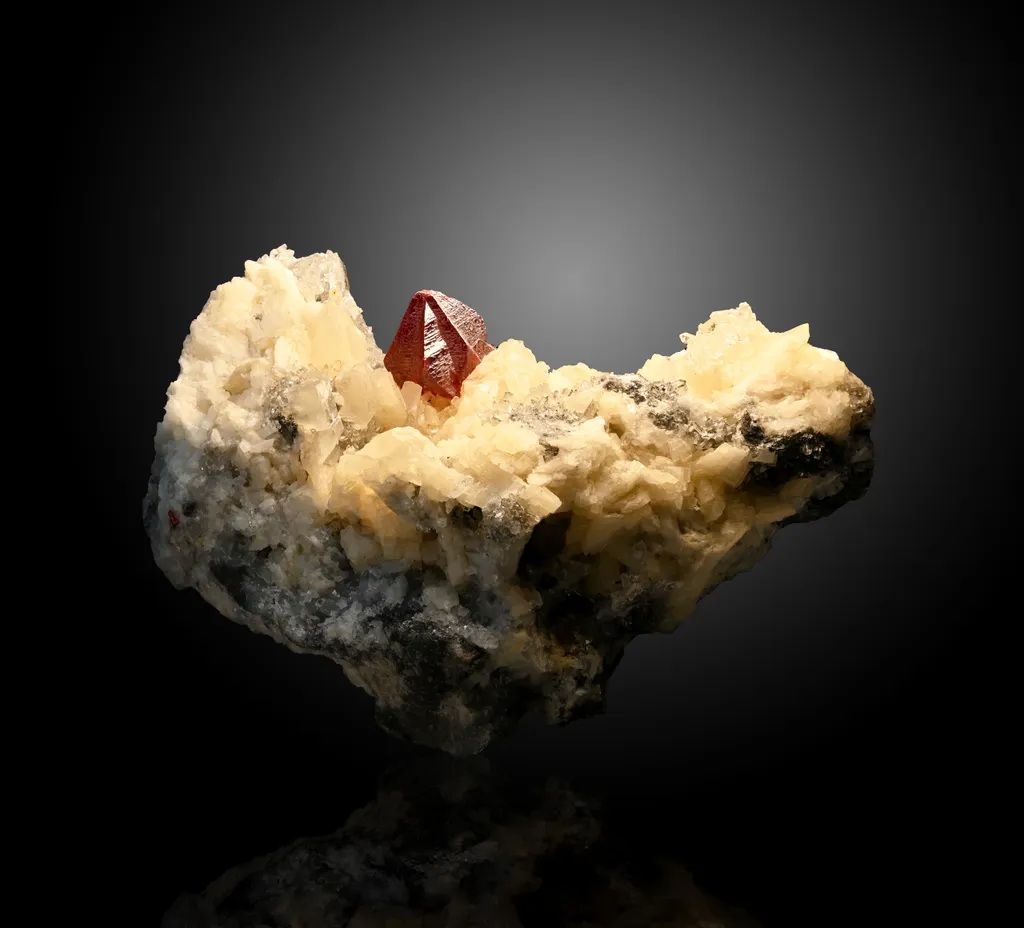
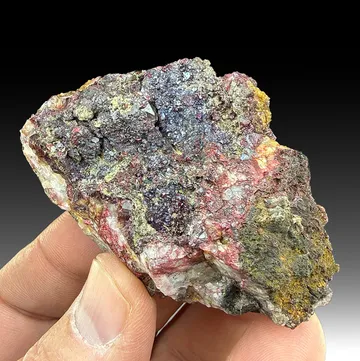
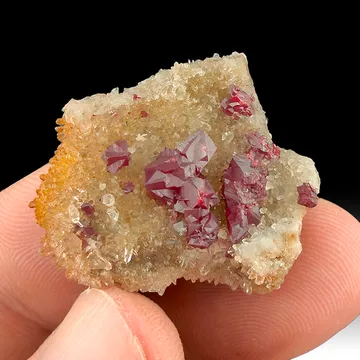
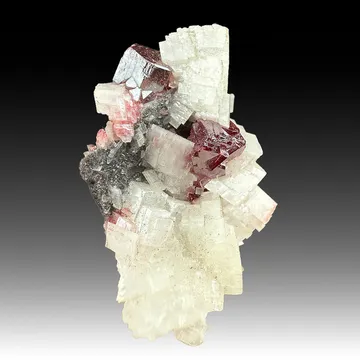
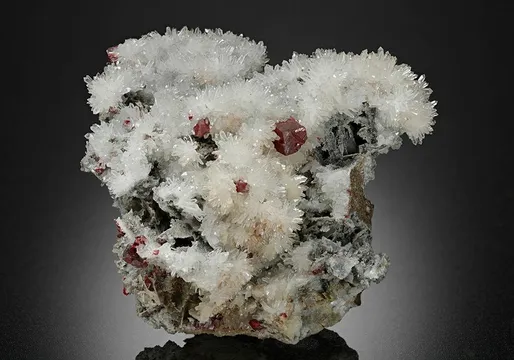
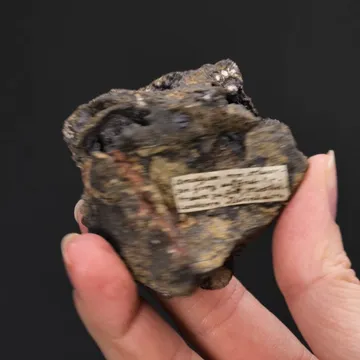
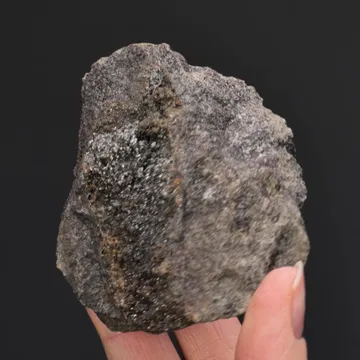
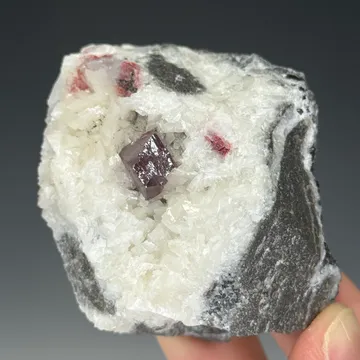
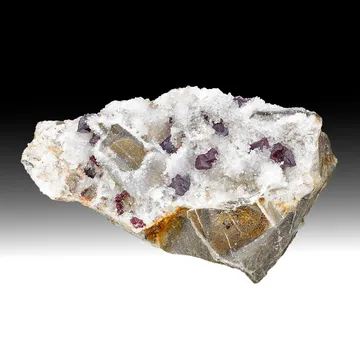
This particular specimen, discovered in the 1990s, is an exceptional example of cinnabar crystallization. Remarkably well-preserved, it exhibits an intense luster and striking transparency—so gemmy that the underlying matrix is visible through the crystal.
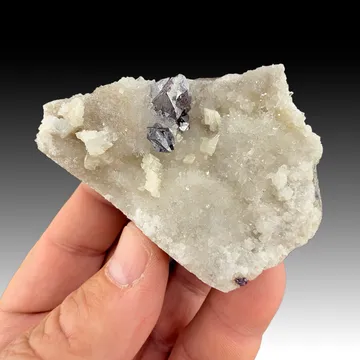
Cinnabar, dolomite and quartz on limestone, Xl 1.5cm, fov=1.9cm, specimen 3cm, Tongren Mine, Bijiang District, Tongren, Guizhou, China
Jingnan (Tom) Zhang Coll & Photo
Comments