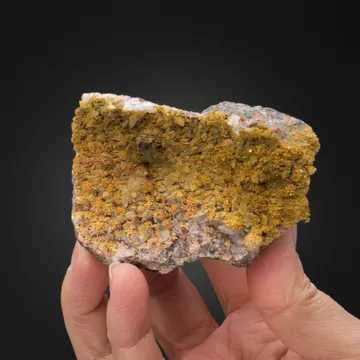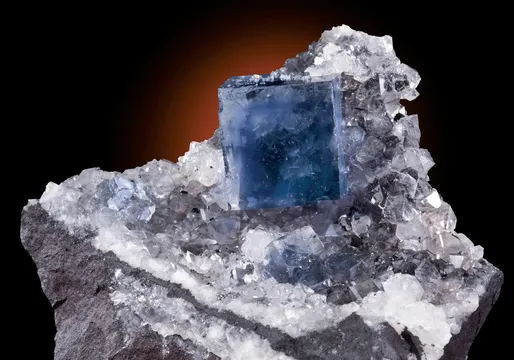
Florence Mine, UK — a classic hematite locality in west Cumbria, yielding specularite, botryoidal hematite, and quartz; historic site prized by collectors.
Key facts
Florence Mine, on the southern edge of Egremont in west Cumbria, is one of the great British hematite localities: not merely an old iron mine that happened to yield attractive specimens, but a classic replacement orebody whose mineralogy, mining history, and surviving pithead architecture are unusually well documented. The deposit belongs to the West Cumbrian Iron Orefield, where iron-rich fluids replaced Lower Carboniferous limestones along fault-controlled structures near the western margin of the Lake District. At Florence the ore was worked in the Florence–Ullcoats system, an extensive hematite body concealed beneath Permo-Triassic rocks, rather than one of the older surface-near northern workings around Cleator Moor and Frizington.
For collectors, Florence means hematite above all: lustrous specularite, botryoidal and mammillated kidney ore, pencil ore, and compact massive ore with the deep red streak that gave Egremont its industrial colour. The finest cabinet pieces combine metallic, black to steel-grey hematite with glassy quartz—colourless, smoky, or hematite-red eisenkiesel—often in small but bright bipyramidal crystals lining vugs in the ore. Associated gangue minerals are not abundant in the orebody as a whole, but where open space existed Florence could produce handsome combinations with calcite, dolomite, baryte, fluorite, and aragonite.
Regional View
Country View
Its historical importance is just as strong as its specimen reputation. Florence was the last working hematite mine in Cumbria and, in its final years, was widely described as the last deep iron ore mine in Europe. The mine was also the last place where this style of Cumbrian hematite replacement body could be examined underground in full geological context before pumping ceased and the workings flooded in 2007. Today the mine is inactive; its Grade II listed pithead survives at Florence Arts Centre, while underground collecting access is gone.

Photo: Wikimedia Commons
The best Florence specimens have a very particular look. A classic piece is not a random lump of iron ore; it is a compact, dark hematite matrix with rounded kidney-ore forms or glittering specularite, carrying clean quartz crystals that contrast sharply against the metallic surface. The most desirable examples show fresh, bright hematite rather than rubbed ore; crisp quartz terminations rather than bruised points; and a balanced association of quartz, specularite, and botryoidal hematite that immediately reads as West Cumbria.
Search for specimens: View all specimens from Florence Mine, UK
Florence Mine lies just south of Egremont in west Cumbria, close to the former iron-mining centres of Ullcoats, Beckermet, Haile Moor, Bigrigg, Cleator Moor, and Frizington. The locality is commonly given near NY 018 102, with Mindat placing the mine at about 54.47842, -3.51771. It is part of the West Cumbrian Iron Orefield, a narrow but extremely productive belt of hematite mineralization around the western edge of the Lake District.
The deposit is a limestone-replacement hematite orebody. At Florence the ore occurs within the lower part of the Lower Carboniferous, or Dinantian, limestone sequence, apparently mainly within the Sixth and Seventh limestones. These limestones rest unconformably on Ordovician Skiddaw Group rocks and are structurally cut by important faults. The Florence–Ullcoats orebody lay within a graben bounded by the roughly WNW–ESE-trending Ullcoats and Florence faults. In the immediate mine area the limestone and ore are concealed beneath Permo-Triassic rocks: a basal breccia known locally as Brockram, around 70 m thick in the geological descriptions, overlain by red sandstones of the St Bees Sandstone Formation, the local expression of the Sherwood Sandstone Group.
The mineralization is typical of the best Cumbrian hematite replacements. Iron-rich, oxidizing, saline fluids moved through permeable formations and faults at the margin of the East Irish Sea Basin and replaced favourable carbonate horizons with hematite. The result at Florence was not a simple vein but a large irregular to flat-lying replacement body, locally retaining ghost structures of the original limestone: bedding planes, stylolitic contacts, mudstone partings, and even fossil outlines could be preserved through hematitization. The orebody is overwhelmingly hematite, but open cavities and marginal zones introduced the minerals that collectors prize.
In the mine, small cavities in massive hematite were known to the miners as “lough holes.” Most were less than 5 cm across, but larger examples were recorded. These vugs were commonly lined by small tabular specular hematite crystals with bipyramidal quartz. Many quartz crystals were colourless; deep-brown smoky quartz was formerly common; and red hematite-included quartz, locally called eisenkiesel or “tomato quartz,” made some of the most distinctive Florence combinations. A thin mammillated band of kidney ore could separate massive hematite from the later specularite and quartz lining. Elsewhere kidney ore occurred in bands and pockets within the orebody, and fine-grained conical fragments of fibrous hematite were known locally as pencil ore.
The history of the mine begins in the early 20th century, although the Egremont district’s iron ore mining is far older. Sinking of Florence No. 1 shaft began in 1913 or 1914 in accounts of the mine, and the first ore was raised in the early 1920s, commonly cited as 1923. The operator was the Millom and Askam Hematite Company, which also worked the adjacent Ullcoats Mine; Florence and Ullcoats were being operated together from 1917. Florence No. 2 shaft was sunk in the 1940s, a short distance north of No. 1, and the new pithead opened in 1947, allowing ore around the old shaft pillar to be worked.
Later the Florence workings were connected underground with Ullcoats and Beckermet. After nationalisation, British Steel Corporation took over in 1969, pumped out flooded workings, and worked Florence in conjunction with Beckermet, with ore being drawn up Beckermet shaft for the Workington steelworks. British Steel closed Florence on 3 October 1980, but redundant miners bought the property with their redundancy money and reopened part of the mine as the Egremont Mining Company. Thereafter production continued on a much smaller scale, partly because British Nuclear Fuels Ltd at Sellafield paid for pumping in exchange for mine water used in cooling systems. When that arrangement ended, pumping stopped, the workings flooded, and the mine finally closed in 2007.
The ore was important commercially in several ways. In the main industrial period it supplied high-grade hematite to the iron and steel industry; in later years it also supplied pigment-grade material for paints, dyes, cosmetics, and specialist uses. The old association between Cumbrian hematite and pigment survives at the surface today through Florence Paintmakers, who use remaining hematite ore stocks to make Egremont Red and other artist materials at the former mine site.
For collectors, the key specimen-producing environment was not the bulk massive ore, but the vuggy and marginal portions of the orebody. The “Lonely Hearts Orebody,” a higher part of the Florence system near the Ullcoats Fault between the original Florence workings and Ullcoats, became particularly important late in the mine’s life because it remained accessible when many deeper sections were worked out or flooded. Geological descriptions of the final accessible workings emphasize that the Lonely Hearts section displayed the classic features of West Cumbrian hematite replacement mineralization: massive hematite, kidney-ore pockets, lough holes with specularite and quartz, and local gangue minerals near orebody margins.
Collecting access today is fundamentally different from the working-mine period. The underground workings are flooded and inaccessible, and the site is not an open collecting locality. Florence Arts Centre occupies parts of the former mineworkers’ buildings, and occasional surface heritage tours have been advertised, but these do not include entry into the mine or general permission to collect. Modern Florence specimens on the market are therefore historic mine pieces, material collected during legal access in the working or heritage-tour years, or pieces retained from old collections and dealer stocks.
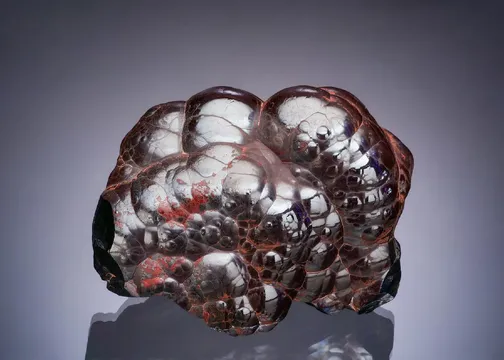
Hematite from Florence is the defining species of the mine and occurs in several collectible forms: compact massive ore, mammillated kidney ore, conical fibrous pencil ore, and brilliant specularite lining lough-hole cavities. Good specimens show either rich botryoidal kidney-ore surfaces with a dark, rounded, almost organ-like sheen, or sharp metallic specularite crystals sparkling over hematite matrix, ideally accompanied by quartz. Ordinary Florence ore can be heavy, dark, and rather featureless; collector-grade pieces have fresh lustre, undamaged rounded hematite surfaces, clear evidence of open-space crystallization, or a strong contrast between black specularite, red-brown hematitic quartz, and the underlying ore. Much of the best late material is associated with the higher Lonely Hearts workings, while older deep Florence–Ullcoats material includes classic cabinet pieces long represented in British and international collections.
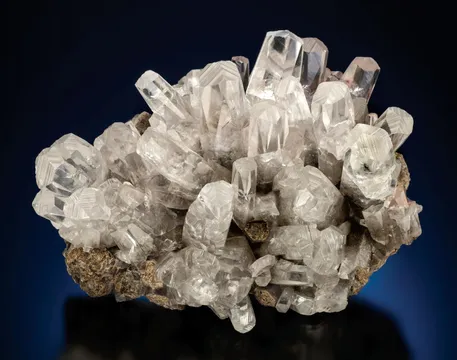
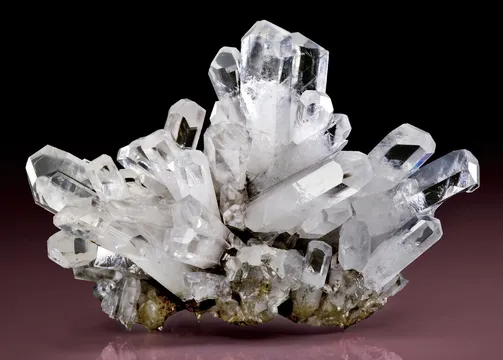
Quartz from Florence is prized because it is so intimately tied to the hematite orebody: small bipyramidal crystals grew in lough holes and on specular hematite, producing the characteristic quartz-on-hematite combinations of west Cumbria. The crystals may be colourless and glassy, pale to deep smoky, or reddish-orange to red where finely divided hematite is included, the latter being labelled eisenkiesel or, in miners’ language, “tomato quartz.” Documented specimen sizes range from small crystals only a few millimetres across to showy cabinet pieces with quartz crystals around 2 cm or a little more, commonly associated with specularite, kidney ore, calcite, dolomite, baryte, or fluorite. The best Florence quartz pieces are clean, lustrous, sharply terminated, and well placed on contrasting black hematite; damaged drusy coatings or bruised tips are far less desirable, even when the locality is correct.
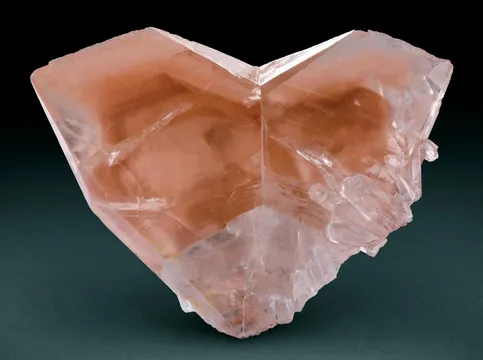
Other minerals documented from Florence Mine include aragonite, baryte, calcite, dolomite, fluorite, and pyrolusite, along with the locality’s important varieties of hematite and quartz: kidney ore, specularite, smoky quartz, and eisenkiesel. Fluorite is especially worth noting for collectors, because colourless to pale-blue cubes occurred in vugs in the later workings, while older deeper Florence and Ullcoats workings produced finer sky-blue cubes, some several centimetres across. Dolomite occurs as curved cream-white rhombs, calcite in several habits, and white to pale-pink platy baryte is more typical of veins and vugs near orebody margins. Florence is not chiefly a rarity locality in the type-mineral sense; its importance rests instead on world-class hematite habits and the classic quartz–hematite association.
Florence specimens are common enough that patient collectors can still obtain representative pieces, but the best material is no longer being produced. The mine is flooded and inactive, and any fresh-sounding claim of current underground collecting should be treated sceptically unless supported by clear, lawful provenance. Most legitimate pieces now come from older British collections, mine-era acquisitions, former dealer stocks, or material collected during the late working and heritage-centre years.
The main authenticity issue is not sophisticated faking but locality drift. West Cumbria produced hematite specimens from many mines, and labels reading only “Egremont,” “Cumberland,” “Cumbria,” or “West Cumbrian Iron Field” are often sharpened by later sellers into “Florence Mine” without evidence. Bigrigg, Ullcoats, Beckermet, Pallaflat, and other Egremont-area mines can produce visually related hematite and gangue assemblages. A credible Florence label is strongest when it comes with an old collection tag, mine-era provenance, a named dealer history, or a specimen style matching documented Florence material: specularite and quartz in lough-hole cavities, kidney ore and pencil ore from massive hematite, or combinations known from the Florence–Ullcoats system.
Condition matters greatly. Botryoidal kidney ore may show dull rubbed high points, edge bruising, or sawed and polished surfaces; polishing is not necessarily deceptive if sold as lapidary material, but it changes the specimen’s mineralogical character. Specularite can be brilliant yet fragile at the edges, and careless cleaning may remove fine sparkle or expose dull massive ore beneath. Quartz tips are frequently nicked because the crystals sit proud of a dense, heavy hematite matrix. Calcite and dolomite associations are more vulnerable to acid cleaning than the hematite itself, so avoid aggressive chemical treatment on combination pieces.
Hematite from Florence is dense, abrasive, and strongly staining when earthy or fractured. Handle friable red ore over a tray or cloth, and keep it away from pale display fabrics and paper labels. The principal collectible species here are not fluorescence minerals, and fluorescence should not be expected as a value feature. The real market premium goes to old labels, strong aesthetics, kidney-ore form, sharp smoky or eisenkiesel quartz, fresh specularite lustre, and documented association with notable mine areas such as the Lonely Hearts Orebody.
Florence’s late history has the stubbornness of a good mining story. British Steel closed the mine on 3 October 1980, leaving proven reserves underground, but the end did not come cleanly. A group of redundant miners used their own redundancy payments to buy the property and reopen part of the workings as the Egremont Mining Company. Contemporary reporting described an unlikely partnership of experienced miners and the Egremont Estates, with Dowager Lady Egremont and her husband involved at board level. By the late 1980s only eight men were still working there—“the last of the red men”—where, a generation earlier, the wider Florence system and its associated mines had employed workers by the thousand.
Underground, the mine was red in a way few mineral collectors forget. Visitors entering in the heritage-centre years encountered the same iron dust that gave the local miners their nickname. A 1998 underground tour used a surface drift down to the 300 ft level after the electric winder on No. 2 shaft was barred for visitor and material use because of gearbox problems. The route passed the rescue station, a landing on No. 1 shaft, an ore chute still in use, battery locomotives, speckled hematite, and occasional kidney ore. One visitor remembered that the tour was relatively clean by iron-mine standards, but still wrote that the red stains took years to disappear from his wellies.
A Cumberland Geological Society visit in March 1983 captured Florence while it was still plainly a working mine. Ten members descended the 57 m shaft under the guidance of G. Finlinson, Managing Director of the Egremont Mining Company. Below, they moved from St Bees Sandstone through faulted ground into limestone with shale partings and fossil shell sections, then watched the rock grade over a few metres into hematite. They passed the disused and wet Ullcoats No. 1 shaft, entered older workings, and saw the consequences of miners following a sloping orebody into subsurface sand—a problem serious enough that the area had to be sealed off. The orebody then being worked was about 26 m thick and was kept dry by two pumps delivering a combined 900 litres per minute. In that same visit, members were shown a bus-sized empty natural lough, an unforgettable void in a mine better known to collectors for lough holes only a few centimetres across.
The last act of Florence was governed by water. For years British Nuclear Fuels Ltd at Sellafield paid pumping costs because the mine water was useful for cooling. That bargain kept the old hematite workings dry enough for small-scale production and study. When the need for the water ended, the economics of pumping ended with it. Geological recording was undertaken because everyone understood what would happen next: the underground exposures of the hematite orebody would flood rapidly and become permanently inaccessible. In 2007 that is what happened, closing not only a mine but the last accessible underground textbook of its kind in the Cumbrian hematite field.
Then the colour returned above ground. In 2011 and 2012, artist Mat Do’s Egremont Red project imagined a new industry at Florence using the remaining hematite ore. A two-day pigment and paint-making workshop with Pip Seymour and Rebecca Wallace-Jones introduced local people to making artists’ materials from hematite and other natural substances. Four local artists—Jenni Payne, Jill Davis, Liz Redmayne, and Margie Foots—kept experimenting, first with oil paint and later with watercolours, pastels, ink, and other Cumbrian pigments. The former shower block became a paint-making studio. The branding even carried mineralogical memory: a hexagonal-star motif alluding both to the cooperative beehive and to the crystalline structure of hematite. In the old mine yard, the ore that once fed furnaces and pigment works became Egremont Red again, this time in artists’ tins and pans.