






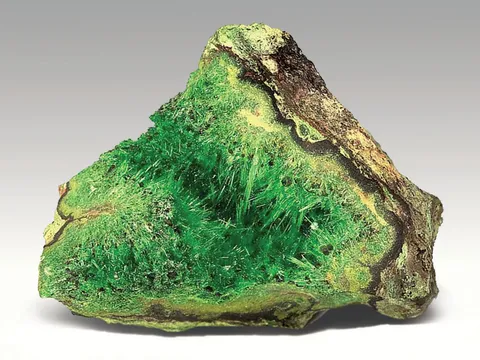
コルウェジのムソノイ鉱山産トルベリナイト。エメラルグリーンの正方形の板状結晶で、はっきりとした輪郭が特徴。クラシックな産地と高い産地情報で評価される。
Key facts
Musonoiのトーバーライトは、種のクラシックなアフリカ表現である。深いエメラルド色から黒みがかった緑、湿ったガラス光沢からほとんど金属光沢のある正方形の板状結晶、しばしば石英質マトリックスやマラカイト染色基質上で緊密な刃状の集合体として積み重なる。最高の標本は、透明な緑の板がシャープな正方形のアウトラインを持ち、明るいエッジを備え、色が現れる程度の厚さがあり、不透明にはならないという品質がすぐに分かる。Musonoi産の優品は「コロンビアにとって良い」といっただけではなく、世界のトーバーライト産地の最前線に属する。

写真: 米国地質調査所
localityの重要性は、中央アフリカ鉱山帯コルウェジ地区の特定の地質的偶発事象に基づく。MusonoiはKatangaスーパーグループのロアン層にあるCu-Co-U鉱床で、褶曲・断層・推挙作用によって変形している。Musonoi Extensionでは、ウランとセレンが制限された極度に衝撃的な帯状地帯に濃集されていた。その小さな異常が過度の鉱物学的遺産を生み出した。同じ体系が大きく美しいトーバーライトを生み出しただけでなく、Musonoiをウラリウム・セレン石、銅-ウランケイ酸塩、パラジウム硫化物、そしていくつかの希少または標本局地種で有名にした。
収集家にとって、Musonoi産トーバーライトは、産地が標本の美しさと鉱物学的系譜の両方を供給する点で魅力的である。結晶はキャビネット展示向きで、最高材では縁2 cm程度のプレートと報告されるが、鉱山はまた豊かなミニチュアやサムネイルを密集した艶やかな刃のカーペットとして産出する。最も望ましい標本は、シャープな正方形の板状結晶、透明性、飽和した緑色、エッジの欠けが最小限、確かな旧来の出自を組み合わせている—特にMusonoi Extensionに結びつくラベル、または1960年代・1970年代の有名なクラシック生産のラベル。

写真: ウィキメディア・コモンズ
Search for specimens: View all torbernite specimens from Musonoi Mine, DR Congo
Musonoi Mine lies near Kolwezi in Lualaba Province, in the western part of the Katanguian Copperbelt. The historic workings are a group of open cuts: Musonoi Principal began during the 1940s, Musonoi Extension followed in the 1950s, and Musonoi Extension II was opened during the 1970s. These pits were eventually combined and are linked historically and geographically to the broader Kolwezi-Kamoto mining complex.
The deposit is a sediment-hosted copper-cobalt-uranium system in the Roan rocks of the Katanga Supergroup. Musonoi’s ore is hosted in dolomitic and clastic sequences that were strongly folded and faulted; two principal orebodies of roughly 10 m scale are recorded, with the uranium mineralization concentrated in the faulted lower orebody. That lower orebody, especially in the Musonoi Extension, is the context that matters most to specimen collectors. It supplied the exceptional secondary uranium minerals—torbernite, cuprosklodowskite, kasolite, sklodowskite, sengierite, vandenbrandeite, uranophane, soddyite, and others—along with the unusual selenium and palladium mineralogy for which the mine is also famous.
Musonoi was not a specimen mine in the modern sense. It was a major industrial copper-cobalt operation, and mineral specimens were recovered incidentally from blasting, development, ore handling, and dumps. The best torbernite is historically tied to Musonoi Extension, where the uranium-selenium anomaly was limited in size but exceptionally rich in collectible minerals. A main torbernite discovery was reported in 1966, and classic dealer descriptions often place the finest torbernite specimens in the 1960s–1970s production window.
Collecting access today should be treated as closed industrial ground unless explicit permission is obtained from the land and mineral-rights holders. Historic dump collecting is also not a dependable option: the uranium-rich dump known as “remblay 269” or “dump 500” was processed, with sources recording removal or processing dates in the late 1980s and early 1990s. Because that dump received uranium minerals from multiple mines, it also created a real locality-label problem: some specimens connected with Kamoto East and related material have been wrongly reported as Musonoi. For high-end torbernite, old labels are valuable, but old labels still need to be read critically.

Photo: Wikimedia Commons## ムソノイ鉱山(DRコング)産トーバーナイトの特徴
ムソノイ産トーバーナイトは、正方形から長方形の板状晶が特に評価され、通常は薄いが時には厚くて暗いボトルグリーンや黒緑色の正面像として現れることがある。良質材料の個々の晶はエッジが宝石質で、背面発光時には内部の緑色の炎が強く見えることがある。古い文献には辺縁約2 cmの正方形プレートと記載されることがあるが、現在市場で見られる標本ははるかに小さな晶を多く含み、一般には2–8 mmの範囲で散在するプレートまたは密集した刃状カーペットとして現れる。
形状は明確にオータンサイト族に属する:平坦な正方 tetragonal(正方)板、刃状の集合体、重なり合うスタック、ローズ状構造、そして互いに結晶成長した正方形プレートの密集したクラストである。ムソノイ産標本は、暗緑色の晶面上で特に光沢があり、ほとんど金属的な輝きを示すことがある。この半金属的な外観と深い色、板状の几何学が、この産地のクラシック材料を見分ける最も分かりやすい視覚手掛かりの一つである。
色は、輝くエメラルドグリーンから森緑、厚い簇ではほぼ黒ずんだ緑へと変化する。薄く露出したプレートは半透明〜透過性があることがあり、密接に結合した塊は不透明に見えることがある。新鮮で高品質なプレートはガラス光沢〜真珠光沢の表面を持つ一方、部分的に脱水したり傷ついた晶は鈍く、粉状またはマットに見えることがある。多くの古いラベルには「torbernite」と記されているが、試料にはtorberniteの脱水で形成されたmetatorbernite、Cu(UO2)2(PO4)2·8H2Oが含まれることがある一方、Cu(UO2)2(PO4)2·12H2Oの状態のものもある。
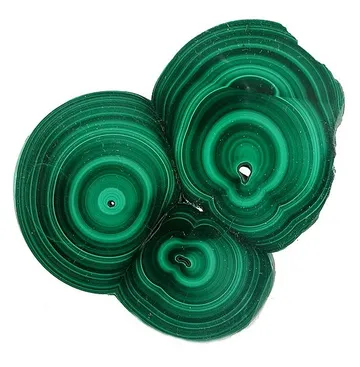
最も典型的な基質は、二次铜着色を伴う石英質またはドロマイト質の岩石である。マラカイトは頻繁な視覚的伴侶であり、トーバーナイトの下部や隣接部に緑のベルベット状コーティングを形成することがある。重要な関連鉱物には、Cu-スコロドウスカイト、カソライト、メタトービャー、スコロドウスカイト、ウラノファン、ソディー石、センギエライト、バンデンブランダイト、ウルフェナイト、ギユイミナイトなどがある。黄のカソライト、オレンジから赤のウルフェナイト、緑のトーバーナイト、マラカイトを組み合わせた標本は、トーバーナイト結晶が数ミリの大きさであっても、ムソノイ収集家の美学に特有の特徴として特に際立っている。
品質は晶の大きさ、晶の完成度、光沢、色の飽和、透明度、基質との視覚的分離などで判断される。はっきりとした孤立したガラス質の正方プレートが少なく、より大きな岩石に比べて少数だがシャープな場合、そちらの方が好まれることがある。高度な収集家にとっては産地の出所情報が見た目と同程度重要であり、ムソノイ拡張部、古いシャバまたはザイール(label: Zaïre)のラベル、1990年代以前の収集履歴は、信頼性と市場価値を高める要素となる。## Collector Notes
Musonoi torbernite is radioactive and should be handled with the same discipline applied to all uranium minerals. Display it in a closed case, avoid generating dust, wash hands after handling, keep it away from children and food-preparation areas, and do not saw, grind, or aggressively clean it. Strong specimens should be stored where radon accumulation and loose radioactive particles are considered; a sealed display box with sensible ventilation practices is preferable to leaving friable material exposed.
The main authenticity issue is not usually artificial enhancement, but accurate identity and locality. Many old specimens labeled torbernite are partly or wholly metatorberbernite at the surface. That is not unusual and does not automatically make the specimen undesirable, but it should be understood. Phase precision requires analysis; visually, torbernite and metatorbernite can be difficult to separate, especially on old material. A cautious label such as “torbernite / metatorbernite” is often more scientifically honest than a confident species name based on appearance alone.
Locality precision is another concern. Musonoi is famous, and “Musonoi” labels have sometimes been applied broadly to uranium minerals from the Kolwezi district. The former uranium dump at Musonoi received material from other mines, and some specimens historically attributed to Musonoi are better understood as dump-derived or from nearby operations. For important purchases, favor pieces with old labels, collection history, dealer documentation, or a visual association consistent with known Musonoi material: dark lustrous plates on quartzitic or malachitic matrix, sometimes with kasolite, cuprosklodowskite, guilleminite, or wulfenite.
Condition is critical. Torbernite plates are brittle and cleave easily; exposed edges chip, and dense crusts can be crushed without obvious matrix damage. Examine crystals under magnification for broken square edges, powdered surfaces, loose flakes, and post-collection bruising. Avoid specimens that were oiled, lacquered, glued, or stabilized without disclosure; coatings can change luster and may trap loose radioactive dust rather than solve the underlying problem.
Storage environment matters. Classic Musonoi material is noted for relatively slow dehydration when well preserved, but heat, direct sun, and very dry display conditions are poor practice. Keep specimens out of strong light and away from heat sources. Do not attempt to “rehydrate” torbernite; such experiments risk damaging the specimen and do not reliably reverse mineralogical alteration.市場ではムソノイ・トルベリナイトは定期的に現れるため、忍耐強い収集家は慎重に選ぶことができる。しかし良品は稀だ。一般的な出品はマトリクス上の小さな板状またはクラストで、しばしば損傷しているが魅力的だ。明るく鋭くガラス状の板を持つより良いミニチュアは強く求められている。大型で無傷、透明な板を備え、旧ムソノイ・エクステンション由来の標本は現代の定番品であり、プレミアム価格がつくことが見込まれる。## Stories & Field Notes
最高のムソノイの物語は、大きな鉱山から始まるのではなく、その内部の小さな地質標的から始まる。鉱山の西側の高い構造運動帯にあるムソノイ拡張部は、半径約100 m、厚さ約50 mのウラン-セレン異常を通過した。そのポケットのウラン資源量は、採掘基準としては enorm ではなく、「最大で数千トンのウラン金属」と表現される程度だったが、その限定ゾーンはシャバ=ザイール採集時代で最も有名なウラン鉱物標本のいくつかを生み出した。
1966年に報告されたトルベリットの発見は、コレクターたちが今も語り継ぐエピソードである。最高品質の結晶は、端が約2 cmにもなる正方形のプレート状で、エメラルグリーンから濃緑、厚さに応じて透明だった。その結晶の配置は非常に特定されていた:銅-コバルト鉱石を分ける石英質岩の割れ目である。空気中へ blasting されるとトルベリットは徐々にメタトルベリットへと変化していくが、高品質の結晶は崩壊を耐えた。現代の記録にも、熱と日光を避ければ二十年経っても宝石のように美しく保たれる結晶があったと記されている。
ムソノイのウラン廃棄物は、2つ目の、より乱雑な章を追加した。 remblay 269 として知られる廃棄物は、刊行物の中には dump 500 とも呼ばれ、複数の地点からウラン濃度の高い物質の貯蔵庫となった。標本は採集可能だったが、標本ラベルをぼやけさせる結果にもなった。カモト東部の物質やカモトのスロドゥスカイトがそこから回収されたことがあり、それが「ムソノイ」表記の中には二度見が必要となる理由である。廃棄物が撤去され処理されると窓が閉じた:かつては緩いウラン-bearing岩から救出されうる標本が、濃縮機の流れへと失われていった。
その後期の廃棄物撤去期に完璧にムソノイの組み合わせ美学を捉えた一つの生き残りミニチュアがある。標本の寸法は 5.0 × 4.4 × 4.1 cm で、以下の五つの名礦を携えていた:ヴルフェナイト、カソライト、トルベリット、ギィーミニット、マラカイト。ヴルフェナイトは多くの産地で見られる薄い黄色のスタイルではなく、グリーンベルベット状のマラカイトに載った最大1 mmの小さな血紅色の柱状結晶だった。明るい黄色のカソライトは最大2 mm に達し、いくつかの結晶には幻影成長が見られた。トルベリットのプレートは縁が約4 mm に達し、結晶の縁自体にはミニチュアのギィーミニット集団が載っていた。これぞムソノイのミニチュアである:銅-コバルト鉱山が、いくつかの酸化的な層と空洞の中で、ウラン-セレンの宝石箱のように振る舞う様子。## 鉱物学的記録と出版物- Wilson, Wendell E. (2018), “The Musonoi mine, Kolwezi District, Lualaba Province, Democratic Republic of the Congo,” The Mineralogical Record, 49(2), 236–304 — Musonoi の主要な現代のローカリティ解説で、豊富な鉱物学的および標本解説を含む。
Musonoi! March–April 2018, The Mineralogical Record, Vol. 49, No. 2 — Musonoi 専用号のバック・イシュー・ページ。
Gauthier, Gilbert J. (1985), “The Minerals of Musonoi (Kolwezi), Shaba-Zaire,” Friends of Mineralogy 7th Tucson Symposium Program Abstracts — Musonoi拡張部、1966年のトーベルナイト発見、結晶サイズ、保存、関連するウラン鉱物を説明する重要なコレクター時代の要旨。
Gauthier, G.; François, A.; Deliens, M.; Piret, P. (1989), “The Uranium Deposits of the Shaba Region, Zaïre,” The Mineralogical Record, 20, 265–304 — 後の Musonoi 鉱物学研究で引用される、シャバ地域のウラン鉱床に関するより広範な解説。
Pirard, Cassian (2005), “Study of Cu-U-Se mineralization of Musonoï Mine, Kolwezi, Katanga, Democratic Republic of Congo,” Geologica Belgica, 8(3), 122–123 — Musonoi の Cu-U-Se 鉱化、ロアン期の設定、および三段階遺伝モデルを要約した要旨。
Pirard, Cassian; Hatert, Frédéric (2008), “The sulfides and selenides of the Musonoi Mine, Kolwezi, Katanga, Democratic Republic of Congo,” The Canadian Mineralogist, 46(1), 219–231 — Musonoi の独特なセレン鉱物学を支える硫化物・セレナイド相の技術的研究。
Roberts, Andrew C.; Paar, Werner H.; Cooper, Mark A.; Topa, Dan; Criddle, Alan J.; Jedwab, J. (2002), “Verbeekite, monoclinic PdSe2, a new mineral from the Musonoi Cu-Co-Mn-U mine, near Kolwezi, Shaba Province, Democratic Republic of Congo,” Mineralogical Magazine, 66(1), 173–179 — Musonoi の鉱物学的意義の新鉱物解説としての Pd-Se 側を示す。
Brugger, J.; Wallwork, K. S.; Meisser, N.; Pring, A.; Ondruš, P.; Čejka, J. (2006), “Pseudojohannite from Jáchymov, Musonoi, and La Creusaz: A new member of the zippeite-group,” American Mineralogist, 91(5), 929–936](https://doi.org/10.2138/am.2006.1885) — ジップペイト-グループ種としての pseudojohannite の Musonoi 材料を含む説明。
USGS public-domain torbernite specimen photograph — Carlin J. Green が撮影し、USGS を通じて提供された 5.0 cm の Musonoi 標本。
Wikimedia Commons: Torbernite from Musonoi Mine, Wayne State University collection — ジェームズ・セントン(James St. John)による大型標本の写真、機関コレクションにおけるムソノイ資料を記録。## Videos & Media
【“Torbernite, Musonoi Mine $120” — Ryan Paul】(https://vimeo.com/666387890) — Musonoi のトルベリットの短いVimeo標本動画.
【USGS “Torbernite” image — Carlin J. Green, U.S. Geological Survey】(https://www.usgs.gov/media/images/torbernite) — 公共ドメインの5.0 cm の Musonoi 標本写真.
【Wikimedia Commons “Torbernite-121272.jpg” — Rob Lavinsky, iRocks.com】(https://commons.wikimedia.org/wiki/File:Torbernite-121272.jpg) — CC BY-SA の7.8 x 6.8 x 2.6 cm の Musonoi トルベリット標本画像.
【Wikimedia Commons “Wulfenite-Kasolite-Torbernite-214957.jpg” — Rob Lavinsky, iRocks.com】(https://commons.wikimedia.org/wiki/File:Wulfenite-Kasolite-Torbernite-214957.jpg) — トルベリット、カソライト、ウォルフェナイト、ギャイユミナイト、マラカイトを含む Musonoi の組成標本のアップ画像.


.jpg)