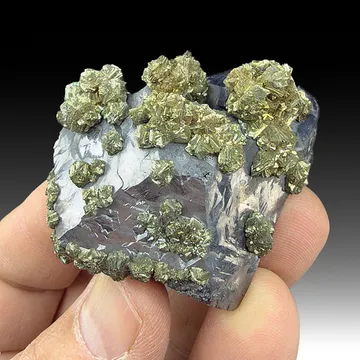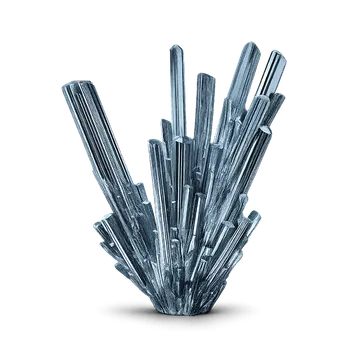
ヘルヤ鉱山、ルーマニア - 放射状の噴霧、濃いガンメタル光沢、そして収集家に評価される彫像のような結晶で有名な、古典的なヨーロッパ産ステブナイトの産地。
Key facts
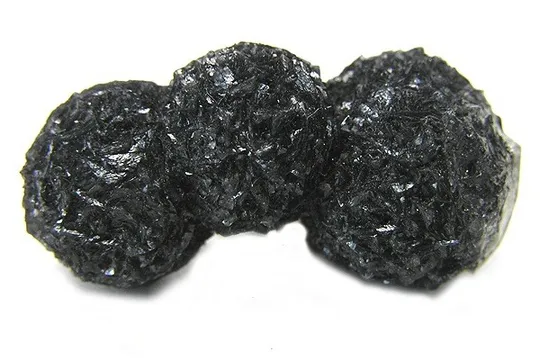
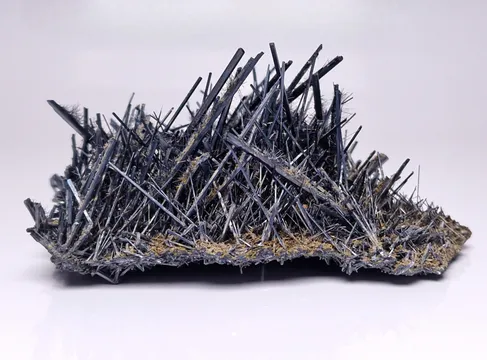
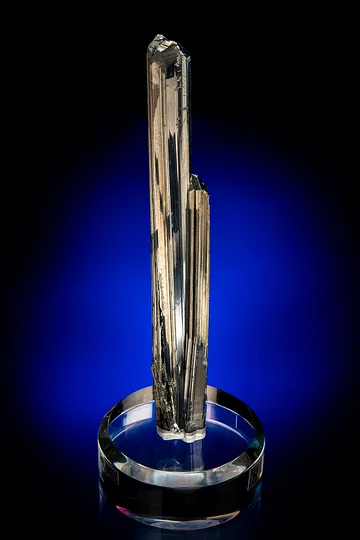
Herja は古典的なヨーロッパ産の硫砒鉱の産地のひとつです。記録上最長の結晶ではないこと、しかしルーマニア産材料を十分に扱った收藏家にとってすぐに見分けがつく外観を持つことが理由です。最良の標本は、刺のように立ち上がる三次元のスプレー状結晶と、灰黒色の金属光沢を持つ丸みを帯びた「球体」で、通常は数センチメートル程度の長さ。高密度な放射状の扇形やコンパクトなハリネズミのような cluster として配置されます。その光沢は、現代の中国産硫砒鉱に関連する鏡のように明るく剣のような輝きというよりも、しばしば暗い銃金属光沢であり、この微妙な差がまさしくHerjaに古風な趣を与えています。

写真: Didier Descouens 経由の Wikimedia Commons
鉱物学的には、Herja は北西ルーマニアのグタイ山脈、バイア・マーレ鉱区に位置します。新生代の火山活動と結びついた多金属性熱水脈で有名な鉱区です。Herja 産出は Pb-Zn-Ag-Sb 系で、併作の Au がわずかに含まれる多くの共役脈網として発展しました。硫砷鉱(stibnite)は、主な閃亜鉛鉱・硫化鉄鉱の発達の後、鉱段の空隙(ヴァグ)には Pb-Sb 含硫酸塩、石英、方解石、鉄系鉱石、バライト、マーカサイト、黄鉄鉱、閃亜鉛鉛、ガリナ、ジェームソナイト、ベルティエライト、ブランジェライト、そして歴史的に「プルモサイト」と呼ばれた繊維状物質が豊富に伴います。
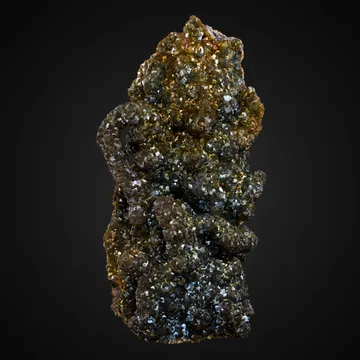
Herja のコレクター性は、このヴァグ鉱物学と切り離せません。Herja の硫砒鉱は稀に単独の刃として現れることは少なく、価値の高い標本は彫刻のような形をしています。コレクターは、基質から清浄に立ち上がる放射状のスプレー、槌状の終端、最小限の先端の欠け、そして淡い方解石、石英、バライト、鉄分の多い方解石とのコントラストを探します。いくつかの標本は白い洞窟状の方解石に硫砒鉱が抱かれているのが見られ、他にはダークな硫化物ベースから金属的なプリズムの森が立ち上がるものもあります。最も優れた例は小型のキャビネットサイズで、全方向に均衡がとれており、間違いなくルーマニア産です。

*写真: Rob Lavinsky, iRocks.com, via Wikimedia Commons*Herjaにも歴史的な重みがあります。この鉱山はバイア・マレ地域にとって非鉄鉱石の重要な源で、鉛、亜鉛、銀、アンチモン、硫黄、そして微量の金が産出したと報じられています。アンチモンは特に1928年以前に重要であり、鉱山は戦後の社会主義鉱業時代にも大きな工業的存在感を保ちました。1990年代以降、産出量と雇用は急激に低下し、2000年代半ばには鉱山は閉山となりました。その閉山はコレクターにとって重要です。現在市場に出回るほとんどの優良ヘルジャ(ヘルジャ)のアンチモン鉛鉱は、現役の採掘からではなく、旧鉱山の生産物、旧ローマニアの収集物、欧州ディーラー在庫、あるいはデアカセッション(収蔵解除)されたコレクションなどから来ています。## フィーチャード・スペシメン
Search for specimens: View all stibnite specimens from Herja Mine, Romania
Herja Mine is in the Baia Mare ore district, Maramureș County, northwestern Romania, in the Gutâi Mountains of the Eastern Carpathians. Older labels often give Chiuzbaia or Kisbánya, and the historical Hungarian and Germanized locality names can appear on antique labels, but the mine is generally treated mineralogically as Herja Mine, Baia Mare, Maramureș County.
The deposit is a low-sulfidation epithermal polymetallic vein system related to Neogene volcanic and subvolcanic activity. It is associated with a complex Pannonian-age intrusive stock and hydrothermal alteration that includes propylitic, argillic, phyllic, and potassic styles. The vein system strikes generally ENE-WSW and is extensive: modern summaries describe more than 250 vein structures, with 67 considered principal veins. Earlier detailed work described two major vein groups, including a southern group hosted by porphyritic quartz microdiorite and a northern group in altered sedimentary rocks of Pannonian, Sarmatian, and Eocene age. Some principal veins were mined for nearly a kilometer along strike and more than 500 meters down dip.
The ore assemblage is dominated by base-metal sulphides and sulfosalts. The main economic suite includes sphalerite and galena with chalcopyrite, pyrite, pyrrhotite, marcasite, tetrahedrite-group minerals, stibnite, and a remarkable population of Pb-Sb sulfosalts. Gold was present but subordinate; silver could be locally high in the upper parts of veins, with historical reports of very rich silver ore in certain zones. The deposit was known for massive galena ore, sphalerite-rich ore, and antimony-bearing upper-level vug assemblages. Stibnite and sulfosalt cavities were especially abundant in upper mine levels, many of which were largely mined out by the time modern collectors began documenting specimens.
Mining history at Herja is long and layered. Regional mining in the Baia Mare area has medieval roots, and local accounts often describe Herja as one of the old mines encircling Baia Mare. In the modern industrial period, Herja became part of the organized nonferrous mining and metallurgical system of the region. After the nationalization of major enterprises in 1948, the Baia Mare nonferrous metallurgical combine incorporated Herja among the mines feeding regional processing facilities, alongside better-known Maramureș localities such as Baia Sprie, Cavnic, Băiuț, Săsar, and Nistru.The mine’s late history is tied to the collapse of Romania’s nonferrous mining industry after 1990. A major workforce reduction process began in 1997, and by January 2007 only a small remnant crew reportedly remained. Local sources describe a final closure in early 2007, while mineralogical publications refer to the mine as closed since 2006. Either way, Herja should be treated as a closed underground mine. Collecting access is not a practical modern field-collecting matter; the locality is represented in collections by material recovered during mining operations, especially from the 20th century and the final decades of work.
Notable finds were not limited to stibnite. Herja produced world-class or highly significant specimens of several antimony minerals and sulfosalts, including semseyite, berthierite, fizélyite, jamesonite, boulangerite, and “plumosite”-type fibrous material. The mine is also famous for unusual carbonate forms: black calcite, black-and-white bicolor calcite spheres, siderite spheres, and calcite associated with needle-like sulfosalts. Those curiosities matter to stibnite collectors because they reflect the same late, open-space, antimony-rich hydrothermal environment that produced the best stibnite sprays.## ヘルヤ鉱山(ルーマニア)産アンチモン鉛鉱の特徴
ヘルヤ産アンチモン鉛鉱は通常、灰黒色から濃いスチールグレーで、金属光沢から準金属光沢のガンメタリック光沢を呈します。最も診断的な形態は、厚い柱状結晶が放射状に球状をなす集合体と、密集した細い針状結晶の喷出です。多くの標本は長く槍状の刃よりも、短くずんぐりとしたプリズムを示します。ほかにはコンパクトな放射状ネスト、風のように広がるファン状、丘のように盛り上がったハリネズミ状の集合体を形成し、個々の結晶は短く鋭く、数多く存在します。
結晶は一般に世界的なアンチモン鉛鉱の標準基準から見ると大きくはありません。Mindat のヘルヤ産出の記録は、個々の結晶は通常数センチの長さであることを強調していますが、放射状の球体は世界で最も美しいものの一つです。ディーラーやオークションの記録はこのパターンを裏付けており、ヘルヤ標本は通常、横幅約4–7 cm のミニチュア級から、横幅約10–16 cm の小型キャビネット級の標本、さらに多くの見事な個体で放射状スプレーが約1.6–3 cm と報告されています。10.5 cm の「森林」標本と 16 × 14 × 5 cm の針状クラスターは市場のキャビネット規模の端を示しており、一方で最もバランスの取れたミニチュアは視覚的なインパクトが最も強いことが多いです。
共生物はその産地の特徴の重要な部分です。カルサイトは多くのヘルヤ産アンチモン鉛鉱の最もよく知られた基質で、白い洞窟状カルサイトから、彫刻的な刃状または鍾乳洞状の形態まで様々です。石英も一般的で、一部の標本にはカルサイト中に小さな石英結晶が散在します。重晶石は比較的稀ですが、金属的な噴霧の上または間に無色の板状結晶として現れると魅力的です。方解石は一部の標本でより暖かい茶色の基質を与え、個別のスプレーを支持すると特に評価されます。他の共生種にはプルモサイト、ジェームソナイト、ベルティエライト、ブランジェライト、ドロマイト、マルカサイト、パイライト、スファレライト、ボロ合金鉱、ガレナ、ジンケナイト、そしてまれにリアルガーや副反応性のアンチモン酸化物としてのステビコナイトなどがあります。
最高品質のヘルヤ産アンチモン鉛鉱は三つの品質を同時に備えています:建築性、表面性、耐久性。建築性とは、欠けた面を隠す必要なく良く展示される放射状のスプレーや周囲全体を見せる球状を指します。表面性とは、金属光沢と鋭い筋理、認識可能な刃状またはノミ状の終端を意味します。耐久性とは、先端が砕かれていないことを意味します。最後の点が決定的です。ヘルヤ産アンチモン鉛鉱は脆く、柔らかく、傷つきやすい性質があるため、先端が真に無傷でスプレー間に開放空間を持つ標本は、単に結晶が豊富にあるだけのものよりはるかに優れています。色の対比は価値にも影響します。雪のような方解石上の黒鉛鉱(スティブナイト)は、特に方解石が空洞状または彫刻的なマトリクスを形成していて、平らな基部ではない場合にクラシックな展示組み合わせとなります。重晶石-スティブナイトの組み合わせは希少で、重晶石が透明で視覚的に濁っていないと特に望まれます。純粋なスティブナイト“森林”は、それとは対照的に密度とリズムに依存します:コレクターは平坦な塊ではなく、直立して終端の結晶が均等に広がる場を求めます。## Collector Notes
Herja stibnite should be bought first with the eyes and then with a loupe. The species is soft, brittle, and strongly cleavable, so broken crystal tips, bruised edges, rubbed terminations, and collapsed sprays are common. Damage can be visually disguised in dense clusters, especially where the original form is a chaotic thicket of blades. Inspect the highest and outermost crystals, not just the front face. If the piece has calcite or baryte, check whether those associated minerals have cleaved or lost corners as well.
Old Herja labels are desirable but not infallible. Romanian stibnite from Maramureș has been repeatedly misattributed among Herja, Cizma, Băiuț-area mines, Baia Sprie, and broader “Baia Mare” labels. Herja’s most typical look is the radiating ball or dense spray of short, grey-black prisms, but other Romanian localities can produce superficially similar material. Be cautious with isolated stout sprays without matrix, especially if the label is vague or modern. A good Herja specimen should ideally have a precise old label, a known dealer history, or a morphology and association consistent with the locality.
Documented fakes specific to the Herja mineral scene are better known among the carbonate spheres than among the stibnite itself. Researchers reported fake centimeter-sized black or grey “calcite spheres” shown at a mineral fair in Cluj-Napoca in 2016; X-ray diffraction identified them as synthetic aluminum oxide with subordinate spinel balls, coated with glued jamesonite debris and needles. That does not mean Herja stibnite sprays are commonly fabricated, but it is a useful warning: Romanian antimony-rich curiosities from this district have attracted fakery, and any improbable Herja association should be judged carefully.
Treatments are not commonly documented for Herja stibnite in the way they are for some colorful secondary minerals, but cleaning and stabilization issues matter. Stibnite should not be aggressively cleaned, oiled, acid-treated, or ultrasonically cleaned. Avoid soaking specimens with sulphosalts, pyrite, marcasite, or delicate calcite. If a specimen has a dull brownish or yellowish coating, it may be natural alteration, a secondary antimony oxide such as stibiconite, iron staining, or mine dirt; do not assume it can be safely removed.
Health handling is straightforward but worth stating. Stibnite is antimony sulfide, Sb2S3. It is not a specimen to grind, lick, carry loose in a pocket, or allow children to handle unsupervised. For normal display and occasional handling it is manageable: wash hands afterward, avoid dust, and keep it away from food surfaces.市場の入手性は、多くの閉鎖欧州クラシックと比べて良好です。ヘルジャは何十年にもわたり大量の標本を生産し、古い在庫がいまだ流通しているためです。ただし、良品は多くありません。普通のヘルジャのアンチモン鉱ミニチュアには多少の欠損があるものが定期的に現れますが、魅力的な方解石、方鉄鉱、石英、または重晶石の基板にのった、鋭く、バランスのとれた、損傷のないスプレーははるかに珍しいです。最高品質の鉱物は、産地の歴史、閉鉱状態、現代の中国製品には再現されない独特の美学を組み合わせているため、プレミアム価格で取引されます。## Stories & Field Notes
Baia Mare の地元記憶では、Herja は丘陵の小さな穴ではなく「mina mare」— 大きな鉱山だった。元従業員は、市や近隣の村から2000人以上を雇用していた頃を覚えている。ドイツの来訪者は年々この仕事と資源を見に来たという報告があり、元従業員は Herja の鉛が特に純度が高いと誇らしげに語った。鉱山は単なる鉱石の供給源ではなく、事務所や作業場、交代勤務、組合、結婚、そして儀式的な鉱夫の別れの場であり、「Noroc bun!(幸あれ!)」という儀式的な別れの挨拶もあった。
終わりはゆっくりと、やがて突然に訪れた。決定的な衰退は1997年に始まった。マラムレシュ各地で非鉄金属採掘を政府方針が削減し始めた時期である。労働者は波状に解雇され、退職給付、失業支援、再訓練が提供された。元鉱夫は県庁の前で抗議し、組合は閉鎖に抵抗しようとしたが、過程は続いた。2007年1月には従業員は150人を下回っていた。現地の報道は最終の瞬間を「最後の Noroc bun!」と表現し、その後は門の施錠を知らせている。ある鉱夫はジウ渓谷へ向かい、別の者はハンガリーへ去り、そして尊敬される技術者フロリ ン・ポップは、チリまでキャリアを続けたと伝えられる。
Herja はまた、ルーマニア鉱物学の最も奇妙な収集家物語の一つ、「Herja 産の鉱物球」を生み出した。1958年、蛇紋岩脈の低部にある水成岩性の黒白の方解石球が見つかった。標準化を担当していた鉱山の Alexandru Dunca は後に「いくつかの蛇紋岩にはさまざまなサイズの球体が見られ、黒色のものと黒と白のものが混じっていた」と回想し、鉱夫たちはそれらに驚きすぎて「遊んでいた」と語った。鉱山地質学者にとっては、最初は好奇心の対象であり、深い関心の対象ではなかった。
その Herja の球体の一つは Romanian national patrimony の鉱物標本となった。Baia Mare の County Museum of Mineralogy “Victor Gorduza” に半分黒、半分白の方解石球が所蔵されていた。2014年1月25日から26日の夜に、その安全な場所から盗まれ、2019年の球体に関する研究が公表された時点でも行方不明のままだった。同研究は他の美術館標本のDetails も保存しており、4.5 × 4.5 × 5 cm の白が優勢な球体は揺らすと音が鳴り、中身が中空で内部に固体インクルージョンがあることを示唆していた; そして 6 × 6 × 6 cm の黒い方解石球は、辺縁が最大 10 mm の菱形菱形晶から成り、埃状の赤鉄鉱球とおそらく黄鐡石で覆われていた。
これらの炭酸塩ストーリーは、閃亜鉛(stibnite)とは遠いように思えるかもしれないが、同じ Herja の性格の一部である。鉱山の最高の鉱物標本は、開放空間—窟洞、蛇紋石、熱水流の古い水路—で生まれ、硫砒鉱、方鉛鉱、方解石、菱鉄鉭、石英、重晶石の針状結晶が、鉱夫が記憶し、収集家が今なお認識する形へと配列される余地を持っていた。## Mineralogical Records & Publications
Nigel J. Cook and Gheorghe S. Damian, “New data on ‘plumosite’ and other sulphosalt minerals from the Herja hydrothermal vein deposit, Baia Mare district, Rumania,” Geologica Carpathica 48, 387–399 (1997) — Herjaの熱水脈系統、 Pb-Sb 竫酸塩、プルモサイト、アンチモンを含む空洞、脈構造、共伴岩相に関する必須論文。
Gheorghe Damian, “The genesis of the base metal ore deposit from Herja,” Studia UBB Geologia 48(1), 85–100 (2003) — Herjaを低硫化物エピサーマル系として、連続する magmatic intrusions と進化する熱水流体に関連付けた鍵となる岩石形成論文。
Ioan Mârza, Călin Gabriel Tămaș, Romulus Tetean, Alina Andreica, Ioan Denuț, and Réka Kovács, “Epithermal Bicolor Black and White Calcite Spheres from Herja Ore Deposit, Baia Mare Neogene Ore District, Romania—Genetic Considerations,” Minerals 9(6), 352 (2019) — Herjaの黒・白・二色カルサイト球体の詳細研究、元鉱山職員や博物館記録からの重要な歴史的ノートを含む。
G. Brănoiu, “Rietveld Structure Refinement of the Stibnite Crystals” — Herja鉱山のアンチモン硫化物のX線粉末回折精密化、分析確認を希望するコレクター向けに有用。
Mindat: Stibnite from Herja Mine, Baia Mare, Maramureș County, Romania — Herjaのアンチモン鉄鉱の形状、色、品質、関連鉱物の発生記録の要約。
Mindat: Herja Mine, Baia Mare, Maramureș County, Romania — 主な産地ページ。鉱物リスト、商品リスト、歴史的な産地名ノート、参考文献。
County Museum of Mineralology “Victor Gorduza,” Baia Mare — Ore Collection — 地域の鉱石標本を記録する博物館ページ。Baia Mare鉱業遺産収蔵品としてHerja材料を含む。
Wikimedia Commons: File: StibineRoumanie.jpg — Didier DescouensによるHerjaのアンチモン鉱 specimen 7 × 5.8 cm の自由ライセンス写真。
Wikimedia Commons: File: Stibnite-Calcite-139573.jpg — Rob Lavinskyによる、Herja産のカルサイト中のアンチモン鉱を自由ライセンスで撮影した写真。古典的なマトリクス関係を記録。## Videos & Media
【“QPJ2378 STIBNITE, Herja, Romania” — Crystal Classics, Vimeo】(https://vimeo.com/850338626) — 取引業者の標本動画。回転展示形式のヘルジャ産の方鉛鉛ミョウニン鉱(ステイブナイト)を示す。
【“Stibine, Herja, Romania” — Minerals and Crystals specimen video】(https://www.minerals-and-crystals.com/product/stibine-herja-romania/) — 大きな刺状のヘルジャ産ステイブナイトのクラスターを硅質の伴礦と共に示す動画を含むディーラーページ。
【“Imagini rare: Mina Herja și începuturile barajului Firiza (VIDEO)” — ZiarMaramureș】(https://ziarmaramures.ro/imagini-rare-mina-herja-si-inceputurile-barajului-firiza-video/) — ヘルジャ鉱山の活発期と初期フィリザダム工事のアーカイブ映像を記述したルーマニアのメディア記事。