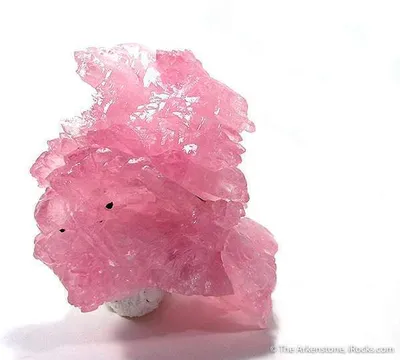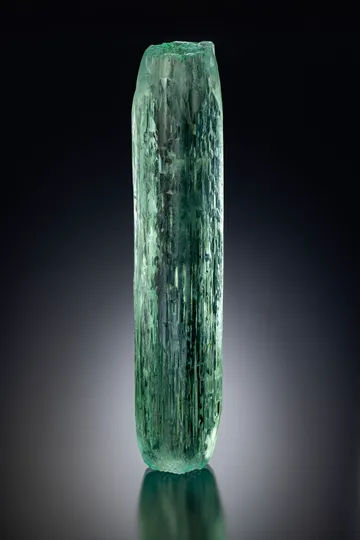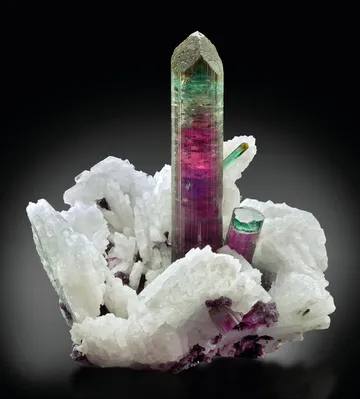
Pitorra claim, Brazil - defining locality for rose quartz, with gemmy pink prisms, sharp terminations, and specimen-rich clusters prized by collectors.
Key facts
Pitorra claim—Lavra da Pitorra in Portuguese usage, and often grouped with Alto da Pitorra in older labels and publications—is one of the defining localities for crystallized rose quartz. That statement needs a collector’s emphasis: not massive lapidary rose quartz, but actual terminated pink quartz crystals, the rare form that makes a quartz specialist stop and look twice. The locality lies at Laranjeiras, in the municipality of Galiléia, Minas Gerais, within the eastern Brazilian pegmatite country of the Rio Doce region. Geologically it belongs to the Aimorés/Conselheiro Pena–Galiléia pegmatite realm of the Eastern Brazilian Pegmatite Province, where granitic pegmatites cut metamorphic country rocks and local granitoids and have supplied generations of collectors with feldspar, mica, beryl, tourmaline, phosphates, and quartz specimens.
Regional View
Country View
Pitorra’s fame rests on a deceptively simple assemblage: pink quartz crystals on or with milky quartz, smoky quartz, microcline, albite-cleavelandite, muscovite, and occasional tourmaline. The best specimens are not large by ordinary Brazilian quartz standards, but they are visually electric: lustrous, translucent to gemmy pink prisms and clustered points, sometimes forming delicate fans, rosettes, druses, crowns, and overgrowths on older quartz. Fine individual pink crystals around 1 cm are already desirable here; crystals approaching or exceeding 2 cm are significant, and pieces showing sharp crystal form, saturated pink color, transparency, and undamaged terminations are the locality’s aristocrats.

Photo: Wikimedia Commons — Rob Lavinsky, iRocks.com
Historically, Pitorra stands with a short list of localities that changed how collectors think about rose quartz. Minas Gerais had already produced extraordinary crystallized material at Berilo Branco/Sapucaia and at Lavra da Ilha, but Pitorra added a style of its own: smaller, intensely specimen-oriented clusters with a high ratio of crystal definition to matrix. Its appearance in mineral literature, notably in Cassedanne and Alves’ 1990 Mineralogical Record article and Janet H. Clifford’s 2012 Rocks & Minerals “Connoisseur’s Choice,” fixed the locality in the canon of rose quartz collecting.
Search for specimens: View all specimens from Pitorra claim, Brazil
Pitorra claim is recorded at Laranjeiras, Galiléia, Minas Gerais, with the Portuguese name Lavra da Pitorra. Mineralogical databases place it in the Aimorés pegmatite district of the Eastern Brazilian Pegmatite Province and describe it plainly but accurately as a specimen quarry for rose quartz crystals. Coordinates in public locality databases are estimated, not survey-grade, and should be treated as a locality center rather than a collecting waypoint.
The deposit is a granitic pegmatite occurrence. Brazilian Geological Survey/CPRM project data for the Galiléia–Mendes Pimentel pegmatite field distinguish Pitorra and Alto da Pitorra as small tabular pegmatites; in the CPRM size scheme, “small” pegmatites are bodies roughly 0.5 to 5 m thick. The Pitorra entry is hosted in biotite schist, while Alto da Pitorra is recorded at the contact of granite and biotite schist. That distinction matches the field character of the district: pegmatites emplaced in and around the São Tomé schists of the Rio Doce Group and associated granitoids, producing pockets and replacement zones rather than broad industrial open-pit ore bodies.
The mineralization is pockety and specimen-driven. CPRM described the Alto da Pitorra assemblage with albite, spodumene, feldspar, mica, quartz, and tourmaline, and noted small geodes or “caldeirões” that yielded collector specimens including lamellar albite-cleavelandite, facetable quartz, and greenish mica aggregates. Mindat’s Pitorra claim record is more conservative, listing elbaite, microcline, muscovite, quartz, and rose quartz; the associated photo data emphasize quartz, smoky quartz, microcline, muscovite, and albite around the rose quartz specimens. For a collector, the important ore body is therefore not an ore body in the metal-mining sense, but the late-stage open space where quartz was able to grow as euhedral pink crystals.
The mining history is typical of eastern Minas Gerais pegmatite work: small-scale garimpo activity, changing levels of activity, and specimen recovery alongside utilitarian production of feldspar, mica, albite, quartz, beryl, and other pegmatite materials in the wider field. CPRM’s late-1990s cadastral work recorded Pitorra as paralyzed and Alto da Pitorra as active at the time of survey. By the time the locality reached international collector literature, however, the rose quartz was already being treated as classic specimen material, with older pieces circulating through major collections and dealers under labels such as Pitorra Mine, Pitorra claim, Lavra da Pitorra, Alto da Pitorra, Laranjeiras, Galiléia, and occasionally the older spelling “Pitora” or Portuguese-accented “Pitôrra.”
The productive pockets were most valuable when they preserved the timing of crystallization: an earlier generation of milky, colorless, or smoky quartz, followed by pink quartz overgrowths or druses. Some pieces are all-pink clusters without obvious matrix; others show the rose quartz as a skin or spray over a smoky or milky quartz core. The most coveted finds are the ones in which the pink quartz crystals are cleanly separated, lustrous, translucent, and visibly terminated rather than fused into sugary druse. As with most classic Brazilian pegmatite sites, present-day collecting should be considered private-property and mineral-rights controlled. There is no established public fee-collecting access for serious collectors; specimens reach the market through old collections, Brazilian dealers, and occasional rediscoveries in estate material.
Quartz from Pitorra is best understood as the structural stage on which the famous rose quartz performs: older milky, colorless, and smoky quartz crystals or masses provide the substrate for later pink crystal growth, and some specimens show glassy second-generation clear quartz scattered over or among the rose crystals. The locality’s ordinary quartz can be blocky, massive, smoky, or prismatically crystallized, but collector-grade examples gain importance when they show distinct generations—smoky or milky quartz beneath pink overgrowths, tiny clear quartz accents, or sharply defined quartz forms that make the paragenesis readable. In this locality, good “quartz” pieces are rarely just colorless quartz; they are the specimens that preserve the growth sequence of the pocket, especially where a smoky or milky quartz base supports rose quartz crystals with minimal bruising.
Rose quartz is the reason Pitorra matters. The locality produced true crystals of pink quartz in drusy clusters, fans, rosettes, sceptery-looking aggregates, and delicate overgrowths, typically in miniature to small-cabinet specimens, with individual crystals most often in the millimeter to centimeter range and exceptional crystals reaching around 2 cm or more. Color ranges from pale pastel pink to unusually saturated hot pink, and the best pieces combine even color, translucency to gemminess, high luster, sharp terminations, and a lively three-dimensional arrangement. Associations with smoky quartz, milky quartz, microcline, albite-cleavelandite, and muscovite are classic; pieces on feldspar or smoky quartz can be especially desirable when the pink crystals stand proud rather than forming a flat sugary coating.
Other minerals documented from Pitorra claim and the closely associated Alto da Pitorra records include microcline, muscovite, albite including cleavelandite, elbaite, schorl, beryl, cassiterite, opal-AN, lepidolite, tantalite, and the amblygonite-montebrasite series. No valid mineral species is documented as having Pitorra claim itself as its type locality, but the broader Galiléia pegmatite region is unusually important in Brazilian type mineralogy, with nearby deposits responsible for species such as barbosalite, faheyite, frondelite, moraesite, tavorite, coutinhoite, and lindbergite. That regional context matters when reading old labels: Pitorra is the rose-quartz locality, while the famous phosphate type-locality stories belong mostly to neighboring Galiléia pegmatites such as Sapucaia, Boca Rica, and Boa Vista/Ênio.
The first authenticity issue is nomenclature. Many labels say “rose quartz,” while some mineralogists prefer “pink quartz” or “rose (pink) quartz” for euhedral pink crystals of quartz, reserving “rose quartz” more strictly for massive material colored by microscopic inclusions. In the collector market, however, Pitorra specimens are overwhelmingly sold and recognized as crystallized rose quartz. A good label should preserve the historical name but, ideally, also retain the exact locality wording: Pitorra claim or Lavra da Pitorra, Laranjeiras, Galiléia, Minas Gerais, Brazil.
Mislabelling is the more common problem than outright fakery. Pitorra pieces can be confused with rose quartz from Berilo Branco/Sapucaia, Lavra da Ilha or Taquaral in Itinga, and more recent crystallized pink quartz from Afghanistan and other pegmatite sources. Pitorra pieces tend to be smaller, delicate, and cluster-rich, commonly with rose crystals on smoky or milky quartz and with microcline, albite, or muscovite matrix. Berilo Branco specimens are often compared for their dramatic “halo” arrangements around smoky quartz, while Lavra da Ilha material has its own matrix and accessory-mineral habits. A specimen labelled only “Galiléia” or “Minas Gerais” deserves caution and comparison.
Condition is critical. Rose quartz crystals from Pitorra are quartz-hard but not quartz-indestructible; the crystals are small, exposed, and brittle at the tips and edges. Look closely for bruised terminations, crushed druse, repaired matrix, and trimmed or sawn backs. Minor peripheral chipping is common on older specimens, but damage to the main pink crystals sharply affects value. Because many pieces are miniature-scale, magnification is useful: a specimen that looks fine by eye may reveal a peppering of contact marks across the crystal faces.
Color stability deserves respect. Euhedral pink quartz and rose quartz color centers can be sensitive to strong light and heat; fine Pitorra specimens should be displayed away from direct sunlight and stored in darkness when not on view. Avoid heat treatment, aggressive chemical cleaning, and prolonged ultrasonic cleaning, especially on internally fractured pieces or specimens with mica and feldspar matrix. Gentle water cleaning and careful mechanical dust removal are usually safer than trying to make a classic old pegmatite specimen look new.
In the market, true Pitorra rose quartz is available but not abundant. Small thumbnails and miniatures appear periodically, especially from older Brazilian collections, while sharp, saturated, transparent clusters with crystals around 1–2 cm are much harder to replace. Provenance adds value: labels from long-established dealers or collections, older “Pitorra Mine” or “Alto da Pitorra” labels, and specimens illustrated in respected databases or publications carry weight. The most desirable pieces are not necessarily the largest; they are the ones with the rare combination of pink color, crystal sharpness, transparency, and sculptural arrangement.
The charm of Pitorra is that its greatest specimens behave almost like jewelry but were born in a rough pegmatite pocket. Mineral writers have repeatedly noted the odd spectacle of pink quartz crystals arranged as crowns, sashes, halos, and overgrowths on older smoky, milky, or colorless quartz. That image captures the locality better than any generic description: a Brazilian pegmatite opened, a quartz mass exposed, and then a second generation of pink crystal growth seeming to dress the older quartz in a rose-colored fringe.
By the late 1980s and early 1990s the locality had entered the international show circuit. Wendell Wilson’s “What’s New in Minerals?” report from the 1989 Denver Show recorded Pitorra material for the collector audience, and Cassedanne and Alves followed with a focused 1990 Mineralogical Record article on crystallized rose quartz from Alto da Pitora. Those early appearances helped separate Pitorra from the much broader commercial category of “Brazilian rose quartz.” Collectors were being asked to see the difference between a pink ornamental stone and a true quartz crystal locality.
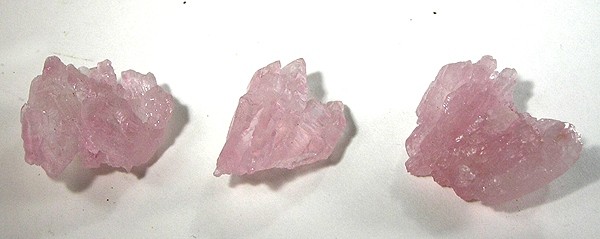
The specimens themselves made the argument. One documented Pitorra specimen measures 5.9 x 3.9 x 3.1 cm and carries rose quartz crystals described as more than 2 cm across the group—large for this habit. Another set of three thumbnails measures only 2.4 x 1.9 x 1.0 cm, 2.2 x 1.4 x 1.0 cm, and 1.9 x 1.9 x 1.1 cm, yet shows the range that keeps collectors searching: one a straightforward cluster, one naturally etched into a stranger form, and one somewhere between. That is Pitorra in miniature—the locality rewards close looking.
Old-label material adds another layer. Dealer and collection records document Pitorra or Alto da Pitorra rose quartz from mid-20th-century and late-20th-century collections, including examples described as vintage early-1960s material and specimens dated around 1967. These pieces often have the slightly irregular, hand-mined character of classic pegmatite specimens: a sawn back, a bruised outer edge, a mica or feldspar remnant, or a smoky quartz core partly hidden beneath the later pink growth. For a collector, those imperfections can be part of the evidence that the specimen belongs to the older Pitorra story rather than to a generic modern quartz flat.